Game review
I Can't Believe It's Not Gambling
5.5 / 10
- Developer
- Mutant Entertainment Studios
- Publisher
- Mutant Entertainment Studios
- Released
- 11 December 2017
- Platforms
- Windows
- Genre
- Satirical loot-box simulator
- Monetisation
- One-off purchase, no in-game currency, ads or gameplay-affecting purchases — the entire game is a parody of systems that do have those things
- Players
- None; single-player only
The short version
I Can't Believe It's Not Gambling picked its target with real precision — arriving weeks after EA's "sense of pride and accomplishment" response to Star Wars Battlefront II's loot-box backlash, it names its own hardest achievement after that exact phrase and dares players to earn it by opening 100,000 loot boxes, a joke with real teeth about how loot-box design manufactures obligation rather than fun. The trouble is the achievement in question has been unreliably tracked since launch — the developer's own week-one known-issues list admits the tracking for it "dont spwawn correctly" — and years of otherwise real, active patch support through 2020 never fully resolved it, leaving a meaningful share of the reviewers who took the satire's dare seriously reporting lost progress rather than the punchline they were promised. The joke about loot boxes wasting your time accidentally became a game that also wastes your time, just not on purpose.
Biggest strengths
- A genuinely well-aimed satirical target, releasing in the immediate aftermath of EA's real "sense of pride and accomplishment" controversy and naming its hardest achievement after that exact phrase
- Extremely cheap, and honest about how short the core "joke" experience is meant to be for anyone not chasing full completion
- A real, multi-year patch history through 2020 shows genuine, sustained developer attention, including several holiday-themed content updates and direct community engagement
Biggest weaknesses
- The single hardest achievement, tracking 100,000 opened loot boxes and named directly after EA's own defensive phrase, has an admitted tracking bug present since the developer's own week-one "known issues" post and still reported broken by reviewers years later
- Global achievement data shows only 3.8% of the playerbase has earned that specific achievement, an unusually steep drop from the 88%+ completion on every earlier milestone, consistent with both extreme grind and a genuine tracking failure rather than difficulty alone
- Multiple independent, detailed reviews describe the same specific failure mode: leaving the game open with an autoclicker overnight only to find the box-opened counter had reset or desynced from actual progress
Who it's for: Players who want a short, sharp, cheap joke about loot-box monetisation and are content to laugh at the premise without chasing its hardest achievement. Not recommended for completionists — the review sample is specific and consistent that the one achievement most worth bragging about is also the one most likely to break on you.
Our recommendation: Worth the very low asking price for the joke and the moment it landed in; skip the 100,000-box achievement chase entirely rather than risk the tracking bug multiple reviewers independently report.
5.5 / 10
Timing is most of the joke here. I Can't Believe It's Not Gambling arrived on Steam in December 2017, weeks after EA's community team infamously defended Star Wars Battlefront II's loot-box economy with a since-deleted comment about instilling "a sense of pride and accomplishment" — one of the most widely mocked lines in recent gaming history. This game's own store pitch leans directly into that moment ("Our marketing department has the game for you! ... Skate legal and ethical lines! Remember kids, its only a video game, so grab your parents credit card!"), strips out everything but the unboxing itself, and names its single hardest achievement after that exact EA phrase. It's a sharp, well-timed target. Whether the joke still works today depends heavily on whether you take its dare seriously — and the review sample is unusually consistent that if you do, you're likely to run into a bug the developer knew about from week one and never fully solved.
A satire that knows exactly what it's mocking
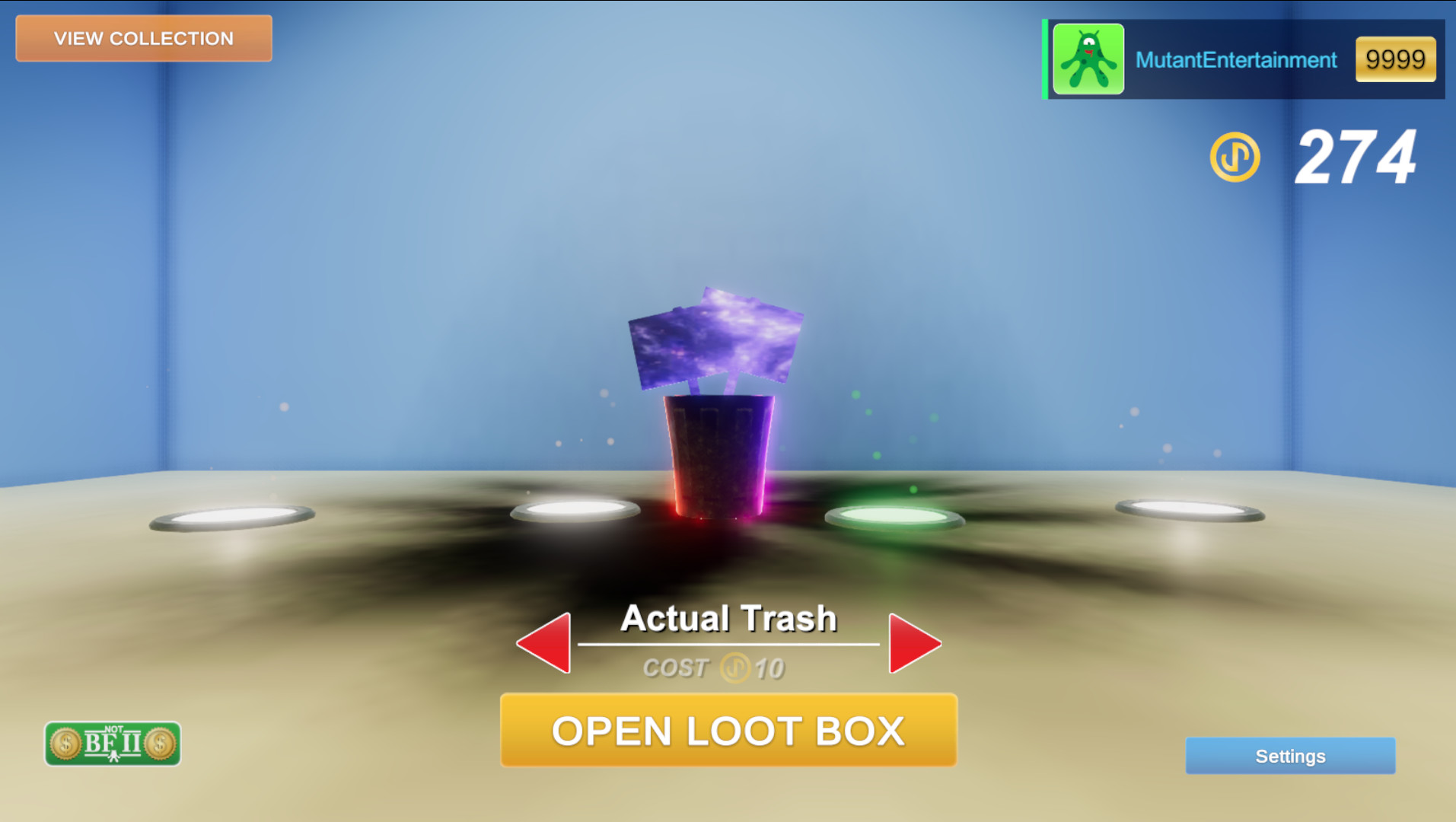
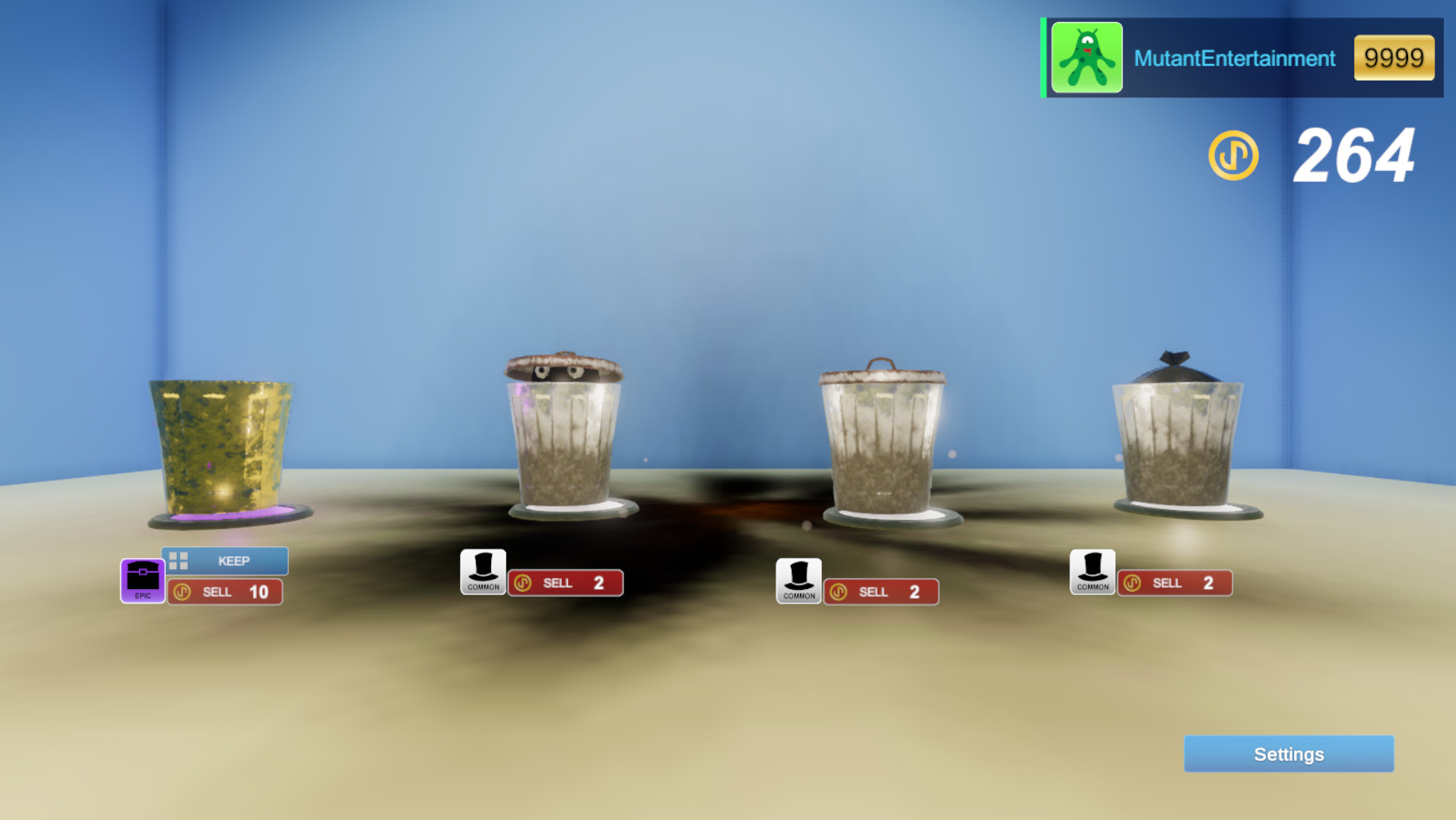
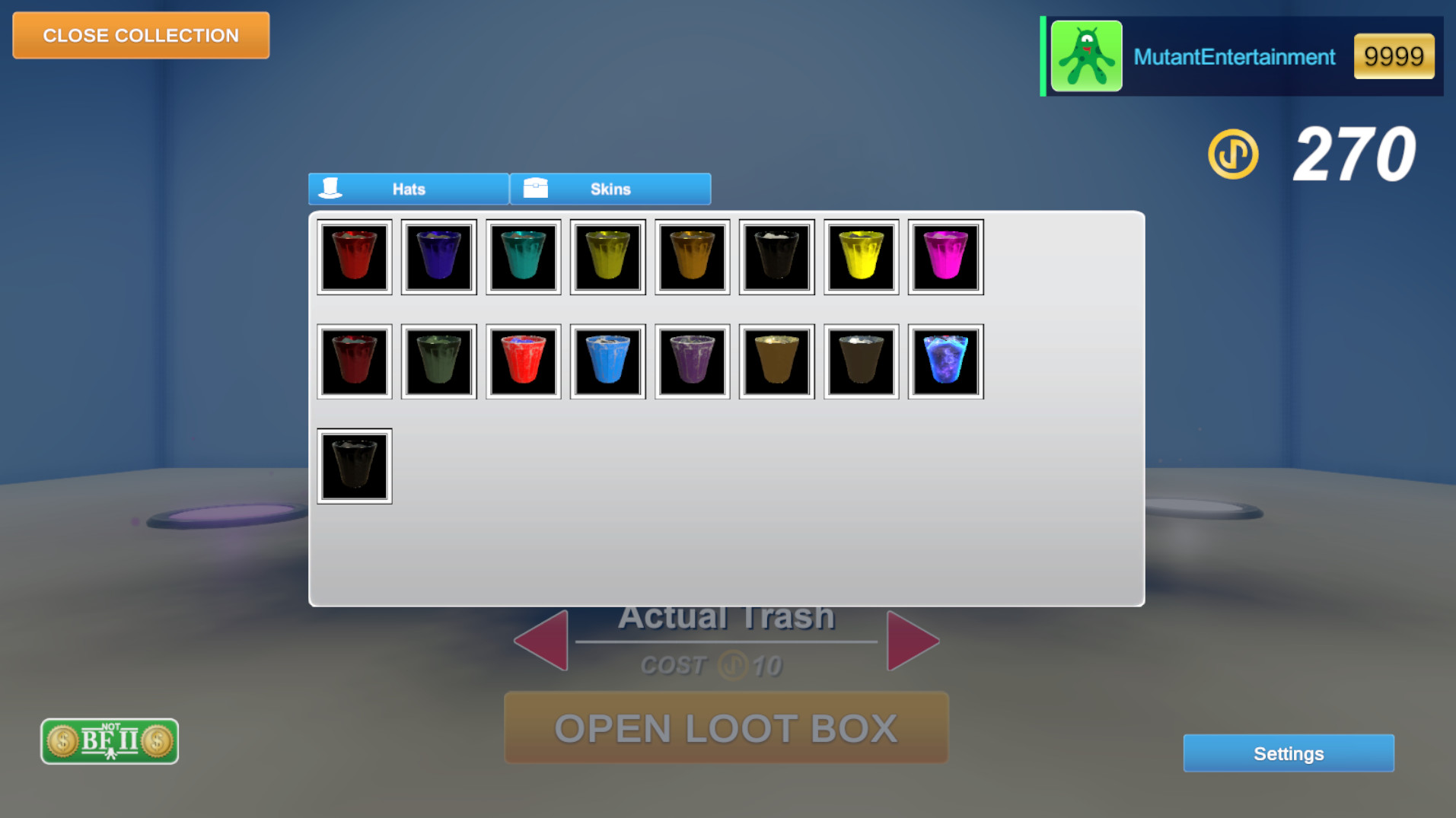
The core loop is deliberately, pointedly thin: open a loot box, get a random item somewhere between trash and legendary rarity, sell the ones you don't want, repeat. There's no combat, no story progression, no skill expression of any kind — which is precisely the point the game is making about the systems it parodies. Reviewers who engage with it as intended describe exactly this recognition: the joke isn't subtle, but it's accurate, and the game commits to it fully rather than softening the satire with actual gameplay depth that would undercut the point. Global achievement data confirms most buyers get the joke on the first pass — every early milestone, from opening a common box to equipping a cosmetic hat, sits between 88% and 99% completion, meaning nearly everyone who launches the game experiences the core bit as intended.
The punchline that breaks
The trouble starts at the game's one real endurance test: an achievement requiring 100,000 opened loot boxes, named directly after EA's "pride and accomplishment" line, clearly designed as the game's thesis statement made mechanical. Multiple detailed, independent reviews describe the exact same specific failure: leaving the game running overnight with an auto-clicker, only to find the box-opened counter had desynced or reset from what should have been logged progress. One reviewer's account is blunt: "If you're gonna make one of the achievements ridiculously hard to get, at least make your game accurately track how many boxes have been opened." Another reports finishing the underlying grind "at least twice over" by their own count and still showing only a fraction of progress toward the achievement. This isn't one player's bad luck — it's the same specific, described failure mode recurring across separate reviews written years apart, and it's not speculation about developer intent: the studio's own week-one "Known Issues" post lists "pride and accomplishment letters dont spwawn correctly" as an acknowledged bug present from the very start. Global achievement data confirms the scale of the problem indirectly — only 3.8% of the entire playerbase holds that achievement, an unusually steep cliff after a run of 88%+ completion rates on everything before it, more consistent with a real tracking failure compounding a genuinely brutal grind than difficulty alone.
Real support, on an unfinished joke
To the developer's credit, this wasn't a fire-and-forget release. The partner-events patch history runs in real, active bursts from launch through early 2020 — holiday-themed content events, a "sUrPrIsE mEcHaNiC Update," direct responses to community requests, and even a currency-overflow temp fix shipped alongside a tongue-in-cheek workaround ("play a round of snake and it will fix itself!"). That's a genuinely sustained level of post-launch attention for a $1-2 satire game, and it makes the persistence of the one bug that undermines the game's own central joke more notable, not less — a studio clearly capable of shipping fixes simply never fully closed this specific one before moving on to other projects around 2020.
A different kind of loot-box satire than its contemporaries
This wasn't the only small Steam game built around mocking loot-box monetisation in this era — Loot Box Quest, released almost exactly a year earlier, took the same broad target and wrapped it in a narrative arc about a developer becoming the industry they claim to despise. The two games make an instructive contrast in how differently "satire clicker" can be executed: Loot Box Quest invests in story and character to make its point, ending with a scripted conclusion and explicitly no reason to replay; this game skips narrative almost entirely and instead builds its satire directly into a mechanical dare — chase the achievement named after the real controversy, and feel the grind EA's critics were actually complaining about. Where Loot Box Quest's flaw is a total absence of replay value, this game's flaw is closer to the opposite: it gives players a reason to keep grinding and then fails to reliably track that they did. Neither approach is more "correct," but a reader deciding between similarly-priced, similarly-themed satire clickers should know they're choosing between a story that ends cleanly and a mechanical dare that may not resolve at all.
Verdict
I Can't Believe It's Not Gambling picked an unusually precise, well-timed target and built its best joke directly out of a real, memorable industry embarrassment — that's more cultural specificity than most $1 clicker satires bother with. What keeps it from landing cleanly is that the joke's own capstone, the achievement that turns the satire into a mechanical thesis statement, has been unreliably tracked since a bug the developer itself acknowledged in week one, never fully fixed across more than two years of otherwise real support. Enjoy the first half hour for the target it's aiming at; don't go looking for "pride and accomplishment" expecting to actually find it.
Sources: Steam store page and appdetails API (release date, pricing, platform data); Steam's aggregate review data (query_summary totals, English-language sample); individually read user reviews, both positive and negative, sorted by helpfulness and recency; Steam's global achievement statistics API; Mutant Entertainment Studios' own partner-events patch notes and launch-week "Known Issues" post, covering December 2017 through the studio's last update in early 2020.
Pros and cons
Pros
- A genuinely well-aimed satirical target, releasing in the immediate aftermath of EA's real "sense of pride and accomplishment" controversy and naming its hardest achievement after that exact phrase
- Extremely cheap, and honest about how short the core "joke" experience is meant to be for anyone not chasing full completion
- A real, multi-year patch history through 2020 shows genuine, sustained developer attention, including several holiday-themed content updates and direct community engagement
- The core loop is instantly legible — open boxes, get random loot, sell what you don't want — which is exactly the point being made about the systems it mocks
- Achievement data for the early, easy milestones sits above 88-98%, confirming the joke lands for nearly everyone who tries the game at all
Cons
- The single hardest achievement, tracking 100,000 opened loot boxes and named directly after EA's own defensive phrase, has an admitted tracking bug present since the developer's own week-one "known issues" post and still reported broken by reviewers years later
- Global achievement data shows only 3.8% of the playerbase has earned that specific achievement, an unusually steep drop from the 88%+ completion on every earlier milestone, consistent with both extreme grind and a genuine tracking failure rather than difficulty alone
- Multiple independent, detailed reviews describe the same specific failure mode: leaving the game open with an autoclicker overnight only to find the box-opened counter had reset or desynced from actual progress
- The core interaction has little to offer past the first half hour for anyone not chasing that one achievement, and several reviewers call the completionist grind genuinely punishing rather than funny
- Development support ended around 2020 with the studio moving to other projects, so the long-standing tracking bug is very unlikely to see a fix at this point
Screenshots
-
I Can't Believe It's Not GamblingImage: Mutant Entertainment Studios via Steam -
I Can't Believe It's Not GamblingImage: Mutant Entertainment Studios via Steam -
I Can't Believe It's Not GamblingImage: Mutant Entertainment Studios via Steam -
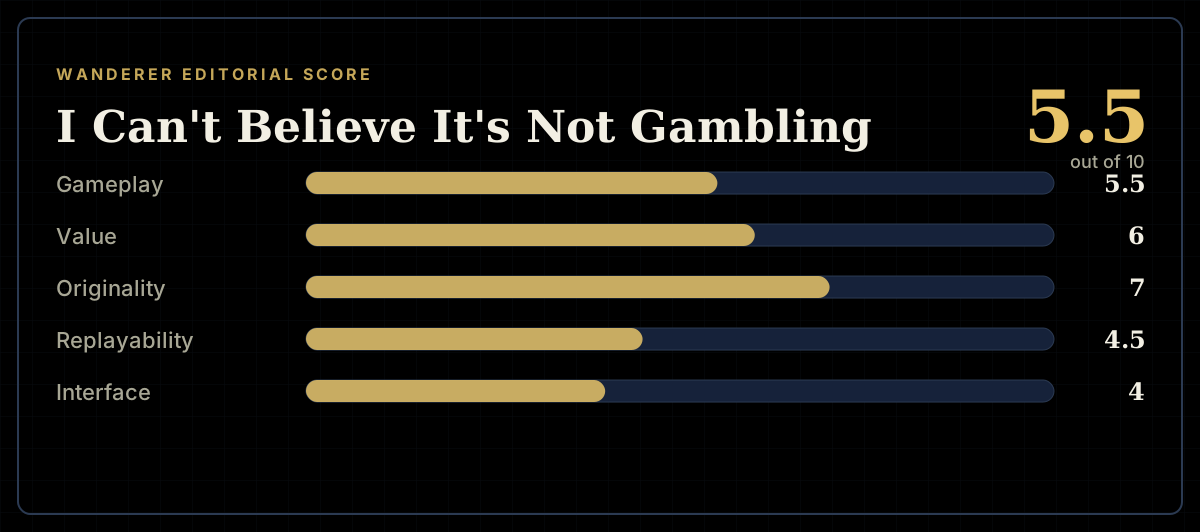
How the review scores each part of the gameWanderer Editorial -
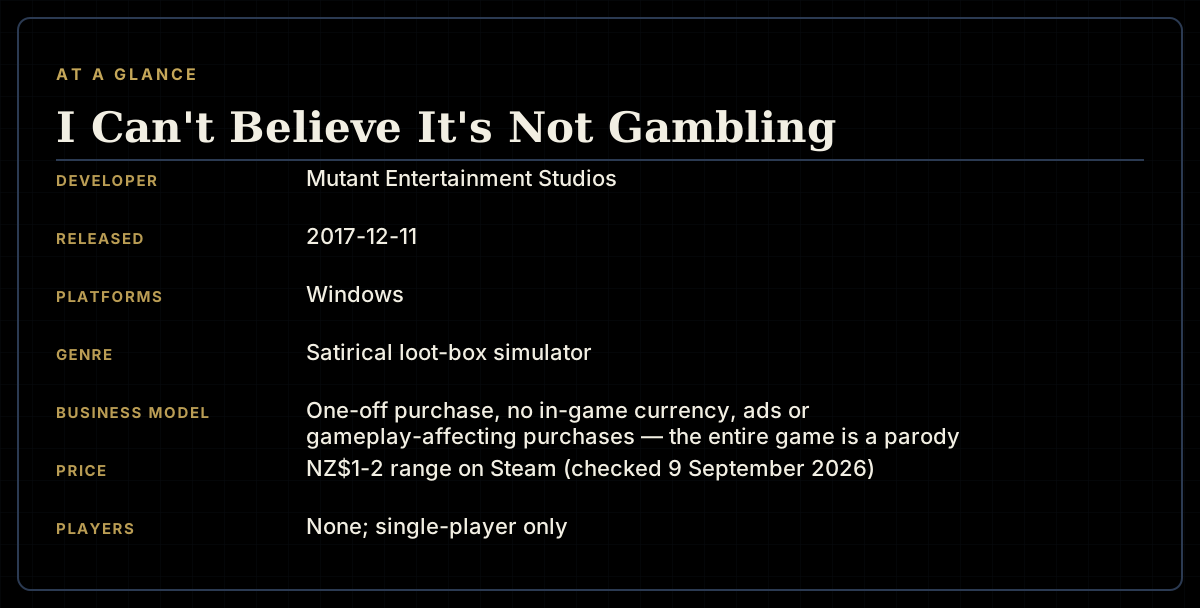
The specsWanderer Editorial -
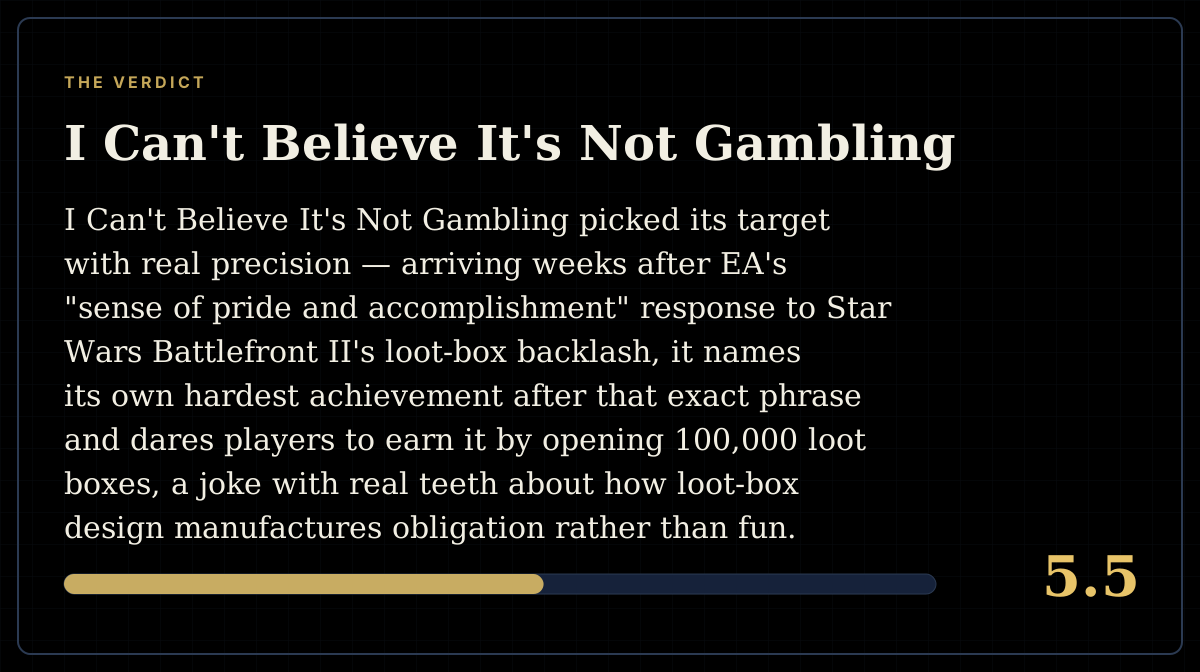
The short versionWanderer Editorial