
Game review
Homura Hime Review
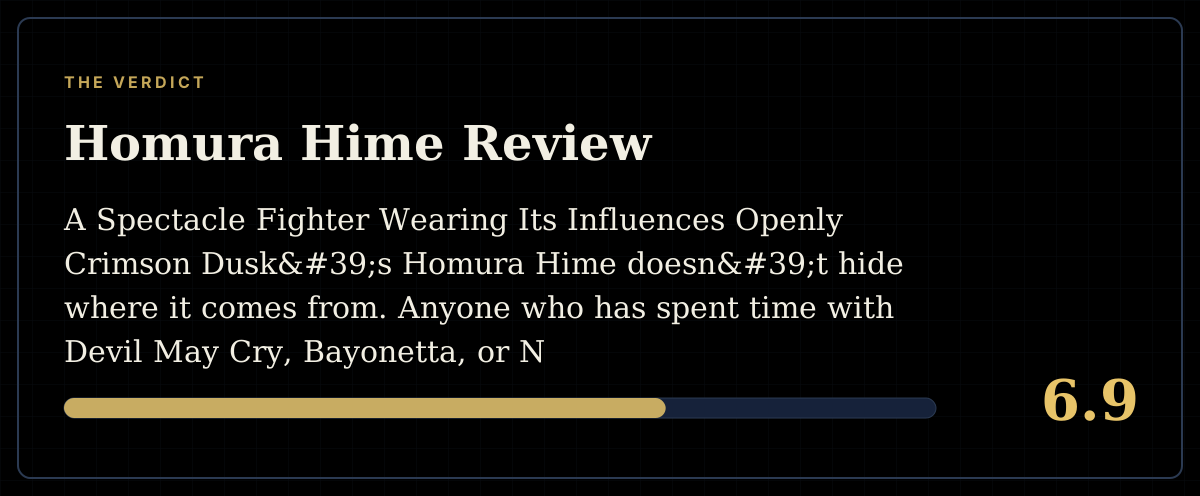
6.9 / 10
- Developer
- Crimson Dusk
- Publisher
- PLAYISM
- Released
- 4 March 2026
- Platforms
- ["Windows"]
- Genre
- Action
The short version
Biggest strengths
- Combat blends Devil May Cry-style combos with Nier-flavored bullet-hell dodging and a satisfying parry system
- Boss fights are the clear highlight, with well-telegraphed multi-phase patterns
- Distinctive anime art direction and a strong orchestral-meets-rock soundtrack
Biggest weaknesses
- Frequent cutscenes and forced walking sections repeatedly interrupt the action for some players
- Parrying is generous enough that combat can devolve into spamming it rather than using the wider combo kit
- Performance dips, audio mixing glitches, and assorted bugs (camera lock, softlocks) crop up across playthroughs
6.9 / 10
A Spectacle Fighter Wearing Its Influences Openly
Crimson Dusk's Homura Hime doesn't hide where it comes from. Anyone who has spent time with Devil May Cry, Bayonetta, or Nier: Automata will recognize the shape of it almost immediately: a stylish melee combo system layered over long-range attacks, wrapped around a story about an exorcist cutting through waves of demons in a fantasy world steeped in Japanese folklore. The title character floats a pair of swords and a support "pod"-style ranged weapon, not unlike 2B's arsenal, and pairs it with a Sekiro-inspired parry that becomes the backbone of nearly every encounter. It's a lot of familiar DNA stitched together, but the developer, a small Taiwan-based studio, has assembled it with a level of polish and consistency that punches well above what its budget suggests. It isn't reinventing the character-action genre, but it plays like a team that studied its favorite games closely and then built something coherent and confident out of the pieces.
Parrying, Bullet Hell, and a Combo System With Teeth
The centerpiece of Homura Hime is a hybrid combat loop: light and heavy attacks link into freeform combo strings, skills and talismans can be slotted in for extra flexibility, and a Sekiro-style parry lets players shrug off incoming damage with well-timed presses. Layered on top of that is a bullet-hell dimension clearly inspired by Nier and Touhou, with waves of projectiles that have to be dodged, shot through, or parried when flagged in red. Multiple reviewers single out the boss fights as the game's peak, describing multi-part encounters that alternate between parry sequences, shield-breaking ranged phases, and full combo assaults, with strong animation and sound design that telegraphs incoming attacks clearly. The stages themselves run longer than a typical character-action game's, mixing linear combat arenas with platforming sections that use air-dashing and parry-timed grapples to get around.
The friction point that comes up again and again is how permissive the parry window is. Several players note that because dodging, parrying, and even whiffed parries carry little to no penalty, it's possible to lean almost entirely on parry-spam and mashing a signature skill rather than engaging with the fuller combo toolkit the game builds around you. It doesn't break the game, and the people who enjoy the rhythm of parry-heavy combat clearly had a blast with it, but it does mean the more elaborate combo strings can feel optional rather than rewarded, especially once players realize shorter, safer strings deal comparable damage. A lock-on system that struggles against multiple enemies, and a lack of a harder difficulty at launch (Crimson Dusk has said a free hard-mode update is coming), round out the list of gameplay quibbles.
A Better Story Than Expected, Told Awkwardly at Times
For a game sold primarily on its action, Homura Hime's narrative earns more praise than expected. It follows Homura, an exorcist channeling flame powers against a rotating cast of "arch-demon" bosses, accompanied by a shrine-priestess sidekick, and builds toward twists that land for some players and feel telegraphed or under-baked for others. The most consistent praise goes to how the archdemons are characterized: rather than being disposable boss fodder, several are given real backstory and motive, with the overall arc drifting from a straightforward "purge the demons" premise into something more about reckoning with the past. Optional lore logs scattered through the levels add texture without feeling like padding, and the Japanese voice cast (there is no English dub) draws specific praise for its quality, even from players who otherwise don't understand the language.
The delivery has rough edges, though. Only Japanese voice acting is included, and because important story beats sometimes play out as subtitles at the bottom of the screen during active combat or platforming, it's easy to miss dialogue while focused on staying alive. A number of players also flag frequent short cutscenes, and a habit of stopping the action to explain simple mechanics through an overly chatty sidekick character, as a real drag on pacing, particularly in the opening hour or two before the game trusts the player to just move forward on their own.
Style, Sound, and Some Rough Technical Edges
Visually, Homura Hime commits fully to its aesthetic: cel-shaded characters set against serene, folklore-inspired environments that give way to chaotic festival skylines and demon-infested realms. The soundtrack draws consistent praise, mixing tranquil ambient pieces with a classical-Japanese-orchestra-and-rock hybrid for combat and boss encounters, matched well to the mood of each scene. Where the presentation stumbles is technically: multiple players report frame-rate dips during heavier bullet-hell sequences (one specific mission is called out repeatedly), a Linux/SteamOS-specific freezing bug, inconsistent audio mixing where sound effects and even dialogue occasionally cut out entirely, and a handful of outright bugs, including a camera that can get stuck tracking an enemy that's fallen out of the level. None of these were described as game-breaking by the people who ran into them, but they're frequent enough, and the audio issues specific enough, that they clearly affected some players' enjoyment of an otherwise flashy, high-energy combat loop. Invisible walls in the otherwise linear levels also draw repeated complaints, mostly because players would rather see an obstacle than bump into empty air.
Verdict
Homura Hime is a confident, clearly loving tribute to the character-action games it borrows from, built by a small studio that nailed the fundamentals of combat and boss design before worrying about anything else. When it's firing, particularly during its boss fights, it's genuinely thrilling: a fluid mix of DMC-style combos, Nier-style bullet-hell dodging, and Sekiro-style parry timing that a lot of players are calling a highlight of their year. The story surprises in a good way too, even if the delivery (Japanese-only voice acting, frequent short cutscenes, heavy-handed tutorializing early on) will test some players' patience before it settles into its rhythm. Where it falls short is in the areas a bigger budget usually smooths over: performance hitches, inconsistent audio, a parry system generous enough to let players skip most of the combo depth on offer, and a lack of a hard mode or meaningful replay incentive at launch. It's not a masterpiece, but for the asking price it's a genuinely good spectacle fighter with more heart in its combat and story than its rough edges would suggest, and it's easy to see why it's already a favorite for some players' game of the year list.
Pros and cons
Pros
- Combat blends Devil May Cry-style combos with Nier-flavored bullet-hell dodging and a satisfying parry system
- Boss fights are the clear highlight, with well-telegraphed multi-phase patterns
- Distinctive anime art direction and a strong orchestral-meets-rock soundtrack
- A heartfelt, better-than-expected story about an exorcist and her demons, told through world-building logs
Cons
- Frequent cutscenes and forced walking sections repeatedly interrupt the action for some players
- Parrying is generous enough that combat can devolve into spamming it rather than using the wider combo kit
- Performance dips, audio mixing glitches, and assorted bugs (camera lock, softlocks) crop up across playthroughs
- No hard difficulty at launch, and low replay incentive once every combo and collectible is unlocked
Screenshots
-
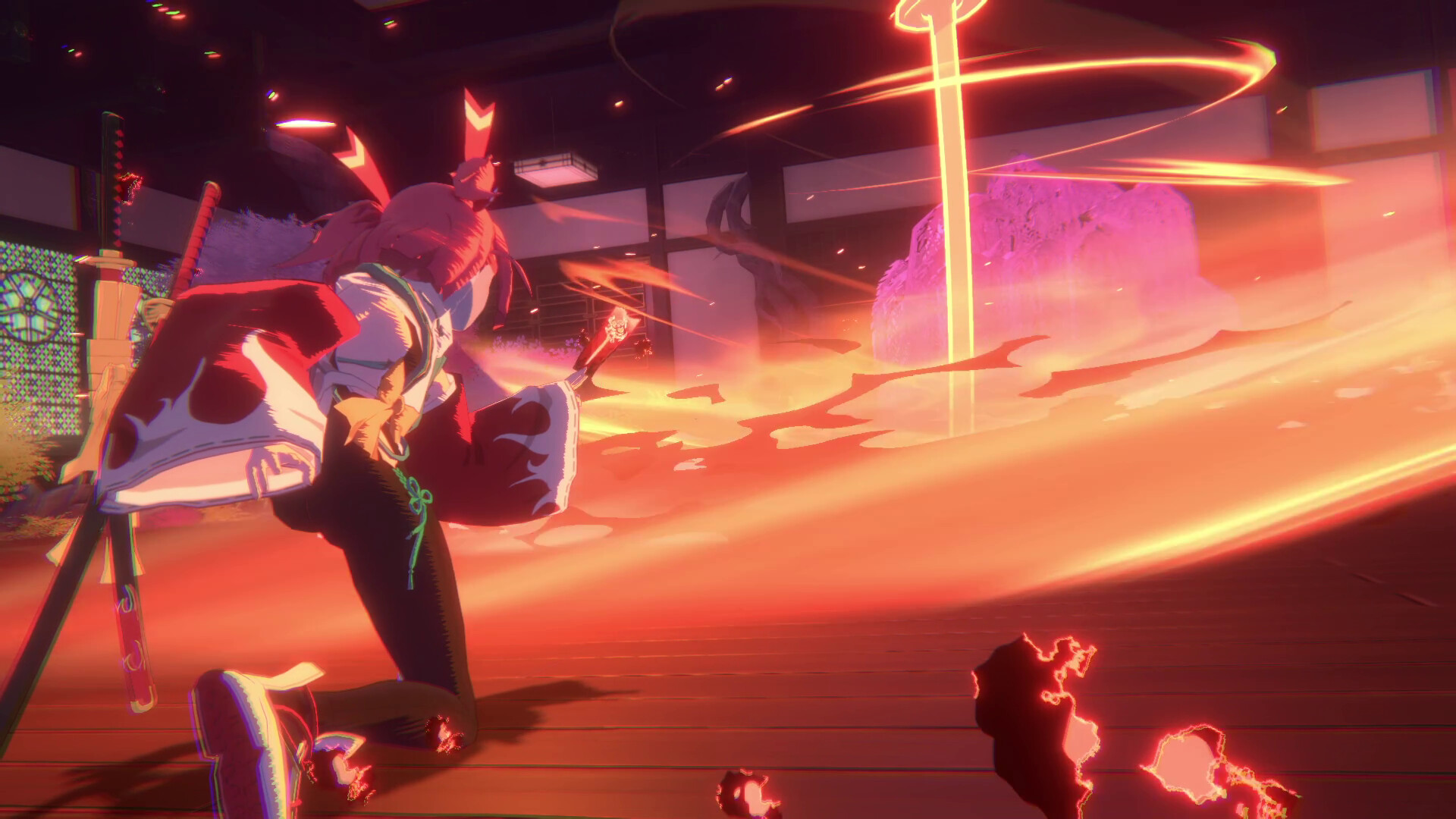
Combos link light and heavy sword strikes into flashy, fast-moving attacksImage: Crimson Dusk -
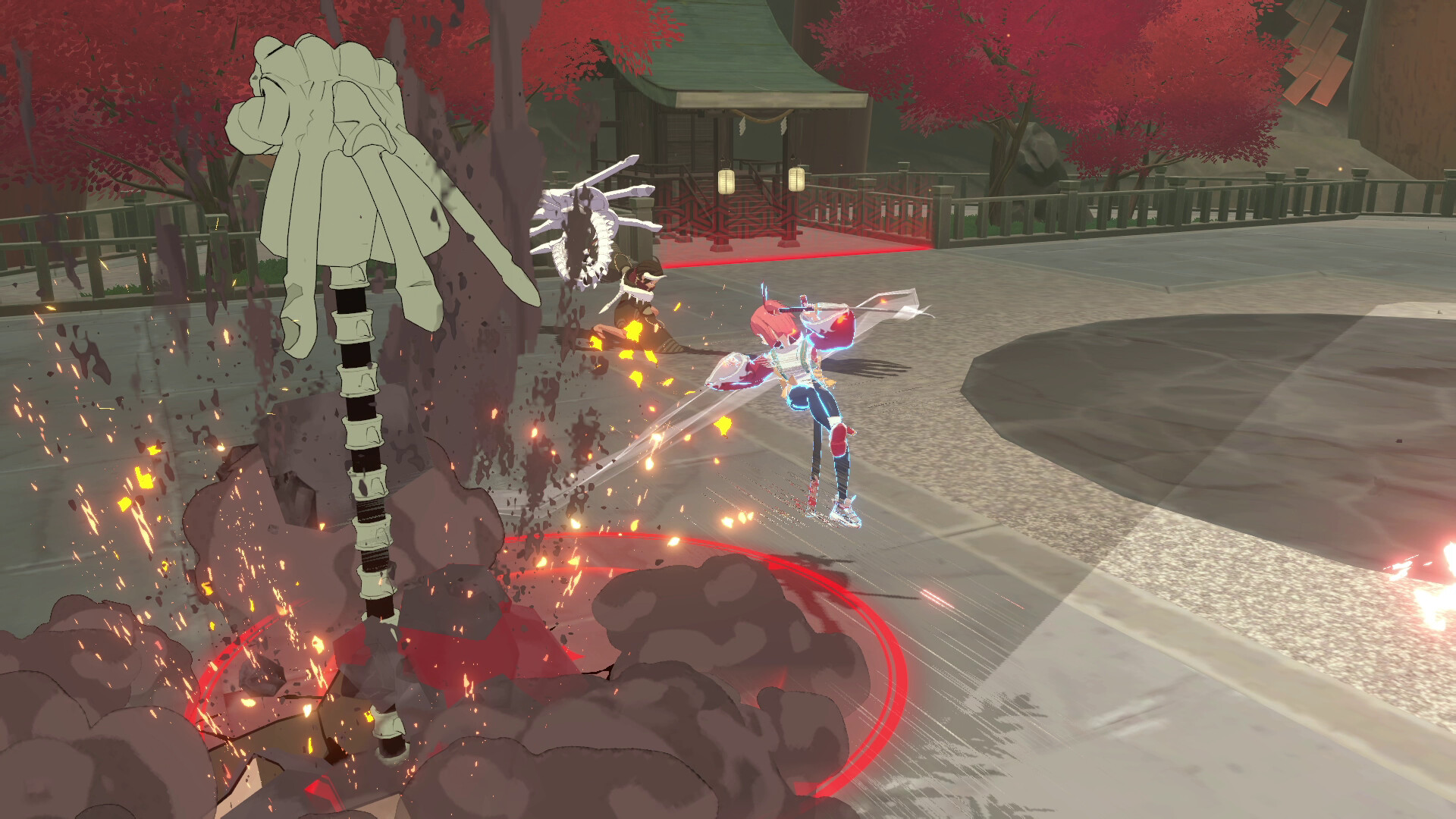
Boss encounters mix melee combos with dodges and parries against multi-part demon enemiesImage: Crimson Dusk -
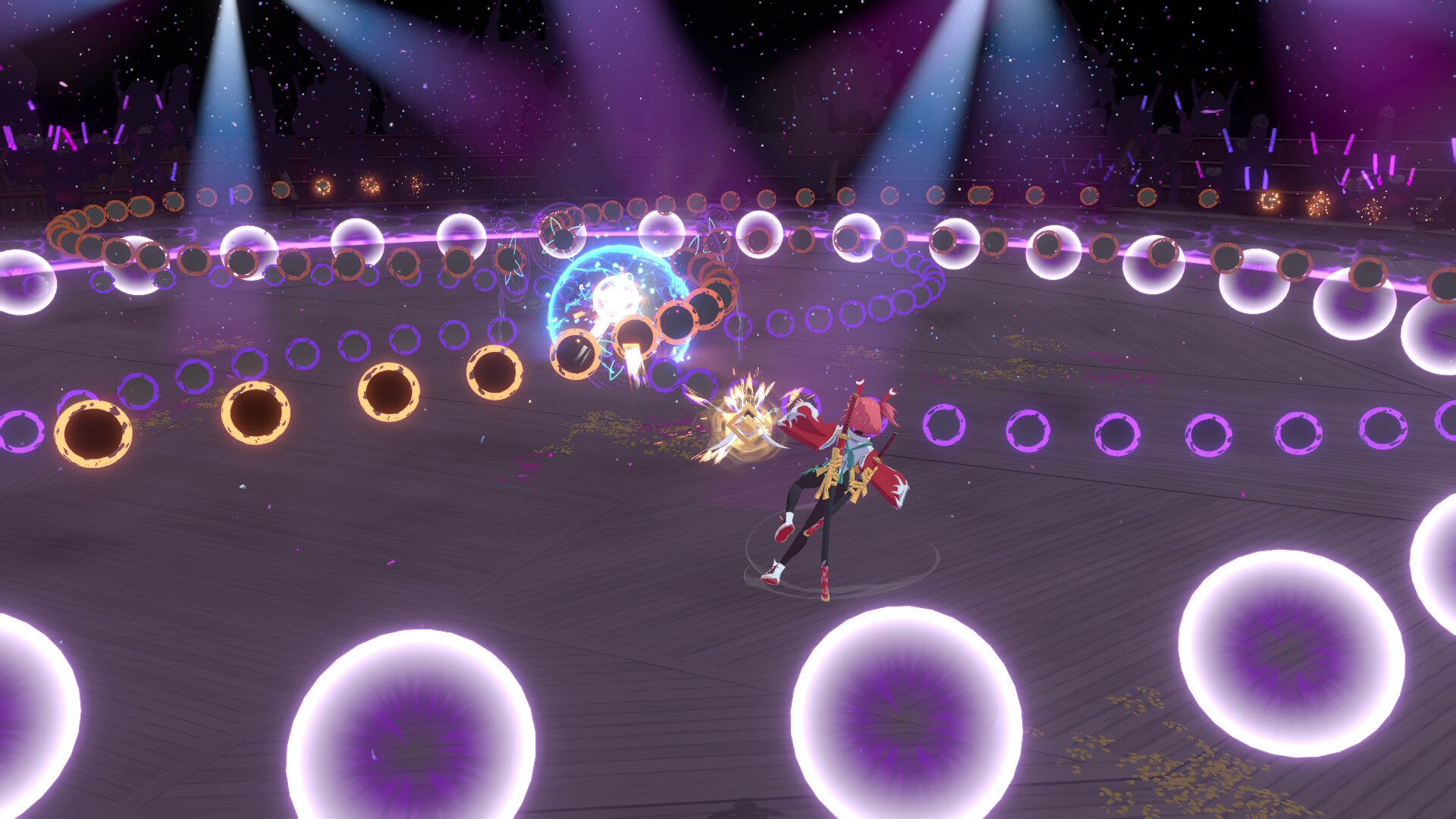
Bullet-hell rings of projectiles have to be dodged, shot through, or parried during set-piece fightsImage: Crimson Dusk -
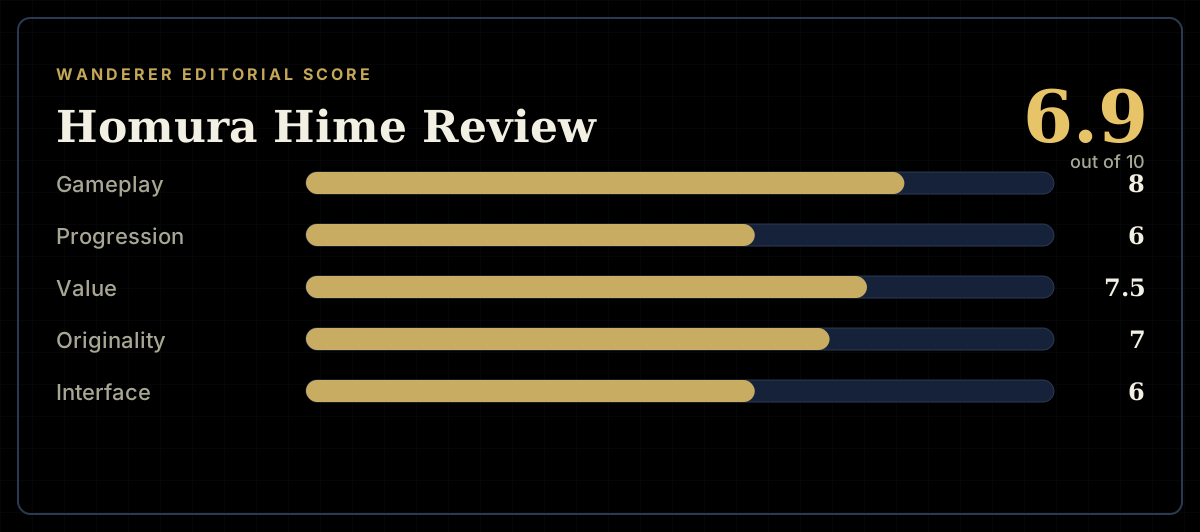
How the review scores each part of the gameWanderer Editorial -
The short versionWanderer Editorial