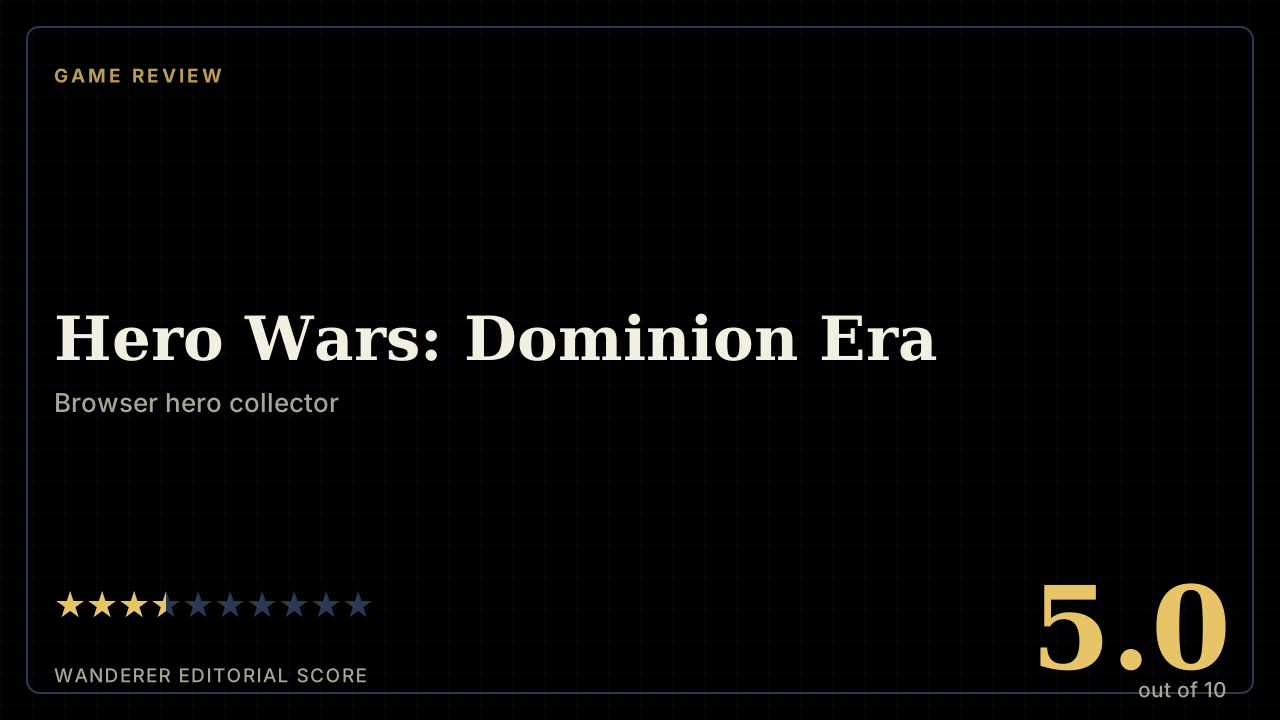
Game review
Hero Wars: Dominion Era
5 / 10
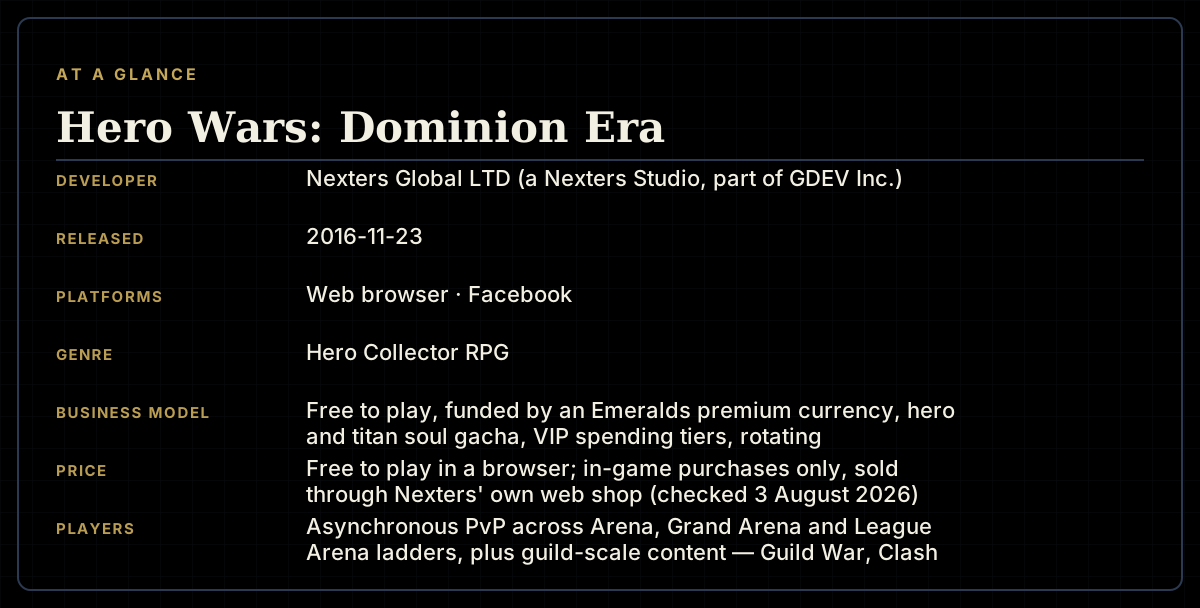
- Developer
- Nexters Global LTD (a Nexters Studio, part of GDEV Inc.)
- Publisher
- Nexters Global LTD / GDEV Inc.
- Released
- 23 November 2016
- Platforms
- Web browser, Facebook
- Genre
- Hero Collector RPG
- Monetisation
- Free to play, funded by an Emeralds premium currency, hero and titan soul gacha, VIP spending tiers, rotating limited-time bundles, and a stack of concurrent event passes. The browser build bills players directly through Nexters' own web shop rather than an app store, which is the entire strategic point of the platform — no 30% cut, no store-level refund or spending controls. Advertising is a rounding error in the business: at parent company GDEV, ad bookings were 5.8% of the total in Q1 2026, so the notorious Hero Wars ad campaigns are acquisition spend, not a revenue stream. Checked 3 August 2026.
- Players
- Asynchronous PvP across Arena, Grand Arena and League Arena ladders, plus guild-scale content — Guild War, Clash of Worlds against rival guilds, Titan Valley, Asgard and Adventures, a co-operative board-style mode that is one of the browser version's signature features.
The short version
Dominion Era is a well-made machine for extracting money from people in their thirties and forties who like fantasy RPGs and have jobs. That sounds harsh, and the game underneath is genuinely more interesting than its reputation — fifteen-plus modes, real guild politics, a team builder with actual depth once you stop letting it auto-resolve. But everything that structure exists to do is visible in the parent company's own numbers, and on the browser, where there is no app store between you and the shop, the design has fewer reasons to be subtle. Play it as a free strategy puzzle. Do not open the wallet, because this game has been engineered for years by people who know exactly what happens after you do.
Biggest strengths
- Substantially more game than the mobile version — Campaign, Tower, Outland, Dungeon, Airship, Titan Valley, Asgard, Adventures, Clash of Worlds and several arena ladders, most with their own currency and shop
- Adventures, the co-op board mode, is a genuinely good design: route planning, shared resources and guild coordination rather than another auto-resolve queue
- Team building has real depth — control effects, energy generation, damage types, artifacts, ascension skills and pets interact in ways that reward study
Biggest weaknesses
- The daily obligation list across fifteen-plus modes is the real design; a full clear takes a substantial chunk of an evening and skipping it costs ladder position
- Selling directly through its own web shop removes the app-store layer that would otherwise impose refund paths and spending limits — the platform choice is a monetisation choice
- Progression is gated at every tier by fragments and souls that are simultaneously farmable and purchasable, which is the oldest pressure in the genre and still the most effective
Who it's for: Genre veterans who want the deepest version of Hero Wars and are immune to bundle pressure, guild players who like scheduled, social, competitive content, and anyone who prefers a game that runs in a browser tab. Badly suited to newcomers, to anyone who has ever described themselves as having an addictive personality around progress bars, and to players who want fights they meaningfully control.
Our recommendation: If you're going to play a Hero Wars, play this one — it has more content and more interesting guild systems than the mobile version. Set a hard rule before you start that you will never buy an Emerald, treat the daily list as optional rather than a job, and quit the day the calendar starts feeling like an obligation. Everyone else should read the monetisation section and take it as a case study rather than a recommendation.
5 / 10
The most revealing document about Hero Wars: Dominion Era isn't a patch note. It's a quarterly earnings release.
GDEV, the company that owns Nexters and this game, reported Q1 2026 bookings of $83 million from 269,000 monthly paying users. That works out to $97 per paying user per quarter — call it thirty-two dollars a month, on average, from everyone who spends anything at all. Advertising, despite Hero Wars being famous for years of ads with pin-pulling puzzles that appear nowhere in any of its games, made up 5.8% of bookings. The ads were never the business. They were the funnel.
Hold that number in your head while reading anything else about this game, including the parts where I tell you it's good — because it is, in places, and the two facts are not in tension. They're the same fact.
The browser one, not the phone one
In July 2023 Nexters cut Hero Wars in half. The mobile app became Hero Wars: Alliance, and the browser and Facebook version became Hero Wars: Dominion Era. Separate accounts, separate balance patches, no way to move a character between them. If you played on a phone in 2022 and open the browser version now, you're starting over.
The split was a business decision that reads clearly from the outside. Nexters had spent years building a web presence, launched an external web shop for mobile players in 2023, and has been explicit that its browser versions were designed with balance and monetisation in mind rather than being straight ports. A browser game bills players through the company's own storefront. There's no 30% platform cut, and equally no store-level refund process, no family spending controls, and no Apple or Google review pass on how aggressively the shop behaves.
That's the context for everything Dominion Era does differently. It is not a lesser version of the mobile game shovelled onto a webpage — by content volume it's the fuller one, aimed at what Nexters itself describes as an audience of men over thirty, with an average player lifespan on this franchise past two years.
Fifteen modes and a calendar
Open the game and count the buttons. Campaign, Tower, Outland, Dungeon, Airship, Arena, Grand Arena, League Arena, Guild War, Clash of Worlds, Titan Valley, Asgard, Adventures, Tournament of the Elements, plus whatever seasonal event is running — July 2026 brought a reworked Summer Festival and a new hero, with a new event map announced for August. Most of these have their own currency, their own shop and their own daily or weekly reset.
That volume is genuinely impressive as content, and it's also the design. A hero collector doesn't retain a player for two years on the strength of its combat; it does it by making sure there is always something expiring. The daily list is the game. Clear it and you inch forward on a dozen tracks at once. Skip it for a week and you drop ladder positions, miss event currency and fall behind guildmates who didn't.
Some of it is legitimately good. Adventures — a co-operative board mode where a guild picks routes, spends shared resources and coordinates who takes which path — is a real design with real decisions in it, and it's the mode people talk about when they explain why they play the browser version. Guild War and Clash of Worlds turn a solo grind into scheduled social competition, which is the strongest thing this game has. There's a reason the retention numbers are what they are, and it isn't only the pressure.
The fights aren't the point
Combat is five heroes a side, resolving automatically, with energy building until characters fire their ultimates. You can take manual control of ultimate timing, and at the margins that matters, but the honest description is that you build a team and then watch it work.
Underneath the automation there's more strategy than the genre usually gets credit for. Control effects, damage types, energy generation rates, artifacts, ascension skills, pets and titan support all interact, and a well-built five against a badly-built five with higher raw power will often win. Players who enjoy this game are usually enjoying the spreadsheet — the counter-picking against a specific arena defence, the fifteen minutes spent working out which artifact to level.
But an auto-battle you lose is a puzzle you failed before it started, and the game's answer to a failed puzzle is always the same: more power. More power comes from fragments and souls, which come from the same modes you already cleared today, or from the shop, immediately. That's the pressure point the whole structure is built around, and it's identical to the one in Hero Wars: Alliance — the browser just has fewer chaperones.
Starting in year nine
There's a specific problem with joining a hero collector this old, and Dominion Era doesn't solve it. The accounts you meet in Arena have had nine years to accumulate artifacts, ascension levels, titans and pets, and none of that was on a curve designed to be caught up with — it was designed to reward the two-year-plus player lifespans the franchise reports as a selling point. A new account gets a sheltered opening, then meets the ladder.
The game's answer is the same as every game like it: bracket you gently, feed you fragments, and keep a bundle visible that closes the gap faster than farming will. That's not a bug in the onboarding, it's the onboarding working. What it means practically is that a free player should plan to be uncompetitive in PvP for a long time and enjoy the PvE and guild content instead — which is genuinely enough game to be worth the tab, provided you go in expecting it rather than discovering it in month three.
Reading the business into the design
The GDEV numbers are worth taking seriously because they're audited, current and published by the company itself, not scraped from a fan forum.
Monthly paying users fell 5% year-on-year in Q1 2026, to 269,000. Average bookings per paying user rose 8%, to $97 a quarter. Marketing spend dropped 13%. Read together: fewer people are paying, each of them is paying more, and the company is spending less to find them, having shifted to "channels that attract players with higher long-term value." That is a company optimising toward the players who spend the most, which in this genre is a small number of people spending a very large amount.
The platform mix moved too — mobile up to 64% of bookings, PC down to 36%. The browser side is the smaller and shrinking half, which puts Dominion Era in the position live-service games are least comfortable in: a mature product with a devoted, high-value audience and no growth story.
None of this is illegal, hidden, or unusual for the genre. It is, though, the answer to "why does this game feel like it's asking me for money constantly" — because the model now depends on a quarter of a million people at ninety-seven dollars a quarter, and the ones who don't spend are, in the arithmetic, marketing.
Verdict
I'd rather play Dominion Era than most of its competition. It has more ideas than the average hero collector, its guild content is genuinely social, and the team-building layer is deep enough to occupy the part of your brain that likes solving things. Nine years in, it's still getting new heroes and reworked events, which is more than many live games manage.
It scores half a point below our review of the mobile version anyway, and the reason is the shop. Alliance at least sits behind Apple's and Google's billing, with the refund routes and spending controls that come with them. Dominion Era bills you directly, on a platform chosen partly because it bills you directly, aimed at an older demographic with more disposable income — and the parent company's own filings show a strategy of getting more money from fewer people. That combination deserves to be named plainly rather than buried under a paragraph about hero synergies.
Play it free, enjoy the puzzle, treat the daily list as optional and the shop as off-limits. Played that way it's a decent, deep, slightly bloated fantasy strategy game you can leave in a browser tab. Played any other way, it's a subscription you didn't agree to.
Players who want a fantasy world that keeps progressing without a daily checklist, a bundle timer or a guild waiting on them, may also enjoy Wanderer.
Pros and cons
Pros
- Substantially more game than the mobile version — Campaign, Tower, Outland, Dungeon, Airship, Titan Valley, Asgard, Adventures, Clash of Worlds and several arena ladders, most with their own currency and shop
- Adventures, the co-op board mode, is a genuinely good design: route planning, shared resources and guild coordination rather than another auto-resolve queue
- Team building has real depth — control effects, energy generation, damage types, artifacts, ascension skills and pets interact in ways that reward study
- Guild content is scheduled and social, which is why the average player lifespan on this franchise runs past two years
- Still actively developed after nine years, with monthly events, a reworked Summer Festival in July 2026 and a new event map announced for August
Cons
- The daily obligation list across fifteen-plus modes is the real design; a full clear takes a substantial chunk of an evening and skipping it costs ladder position
- Selling directly through its own web shop removes the app-store layer that would otherwise impose refund paths and spending limits — the platform choice is a monetisation choice
- Progression is gated at every tier by fragments and souls that are simultaneously farmable and purchasable, which is the oldest pressure in the genre and still the most effective
- Combat is nearly all automatic; your input is team composition and, at most, the timing of ultimates, so a fight you lose is usually a fight you were never in
- New players enter a nine-year-old power curve against accounts with years of accumulated artifacts, and the free path to competitiveness is measured in months
Screenshots
-
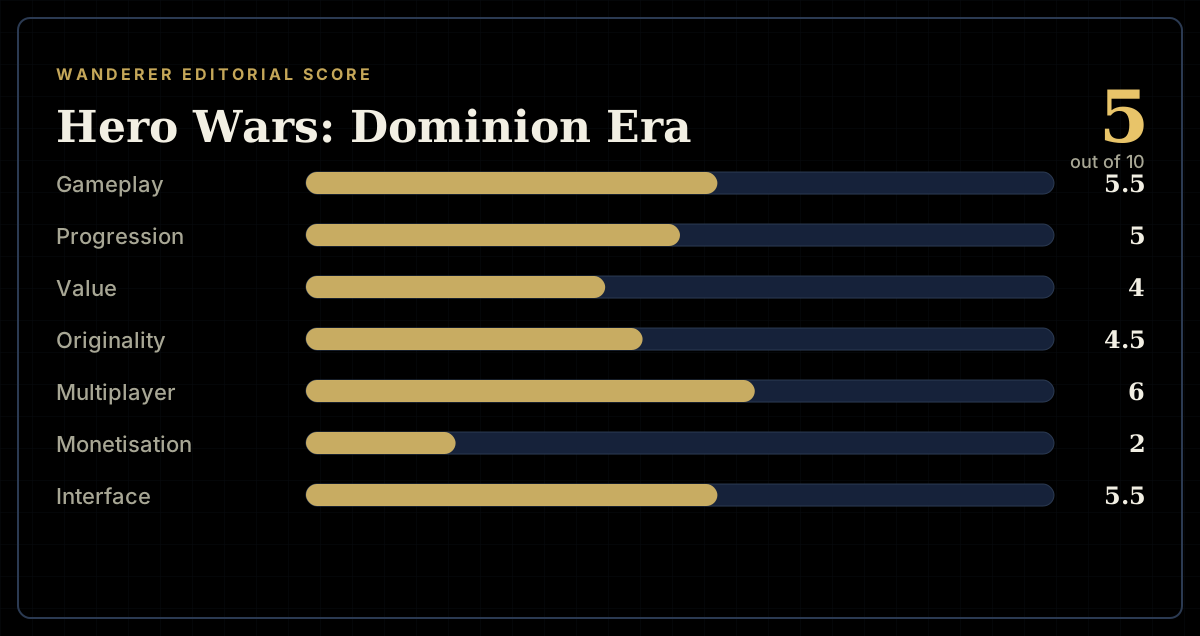
How the review scores each part of the gameWanderer Editorial -
The game at a glanceWanderer Editorial -
The short versionWanderer Editorial