Game review
Goblin Vyke: The Thief Tycoon
7 / 10
- Developer
- Art Thieves
- Publisher
- Art Thieves
- Released
- 1 May 2026
- Platforms
- Windows
- Genre
- Metroidvania / Shop Sim / RPG
- Monetisation
- Paid, one-time purchase. No premium currency, ads, subscriptions or DLC are listed on the store page.
- Players
- Single-player only. No multiplayer, co-op or online features are listed anywhere on the store page.
The short version
Goblin Vyke: The Thief Tycoon splits its goblin protagonist's life in two: nights spent sneaking through hand-drawn dungeons stealing from sleeping monsters and rival adventurers, days spent haggling over that loot behind the counter of a shop called Grabby's. Both halves are genuinely well made — the dungeons are tense, pixel-art Metroidvania platforming with a real stealth-theft minigame, and the shop haggling layers a persuasion meter and a price-multiplier dice mechanic onto what could have been a simple sell screen. The catch is that the two halves actively fight each other: a recurring debt payment forces the player to sell a specific item type to a specific customer every few in-game days, which turns dungeon runs from open exploration into shopping trips for whatever the ledger currently demands, and a save system that only checkpoints after scripted morning-and-evening events has cost more than one player a full session's progress. 1,367 Steam reviews sit at 70% positive — Mostly Positive rather than a higher tier — and the developer has visibly worked to soften the harshest of these complaints since launch, most notably cutting back the debt pressure that drove the loudest early criticism. What's left is an inventive, good-looking dual-loop RPG that never quite lets its two best ideas breathe at the same time.
Biggest strengths
- The core theft loop — sneaking past patrols, filling a limited backpack grid, judging when to cut a run short before a chase starts — is tense, well-animated pixel-art platforming rather than a simulation-lite afterthought bolted onto a shop game
- The shop-side haggling minigame gives selling real texture, running customer demands, a persuasion meter and a base-price-times-multiplier calculation rather than a flat sell button
- Full hand-drawn character portraits carry named-NPC dialogue scenes, a level of narrative presentation polish uncommon in a game built primarily around two gameplay loops
Biggest weaknesses
- A debt payment due roughly every three in-game days forces the player to prioritize whatever item type is currently owed and sell it to one specific customer type, which one reviewer described as turning "the dungeon experience" into "inventory management" rather than open-ended exploration
- The game saves only after scripted morning-and-evening NPC events rather than on demand, which one reviewer with 13.5 hours logged called "one of the worst save systems known to gaming," and multiple other reviews describe losing an hour or more of dungeon progress to it
- Global achievement data shows steep attrition through the back half of the content: 97.4% of players reach the first region, but only 3.7% reach the sixth shop tier and 2.7% run four franchise locations, suggesting most players don't see the later game at all
Who it's for: Metroidvania and dungeon-crawler fans who don't mind a shop-management layer imposing real structure — and real friction — on how they're allowed to explore, and who can tolerate an unforgiving, infrequent save system.
Our recommendation: Worth the NZ$23.49 for players drawn to the stealth-thief/haggling-merchant hook specifically, especially with the developer's post-launch patches easing the worst of the early debt pressure — but go in expecting the shop half to constrain the dungeon half more than the marketing suggests, and save often at the moments the game actually lets you.
7 / 10
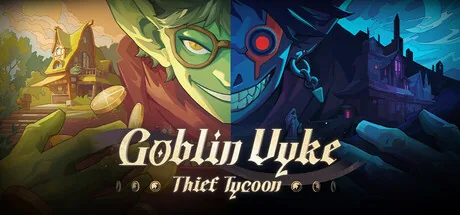
The best joke in Goblin Vyke: The Thief Tycoon is structural rather than written. By night the goblin Vyke breaks into dungeons and robs sleeping monsters blind; by day, that same goblin stands behind a shop counter haggling honest customers over the price of what got stolen the night before. It's a clean, funny premise for a game, and Art Thieves — a small studio releasing its first title here — clearly know it, judging by the amount of hand-drawn dialogue art spent on Vyke's double life. What's less clean is how the two halves interact once the debt collector shows up.
Sneaking, stealing, and a backpack that fills too fast
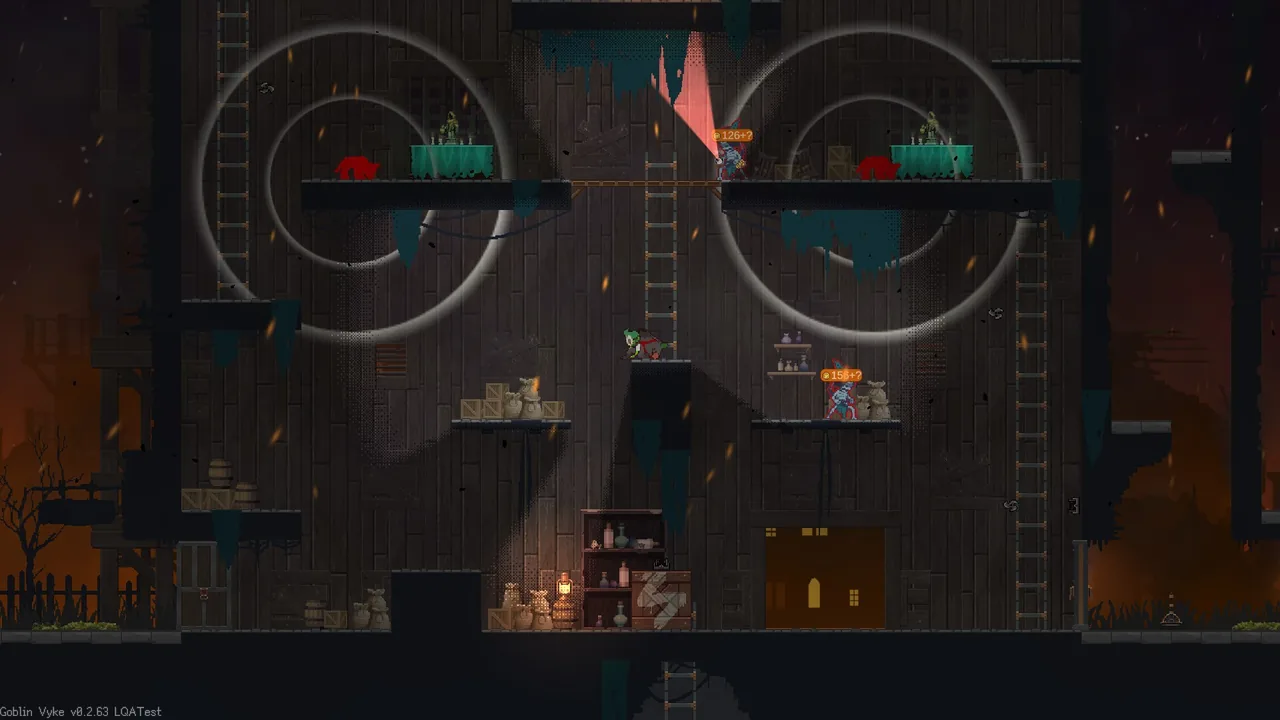
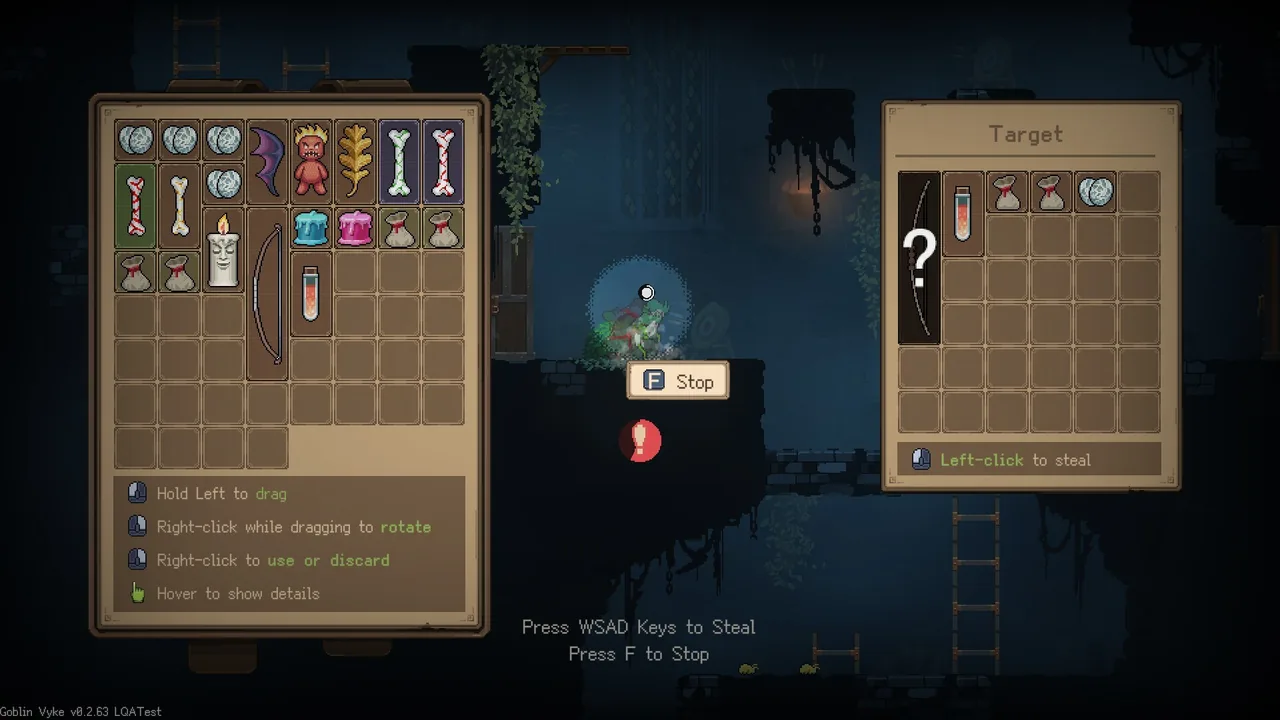
The dungeon half of the game is a proper 2D Metroidvania: ladders, patrol routes, a limited inventory grid that has to be managed in real time while sneaking past guards. Screenshots of the theft minigame show a WSAD prompt to physically pilfer an item while a target's alert meter climbs, with a clear "Stop" option to bail before getting caught — a real risk-versus-reward decision made under time pressure, not a menu you click through. Community tags back this up: Stealth sits at 145 votes, Dungeon Crawler at 120, Metroidvania at 126, ahead of Simulation's 105, which is a fair read of where the game's identity actually leans even though the shop side gets equal billing in the marketing.
The visual presentation matches the ambition. Dungeons are moodily lit pixel art with genuine platforming geometry — ladders, drop-throughs, layered parallax fire and fog — while story beats switch to full hand-drawn character portraits for named NPCs like the adventurer Bekka, offering side jobs and dialogue with real personality rather than templated fetch-quest text. That's a level of narrative polish a lot of games this size skip entirely in favor of pure mechanics.
Haggling as a real minigame
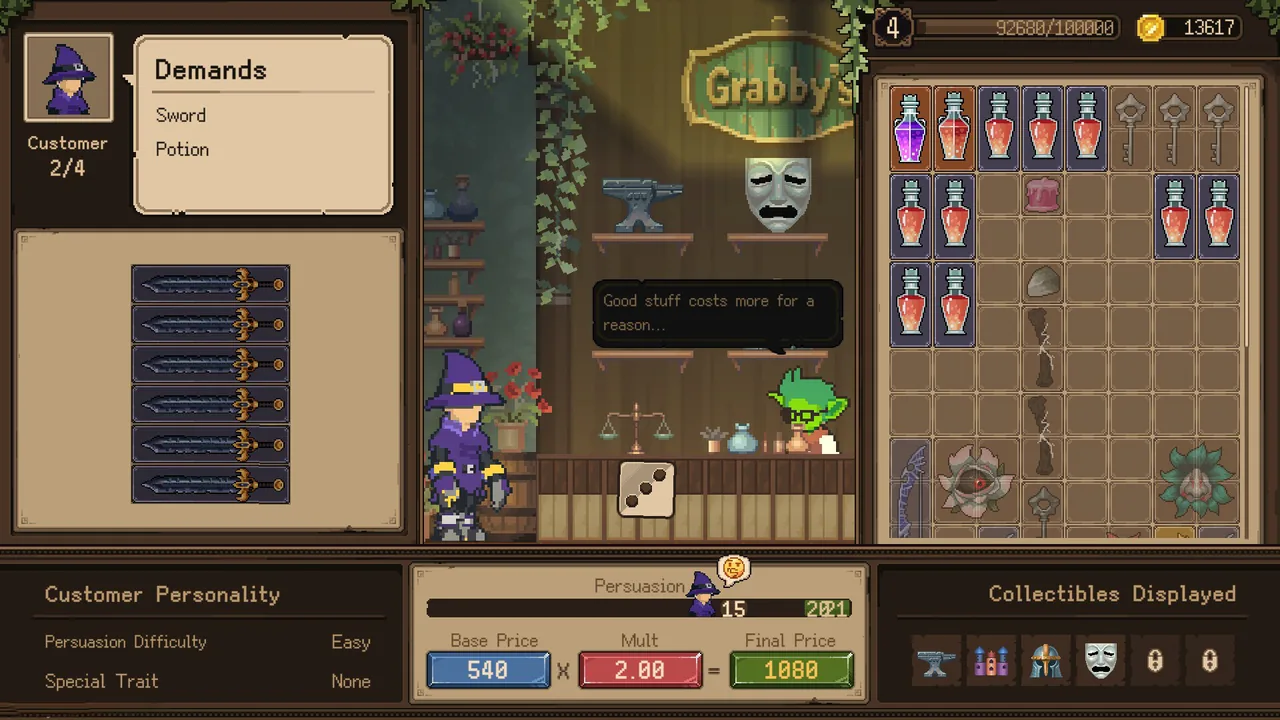
Selling the loot isn't a flat transaction either. The shop screen — a counter at "Grabby's" — tracks a customer's specific demands (a sword, a potion, whatever they're shopping for that visit), runs a persuasion meter the player has to work up through negotiation, and calculates a final price from a base value multiplied by however well that negotiation went, landing on genuinely different numbers depending on play rather than a fixed markup. It's a smart, tactile answer to a problem a lot of loot-focused RPGs never solve: making the act of selling interesting rather than a chore between the parts of the game that actually matter.
Where the two halves collide
The trouble starts with the game's economic clock. A debt or rent payment comes due roughly every three in-game days, and multiple reviewers describe it reshaping what a dungeon run actually is: rather than exploring for whatever's valuable or interesting, the player is told which item category the ledger currently needs and has to fill the backpack with specifically that, then sell it to the one customer type currently buying. One of the most-upvoted negative reviews — 93 helpful votes, posted six days after launch — put it plainly: the loop "is effective" on its own terms but "weakens the dungeon experience because you're doing inventory management" instead of exploring. Another early review, posted on launch day and ultimately refunded at 2.6 hours, listed the rent cycle alongside a string of smaller irritations — a "fart dash" sound effect undercutting tense chases, a bell charm that chimes constantly during inventory sorting — as evidence the game hadn't been tuned for how punishing its own pressure systems felt in practice.
To Art Thieves' credit, the patch history suggests they heard this. A news post titled "On Recent Feedback and Update Adjustments" went up two days after launch, followed by a run of hotfixes across the following two weeks, and at least one player review posted shortly after specifically credits an update with reducing "the mortgage" and calls the developers "responsive" with quick turnaround. That's the kind of post-launch course-correction that's worth crediting explicitly: the loudest specific complaint from opening week appears to have been directly, quickly addressed, which isn't something every small studio manages.
What the visible patch notes don't obviously touch is the save system, and that complaint arrived later and independently. A review posted six weeks after launch, with 13.5 hours logged and 114 helpful votes, calls it "one of the worst save systems known to gaming" — the game checkpoints only after scripted NPC events at morning and evening, meaning a crash or a bad death mid-dungeon can cost a full session's progress. That reviewer's read is that the restriction is deliberate, intended to prevent save-scumming; whether or not that's the actual design reasoning, losing real playtime to an unresponsive save system reads as a cost imposed on every player to solve a problem only some players would have caused.
A goblin with a conscience, sort of
The achievement list also hints at a moral-choice layer the store page doesn't foreground much. Alongside the region and shop-tier milestones sit entries like ChooseHonesty (30.6% of players), AuditWrong (39.3%), FailToPay (6.3%) and HappinessOrMoney (3.0%) — names that suggest Vyke isn't just automatically dishonest by default, but periodically faces a choice between the profitable option and the decent one, with the game tracking which way each player leans. That fits the Dark Humor tag riding at 77 community votes and gives the shopkeeper half of the game a bit more personality than "sell things for money": Grabby's isn't just a transaction screen, it's a stage for a goblin repeatedly deciding what kind of thief he's going to be. It's a small system by the numbers — HappinessOrMoney sitting at just 3.0% suggests either a rare, late-game decision or one most players resolve the same way — but it's the kind of detail that separates a game with a genuine point of view from one simply mashing two mechanics together for novelty.
Value and who should buy in
The positive side of the review ledger deserves equal weight. Reviewers who got past the opening friction log real hours: 28.6, 16.1, 34.1 — the kind of playtime that suggests the loop holds up once its rhythm clicks, not just goodwill from an interesting premise. One recommendation explicitly compares the game to Dave the Diver, a fellow day/night dual-loop hit, and comes down in Goblin Vyke's favor: "this game is in fact much better. It has more soul, doesn't feel repetitive." That's a strong claim from a genre neighbor with a much bigger budget and audience, and it lines up with what the screenshots show — a level of hand-drawn character art and systemic depth (the persuasion meter, the price-multiplier dice, the honesty-versus-profit tracking) that a lot of games in this price bracket don't attempt. At NZ$23.49 with no premium currency, ads or DLC pulling at the wallet beyond the sticker price, and a developer that has kept shipping fixes for months after launch rather than moving on immediately, this reads as a small studio's ambitious first swing that mostly connects — worth the money for the specific audience who wants exactly this hybrid, even though the achievement curve suggests plenty of buyers haven't stuck around to see it through.
How far players actually get
Steam's global achievement data gives a rare, hard number on where the drop-off happens. 97.4% of players who've earned any achievement reach the first dungeon region, and 87.8% survive their first death — both essentially universal, as onboarding milestones should be. From there the curve falls fast: reaching the third shop tier is down to 56.1%, the second dungeon region to 53.8%, the fourth shop tier to 33.8%, the third region to 32.7%. By the sixth and final listed shop tier, only 3.7% of players are still going, and only 2.7% have expanded to four franchise locations, the game's apparent late-game milestone. Read alongside a 34-hour review that counts just four dungeons in the entire game and describes the merchant minigame as static rather than evolving over a full playthrough, the achievement curve reads less like players losing interest gradually and more like a specific wall somewhere in the back half of the content — plausibly the same debt pressure and save-system friction the written reviews describe, compounding as the stakes rise.
The verdict
Both of Goblin Vyke's core ideas are good enough, individually, to carry a game. The dungeon-theft loop is tense and well-animated; the shop-haggling loop gives selling actual weight. Where the design falls short is in making the two coexist — right now the economic pressure of the shop side regularly overrides the freedom that makes the dungeon side interesting, and an unforgiving save system adds real cost to failure on top of that. A responsive developer has already softened the worst version of this problem since May, and the steady 70%-positive score across more than 1,300 reviews, holding roughly stable in the most recent 30 days, suggests most players who try it are finding enough here to recommend it despite the friction. At NZ$23.49 for a game with real production values — hand-drawn character art, tight pixel-art platforming, two genuinely distinct systems layered into one loop — that's a fair trade for players who go in accepting the shop clock is going to interrupt the dungeon crawling regularly, rather than expecting one to simply complement the other.
Pros and cons
Pros
- The core theft loop — sneaking past patrols, filling a limited backpack grid, judging when to cut a run short before a chase starts — is tense, well-animated pixel-art platforming rather than a simulation-lite afterthought bolted onto a shop game
- The shop-side haggling minigame gives selling real texture, running customer demands, a persuasion meter and a base-price-times-multiplier calculation rather than a flat sell button
- Full hand-drawn character portraits carry named-NPC dialogue scenes, a level of narrative presentation polish uncommon in a game built primarily around two gameplay loops
- The developer has shipped a steady stream of post-launch hotfixes and at least one update explicitly responding to player feedback on the debt system, reducing the mortgage pressure several early reviews singled out as the game's biggest problem
Cons
- A debt payment due roughly every three in-game days forces the player to prioritize whatever item type is currently owed and sell it to one specific customer type, which one reviewer described as turning "the dungeon experience" into "inventory management" rather than open-ended exploration
- The game saves only after scripted morning-and-evening NPC events rather than on demand, which one reviewer with 13.5 hours logged called "one of the worst save systems known to gaming," and multiple other reviews describe losing an hour or more of dungeon progress to it
- Global achievement data shows steep attrition through the back half of the content: 97.4% of players reach the first region, but only 3.7% reach the sixth shop tier and 2.7% run four franchise locations, suggesting most players don't see the later game at all
- Content is reported as limited at the top end, with one 34-hour review counting only four dungeons total and describing the merchant minigame as repetitive without much evolution across a full playthrough
Screenshots
-
Goblin Vyke: The Thief TycoonImage: Art Thieves via Steam -
Goblin Vyke: The Thief TycoonImage: Art Thieves via Steam -
Goblin Vyke: The Thief TycoonImage: Art Thieves via Steam -
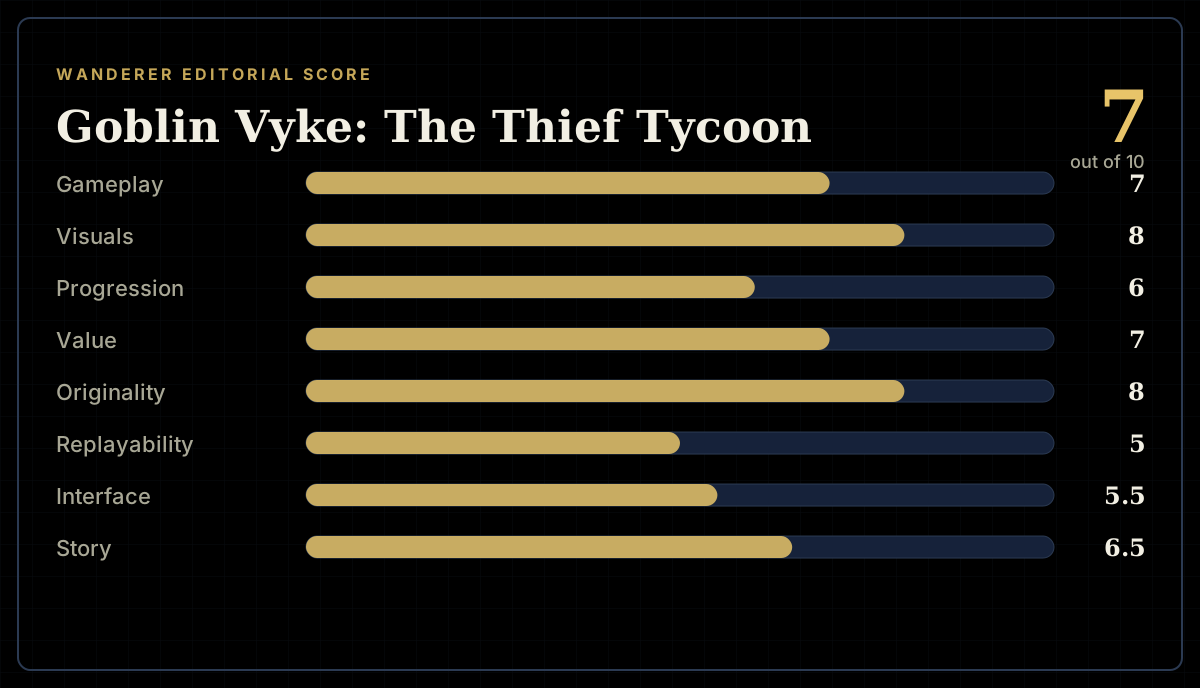
How the review scores each part of the gameWanderer Editorial -
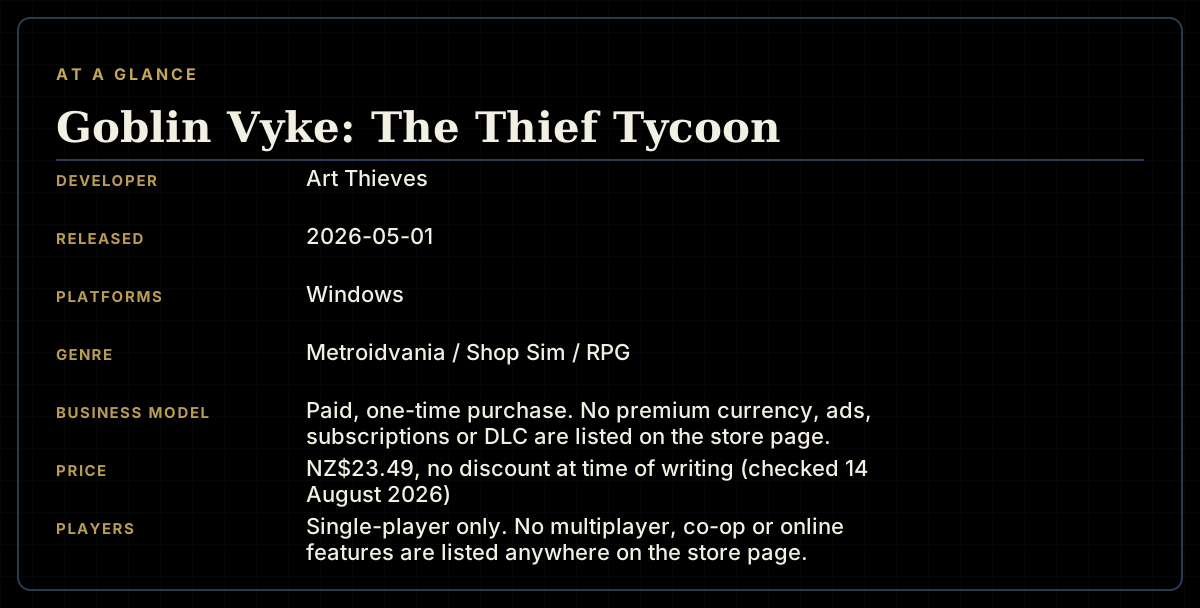
The game at a glanceWanderer Editorial -
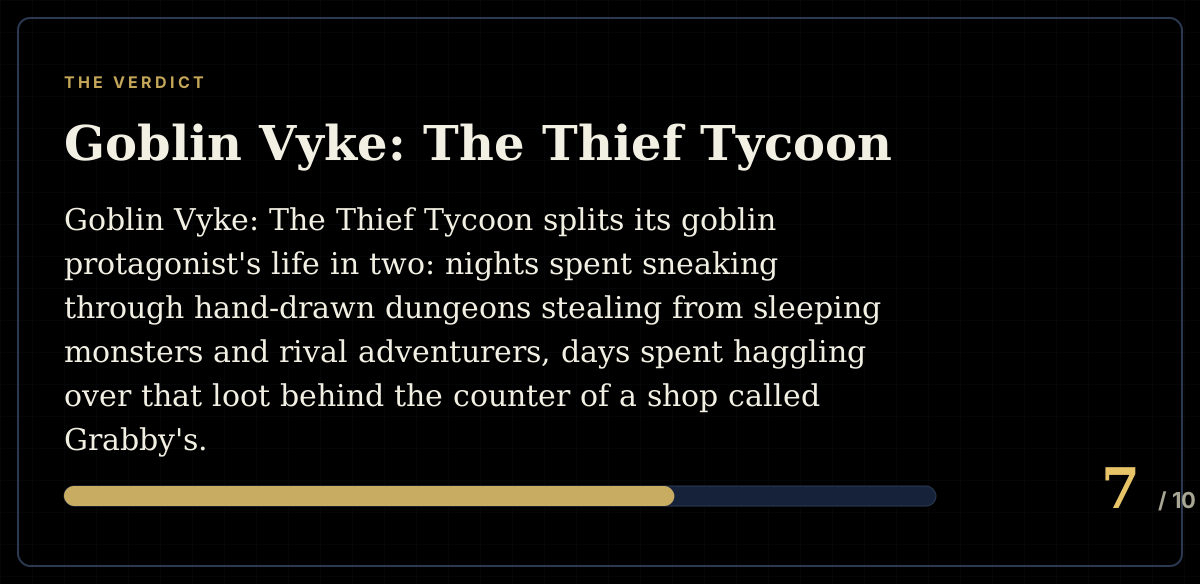
The short versionWanderer Editorial