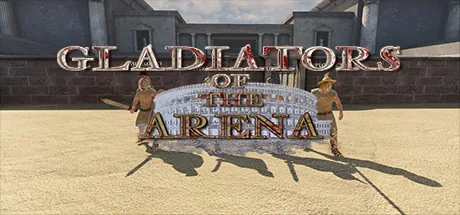
Game review
Gladiators Of The Arena
3.2 / 10
- Developer
- CreativeOvenStudio
- Publisher
- CreativeOvenStudio
- Released
- 2 March 2018
- Platforms
- Windows
- Genre
- Action, Hack and Slash, Simulation
- Monetisation
- One-time purchase, no in-app purchases listed on the Steam page
- Players
- None on the shipped Steam listing — Single-player and Family Sharing are the only two store categories; the developer's own website still describes multiplayer as a future goal
The short version
Gladiators Of The Arena is the surviving fragment of a much bigger pitch. CreativeOvenStudio's own website — frozen since 2013-2015 and still online today — describes an "upcoming" Unreal Engine RPG set in Imperial Rome around 200 A.D., with players rising as slaves or citizens through single-player and multiplayer arenas, and a Greenlight campaign built around funding multiplayer servers. What actually shipped on Steam in 2018 is a single-player-only hack-and- slash with a one-line store description and no Steam achievements. This review reads all three of the reviews the game has ever received: two are cautiously hopeful about the core combat and ask for basic features like a 1v1 custom match mode, and the third — the only detailed one — reports bugs and a settings menu that doesn't open.
Biggest strengths
- The core arena combat lands with at least part of its target audience — one of the game's only two positive reviewers called it "the only one out of all the gladiator games" they'd looked through and played that delivered the specific style of gladiator combat they wanted
- A free Steam demo exists, so the entire purchase decision can be made at zero cost
- Cheap by genre standards at NZ$10.29, with no additional in-app purchases layered on top
Biggest weaknesses
- Only three Steam reviews exist as of this writing, for a game released in March 2018 — two positive, one negative, and Steam doesn't generate a score badge from a sample that small
- The one detailed review (in Russian, translated here) calls the game buggy and specifically reports that the settings menu and "some game modes" cannot be accessed at all
- No Steam achievements exist for this game whatsoever
Who it's for: Genre completionists specifically chasing gladiator-combat games, and players curious about a shoestring passion project that never became what it set out to be. Not for anyone wanting the Imperial Rome RPG the developer's own marketing still promises.
Our recommendation: Try the free Steam demo first. At NZ$10.29 for a single-player sliver of a cancelled-in-place multiplayer vision, with a reported broken settings menu and no achievements, there's very little reason to buy the full game sight unseen.
3.2 / 10
A gladiator hack-and-slash built on an unfinished promise
Gladiators Of The Arena is a small, one-studio hack-and-slash about fighting in the arena as a Roman gladiator, released on Steam on 2 March 2018 by CreativeOvenStudio, a developer with no other title on the platform. The Steam store page sums the whole thing up in one line — "Hack and slash game" — and the fuller description underneath is barely longer: "This is a hack and slash game about gladiators that it has survivalism and RPG features." That sentence, grammatical hiccup and all, is the entire pitch a buyer gets before paying NZ$10.29.
It would be easy to review that one-liner as the whole story: a cheap, threadbare indie combat game with almost no reviews to lean on. But CreativeOvenStudio's own official website tells a very different, much larger story about what this game was supposed to be — and the gap between the two is the most useful thing this review can put in front of a prospective buyer.
What the developer promised, and what actually shipped
The studio's official site, gladiatorsofthearena.org, is still live today. It describes "GOTA: Gladiators of the Arena" as "an upcoming role playing hack slash game" built in Unreal Engine and set around 200 A.D. in northern Italy near the Alps, during Imperial Rome. Players would rise through the ranks as either slaves or citizens, with the fighting system as the game's stated core feature alongside gore effects and RPG progression. Crucially, the site describes both single-player and multiplayer modes, and discusses a Steam Greenlight push specifically framed around getting Valve's approval to fund multiplayer server infrastructure. The page says the game is "in alpha stage." Its copyright notice reads "2013-2015." There is no blog, changelog or roadmap with a later date anywhere on it.
The Steam listing that actually launched in 2018 tells a smaller story. Its only two store categories are Single-player and Family Sharing — there is no multiplayer category, no mention of servers, no slave-or-citizen career track described anywhere on the page. Whatever became of the multiplayer ambition the Greenlight campaign was built around, it isn't visible in what shipped. Buried in the storefront JSON is a trailer clip literally titled "Gladiaotors OF The Arena Trailer Early Acces" — misspelled and referencing Early Access despite the eventual release never carrying that tag — a small but telling sign of a marketing presence that was never tidied up after the project's shape changed. None of this proves anything about why the multiplayer version never arrived, but for a buyer deciding whether to trust the promise on the tin, the honest answer is that the tin currently on sale is not the tin the developer's own website is still advertising.
What the only three reviews say
At time of writing, Gladiators Of The Arena has exactly three Steam user reviews — two positive, one negative — logged across more than eight years since launch. That's far too small a sample for Steam to generate a review-score badge at all, but it is also the entire record that exists, so all three are worth reading in full rather than summarising away.
Both positive reviews are cautiously hopeful rather than enthusiastic. The longer one, at 163 minutes of playtime, calls the game "defiantly a work in progress but a good one" and says that out of every gladiator game the reviewer had looked through and played, this was "the only one that delivered in the style of a gladiator" they were looking for — a genuinely useful data point for anyone specifically chasing that niche. The same review asks the developer to add a 1v1 custom match option. The shorter positive review, at 20 minutes, asks for more settings, gladiator customisation and a "classic arena with more spectators." Read together, both reviewers are describing a game that gets its core combat feel right but is missing features a buyer would reasonably expect a finished release to already have.
The negative review is the only one of the three that goes into specifics, and it's the most important one to weigh. Written in Russian and logged at 110 minutes of playtime, it translates to: "the game is interesting, but has many bugs, one of which is that it's impossible to get into the settings and some game modes; wish they'd polish it." A settings menu that doesn't open, and game modes that are inaccessible, are not minor complaints — they're basic functionality, and they line up with the smaller positive reviews' requests for "more settings" rather than contradicting them.
No achievements, a very small footprint
Two smaller but checkable facts round out the picture. Steam's global achievement percentages endpoint returns nothing at all for this app, consistent with no achievement list existing for it — an unusual gap for a game with stated RPG progression. And SteamSpy's owner estimate for the game sits at a wide, largely uninformative "0 to 20,000," alongside 48 followers — numbers that, read next to a three-review total after eight-plus years, point to a genuinely small audience rather than a hidden hit Steam's review system just hasn't caught up with.
Final verdict
There is a real, if faint, positive signal buried in Gladiators Of The Arena: at least one player went looking specifically for a game that captured the feel of gladiatorial combat and says this is the one that did it, out of everything else that player tried. That's worth something, and the free Steam demo means nobody has to take this review's word for it before deciding whether that core feeling is worth NZ$10.29. But everything else this review can document argues for caution. The developer's own official website still advertises a bigger, unfinished, multiplayer Imperial Rome RPG that never materialised in the shipped Steam version; the only detailed review of the three that exist reports a broken settings menu and inaccessible game modes; there are no Steam achievements at all; and both of the positive reviewers are asking, years after release, for features that sound like they belong at launch rather than after it. 3.2 reflects a game whose promise, by its own developer's telling, was considerably larger than what a buyer can actually purchase today.
Pros and cons
Pros
- The core arena combat lands with at least part of its target audience — one of the game's only two positive reviewers called it "the only one out of all the gladiator games" they'd looked through and played that delivered the specific style of gladiator combat they wanted
- A free Steam demo exists, so the entire purchase decision can be made at zero cost
- Cheap by genre standards at NZ$10.29, with no additional in-app purchases layered on top
- Family Sharing is enabled on the Steam listing, lowering the cost of trying it within a household that already owns it
Cons
- Only three Steam reviews exist as of this writing, for a game released in March 2018 — two positive, one negative, and Steam doesn't generate a score badge from a sample that small
- The one detailed review (in Russian, translated here) calls the game buggy and specifically reports that the settings menu and "some game modes" cannot be accessed at all
- No Steam achievements exist for this game whatsoever
- Both positive reviewers are explicitly asking for features that sound like launch basics — a 1v1 custom match mode, gladiator customisation, a "classic arena with more spectators" — which is not what a reviewer expects to still be requesting after a full release
- The developer's own official website, still live today, describes an entirely different and much larger game than what shipped: an "upcoming," "alpha stage" Unreal Engine RPG with slave-or-citizen progression and multiplayer arenas, pursuing Steam Greenlight specifically to fund multiplayer server infrastructure. None of that multiplayer promise appears anywhere on the actual 2018 Steam listing, which is single-player only
- Store-page system requirements list the minimum OS simply as "v 1" and tell players "you should get windows 7," and the official description contains a grammatical error ("survivalism and RPG features") — small details, but consistent with a page that was never revisited after launch
- This is CreativeOvenStudio's only release on Steam, with no other titles and no visible post-launch update history or announcements found for this one
Screenshots
-
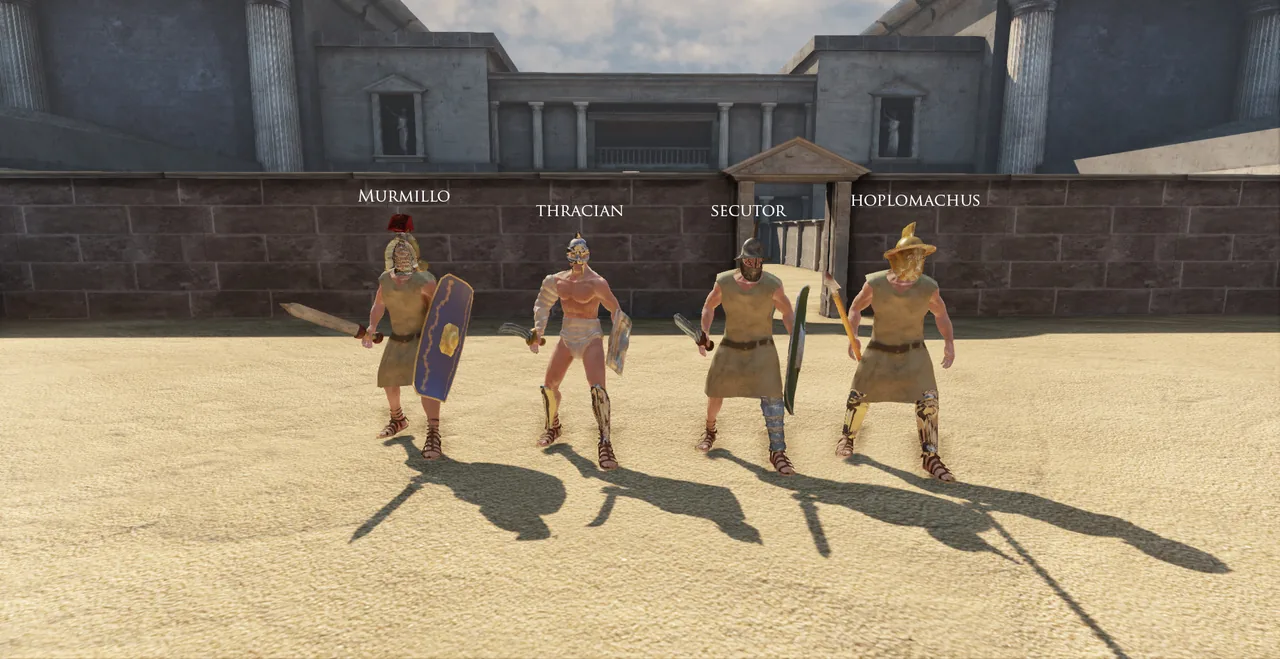
Gladiators Of The ArenaImage: CreativeOvenStudio via Steam -
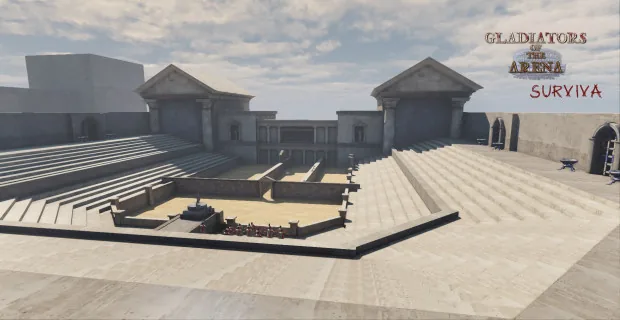
Gladiators Of The ArenaImage: CreativeOvenStudio via Steam -
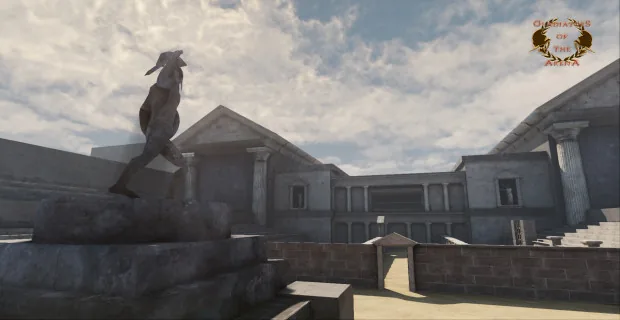
Gladiators Of The ArenaImage: CreativeOvenStudio via Steam -
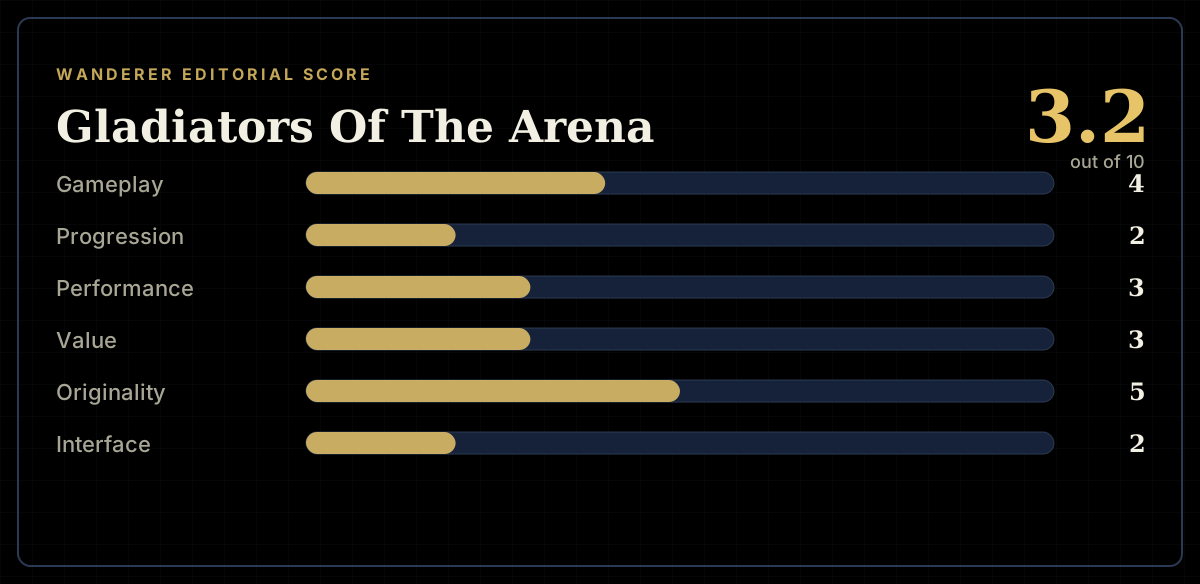
How the review scores each part of the gameWanderer Editorial -
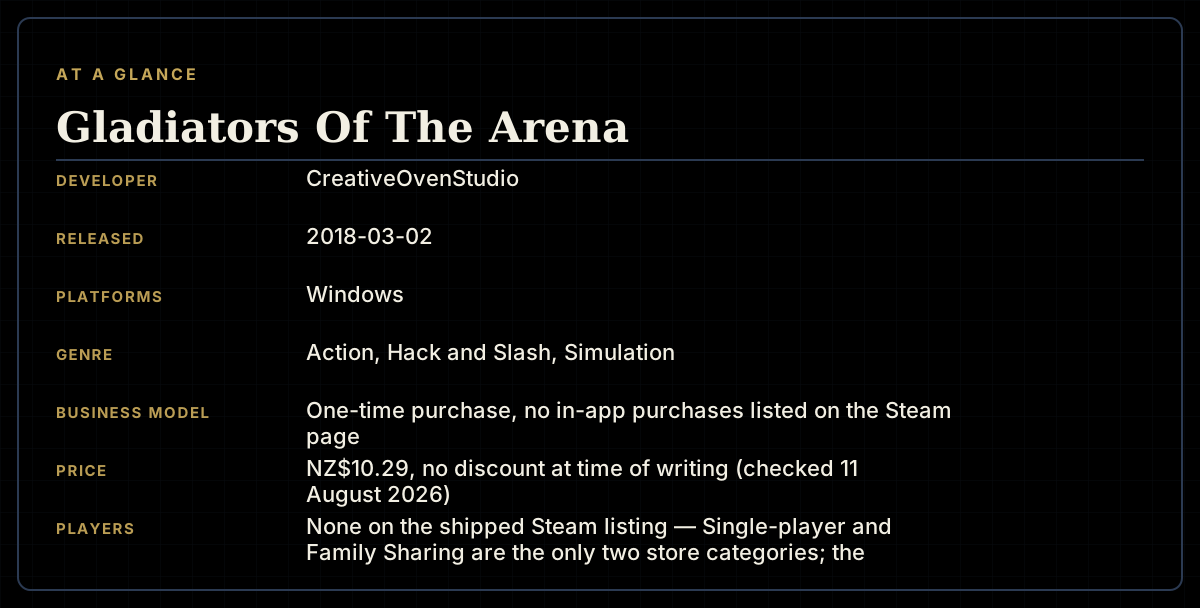
Gladiators Of The Arena at a glanceWanderer Editorial -
The short versionWanderer Editorial