Game review
Hack and Slash Fury
3.7 / 10
- Developer
- juan_poder_azure
- Released
- 5 March 2025
- Platforms
- Windows
- Genre
- Action / Adventure
- Monetisation
- One-time purchase plus 34 separate paid DLC listings, including a premium in-game currency
- Players
- Listed as supporting online PvP and cross-platform multiplayer, alongside a single-player story campaign
The short version
Hack and Slash Fury is a solo developer's swing at a AAA-shaped character-action game: branching combo routes, a chargeable attack, a fury-meter super mode, a swappable FPS/TPS camera and a claimed 10-15 hour, fully voiced, heavy-metal-scored story campaign, all for NZ$35.99. That's a genuinely ambitious feature list for a one-person credit, and it deserves to be said plainly before anything else.
What follows it undercuts the pitch. The tiny review corpus that exists agrees the combat itself doesn't deliver on the "deep combo system" the store page promises, the storefront text is riddled with the kind of grammar and spelling errors that suggest nothing here was proofread, and the DLC catalog runs to 34 separate paid listings — a premium currency sold across six tiers, five of which are each duplicated into five identically priced SKUs, plus standalone paid unlocks for the game's own cinematics, stages and armor sets. The store page insists "this game includes all downloadable or purchasable content for free inside the game," which makes the 34-item DLC list sitting directly below that sentence read less like reassurance and more like a tell.
Biggest strengths
- An unusually ambitious feature set for a solo-developer budget title — charge attacks, a fury-meter super mode, branching combo routes and a togglable FPS/TPS camera
- A fully original heavy metal and orchestral soundtrack, plus voice-acted cinematics that even a lukewarm review singles out as "truly inspired"
- A genuinely long claimed campaign (10-15 hours) with full controller support
Biggest weaknesses
- The most detailed favorable review still describes the combos as "basically the exact same move" repeated, and says players will spend real time "fighting the controls"
- Storefront and marketing text is full of unproofed grammar and spelling errors ("charachters," "tiranity," "Anihilate," "withouth"), a bad sign for a $36 game built on story and dialogue
- 34 separate paid DLC listings sit on top of the base price, including a premium currency ("Magic Stones of Sacred Light") whose five paid tiers are each listed as five near-identical SKUs at identical prices, and $7.39 unlocks for the game's own cinematics/stages and armor/suit sets
Who it's for: Genre completionists curious about a lone developer's very ambitious hack-and-slash experiment, and players who enjoy "so bad it's fascinating" cult curios — not a fit for anyone who wants a polished, trustworthy character-action game.
Our recommendation: Skip it, or watch footage first — do not buy on the strength of the feature list alone.
3.7 / 10
The pitch
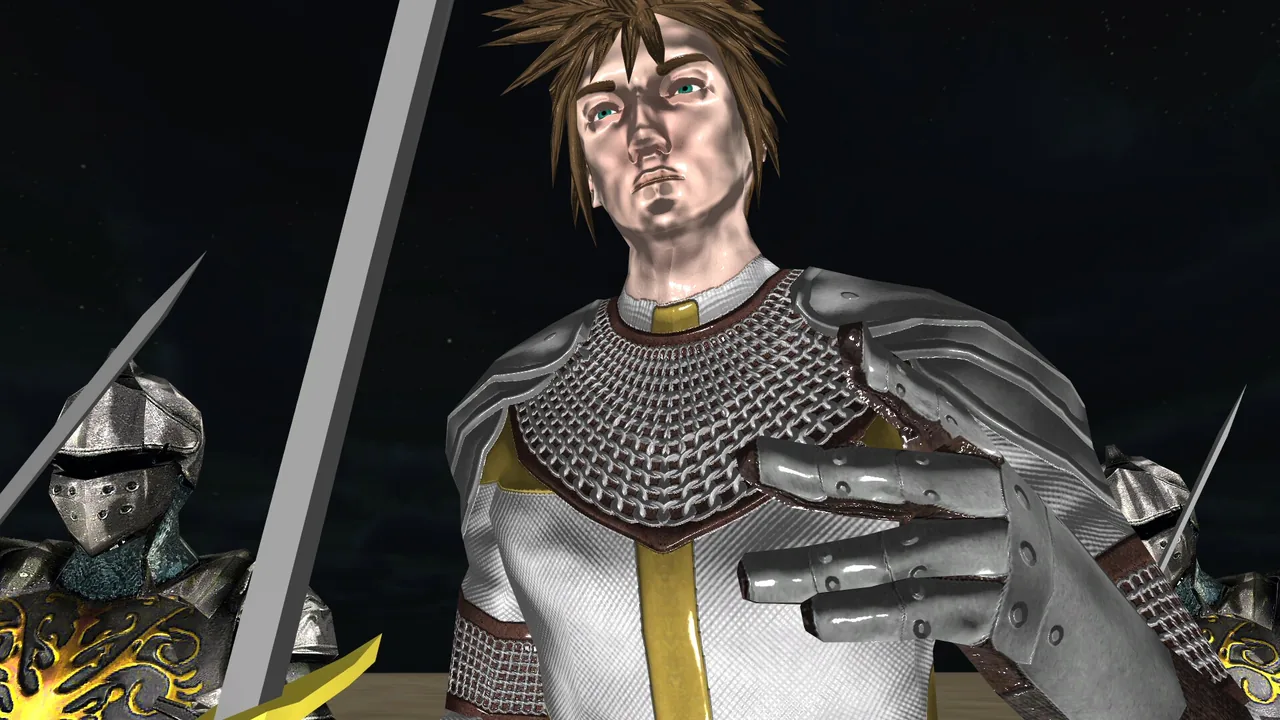
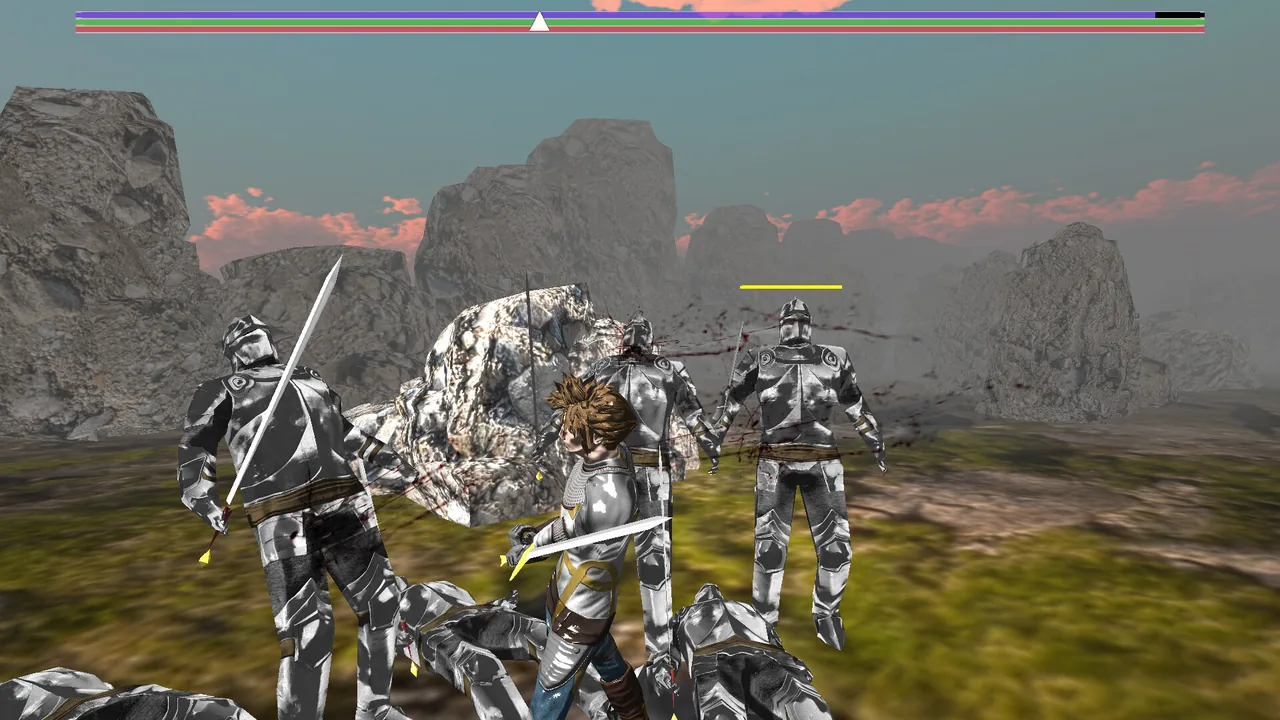
Hack and Slash Fury is a single-developer action game that wants to sit next to the genre's big names: Devil May Cry-style combo routes, a chargeable heavy attack that can stagger an enemy if timed correctly, a "Fury Mode" that trades precision for speed and builds toward a slow-motion finishing move, and a camera you can swap between a third-person action view and a first-person mode mid-fight. The store page frames the whole thing around a "True Deep Action" pitch aimed squarely at players tired of "easy simple games withouth cinematics" — its words, not a typo introduced here; the storefront copy is written that way throughout. Wrapped around the combat is a claimed 10-15 hour, fully voice-acted story campaign, told through cinematics after every stage, scored with an original heavy metal soundtrack for the fighting and orchestral pieces for the cutscenes. For a solo credit (juan_poder_azure is listed as both developer and publisher), that is a lot of scope to promise at once.
Combat that doesn't land the pitch
The problem, according to the small handful of people who have actually reviewed it, is the gap between that pitch and the combat itself. The most detailed review in the corpus — from a player with over 10 hours logged, so not a bounce-off — puts it plainly: after "getting flashbanged by the control screen," the combos turn out to "basically boil down to the exact same move" repeated, and a meaningful chunk of playtime goes to "fighting the controls" rather than the enemies. That review still recommends the game, but specifically as something to stream for friends as "the funny bad game" — not as a combat system worth engaging with on its own merits. None of the available reviews dispute that read; nobody in the corpus defends the combo system as actually deep.
Cinematics, voice acting and a soundtrack people do credit
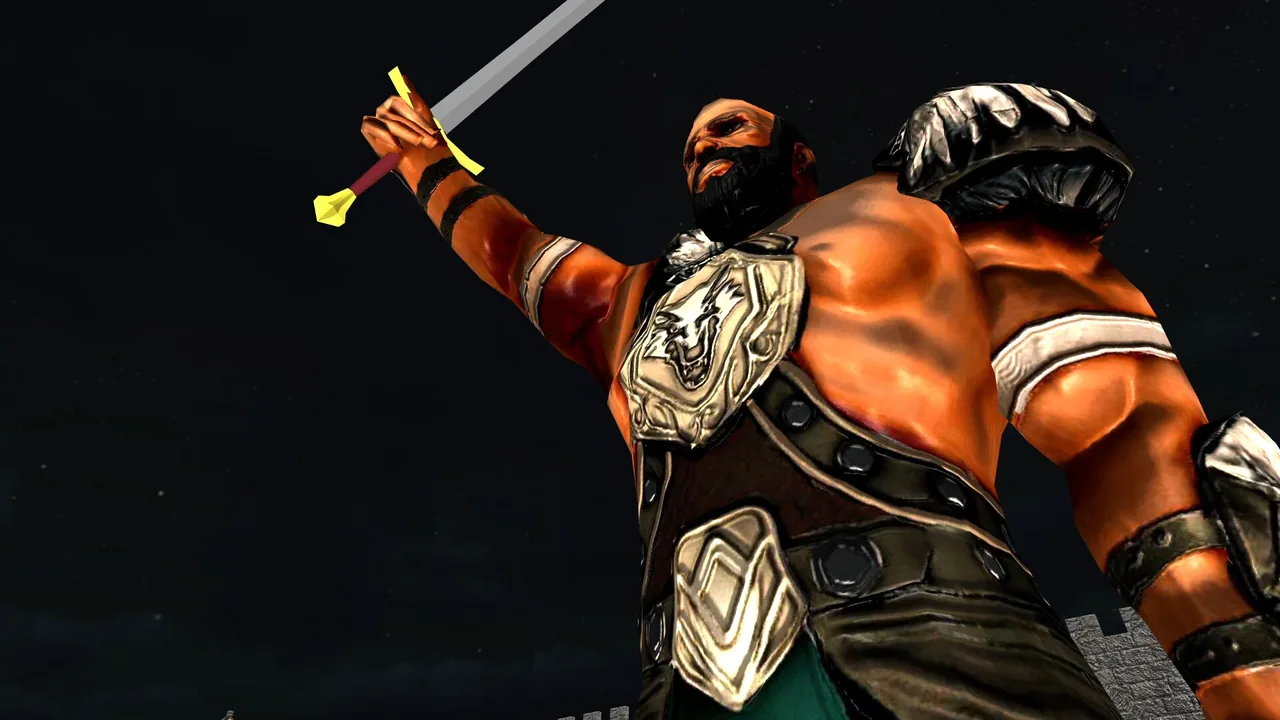
The story presentation gets a more mixed hearing. One review calls the visuals and story "really entertaining" and the voice acting "truly inspired," and frames the whole game as more of "an exploration of whatever the hell the developer cooked up" than a conventional action game — meant as a compliment. The same detailed review quoted above concedes the cutscenes are "entertaining to a point" before adding they "get quite repetitive at times and seem to drag" across roughly three hours of cinematics. The two threads agree on the same shape: distinctive, personal, over-long, and worth seeing once rather than something built for replay value.
What seven reviews and 47 achievements actually show
This review reads every negative review the game has, because there are only two: "there is no universe in which this is worth $25" and a one-word "dog." The full English-language corpus at time of writing is seven reviews total (five positive, two negative) — far too few for Steam to assign a review-score bracket at all. Worth noting for anyone reading the raw thumbs-up count: at least two of the five "positive" reviews are backhanded rather than enthusiastic, including one that reads in full: "This game cured my autism, but in return I have lost 1/8th of my soul." Treat the positive score with real caution; it is not the same signal as a game with hundreds of reviews sitting at "Mostly Positive."
Steam's public achievement data adds a more objective data point. Of 47 tracked achievements, the first is earned by 91.1% of players, but the second drops to 41.4%, and from the third achievement onward the completion rate settles into a long plateau mostly between 17.5% and 33.7%, with the final story achievements sitting at the low end of that band (17.5-17.7%). Read together: a large share of buyers try the opening and stop, but the minority who push past the first checkpoint tend to stick around rather than dropping off further — the campaign doesn't hemorrhage players a second time the way the first act does.
The DLC catalog is the real story
Set the combat aside, and the more consequential finding here is the storefront itself. Hack and Slash Fury's base game sits at NZ$35.99, a real price for a solo-developer title. Attached to it, at time of writing, are 34 separate paid DLC listings — an unusually large number for any game this size, let alone a one-person project. They break down into three groups:
- A premium currency sold in duplicated tiers. "Magic Stones of Sacred Light" is sold in six
denominations, from 5 stones (NZ$1.49) up to an "Infinite Magic Stones" pack at NZ$28.99 — nearly the price of the base game on its own. Five of those six tiers (every one except the Infinite pack) are each listed not once but five times, as separate store pages suffixed B, C, D and E, all at the identical price and, as far as the listings show, identical content. That is 26 of the 34 DLC entries accounted for by what amounts to six actual products.
- Paid unlocks for content the base game already advertises. "Unlock All Cinematics and
Stages" (NZ$7.39) and "Unlock All Armors and Suits" (NZ$7.39) sell access to content that the store page's own story pitch — "a full canonic Story Mode," "tons of Scenarios," cinematics after every stage — presents as the reason to buy the game in the first place.
- Miscellaneous paid extras, including "Attack Speed Selector" (NZ$4.49), "Bribe Hidalgo"
(NZ$4.49), "Developer Secrets" (NZ$4.49), "Premium Sky" (NZ$4.49), and two cosmetic armor packs, "Manga Waifu Armor" and "Manga Waifu Advanced Armor" (NZ$4.49 each).
The base game's own description carries this line: "*This game includes all downloadable or purchasable content for free inside the game." If that's accurate, none of the 34 listings above should be necessary to see everything Hack and Slash Fury has to offer — which raises the obvious question of why they exist as paid products at all, let alone why a currency pack needs five identically priced duplicates of itself. Whatever the reason, a buyer scanning the store page sees a wall of DLC before they see any evidence it's optional.
Value
At NZ$35.99 for the base campaign alone, judged purely on the ambition of its feature list against its price, Hack and Slash Fury is at least in the right neighbourhood for a full-length singleplayer action game. Judged against what the review corpus actually says about the combat holding up that ambition, and against a DLC catalog that looks nothing like a typical indie's cosmetic add-ons, the asking price is much harder to justify. A buyer who wants the "everything is free in-game" promise to be true has no way to verify it before paying full price, since none of the seven existing reviews mention needing (or not needing) any of the 34 add-ons to finish the story.
Final verdict
There's a real, distinctive game buried in here — a solo developer's earnest attempt at a cinematic, heavy-metal-scored character-action title, with more mechanical ideas (charge attacks, a fury meter, a swappable camera) than plenty of bigger-budget genre entries bother with. That ambition is worth acknowledging. But the small handful of people who've reviewed it agree the combat doesn't deliver on its own "deep combo system" pitch, the writing throughout is visibly unproofed, and the storefront around the game is dominated by a DLC catalog — 34 listings, a currency duplicated into near-identical SKUs, paid unlocks for content the game claims is already free — that no honest one-time purchase should need. Hack and Slash Fury earns credit for scope and loses far more for how it's sold.
Pros and cons
Pros
- An unusually ambitious feature set for a solo-developer budget title — charge attacks, a fury-meter super mode, branching combo routes and a togglable FPS/TPS camera
- A fully original heavy metal and orchestral soundtrack, plus voice-acted cinematics that even a lukewarm review singles out as "truly inspired"
- A genuinely long claimed campaign (10-15 hours) with full controller support
- The base game is a one-time purchase, and the store page states everything is also earnable for free in-game
Cons
- The most detailed favorable review still describes the combos as "basically the exact same move" repeated, and says players will spend real time "fighting the controls"
- Storefront and marketing text is full of unproofed grammar and spelling errors ("charachters," "tiranity," "Anihilate," "withouth"), a bad sign for a $36 game built on story and dialogue
- 34 separate paid DLC listings sit on top of the base price, including a premium currency ("Magic Stones of Sacred Light") whose five paid tiers are each listed as five near-identical SKUs at identical prices, and $7.39 unlocks for the game's own cinematics/stages and armor/suit sets
- Only 7 English-language Steam reviews exist at time of writing, and several of the "positive" ones are backhanded rather than genuine endorsements
Screenshots
-
Hack and Slash FuryImage: juan_poder_azure via Steam -
Hack and Slash FuryImage: juan_poder_azure via Steam -
Hack and Slash FuryImage: juan_poder_azure via Steam -
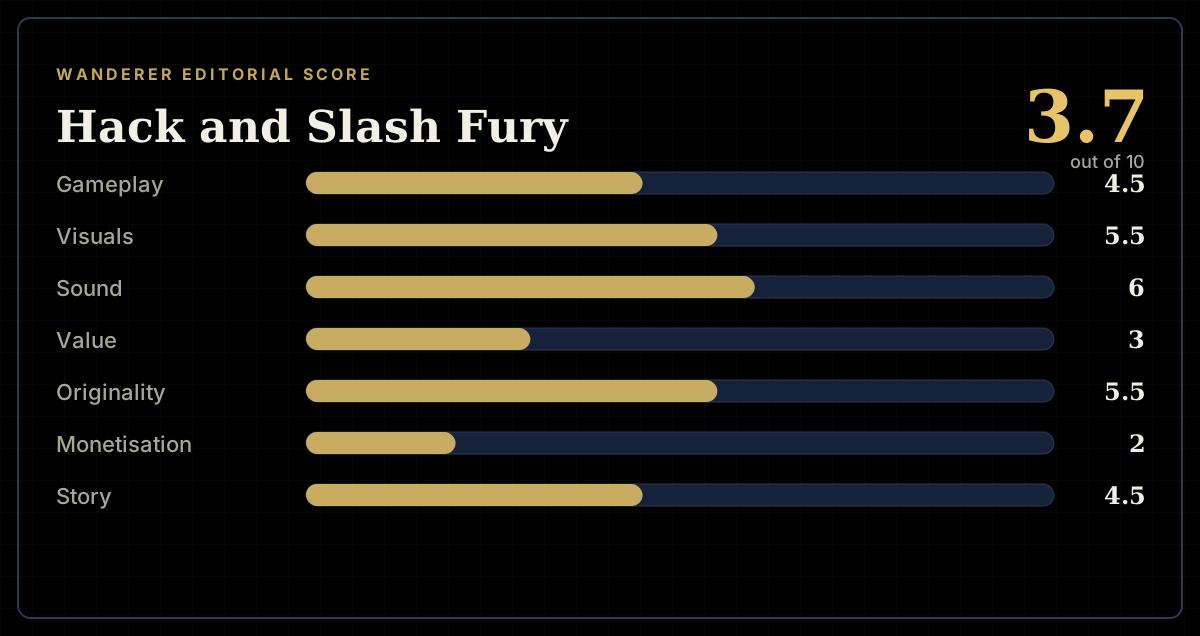
How the review scores each part of the gameWanderer Editorial -
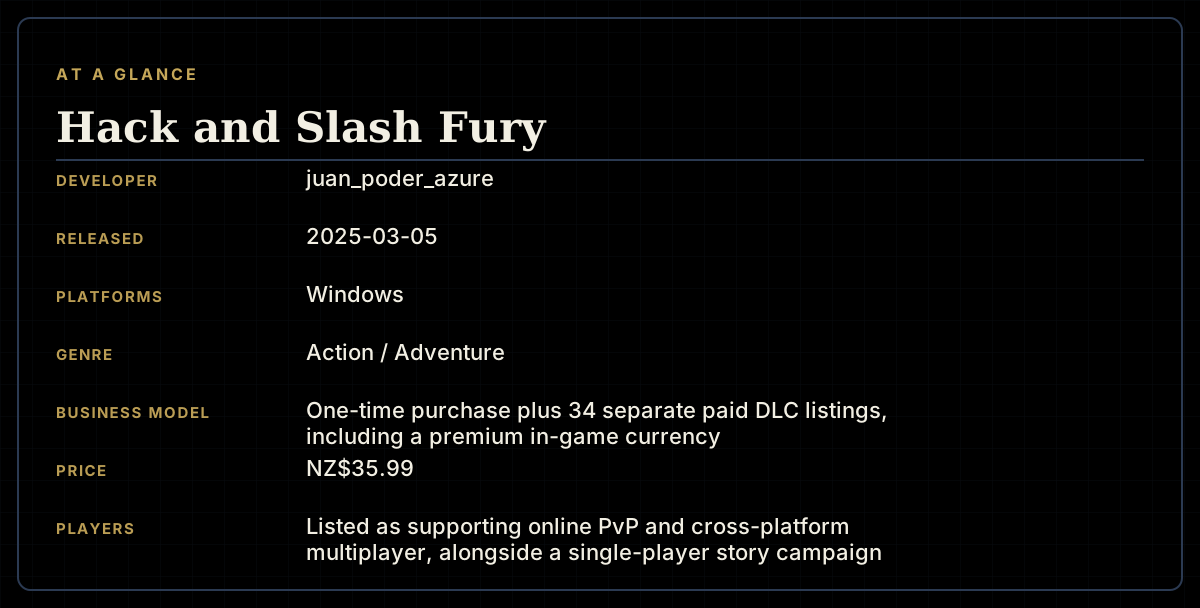
The game at a glanceWanderer Editorial -
The short versionWanderer Editorial