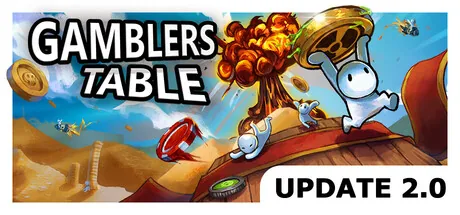
Game review
Gamblers Table
6.5 / 10
- Developer
- greenpixels; Bossforge
- Publisher
- greenpixels; Bossforge
- Released
- 11 January 2026
- Platforms
- Windows, Linux
- Genre
- Incremental
- Monetisation
- One-off paid purchase with an optional cosmetic DLC pack
- Players
- Single-player
The short version
Gamblers Table takes the reset-for-more incremental formula Cookie Clicker popularized and reskins it as a tabletop coin game: flip for cash, flip for skull tokens, spend the skulls on a capsule machine that dresses your automated helpers in silly hats. For the first few hours it's genuinely compulsive — the animation and sound design sell every flip, and watching a crew of tiny minions scurry around a table full of spinning coins has real charm.
The trouble starts once the numbers get big enough to expose the maths underneath. A progression-breaking mechanic tied to copper coins makes the higher-tier coins the game keeps selling you almost pointless, the prestige reset asks for hours of grinding per point and then hands out upgrades that can work against each other, and there's no undo on purchases that can set a run back significantly. It's a good five-dollar distraction that runs out of ideas well before it runs out of numbers.
Biggest strengths
- Coin-flip animation, physics and sound design make the core click feel satisfying long after the numbers stop meaning much
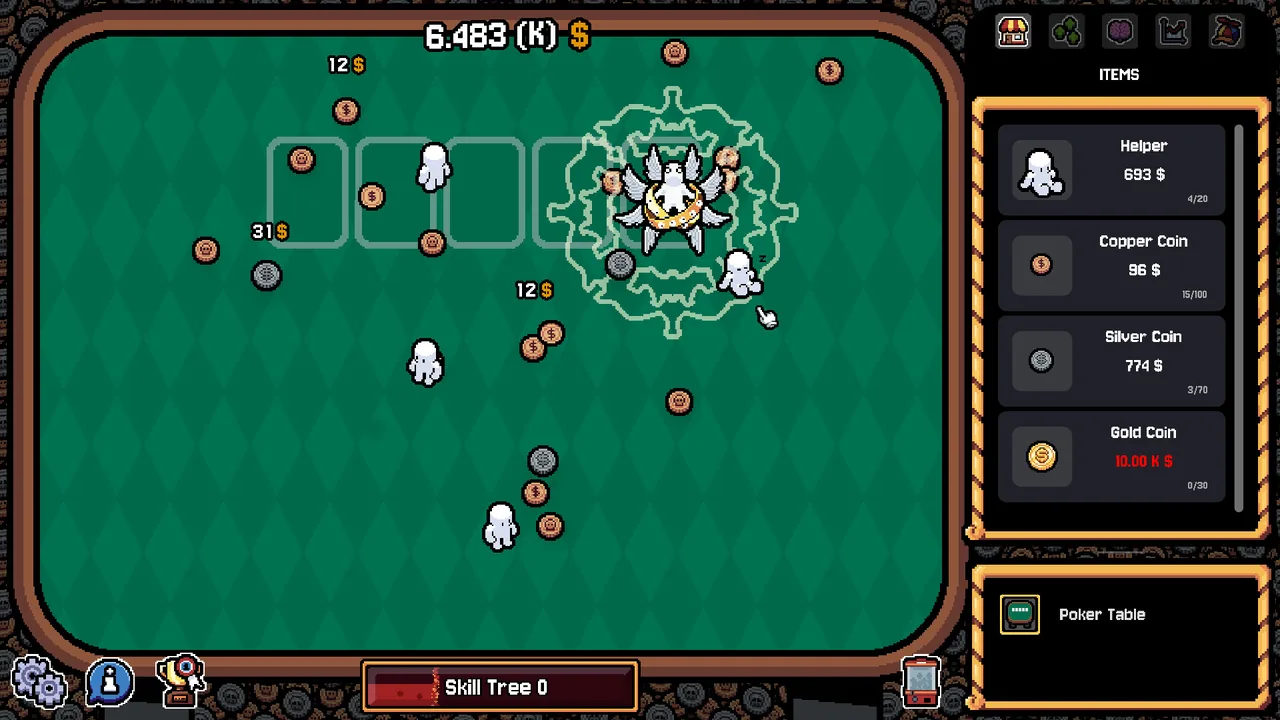
- The minion helpers are genuinely charming — hiring more, watching them scurry and occasionally doze off on the table gives the automation stage real personality
- 149 collectible hats (plus 32 more in the optional Supporter Pack), including golden and rainbow variants, give the cosmetic side actual depth without touching real-money odds
Biggest weaknesses
- A copper-coin "oxidation" mechanic reportedly breaks the coin economy, making silver, gold and diamond coins — the game's whole sense of tiered progression — almost worthless next to just stacking copper
- Prestige resets take hours of grinding for a single point, and some of the resulting upgrades actively work against the table's own bonuses rather than compounding them
- The prestige allocation screen offers little guidance, so a first-time reset plays out as a guess rather than a plan
Who it's for: Incremental fans who want something to run on a second monitor for a weekend, not players looking for a Cookie Clicker-length commitment.
Our recommendation: Worth it on a sale for a few sittings; go in expecting a short, pretty distraction rather than a game with staying power.
6.5 / 10
The pitch, and what it actually is
Gamblers Table wants you to notice the felt-green table, the casino typeface and the word "gambler" in its own title before you've flipped a single coin. It's a deliberate misdirection. Nothing here runs on real money. You click a coin, it spins, and it lands on one of two faces — a dollar sign pays out currency, a skull pays out a token. That's the entire wager, and the only thing riding on it is progress inside a single-player save file. The skull tokens buy spins on a capsule machine that hands out cosmetic hats for the little automated helpers you hire later, and there is no way to convert real money into better odds, more tokens or rarer hats. Whatever "gambling" is happening here is purely aesthetic — a costume borrowed from casino iconography to dress up what is, mechanically, a Cookie Clicker descendant with a coin-flip skin. Anyone worried this is a stealth gacha with a cash shop bolted on can relax; the only currency involved is time.
That distinction matters, because it's the smartest thing the game does. The skull-token loop gives you a second resource to chase alongside money, and unlike most incrementals' bolted-on achievement systems, it actually changes what you're looking at on screen — 149 hats, expanded to 181 with the optional Supporter Pack DLC, including rare golden and rainbow variants that show up on the minions wandering the table. It's a reward track that's purely for your own amusement, priced once, and never nagged at you again.
The loop, before it breaks
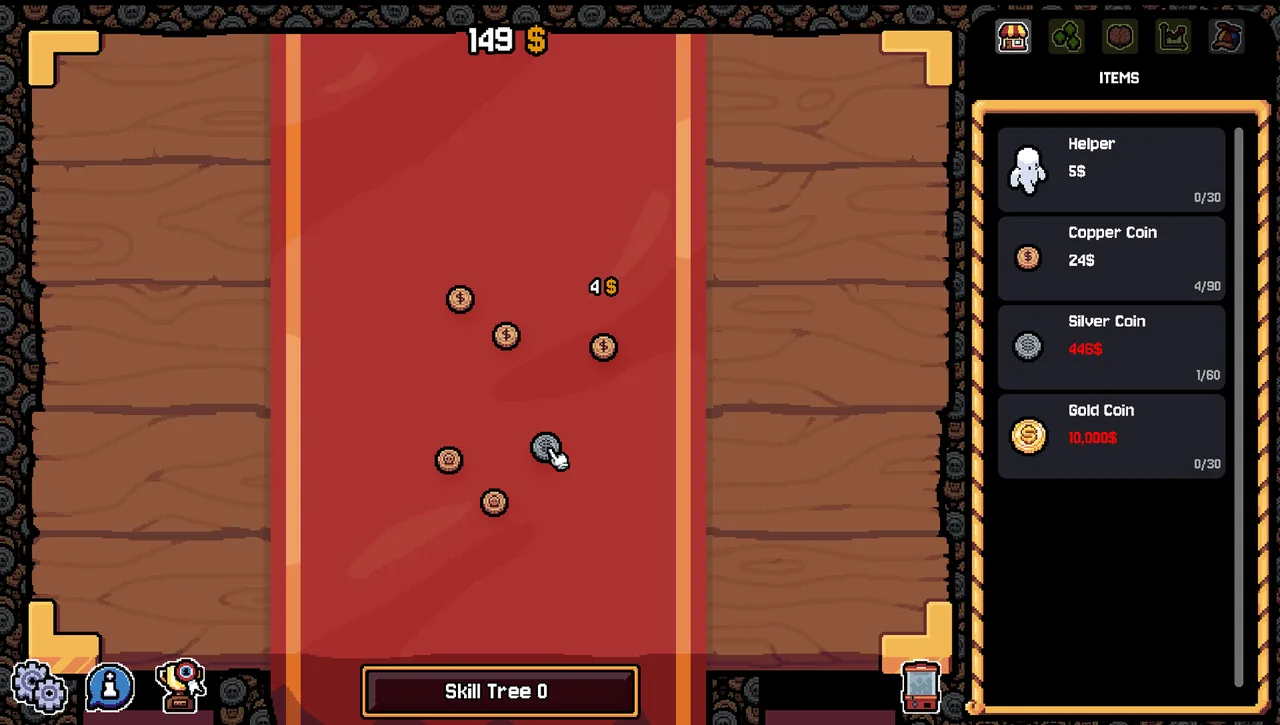
The opening hours are close to ideal incremental design. You flip one coin by hand, then two, then afford a helper to flip for you, then a second and third helper, then automation upgrades that remove the clicking requirement entirely. Bigger silver and gold coins promise fatter payouts per flip, and the game keeps dangling the next purchase just out of reach in the way this genre lives or dies by. The presentation earns its keep here: the coin-flip animation has weight to it, the sound design turns every landing into a small, satisfying percussion hit, and watching a growing crowd of minions mill around the table — occasionally slacking off mid-shift — gives the automation phase a personality most idle games never bother with.
The cracks show once the numbers get big enough to actually test the underlying economy. Player reports converge on a specific problem: an "oxidation" mechanic attached to copper coins lets them keep compounding in a way the pricier silver, gold and diamond tiers can't match, so the coins the game spends the whole midgame selling you as upgrades end up strictly worse than what you started with. For a genre whose entire appeal is the promise that bigger numbers mean better numbers, that's not a minor balance quirk — it undercuts the reason to keep spending.
Prestige, and the reset that isn't worth resetting for
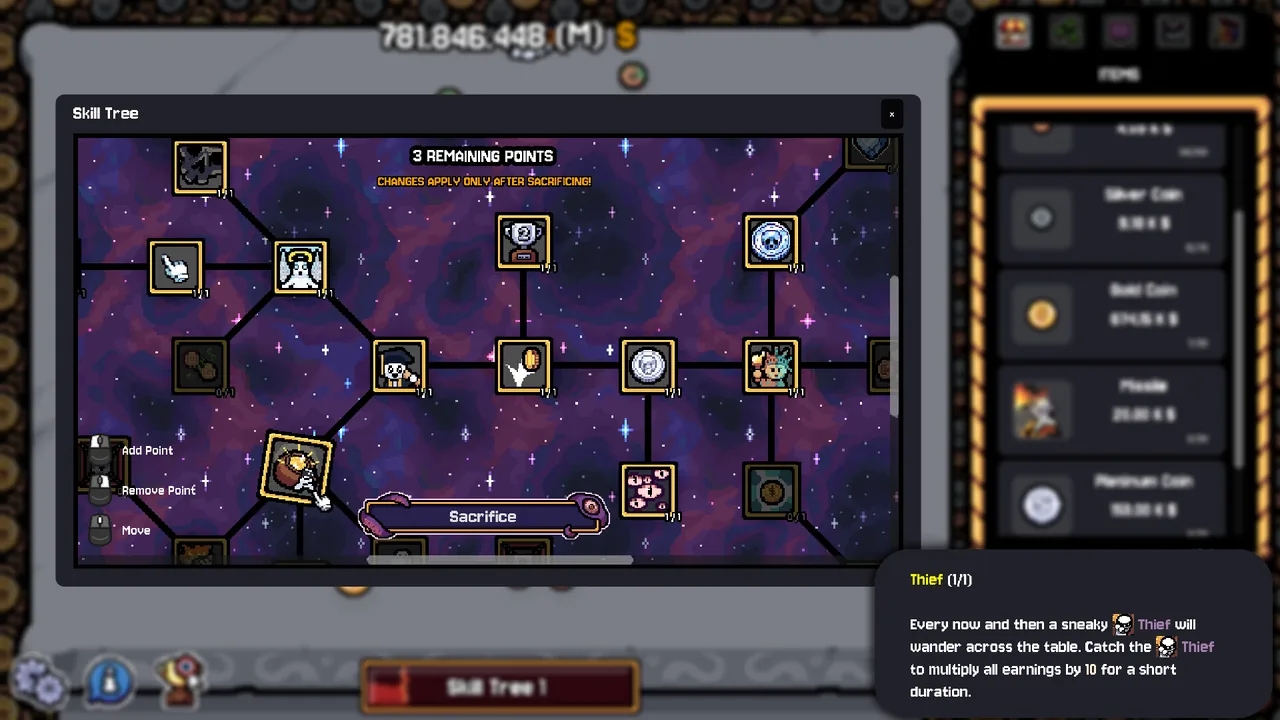
Wiping the table for a permanent bonus is the genre's signature moment, the one Cookie Clicker turned into a genuine ritual over a decade ago. Gamblers Table borrows the shape of that system without the generosity that makes it work. Reaching a single prestige point takes hours of grinding, the allocation screen offers little explanation of what any given upgrade actually does, and several of the upgrades on offer reportedly counteract the table's own unique bonuses rather than stacking with them — so a blind pick during your first reset can leave a subsequent run weaker than it should be. Combine that with purchase prices that scale aggressively and no confirmation prompt on big buys, and there's a real risk of an accidental click undoing significant progress with no way to walk it back. A game built around repeated resets should make each one feel like forward motion. This one occasionally makes it feel like a trap.
Presentation and controls
None of the design problems live in the audiovisual side of the game. The pixel-art table, coins and minions are clean and readable even as the screen fills with automation, the SFX design carries more of the moment-to-moment satisfaction than the numbers do, and full controller support is a genuinely useful option for a genre that usually assumes mouse-only play. Steam Workshop integration also opens the door to community content, for whatever longevity that's worth in a game this size.
Value and monetisation
At its regular asking price, Gamblers Table sits where a lot of well-made indie incrementals do — cheap enough that a few good hours justifies the purchase on its own. The optional Supporter Pack DLC is exactly what it says on the tin: more hats, framed honestly as a thank-you tip rather than something the base game pressures you toward. There's no energy system, no ads, no premium currency and nothing resembling a paywall between you and any system in the game. Whatever frustration Gamblers Table generates, none of it comes from being asked to pay twice.
Final verdict
Gamblers Table gets the feel of an incremental right and fumbles the maths underneath it. The flipping, the minions, the hat collection — all of that is confident, well-produced work from a small team that clearly understands what makes this genre tick moment to moment. But an incremental lives or dies on whether the next tier of upgrade is worth chasing, and once the copper-coin exploit and the punishing, poorly-explained prestige system are common knowledge, the answer for long stretches of the game is no. Mostly Positive reception on Steam tracks with that split: plenty of players are happy to bounce off it after a satisfying afternoon, and a vocal minority are frustrated that the systems meant to reward a longer commitment actively discourage one.
Buy it for a five-dollar weekend of coin-flipping with real charm to it, not for a Cookie Clicker-length relationship. If number-go-up games that reward you for sticking around are more your speed, that's closer to what Wanderer is built for.
Pros and cons
Pros
- Coin-flip animation, physics and sound design make the core click feel satisfying long after the numbers stop meaning much
- The minion helpers are genuinely charming — hiring more, watching them scurry and occasionally doze off on the table gives the automation stage real personality
- 149 collectible hats (plus 32 more in the optional Supporter Pack), including golden and rainbow variants, give the cosmetic side actual depth without touching real-money odds
- Steam Workshop support and a fair, one-off asking price with no ongoing monetisation pressure
- Full controller support is a nice touch for a game usually played one-handed with a mouse
Cons
- A copper-coin "oxidation" mechanic reportedly breaks the coin economy, making silver, gold and diamond coins — the game's whole sense of tiered progression — almost worthless next to just stacking copper
- Prestige resets take hours of grinding for a single point, and some of the resulting upgrades actively work against the table's own bonuses rather than compounding them
- The prestige allocation screen offers little guidance, so a first-time reset plays out as a guess rather than a plan
- No confirmation or undo on big purchases means a mistimed buy can set a run back substantially, which stings harder the further into a session it happens
- Once the optimal early strategy is found, the loop thins out fast — closer to an afternoon's amusement than a game with a long tail
Screenshots
-
Gamblers TableImage: greenpixels via Steam -
Gamblers TableImage: greenpixels via Steam -
Gamblers TableImage: greenpixels via Steam -
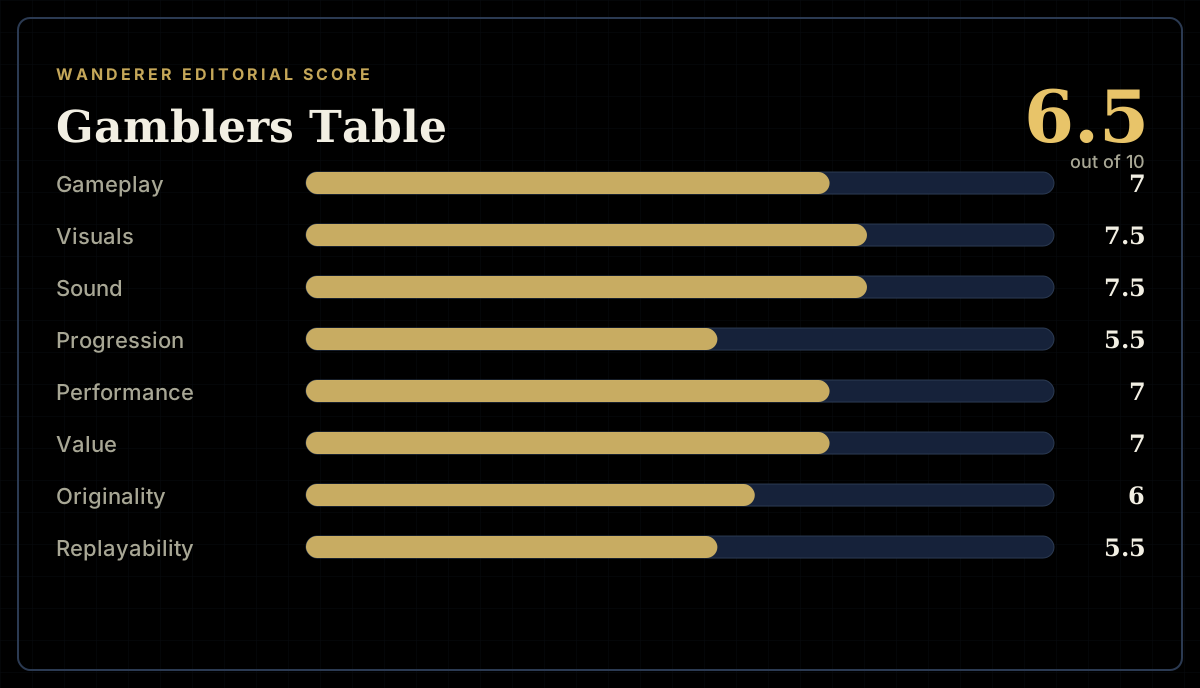
How the review scores each part of the gameWanderer Editorial -
The short versionWanderer Editorial