
Game review
Forage Wizard
5.9 / 10
- Developer
- Lost Maxim
- Publisher
- Lost Maxim
- Released
- 5 May 2026
- Platforms
- [Windows]
- Genre
- Simulation
- Monetisation
- Paid
- Players
- Single-player
The short version
Forage Wizard, developed and published by solo developer Lost Maxim, casts players as an aspiring alchemist gathering resources, crafting equipment, and building automated production chains through a forbidden forest full of monsters and a branching skill tree. It released as a full game on 5 May 2026 at NZ$11.25. Reception sits at Very Positive across 760 reviews (88% positive), but a large English-language sample pulled for this piece (100 reviews: 52 positive, 48 negative) skews far more critical than that headline figure, and reading through it reveals why: a charming, genuinely relaxing first half gives way to a back half where a meaningful chunk of resources simply can't be automated at all, and reviewers on both sides of the recommend line say so almost identically, they just land on different verdicts about whether that's a dealbreaker.
Biggest strengths
- The first half of the game is repeatedly praised as genuinely cozy and satisfying, with charming visuals and a relaxing, well-paced crafting loop that eases players into the systems
- The branching skill tree and progression through new areas, resources, and crafters is called well-designed and rewarding, especially in the early-to-mid game
- At NZ$11.25 for a roughly 10-to-18-hour complete experience, most reviewers, even critical ones, call the price fair or generous
Biggest weaknesses
- A significant number of resources, water and sand among the most cited, cannot be automated at all, forcing continued manual clicking through the late game regardless of how much a player invests in the automation system
- The pylon-based automation system itself is widely described as confusing, under-explained, and too cramped to build comfortably, with several reviewers saying they had to consult external guides to understand it
- Automation unlocks noticeably late in a run, meaning players spend a long early stretch on manual clicking before the system meant to relieve that tedium becomes available
Who it's for: Fans of cozy click-and-craft automation games looking for a short, complete experience, who can tolerate a genuinely broken back-half pacing curve in exchange for a strong opening act.
Our recommendation: Worth the low asking price for the first several hours alone, but go in expecting the automation system to leave you clicking manually through much of the late game rather than solving it.
5.9 / 10
A Cozy Alchemy Sim With an Automation Problem at Its Core
Forage Wizard, developed and published by solo developer Lost Maxim, puts players in the boots of an apprentice alchemist tasked with gathering resources from a forbidden forest, crafting increasingly complex equipment, and building networks of "pylons" to automate production as a branching skill tree opens up new areas, crafters, and monsters to fend off. It released as a full game, with no Early Access tag on its store page, on 5 May 2026 at NZ$11.25. Reception currently sits at Very Positive across 760 total reviews (88% positive). A large English-language sample pulled for this piece (100 reviews: 52 positive, 48 negative) skews considerably more critical than that headline figure, and reading through it in full explains the gap clearly: this is a game whose central mechanic, automation, is also its single most consistently cited flaw, cutting across both recommenders and non-recommenders in a way that's unusually direct even by Early-Access-adjacent standards, despite this being a finished release.
A Genuinely Cozy, Satisfying Early Game
Where Forage Wizard earns its Very Positive aggregate is in its opening hours, and the praise here is specific rather than generic. Reviewers consistently describe the first half as genuinely relaxing, charming low-poly visuals, an intuitive crafting loop, and a steady, well-paced drip of new unlocks that several reviewers compare favourably to the developer's earlier, smaller game, Click Mage, calling Forage Wizard a clear step up in scope and polish. The branching skill tree draws real praise for making almost every unlock feel meaningful rather than filler, and reviewers who finished the game, most report completion times somewhere between 10 and 18 hours, frequently describe that length as appropriately tight rather than padded, a complete experience rather than an endless idler. At NZ$11.25, the value proposition lands well even with reviewers who otherwise have real complaints about the back half, and the developer's visible presence on Discord, actively responding to feedback through what multiple reviewers describe as a lengthy pre-release playtest period, is repeatedly cited as a point in the game's favour.
The Same Automation Complaint Splits Recommenders and Non-Recommenders Alike
The dominant thread running through this entire sample, regardless of overall recommendation, is that the automation system central to the game's pitch simply doesn't hold up once players reach the mid-to-late game. The specific, most-repeated complaint is that a meaningful number of resources, water and sand come up again and again, cannot be automated at all, meaning that no matter how thoroughly a player has built out their pylon network, the late game still requires extensive manual, repetitive clicking to keep production moving. Compounding this, several reviewers describe the pylon system itself as confusing and poorly explained, with limited range and cramped building space making efficient setups genuinely difficult to design, to the point that multiple reviewers say they had to seek out community guides or forum threads just to understand how it worked. What makes this sample distinctive is how evenly this specific complaint splits down the middle rather than sorting cleanly into positive and negative camps: several reviewers who ultimately recommend the game still describe the late game as "a slog" or "a chore," they simply weigh the strong opening hours and low price as worth tolerating it, while reviewers who don't recommend the game cite the exact same issue as the reason they can't.
A Short, One-and-Done Experience With Room to Grow
Beyond the automation debate, a handful of secondary points recur often enough to be worth noting. The game's short length and lack of replayability, once a playthrough ends, there's little reason to start another, is framed very differently depending on the reviewer: some call it a refreshing change from bloated idle-automation games that never end, while others feel it leaves comparatively little to show for the asking price once the novelty wears off. At least one reviewer flags a mandatory online connectivity check required at startup as a real inconvenience for players hoping to use a Steam Deck away from Wi-Fi or otherwise play offline, a small but concrete technical complaint distinct from the automation debate. Several reviewers frame their overall take as cautious optimism rather than final judgment, explicitly noting that the developer has automation improvements on a public to-do list and suggesting prospective buyers who are put off by the current back-half pacing might want to wait and see whether a future update resolves it. A smaller number of reviewers also raise cramped building space as its own separate frustration, distinct from the automation logic itself, noting that later areas of the map simply don't leave enough room to lay out the number of pylons and crafters an efficient late-game setup would need, which compounds the automation complaints rather than offsetting them.
Verdict
Forage Wizard is a game of two distinct halves: a genuinely cozy, well-designed opening act that earns every bit of its Very Positive aggregate score, followed by a back half where its own central automation system can't keep up with the demands the game places on it, leaving both fans and critics doing the same manual clicking they'd hoped to have automated away. At NZ$11.25 for a tight 10-to-18-hour experience, it's an easy enough recommendation for players who mostly want a relaxing few hours of resource-gathering and crafting and are willing to grit their teeth through a rougher finish, especially given a developer reviewers trust to keep iterating. Players hoping automation will genuinely carry them through to the credits, the game's own central promise, should treat the current Very Positive score as a reflection of a strong opening rather than a guarantee that the whole experience holds up.
Pros and cons
Pros
- The first half of the game is repeatedly praised as genuinely cozy and satisfying, with charming visuals and a relaxing, well-paced crafting loop that eases players into the systems
- The branching skill tree and progression through new areas, resources, and crafters is called well-designed and rewarding, especially in the early-to-mid game
- At NZ$11.25 for a roughly 10-to-18-hour complete experience, most reviewers, even critical ones, call the price fair or generous
- The developer is repeatedly described as active and responsive on Discord, engaging directly with player feedback and tweaks during a long playtest period before release
- Several reviewers who also played the developer's earlier game, Click Mage, describe Forage Wizard as a clear step up in scope, polish, and depth
Cons
- A significant number of resources, water and sand among the most cited, cannot be automated at all, forcing continued manual clicking through the late game regardless of how much a player invests in the automation system
- The pylon-based automation system itself is widely described as confusing, under-explained, and too cramped to build comfortably, with several reviewers saying they had to consult external guides to understand it
- Automation unlocks noticeably late in a run, meaning players spend a long early stretch on manual clicking before the system meant to relieve that tedium becomes available
- The game is short and explicitly "one and done", with no meaningful replayability once a playthrough is finished, which some reviewers count as a plus and others as a limitation given the asking price
- A mandatory online connectivity check at startup is flagged by at least one reviewer as an inconvenience for offline play or handheld devices like the Steam Deck
Screenshots
-
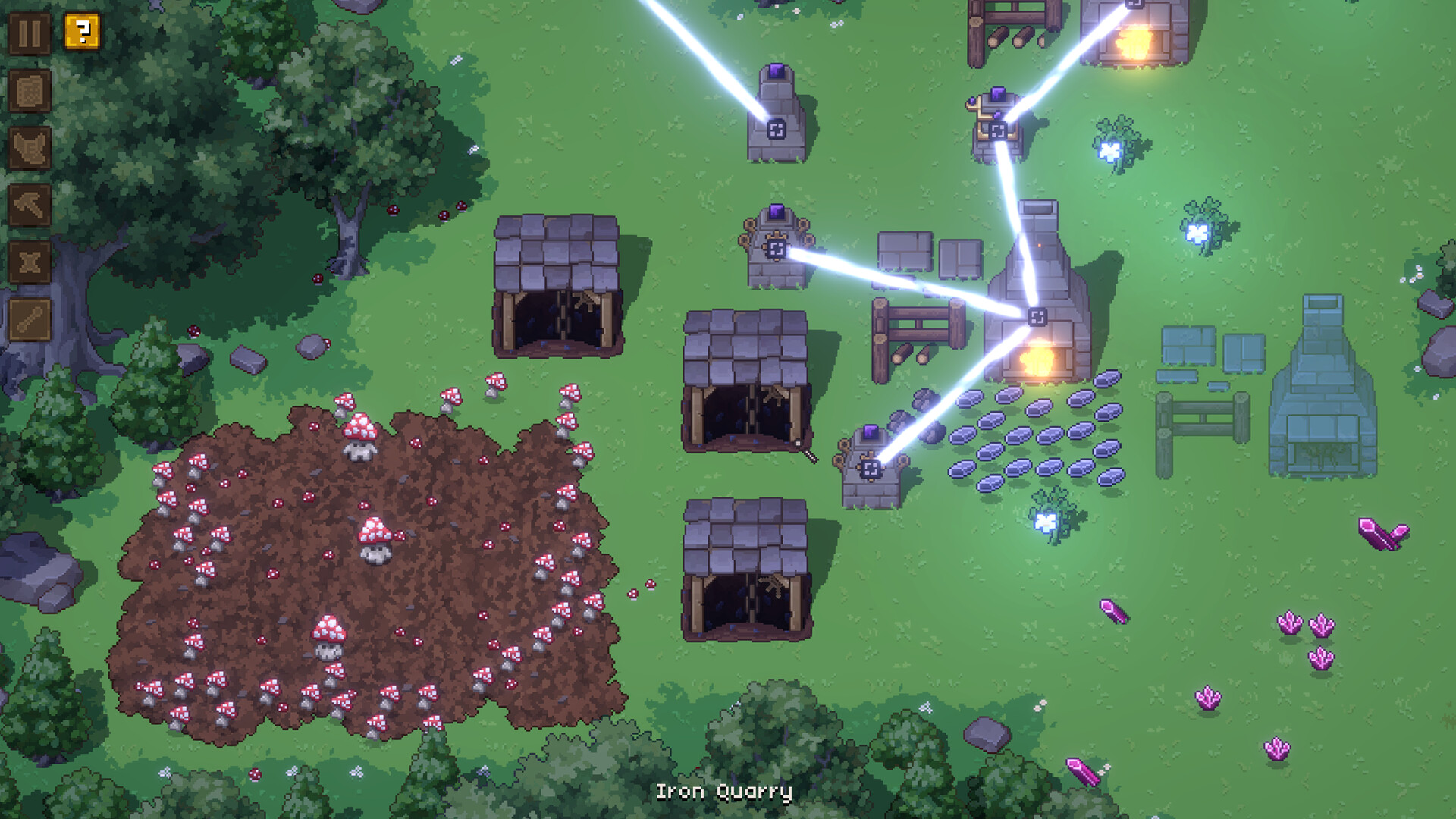
The pylon automation network at the heart of both the game's appeal and its most repeated complaintLost Maxim -
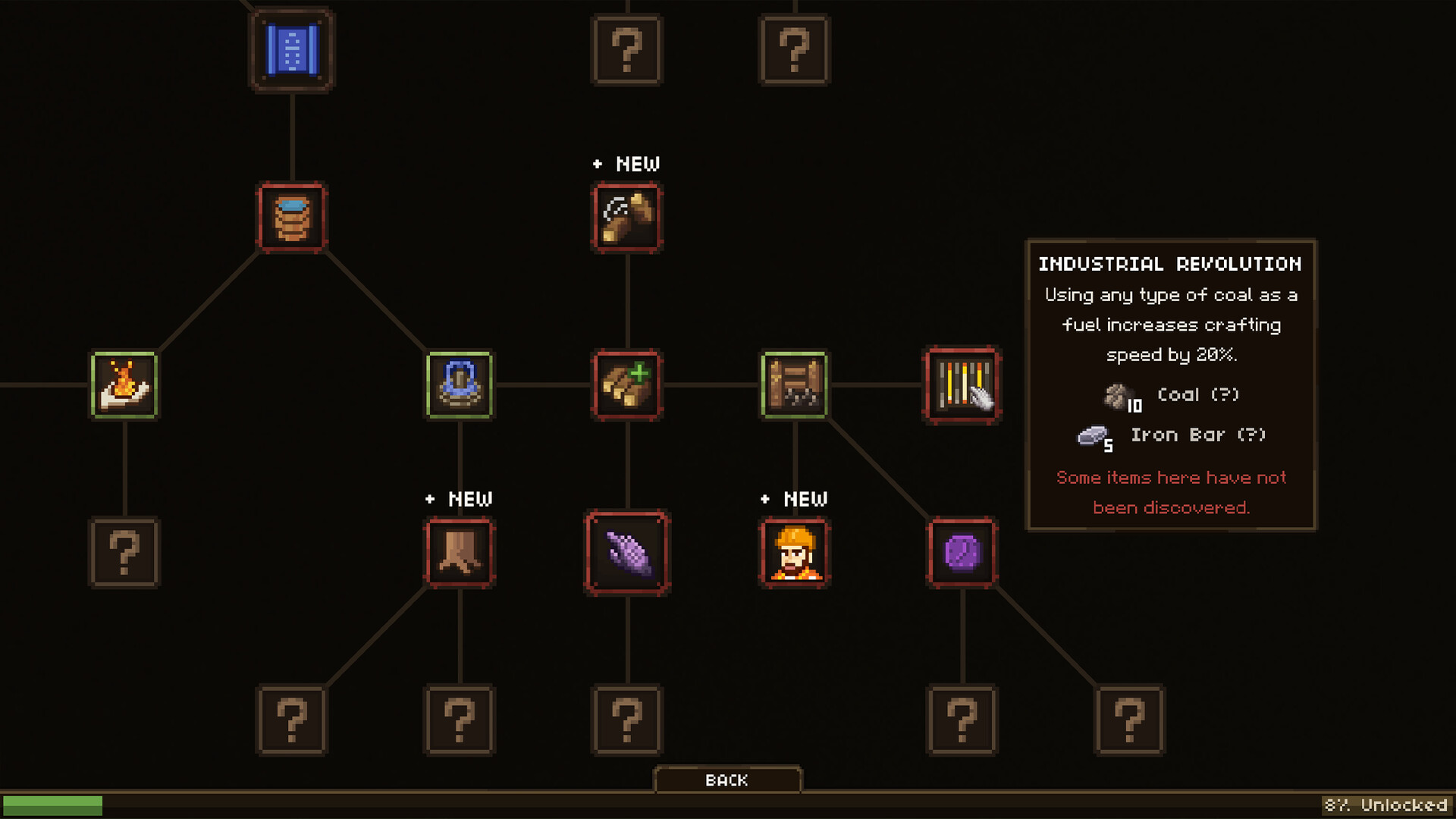
The branching skill tree reviewers call one of the game's best-designed systemsLost Maxim -
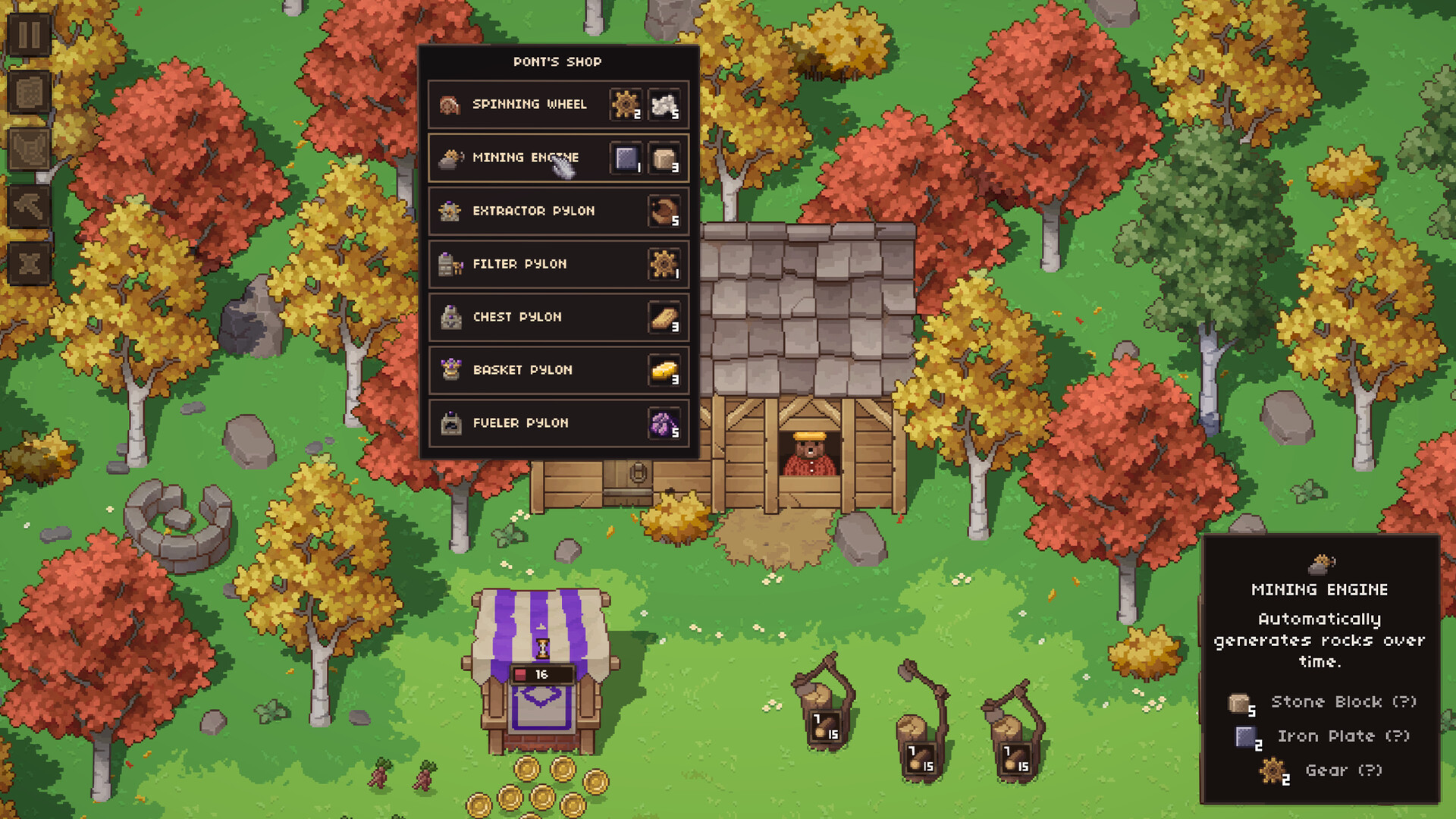
Shopping for pylon upgrades, a system several reviewers say needed clearer in-game explanationLost Maxim -
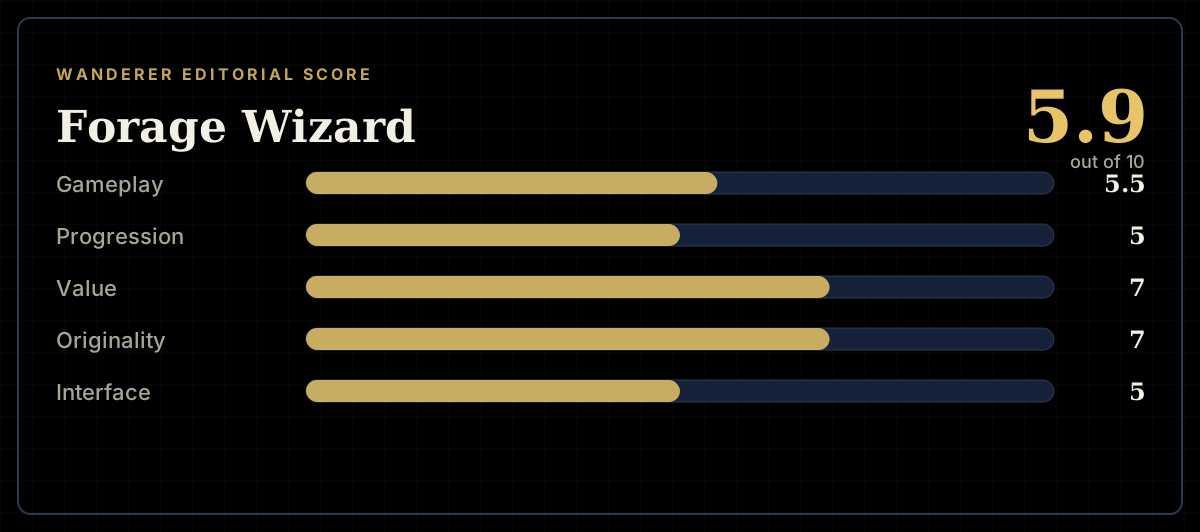
How the review scores each part of the gameWanderer Editorial -
The short versionWanderer Editorial