
Game review
Fellwood Review
6 / 10
- Developer
- Allerton Apps
- Publisher
- Allerton Apps
- Released
- 14 August 2026
- Platforms
- ["Windows"]
- Genre
- Simulation
A Lumber Empire That Builds Itself
Fellwood casts the player as the operator of an escalating fantasy woodcutting encampment: place buildings that fling axes, ballistas, cannons, and eventually magic at a forest across the valley, watch physics-driven logs pile up and get hauled off by automated collectors, and reinvest the proceeds into more buildings, upgrades, and permanent prestige bonuses. It released August 14, 2026 from solo-adjacent developer and publisher Allerton Apps for $11.25, and currently sits at a "Mixed" rating across roughly 99 Steam reviews — a real split rather than a rounding error, and one the review text bears out on inspection.
The Loop: Seventeen Buildings, Eighty-Plus Permanent Upgrades
The store page lists 17 buildings, 80-plus permanent prestige upgrades, and 100-plus level-up options per run, and the shape of a session matches an established incremental template: early buildings chip away at trees for modest gold, that gold buys more buildings and upgrades, the valley gradually fills with escalating firepower and cascading log piles, and eventually a prestige reset trades the current run's progress for permanent multipliers on the next one. Reviewers who stuck with it describe a genuine escalation curve — one wrote that the game "starts pretty simple and builds into something crazy and incredible," and several specifically praised watching "things go absolutely crazy" once enough buildings are stacked. As a pure number-go-up spectacle in its opening hours, it clearly delivers.
The Elephant in the Valley: Constant Comparisons to Dwarf Eats Mountain
No pattern recurs more often across Fellwood's review corpus than direct, unprompted comparisons to Dwarf Eats Mountain, an earlier incremental game with a near-identical structural conceit (autonomous ranged attackers whittling down a large physics-based target for resources). Reviewers invoke it constantly and not always kindly: one review consists almost entirely of "Dwarf eats mountain but with trees and considerably less interesting," another states flatly "if you had a choice between this and Dwarf Eats Mountain, purchase Dwarf Eats Mountain instead," and a third calls Fellwood "a cheap rip-off" of it. Others are more generous, framing the resemblance as a compliment ("amazing game that gives 'Dwarfs Eat Mountain' vibes") or noting specific elements Dwarf Eats Mountain had that Fellwood lacks, like boss encounters. This is reviewer characterization rather than an independently verifiable claim about copying, but the sheer frequency and specificity of the comparison — arriving from reviewers who evidently know the earlier game in detail — makes it impossible to write around, and it visibly depresses the review score relative to what the mechanics alone might earn.
Prestige That Reviewers Say Runs Out of Things to Say
The permanent-upgrade layer is where the more substantive, mechanically specific complaints concentrate. Multiple reviewers describe the prestige currency as accruing on a luck-based basis that stalls progress, and argue that once the early prestige tree is cleared, later upgrades stop feeling meaningful — one review states plainly that "prestige upgrades feel to have zero impact," while another describes the loop going "ok, set up some trees, set up some collectors... oh, prestige points? cool" before trailing off into repetition. A separate, more specific complaint concerns build diversity: because upgrade choices key off which weapon types are already unlocked, several reviewers report that the optimal strategy is to commit to a single weapon type and ignore the rest of the roster entirely, which undercuts the appeal of the 17-building lineup the store page advertises. That is a genuine design tension between "many toys" and "one correct toy," and it is corroborated across several independent reviews rather than resting on a single account.
A Short Incremental, By Design or By Thinness
Where a lot of the genre stretches for hundreds of hours, Fellwood's own players describe it as compact: one reached the "1 billion gold" milestone and a maxed prestige tree in about 3.1 hours, others cite full 59/59-achievement completion somewhere in the 35-to-70-hour range depending on how efficiently they played, and more than one review frames the short length as a feature rather than a flaw at this price — "these are not bad things unless you expect thousands of hours from a $7 game." Others disagree just as directly, calling the replay value "nil" once the tree is cleared and arguing the roughly $5-equivalent asking price is a fairer match for what's on offer than the higher regional prices some markets see. Both readings are represented often enough in the corpus that neither can be dismissed as an outlier — this is a genuinely short incremental, and how much that bothers a given player depends heavily on their expectations going in.
Where It Lands as a Background Game
Set against its harsher critics, Fellwood also has a consistent fan base describing exactly the kind of ambient, low-demand session the genre is built for: reviewers mention streaming it to help a partner fall asleep, running it on a second monitor while doing housework, and leaving it ticking over in the background between other tasks, all citing the soft sound design and unhurried pace as deliberate strengths rather than accidents. The visual chaos of log piles and projectile spam scales up satisfyingly even for players who never touch the keyboard once buildings are placed, and the game supports that passive style explicitly through categories like Playable at Your Own Pace and Playable Without Timed Input.
Achievements and Presentation
Fellwood ships with 59 Steam Achievements tied to concrete milestones — building counts, damage thresholds, prestige tiers — giving completionists a structured checklist on top of the open-ended number climbing, and reviewers who hunted them down generally reported the process as fair rather than punishing. Screenshots show a colorful, readable fantasy-forest aesthetic with visible log stockpiles and a busy but legible shop/upgrade interface; no reviewer flagged translation or stability problems, and the game ships with a wide language list (English, French, Italian, German, Spanish, Japanese, Korean, Polish, Portuguese, Russian, Simplified Chinese) well beyond what a small-studio incremental typically bothers to localize.
Verdict
Fellwood is a competently built, pleasant-enough incremental let down by two things largely outside the reach of a patch: it invites direct, unflattering comparison to a specific earlier game in the same niche, and its own prestige layer runs thin faster than its opening hour promises. Neither complaint is speculative — both come from a wide, independent cross-section of its own review corpus rather than a single loud account. For players who haven't played the game it's constantly measured against, or who just want a short, low-effort background idler with a decent achievement list, there's real value here at a fair price. For anyone hunting the deepest possible incremental, or anyone who already owns the game Fellwood keeps getting compared to, it's a much easier pass.
Screenshots
-
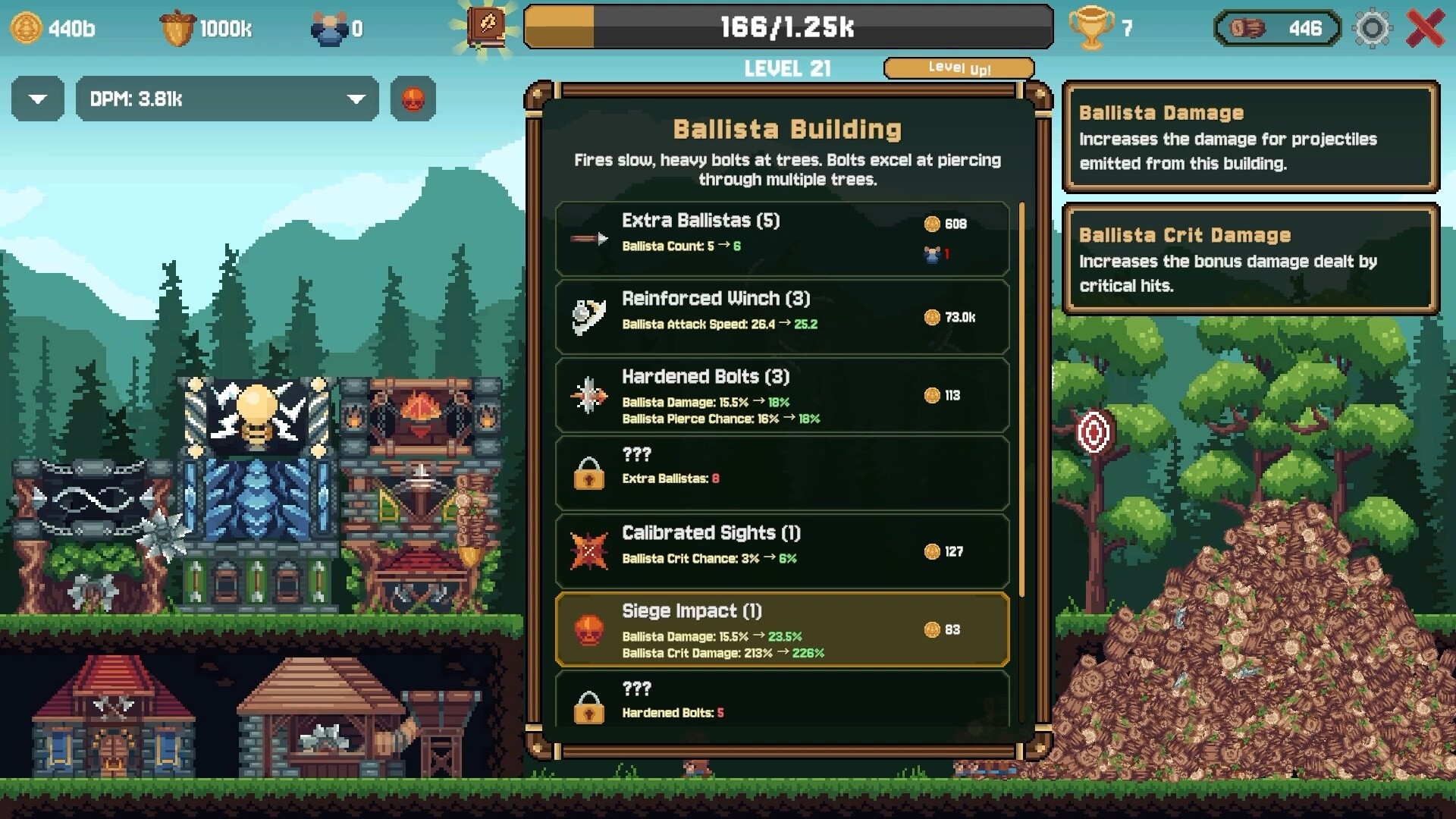
The prestige-and-upgrade panel for a single building, mid-run at level 21Image: Allerton Apps via Steam -
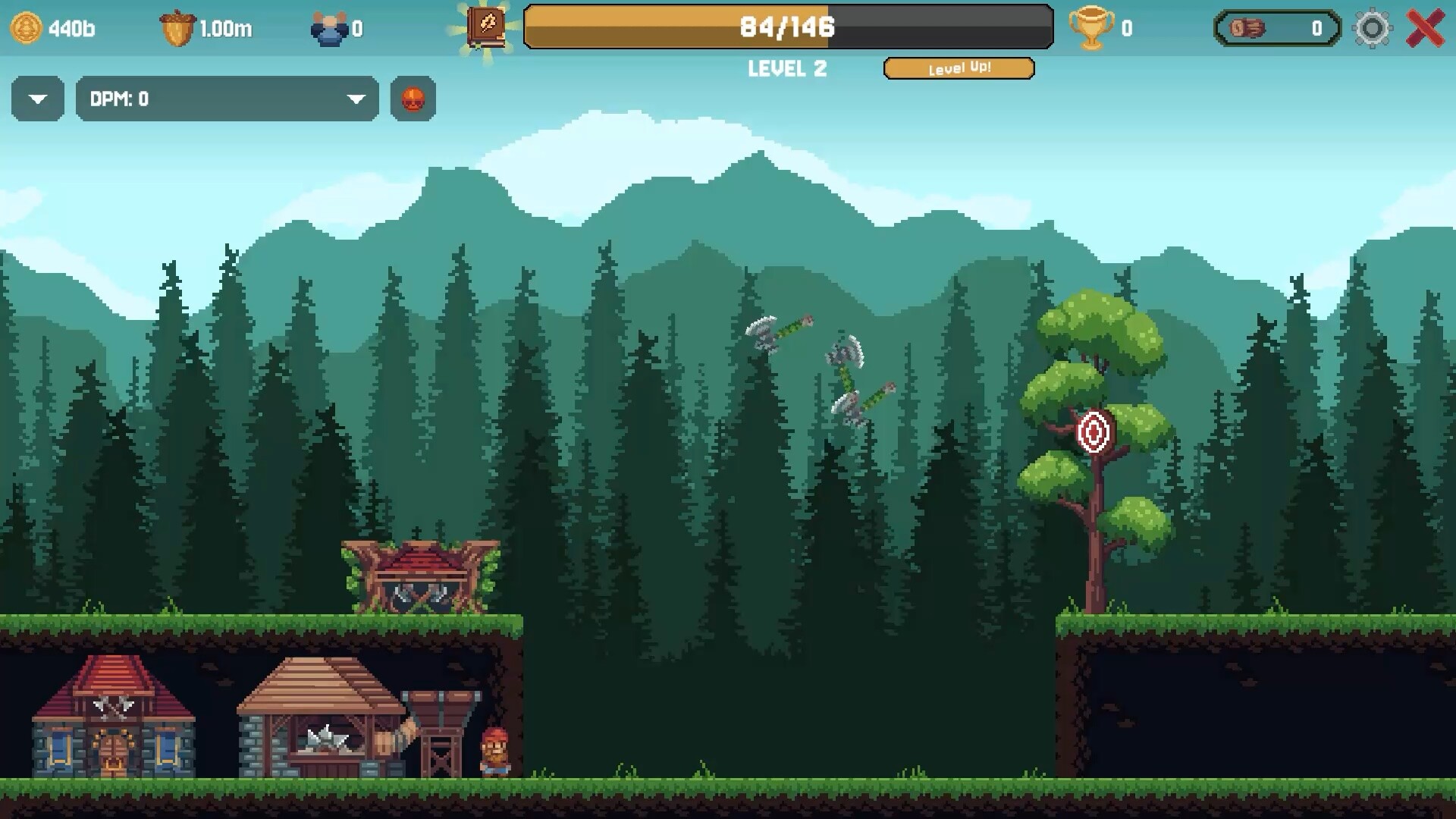
An early run — one building, one tree, level 2Image: Allerton Apps via Steam -
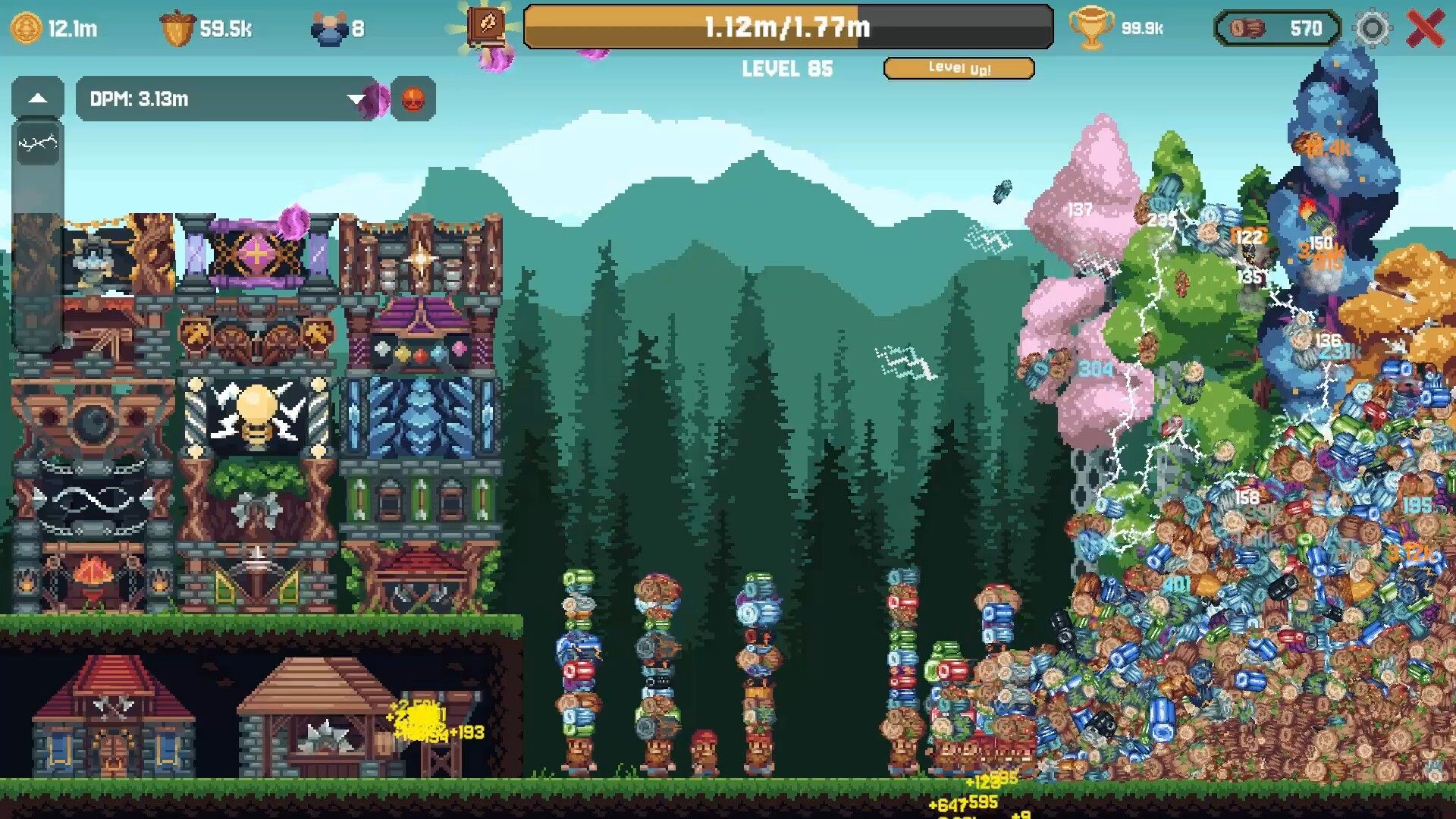
The same loop by level 85 — full building roster, magic effects, and a sprawling log pileImage: Allerton Apps via Steam