Game review
Fae Tactics
7 / 10
- Developer
- Endlessfluff Games
- Publisher
- Balor Games
- Released
- 31 July 2020
- Platforms
- Windows
- Genre
- Tactical RPG
- Monetisation
- One-time purchase, no in-game store
- Players
- Single-player only
The short version
Fae Tactics is a pixel-art turn-based tactical RPG from Endlessfluff Games, published by Balor Games, following a young mage named Peony as she summons fae creatures into isometric grid battles across a growing conflict between humans and magical beings. Released 31 July 2020, it holds a large, mature review base of 1,059 English-language reviews at Very Positive, roughly 84%. This review's read of both sides of that sample finds a consistent theme reviewers on both the positive and negative side raise independently: this is deliberately not a Final Fantasy Tactics clone, and that departure from genre convention is exactly what some reviewers love and others find frustrating. Praise centres on the summoning system itself, charming pixel art and an exceptional soundtrack; criticism centres on specific, well-documented mechanical friction — unpredictable ally AI, RNG that can undercut careful planning, and a level-scaling system that a comparable number of reviewers credit as removing pointless grind and blame for making character progression feel meaningless.
Biggest strengths
- The fae summoning system draws consistent, specific praise as the game's real identity — reviewers describe adapting summon choices to each battlefield as a genuinely evolving puzzle rather than a repeated pattern
- Pixel art and sprite animation are widely and specifically praised, distinct from generic "nice graphics" comments
- The soundtrack draws unusually strong, repeated praise, with multiple reviewers comparing it favourably to AAA-budget titles
Biggest weaknesses
- Ally AI behaviour draws a specific, credible complaint: reviewers describe uncontrolled allies swinging unpredictably between reckless and hyper-effective without warning, undermining careful planning
- RNG on hit chance, dodge and status effects is a recurring complaint from reviewers who feel it can override tactical decision-making rather than support it
- A comparable number of reviewers credit and blame the same level-scaling system — some appreciate that it removes pointless grinding, others feel it makes character progression feel meaningless since enemies simply scale to match
Who it's for: SRPG fans open to a distinctive creature-summoning hook rather than a straight genre homage, who can tolerate real difficulty spikes and uneven AI; less suited to players wanting tightly balanced, low-RNG tactical combat.
Our recommendation: A genuinely distinctive tactical RPG with real charm and a large, dedicated audience — worth playing specifically because it doesn't try to be Final Fantasy Tactics, with the caveat that several of its systems draw real, credible complaints from experienced players.
7 / 10
Introduction
Fae Tactics follows Peony, a young mage navigating a growing conflict between humans and the magical fae, across pixel-art isometric grid battles built around a central mechanical hook: summoning fae creatures to fight alongside her rather than commanding a traditional roster of recruited soldiers. Developed by Endlessfluff Games and published by Balor Games, it released 31 July 2020 for NZ$24.79 and has since built a large, mature review base — 1,059 English-language Steam reviews sitting at Very Positive, roughly 84%. This review reads a substantial share of both the negative and positive samples, and finds a specific consensus running through both sides worth naming up front: reviewers on both ends of the score agree this game deliberately isn't a Final Fantasy Tactics clone, and the disagreement is almost entirely about whether that departure works.
An identity built on summoning, not imitation
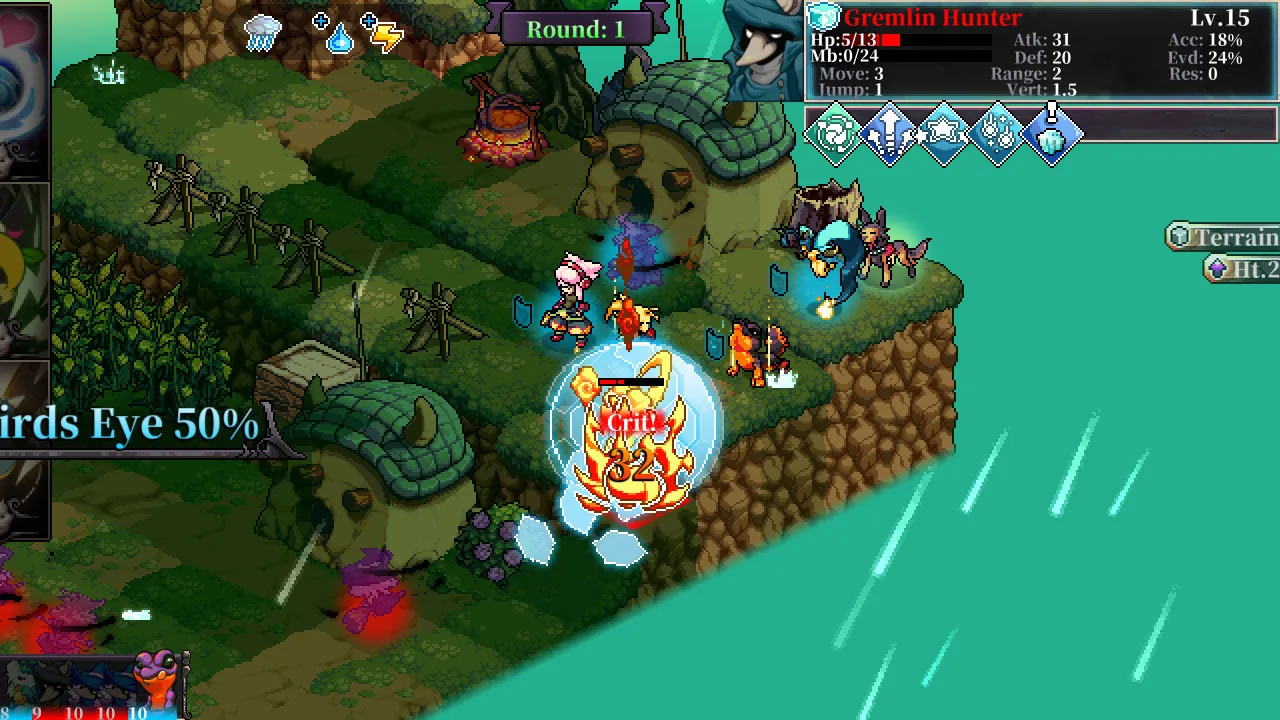
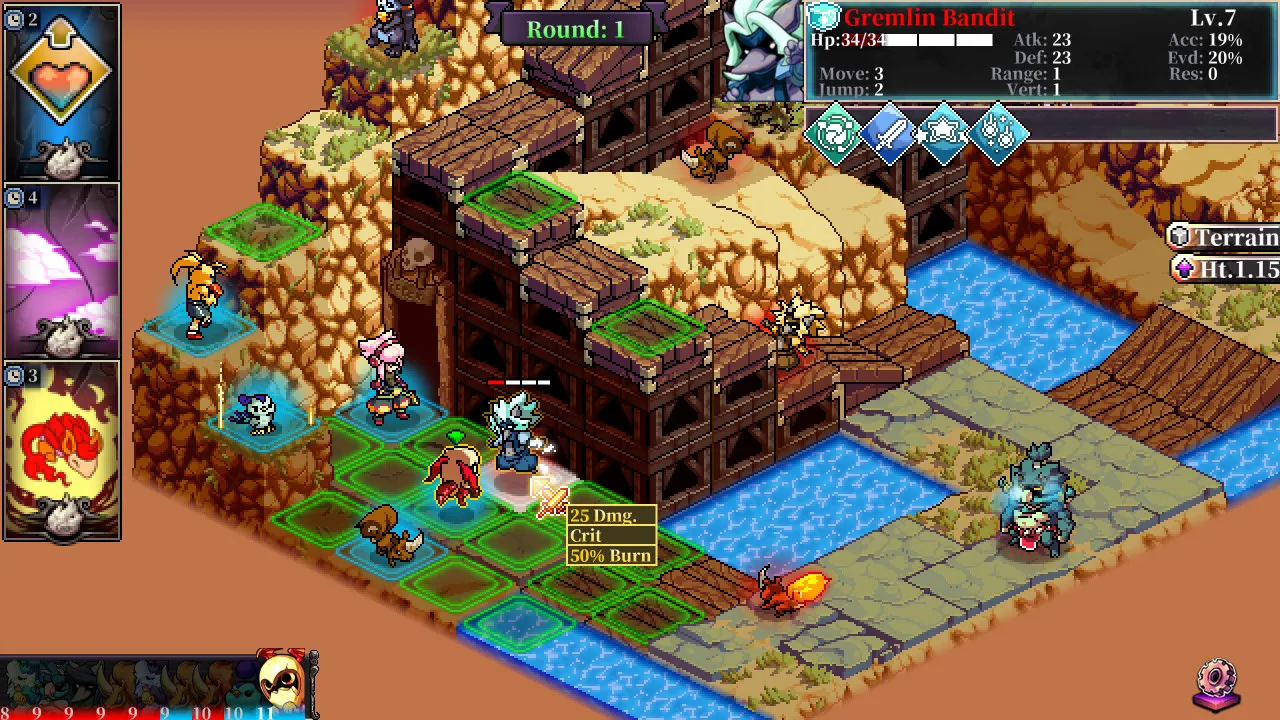
The clearest praise in this review's sample centres on the summoning system as the game's genuine mechanical identity. Reviewers describe obtaining talismans that let Peony summon fae creatures at the start of a battle, creatures that then function as full combat units in their own right — one reviewer with 5,171 hours logged across their broader history described these summoned characters working "just like your main characters," giving battles real compositional flexibility rather than a fixed party to optimise once and reuse. Another reviewer, at 1,594 hours, praised the way summons let a player "complement" Peony's abilities and "adapt to the battlefield," framing each fight as a genuinely evolving puzzle rather than a repeated pattern. That's a meaningfully different core loop than the genre's usual roster-management structure, and it's the thing this review's sample credits most specifically as Fae Tactics' real contribution to the SRPG space.
Presentation that earns specific praise
Beyond the central system, pixel art and sprite animation draw wide, specific praise throughout the positive sample, and the soundtrack draws even stronger language — multiple reviewers independently compared it favourably to AAA-budget productions, an unusually strong claim for an indie title's audio to earn repeatedly. Story and character writing are credited with genuine emotional weight, with reviewers specifically noting that different characters receive distinct, satisfying endings rather than a single generic wrap-up — a detail that suggests real narrative craft rather than padding.
Where the reviews split on the same systems
What makes this review's sample genuinely interesting is how often the same specific mechanic shows up as both a praised feature and a blamed flaw, rather than one side simply being uninformed. Level scaling is the clearest example: a meaningful share of positive reviewers specifically credit the system for removing pointless grinding, letting players engage with the story and tactics without farming experience — while a comparable number of negative reviewers argue the same scaling makes character progression feel meaningless, since enemies simply match the player's growth rather than being genuinely overcome by it. Difficulty draws an almost identical split: reviewers who enjoy the game specifically call its challenge fair rather than cheap, while others report unfair boss mechanics, one-shot conditions and unbalanced damage spikes. These aren't different reviewers talking past each other about unrelated issues — they're describing the same systems and reaching opposite conclusions about whether the trade-offs land well.
The complaints with less ambiguity
Set apart from those genuinely contested points, two complaints in this review's negative sample read as more one-sided and credible. Ally AI draws specific, detailed frustration: reviewers describe uncontrolled allies swinging unpredictably "between idiotic decisions to hyper-efficient team wipers with no warning," a description of genuine unpredictability rather than simple weakness, which makes it harder for a player to plan around. RNG on hit chances, dodge rates and status effects draws a similar complaint — several reviewers feel it can override careful tactical setup rather than support it, undercutting the exact kind of planning the summoning system is meant to reward.
Worth noting directly: one of the most detailed and highly-voted reviews in this entire sample, from a reviewer with 1,013 hours logged, delivers a genuinely serious negative verdict rather than a lukewarm one — calling the game "a major disappointment and failure in nearly every aspect of SRPG design" and specifically criticising minimal army-wide progression. That's not a casual dismissal; it's a considered rejection from someone who clearly engaged with the game at length, and it sits inside a sample that's still 84% positive overall. Both things can be true at once, and this review treats that dissent as a real, informative data point rather than an outlier to dismiss.
Final Verdict
Fae Tactics earns its Very Positive standing by being genuinely itself rather than a genre homage — the fae summoning system gives it a real mechanical identity, and its pixel art and soundtrack draw some of the more enthusiastic praise in this review's sample. Its most significant weaknesses, unpredictable ally AI and RNG that can undercut planning, are specific and credible rather than vague grumbling. And on its most contested design choices — level scaling and difficulty balance — this review found a genuinely divided, experienced audience rather than a clear consensus either way, which is worth knowing going in rather than a flaw to be talked around. For SRPG fans curious about a distinctive take on the genre rather than another Final Fantasy Tactics clone, this is a strong, well-earned recommendation with realistic expectations about where its rough edges sit.
Pros and cons
Pros
- The fae summoning system draws consistent, specific praise as the game's real identity — reviewers describe adapting summon choices to each battlefield as a genuinely evolving puzzle rather than a repeated pattern
- Pixel art and sprite animation are widely and specifically praised, distinct from generic "nice graphics" comments
- The soundtrack draws unusually strong, repeated praise, with multiple reviewers comparing it favourably to AAA-budget titles
- Story and character writing are credited with real emotional moments and meaningful character endings, giving the campaign a reason to see through to completion
Cons
- Ally AI behaviour draws a specific, credible complaint: reviewers describe uncontrolled allies swinging unpredictably between reckless and hyper-effective without warning, undermining careful planning
- RNG on hit chance, dodge and status effects is a recurring complaint from reviewers who feel it can override tactical decision-making rather than support it
- A comparable number of reviewers credit and blame the same level-scaling system — some appreciate that it removes pointless grinding, others feel it makes character progression feel meaningless since enemies simply scale to match
- One of the most detailed and highly-voted reviews in the sample, from a player with over 1,400 hours logged, describes minimal army-wide progression and calls the overall SRPG design a "major disappointment" — a genuinely serious dissent from an experienced player, not a casual bounce-off
Screenshots
-
Fae TacticsImage: Balor Games via Steam -
Fae TacticsImage: Balor Games via Steam -
Fae TacticsImage: Balor Games via Steam -
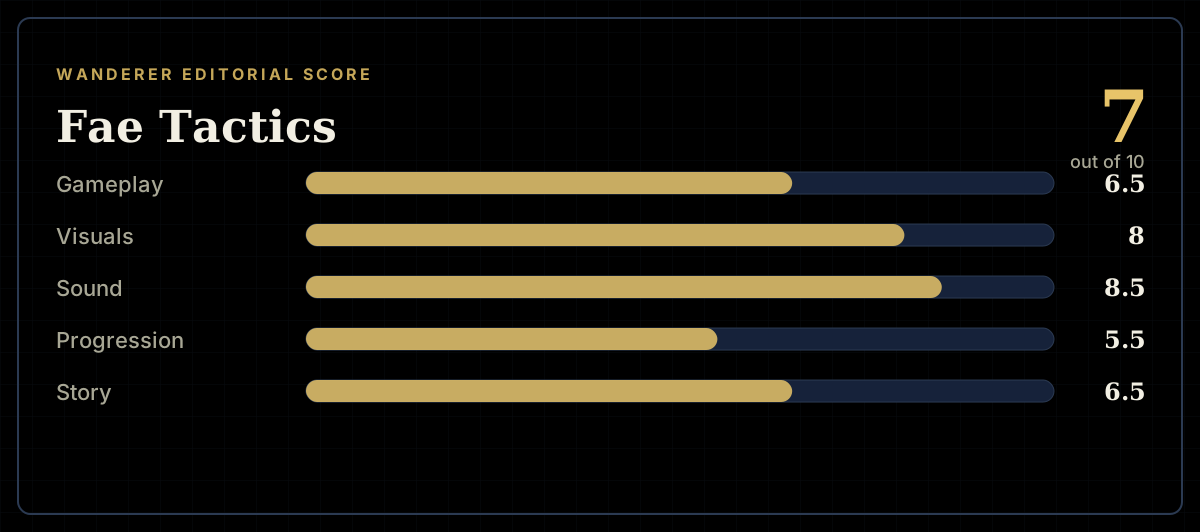
How the review scores each part of the gameWanderer Editorial -
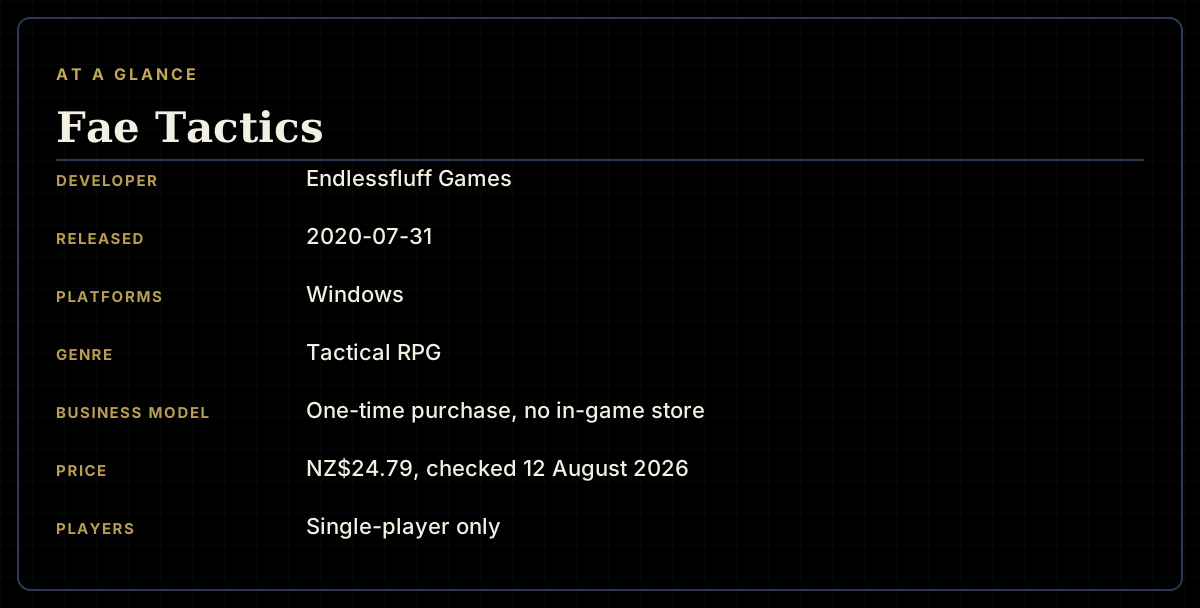
The essentials at a glanceWanderer Editorial -
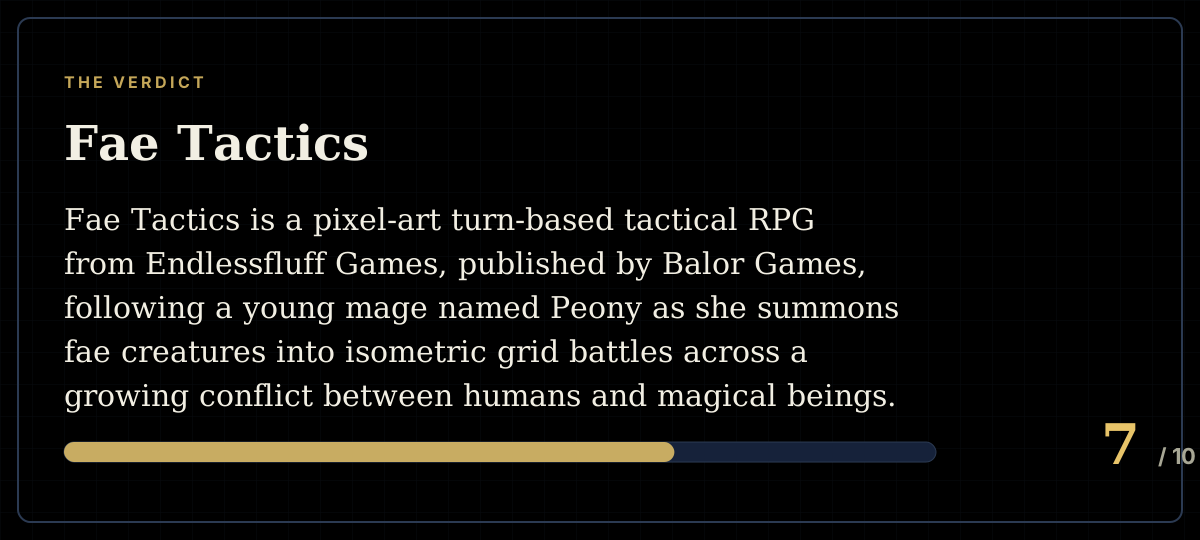
The short versionWanderer Editorial