Game review
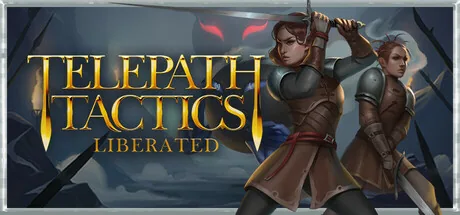
Telepath Tactics Liberated
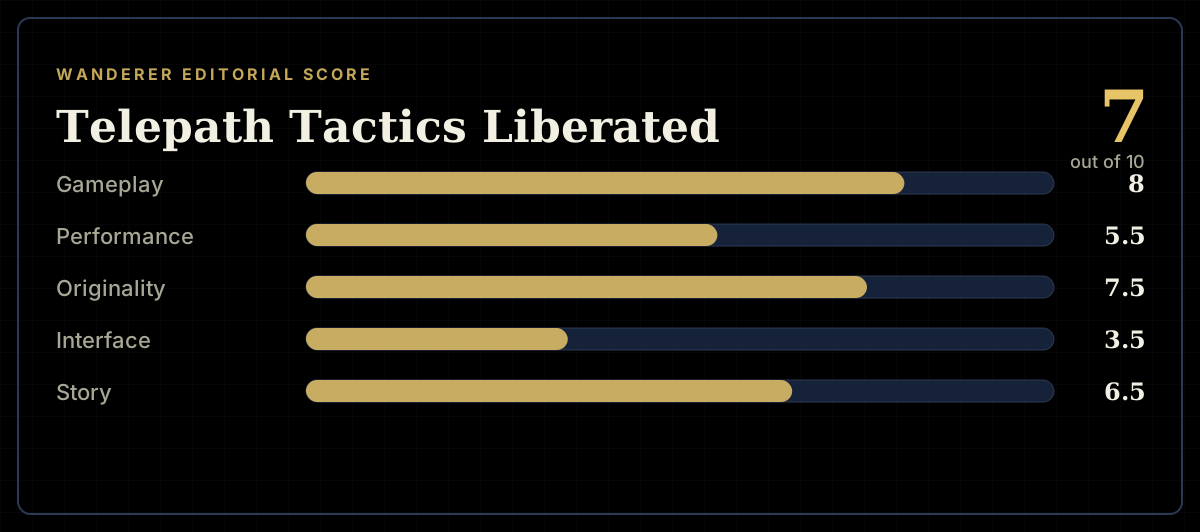
7 / 10
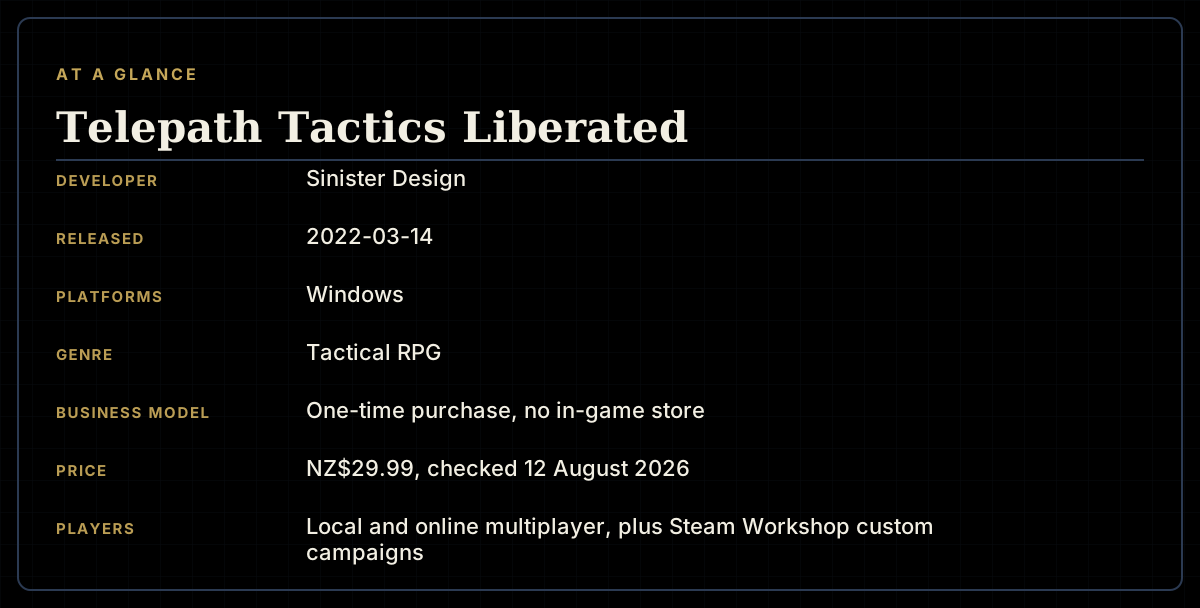
- Developer
- Sinister Design
- Publisher
- indie.io
- Released
- 14 March 2022
- Platforms
- Windows
- Genre
- Tactical RPG
- Monetisation
- One-time purchase, no in-game store
- Players
- Local and online multiplayer, plus Steam Workshop custom campaigns
The short version
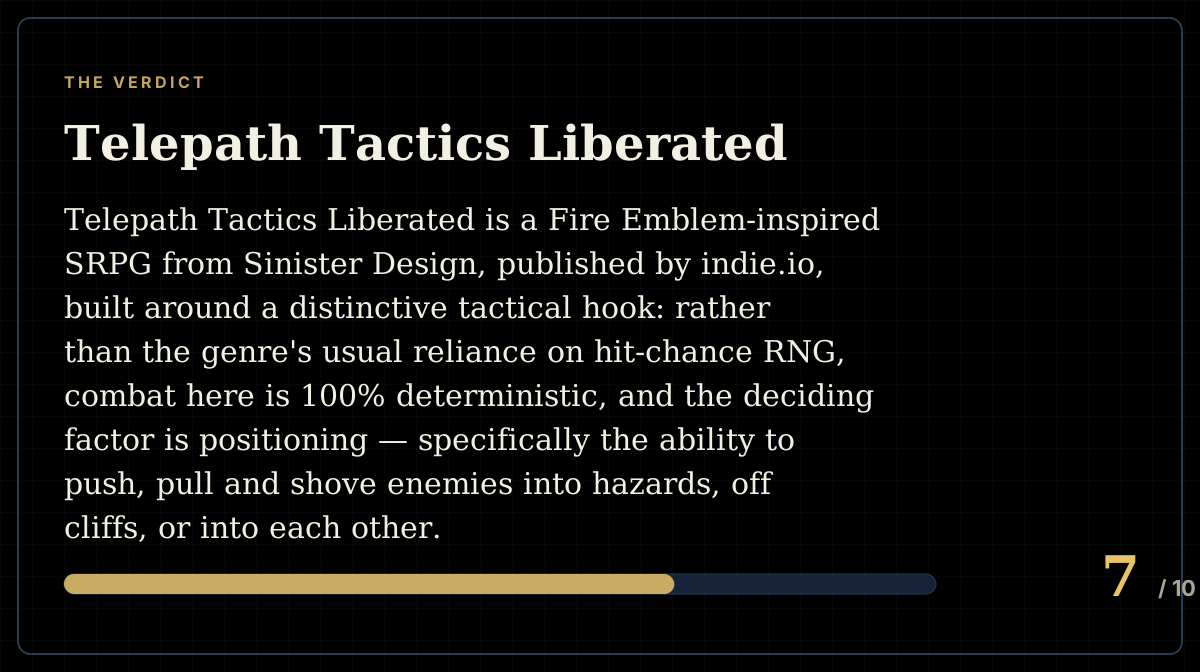
Telepath Tactics Liberated is a Fire Emblem-inspired SRPG from Sinister Design, published by indie.io, built around a distinctive tactical hook: rather than the genre's usual reliance on hit-chance RNG, combat here is 100% deterministic, and the deciding factor is positioning — specifically the ability to push, pull and shove enemies into hazards, off cliffs, or into each other. Released 14 March 2022 as an overhaul of the original 2015 Telepath Tactics, it sits at Very Positive across 142 English-language reviews (~83.8%), and this review's read of the full sample finds an unusually consistent shape to that reception: reviewers with genuinely enormous playtime — several in the thousands of hours — praise the tactical depth, the built-in campaign editor, and a developer specifically credited for still responding to community posts years after release. Set against that, the same committed playerbase is remarkably unified on one specific complaint: the user interface, which multiple high-hour reviewers independently call among the worst they've encountered in the genre, even while continuing to play hundreds of hours past that frustration.
Biggest strengths
- Combat is fully deterministic rather than RNG-based, removing the luck-driven misses that define much of the genre and putting the entire outcome on positioning and planning
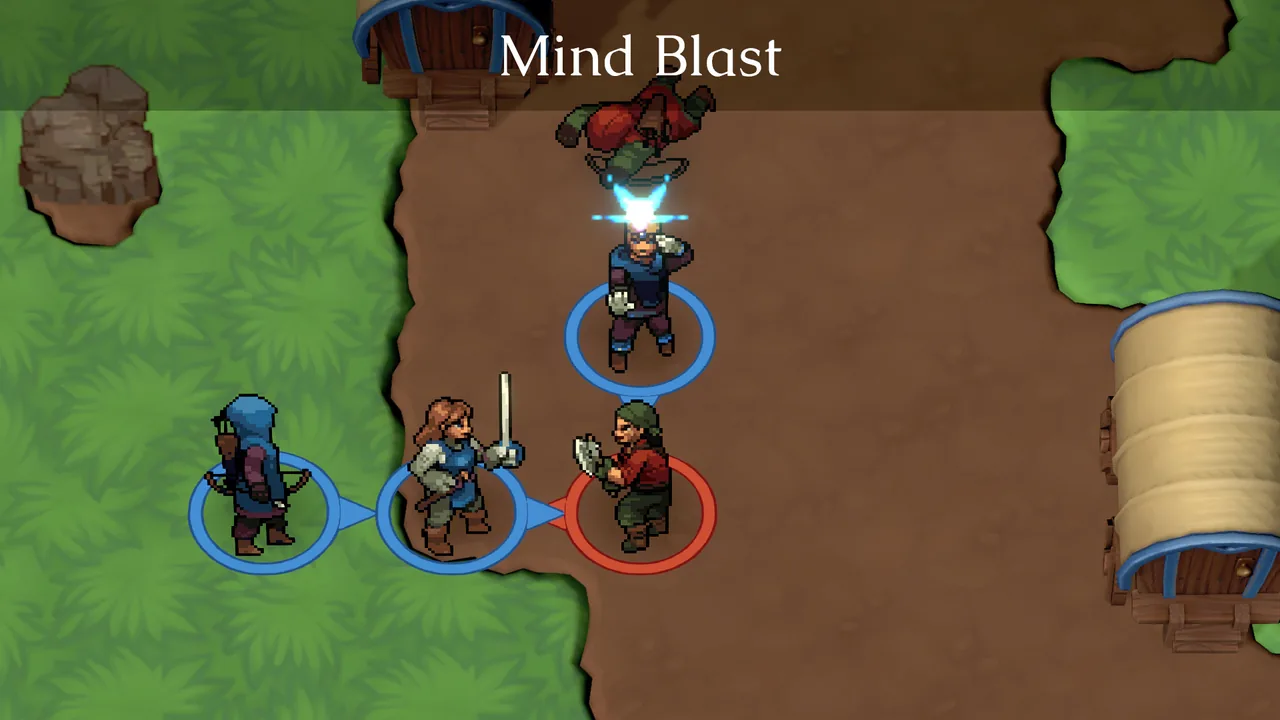
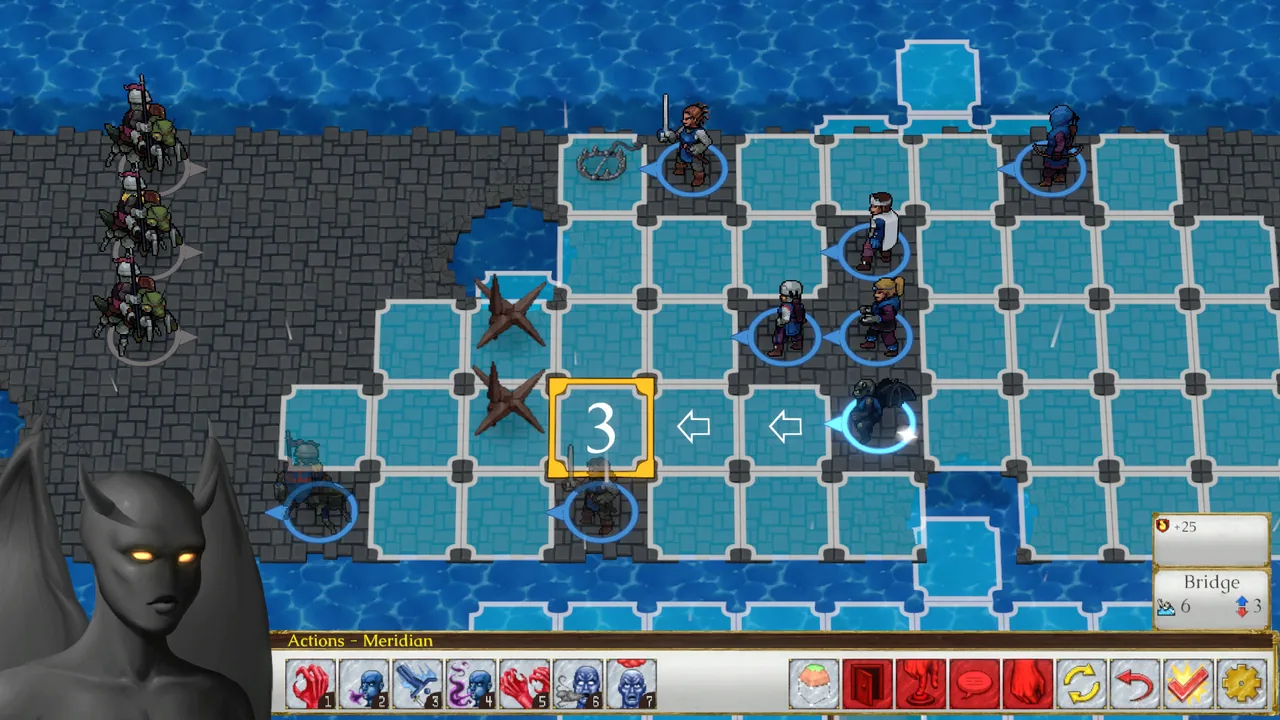
- The push/pull/shove system — knocking enemies into lava, off cliffs, or into each other — is this review's most consistently praised mechanic, described by reviewers as genuinely distinctive rather than a reskinned Fire Emblem clone
- The built-in campaign editor draws sustained praise for its depth and modding potential, with Steam Workshop support extending the game well past its own campaign
Biggest weaknesses
- The user interface is this review's single most consistent complaint, with reviewers who have logged well over a thousand hours independently describing it as clunky, unintuitive, and in one case "the worst I have ever seen"
- Performance issues on larger maps — frame rate drops and stuttering — recur across the negative sample, alongside a file size some reviewers consider excessive for the visual fidelity on offer
- Several reviewers report specific, progress-blocking bugs, including enemy units getting stuck mid-turn and locking up the game entirely on at least one level
Who it's for: SRPG veterans looking for a genuinely different tactical hook than Fire Emblem's RNG, and players drawn to strong mod/campaign-editor support; less suited to anyone put off by rough, dated UI and willing to bounce off a game for that reason alone.
Our recommendation: A mechanically excellent tactics game that its most dedicated players love despite, not because of, its interface — worth pushing through the UI friction for the combat and editor underneath.
7 / 10
Introduction
Telepath Tactics Liberated takes the shape of a Fire Emblem-inspired SRPG and then removes the one mechanic that most defines the genre's reputation: dice-roll hit chances. Combat here is fully deterministic — every attack lands exactly as predicted, and the entire tactical puzzle rests on positioning, terrain, and a shove mechanic that lets players knock enemies off cliffs, into lava, or straight into each other. Developed by Sinister Design and published by indie.io, this is an overhaul release of the original 2015 Telepath Tactics, launched as its own Steam entry on 14 March 2022 for NZ$29.99. More than four years on, it sits at Very Positive across 142 English-language reviews — a small enough sample that this review reads it in full, and one dominated by reviewers with genuinely extraordinary time invested: playtimes in the thousands of hours recur throughout both the positive and negative samples.
Tactics without the dice
The deterministic combat system is the clearest throughline in this review's positive sample, and it's praised for a specific reason: it makes every loss the player's own fault. Reviewers repeatedly credit the removal of RNG-driven misses as forcing genuine tactical accountability — there's no blaming a bad roll when a 100%-certain outcome goes wrong, only a positioning mistake to learn from. Layered on top of that is the push/pull/shove system, which several reviewers single out as the game's real signature idea: enemies can be knocked into hazardous terrain, off ledges, or into each other, turning positioning from a defensive concern into an offensive weapon in its own right. One reviewer with 1,991 hours logged called it their favourite tactical turn-based game since Final Fantasy Tactics Advance, specifically citing a final battle that genuinely surprised them — high praise from someone who's clearly played a great deal of the genre.
A developer still showing up years later
A theme this review found more specific and more unusual than generic "good developer support" praise: multiple reviewers credit Sinister Design directly for responding to community posts and questions years after the game's release. One reviewer with 6,301 hours logged wrote plainly that they were impressed the developer replied to their post within a day, "on a game that was released years ago." For a small indie studio, that kind of durable, ongoing engagement is genuinely rare, and it pairs well with the game's other standing asset — a built-in campaign editor with Steam Workshop support that reviewers credit with real depth, giving the game a modding and custom-content life well beyond its own campaign.
The interface problem, from the people who kept playing anyway
Set against all of that, this review's clearest and most consistent negative finding is the user interface, and what makes it credible is exactly who's raising it. This isn't a complaint from players who bounced off the game early — it comes specifically and repeatedly from reviewers with enormous logged playtime, the people best positioned to have adapted to a rough UI if adaptation were possible. One reviewer at 2,402 hours, having completed the full campaign and clearly appreciating the core mechanics, still described the interface as "really the worse I have ever seen... It's a nightmare." Another, at 1,302 hours, praised the strategic gameplay while separately flagging poor optimisation on specific maps as a genuine drag on immersion. That combination — deep, sustained engagement with the tactics alongside unresolved frustration with the interface wrapped around them — is a more informative signal than either complaint or praise in isolation would be on its own.
Performance issues compound the UI complaints rather than standing fully apart from them: frame rate drops and stuttering on larger maps recur across the negative sample, and at least one reviewer called the game's roughly 11GB install size excessive relative to its visual fidelity. More seriously, a handful of reviewers report genuinely progress-blocking bugs — one described being unable to finish a specific level because an enemy unit gets stuck mid-turn and locks up the game entirely, alongside a separate report of units appearing to float several tiles above staircases rather than moving through them correctly.
Story, writing, and a specific push/pull design quibble
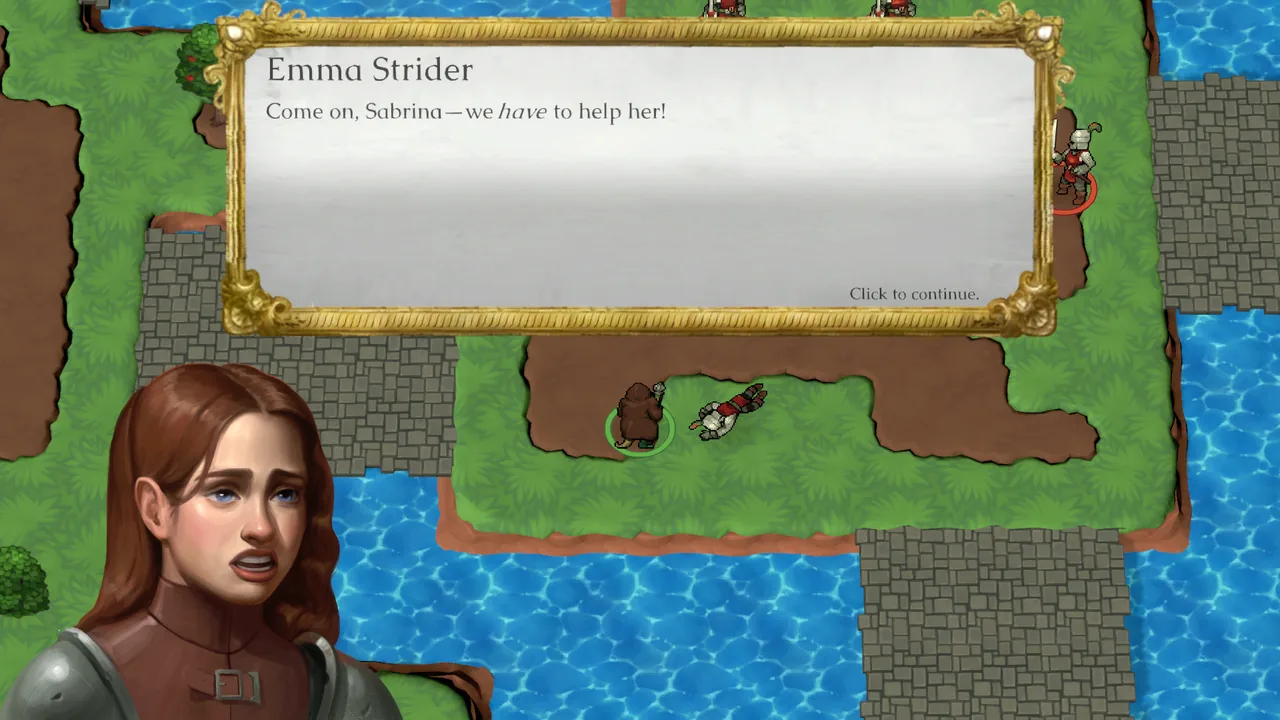
Story and dialogue writing land in a middle zone across this review's sample — described as serviceable and occasionally engaging rather than a standout, with a minority of reviewers specifically objecting to particular aspects of the game's character writing. Worth noting as a real theme in the sample without dwelling on it further, since it's a considerably smaller share of the negative reviews than the UI and performance complaints above. On the mechanical side, one detailed reviewer raised a specific design quibble with the signature push mechanic itself: shoving an enemy into a puddle causing them to "start drowning" and miss a turn struck them as a slightly misplaced application of an otherwise strong system — a fair, specific critique of implementation rather than a rejection of the core idea.
Final Verdict
Telepath Tactics Liberated earns its Very Positive score on the strength of a genuinely distinctive tactical identity: deterministic combat that rewards positioning over luck, a shove mechanic that turns terrain into a weapon, and a campaign editor with real staying power, all backed by a developer reviewers credit for showing up years after launch. What keeps it from a stronger recommendation is an interface its own most committed fans — people with thousands of hours logged — describe as genuinely bad, alongside real performance and stability rough edges on larger maps. The fact that so many high-playtime reviewers pushed through that friction anyway says something real about how strong the tactics underneath actually are. For SRPG players willing to tolerate a dated, clunky UI in exchange for genuinely novel combat design, this is a deep cut worth digging up.
Pros and cons
Pros
- Combat is fully deterministic rather than RNG-based, removing the luck-driven misses that define much of the genre and putting the entire outcome on positioning and planning
- The push/pull/shove system — knocking enemies into lava, off cliffs, or into each other — is this review's most consistently praised mechanic, described by reviewers as genuinely distinctive rather than a reskinned Fire Emblem clone
- The built-in campaign editor draws sustained praise for its depth and modding potential, with Steam Workshop support extending the game well past its own campaign
- The developer is specifically credited by multiple reviewers for responding to community posts and questions years after release, an unusually durable level of support for an indie title
Cons
- The user interface is this review's single most consistent complaint, with reviewers who have logged well over a thousand hours independently describing it as clunky, unintuitive, and in one case "the worst I have ever seen"
- Performance issues on larger maps — frame rate drops and stuttering — recur across the negative sample, alongside a file size some reviewers consider excessive for the visual fidelity on offer
- Several reviewers report specific, progress-blocking bugs, including enemy units getting stuck mid-turn and locking up the game entirely on at least one level
- Story and dialogue writing draws a consistent "serviceable rather than excellent" assessment, with a minority of reviewers specifically objecting to aspects of the game's character writing
Screenshots
-
Telepath Tactics LiberatedImage: indie.io via Steam -
Telepath Tactics LiberatedImage: indie.io via Steam -
Telepath Tactics LiberatedImage: indie.io via Steam -
How the review scores each part of the gameWanderer Editorial -
The essentials at a glanceWanderer Editorial -
The short versionWanderer Editorial