Game review
ENDSTATION
5.6 / 10
- Developer
- bal_duin
- Publisher
- bal_duin
- Released
- 6 March 2026
- Platforms
- Windows
- Genre
- Strategy
- Monetisation
- Premium
- Players
- Single-player only
The short version
ENDSTATION is a $2.99 game from solo developer bal_duin, released 6 March 2026, a Farkle-based dice gambling game set on a mysterious subway train, with unlockable special dice and escalating opponents. This review's small sample is Positive, praising an addictive push-your-luck loop and eerie atmosphere, tempered by one detailed negative review arguing the underlying randomness is never meaningfully tamed.
Biggest strengths
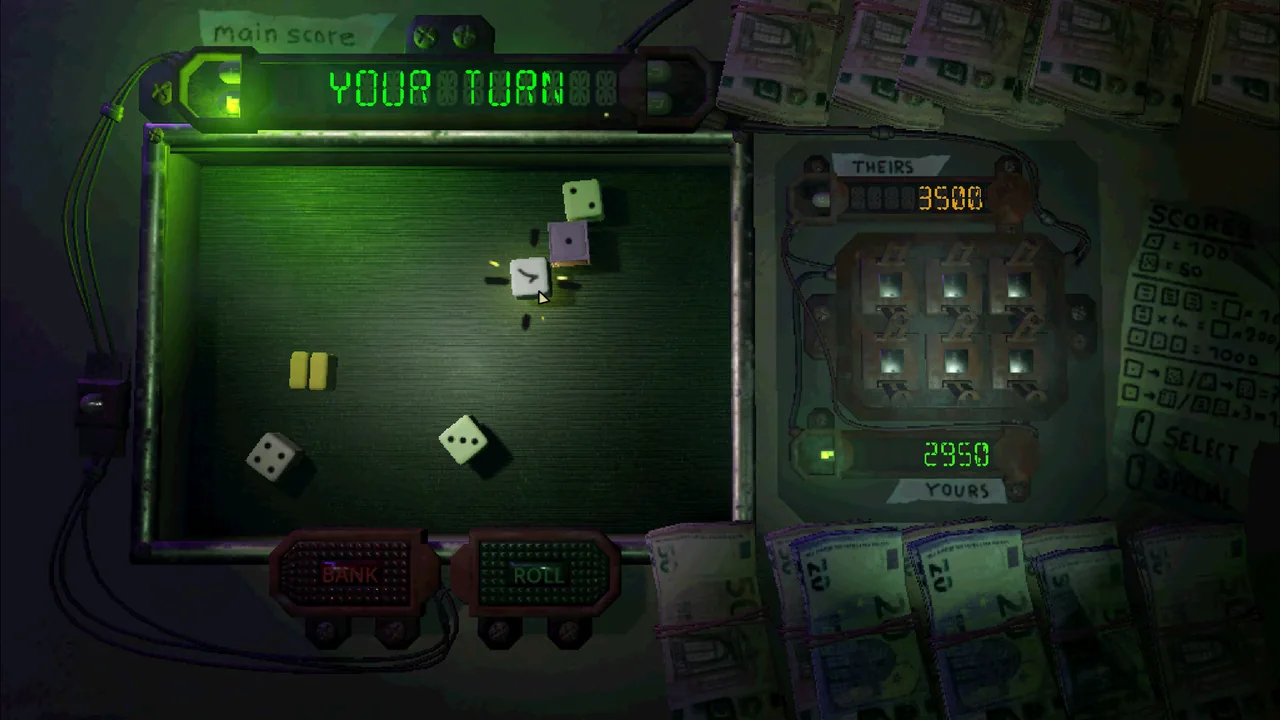
- This review checked the store's own detailed description and confirmed a clear, specific pitch: a physics-based dice adaptation of the classic game Farkle, wrapped in a betting structure and a mysterious subway setting, and this review's sample repeatedly confirmed the adaptation is easy to pick up for anyone already familiar with Farkle or similar dice games from titles like Kingdom Come: Deliverance
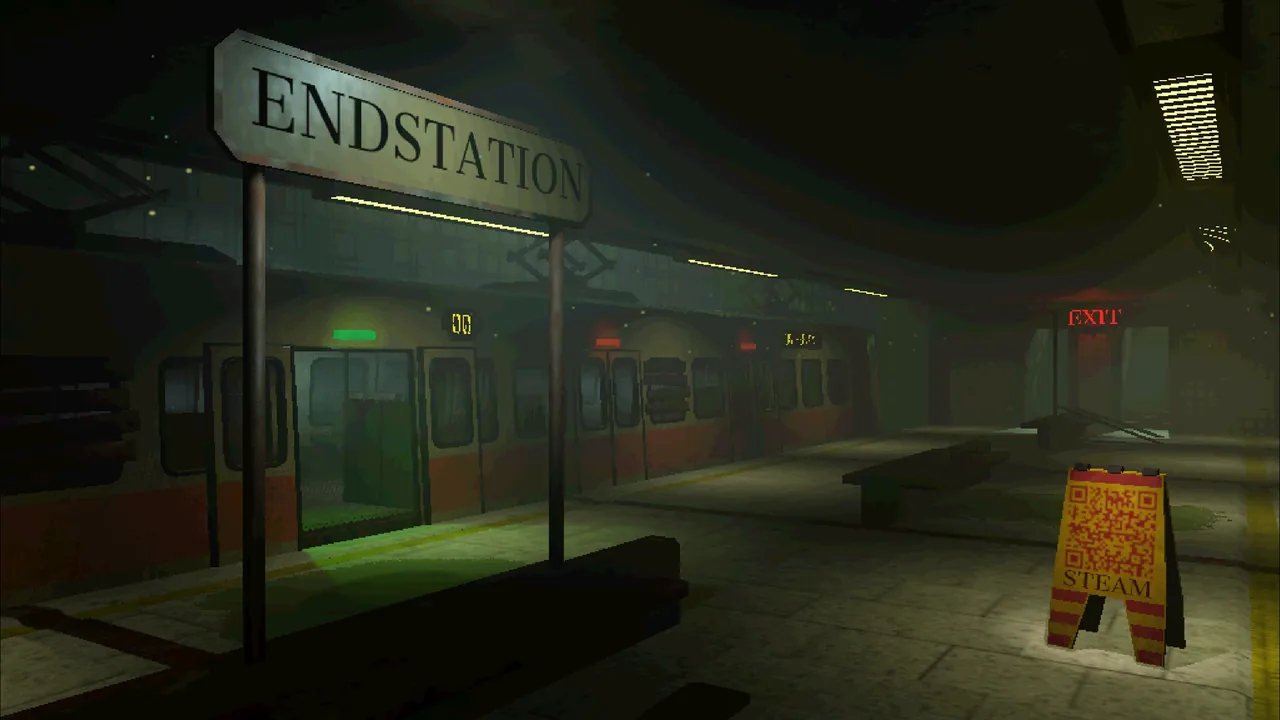
- This review's sample repeatedly praised the game's atmosphere specifically, with reviewers independently calling it 'eerie,' describing an 'authentic and mysterious subway ambience,' and even the game's most detailed negative review conceding the atmosphere as 'excellent' and the clearest standout element
- This review's sample was close to unanimous in describing the core loop as addictive despite its simplicity, with one reviewer calling it 'as simple as it is addicting' and another recommending it as a quick way to 'sit back and maybe play some dice' during a short break
Biggest weaknesses
- This review's sample includes one detailed negative review with a specific, substantive complaint: that beyond its betting structure and light special-dice drafting, the game does little to mitigate Farkle's inherent randomness, describing games lost to a string of consecutive lucky opponent turns with the reviewer reduced to 'watching AI have fun'
- That same detailed negative review specifically argued the special-dice deckbuilding layer is 'very light' and itself still prone to randomness, concluding the game offers an 'overly simplistic' strategic angle beneath its atmosphere, a serious, specific critique this review notes directly rather than dismisses
- This review's sample included one reviewer who felt the eerie subway atmosphere was underused, arguing the setting is 'ripe for horror' the game never actually leans into, a shared observation between at least two reviewers on opposite sides of the overall recommendation
Who it's for: Fans of push-your-luck dice games like Farkle who want a short, cheap, atmospheric roguelike spin, with tolerance for a game that leans on real physics-based randomness rather than heavily mitigating it.
Our recommendation: Recommended at its very low price for dice-game fans who enjoy leaning into genuine randomness, less so for players who want a deckbuilder where strategy reliably overrides luck.
5.6 / 10
Somewhere beneath the city, train number 00 rattles through the dark, and the only way off is to keep rolling dice you can't fully control. ENDSTATION is a $2.99 game from solo developer bal_duin, released 6 March 2026. This review draws on a small, entirely English-language sample of all 12 English-language reviews out of 23 lifetime reviews overall, rated Positive.
A clear, specific pitch for a well-known dice game
This review checked the store's own detailed description and confirmed a specific, honest premise: a physics-based adaptation of Farkle, the classic push-your-luck dice game, wrapped in a betting structure and a mysterious subway setting. This review's sample repeatedly confirmed that familiarity makes the game immediately approachable, with reviewers pointing to the same underlying dice game as seen in titles like Kingdom Come: Deliverance and finding the rules easy to pick up as a result.
Atmosphere this review's sample agreed on across the board
Even the sample's most critical review conceded one point without reservation: the atmosphere works. Reviewers independently called it "eerie," praised an "authentic and mysterious subway ambience," and one specifically described the setting as feeling like it could belong to a much darker, horror-adjacent game. This review reads that unanimous agreement, spanning both positive and negative reviews, as strong evidence the presentation is a genuine success regardless of how reviewers felt about the mechanics underneath it.
A core loop this review's sample called addictive despite its simplicity
This review's sample was close to unanimous that the moment-to-moment loop of rolling, betting, and drafting special dice is genuinely compelling, with one reviewer calling it "as simple as it is addicting" and several others recommending it specifically as a short, low-commitment session to unwind with. This review reads that consistency as evidence the core gameplay hook works as intended for most players, even before weighing the deeper strategic complaints raised elsewhere in the sample.
A detailed, substantive critique of the game's reliance on chance
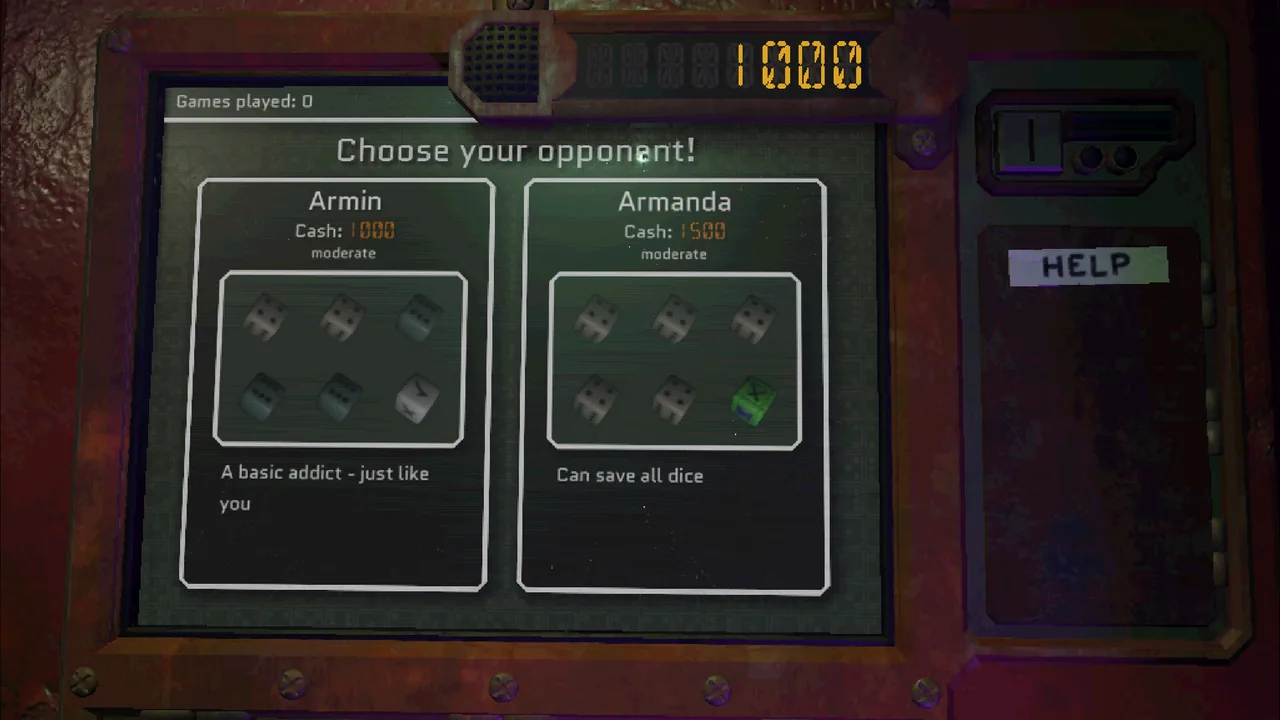
Not every account in this review's sample was positive. One detailed negative review argued that beyond its betting layer, the game does little to meaningfully mitigate Farkle's inherent randomness, describing losing runs to a string of consecutive lucky opponent turns that left the reviewer "essentially watching AI have fun." That same review specifically criticized the special-dice deckbuilding layer as "very light" and still prone to randomness, concluding the strategic angle is thinner than the atmosphere suggests. This review treats that critique as a serious, specific counterweight worth taking at face value for players who want strategy to reliably outweigh luck.
A shared observation about unused horror potential
Interestingly, this review's sample includes reviewers on both sides of the overall verdict independently making the same observation: the eerie subway setting feels "ripe for horror" the game never fully commits to. One reviewer framed this as wasted potential specifically, while others treated the atmosphere's current restraint as a plus in its own right. This review notes that split as a useful signal for prospective buyers about exactly what tone to expect.
What the achievement data says about mastering genuine randomness
This review checked the Steam global achievement API and found a steep completion curve across ten tracked achievements, from 84.5 percent down to just 0.9 percent for the rarest. This review reads that spread as consistent with both sides of this review's sample's account: an easy game to pick up and enjoy casually, but a genuinely difficult one to consistently master given its acknowledged, largely unmitigated reliance on chance.
A modest accessibility baseline, missing the one flag critics would want most
This review checked the store's accessibility feature-flag block directly and found four of nineteen tracked flags true: background volume controls, stereo sound, a mouse-only option, and play without quicktime events. Notably absent is adjustable difficulty, a real gap given that the game's own critics specifically flag difficulty swings driven by randomness as its central weakness, something a difficulty option could have directly addressed.
A solo developer's own words on the project
This review checked the store's own detailed description in full and found the developer, credited as Balduin, writing directly to players in a personal, unpolished voice, describing the game as "a solo project that was crafted with love and care for my friends" before being shared more widely. This review reads that framing as consistent with the game's overall scope and presentation, a short, tightly focused passion project rather than an attempt to compete with larger, more mechanically dense deckbuilding roguelikes at a much higher price point.
A steady, honest development history
This review checked the developer's own partner-events feed directly and found six posts tracing a clean, conventional path: a February 2026 demo titled "Probefahrt," a release-date announcement, the confirmed 6 March 2026 launch, and a 1.1 patch in July 2026 alongside a short post noting the game was "Made and composed in Germany." This review reads that steady, modest cadence as consistent with a genuine solo release with no port-trap or early-access-graduation concerns, and as further evidence supporting the game's low, honest price point relative to its scope.
Verdict
ENDSTATION delivers a genuinely atmospheric, addictive short dice-gambling experience at an extremely low price, but a detailed, specific critique of its unmitigated reliance on chance is worth taking seriously for players who want strategy to consistently matter more than luck. At $2.99, this remains an easy recommendation for fans of Farkle-style push-your-luck games who are comfortable leaning fully into genuine randomness rather than expecting a deckbuilder that reliably tames it.
Pros and cons
Pros
- This review checked the store's own detailed description and confirmed a clear, specific pitch: a physics-based dice adaptation of the classic game Farkle, wrapped in a betting structure and a mysterious subway setting, and this review's sample repeatedly confirmed the adaptation is easy to pick up for anyone already familiar with Farkle or similar dice games from titles like Kingdom Come: Deliverance
- This review's sample repeatedly praised the game's atmosphere specifically, with reviewers independently calling it 'eerie,' describing an 'authentic and mysterious subway ambience,' and even the game's most detailed negative review conceding the atmosphere as 'excellent' and the clearest standout element
- This review's sample was close to unanimous in describing the core loop as addictive despite its simplicity, with one reviewer calling it 'as simple as it is addicting' and another recommending it as a quick way to 'sit back and maybe play some dice' during a short break
- This review's sample repeatedly praised the value at the $2.99 price point specifically, with one reviewer calling it 'worth every penny' and another describing it as 'a lot of fun for a small price to pay,' consistent with the store's own framing of runs lasting around forty minutes with mid-run saving
Cons
- This review's sample includes one detailed negative review with a specific, substantive complaint: that beyond its betting structure and light special-dice drafting, the game does little to mitigate Farkle's inherent randomness, describing games lost to a string of consecutive lucky opponent turns with the reviewer reduced to 'watching AI have fun'
- That same detailed negative review specifically argued the special-dice deckbuilding layer is 'very light' and itself still prone to randomness, concluding the game offers an 'overly simplistic' strategic angle beneath its atmosphere, a serious, specific critique this review notes directly rather than dismisses
- This review's sample included one reviewer who felt the eerie subway atmosphere was underused, arguing the setting is 'ripe for horror' the game never actually leans into, a shared observation between at least two reviewers on opposite sides of the overall recommendation
- This review checked the Steam global achievement API and found a steep completion curve across ten tracked achievements, from 84.5 percent down to 0.9 percent for the rarest, consistent with a short core loop that's easy to start but genuinely difficult to fully master given its acknowledged reliance on chance
- This review checked the store's accessibility feature-flag block directly and found four of nineteen tracked flags true, background volume controls, stereo sound, a mouse-only option, and playable without quicktime events, a modest baseline missing adjustable difficulty for a game whose own critics specifically flag difficulty swings driven by randomness
Screenshots
-
ENDSTATIONImage: bal_duin via Steam -
ENDSTATIONImage: bal_duin via Steam -
ENDSTATIONImage: bal_duin via Steam