
Game review
Apokerlypse Review: A Chaotic, Balatro-Flavored Card Roguelike (Just Don't Call It Poker)
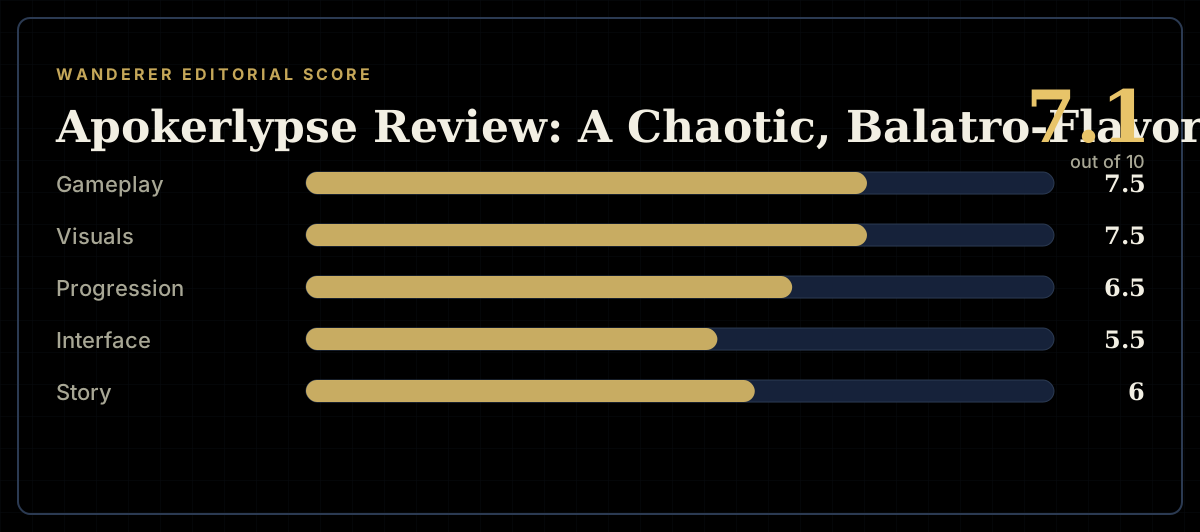
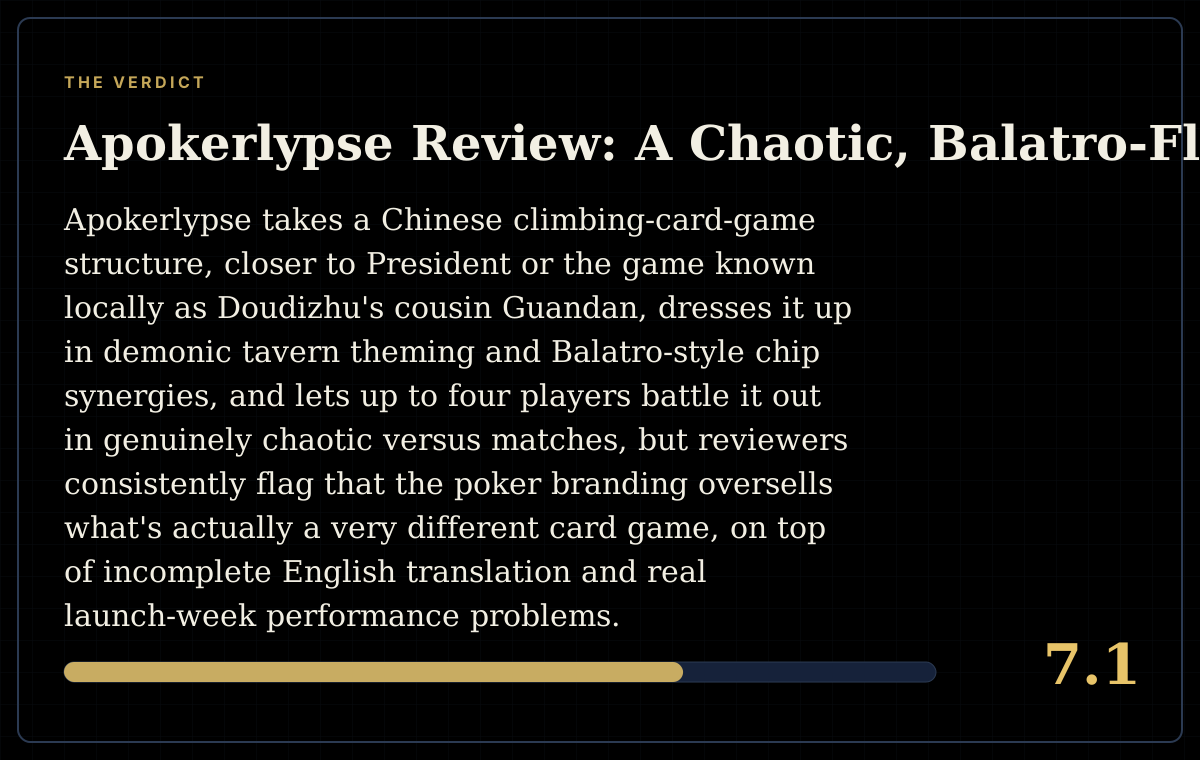
7.1 / 10
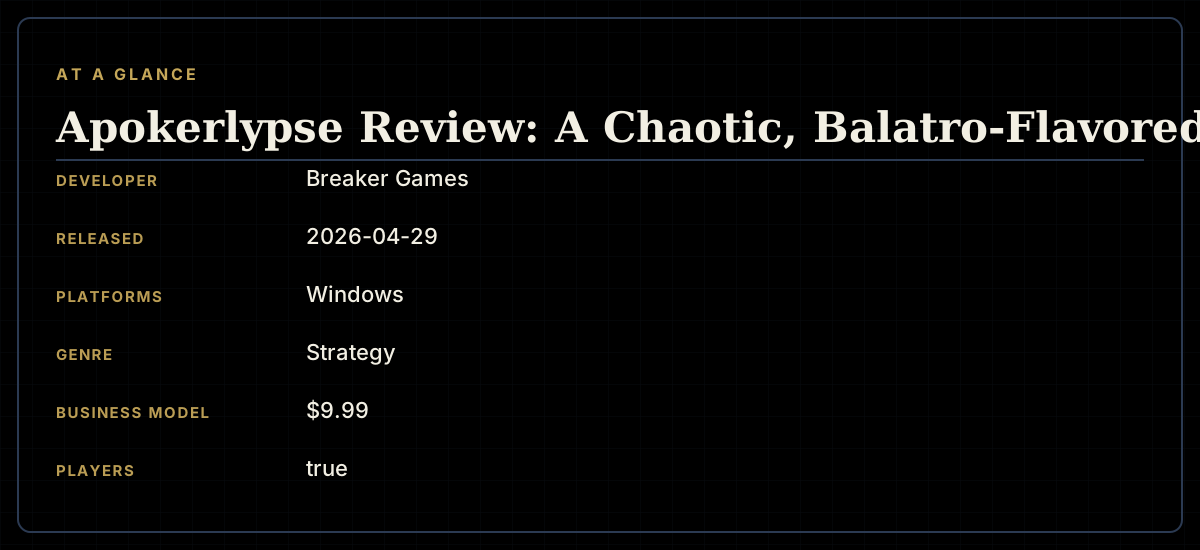
- Developer
- Breaker Games
- Publisher
- Breaker Games
- Released
- 29 April 2026
- Platforms
- Windows
- Genre
- Strategy
- Monetisation
- $9.99
- Players
- true
The short version
Apokerlypse takes a Chinese climbing-card-game structure, closer to President or the game known locally as Doudizhu's cousin Guandan, dresses it up in demonic tavern theming and Balatro-style chip synergies, and lets up to four players battle it out in genuinely chaotic versus matches, but reviewers consistently flag that the poker branding oversells what's actually a very different card game, on top of incomplete English translation and real launch-week performance problems.
Biggest strengths
- Genuinely chaotic and enjoyable two-to-four-player versus matches that reviewers consistently cite as the game's biggest strength and reason to keep coming back
- A varied roster of characters, each built around distinct chip synergies and playstyles rather than simple passive skill differences, giving real build variety between runs
- An active developer that reviewers credit with fast bug-fix turnarounds and responsive patches following player feedback
Biggest weaknesses
- Marketing and branding built around poker that reviewers say is actively misleading, since the actual card game is a climbing/shedding game with little resemblance to real poker hands
- Incomplete English translation at launch, with some later-unlocked characters and Steam achievements left entirely untranslated
- Reports of frequent lag, frame drops, and input delays in both single-player and online matches, along with disconnection issues
Who it's for: A strong fit for fans of climbing card games like President, Scum, or Guandan looking for a roguelike, Balatro-adjacent spin with real multiplayer depth; a weaker fit for players expecting an actual poker variant, or those who need a fully translated, polished experience out of the gate.
Our recommendation: Try it on sale
7.1 / 10
Welcome to the tavern at the end of the world
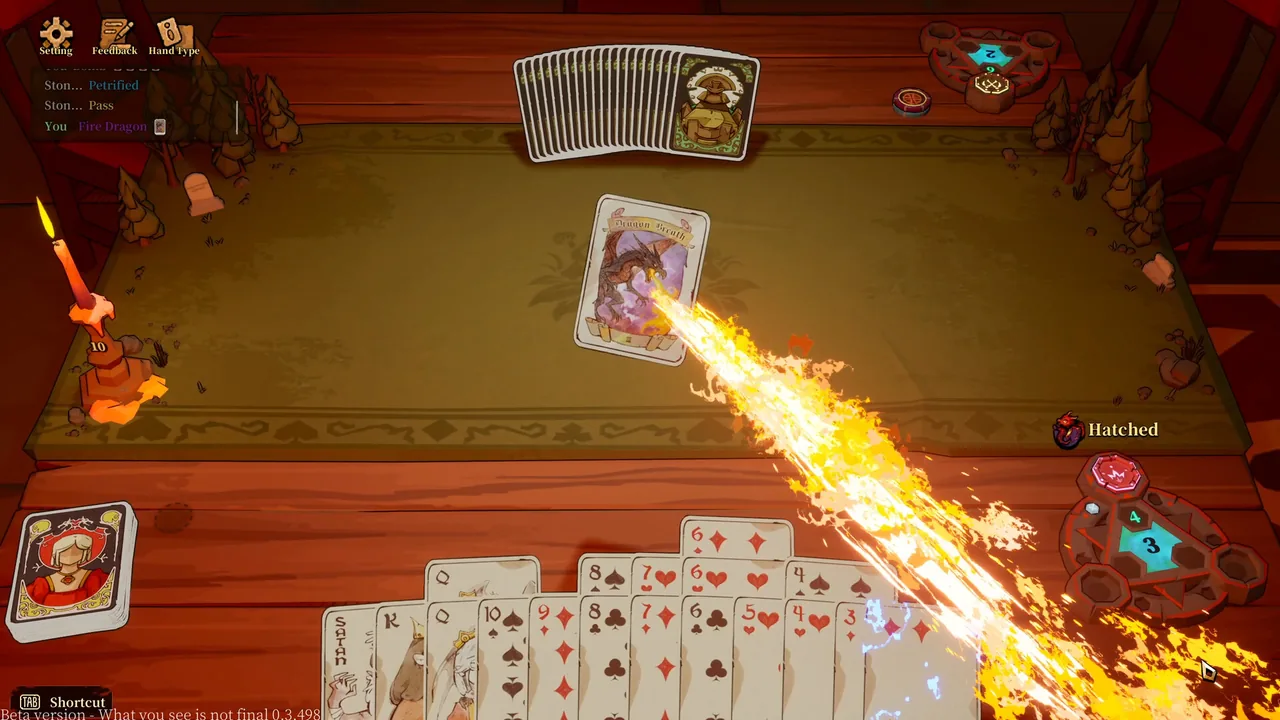
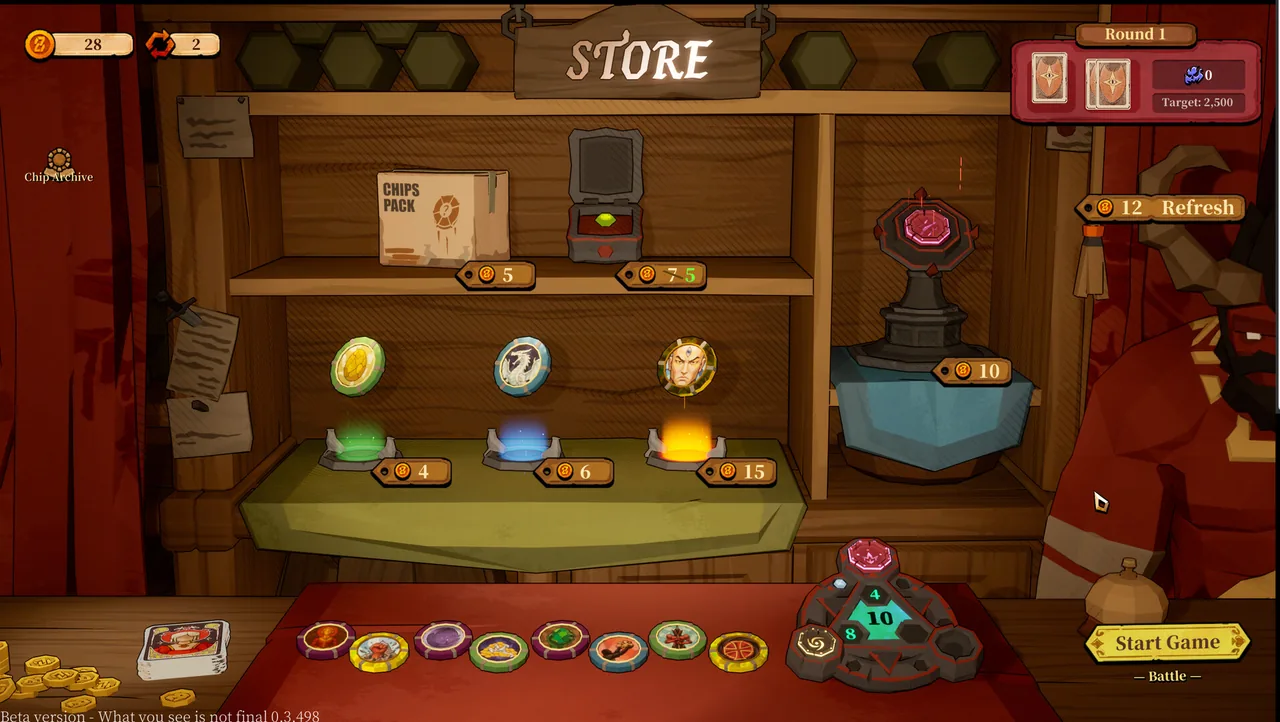
Apokerlypse casts players as card sharks battling their way through a demon-run tavern at the end of the world, playing hands of cards enhanced with roguelike "demon chip" upgrades that let players chain together increasingly absurd combos as a run progresses. Developed and published by Breaker Games, it launched at $9.99 with a promise that "even if you know absolutely nothing about poker, you can jump in almost instantly." At 742 reviews and 82% positive, that pitch has clearly resonated with a lot of players, even though, as a striking number of reviewers point out, the game underneath the marketing isn't really poker at all.
Not poker, and that's mostly fine
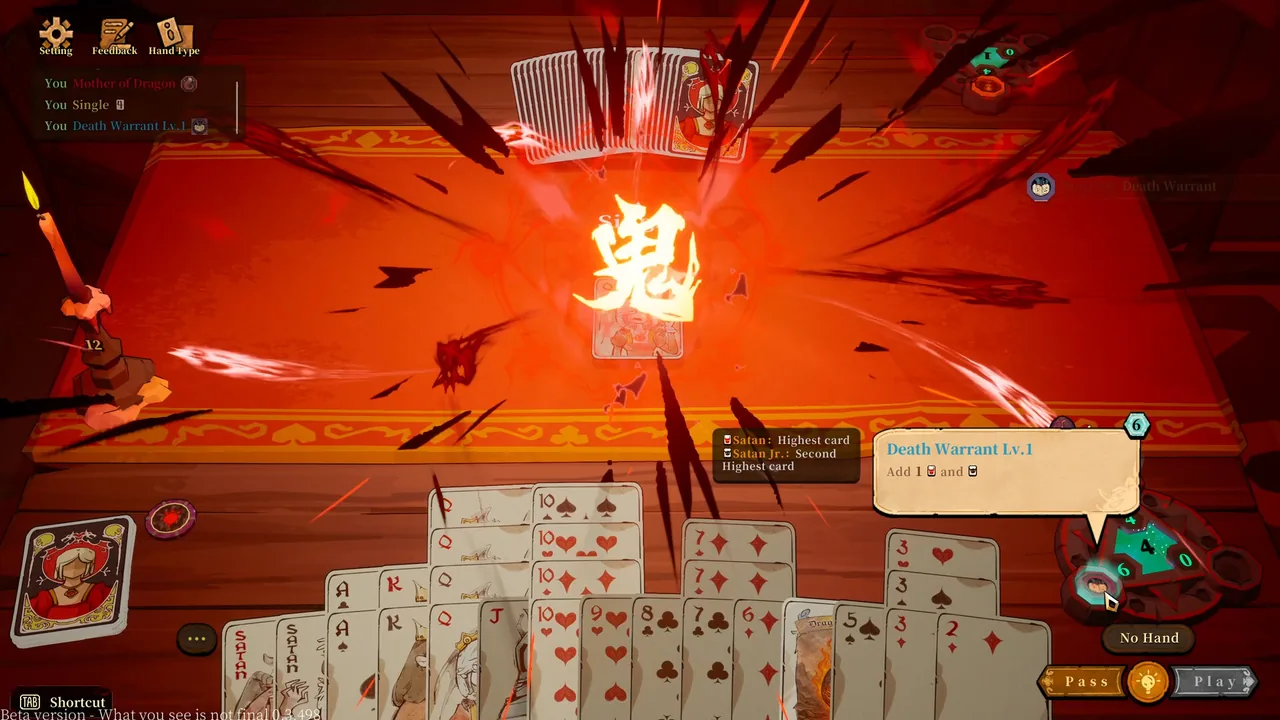
The single most repeated observation across the review base, positive and negative alike, is that Apokerlypse's actual card game is a shedding or climbing-style game, closer to games in the President, Scum, or Guandan family, where players race to empty their hand by playing increasingly strong sets, rather than anything resembling a traditional poker hand. One reviewer flatly stated the game "has almost nothing to do with poker," while another called it "some kind of Asian bastardization of poker where pairs and full houses can only be played with colored sets." For players expecting genuine poker mechanics, this disconnect is a real source of frustration. But for reviewers willing to take the game on its own terms, the reaction flips: several specifically praise the climbing-card foundation as a smart, underused base for a card roguelike, arguing the title itself, while misleading, undersells a genuinely distinct and enjoyable card game once you understand what you're actually playing.
Chaotic multiplayer that reviewers can't stop praising
Where the review base agrees almost unanimously is on multiplayer. Reviewers consistently single out two-to-four-player versus matches as the game's high point, describing them as chaotic, fast-paced, and unusually deep for the genre. One reviewer specifically called out how rare it is to see well-supported multiplayer in a roguelike card game at all, arguing it deserves more attention for that alone. The character roster draws similar praise, with reviewers noting that each character brings genuinely distinct chip synergies and mechanics to the table rather than simply swapping in a different passive stat bonus, giving real replay variety between characters rather than just between runs.
Rough translation and a shaky launch
A real cluster of criticism centers on polish. Multiple reviewers report that English translation, while functional for the core game, breaks down for some of the later-unlocked characters and for the game's Steam achievements, which several reviewers say remain entirely untranslated. One reviewer, generally positive on the game, called this out directly as "a cautionary thumbs up" for buyers who'd find that a dealbreaker. Separately, a detailed negative review describes serious performance issues at launch, citing frequent lag, frame drops, and input delays in both single-player and online matches, along with outright disconnections, though multiple other reviewers note the game "runs better with updates," suggesting the developer has been actively working through these problems post-launch.
Cheating reports and diminishing build variety
A Chinese-language review flags a more serious concern for competitive players: reports of multiplayer cheating involving unlimited in-match chips and currency, a problem that, if widespread, would undercut the versus mode reviewers otherwise praise so highly. Separately, a smaller number of English-language reviewers note that after several hours, runs can start to feel repetitive, with one writing that despite plenty of modifiers, "nothing really changes the way you play the game." It's worth noting this isn't the dominant sentiment, most reviewers who log serious hours describe the opposite experience, but it's a real enough thread to flag for buyers weighing long-term replayability.
Setting expectations before you buy
Given how often the poker-versus-climbing-card confusion shows up in the review base, it's worth being direct about what buyers are actually signing up for. Apokerlypse plays like a demon-chip-powered version of a shedding game, where the goal each hand is to play a stronger set than the one before it until someone empties their hand, layered with roguelike upgrades that let characters bend or break those base rules as a run progresses. It has more in common with games like Tichu, President, or the Chinese game Guandan than with Texas Hold'em or five-card draw, and reviewers who go in expecting the latter are consistently the ones who come away disappointed regardless of how well the game executes its actual design. Reviewers who understand this going in, whether from prior experience with climbing card games or simply because they adjusted their expectations after a rocky first session, describe a much smoother, more enjoyable time with the roguelike systems layered on top of that unfamiliar foundation.
Verdict: a genuinely fun card roguelike wearing a misleading name
Apokerlypse's biggest obstacle might be its own branding: players who come in expecting poker are likely to leave disappointed, while players willing to take it as a climbing-card roguelike with real multiplayer depth tend to walk away enthusiastic. Strip away the marketing mismatch, and what's left is a chaotic, well-liked card game with a varied cast and an actively engaged developer, held back at launch by incomplete translation and real performance hiccups. It's a strong pick for card-game fans open to something different from Balatro's poker-hand structure, especially with friends, though newcomers should go in with accurate expectations about what kind of card game they're actually getting.
Pros and cons
Pros
- Genuinely chaotic and enjoyable two-to-four-player versus matches that reviewers consistently cite as the game's biggest strength and reason to keep coming back
- A varied roster of characters, each built around distinct chip synergies and playstyles rather than simple passive skill differences, giving real build variety between runs
- An active developer that reviewers credit with fast bug-fix turnarounds and responsive patches following player feedback
- A fresh, Balatro-adjacent take on card-roguelike design that multiple reviewers say stands out even in an increasingly crowded genre
Cons
- Marketing and branding built around poker that reviewers say is actively misleading, since the actual card game is a climbing/shedding game with little resemblance to real poker hands
- Incomplete English translation at launch, with some later-unlocked characters and Steam achievements left entirely untranslated
- Reports of frequent lag, frame drops, and input delays in both single-player and online matches, along with disconnection issues
- A Chinese-language report of multiplayer cheating involving unlimited in-match currency, alongside complaints from several reviewers about repetition and limited build variety after several hours
Screenshots
-
ApokerlypseImage: Breaker Games via Steam -
ApokerlypseImage: Breaker Games via Steam -
ApokerlypseImage: Breaker Games via Steam -
How the review scores each part of the gameWanderer Editorial -
Platform and release detailsWanderer Editorial -
The short versionWanderer Editorial