
Game review
Cupiclaw
7.5 / 10
- Developer
- Typin
- Publisher
- Typin
- Released
- 5 March 2026
- Platforms
- Windows
- Genre
- Strategy
- Monetisation
- Premium
- Players
- Single-player
The short version
Cupiclaw is a $9.99 game from developer and publisher Typin, released 5 March 2026, a roguelike deckbuilder built around water-filled claw machines where floating, sinking, and bobbing prizes turn every grab into a physics puzzle. This review's large, Very Positive sample is close to unanimous on the mechanics, but repeatedly flags genuine discomfort with the game's romance-plot writing.
Biggest strengths
- This review checked the store's own detailed description and confirmed a genuinely novel hook: a roguelike deckbuilder built around water-filled claw machines, where a changing water physics simulation makes every prize float, sink, or bob unpredictably, turning grabs into a genuine skill-and-luck puzzle rather than a simple timing test
- This review's sample was close to unanimous in praising the core gameplay loop even among otherwise critical reviewers, with one reviewer who ultimately could not recommend the game over its story still calling the mechanics 'mechanically brilliant' and 'a total blast'
- This review checked the developer's partner-events feed and found twenty-four posts spanning back to 2021, including a public demo, multiple playtests, and a Tiny Teams Festival appearance well before the March 2026 launch, followed by seven post-launch patches and a new difficulty mode update, real evidence of a long, carefully tested development runway and continued post-launch investment
Biggest weaknesses
- This review's sample repeatedly and independently raised discomfort with the game's central romance plot, with one detailed review describing the protagonist as written in a 'textbook stalking, harassing archetype' and stating that multiple completed runs never resolved into the satirical twist or redemption arc they kept hoping for, a serious, specific content concern this review does not treat as a minor gripe
- This review checked the Steam global achievement API and found a difficulty curve consistent with several reviewers' complaints about steep late-run punishment, a late-game story-completion achievement sits under a quarter of all players, and one reviewer specifically described later floors as feeling almost impossible to clear without extensive practice
- This review's sample included at least one detailed account of the game's difficulty spiking sharply and unpredictably between the demo and the final release, with a lack of clear failure feedback that reviewer said made losing runs feel arbitrary rather than instructive
Who it's for: Roguelike deckbuilder fans looking for a fresh, physics-driven hook, who are prepared to weigh a strong mechanical core against a storyline several reviewers found uncomfortable rather than charming.
Our recommendation: A confident recommendation on mechanics alone, tempered by a real, repeated content concern this review takes seriously rather than dismisses as a minority complaint.
7.5 / 10
A lost engagement ring, a broke fiancé, and an arcade full of water-filled claw machines standing between them. Cupiclaw is a $9.99 game from developer and publisher Typin, released 5 March 2026. This review draws on a substantial 130-review sample, rated Very Positive, with 92 English-language reviews read in depth.
A genuinely novel hook, confirmed directly
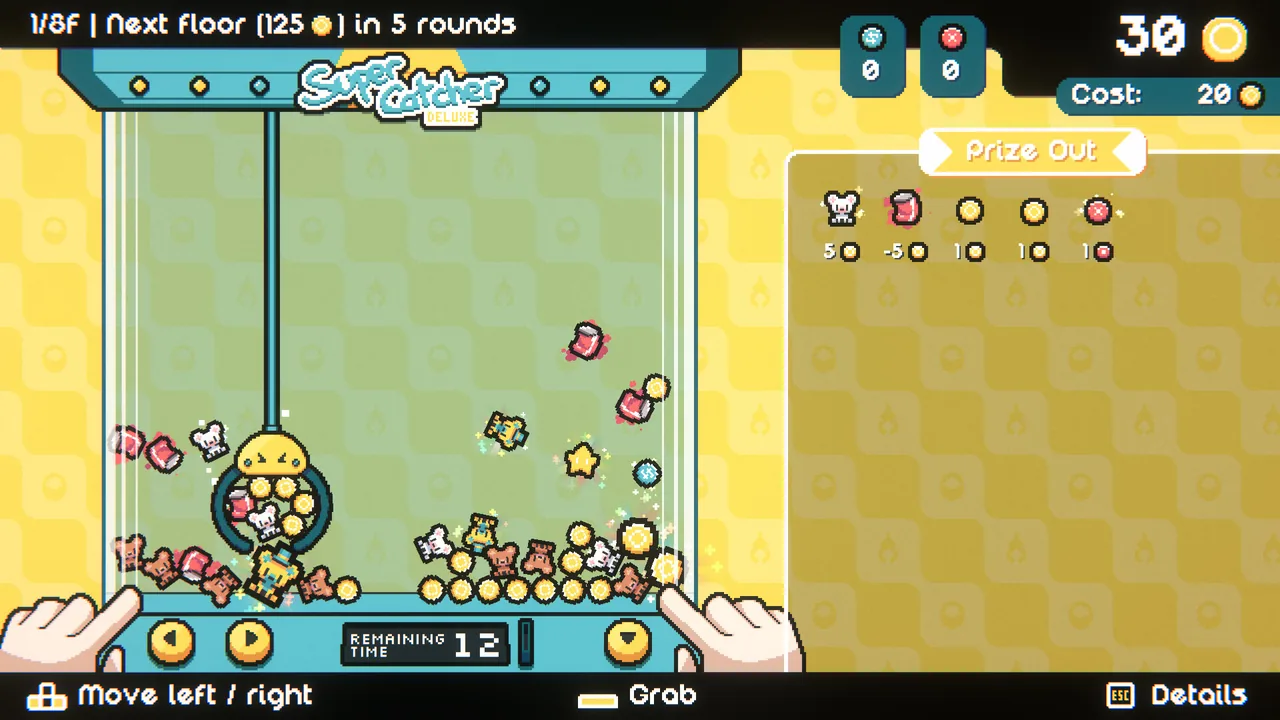
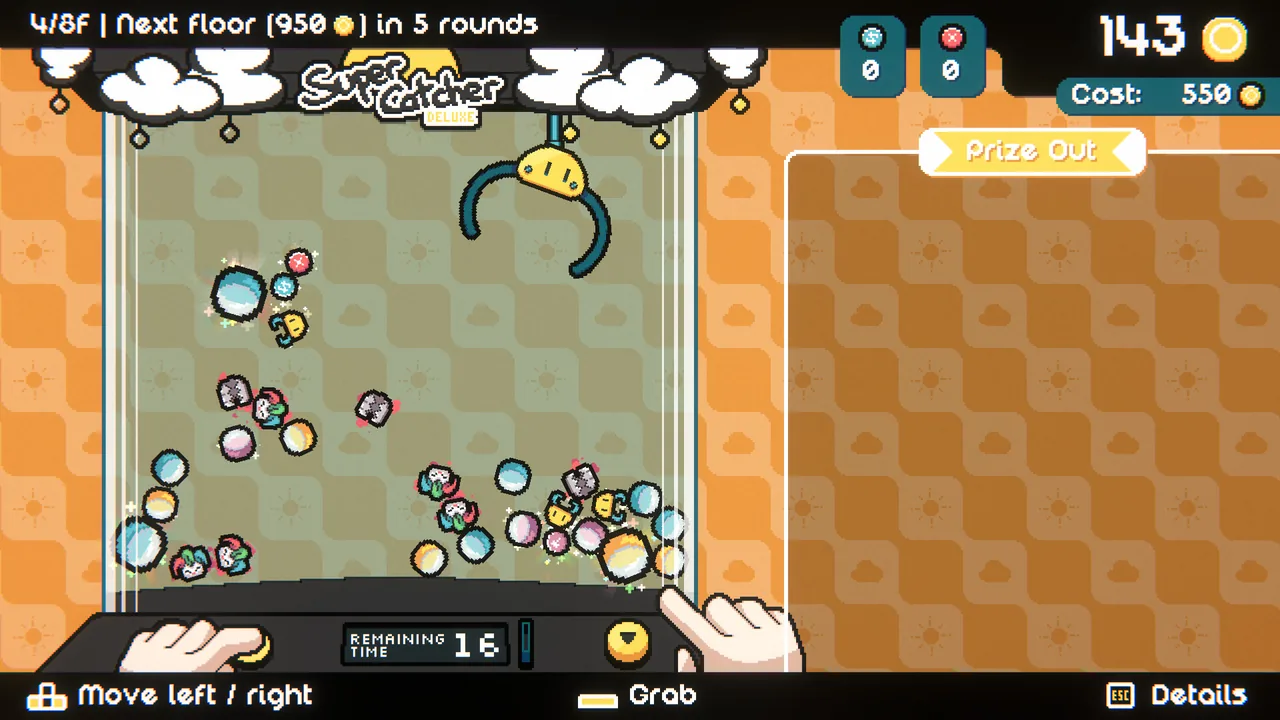
This review checked the store's own detailed description and confirmed a hook this review hasn't seen executed quite this way before: a roguelike deckbuilder built around water-filled claw machines, where a real-time water physics simulation makes every prize float, sink, or bob unpredictably as you grab. That turns each pull into a genuine skill-and-luck puzzle rather than a simple timing exercise, and this review's sample consistently treated that combination as the game's defining strength.
Mechanics nearly every reviewer agrees on
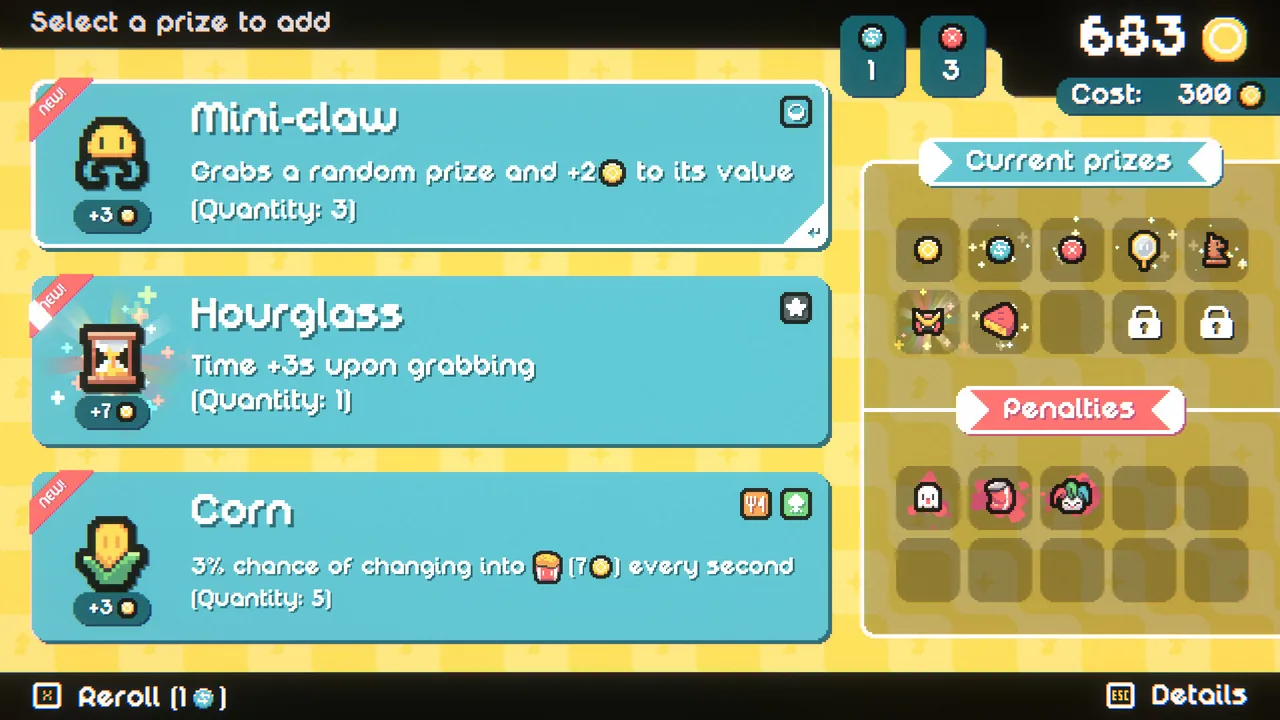
This review's sample is unusually consistent on the core gameplay loop, close to unanimous even among reviewers who couldn't recommend the game overall. One reviewer who ultimately declined to recommend Cupiclaw over its story still called the mechanics "mechanically brilliant" and "a total blast," describing the loop of building up a claw machine, leveling prizes, and managing curses as "fast-paced, breezy," with "that perfect endorphin rush you want from a good roguelite deckbuilder." That kind of agreement across an otherwise split sample is worth taking seriously as a signal.
A real, repeated content concern this review won't minimize
This review's sample repeatedly and independently raised discomfort with the game's central romance plot, in which the protagonist searches the arcade to win back a replacement engagement ring for his fiancée. One detailed review described the protagonist as written in a "textbook stalking, harassing archetype," reporting that five or six completed runs never resolved into the satirical twist or subversion they kept hoping for, calling the pattern "terminally gross" by the end. This review treats that as a specific, serious content concern rather than an isolated gripe, and notes it plainly for any player who weighs story content heavily in a purchase decision, even as most of this review's sample engaged with the story more positively, several specifically calling it "surprisingly funny and heartfelt."
What the achievement data says about difficulty
This review checked the Steam global achievement API and found a difficulty curve that lines up with a separate, repeated complaint in this review's sample: several reviewers described the game's later floors as punishingly difficult, with one specifically noting the final release felt considerably harder than the pre-launch demo, and another describing a lack of clear failure feedback that made losing runs feel arbitrary rather than instructive. A late-game story-completion achievement sits under a quarter of all players, consistent with those firsthand accounts of a steep late-run wall.
A long, visibly tested development history
This review checked the developer's partner-events feed directly and found twenty-four posts stretching back to 2021, including an early public demo, multiple community playtests, and a Tiny Teams Festival appearance well before the March 2026 launch, followed by seven post-launch patches and a dedicated new difficulty mode update. That's real, verifiable evidence of a carefully tested, long-gestating release rather than a rushed one, and it helps explain the mechanical polish this review's sample describes so consistently.
Solid accessibility coverage for a fast-paced arcade game
This review checked the store's accessibility feature-flag block directly and found six of nineteen tracked flags true, including adjustable difficulty, keyboard-only and mouse-only play options, and a design playable without timed input, a genuinely strong showing for a game built around fast, physics-driven claw grabs where twitch reflexes might otherwise be assumed necessary.
A tag list that's accurate, with one worth flagging
This review checked the store's own tag list against the detailed description and found it largely accurate, "Roguelike Deckbuilder," "Physics," and "Resource Management" all track directly to what this review's sample describes. One tag, "Gambling," is worth calling out directly rather than glossing over: it isn't inaccurate given the game's randomized claw grabs and reroll mechanics, but players sensitive to chance-based reward loops should know it's present before buying.
Weighing $9.99 against a strong core with a real caveat
At $9.99, Cupiclaw sits at a fair price for a mechanically inventive roguelike deckbuilder with a long, visibly supported development history behind it. This review weighs that strong mechanical foundation against the repeated, specific discomfort several reviewers reported with the story, a genuine caveat rather than a footnote, and prices its overall recommendation accordingly: confident on gameplay, more measured once the full package is considered.
How this compares to the wider deckbuilder-roguelite field
Roguelike deckbuilders are one of the most crowded genres on Steam, and most compete on card synergies alone. This review's sample repeatedly credited Cupiclaw with standing apart specifically because of its physics layer: the same deck of cards behaves differently depending on how a given machine's water level and current push prizes around, meaning strategy has to account for a variable this review hasn't seen paired with deckbuilding mechanics elsewhere. One reviewer who has clearly played widely in the genre noted they weren't chasing "4D chess level builds" and still found plenty to enjoy, evidence the game's hook works even for players who don't optimize deeply.
Session length and replayability, according to this review's sample
Several reviewers in this review's sample described runs lasting roughly twenty minutes, short enough to fit into a lunch break but with enough depth, according to this review's sample, to reward repeated attempts as players learn which prize combinations synergize. One reviewer specifically praised the game as well suited to handheld play on Steam Deck, and this review notes that a fast-paced, session-friendly structure like this pairs naturally with the physics-driven claw mechanic at the center of the whole design, since each grab attempt is short enough to stay tense without dragging.
Verdict
Cupiclaw pairs a genuinely inventive claw-machine-meets-deckbuilder hook with a mechanical loop that wins over nearly this review's entire sample, backed by a long, well-tested development history and solid accessibility coverage. But a real, repeated concern about its romance-plot writing keeps this review from an unqualified recommendation. At $9.99, this is a confident pick for the mechanics alone, with a content caveat every buyer should weigh for themselves.
Pros and cons
Pros
- This review checked the store's own detailed description and confirmed a genuinely novel hook: a roguelike deckbuilder built around water-filled claw machines, where a changing water physics simulation makes every prize float, sink, or bob unpredictably, turning grabs into a genuine skill-and-luck puzzle rather than a simple timing test
- This review's sample was close to unanimous in praising the core gameplay loop even among otherwise critical reviewers, with one reviewer who ultimately could not recommend the game over its story still calling the mechanics 'mechanically brilliant' and 'a total blast'
- This review checked the developer's partner-events feed and found twenty-four posts spanning back to 2021, including a public demo, multiple playtests, and a Tiny Teams Festival appearance well before the March 2026 launch, followed by seven post-launch patches and a new difficulty mode update, real evidence of a long, carefully tested development runway and continued post-launch investment
- This review checked the store's accessibility feature-flag block directly and found six of nineteen tracked flags true, including adjustable difficulty, keyboard-only and mouse-only options, and a design playable without timed input, a genuinely strong showing for a fast-paced arcade-adjacent roguelike
Cons
- This review's sample repeatedly and independently raised discomfort with the game's central romance plot, with one detailed review describing the protagonist as written in a 'textbook stalking, harassing archetype' and stating that multiple completed runs never resolved into the satirical twist or redemption arc they kept hoping for, a serious, specific content concern this review does not treat as a minor gripe
- This review checked the Steam global achievement API and found a difficulty curve consistent with several reviewers' complaints about steep late-run punishment, a late-game story-completion achievement sits under a quarter of all players, and one reviewer specifically described later floors as feeling almost impossible to clear without extensive practice
- This review's sample included at least one detailed account of the game's difficulty spiking sharply and unpredictably between the demo and the final release, with a lack of clear failure feedback that reviewer said made losing runs feel arbitrary rather than instructive
- This review checked the store's own tag list against the detailed description and found one notable inclusion, 'Gambling,' that while not inaccurate given the randomized claw grabs and reroll mechanics, is worth flagging directly for players sensitive to chance-based reward loops in games
Screenshots
-
CupiclawImage: Typin via Steam -
CupiclawImage: Typin via Steam -
CupiclawImage: Typin via Steam