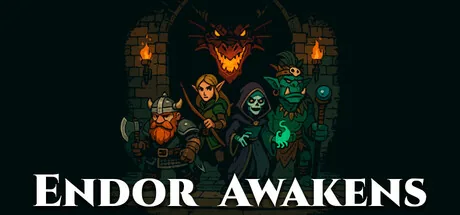
Game review
Endor Awakens: Roguelite DRPG
6 / 10
- Developer
- Javier Hernández Torres
- Publisher
- Javier Hernández Torres
- Released
- 11 June 2025
- Platforms
- Windows
- Genre
- Roguelite DRPG
- Monetisation
- Free to play. Steam lists no in-app-purchase category, though several reviewers describe an in-game meta-currency tied to stat rerolling
- Players
- Single-player
The short version
Endor Awakens is a genuinely deep dungeon crawler wearing the wrong clothes. Under the hood it has races with their own racials, classes with guild skill trees, a hardcore permadeath mode, procedurally generated floors and a full hub of shops, quests and a morgue for resurrecting the party members who don't make it back — a lot of game for a $0 price tag. What it doesn't have is a PC interface. This is Depths of Endor, the developer's mobile game, moved onto a bigger screen with the same tap-driven menus intact, and the reviewers who liked it on a phone are the same ones asking, loudly, for a redesign.
The free price and the accessibility options Steam lists for it are real, uncommon strengths for a one-person project. The friction in actually using the deeper systems is just as real, and it shows up in the numbers: barely one in fifteen players who've logged an achievement have bothered engaging with the guild skill tree at all.
Biggest strengths
- Full character creation with race, class, guild skill tree and a custom-uploaded portrait, plus an optional hardcore mode where death is permanent
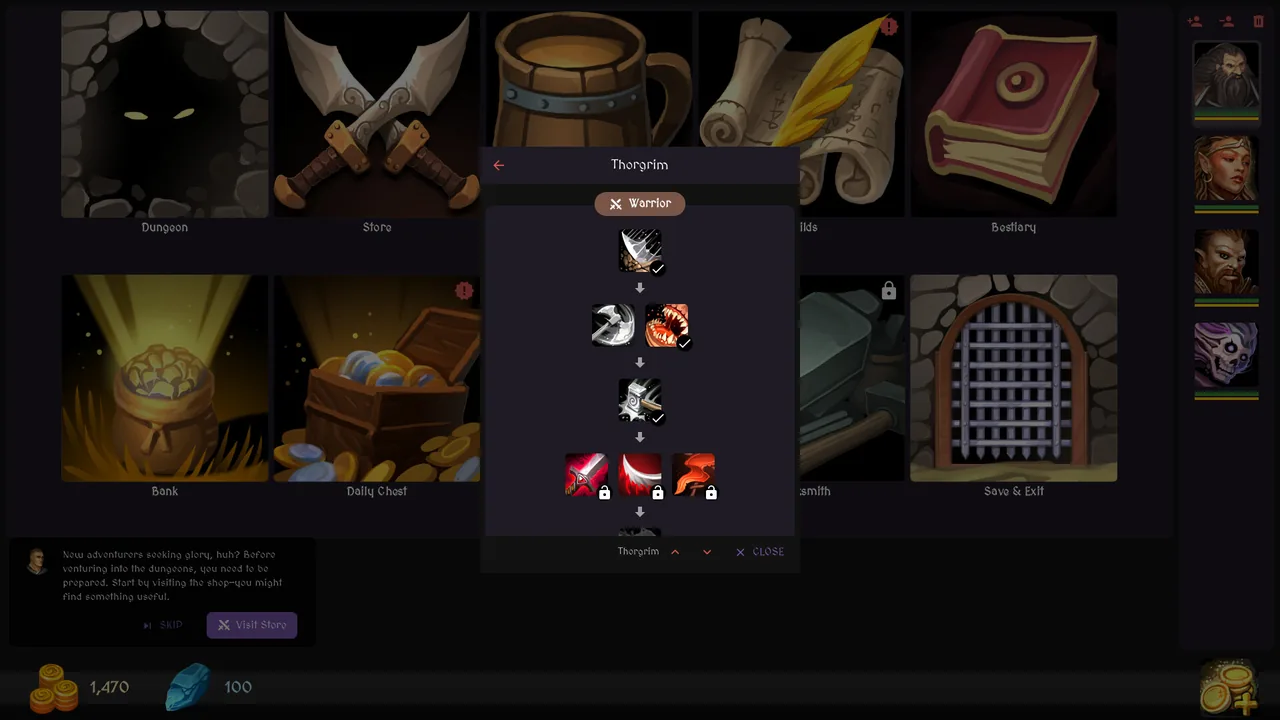
- The city hub is unusually complete for a solo project — shop, inn with quests, guild skill trees, bestiary, bank storage, a daily login chest and a morgue that resurrects fallen heroes
- Entirely free to enter, with none of those systems gated behind a purchase
Biggest weaknesses
- The interface is an unmodified mobile layout — reviewers single out shopping, weapon swapping and in-combat spell selection as specifically uncomfortable with a mouse and a widescreen monitor
- Save files write to Documents instead of the Windows-conventional AppData location, a small but concrete sign of a straight port rather than a PC-specific release
- A meta-currency system for rerolling item stats draws direct "Skinner Box" and microtransaction comparisons from more than one reviewer, despite the game costing nothing
Who it's for: Fans of the original Depths of Endor mobile game, and free-to-play dungeon-crawler players willing to trade a native PC interface for a lot of system depth at no cost.
Our recommendation: Worth installing purely because it's free — go in expecting a mobile menu on a monitor, not a PC-native roguelite, and budget patience for the shopping and spell-selection screens before judging the combat underneath them.
6 / 10
A mobile game that changed screens, not habits
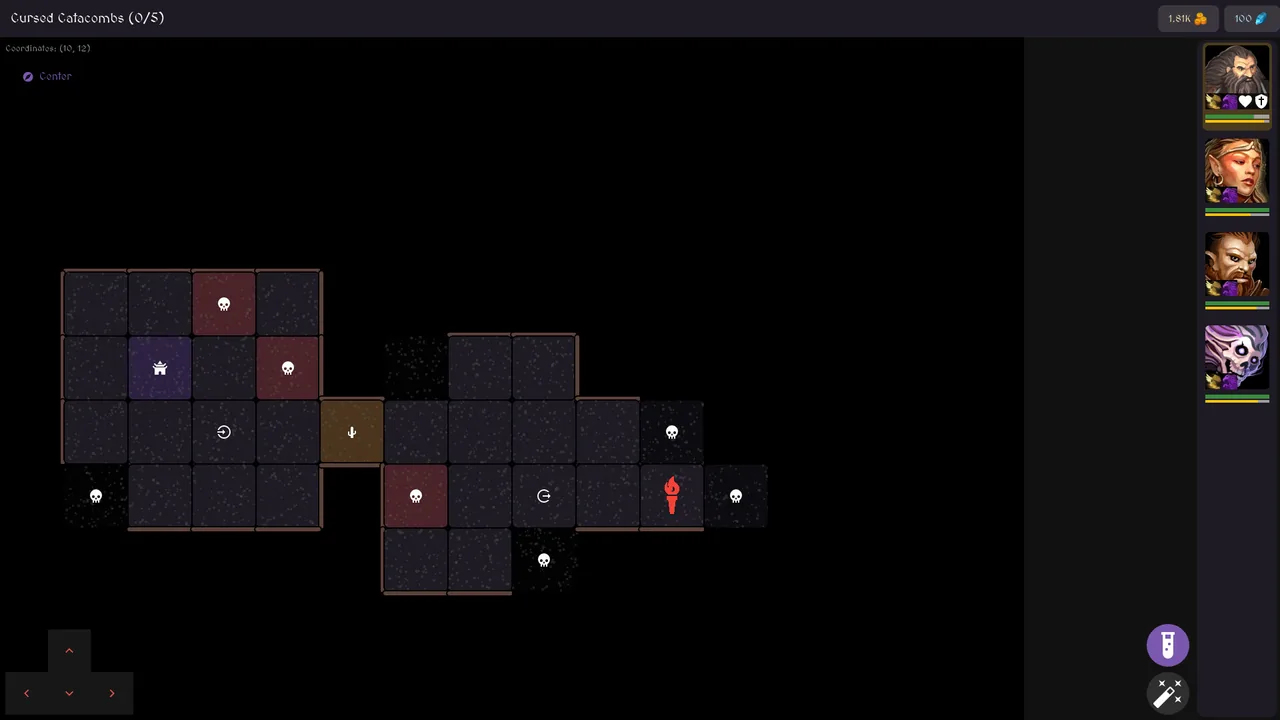
Endor Awakens doesn't hide what it is. Its own store description calls it "a thrilling evolution of Depths of Endor," the developer's earlier mobile title, and that lineage explains almost everything about how the game plays on Steam. Solo developer Javier Hernández Torres — credited as both developer and publisher — has carried over a genre that Steam still under-serves relative to demand: the turn-based DRPG, where you build a party from scratch, choose their races and classes, and send them down procedurally generated dungeon floors one careful decision at a time. That's a real gap to fill, and on paper this fills a lot of it for free.
Character creation is the strongest single pitch here. You pick each hero's race — which carries its own racial bonuses, the kind of asymmetry that games like World of Warcraft built entire class fantasies around — their class, their guild, and their portrait, which can be a custom image pulled from your own device rather than a preset from a gallery. One reviewer with over 1,300 minutes logged sums the whole loop up as "like MMORPG dungeon crawler," listing off race, class and guild systems that mirror an MMO's character sheet compressed into a single-player roguelite. Hardcore mode removes the safety net entirely: die there, and that character stays dead, no morgue resurrection available.
The hub does a lot of work
The city that surrounds each dungeon run is where the free-to-play scope becomes obvious. The store page lists seven distinct systems living there: a shop for weapons and armour, an inn that hands out quests and carries the main story, guilds that unlock each hero's skill tree, a bestiary that tracks every monster you've fought, a bank for storing items you don't currently need, a daily login chest, and a morgue for reviving anyone who dies outside hardcore mode. That's a genuinely full loop for a project with one developer's name in both the developer and publisher fields, and it's the reason several long-session reviewers — one logging 917 minutes, another 791 — describe it as a comfortable, low-stakes game to return to "when you are bored," in one reviewer's words, rather than a title that demands sustained attention.
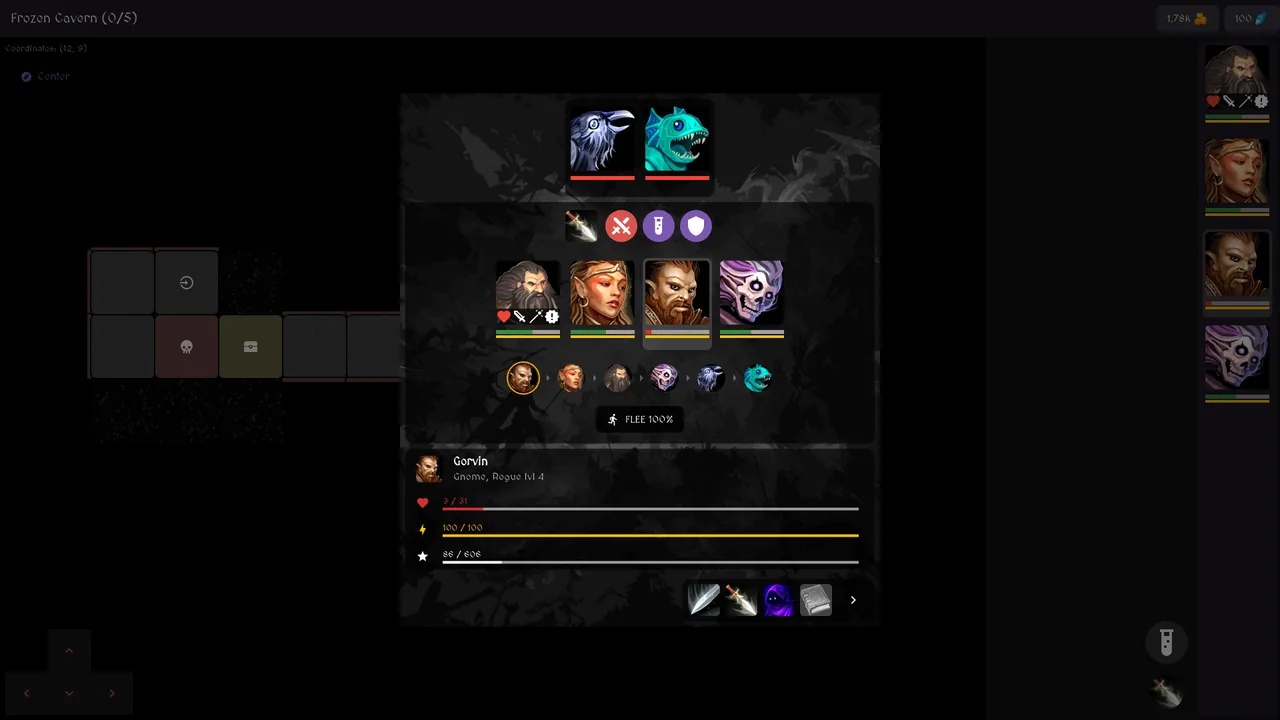
Combat itself is turn-based and deliberately unhurried: attack, cast, use an item, or defend, with traps and random events layered into the dungeon floors alongside the fights. More than one reviewer flags it as easy rather than punishing for something billing itself a roguelite — "for a roguelike it seems very easy," as one puts it — which tracks with a design built to be played in short mobile sessions rather than around the tense, single-mistake-ends-the-run tension the genre label usually promises outside hardcore mode.
The interface never got a PC pass
Here's the complaint that shows up, independently, across nearly every critical review: nothing about the menus was redesigned for a mouse and a monitor. One reviewer who liked both this game and its mobile predecessor is explicit about it: "when you transition to a PC release like this there should definitely be some PC UI. The UI/UX is really uncomfortable for shopping, and changing weapons, moving things around." Another calls it "a much uglier and clunkier version of Monster's Den," a genre touchstone this game invites the comparison to just by existing in the same space. A third notes the game stores its save files in Documents rather than the Windows-standard AppData folder — a small technical detail, but exactly the kind of thing a straight mobile-to-desktop port gets wrong that a PC-first release wouldn't.
That friction isn't just a matter of taste — it shows up in Steam's own achievement data. The "explorer" achievement, presumably an early-game milestone, sits at 47.1% of the tracked player base. "Guilds" — the achievement tied to the skill-tree system the store page and the positive reviews both single out as a highlight — sits at just 6.9%. Fewer than one in fourteen players who have earned any achievement at all have engaged with the system most reviewers call the game's best feature. A menu that's genuinely uncomfortable to navigate is one plausible reason a strong system goes this unused.
Free, but not free of complaints about money
Being $0 to download is Endor Awakens' clearest advantage over almost anything else in its genre, and Steam's own category list doesn't flag an in-app-purchase feature the way it does for plenty of other free-to-play games. That makes it notable that more than one reviewer still raises money as a concern. One calls it "light on detail or depth, and heavy on micro-transactions"; another takes aim specifically at a meta-currency — described elsewhere as a blue gem used to reroll item stats — as "more of more Skinner Box number-go-up tripe." Whether that currency is purchasable with real money or purely earned through play isn't confirmed by anything Steam surfaces publicly, but the fact that multiple, unconnected reviewers reached for the same monetisation-shaped language about a free game is itself worth flagging to anyone deciding whether to commit hours to the reroll grind.
A genuinely good accessibility list
One thing this review can state with more confidence than most: Steam's own category tags for Endor Awakens list Camera Comfort, Custom Volume Controls, Narrated Game Menus, Playable Without Timed Input, and Save Anytime, alongside the more expected Steam Achievements and Steam Cloud support. That's five distinct accessibility-relevant features officially catalogued for a game built by one person, which is a meaningfully longer list than most solo dungeon crawlers ship with, and it deserves credit independent of the interface complaints above — turn-based combat with no timed input requirement and full narration support removes real barriers that a lot of bigger-budget RPGs still don't bother with.
Verdict
Endor Awakens has the bones of a genuinely deep free-to-play RPG: race-and-class character creation with real mechanical weight, a hub with seven working systems, procedural dungeons, an optional permadeath mode, and an accessibility feature list that outperforms its budget. Where it falls down is specific and well documented by its own players — an interface carried over from a touchscreen without redesign, a save-file quirk that betrays the port, and a meta-currency system that draws unflattering comparisons despite costing nothing at the door. None of that erases the depth underneath; it just means a fair number of players are bouncing off the wrapping before they reach the guild skill trees the achievement data shows so few of them ever touch. At zero cost the downside of trying it is low, and returning fans of Depths of Endor clearly still find plenty here. Anyone coming in cold, expecting a PC-native roguelite, should know exactly what they're getting into first.
Pros and cons
Pros
- Full character creation with race, class, guild skill tree and a custom-uploaded portrait, plus an optional hardcore mode where death is permanent
- The city hub is unusually complete for a solo project — shop, inn with quests, guild skill trees, bestiary, bank storage, a daily login chest and a morgue that resurrects fallen heroes
- Entirely free to enter, with none of those systems gated behind a purchase
- Steam's own accessibility category list is genuinely unusual for a one-developer game — camera comfort options, custom volume controls, narrated menus, no forced timed input and save-anytime
- Multiple reviewers with 400 to over 1,300 minutes logged still recommend it, mostly players who already knew the mobile original
Cons
- The interface is an unmodified mobile layout — reviewers single out shopping, weapon swapping and in-combat spell selection as specifically uncomfortable with a mouse and a widescreen monitor
- Save files write to Documents instead of the Windows-conventional AppData location, a small but concrete sign of a straight port rather than a PC-specific release
- A meta-currency system for rerolling item stats draws direct "Skinner Box" and microtransaction comparisons from more than one reviewer, despite the game costing nothing
- Combat and presentation read as dated to several reviewers, with comparisons to genre veterans like Monster's Den and complaints that the mechanics feel much older than the 2025 release date
- Steam's own achievement data shows only 6.9% of tracked players have earned the "guilds" achievement against 47.1% for the entry-level "explorer" one — the skill-tree system most positive reviews praise appears to be the one system most players never reach
Screenshots
-
Endor Awakens: Roguelite DRPGImage: Javier Hernández Torres via Steam -
Endor Awakens: Roguelite DRPGImage: Javier Hernández Torres via Steam -
Endor Awakens: Roguelite DRPGImage: Javier Hernández Torres via Steam -
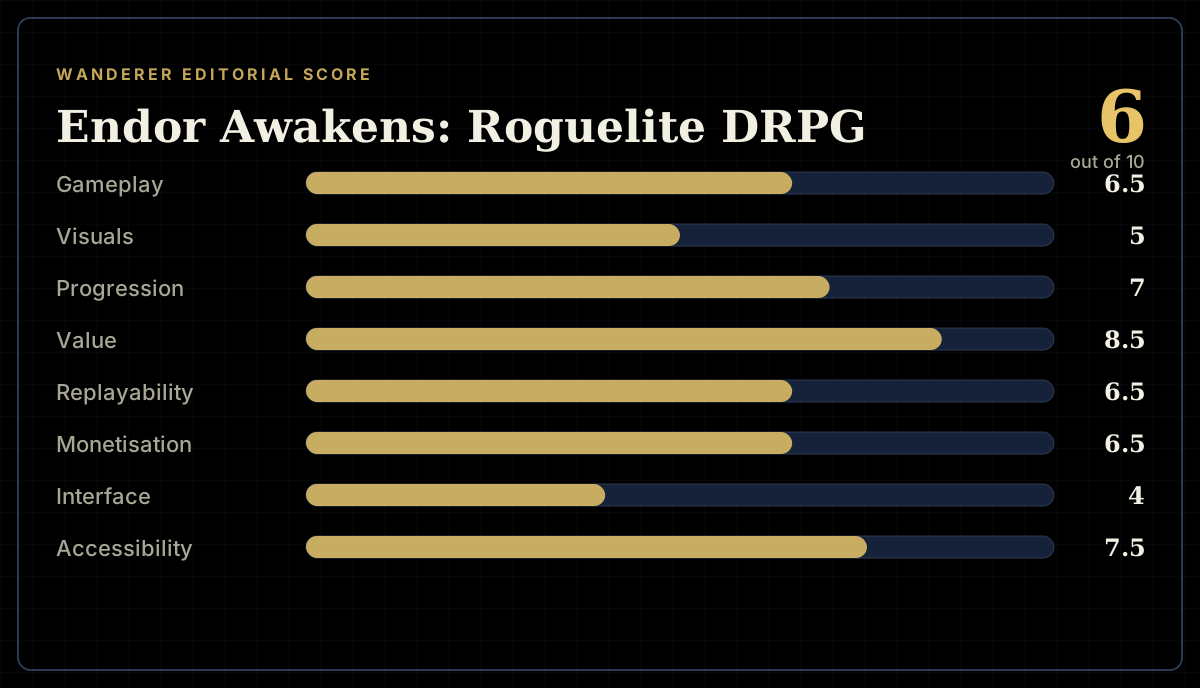
How the review scores each part of the gameWanderer Editorial -
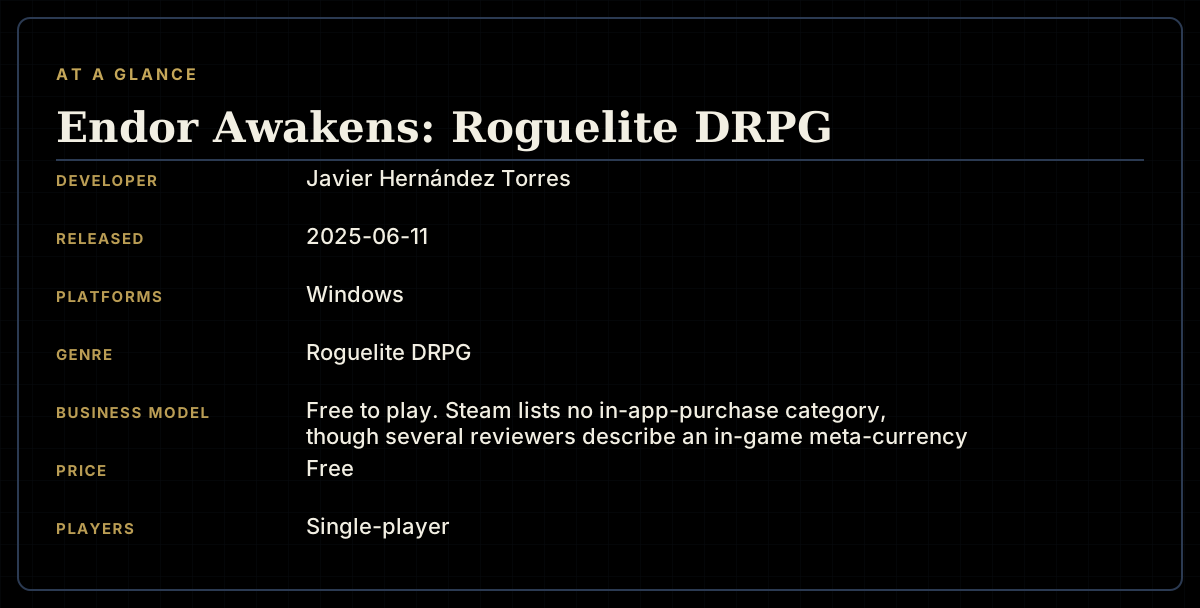
The game at a glanceWanderer Editorial -
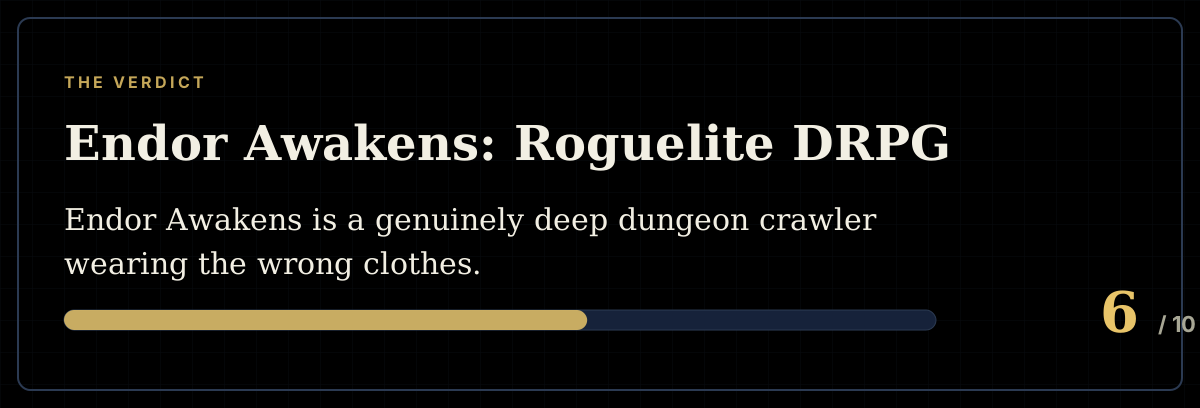
The short versionWanderer Editorial