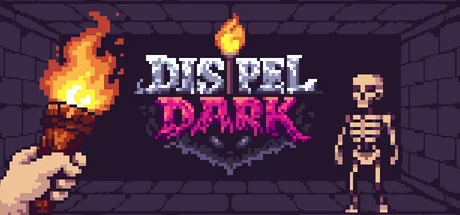
Game review
Dispel Dark
7.5 / 10
- Developer
- Cronostase
- Publisher
- Cronostase
- Released
- 3 August 2026
- Platforms
- Windows
- Genre
- Roguelite
- Monetisation
- One-time purchase, no in-game store, no IAP, no ads
- Players
- None; fully single-player
The short version
Dispel Dark's whole design fits in one sentence, and it's a good one: your torch is your only light source and your only weapon, so every attack burns away a piece of the flame keeping the darkness at bay. That single overlap turns a small, cheap procedural roguelite into a constant, legible risk calculation — fight now and see less of what's coming, or hold back and stay blind to threats you haven't lit up yet.
Two days after release, every one of its thirteen reviews is positive, split almost evenly between English and Brazilian Portuguese players who, independently, keep landing on the same praise: an original mechanic, real tension, and a price that makes it an easy recommendation. It's a small, fresh sample rather than a settled verdict, but the consistency across two separate language communities is a genuinely good sign this early.
Biggest strengths
- A genuinely original central mechanic — light and combat drawing from the same depleting resource — that reviewers across two language communities independently single out as the game's best idea
- Consistent praise for real tension without the game becoming punishing or unfair, striking a balance reviewers describe as well-tuned rather than frustrating
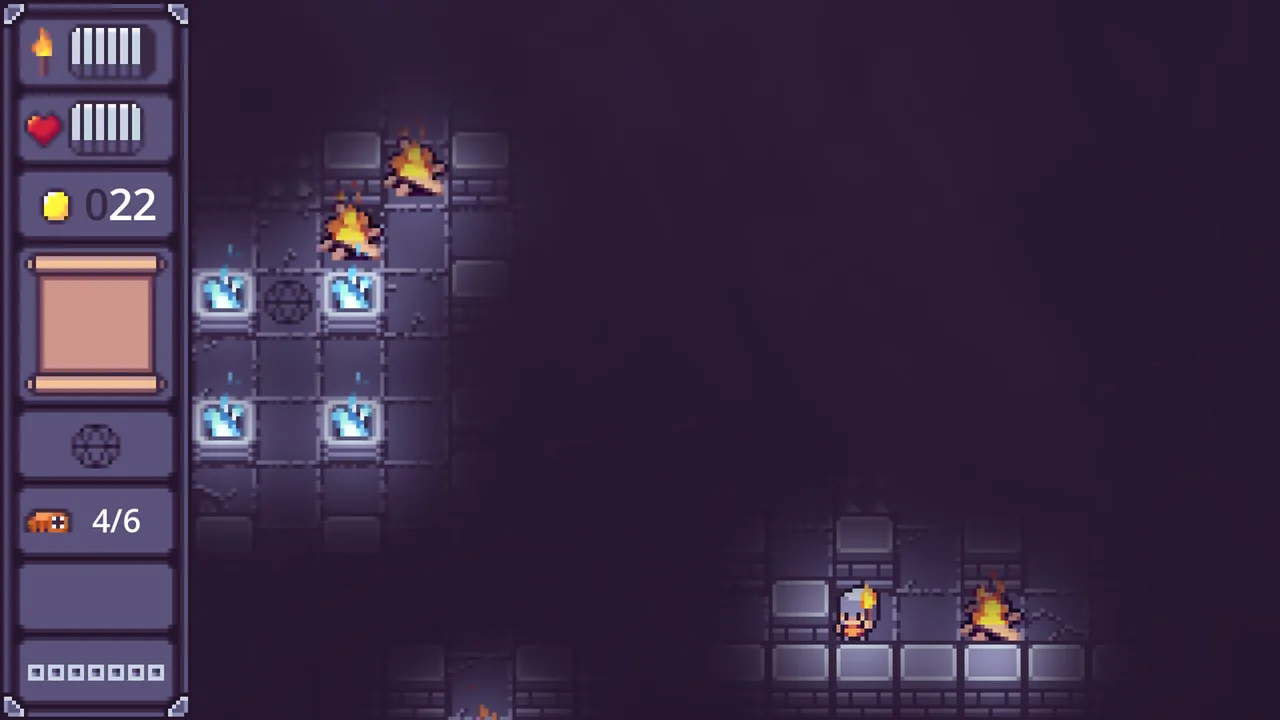
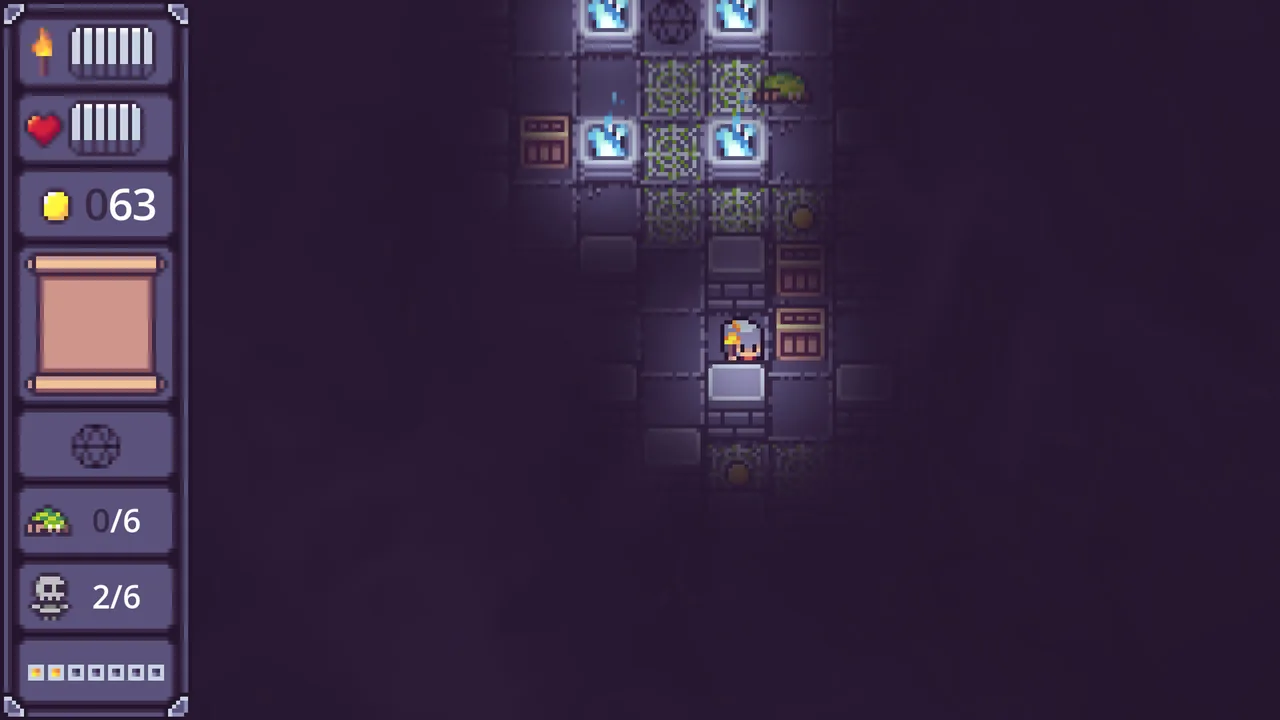
- Charming, atmospheric pixel art that reviewers call "cozy" even while the mechanics stay genuinely tense
Biggest weaknesses
- The review sample is small (thirteen reviews) and only two days old, so this can't yet reflect how the mechanic holds up over many hours or against a broader, more varied audience
- No patch history exists yet, so there's no way to check how actively the developer responds to issues that a wider audience may surface once the review base grows
- Procedural generation and short-run structure mean some players who prefer longer, more developed campaigns over quick, replayable sessions may find less to hold onto here
Who it's for: Roguelite fans who want a small, focused idea executed well rather than a sprawling system, and anyone who likes atmosphere-driven tension over pure combat spectacle.
Our recommendation: At under three dollars, this is an easy, low-risk pickup for anyone who likes the sound of "your weapon is also your only light source." Go in expecting a short, tense, well-crafted experience rather than a long campaign.
7.5 / 10
Small roguelites live or die on a single idea, and Dispel Dark's is a genuinely sharp one: the torch you're carrying through its procedurally generated dungeons is both the only thing keeping the darkness back and the only weapon you have. Every strike against an enemy costs you a piece of your flame. Light up more of the room around you, and you're safer from what you can't see but weaker in a fight. Swing freely, and you clear threats faster while the dark closes back in around you. It's a small mechanical overlap, but it's the kind that makes every single decision in the game legible and tense at the same time, and it's the reason Dispel Dark's first thirteen reviewers — every one of them positive — keep describing the same experience independently of each other.
One resource, two jobs
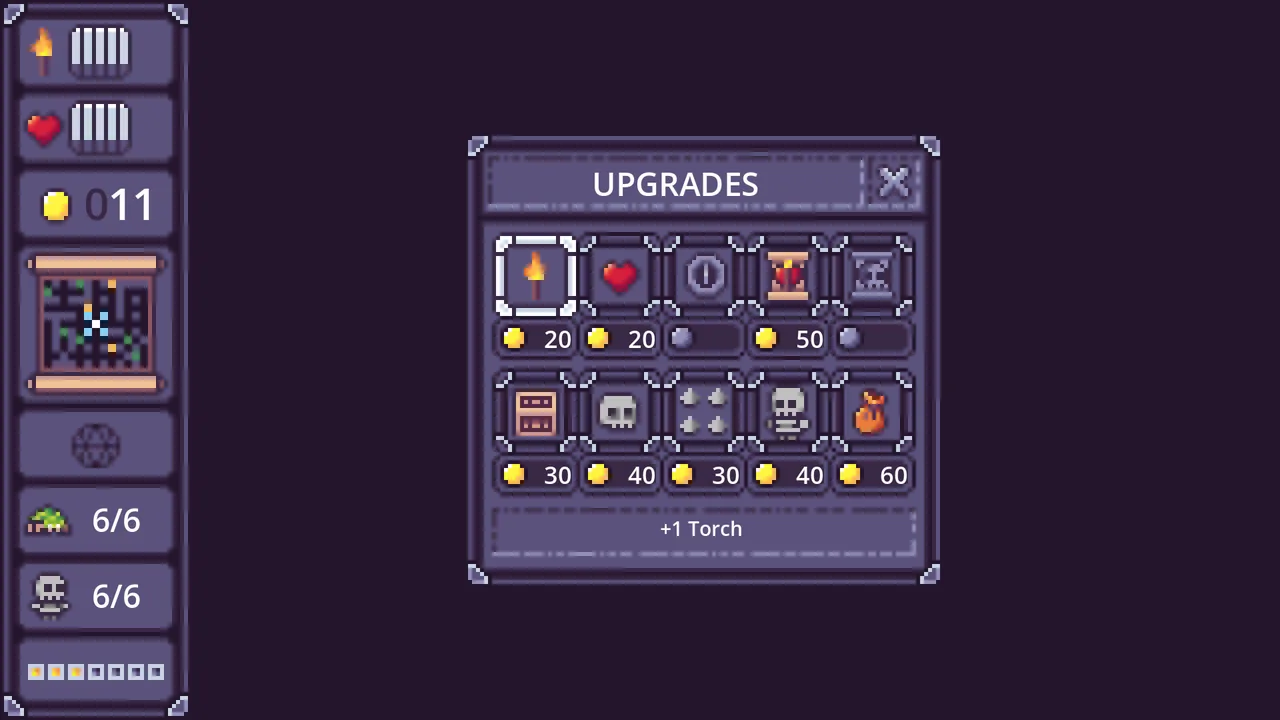
The core loop stays simple by design: descend through procedurally generated levels, each populated by a different enemy type suited to that stage, spend gathered resources on upgrades between runs, and manage torch fuel as carefully as health. Reviewers consistently frame the tension this creates as the game's central achievement. One English review calls it "a constant risk vs. reward decision that keeps every run engaging," adding that the game "feels tense without becoming" unfair — a distinction that matters, since a badly tuned version of this idea could easily tip into feeling arbitrary rather than strategic. A Brazilian Portuguese reviewer makes almost the identical point independently, praising "well-made balancing" and describing how the torch mechanic "makes me think carefully about the right moment to defeat enemies and break boxes" — a specific, mechanical observation that lines up closely with the English-language reviews despite no obvious way the two audiences could be echoing each other.
Multiple reviewers go further and call it genuinely novel within its genre. One writes it's "a roguelike unlike any other I've played, focused on tension and map exploration," and another, more simply, "a game that really held my attention — original mechanics, a tense atmosphere." That kind of specific, repeated praise for originality is worth taking seriously in a genre as crowded with samey procedural dungeon crawlers as this one.
Presentation and price
The visual side gets its own consistent compliment: reviewers describe the pixel art as "incredibly charming and cozy" even while praising how tense the actual play feels — a nice tension in the reception itself, between a comforting look and a genuinely nerve-testing mechanic underneath it. Achievement data backs up real structural scope behind the premise: 43 separate achievements exist at time of writing, suggesting more content and variety than a single simple gimmick stretched thin.
Price comes up unprompted in a striking number of the reviews. At under three dollars, more than one reviewer explicitly frames the cost as part of the recommendation rather than an afterthought — "considering the price, it's a must-buy," reads one; another simply calls it "a short, awesome little game." For a genre where players often expect dozens of hours to justify a purchase, Dispel Dark's reviewers seem entirely comfortable treating a short, tight, cheap experience as sufficient on its own terms.
What a two-day, thirteen-review sample means
It's worth being precise about what can and can't be claimed this early. Thirteen reviews, all within the game's first 48 hours, is a genuinely strong and consistent early signal — particularly given it spans two separate language communities independently reaching similar, specific conclusions about the same mechanic — but it isn't proof the game holds up across dozens of hours, against harder difficulty tiers, or once a much larger and more varied audience has had time to find its rough edges. No patch history exists yet, so there's no way to gauge how the developer responds to issues a wider release will inevitably surface. A perfect positive score on a small sample is a promising start, not a settled verdict.
Final verdict
Dispel Dark earns its early reception honestly: a small, sharp, well-executed idea, charming presentation, and a price that makes the whole thing close to risk-free. The light-and-weapon overlap at its core is exactly the kind of focused design choice that distinguishes a memorable small roguelite from a forgettable one, and two separate language communities independently agreeing on why it works is a better signal than a single glowing review would be.
Go in expecting a short, tense, atmospheric experience rather than a sprawling campaign, and treat the current perfect score as an excellent first impression that a wider audience still needs to confirm over the coming weeks.
Players who like the idea of a resource that forces real trade-offs between exploration and combat, sustained over a much longer and more persistent world than a single roguelite run, may also want to look at Wanderer.
Pros and cons
Pros
- A genuinely original central mechanic — light and combat drawing from the same depleting resource — that reviewers across two language communities independently single out as the game's best idea
- Consistent praise for real tension without the game becoming punishing or unfair, striking a balance reviewers describe as well-tuned rather than frustrating
- Charming, atmospheric pixel art that reviewers call "cozy" even while the mechanics stay genuinely tense
- Extremely cheap, with multiple reviewers independently calling it a must-buy specifically because of the price relative to what's on offer
- 43 Steam achievements suggest real structural depth behind a small, focused premise
Cons
- The review sample is small (thirteen reviews) and only two days old, so this can't yet reflect how the mechanic holds up over many hours or against a broader, more varied audience
- No patch history exists yet, so there's no way to check how actively the developer responds to issues that a wider audience may surface once the review base grows
- Procedural generation and short-run structure mean some players who prefer longer, more developed campaigns over quick, replayable sessions may find less to hold onto here
- A perfect 100% positive score on a small sample is a strong early signal, not a guarantee it holds as the audience grows past its first wave of buyers
Screenshots
-
Dispel DarkImage: Cronostase via Steam -
Dispel DarkImage: Cronostase via Steam -
Dispel DarkImage: Cronostase via Steam -
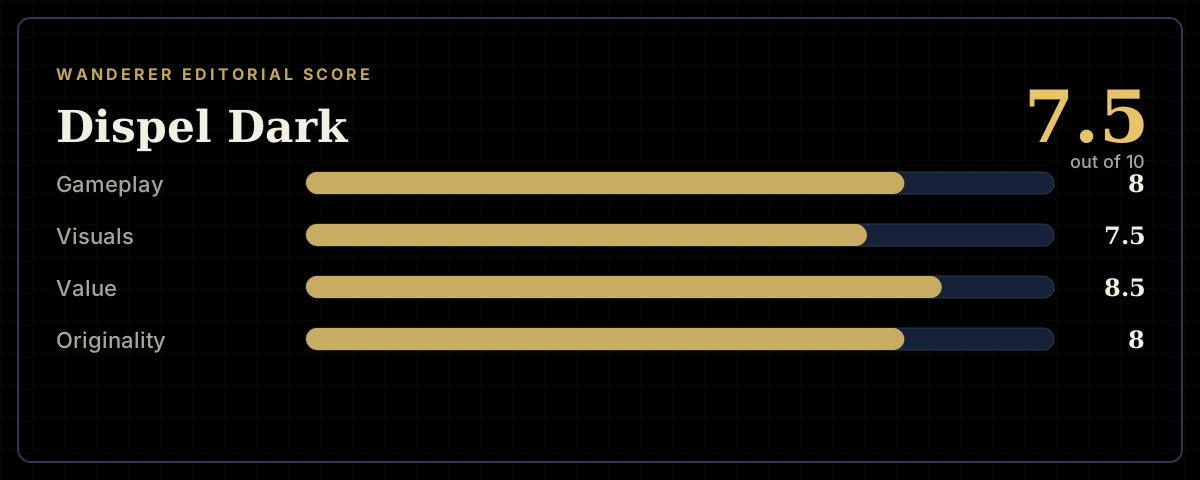
How the review scores each part of the gameWanderer Editorial -
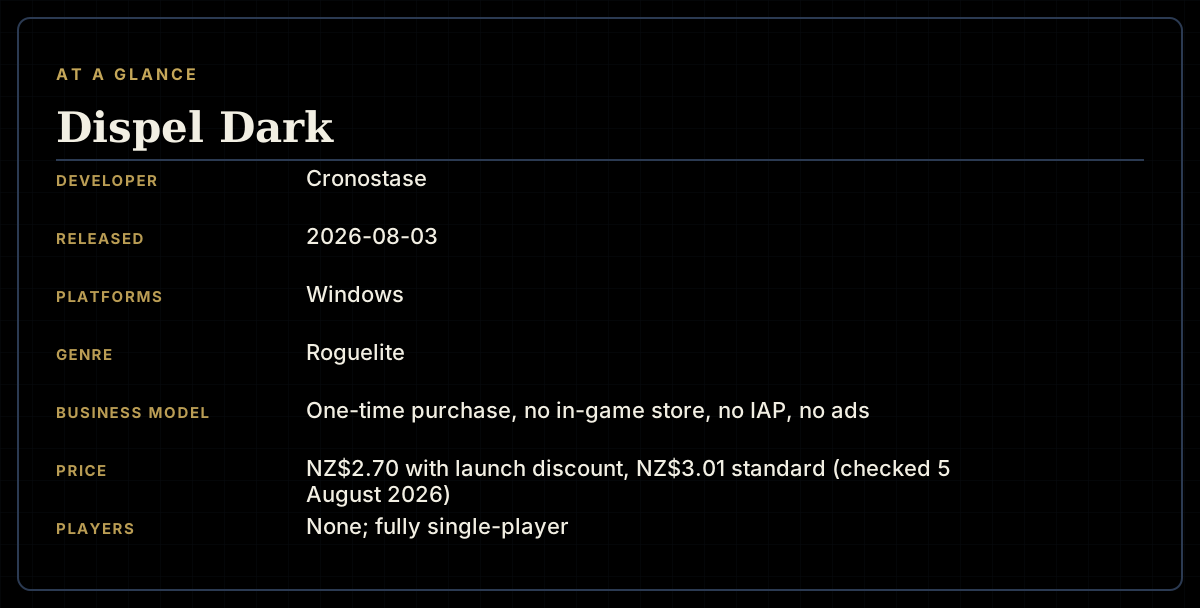
The game at a glanceWanderer Editorial -
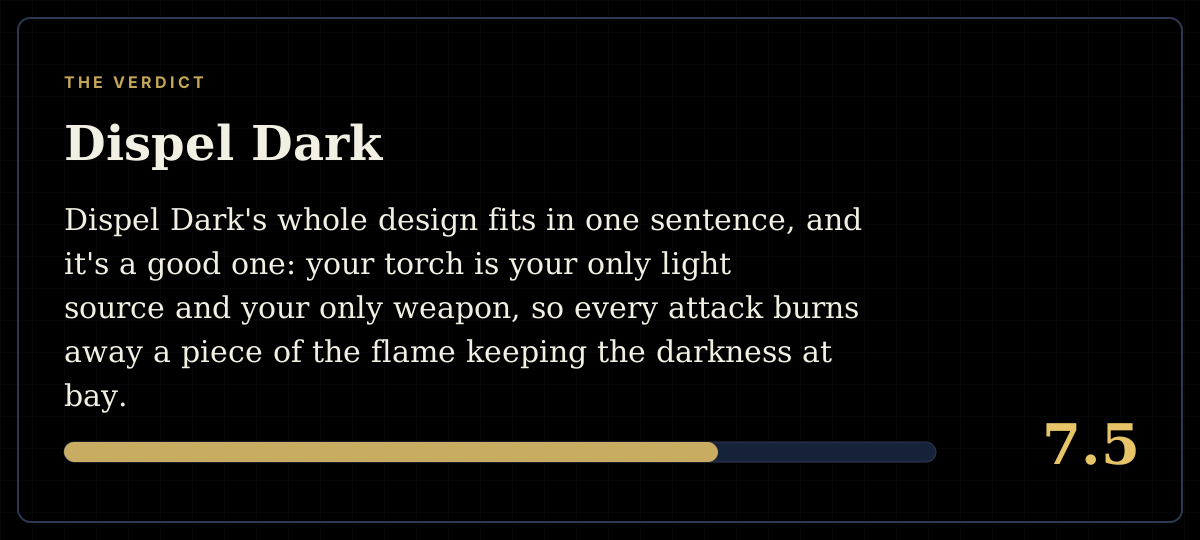
The short versionWanderer Editorial