Game review
Din's Champion Review
6.5 / 10
- Developer
- Soldak Entertainment
- Publisher
- Soldak Entertainment
- Released
- 24 August 2026
- Platforms
- ["Windows", "Linux"]
- Genre
- RPG
An Evil Goddess, a World That Doesn't Wait, and a Sword in Your Hand
Din's Champion casts players against a goddess who "seeks to devour and remake the world," in a sidescrolling 2D action-RPG that refuses to pause while you plan your next move. The store page is blunt about the pace: "the world waits for no one; as you are exploring and collecting, crafting and building, planning, the forces of darkness are amassing power and executing their own designs." That framing lands with players — one reviewer summed the whole pitch up as "Terraria, Diablo and Noita had a messed up looking lovechild, and it's great," while another simply wrote "Terraria, Diablo, Coal LLC in a blender." It's a game explicitly built around the tension between taking your time to build strength and letting the enemy use that same time against you. The campaign also supports online co-op, LAN, and cross-platform multiplayer, letting a group tackle the goddess's forces together rather than facing the escalating threat alone, which several reviewers cited as a meaningful draw compared to genre peers that keep base-building strictly single-player.
Dozens of Classes, Deep Skill Trees, and a Build for Every Playstyle
Character building is where Din's Champion draws its most consistent praise. Players choose from what one reviewer described as "3 out of 39 classes, with the unique ability" to combine them into hybrid builds, each with its own skill tree, strengths, and weaknesses. A long-time reviewer of the genre wrote: "This is an entertaining side scroller with a great deal of complexity and depth in terms of game mechanics. Will provide hours of enjoyment as you delve into the depths, developing your various characters to unlock the [skills]." Another put it even more directly: "the combat is insane, builds even more insane. takes a bit to get used to the layers but once got the hang of things could not stop and will not stop playing!" One player went further still, placing it "in the top 10 most-played games of my account, about to pass Baldur's Gate 3."
Build a Town, Gather Resources, and Watch the Enemy Adapt
Beyond individual character growth, Din's Champion layers in resource gathering and town-building: stone, clay, and wood can be mined from both the foreground and background of the sidescrolling world and turned into gear, potions, and buildings, while a settlement of NPCs can grow into "a massive town with an army of dozens or even hundreds." The twist is that the world's monster forces aren't static — the store page promises they can "plan ambushes," "instigate uprisings," and "spread plagues and curses throughout your town" if left unchecked, and reviewers back that up: multiple mentioned base-defense and resource-versus-time tension as a genuine strategic layer rather than set dressing. One reviewer who compared the loop to Barotrauma's slow-burn dread put it plainly: "such an easy game design wise, but soo, soooo much depth to it" — a comment on how deceptively simple systems (dig, gather, build) compound into something much harder to fully optimise once bosses and coordinated monster factions start pressuring a player's town at the same time.
A Spiritual Sequel That Splits Its Own Fanbase
Din's Champion follows Soldak Entertainment's earlier Din's Legacy, and that lineage is a genuine fault line in the review sample. Several longtime Soldak players feel shortchanged: one wrote, "Sadly this is not much of an Upgrade to Din's Legacy. At this point I am quitting Soldak Games... this game has tons of potential [but is a mess]," while another was more specific, claiming "most content, skilltrees and assets are just reused from the devs previous game without any changes." Other reviewers who hadn't played the earlier games came away far more impressed, with one writing "I didn't play the previous titles, but this is a good rogue-like" and another calling it "probably one of my new favorite indie survival crafting games to this date." The split suggests Din's Champion reads very differently depending on whether you're coming to it fresh or comparing it directly against what Soldak built before.
Jank, UI Complaints, and a Steep Learning Curve
Performance and interface issues come up often enough to matter. "Incredible game. Tons of depth. Addicting feedback loop. Itemization is very well done. 8/10," wrote one reviewer, "[but] the UI could be better — it's not as bad as others say." Others were harsher: one called out "very confusing" mechanics "cobbled together in such a way as to only be described as bizarre," and another compared it unfavourably to a stripped-down Terraria, writing "no movement abilities, terrible graphics, zero weight to anything." A recurring theme is that the game rewards patience with its systems more than immediate polish — several reviewers noted a real learning curve before the class and crafting systems click, with one warning it "took me and will take most players a decent amount of time to grasp the game's concepts and depth. It's not geared as much toward a casual pick [up and play]" experience.
Verdict
Din's Champion delivers exactly what its Terraria-meets-Diablo pitch promises for players willing to push through a rough, occasionally janky presentation: a genuinely deep class and skill-tree system, a resource-and-town-building layer with real stakes, and an aggressive, adapting enemy AI that keeps the world feeling alive rather than static. Whether it's the leap forward longtime Soldak fans wanted from Din's Legacy is a real point of division in its own community, and the interface and combat feel need real refinement to match the depth underneath them. For action-RPG players who don't mind a learning curve and want a game that keeps demanding attention rather than idling in the background, there's a lot here to dig into.
Screenshots
-
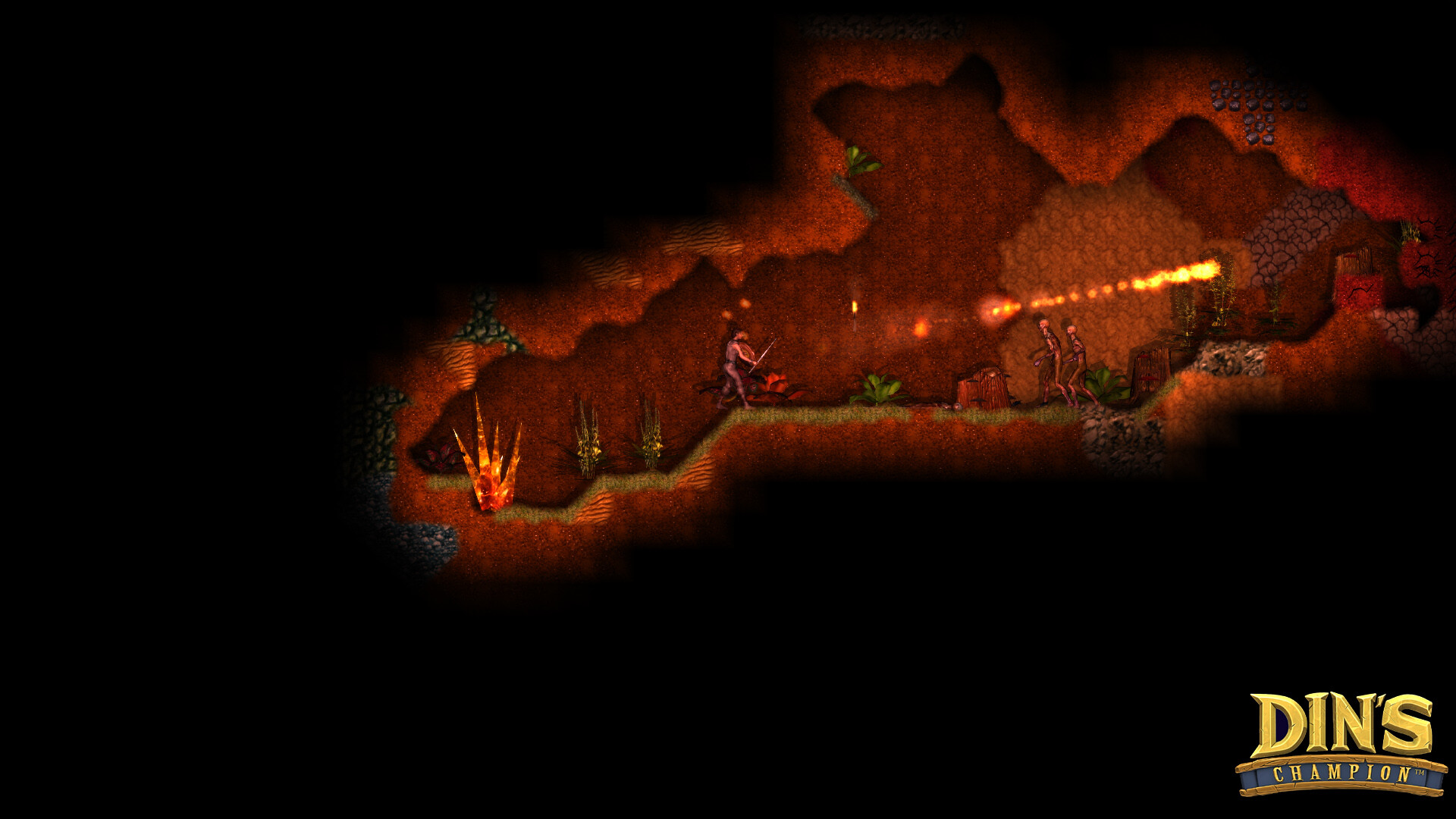
Combat inside one of Din's Champion's underground cavernsImage: Soldak Entertainment via Steam -
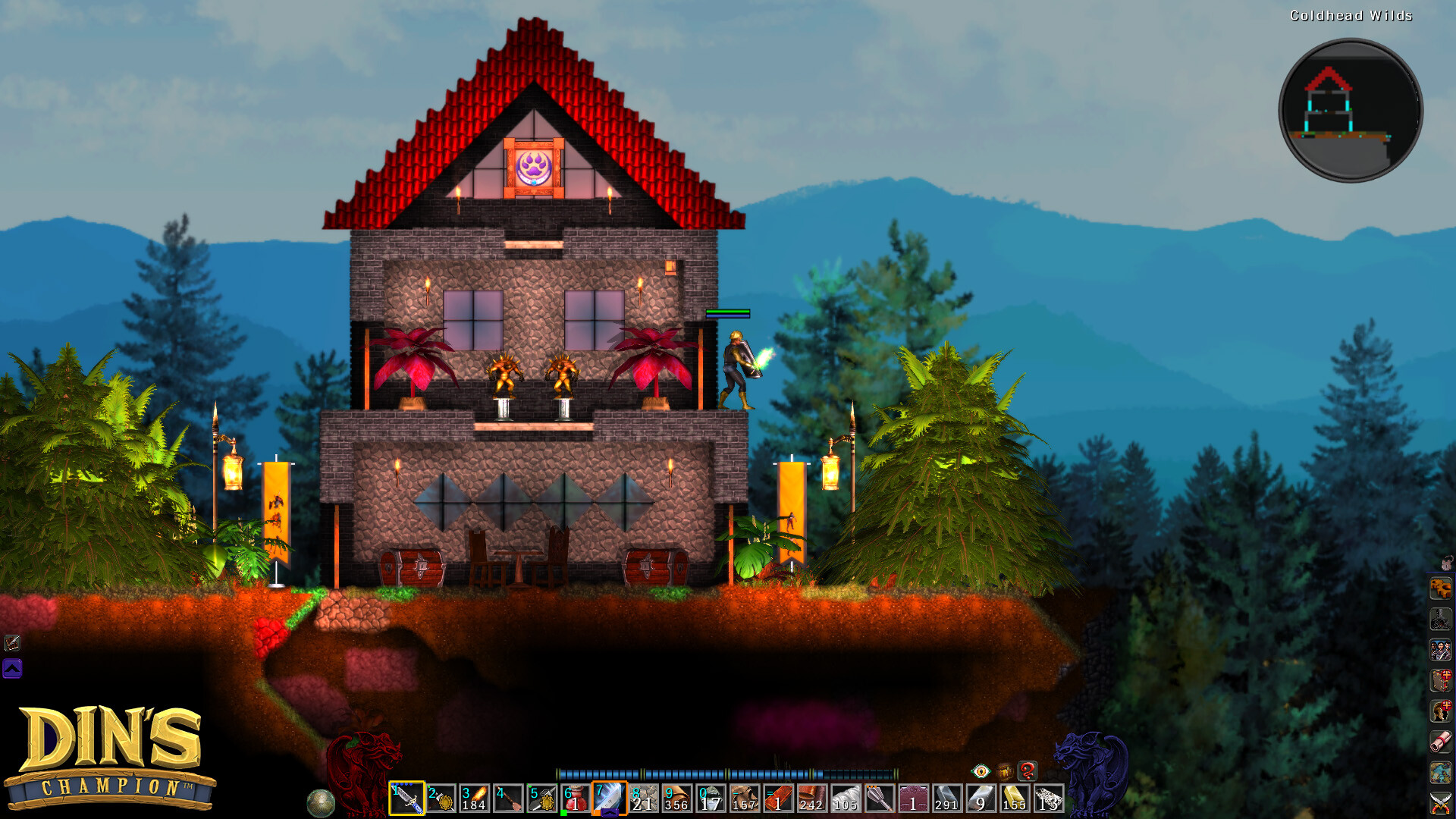
A player-built settlement in the Coldhead WildsImage: Soldak Entertainment via Steam -
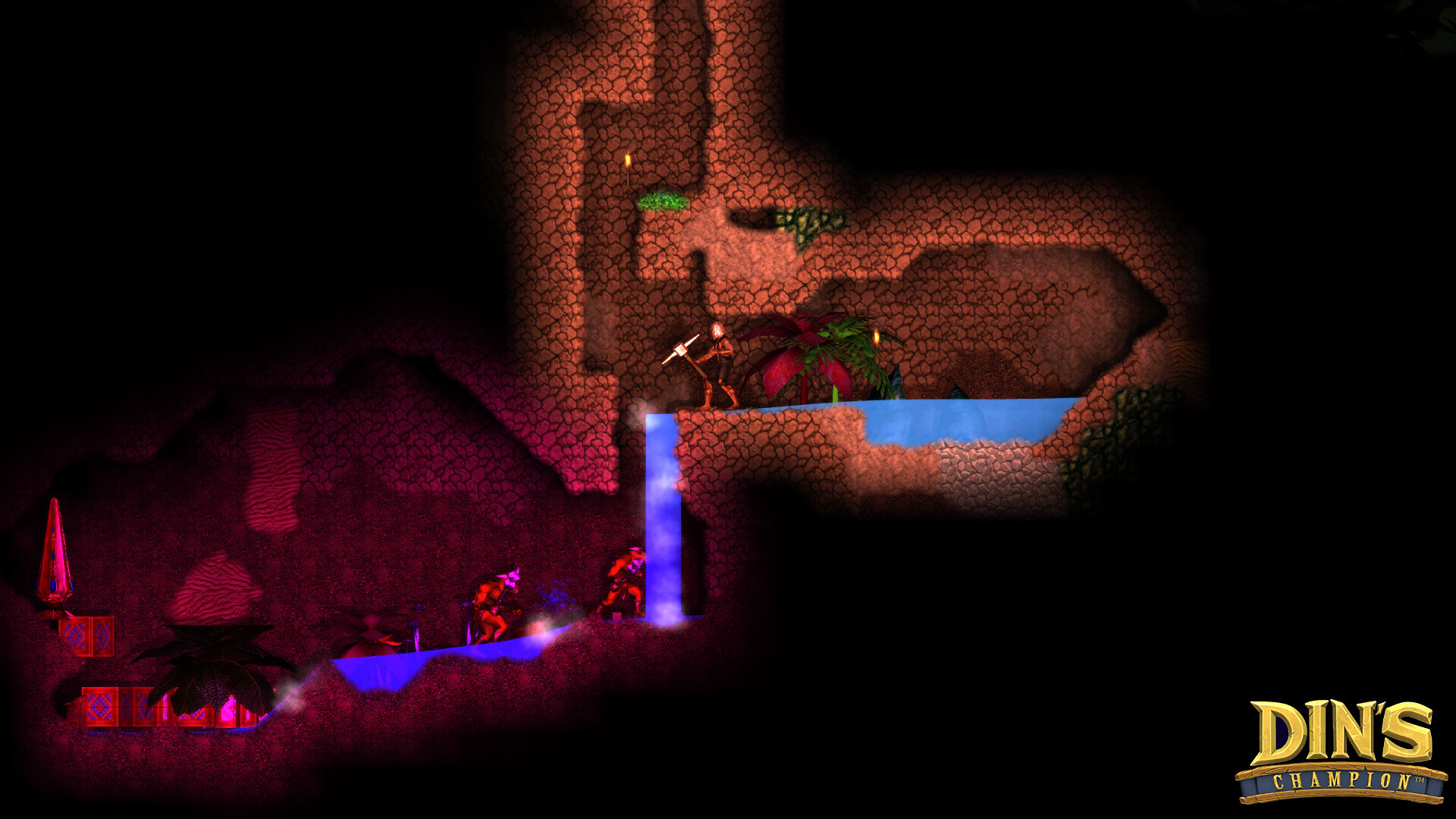
Gathering resources underground while enemies close inImage: Soldak Entertainment via Steam