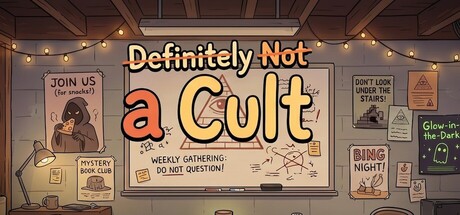
Game review
Definitely Not a Cult
4.5 / 10
- Developer
- NeuroSlop Studio
- Publisher
- NeuroSlop Studio
- Released
- 20 June 2026
- Platforms
- Windows
- Genre
- Casual
- Monetisation
- One-time purchase, no in-game purchases listed
- Players
- Single-player
The short version
Definitely Not a Cult, released 20 June 2026 by NeuroSlop Studio, is a short, comedic visual novel about building a "totally normal" community while managing reputation, faith and paranoia stats, deliberately winking at the obvious cult framing throughout. It sits Positive with a very small sample of just 10 reviews, and reading through all of them turns up two things worth reporting plainly. First, several playthrough accounts describe a genuinely enjoyable ten-minute choice-driven loop with multiple distinct endings worth replaying to see. Second, this review noticed that a number of the positive reviews in this small sample share strikingly similar phrasing and structure to one another, closely echoing wording found in the game's own official description — this review cannot determine why that similarity exists and is not accusing anyone of anything, but reports the observation directly given how small the underlying sample is. Separately, one detailed and more critical reviewer describes the presentation as static — a single unchanging image of empty chairs throughout — and the underlying systems as unexplained and quickly exhausted, with no tooltips clarifying what any given choice actually does to the player's stats.
Biggest strengths
- Multiple reviewers describe the choice-driven loop as genuinely enjoyable for what it is, with the game's various distinct endings drawing specific, repeated praise as worth replaying several times to see
- The comedic, tongue-in-cheek cult premise is consistently described as the game's most appealing element, with the humor built around never quite acknowledging what's obviously happening drawing specific enjoyment from more than one reviewer
- Individual playthroughs are short, at roughly ten minutes each, making the game an easy, low-commitment pick-up for a quick session
Biggest weaknesses
- One detailed, more critical reviewer describes the game's visual presentation as entirely static throughout — a single unchanging image of empty chairs in a circle that never fills or changes regardless of the player's progress or choices
- That same reviewer reports the underlying stat systems are never explained, with no tooltips or guidance clarifying what a given choice actually does until the player has already made several choices and inferred the effects through trial and error
- The same detailed critical account states that once the basic stat relationships are understood, there's little left to discover, describing the game as essentially finished from a systems standpoint after a single playthrough despite its multiple-ending structure
Who it's for: Fans of very short, choice-driven visual novels looking for a quick, comedic ten-minute diversion with replayable multiple endings, at a price low enough that expectations should be set accordingly.
Our recommendation: At its current heavily discounted price, a low-risk, quick bit of comedic fun if the premise appeals to you; go in aware the systems are reported as thin and largely self-explanatory after a single playthrough, and that this review's own small sample includes an unusual amount of similarly worded praise worth being aware of.
4.5 / 10
Introduction
Definitely Not a Cult, released 20 June 2026 by NeuroSlop Studio, is a short comedic visual novel: build a "totally normal" community, recruit suspiciously calm members, and manage reputation, faith and paranoia while never quite acknowledging the obvious. It sits Positive with a very small sample of just 10 reviews, and reading through every one of them surfaces something this review found worth reporting directly and carefully, alongside the more conventional gameplay picture.
A short, comedic loop with genuine replay appeal
Taken at face value, multiple reviewers describe real enjoyment from the core choice-driven loop. Each playthrough runs around ten minutes, and reviewers consistently single out the game's multiple distinct endings as worth pursuing across several short sessions to see the different outcomes. The comedic premise — building what's obviously a cult while the game and its choices insist on calling it a normal community — draws specific, repeated appreciation as the game's strongest element, with more than one reviewer describing it as a simple, cozy way to spend a spare evening.
A notable pattern in this small sample worth naming directly
Before addressing the more conventional gameplay complaints, this review needs to report something specific about the sample itself. Several of the positive reviews in this very small pool of ten share strikingly similar phrasing and structure — describing the game as "a visual novel in which you have to recruit members of a mini-secret society" where "each choice reduces your stats," and praising the ability to "get a new ending every time" in nearly identical wording across more than one separate review, with language closely echoing the game's own official store description. This review has not determined why this similarity exists and is not asserting any specific wrongdoing by the developer or any individual reviewer — there are entirely innocent explanations, including reviewers reading and echoing each other's phrasing, or drawing directly from marketing copy when summarising a short game. Given how small the total sample is, though, this pattern meaningfully affects how much confidence this review can place in the sample's overall positive lean, and readers deserve to know about it directly rather than have it go unmentioned.
A more detailed, critical account of thin systems
Distinct from that observation, one detailed and specifically critical reviewer describes a different, more concrete set of limitations. That reviewer reports the game's visual presentation never changes throughout a playthrough — a single static image of empty chairs arranged in a circle that never fills with bodies or shifts in scenery regardless of the player's progress. The same reviewer describes the underlying stat systems as unexplained on their own terms, with no tooltips or in-game guidance clarifying what a given choice actually does until the effects have already been inferred through trial and error across a first playthrough. Once those basic relationships are understood, that reviewer states there's little else left to discover mechanically, even though the branching narrative and multiple endings remain intact as a reason to try again.
Why this review chose to name the pattern rather than stay silent
It's worth explaining directly why this review treats the phrasing similarity above as significant enough to include, rather than simply reporting the sample's headline "Positive" score and moving on. With a review base this small, a handful of similarly worded entries can shift the entire visible consensus far more than the same pattern would in a sample of hundreds or thousands, where a few templated-sounding reviews would simply be noise. This review's standard practice is to weigh detailed, specific, individually-voiced accounts more heavily than brief or generic ones precisely because specificity is usually a good proxy for a reviewer's actual, personal engagement with a game — and a cluster of reviews that read as though they share a common template or source undermines that proxy in a way worth flagging directly to readers rather than quietly working around. This isn't a judgment about the game's underlying quality, which this review still evaluates on its own separate merits above; it's a transparency note about how much weight this review can responsibly place on the specific sample size and composition available.
A cheap, low-stakes way to test the premise yourself
Given the genuine uncertainty in reading this small sample, this review leans toward treating Definitely Not a Cult's very low current price as doing a lot of the recommendation's work by itself. A ten-minute playthrough at a cost under two dollars represents a low enough commitment that readers curious about the premise can reasonably judge the static presentation and thin systems concerns for themselves without much financial risk, regardless of how much weight they choose to place on this review's own note about the sample's composition.
Final Verdict
Definitely Not a Cult offers a short, genuinely amusing comedic premise and a replayable multiple-ending structure that several reviewers describe enjoying across repeat short sessions. This review's confidence in that praise is tempered specifically by an unusual pattern within this very small sample — several nearly identically worded positive reviews — that readers should weigh for themselves, alongside one detailed critical account describing static presentation and under-explained systems that are quickly exhausted. At its current heavily discounted price, this is a low-risk pick if the premise genuinely appeals to you; go in with modest expectations about depth, and treat this review's own small, partly unusual sample as a reason for a more cautious purchase than the raw "Positive" label alone might suggest.
Pros and cons
Pros
- Multiple reviewers describe the choice-driven loop as genuinely enjoyable for what it is, with the game's various distinct endings drawing specific, repeated praise as worth replaying several times to see
- The comedic, tongue-in-cheek cult premise is consistently described as the game's most appealing element, with the humor built around never quite acknowledging what's obviously happening drawing specific enjoyment from more than one reviewer
- Individual playthroughs are short, at roughly ten minutes each, making the game an easy, low-commitment pick-up for a quick session
- At its current heavily discounted price, reviewers describing the game favourably frame it as good value for a brief, amusing diversion regardless of its other limitations
Cons
- One detailed, more critical reviewer describes the game's visual presentation as entirely static throughout — a single unchanging image of empty chairs in a circle that never fills or changes regardless of the player's progress or choices
- That same reviewer reports the underlying stat systems are never explained, with no tooltips or guidance clarifying what a given choice actually does until the player has already made several choices and inferred the effects through trial and error
- The same detailed critical account states that once the basic stat relationships are understood, there's little left to discover, describing the game as essentially finished from a systems standpoint after a single playthrough despite its multiple-ending structure
- This review specifically noted that several positive reviews within this very small sample use strikingly similar phrasing and structure to each other and to the game's own official description; this review has not determined a cause for that similarity and does not allege any specific wrongdoing, but flags it directly given how few total reviews exist to draw a confident picture from
- With such a small sample size, this review has limited ability to determine how representative either the positive or critical accounts are of the wider potential audience
Screenshots
-
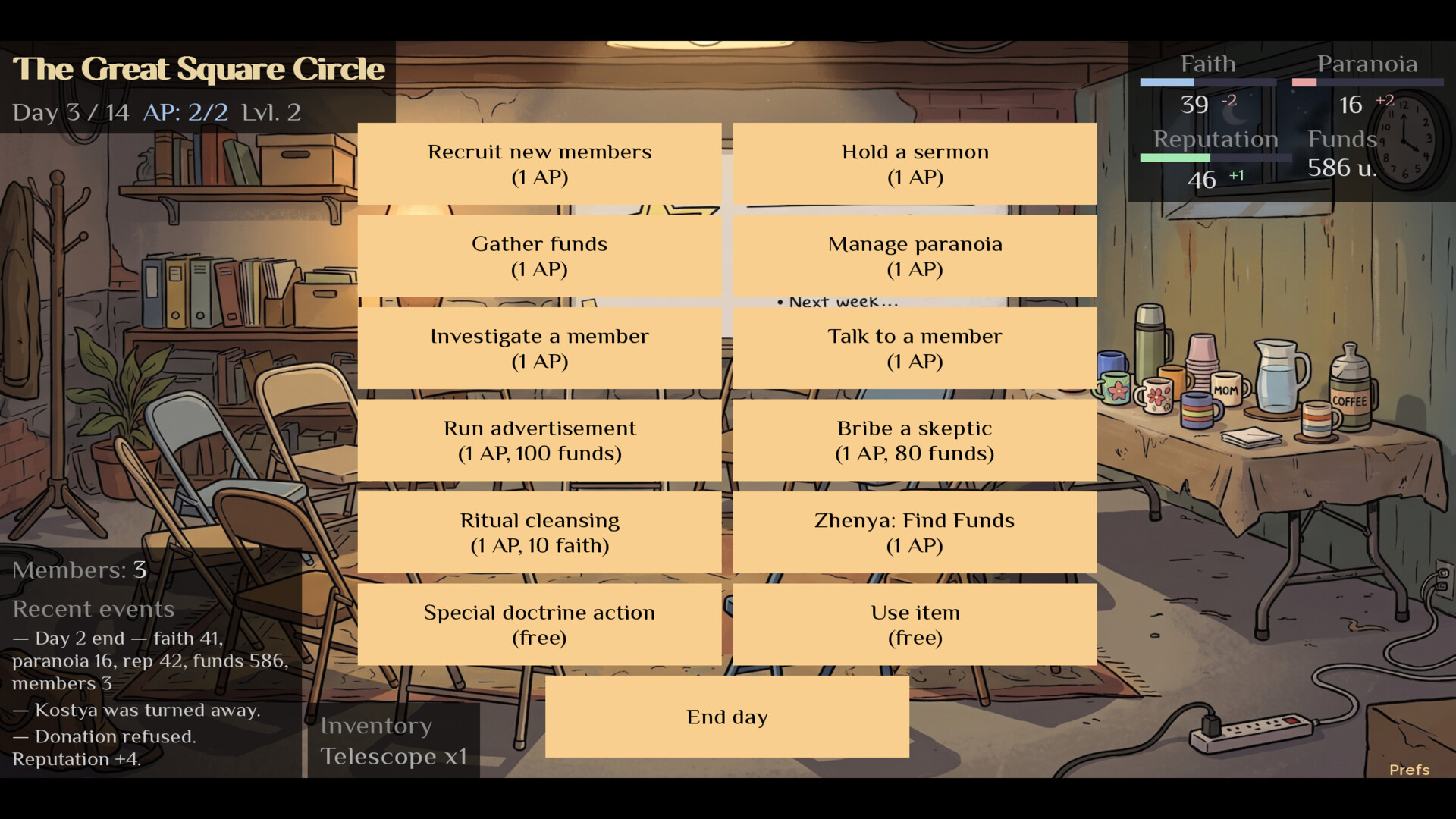
Definitely Not a CultImage: NeuroSlop Studio via Steam -
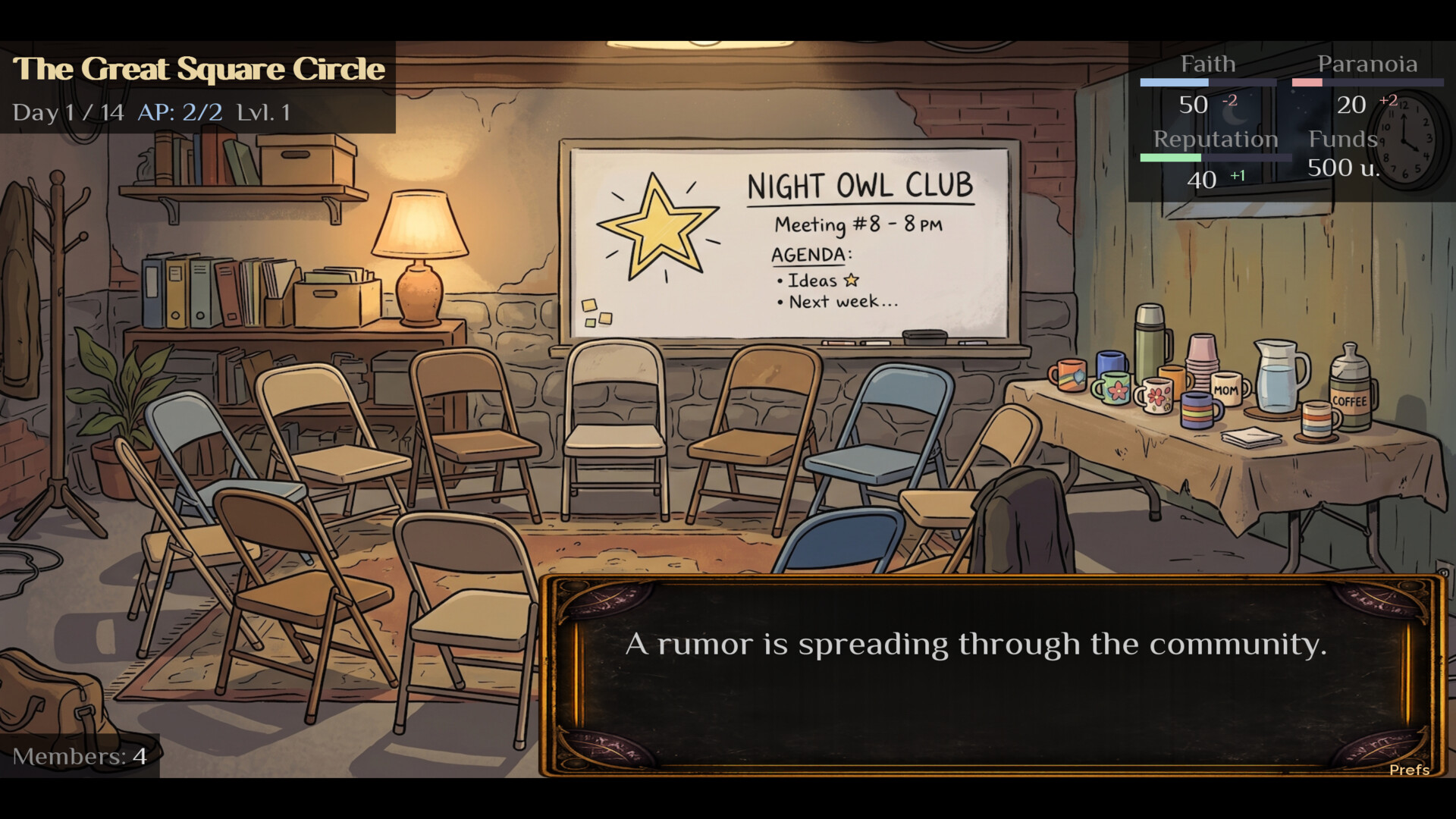
Definitely Not a CultImage: NeuroSlop Studio via Steam -
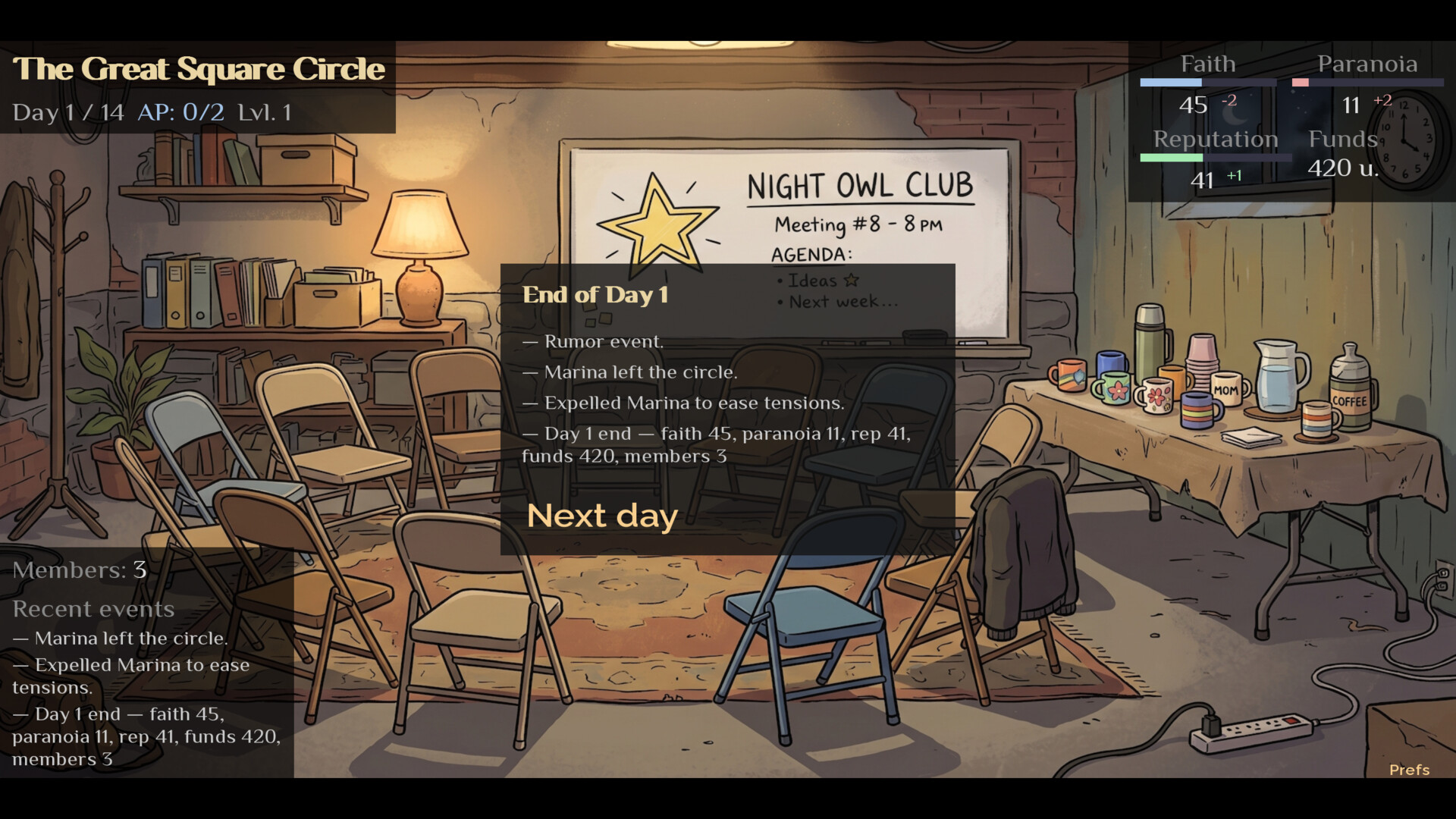
Definitely Not a CultImage: NeuroSlop Studio via Steam -
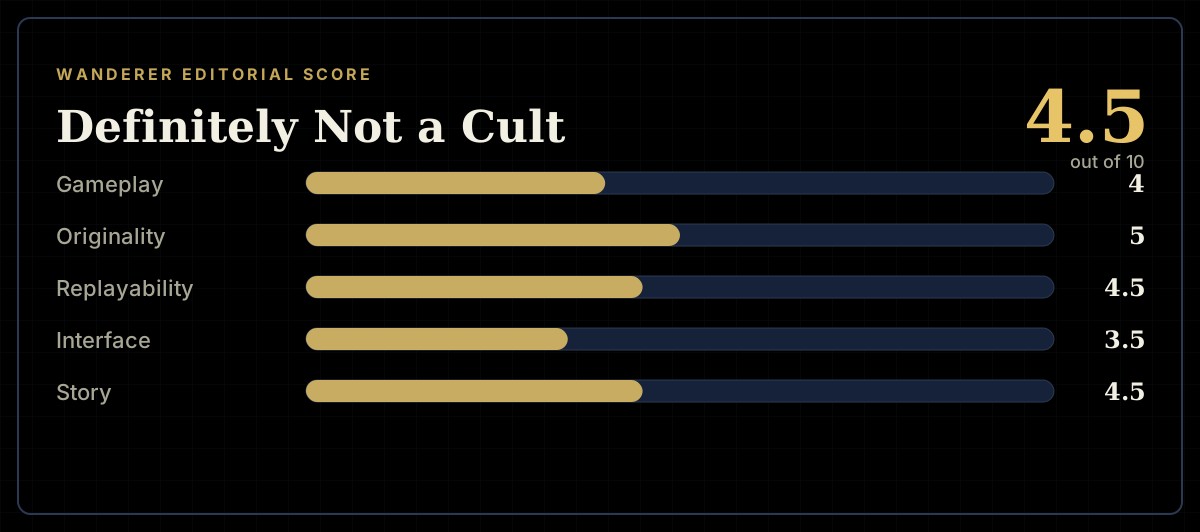
How the review scores each part of the gameWanderer Editorial -
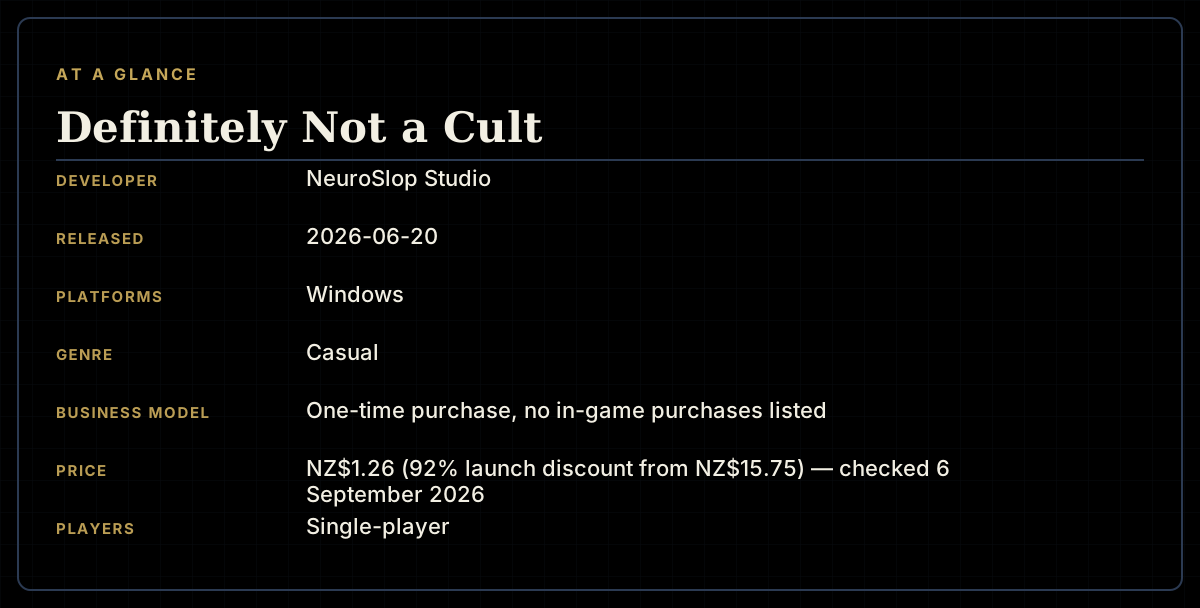
The essentials at a glanceWanderer Editorial -
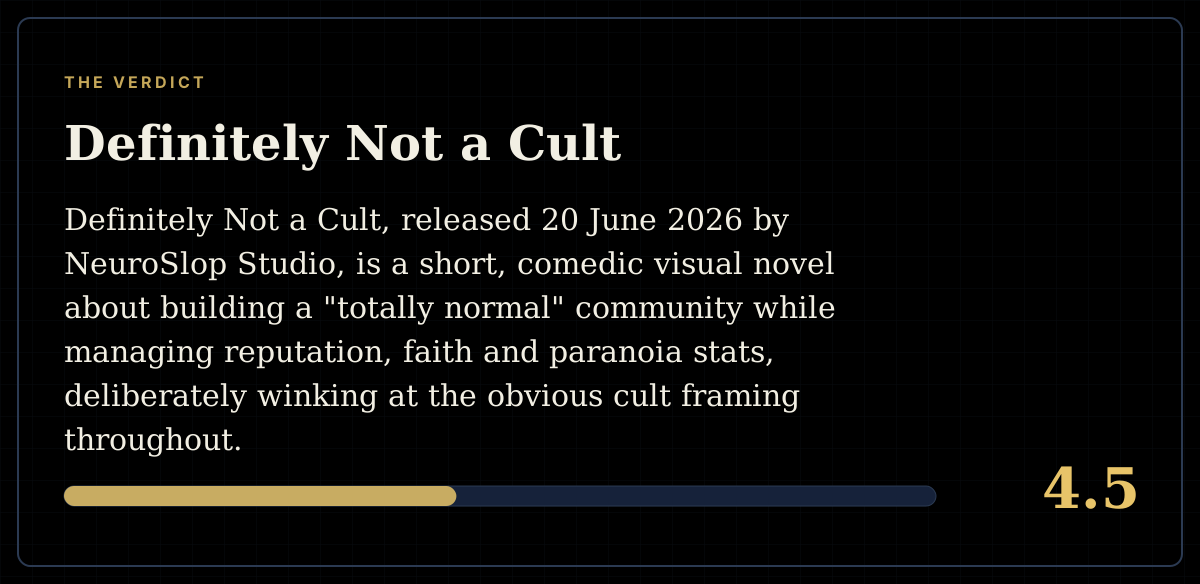
The short versionWanderer Editorial