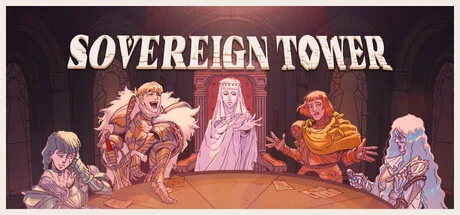
Game review
Sovereign Tower
8.5 / 10
- Developer
- WILD WITS GAMES
- Publisher
- Curve Games
- Released
- 6 August 2026
- Platforms
- Windows, Linux
- Genre
- Round Table Management RPG, Visual Novel, Strategy
- Monetisation
- One-time purchase; two optional DLC add-ons (a digital artbook and a soundtrack), neither containing gameplay content; no in-game currency, energy system or timers
- Players
- Single-player only; no co-op or multiplayer modes are listed on the store page
The short version
Sovereign Tower dresses up as a visual novel and turns out to be a genuinely demanding management RPG underneath: you inherit a magical tower, a Round Table of knights with their own egos and fears, and a kingdom full of factions who cannot all be kept happy at once. Quests get assigned by matching a knight's strengths, quirks and gifted items against a job's demands, and failure has teeth — knights lose health and can die permanently. The twist is a demon in the crypt who offers to rewind the clock at an unstated cost, which every reviewer who has played it describes as the single most compelling piece of tension in the whole game. It's backed by a real publisher and real games-press coverage rather than the usual solo-developer silence, and the two outlets that have reviewed it scored it 9/10 and 8.5/10. The rough edges are specific: a hard ten-knight roster cap with no way to dismiss a bad fit, a skill-upgrade prompt that's easy to accidentally skip, and a story clock that ends the game whether or not your side quests are finished.
Biggest strengths
- Knight assignment is a real logistics puzzle — stats, personal fears, item gifts and quest requirements all interact, and a bad match can get a knight hurt or killed outright
- The demon's time-rewind offer is deliberately unexplained at first use, which both reviewers who covered it singled out as the game's sharpest piece of design tension
- Hand-drawn character art and tight, funny writing carry scenes that have no voice acting and limited animation, and both outlets that reviewed it called the art the game's clearest strength
Biggest weaknesses
- Knights can be recruited but never dismissed, and the roster caps at ten — a reviewer who hit the cap was stuck carrying two consistently under-performing knights with no way to make room for better-suited recruits who wanted to join
- The skill-upgrade prompt only appears briefly after a quest completes and is easy to dismiss by reflex-tapping through dialogue, silently costing a knight's earned skill point for a cycle
- The main story runs on a fixed in-game clock and ends whether or not side quests are finished, which one reviewer flagged as a hard boundary worth knowing about going in
Who it's for: Fans of Reigns, Yes, Your Grace and Frostpunk's harder moral trade-offs who also want the granular unit-management of a mission-assignment game like Dispatch, plus anyone who wants a visual novel's writing and romance options wrapped around genuine strategic stakes rather than a straightforward story.
Our recommendation: At NZ$29.74 for a story that reviewers say takes multiple runs to see even a fraction of, clean one-time-purchase monetisation, and two independent 8.5+ scores from outlets that actually played it before launch, this is an easy recommendation for anyone who likes political trade-offs with real consequences. Go in expecting genuine difficulty rather than a cosy power fantasy, and expect to lean on New Game Plus rather than seeing everything in one go.
8.5 / 10
Sovereign Tower sells itself with a visual-novel screenshot and a "management RPG" subtitle, and the honest version of that pitch is that both halves undersell it. You are handed a kingdom nobody wanted, a Round Table of knights who each arrive with their own egos, fears and secret ambitions, and a padlocked door in the crypt behind which a demon is extremely keen to talk to you about second chances. Wild Wits Games, the French studio behind 2025's Crown Gambit, spent its second game building something closer to a political logistics puzzle wearing a visual novel's clothes — and it launched into a rarer position than most of what crosses this desk: a real publisher in Curve Games, actual pre-launch press coverage, and two independent reviews at launch that landed at 9/10 and 8.5/10 rather than the usual silence.
What the Steam genre tags don't tell you
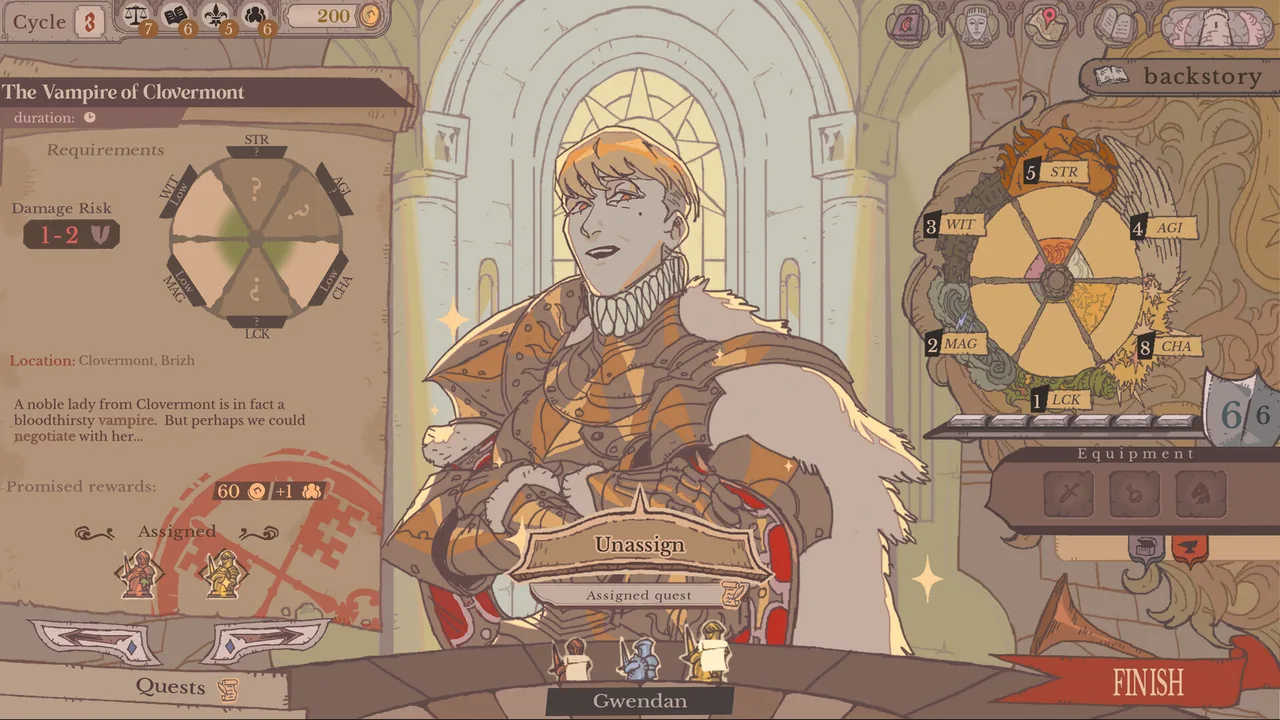
Steam files Sovereign Tower under Indie and RPG, which is technically accurate and not remotely the whole story. The community's own tag votes tell a sharper version: Visual Novel and Choices Matter sit above RPG, with Management, Dialogue Heavy, Story Rich and Time Manipulation not far behind, and Point & Click and Interactive Fiction confirming the presentation is built on dialogue trees and static character art rather than combat you personally control. There's no swordplay to learn here, no action system to master — the game's own promotional screenshots show a stat wheel of six attributes (Strength, Agility, Wit, Magic, Charisma, Luck) used to resolve a knight's odds against a quest's requirements, not a fight you play out yourself. If you're coming in expecting an action RPG because the storefront says "RPG," you're going to be surprised; if you're coming in for a management sim with a novel's worth of writing wrapped around it, the tags undersell how much strategy is actually underneath.
The job is casting, not combat
Every cycle opens with an Audience — a queue of commoners, nobles, merchants and academics petitioning the throne — and closes with a trip to the Round Table, where the actual game happens. Each knight carries stats, personal fears and preferences that interact with a quest's demands in ways that go well past "send the strong one." A knight afraid of the dark performs badly on a cellar rescue no matter how strong they are; a knight from a cheese-producing region gets a real boost from being gifted the right wheel of cheddar before departure, and that same cheese happens to improve charm, which is exactly what a different knight needs for an ice-skating diplomatic incident on the same cycle. Get the casting wrong and the consequences aren't cosmetic: knights lose health on failed quests and can die outright, permanently, taking whatever relationship or romance you'd built with them out of the game along with them.
That weight is deliberate rather than accidental difficulty. Sovereign Tower reportedly has a genuine failure state built into its structure — a "Sovereign mode" that autosaves and locks you out of undoing a bad call by any means except the demon's help — and reviewers who've played it describe losing knights on their very first assigned quest, not through carelessness but through a system that doesn't forgive a mismatch. That's a deliberate design choice worth knowing before you buy: this isn't a cosy kingdom-builder where every decision is reversible for free.
A demon who never explains the price
The single mechanic every account of this game returns to is the demon padlocked in the crypt, who offers to rewind the clock and let you replay a cycle after a disaster. What makes it work is that the game never tells you what using it costs. Nothing visibly breaks the first time you take the offer — no obvious penalty, no meter ticking down — which is precisely the trap: it reads as a free undo button right up until you've leaned on it so many times that stopping feels harder than continuing. CGMagazine's review calls it "a constant piece of narrative tension that's electric in action," and describes exactly that slide from principled refusal to unconscious dependence after losing a favourite knight. It's a rare case of a game mechanic and its narrative framing pulling in the same direction instead of one serving as decoration for the other.
It also isn't a clean reset button in the way it might look. Court Audiences are pulled randomly from a pool of possible events each cycle, so rewinding to correct a specific mistake doesn't guarantee the same quest — or the same knight's availability — reappears. That randomness is doing real design work: it stops the demon's power from turning into a save-scum solved puzzle, and it means two playthroughs of the same opening hours can diverge meaningfully even when a player is actively trying to force the same outcome twice.
A roster with no exit door
The clearest structural complaint in the early coverage is also the most specific: knights join your Round Table permanently, there's no way to dismiss one once recruited, and the roster caps at ten. That sounds like a minor inconvenience until you're several cycles in and stuck carrying one or two knights whose specific fears and weaknesses keep them failing the quests actually on offer, while better-suited recruits are turned away for lack of a seat at the table. It's the kind of friction that a management game built around min-maxing shouldn't have — the entire appeal of the system is picking the right knight for the right job, and a hard cap with no release valve works against that directly rather than adding challenge to it.
A second, smaller but real complaint sits in the same territory: the prompt to spend a knight's earned skill point only flashes briefly after a quest resolves, and it's easy to dismiss by reflexively tapping through dialogue the way you would in any visual novel — which this otherwise plays like. Missing that window means missing the chance to improve a knight for an entire cycle, and there's apparently no way to revisit it later. Neither issue undermines the core loop, but both read as the kind of UI polish that a longer development cycle would likely have caught, and it's fair to flag them rather than pretend the launch build is frictionless.
Writing that outruns its own follow-through
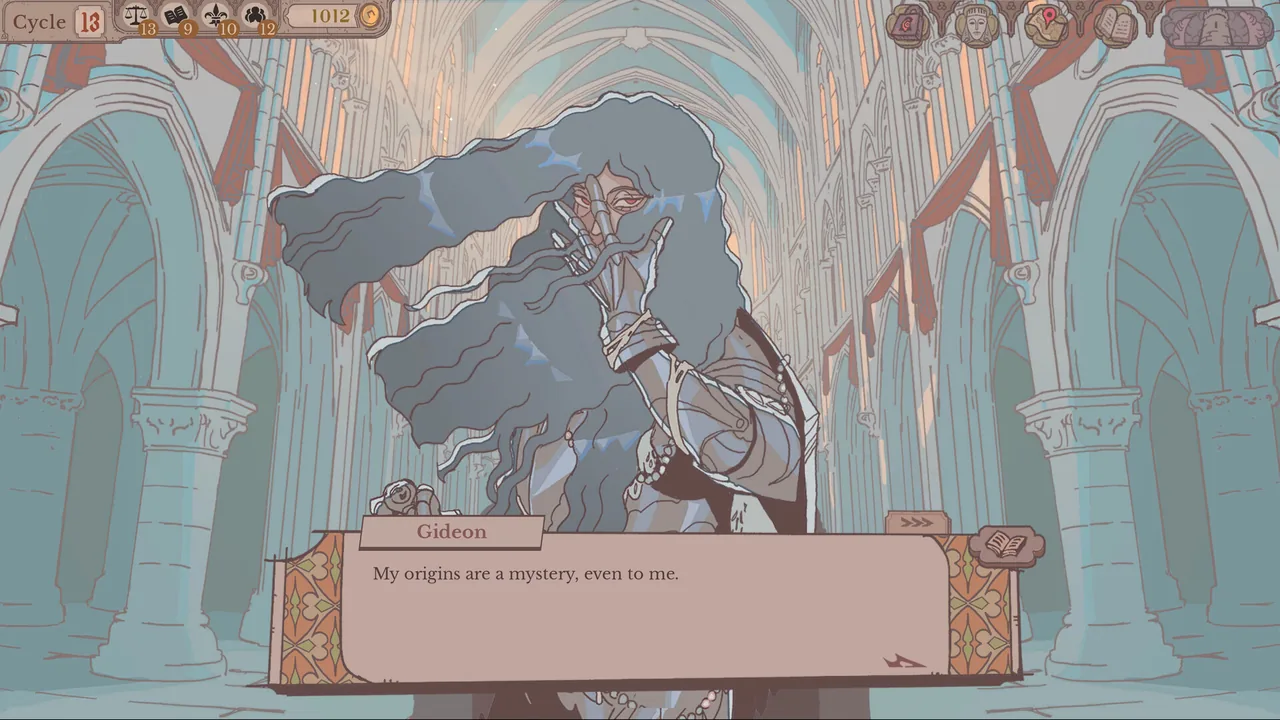
Every account of Sovereign Tower agrees on the strength of its writing and art before anything else. The hand-drawn character portraits — eccentric, expressive, and doing real work in scenes that have no voice acting and only a handful of character poses — carry the game's tone in a way that reviewers describe as consistently funny without tipping into vulgarity, and consistently willing to let a genuinely dark beat (an uprising, a knight's death, a demonic bargain gone too far) sit next to a joke about a cursed goose in a public bathhouse. The world map itself sketches a small continent's worth of named counties — Groveshire, Drakovic, Almor, Southbay, Gavault among them — each apparently carrying its own political stakes and count to negotiate with, which is more worldbuilding infrastructure than a two-person indie writing team strictly needed to build for a game this size.
The one place that ambition outpaces the budget is follow-through on minor content. Major quests earn a proper follow-up audience where consequences actually land in dialogue; a large share of the smaller contracts resolve with nothing more than a one-line pass/fail notice. With reportedly close to a hundred quests total, that's a defensible scope decision rather than an oversight, but it stands out specifically because the major-quest writing is good enough to make players want the same treatment applied everywhere. The main story also runs on a fixed cycle count rather than waiting for you — one review specifically flagged reaching the credits with side quests still open, because the Big Final Confrontation arrives on its own schedule regardless of how tidy your kingdom is. That's a real design choice worth knowing about rather than a bug: New Game Plus is there to pick up what the clock cut off, not a first-playthrough completionist run.
A launch a real publisher actually supported
What separates Sovereign Tower from most of what turns up in this genre lane is the amount of daylight it got before release. Curve Games ran a proper pre-launch campaign — a January 2026 Rock Paper Shotgun preview, a public demo in April, a second demo through the June 2026 Steam Next Fest, a 100,000-wishlist milestone announced in July, and launch-day reviews from at least two outlets rather than the usual solo-developer silence. CGMagazine's Matt Sowinski scored it 9/10, calling it "fantastic and shouldn't be missed, a gripping experience that will have you coming back cycle after cycle." The Punished Backlog landed at 8.5/10, praising the writing and the min-maxing puzzle while naming the roster cap and skill-menu issues explicitly as the game's clearest rough edges — the same complaints that show up here.
Steam's own review corpus is a genuinely rare sight for this library: as of one day after launch, every single review is positive, all 44 of them, with no negative reviews at all yet. That sample is far too small and far too fresh to read as a verdict — it's a launch-week snapshot from buyers who'd mostly already played the demo and knew what they were getting, several of whom explicitly say so in their own reviews — but it's a clean starting position for a game this new, and it lines up with what the actual games press found rather than contradicting it.
Final verdict
Sovereign Tower earns its 8.5 by delivering on a genuinely uncommon pitch: a visual novel's writing and romance systems built around a management RPG with real logistics and real consequences, tied together by a time-rewind mechanic that works because the game refuses to explain its own cost. The knight-assignment puzzle has teeth, the writing is sharp enough to survive having almost no animation to lean on, and the political stakes across a fully-realised map of named counties give the whole thing more scope than its indie budget should technically allow. It doesn't score higher because the friction that exists is specific and structural rather than cosmetic: a ten-knight cap with no way to cut a bad fit loose, a skill-upgrade prompt that's too easy to miss by accident, and a story clock that closes the book on you rather than waiting for you to be ready. None of that undercuts what Wild Wits Games actually built. If you want a kingdom-management game where every choice is genuinely reversible and consequence-free, look elsewhere; if you want one where a demon is quietly counting how many times you've asked for a do-over, this is very much worth your NZ$29.74.
Wanderer players who like weighing a choice against a stat cost before committing to it — rather than just clicking through dialogue — will likely recognise the appeal here immediately.
Pros and cons
Pros
- Knight assignment is a real logistics puzzle — stats, personal fears, item gifts and quest requirements all interact, and a bad match can get a knight hurt or killed outright
- The demon's time-rewind offer is deliberately unexplained at first use, which both reviewers who covered it singled out as the game's sharpest piece of design tension
- Hand-drawn character art and tight, funny writing carry scenes that have no voice acting and limited animation, and both outlets that reviewed it called the art the game's clearest strength
- Randomised Audience requests mean rewinding to fix one mistake doesn't guarantee the same events reappear, so replays stay genuinely unpredictable rather than becoming a solved puzzle
- Monetisation is about as clean as this library sees — one purchase, an artbook and soundtrack that add no gameplay content, no currency or timer systems anywhere in the design
- A real publisher behind the release shows in the coverage: pre-launch previews, a Rock Paper Shotgun writeup in January, and two independent reviews at launch rather than the usual silence
Cons
- Knights can be recruited but never dismissed, and the roster caps at ten — a reviewer who hit the cap was stuck carrying two consistently under-performing knights with no way to make room for better-suited recruits who wanted to join
- The skill-upgrade prompt only appears briefly after a quest completes and is easy to dismiss by reflex-tapping through dialogue, silently costing a knight's earned skill point for a cycle
- The main story runs on a fixed in-game clock and ends whether or not side quests are finished, which one reviewer flagged as a hard boundary worth knowing about going in
- Minor quests resolve with little more than a pass/fail line rather than narrative follow-up, which stands out precisely because the writing on major quests is strong enough to want more of it
- No voice acting and limited character animation — a deliberate scope choice for a two-person writing-heavy indie, but worth knowing if that's a dealbreaker for you
Screenshots
-
Sovereign TowerImage: Curve Games via Steam -
Sovereign TowerImage: Curve Games via Steam -
Sovereign TowerImage: Curve Games via Steam -
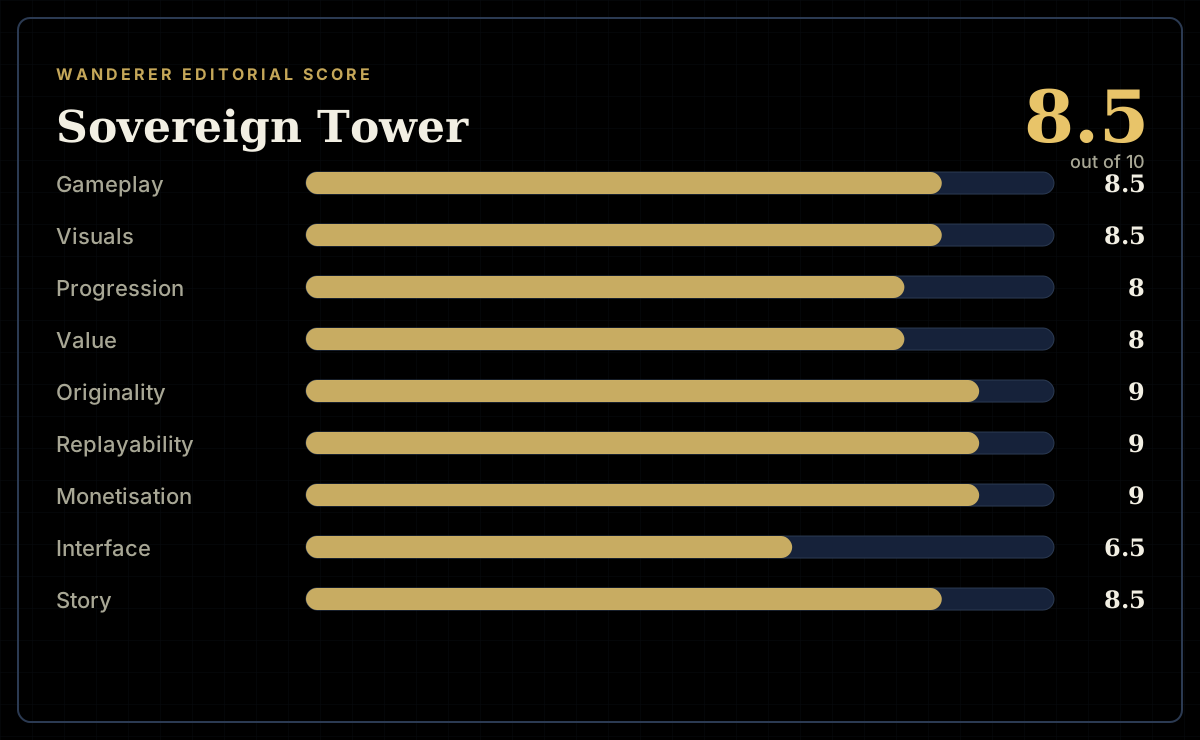
How the review scores each part of the gameWanderer Editorial -
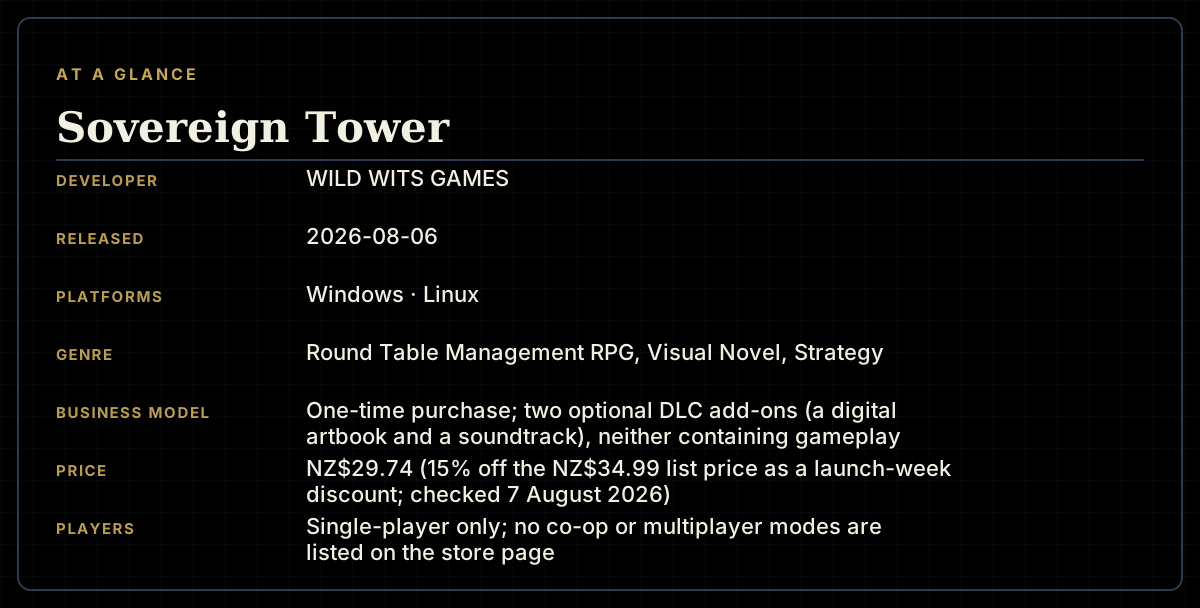
The game at a glanceWanderer Editorial -
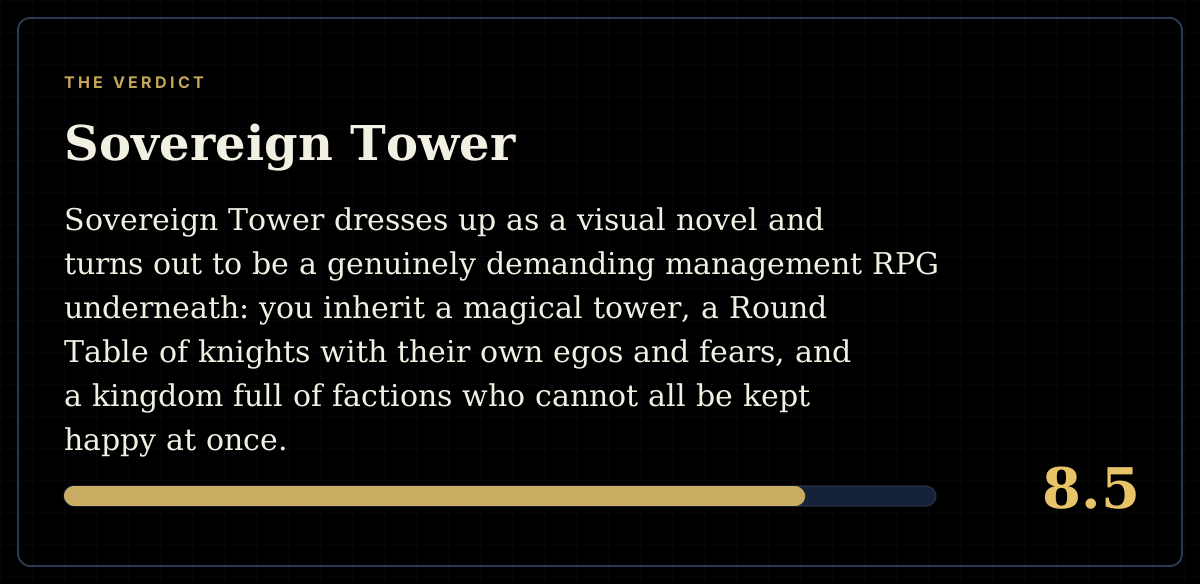
The short versionWanderer Editorial