
Game review
Cult Vacui Review: A Tight, Tense Point-and-Click That Knows Its Limits
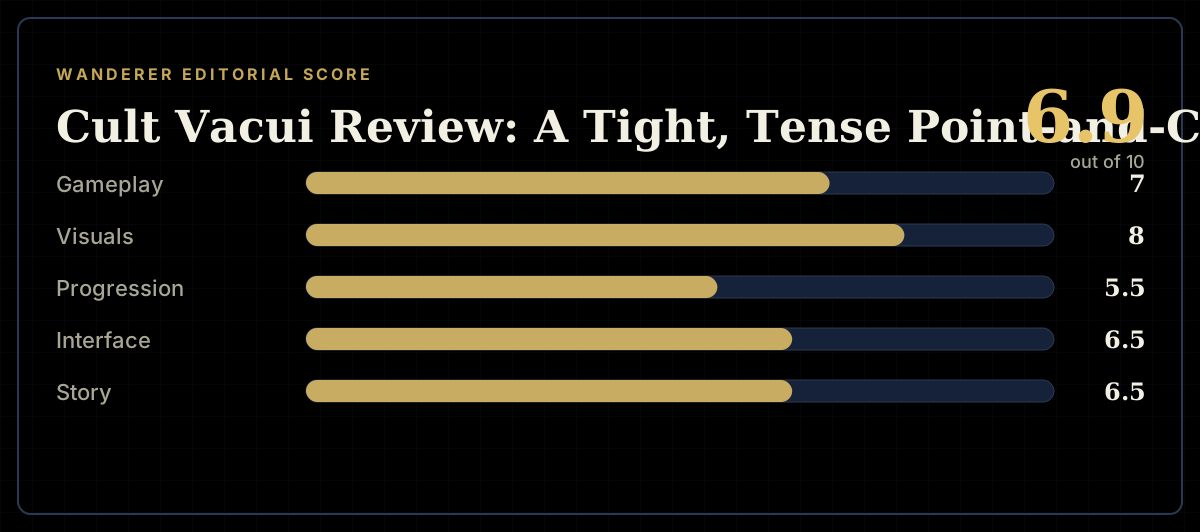
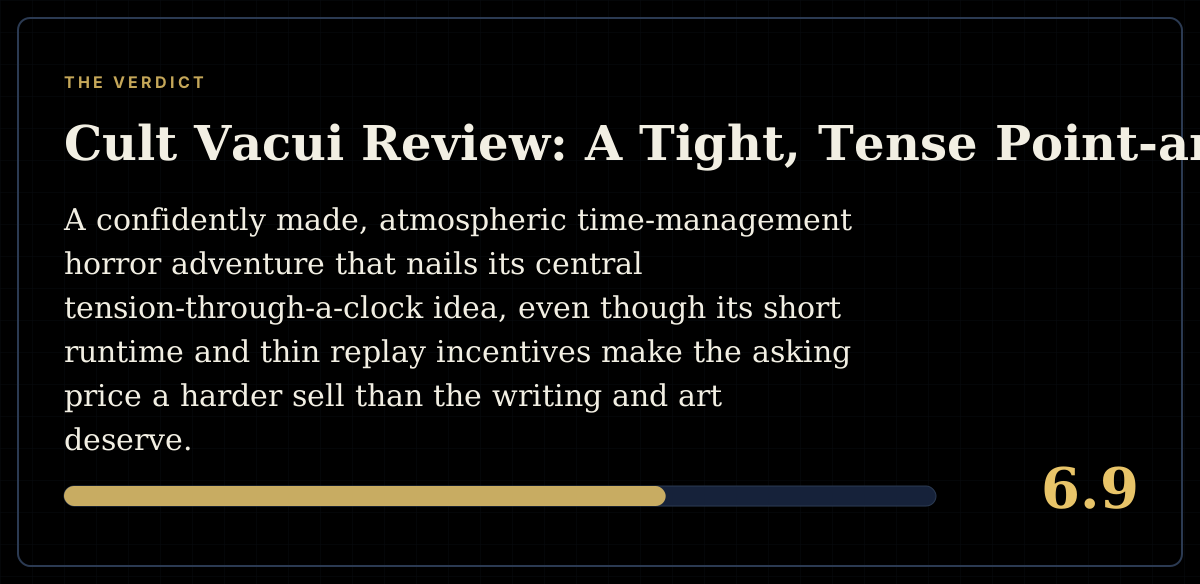
6.9 / 10
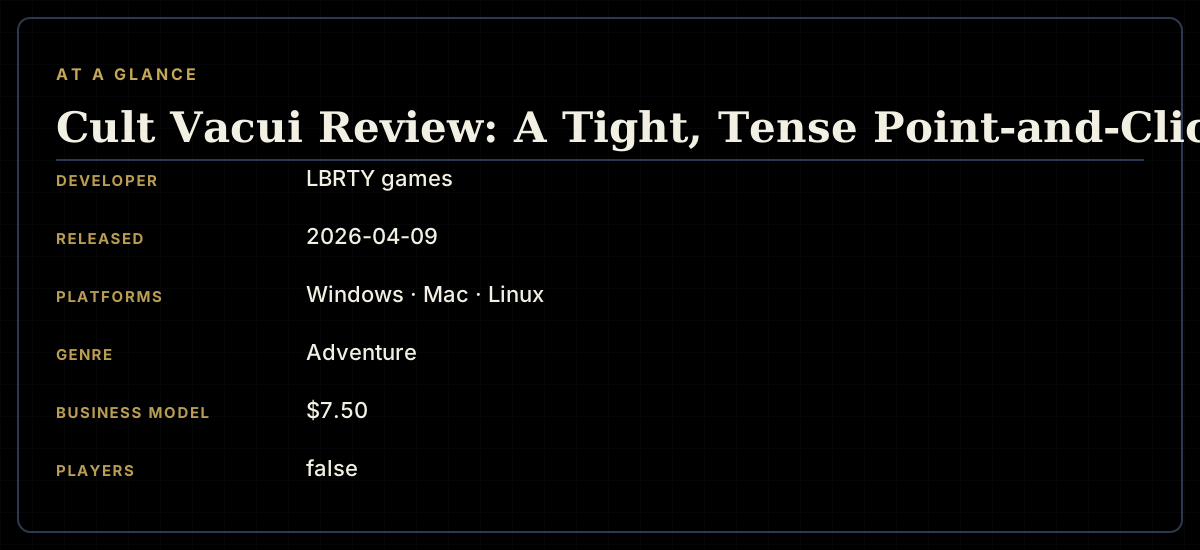
- Developer
- LBRTY games
- Publisher
- Dionous Games
- Released
- 9 April 2026
- Platforms
- Windows, Mac, Linux
- Genre
- Adventure
- Monetisation
- $7.50
- Players
- false
The short version
A confidently made, atmospheric time-management horror adventure that nails its central tension-through-a-clock idea, even though its short runtime and thin replay incentives make the asking price a harder sell than the writing and art deserve.
Biggest strengths
- A tense, well-implemented time-as-resource system that makes every action feel like a real tradeoff
- Handmade pixel art and an original score that consistently earn praise for atmosphere over jump scares
- A focused Lovecraftian cult story with multiple endings shaped by earlier choices
Biggest weaknesses
- Very short overall (most players finish in two to three hours), which several reviewers felt was steep for the asking price
- The third and final scenario requires foreknowledge to solve cleanly, making a first blind run feel almost designed to fail
- Limited tools for skipping previously seen dialogue on repeat playthroughs
Who it's for: Fans of Scriptwelder's Don't Escape series and short, story-driven horror point-and-clicks who don't mind a two-to-three-hour experience with limited replay value.
Our recommendation: Worth playing
6.9 / 10
A janitor's job goes very wrong
Cult Vacui opens with a simple premise dressed up in a lot of dread: you're a janitor who has taken a maintenance job on the remote Scottish island of Barra, at the summer estate of the wealthy Gladstone family. You arrive a day too late. The island's population has already been subjected to a "gruesome blood ritual" by a cult that considers its work unfinished until everyone left standing — including you — is dealt with. What follows is a few in-game hours of frantic preparation before the cult's final act, told through a late-19th-century point-and-click lens with survival horror trimmings rather than jump scares.
It's a tight, well-worn horror setup, and Cult Vacui doesn't pretend otherwise. Several reviewers compared it directly to Shadow of the Comet's island-cultist framing and to H.P. Lovecraft and Poe more broadly. The game leans into that familiarity rather than fighting it, and mostly earns the comparison through mood: unsettling music, a slow accumulation of ritual notes and objects, and a script that plays its occult beats straight without overreaching.
The clock is the whole game
The mechanical hook, and the thing nearly every review calls out first, is the time-management system borrowed from — and openly indebted to — Scriptwelder's Don't Escape series. You're given a hard time budget before the ritual concludes. Every action costs minutes: walking between locations, picking up or using an item, having a conversation, even backing out of a pause menu at the wrong moment in some early builds. The clock doesn't tick in real time; it only advances when you act, which turns the game into a resource-allocation puzzle rather than a twitch-reflex one. That distinction matters — several reviewers who went in expecting a stressful, ticking-clock experience came away pleasantly surprised that Cult Vacui rewards planning over panic.
Structurally, the game is built around three scenarios of escalating stakes, unlocked in sequence. The second is consistently singled out as the strongest and longest, with the most room to explore, fail, and retry. The first functions as a gentle introduction. The third is the sticking point: several players noted it's short enough, and tight enough on time, that a first attempt is nearly impossible to clear without knowledge you can only get by failing once and trying again — you need items from a specific location that you have no way of knowing about until you've already run out of time looking for them. That's a deliberate design choice around replayability, but it reads as a rough edge rather than a feature, and it's the single most consistent complaint in the review base.
Short, polished, and priced right at the edge
At $7.50 for roughly two to three hours (the developer's own listing calls this "the perfect moody afternoon game"), Cult Vacui sits in a spot where its length becomes the central point of contention. Most reviewers who finished it found the price fair for what's there — tightly written, well-paced, no padding. A minority pushed back explicitly: one review called it "waaay too short and simple for the price" and suggested it would land better at three or four euros; another, more sympathetic, still wished it was "a tiny bit cheaper" for the region. Out of 41 reviews at the time of writing, only one is negative, and that complaint is almost entirely about value-for-length rather than quality.
Multiple endings depending on earlier choices give the game some legitimate reason to be replayed — completing every achievement, per the most detailed review on file, takes about two hours and requires deliberately steering scenario outcomes toward an alternate finale. But the game offers little in the way of dialogue-skip tools for that second pass, which a couple of reviewers flagged as an odd omission for a design that explicitly wants you to run it back.
Handmade art carrying a lot of the atmosphere
Visually, Cult Vacui punches well above its price point. The pixel art is repeatedly described as gorgeous and handmade, and the game's own marketing leans on that honestly — "thought by a real human being" is the actual pitch line, a small dev-signature touch that lands given LBRTY games is a one-person studio. The soundtrack, composed by a film-credited musician working under the name Ascari, gets similarly consistent praise for setting tone without leaning on cheap stingers. Embedded critic pull-quotes on the store page — 80/100 from 1Up Nerd, 4/5 from Gamecult, 8/10 from RoJo Adventures — track closely with the player sentiment: strong on mood and mechanical hook, softer on length and originality.
A first game with real follow-through
Cult Vacui is developer Alessandro's first released Steam game, built solo under the LBRTY games name over roughly two years and picked up for publishing by Dionous Games, a studio known for other point-and-click adventures. That context matters for how the post-launch period has gone: a public demo shipped months ahead of release to gather feedback, monthly devlogs tracked visible progress toward launch, and a 1.02 patch arrived within weeks of release specifically fixing UI bugs around the clock and pause-menu interactions that multiple early reviewers had flagged. The game's 15 achievements show a clean, natural completion curve — from roughly 80% down to about 12% for the hardest — consistent with real players working through a linear story rather than an inflated or farmed achievement list.
Verdict
Cult Vacui is a small, confidently executed horror adventure that does one thing — turning every choice into a countdown — and does it well, then gets out before overstaying its welcome. The tradeoff is that "gets out before overstaying its welcome" also means it's genuinely short, and a game this size asking $7.50 will always face some pushback on value, regardless of quality. For fans of Don't Escape-style tension puzzles who want a focused, well-written evening rather than a sprawling campaign, it's an easy recommendation. For anyone counting hours per dollar, it's worth going in with the length expectation set correctly first.
Pros and cons
Pros
- A tense, well-implemented time-as-resource system that makes every action feel like a real tradeoff
- Handmade pixel art and an original score that consistently earn praise for atmosphere over jump scares
- A focused Lovecraftian cult story with multiple endings shaped by earlier choices
- Active post-launch support, including a patch fixing UI and restart bugs within weeks of release
Cons
- Very short overall (most players finish in two to three hours), which several reviewers felt was steep for the asking price
- The third and final scenario requires foreknowledge to solve cleanly, making a first blind run feel almost designed to fail
- Limited tools for skipping previously seen dialogue on repeat playthroughs
- A handful of reported bugs around the clock UI and pause menu, though the developer patched some early on
Screenshots
-
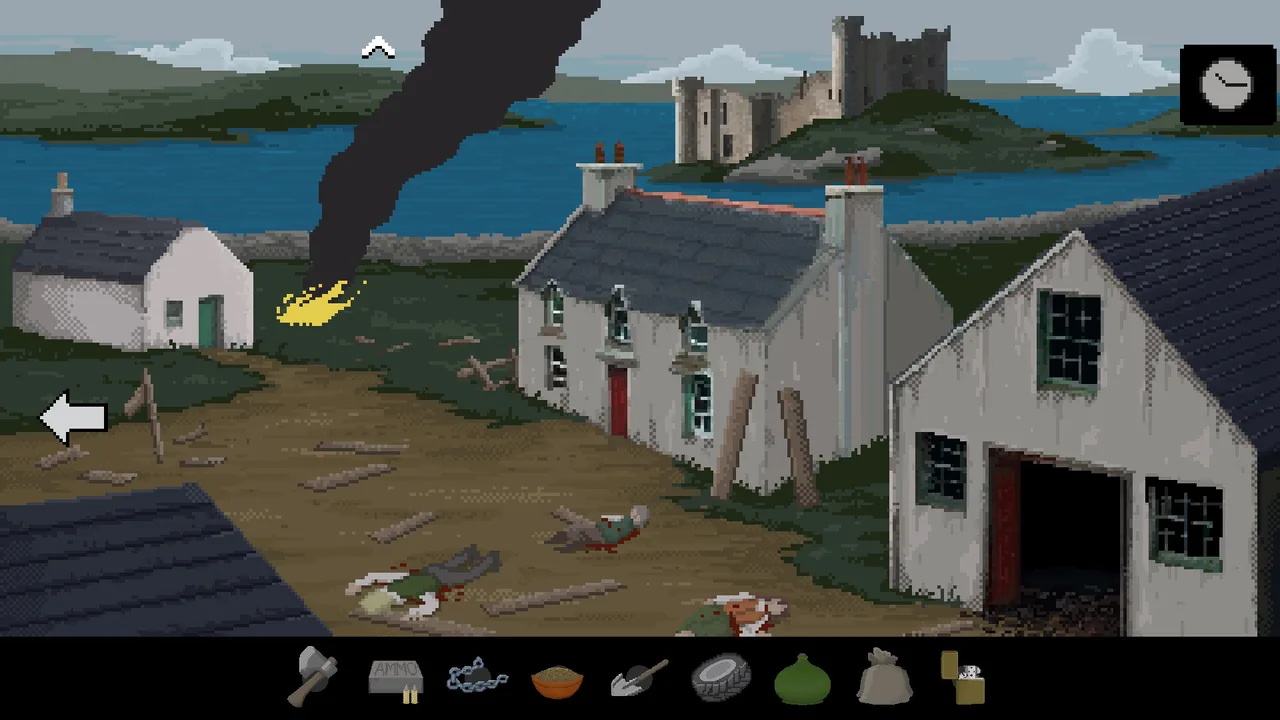
Image: LBRTY games via Steam -
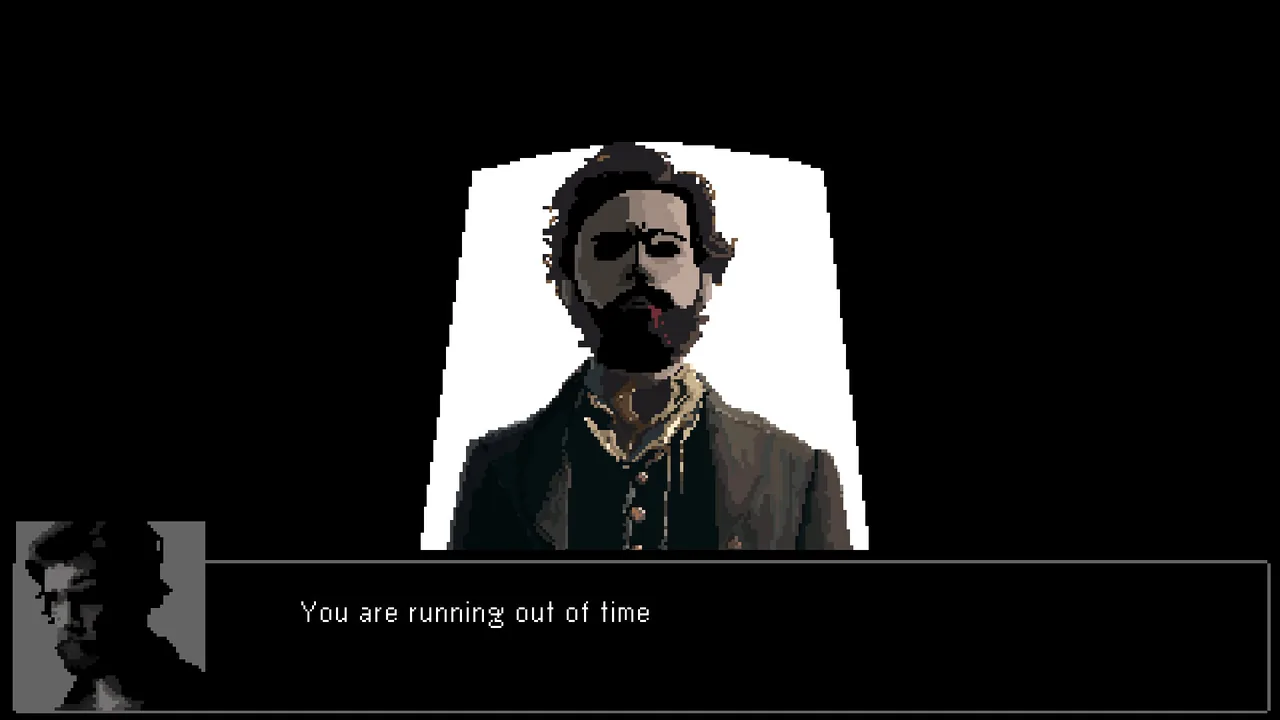
Image: LBRTY games via Steam -
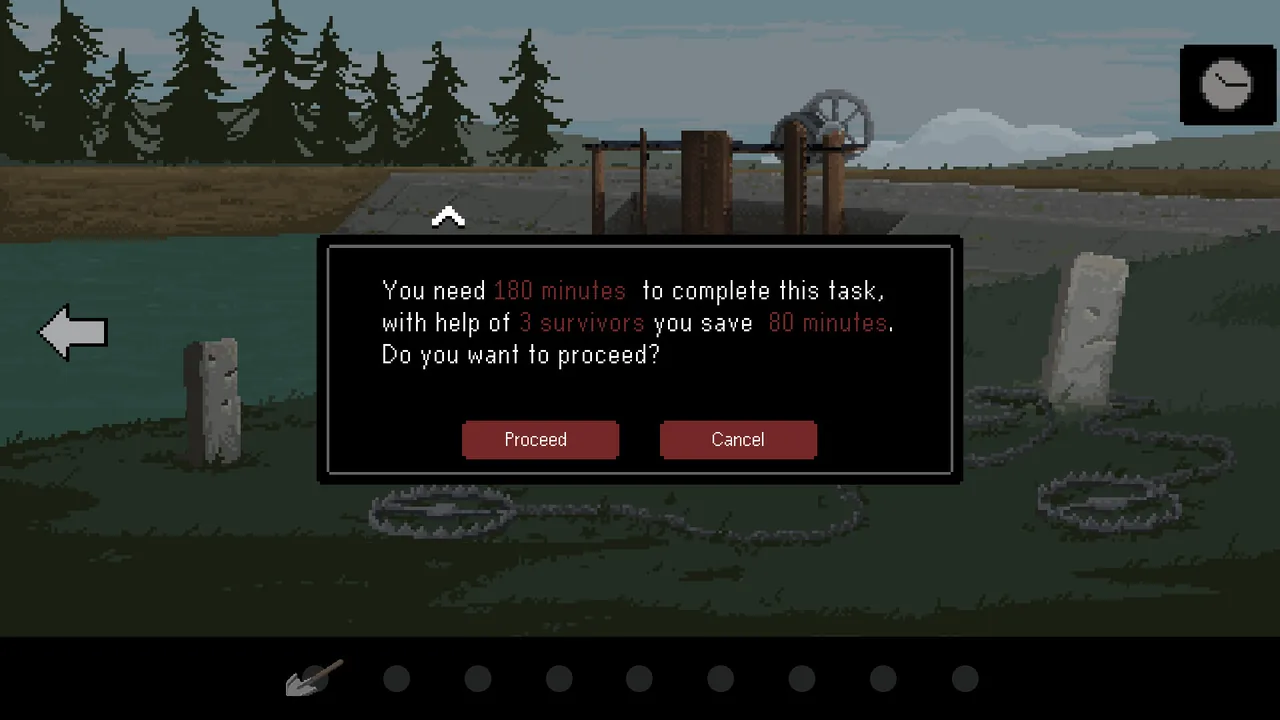
Image: LBRTY games via Steam -
Wanderer Editorial -
Wanderer Editorial -
Wanderer Editorial