Game review
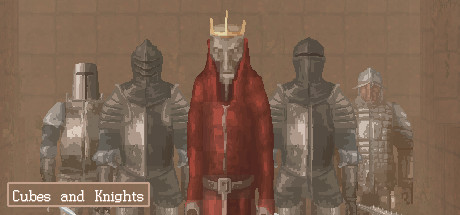
Cubes and Knights
5.5 / 10
- Developer
- Sergey Bobrov
- Publisher
- Sergey Bobrov
- Released
- 4 May 2022
- Platforms
- Windows
- Genre
- Action RPG
- Monetisation
- One-time premium purchase; no ads, in-game purchases or premium currency found
- Players
- Single-player only; no online, co-op or PvP modes
The short version
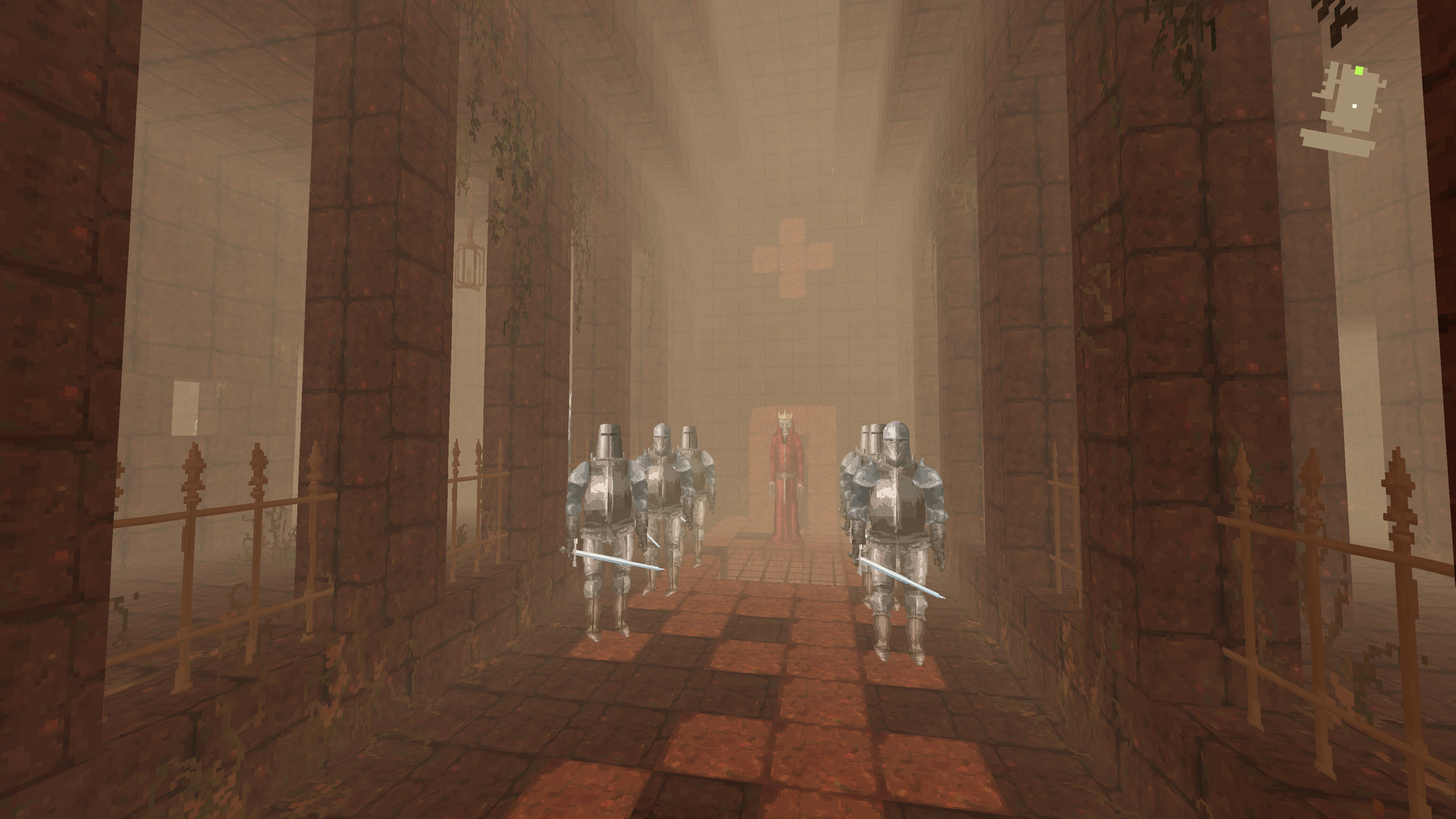
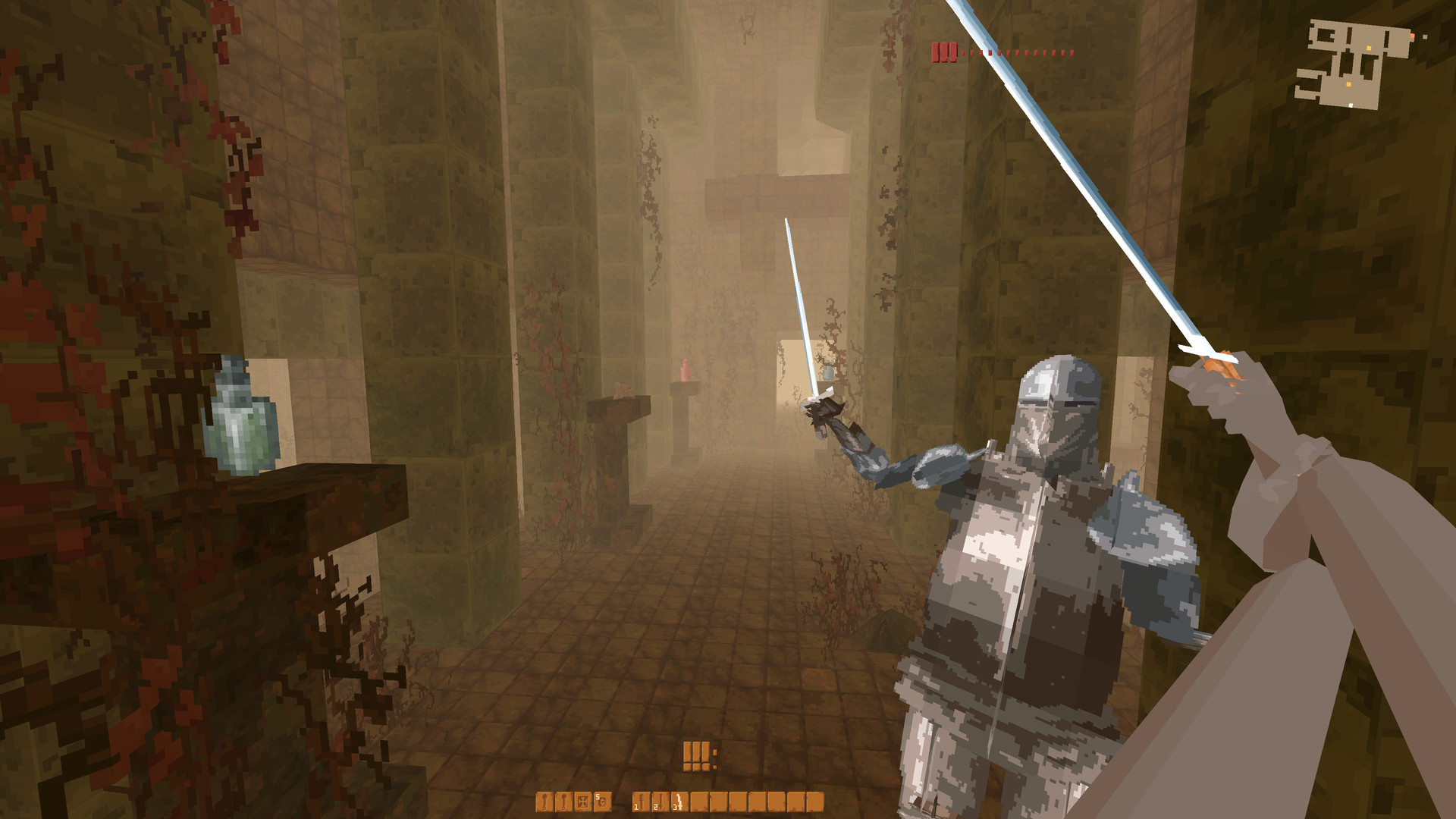
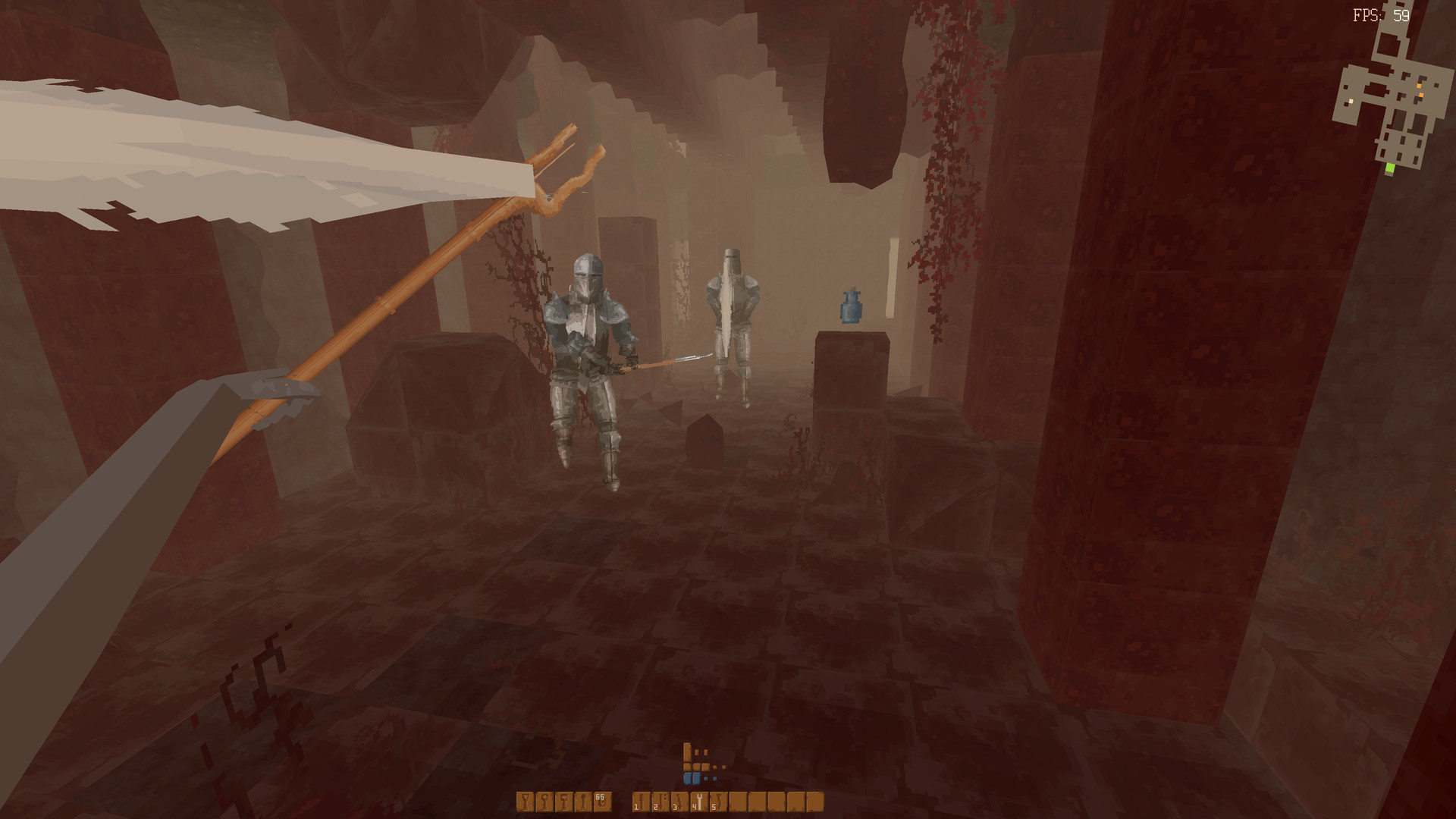
Cubes and Knights plays like a love letter to Quake, Hexen and DUSK: a heavy sword, weighty first-person combat, and genuinely destructible dungeon environments that reviewers repeatedly single out as unusually satisfying for a solo project. The combat feel alone earns real, consistent praise — more than one reviewer says they'd want a full-length RPG campaign built around this exact system, and the retro mood lands convincingly rather than reading as cheap nostalgia bait.
Underneath that combat sits a progression system reviewers describe as actively working against itself: max-health upgrades that don't translate into meaningfully more usable health, and spells costing the majority of a starting mana pool that never regenerates, leaving stat growth feeling hollow rather than rewarding. Two specific, reviewer-documented bugs compound the frustration — an endless victory screen with no way to continue playing after the final boss, and a boss fight that becomes literally unwinnable if a player enters it below a certain stamina threshold. Checked against the game's own public record, no patch of any kind was ever released across its four years live before the developer moved on to a confirmed 2026 sequel.
Biggest strengths
- Genuinely weighty, satisfying first-person combat that multiple reviewers compare favourably to Quake, Hexen, Strife and DUSK, with real physics behind hits and destructible environments
- A convincing, non-derivative retro mood rather than surface-level nostalgia styling
- Real difficulty and secrets that reward exploration, described by more than one reviewer as satisfyingly hardcore once its systems click
Biggest weaknesses
- Stat progression is described by multiple reviewers as actively self-defeating: max-health upgrades don't translate into meaningfully more usable health, and most spells cost the majority of a starting mana pool that never regenerates
- A specific, reproducible bug leaves players stuck on an endless victory screen after defeating the final boss, with no way to continue playing other than restarting the level entirely
- A specific, reproducible balance issue makes at least one boss fight literally unwinnable if a player enters with a reduced stamina pool, since a single parry can drain all remaining stamina and leave no way to riposte
Who it's for: Fans of weighty, physics-driven retro first-person combat who can tolerate short length, stingy progression and at least two specific, never-fixed bugs. Best approached as a short combat showcase rather than a full RPG experience.
Our recommendation: Worth it specifically for the combat feel if that's what draws you, but go in knowing it's short, under-supported, and has real unresolved issues the developer never patched.
5.5 / 10
Cubes and Knights doesn't waste time explaining itself: pick up a heavy sword, descend into a dungeon full of ancient evil, and start hitting things with real, physical weight behind every swing. Reviewers who know the genre place it directly alongside Quake, Hexen, Strife and DUSK as a reference point, and mean it as a compliment — the combat here isn't retro styling layered over modern mechanics, it's a genuine, convincing recreation of that era's best first-person melee feel, built by one developer working alone. That combat is the entire reason to play this game, and it's good enough that this review can say so without qualification. Everything else around it is where the qualifications start.
Combat that earns its comparisons
The praise for Cubes and Knights' moment-to-moment feel is specific and consistent: weighty hits, satisfying physics on destructible dungeon scenery that reacts believably to a heavy sword swing and becomes part of a fight rather than static backdrop, and a mood reviewers describe as genuinely capturing an era of first-person games rather than imitating its surface aesthetics. More than one reviewer explicitly wishes for a full, expanded RPG campaign built around this exact combat system — a strong form of praise, since it implies the underlying mechanics are good enough to justify more scope rather than being a one-trick showcase. Exploration and secret-finding are cited as genuinely rewarding too, with reviewers calling the game surprisingly, satisfyingly hardcore once its systems click into place.
Performance and audio draw separate, smaller complaints worth naming alongside the bigger design issues. More than one reviewer notes the game runs below 60 frames per second, attributed to its custom, developer-built engine rather than a fixable settings problem, and a separate reviewer describes the audio mix as consistently muffled. Neither is treated as a dealbreaker by the reviewers who raise them — both mention it as a minor detraction from an otherwise strong experience — but they're worth including precisely because they're the kind of small polish gaps that a longer support window typically catches, and this game never got one.
A progression system that starves itself
The praise for combat feel sits uneasily next to a specific, repeated complaint about how that combat is supposed to grow over a playthrough. One detailed review lays out the problem precisely: picking up a max-health upgrade doesn't translate into a meaningful increase in usable health, and most spells cost 75% or more of a starting mana pool that never regenerates on its own — leaving players with theoretically larger health and mana pools but nothing practical to fill them with. That's a specific, mechanical complaint rather than a vague "progression feels slow" comment, and it points at a design tension the game never resolves: growth stats exist, but the economy around actually using them doesn't support meaningful improvement run to run.
Two bugs the developer never touched
Two more specific, reproducible problems recur across independent reviews. First: defeating the final boss drops a player into an endless victory screen with no way to continue playing, forcing a full level restart for anyone who wants to keep exploring after finishing the story. Second, and more serious: at least one boss fight becomes effectively unwinnable if a player enters it with a reduced stamina pool, since a single successful parry can drain all remaining stamina and leave no way to execute the riposte that fight depends on — a design interaction one detailed reviewer flags directly as needing a balance pass. Checked against the game's own public event history, there is no record of any patch, hotfix or update across the entirety of its four years on sale — meaning, as far as this review's available sources can confirm, neither bug was ever addressed.
Four years of silence, then a real sequel
That total absence of patching isn't the same shape as this fleet's usual "developer went quiet after a real support window" story — here there doesn't appear to have been a support window at all after launch. What happened instead, confirmed via the game's own storefront announcements, is that the developer spent the intervening years building a full spiritual successor: The Deepest Castle, released in July 2026, explicitly promoted as expanding the same combat system with more fights, artifacts and magic. That's a genuinely different outcome than abandonment — a solo developer who moved directly to building something bigger rather than either patching the original or disappearing — but it does mean anyone hoping the specific bugs and balance issues documented above might still get fixed in this particular game shouldn't expect it at this point.
Where it lands
Cubes and Knights is worth knowing about specifically for its combat, which earns real, substantive comparisons to genre touchstones from a solo developer working with clearly limited resources. But a progression system that undercuts its own stat growth, a specific bug that blocks post-victory play, a boss fight with a documented unwinnable state, and four full years with no patch addressing any of it are real, serious shortfalls rather than incidental jank. A 5.5 reflects a genuinely good combat idea that never received the follow-through to become a complete, polished game in its own right. Players specifically chasing that combat feel, and willing to work around or simply avoid its documented rough edges, are likely to get real satisfaction out of the few hours it offers; anyone wanting a fully realised RPG experience around it should look toward its sequel instead.
Pros and cons
Pros
- Genuinely weighty, satisfying first-person combat that multiple reviewers compare favourably to Quake, Hexen, Strife and DUSK, with real physics behind hits and destructible environments
- A convincing, non-derivative retro mood rather than surface-level nostalgia styling
- Real difficulty and secrets that reward exploration, described by more than one reviewer as satisfyingly hardcore once its systems click
- A confirmed, credited spiritual successor — The Deepest Castle, released July 2026 by the same solo developer — promising an expanded version of the same combat system
Cons
- Stat progression is described by multiple reviewers as actively self-defeating: max-health upgrades don't translate into meaningfully more usable health, and most spells cost the majority of a starting mana pool that never regenerates
- A specific, reproducible bug leaves players stuck on an endless victory screen after defeating the final boss, with no way to continue playing other than restarting the level entirely
- A specific, reproducible balance issue makes at least one boss fight literally unwinnable if a player enters with a reduced stamina pool, since a single parry can drain all remaining stamina and leave no way to riposte
- The game's own public record shows zero patches of any kind across its full four years live, meaning neither of the bugs above, nor the progression complaints, were ever addressed
- Below-60fps performance and muffled audio are both raised independently by more than one reviewer
Screenshots
-
Cubes and KnightsImage: Sergey Bobrov via Steam -
Cubes and KnightsImage: Sergey Bobrov via Steam -
Cubes and KnightsImage: Sergey Bobrov via Steam -
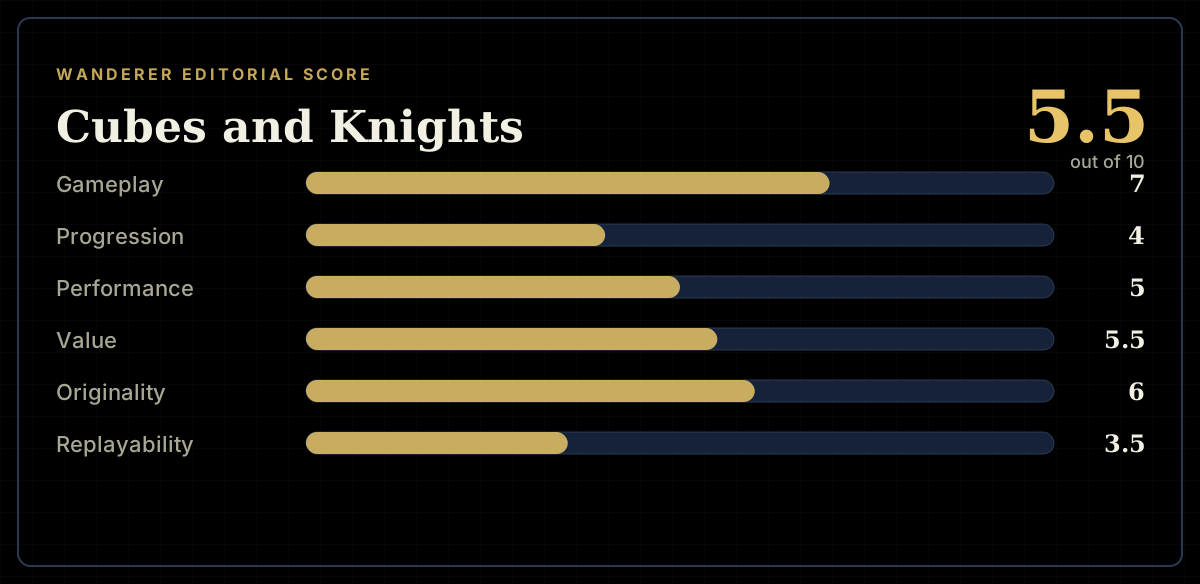
How the review scores each part of the gameWanderer Editorial -
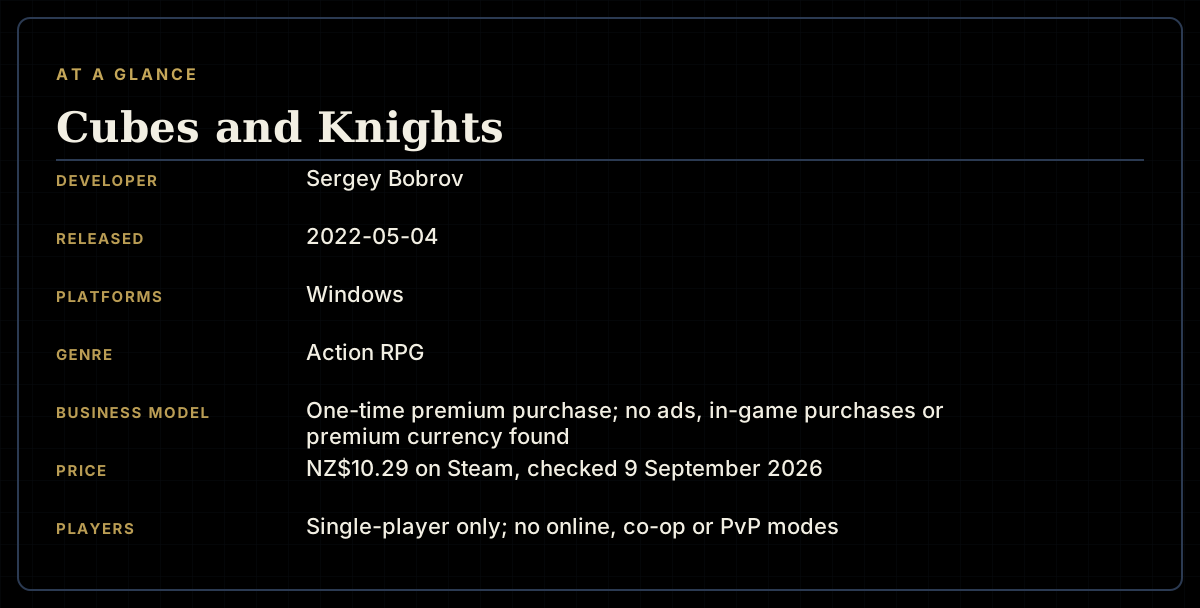
The specsWanderer Editorial -
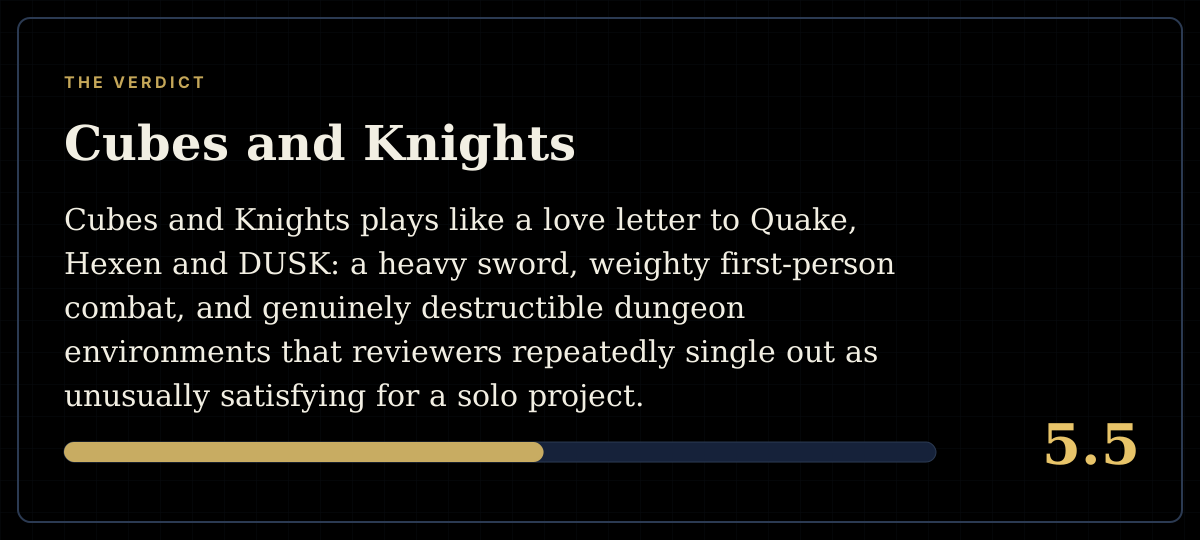
The short versionWanderer Editorial