Game review
Cromania
6.4 / 10
- Developer
- Momoiu Cerasela Nicoleta
- Publisher
- Momoiu Cerasela Nicoleta
- Released
- 29 April 2026
- Platforms
- PC
- Genre
- Idle Medieval RPG
Forge your hero, conquer the map
Cromania's own tagline sums up its structure cleanly: "Forge your hero. Conquer the map." A solo developer's medieval idle-adventure built around three starting classes — warrior, archer, and wizard — sending a chosen hero through automatic combat, coin collection, and equipment upgrades on a slow crawl toward increasingly dangerous provinces and bosses. The key art itself, matching a captured screenshot, depicts a mage and a knight facing off with swords crossed over a sprawling illustrated map dotted with castles and villages, which turns out to be a fairly literal representation of the game's structure — a second screenshot shows exactly that kind of overworld, rendered as a painterly aerial map connecting fortified towns, a lighthouse, waterfalls, and two distant castles by winding rivers and roads.
What sets Cromania apart from a purely hands-off idle loop is a genuine PvP arena system, corroborated directly by a captured screenshot: two heroes face off in a torch-lit throne room before a crowd of onlookers, with health bars, a resource counter (10/10), a 106-second cooldown timer, and a live gold total all visible on screen simultaneously. That's a meaningfully different structure from most idle RPGs in this genre, which tend to be purely PvE grinds against scripted enemy waves — Cromania instead builds toward direct, stat-driven duels against other players' heroes, giving the class-and-equipment choices upstream of it actual competitive stakes rather than just cosmetic or numerical progression for its own sake.
Two playstyles, one progression curve
One of Cromania's more interesting design choices, confirmed independently by more than one reviewer, is that it deliberately supports two distinct playstyles on top of the same underlying systems: an active mode for players who want to stay engaged and keep clicking through combat and resource decisions, and a genuinely idle mode for players who'd rather leave the game running and check back periodically. One reviewer states this directly, describing the two options as a real choice rather than idle-mode being a fallback for a game that's secretly meant to be played actively, and notes they personally prefer the active playstyle specifically because it's supported rather than merely tolerated. Combined with the fact that combat itself is automatic regardless of which mode is chosen — the player's real agency lies in class selection, equipment upgrades, and how earned points get invested — Cromania reads as a hybrid that's trying to serve both idle-genre regulars and players who want a more hands-on medieval RPG experience from the same core loop.
Three classes, one shared road through the map
The store page frames the three starting classes as genuinely different paths through the same world rather than reskins of one another — the warrior offering raw strength, the archer built around precision, and the wizard channelling magic, each described as unlocking a different feel across the same sequence of provinces and bosses. The overworld screenshot itself gives a sense of scale to that province-by-province structure: a single connected landscape stretching from a dark fortress on a western cliff to a sunlit white castle on the eastern coast, with a walled river town, a solitary lighthouse tower, and multiple waterfalls marking the terrain in between. It's a static illustration rather than a captured gameplay map, so it can't confirm exactly how navigable or interactive that world is in practice, but it does support the store page's description of provinces unlocking progressively as the hero grows stronger rather than being open from the start.
An unusually small but completely unanimous review sample
The review sample is small — six total, and notably, all six are positive with zero negative reviews recorded. That's a genuinely clean record rather than a lopsided-but-mixed one, and it's worth taking seriously given how substantial some of the individual playtimes behind those six reviews are: several reviewers report tens of thousands of accumulated minutes, with one logging over 110,000 minutes (roughly 1,844 hours) and describing the game as "really addictive" despite calling the price "a bit spicy." Reviewers consistently credit the solo developer's pace of updates and responsiveness, with one describing the game as having "evolved massively" thanks to recent patches, moving from what they call a "perfect second-screen background title" into something considerably more engaging. One reviewer also confirms the game runs well on Ubuntu Linux, which lines up with the store page's own listed Linux support alongside Windows.
That said, six reviews is a genuinely thin sample for a paid Early Access release, and the total absence of any negative feedback should be read as encouraging rather than as proof the game is flawless — there simply isn't enough volume yet to know what complaints a larger audience might surface. The one recurring soft criticism that does appear, even inside otherwise glowing reviews, is price: at NZ$12.25 for an Early Access title from a single developer, more than one reviewer flags the cost as noticeably higher than they expected going in, even while ultimately recommending the purchase.
Early, ambitious, and worth watching rather than judging as finished
Cromania's accessibility options are more thorough than its small scale might suggest — adjustable text size, contrast controls, custom volume controls, adjustable difficulty, and a mouse-only play option are all listed directly among its Steam categories, a genuinely considerate set of features for a one-person Early Access project. Steam achievements and both single-player and multiplayer support (presumably tied to the PvP arena) round out the feature list. As an Early Access release five months old at review time, Cromania is best understood as a promising foundation rather than a finished product: the dual active/idle structure and genuine PvP layer are distinctive enough to set it apart from the genre's more purely passive entries, and the entirely positive, high-playtime review sample suggests real staying power for the players who've found it — but the thinness of that sample, and the honestly repeated "price is a bit steep" caveat running through it, both argue for tempered rather than unreserved enthusiasm at this stage.
Screenshots
-
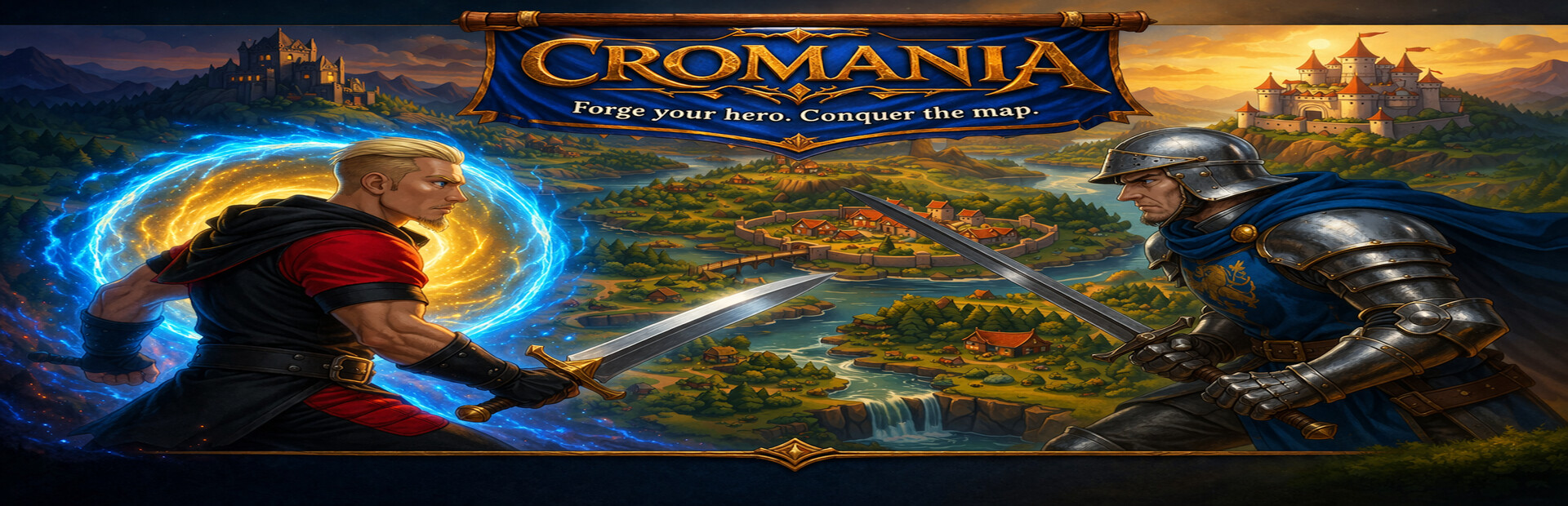
The key art doubles as a fair summary of the game's structure — build a hero, then push across a connected medieval map.Image: Momoiu Cerasela Nicoleta via Steam -
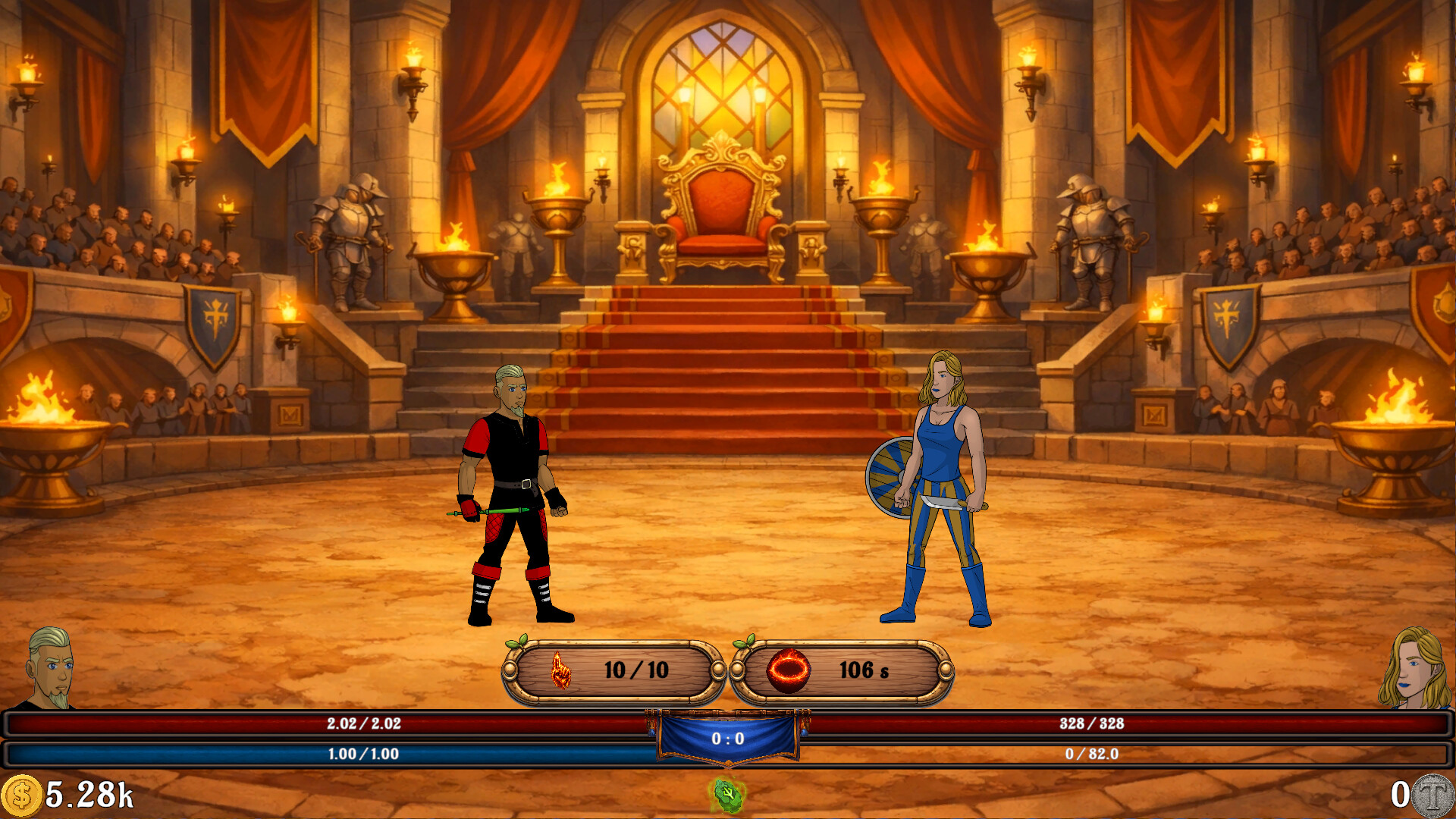
The PvP arena system pits stat-built heroes against each other directly, with live health, resource, and cooldown tracking.Image: Momoiu Cerasela Nicoleta via Steam -
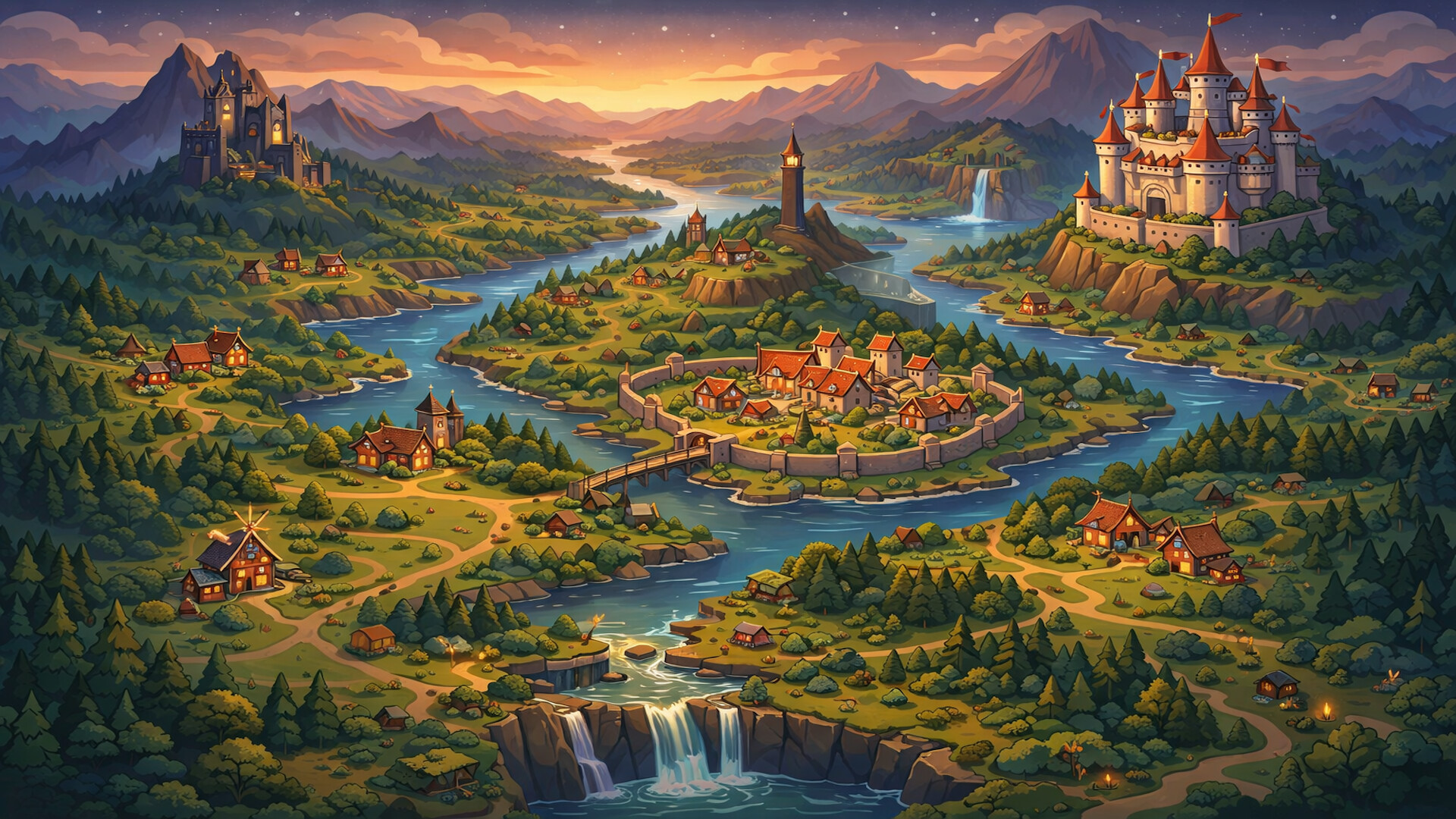
The province-spanning world depicted in Cromania's overworld artwork, connecting fortified towns and castles across the map.Image: Momoiu Cerasela Nicoleta via Steam