Game review
Code: Terraform Review
6.5 / 10
- Developer
- AppsMafia
- Publisher
- AppsMafia
- Released
- 9 September 2026
- Platforms
- ["Windows", "Linux"]
- Genre
- Simulation
Write Real Python, Terraform a Planet
Code: Terraform strips away the pretense that separates most "programming games" from actual programming. There's no visual node-graph standing in for code, no toy language invented to look friendlier than it is — you open an in-game editor with genuine syntax highlighting and Vim keybindings, and you write Python. That Python drives rovers across a frozen alien world called Nocturna, manages solar arrays and power grids, keeps a bio lab's reagents from running dry, and gradually automates a colony you're trying to make livable. One reviewer put the pitch as clearly as anyone: "Not another automation game where you drag conveyor belts around. Here the code is the game — you write the actual scripts that drive rovers, manage your power grid, and keep your bio lab fed. Nothing runs unless you make it run."
Solo developer AppsMafia launched the game into Early Access on September 9, 2026, after a lengthy public demo period that built real goodwill — several reviewers mention discovering the free demo, sinking twenty or thirty hours into it, and buying the full release the moment it went live. That history matters for reading the review pool: of 258 all-language reviews at time of writing, 222 are positive (86%), and English reviews sit at 180 of 211, both landing the game at Very Positive — a strong score for software this niche, though a meaningfully large minority of the negative third of reviews cluster around one specific, unusually well-documented complaint that has nothing to do with the coding itself.
The Loop: Contracts, Scripts, and a Genre with Very Few Peers
Structurally, Code: Terraform sits in a tiny genre alongside Bitburner and The Farmer Was Replaced — games where the core interaction loop is writing and debugging persistent code rather than clicking through menus. You take on "contracts" that function like scoped programming puzzles (scan a sector, sort a batch of resources, route power around a fault), and the scripts you write to solve them become permanent fixtures of your base, running continuously while you plan the next system. Reviewers who came in with programming backgrounds describe genuine, sustained engagement — one self-identified senior software engineer called it "much more practical, interacting with multiple real time entities and having a very lose requirement to optimize," while another with 151 hours logged called it "genuinely phenomenal... tons of depth if you really get into it."
The friction shows up almost immediately for anyone without that background. The tutorial is minimal by design, and the game leans hard on in-editor documentation instead — documentation multiple reviewers describe as dense to the point of hostility. One review joked about downloading "a manual... WHAT?! 1200+ pages," and another, more bluntly: "the documentation is absolutely horrible. Most of the time, I'm not struggling with the coding or problem-solving itself; I'm just trying to find the actual methods and functions I need to get the job done." This isn't a small-sample complaint — it's the second-most common thread in the negative reviews after the issue covered below, and it means the game's stated audience is narrower than its marketing suggests: this rewards people who already know how to read technical docs and debug blind, not people hoping the game will teach them from zero.
Progression That Rewards Patience, Sometimes Too Literally
Beyond the coding puzzles themselves, the terraforming metagame — unlocking new zones, scaling up resource production, expanding the base's footprint — earns more mixed marks. Several reviewers flagged that meaningful progress becomes gated behind literal waiting rather than active problem-solving once you clear the early contracts, with one writing that "progress is locked behind just 'idling' and letting the atmospheric fixers do its thing," and describing the jump to titanium-tier crafting as a wall rather than a challenge. Others found the opposite complaint just as valid from a different angle — that contracts feel disconnected from the simulation they're nominally part of, more like isolated LeetCode exercises wearing a terraforming skin than systems that build on each other. "The contracts often feel like LeetCode problems with a terraforming theme: solve an isolated coding puzzle, transmit the answer, get credits," as one middling review put it, before conceding that the actual machine-scripting layer — writing persistent code for solar tracking, oxygen production, and biology systems — is considerably stronger than the puzzle layer wrapped around it.
Reviewers Flag Undisclosed AI-Generated Documentation and Puzzle Text
The single most common complaint in Code: Terraform's negative reviews isn't a bug or a design choice — it's a cluster of reviewers who say the game's writing, and in some cases its puzzle design itself, reads as generated by large language models, and that this isn't adequately covered by the game's own Steam AI disclosure. AppsMafia has disclosed some AI-assisted content, and several positive reviewers explicitly defend that disclosed use, with one writing "Yes, there's AI elements and the developer has been up front with this. Not everyone has the budget to hire artists or composers." But a substantial number of critical reviews argue the disclosure doesn't cover what they say they're actually running into: in-game documentation and function descriptions. "That's screamingly Claude," reads one review, describing an in-game tooltip. Another, more pointed: "Note there's no mention of AI usage for any text (which happens to be a pretty large part of a puzzle coding game) in the 'AI Generated Content Disclosure' section on the steam page either." A third alleges the puzzle design itself is templated: "the challenge puzzles I now think are just asking Claude to 'Make me an easy programming puzzle,' repeated for every challenge." These are reviewer claims and interpretations, not verified findings — plenty of other reviewers report no issue with the AI-assisted elements at all, and at least one long, detailed positive review argues the AI use here is "the only example I know of in the gaming industry where AI content is used appropriately." But the volume and specificity of the disclosure complaints, in a first-week Early Access review pool this size, is hard to wave off as noise.
Early Access Instability, Bugs, and a Rocky Linux Launch
Being days old at time of writing, Code: Terraform carries the rough edges you'd expect from a solo-developed Early Access launch. Reviewers report crashes serious enough to interrupt play — one with over 22 hours logged described "STATUS_BREAKPOINT" and "STATUS_ACCESS_VIOLATION" errors recurring roughly every two minutes late in a session — and Linux players specifically flag that a compatibility layer requirement was reportedly added shortly after launch, breaking audio and limiting Proton version flexibility for a platform the game otherwise advertises support for. Several other reviews describe features and solutions that worked in the demo breaking in the shipped release, a common but frustrating pattern for demo-to-launch transitions. On the credit side, the developer is described repeatedly and specifically as active and responsive on Discord, shipping small fixes quickly in response to community feedback — the kind of signal that, in Early Access, often matters more than the day-one bug list itself.
Verdict
Code: Terraform is a genuinely distinctive entry in a genre that barely has entries — a programming game that asks you to write real, working Python against a real API, for people who already know how to code and want that skill turned into the whole game rather than a gimmick bolted onto one. For that audience, the reviews are close to rapturous. For everyone else, the documentation is a real obstacle, the progression can stall into idle-waiting, and the AI-disclosure controversy — specific, repeated, and leveled by a meaningful slice of the negative-review pool — is worth knowing about before you buy rather than discovering after. This is an Early Access release in the truest sense: promising, rough, actively maintained, and not yet the finished thing its best reviews describe.
Screenshots
-
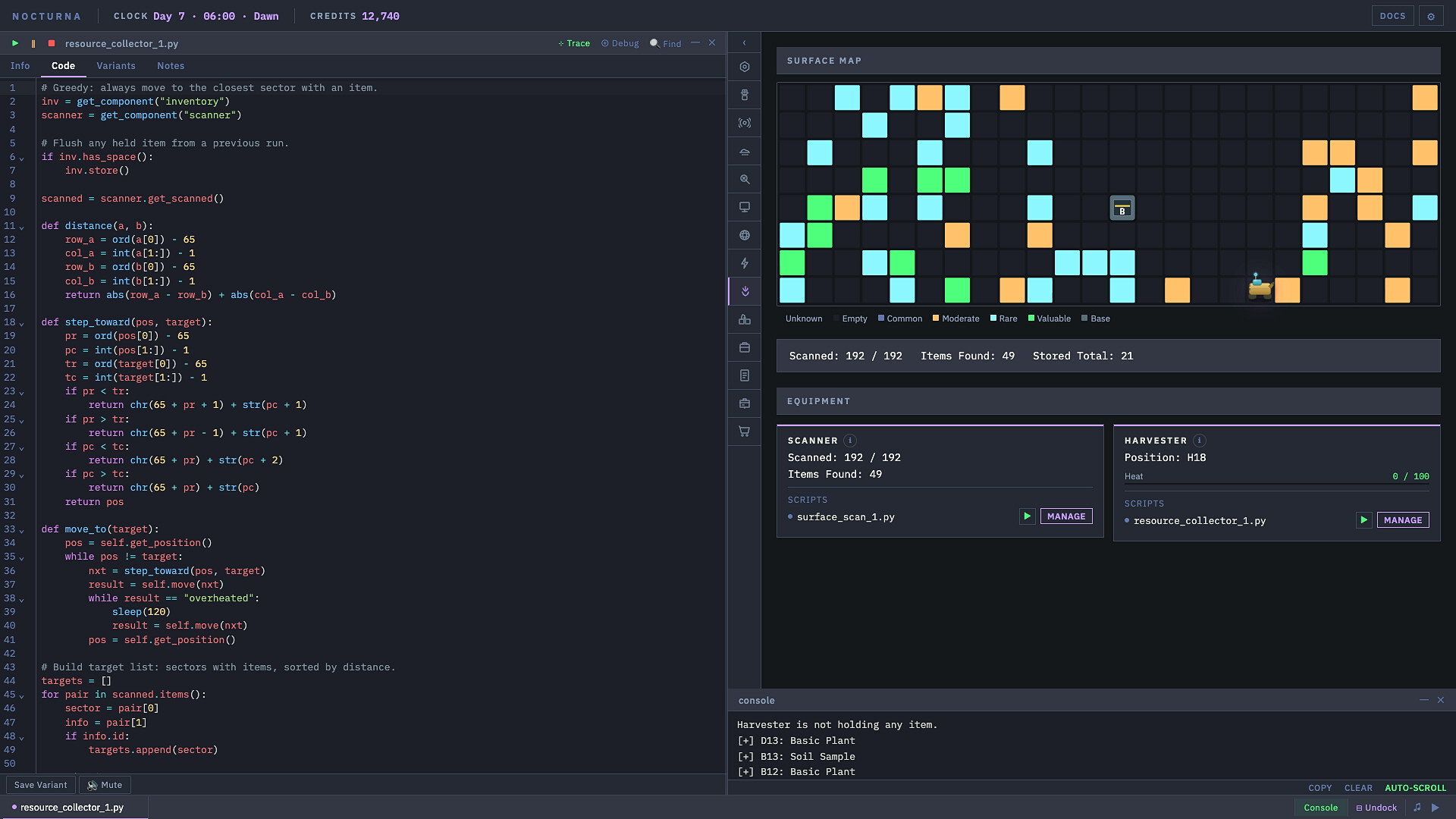
The code editor sits directly beside the surface map your scripts are actually controlling.Image: AppsMafia via Steam -
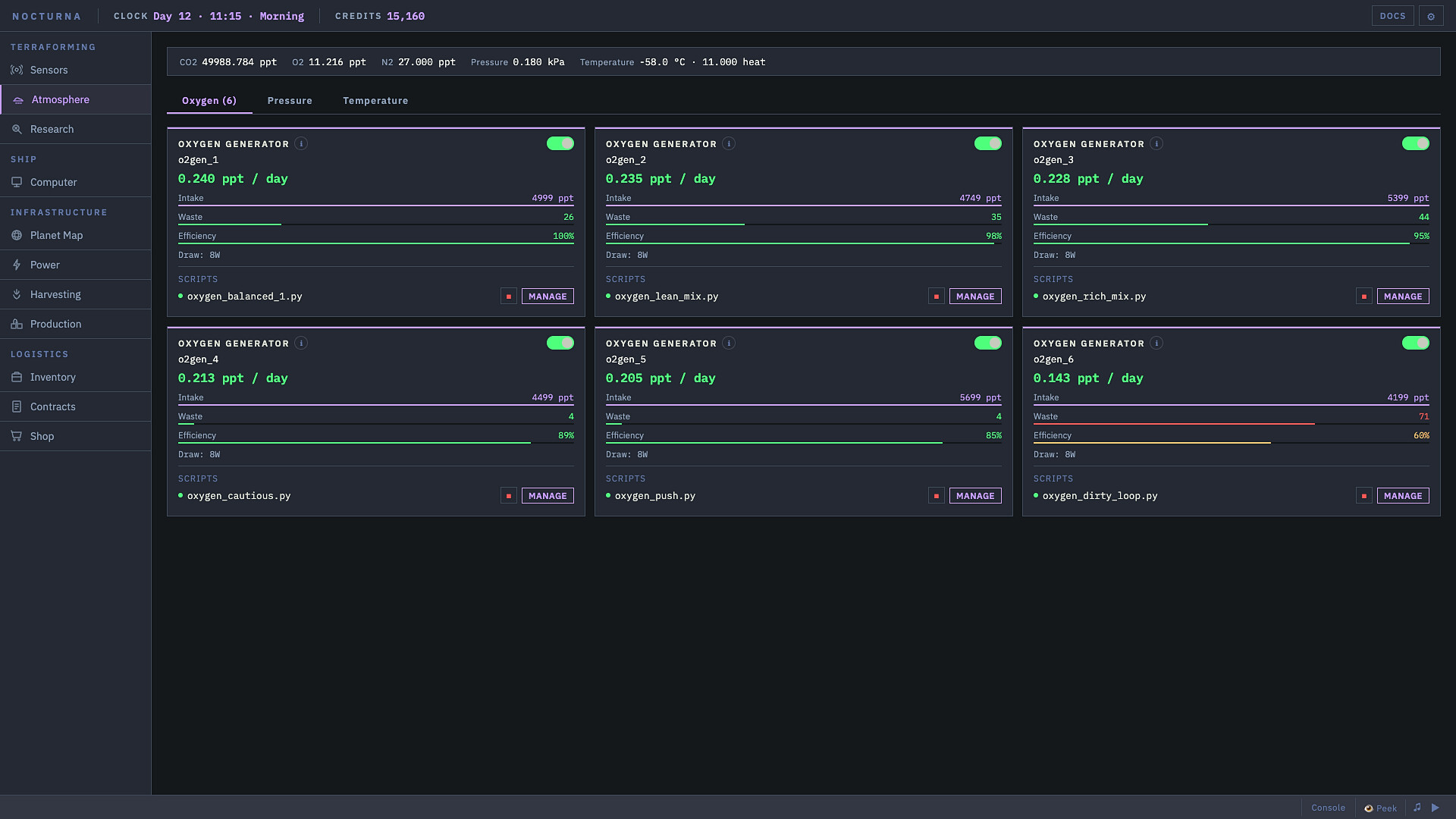
Six oxygen generators, six separately scripted behaviors, one shared atmosphere to keep balanced.Image: AppsMafia via Steam -
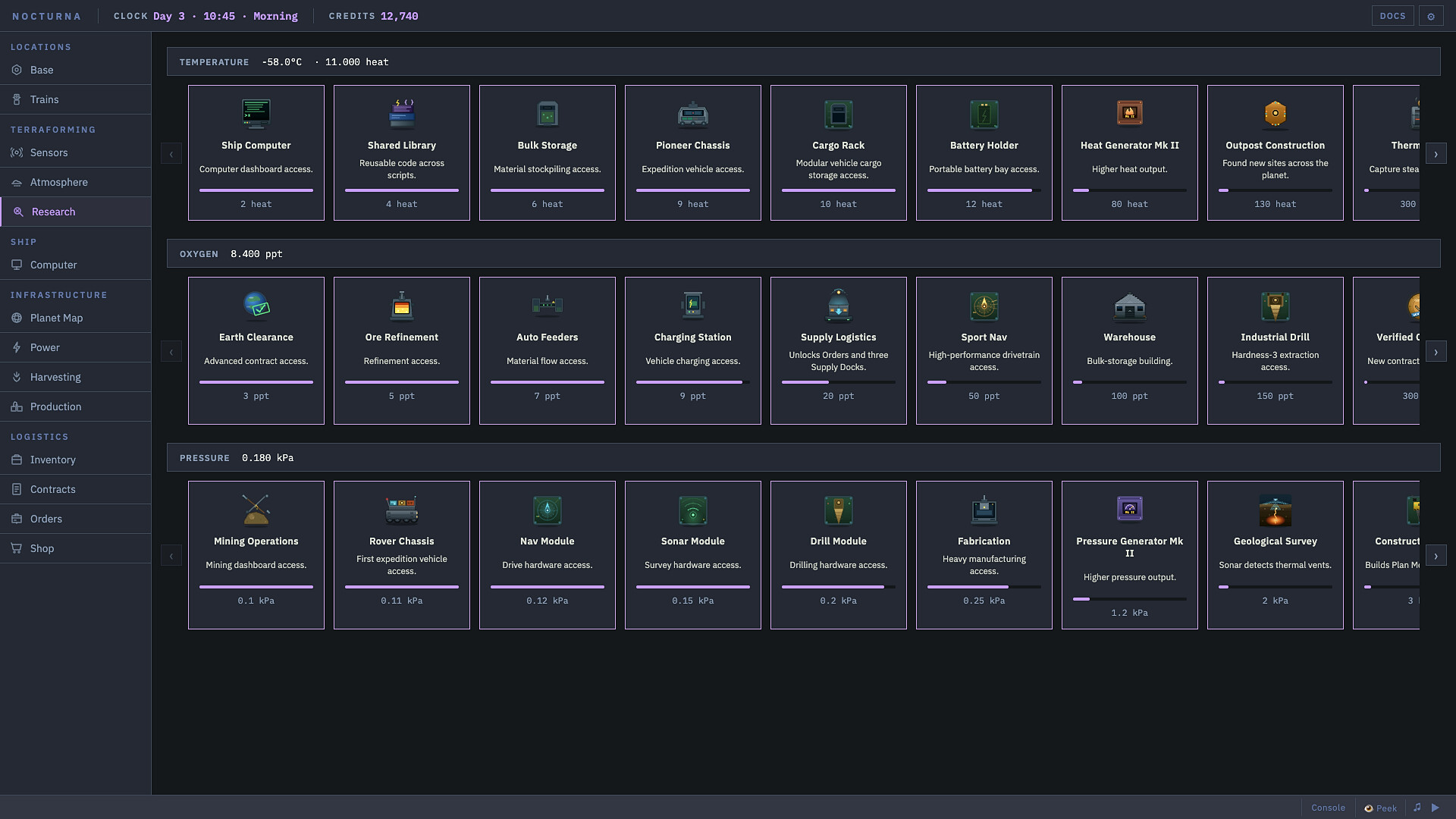
The terraforming tech tree, where heat, oxygen, and pressure costs gate every new unlock.Image: AppsMafia via Steam