Game review
Legacy of the Ark: Beneath the Broken Sky Review
3.9 / 10
- Developer
- Broken Ark Studios
- Publisher
- Broken Ark Studios
- Released
- 5 September 2026
- Platforms
- ["Windows"]
- Genre
- Simulation
Waking Up Alone at a Crash Site, Then Idling Your Way Back to a Sky
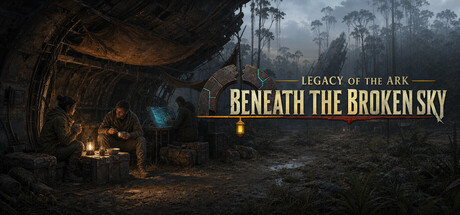
Legacy of the Ark: Beneath the Broken Sky opens with a familiar cozy-survival hook: you wake alone at the wreck of a fallen Ark with nothing but a handful of scrap, and it's up to you to gather resources, revive sleeping survivors, level them up, send them on expeditions, and gradually stabilize a sky that's come apart around you. It bills itself as a "cozy, honest idle game" that runs whether you're actively clicking through menus or leaving it to tick over in the background, playable online or offline. Developer Broken Ark Studios released it free-to-play on September 5, 2026, and pushed a rapid string of hotfixes in the days immediately after — patch notes with titles like "It keeps running now" and "Your level moves again, and the game finally tells you what to do" suggest a launch that needed real triage rather than routine polish.
The pitch — automation-driven idle progression wrapped in a post-apocalyptic-but-gentle survivor theme — sits in well-trodden territory, and the reviews bear out that the execution doesn't do much to elevate it above the pack. Six patch notes landed in the first four days after launch, addressing store bugs, a stuck-progress issue, and a broken tutorial in quick succession — a pace that suggests the game shipped before its core systems were fully validated, even if the developer has clearly been responsive to the fallout.
A Genuinely Mixed, Thin Pool With Recurring "This Feels AI-Made" Complaints
Legacy of the Ark has drawn 17 total Steam reviews (53% positive) since launch, with only 8 in English — a small sample, but one where several reviews independently converge on the same unflattering characterization. One reviewer writes bluntly: "Just seems like the typical game you would get if you asked ai to make an incremental clicker with this theme." Another, separately, states: "Too much ai involved; cost of upgrades goes up way too much too fast; not a fan. Find a different incremental idle clicker and move on." These are reviewer opinions and inferences about the game's design and possibly its development process, not confirmed facts about how the studio actually built it — but reported here because three separate reviewers raised some version of the same complaint unprompted, in a pool of only eight.
A third and more concerning report concerns runtime behavior rather than aesthetics: one reviewer describes the game "forces you to have the window on top and then it runs at 1500 fps, not really sure what this is, a bad AI game or a crypto miner." That's a serious-sounding technical complaint worth flagging plainly, though it's a single reviewer's observation and characterization, not an independently verified finding by this outlet.
The Core Loop Works for Patient Players Willing to Let It Run
Not every review is negative, and the positive ones are consistent about what works: the fundamental gather-revive-level-expedition loop is sound, if slow. "It's not bad because the general idea, gameplay loop and theme are fine," one reviewer writes, adding that "leveling up the player profile is incredibly slow even with all the automation at play" before settling on a mild thumbs-up for patient players. Another, with over sixteen hours logged, calls it a "fun idle game, slow start, avalanching end game," noting real momentum builds once the automation compounds. A third reviewer sums up the free-to-play calculus simply: "Free so yes. I'm kinda bored of it tho" — a lukewarm but genuine endorsement grounded entirely in the zero-cost entry point.
A Costly Forced-Replay Structure Undermines the Late Game
The most substantive structural complaint comes from the reviewer with by far the most playtime in the sample — over 146 hours. Their initially positive review was revised downward after discovering the story requires multiple full replays to continue: "upgraded post review after now having to replay the game at least 3 times to continue the story the fun factor has gone out the door... if this isn't the end i give up... there should of been 1 play through and make each new area harder." It's a rare, detailed account from someone who invested real time, and it points to a design decision — recycling story content across forced repeat playthroughs rather than building new late-game areas — that actively punishes the players most engaged with the game. A separate reviewer's blunt one-word review, "No," and another's complaint about "messy visual style" and oddly oversized clickable areas round out a picture of a game whose presentation and structure haven't caught up to its underlying idea. None of the eight English reviews describe the replay requirement as clearly signposted going in, which makes the late-game pivot feel less like a deliberate difficulty gate and more like a content shortfall the studio is asking players to absorb.
Verdict
Legacy of the Ark: Beneath the Broken Sky has a genuinely workable cozy-idle foundation — gather, revive, expedition, repeat — but a slow leveling curve, a costly forced-replay structure at the point players are most invested, and a cluster of independent reviewer complaints about both its AI-adjacent feel and one alarming performance report leave it feeling unfinished rather than simply modest. Being free covers a lot of sins, and patient idle-game fans willing to look past the rough edges may still find something to like here, but this is a title to watch from a distance for now rather than one to recommend outright.
Screenshots
-
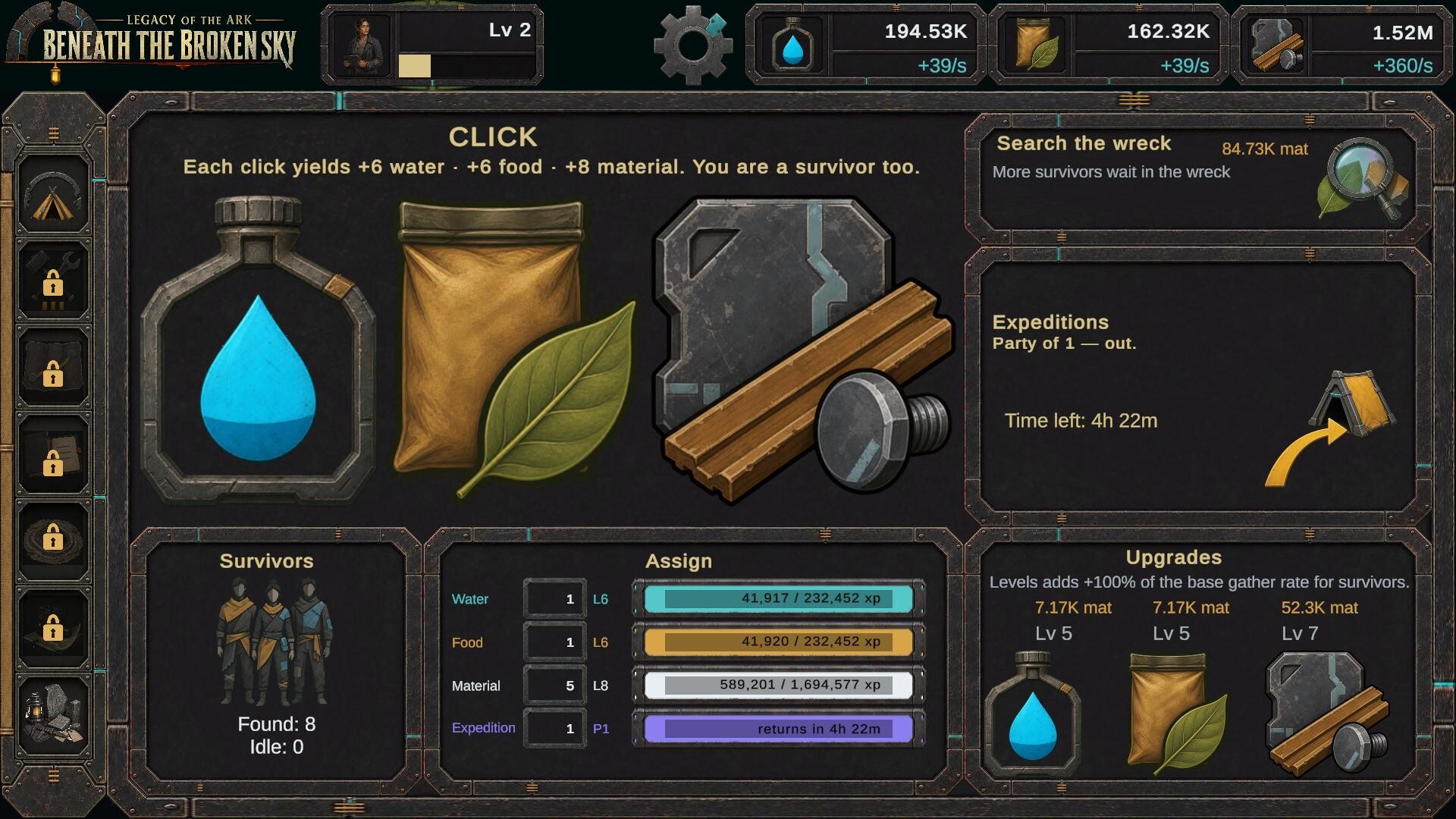
The core loop: click to gather, assign survivors to resource tasks, and send a party out on a multi-hour expedition.Image: Broken Ark Studios via Steam -
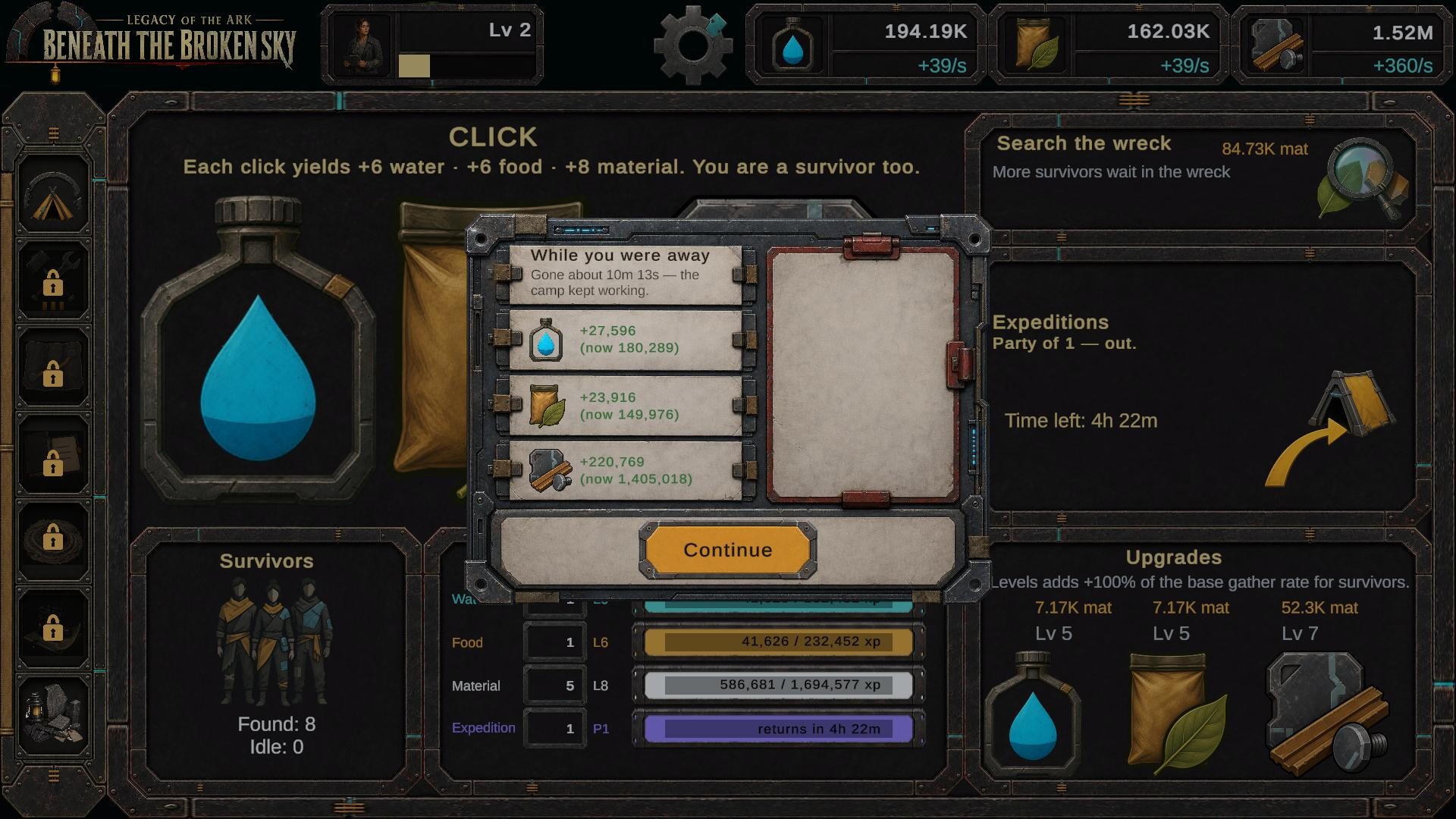
A 'While you were away' summary tallies the resources the camp accrued passively during a short offline stretch.Image: Broken Ark Studios via Steam -
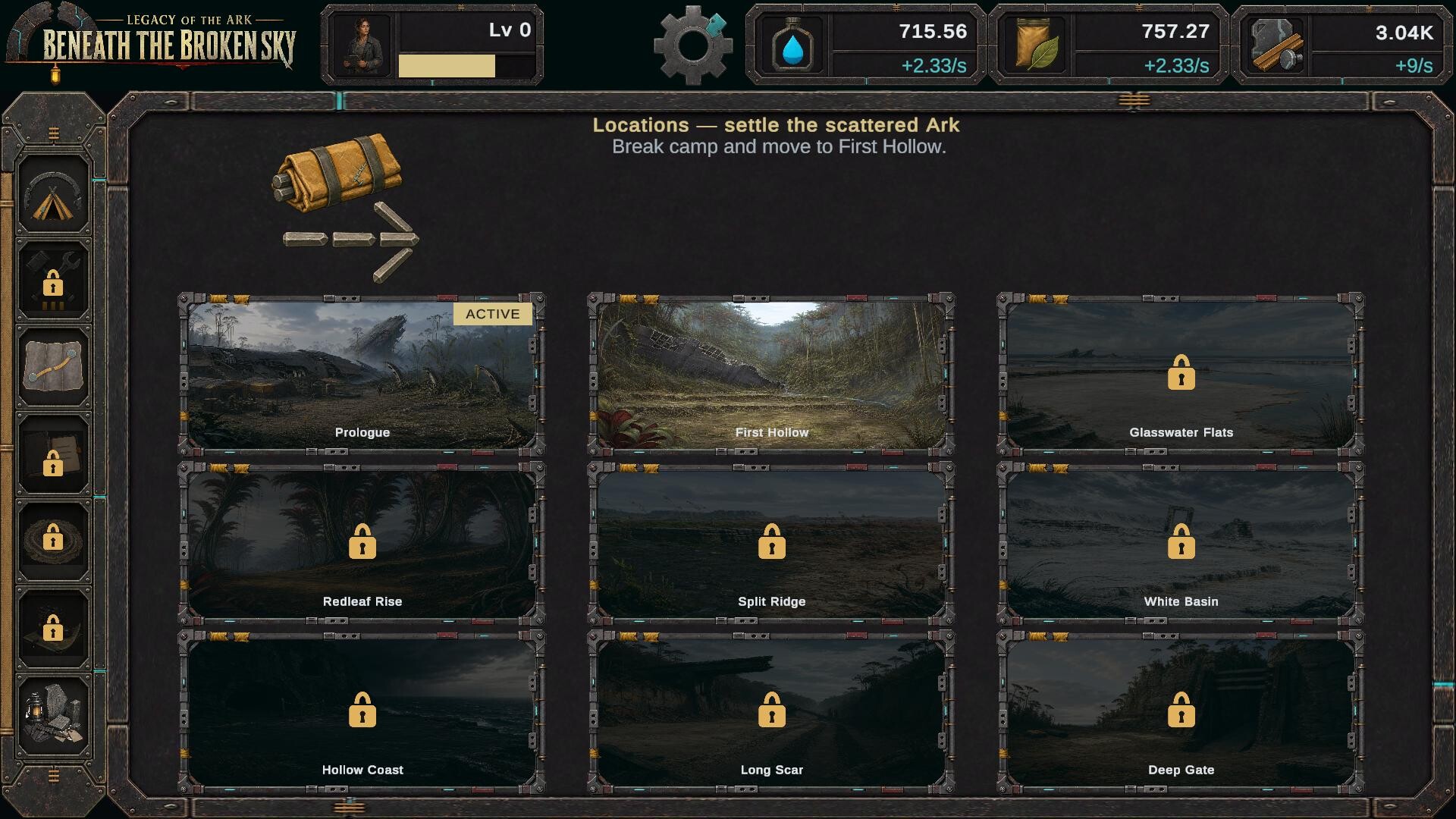
The Locations map gates story areas one at a time, the structure at the center of the sample's forced-replay complaint.Image: Broken Ark Studios via Steam