Game review
Clicker Guild
4 / 10
- Developer
- Fox Dawn
- Publisher
- Fox Dawn
- Released
- 16 December 2016
- Platforms
- Windows
- Genre
- Idle Clicker
- Monetisation
- Free to play with in-app purchases, including a one-time permanent damage multiplier
- Players
- Single-player only; no online, co-op or PvP modes
The short version
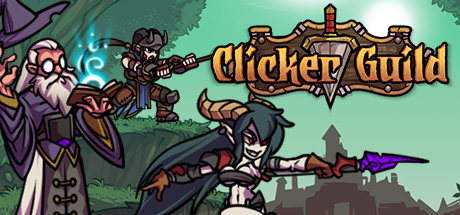
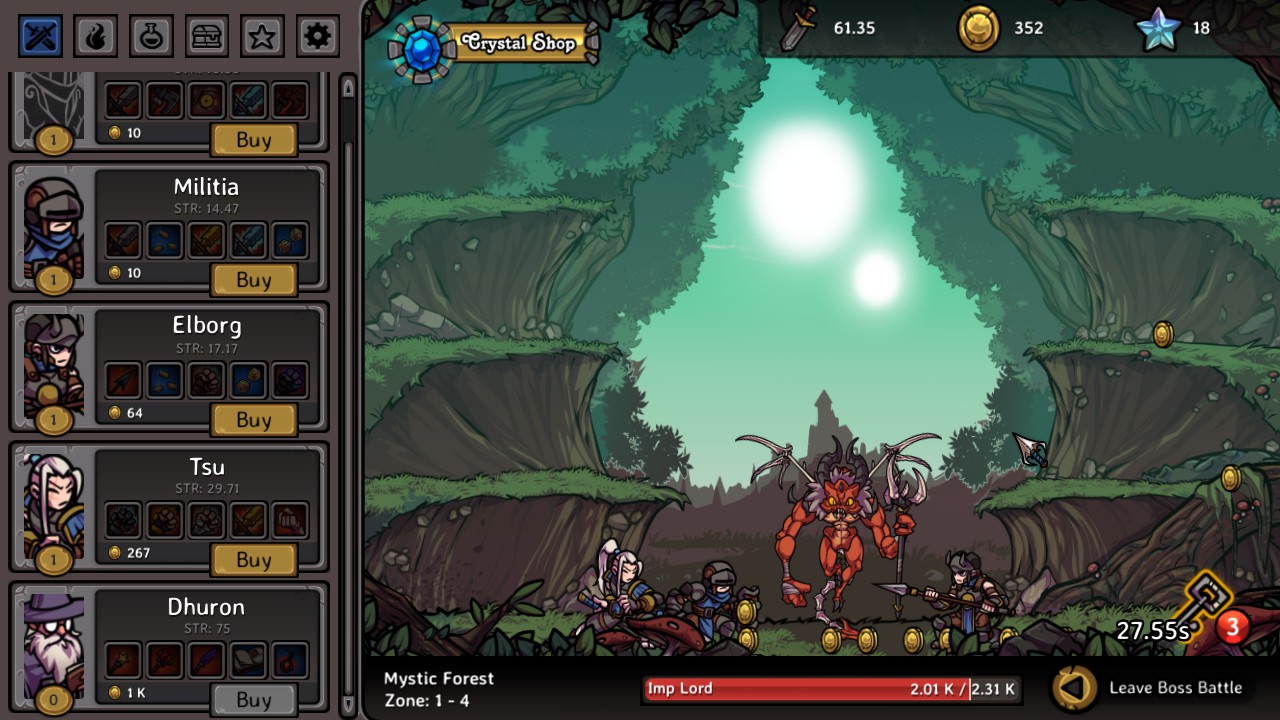
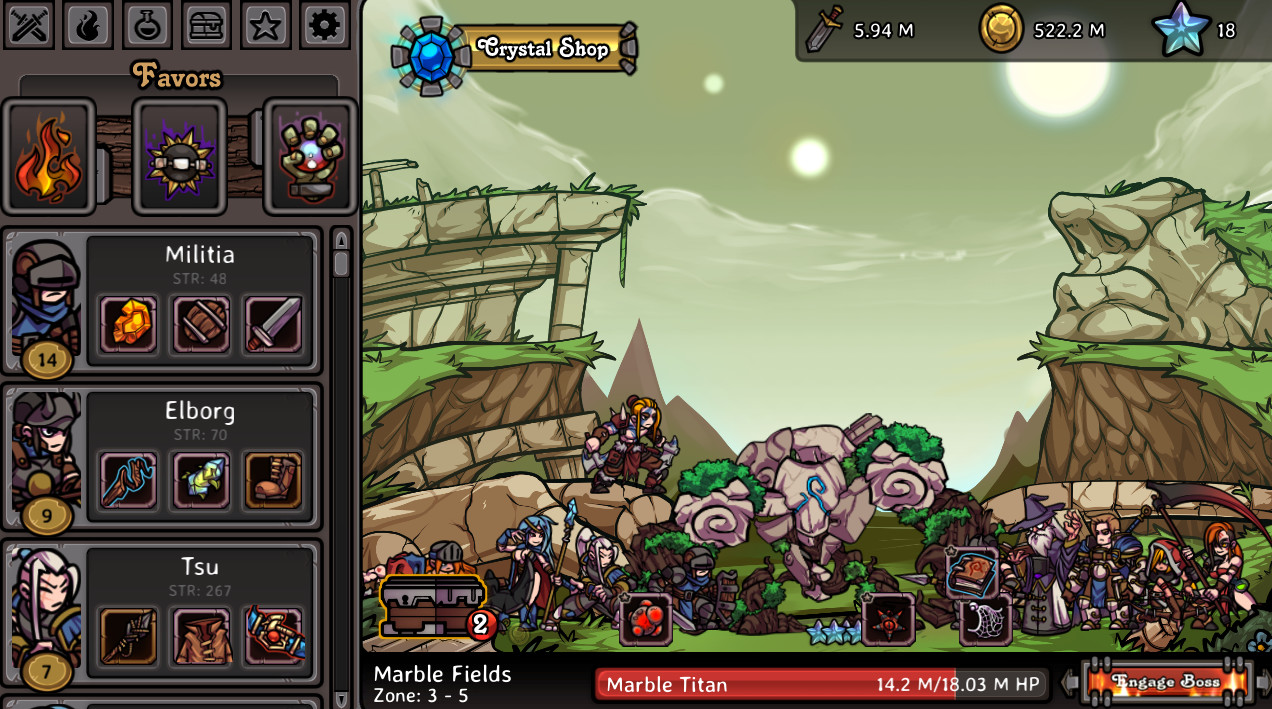
Clicker Guild's pitch is a good one for the genre: rather than the usual bare number-go-up loop, heroes drop randomly generated loot as you fight through zones, giving the clicker a real RPG-adjacent gearing layer most peers in the genre don't bother with. Reviewers who caught it early and clean consistently praise the animation work and a soundtrack that changes every ten levels — genuinely more polish than a free clicker usually gets.
What sinks it is that the loot hook sits on top of mechanics reviewers describe as broken in ways that specifically undercut an idle game's core promise: offline earnings reported as silently zeroing out, a UI that stops registering clicks as heroes and bosses scale up, and a late-game balance collapse where a single hero ends up doing effectively all the damage. Steam's own partner-events feed shows exactly two posts for this game, both within a day of its 16 December 2016 release, then nothing since — directly confirming the abandonment multiple reviewers independently describe.
Biggest strengths
- A genuine structural differentiator for the genre: heroes drop randomly generated loot rather than just feeding a flat number, giving the clicker loop an RPG-style gearing layer most peers skip entirely
- Animation work and a soundtrack that changes every ten levels are praised consistently across otherwise critical reviews, unusually polished for a free clicker
- Free to play with no cost of entry, which softens the risk of running into its worse bugs
Biggest weaknesses
- Offline earnings are reported as unreliable to the point of sometimes zeroing out entirely, directly undercutting the basic premise of an idle game
- The UI is reported to lose click responsiveness as hero rosters and boss fights scale up, a functional defect rather than a difficulty complaint
- Steam's own partner-events feed shows only two posts ever, both within a day of release, confirming reviewers' independent accounts that the developer stopped supporting the game almost immediately
Who it's for: Idle-clicker fans curious about an early, free take on loot-driven progression who can tolerate real, unpatched bugs and don't mind a game with zero ongoing support. Not for anyone who wants offline progress they can actually trust.
Our recommendation: Worth a free look for the loot-drop hook and presentation, but go in expecting a finished, abandoned build rather than a maintained one — the bugs reviewers report have had nearly a decade to go unfixed.
4 / 10
Most idle clickers are honest about what they are: a number that goes up, dressed in whatever theme the developer picked. Clicker Guild tries for something a little more ambitious. Its heroes fight through zones and drop randomly generated loot as they go, turning the genre's usual flat progression curve into something closer to a stripped-down action-RPG's gearing loop. It's a genuinely good idea for a clicker, and the reviewers who got the most out of the game consistently credit that hook, along with animation work and a soundtrack that changes every ten levels, as real standouts for a free release. The trouble is what that hook is built on top of.
A real hook, undercut by mechanics that don't reliably work
The loot system is the thing separating Clicker Guild from the dozens of other flat-number clickers on Steam, and it's the part of the game reviewers single out most positively — a system where clicking and idling both feed a roster of heroes who can come back with better gear rather than just a bigger multiplier. That's a meaningfully different structure than the genre usually offers, and it earns the game real, if muted, praise even from otherwise critical reviewers.
What undoes it is that idle games live or die on players trusting the game to keep working while they're away, and several independent reviewers report that trust being broken in specific, concrete ways. One reviewer logged returning after a night away to "0.0 Gold" and a notification reporting "0.0 Gold while away," with no way to collect any offline earnings short of forcing a rebirth. Another separately describes offline money as "kinda random" and warns that switching the game off might wipe equipment outright. These aren't vague dissatisfaction — they're specific, reproducible- sounding failures in the exact mechanic an idle game exists to deliver on.
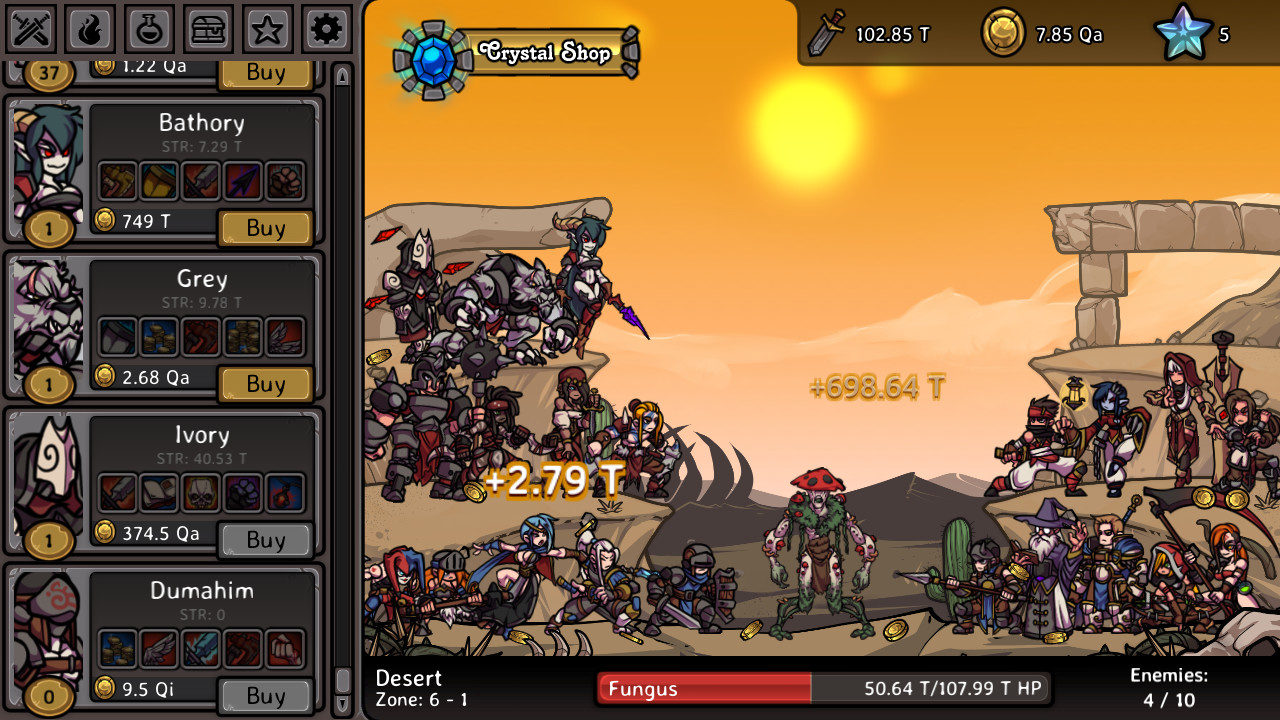
A second, separately reported problem is interface responsiveness at scale: reviewers describe the game slowing down and losing click registration as hero rosters grow and boss fights get bigger, with one calling it "the worst bug," describing the UI as "completely lost" mid-fight. For a game whose core interaction is clicking, a UI that stops reliably registering clicks under normal late- game load is close to a structural failure rather than an edge-case bug.
Balance and monetisation compound the same problem
Beyond the earning and interface bugs, reviewers converge on a late-game balance issue: one describes reaching a point where "last hero accounts for 99 percent of your total dps," a progression state that quietly defeats the roster-building appeal the loot system was supposed to deliver in the first place. Another separately calls out that leveling heroes stops meaningfully helping "past level 150," and that Ascending — the game's prestige/rebirth layer — feels boring because the stars it grants "barely enable any upgrade." Taken together, these reports describe a progression curve that starts strong on the strength of its loot hook and then flattens into something much less interesting the longer a run continues.
Layered on top of an already-uneven curve is a monetisation model reviewers flag as pay-to-win: a purchasable permanent damage multiplier ("P2W for 2x perma dps," as one reviewer puts it) inside a system already reported as unreliable. In a game with working offline progression, a permanent multiplier purchase would be a fairly ordinary F2P convenience option. Layered onto mechanics reviewers say don't reliably deliver what they promise even without spending, it reads more like a way to buy around problems the game itself doesn't fix.
Steam's own achievement data offers a partial counterpoint to the harshest version of these complaints. The completion curve declines gradually rather than hitting a hard wall — early milestones sit in the high 80s and low 90s percent, mid-tier hero and gold achievements fall into the 40s and 50s, and only the deepest late-game tiers drop into single digits. That's a genuine, if steep, long-tail grind rather than the "effectively impossible" achievement set one reviewer describes — evidence that a meaningful share of the playerbase did push well into the game's later stages despite the bugs, even if very few reached the very end.
Confirmed, not just alleged, abandonment
The single most consistent thread across this game's negative reviews is a claim that the developer stopped supporting it almost immediately after launch. One reviewer states the game was "abandoned by developer for over two months (since a day or few after release)." Another, writing roughly a year after launch, reports the exact same offline-earnings bug still present with "no fixes in nearly a year." A third calls the game "abandoned with no bugs fixed" and specifically criticizes developers who "abandon games the day after launch."
This is checkable, and it checks out. Steam's own partner-events feed for Clicker Guild contains exactly two posts in its entire history: a release announcement on 16 December 2016, and a same-week "[FIXED] Save Game Issue" post the following day. Nothing has been posted since — not a patch note, not a comment, not an acknowledgment of the offline-earnings or UI complaints that recur across reviews spanning its first year and beyond. Nearly a decade later, the record confirms exactly what those reviewers described in real time: a launch, one quick fix, and total silence.
Where it lands
Clicker Guild deserves credit for trying something the flat-number clicker genre mostly doesn't bother with, and the animation and music praise it gets from reviewers across the board is sincere and specific enough to trust. But a loot-driven progression hook only works if players can trust the progression underneath it, and the specific, independently corroborated reports of broken offline earnings, an unresponsive late-game UI, and a single-hero damage collapse describe a game whose central promise doesn't reliably hold up — made worse, not better, by a pay-to-win purchase sitting on top of mechanics already reported as unreliable. Being free to play takes some of the sting out of that, and there's a real, if short, window of enjoyment here for players who don't run into the worst of it. But a decade of confirmed silence from the developer means none of these issues are getting fixed, and that's the version of the game anyone installing it today is actually going to get.
Pros and cons
Pros
- A genuine structural differentiator for the genre: heroes drop randomly generated loot rather than just feeding a flat number, giving the clicker loop an RPG-style gearing layer most peers skip entirely
- Animation work and a soundtrack that changes every ten levels are praised consistently across otherwise critical reviews, unusually polished for a free clicker
- Free to play with no cost of entry, which softens the risk of running into its worse bugs
- A functional core loop for players who don't hit the offline-earnings or UI bugs hard, with several reviewers logging well over 100 hours
Cons
- Offline earnings are reported as unreliable to the point of sometimes zeroing out entirely, directly undercutting the basic premise of an idle game
- The UI is reported to lose click responsiveness as hero rosters and boss fights scale up, a functional defect rather than a difficulty complaint
- Steam's own partner-events feed shows only two posts ever, both within a day of release, confirming reviewers' independent accounts that the developer stopped supporting the game almost immediately
- Late-game balance is reported to collapse into a single dominant hero carrying effectively all of a run's damage, undermining the roster-building hook that sets the game apart
- A permanent damage-multiplier purchase sits inside an otherwise already-uneven progression curve, a pay-to-win structure layered on top of mechanics reviewers say don't reliably work as intended
- No volume slider at launch, only a full mute toggle, despite audio reviewers describe as unusually loud by default
Screenshots
-
Clicker GuildImage: Fox Dawn via Steam -
Clicker GuildImage: Fox Dawn via Steam -
Clicker GuildImage: Fox Dawn via Steam -
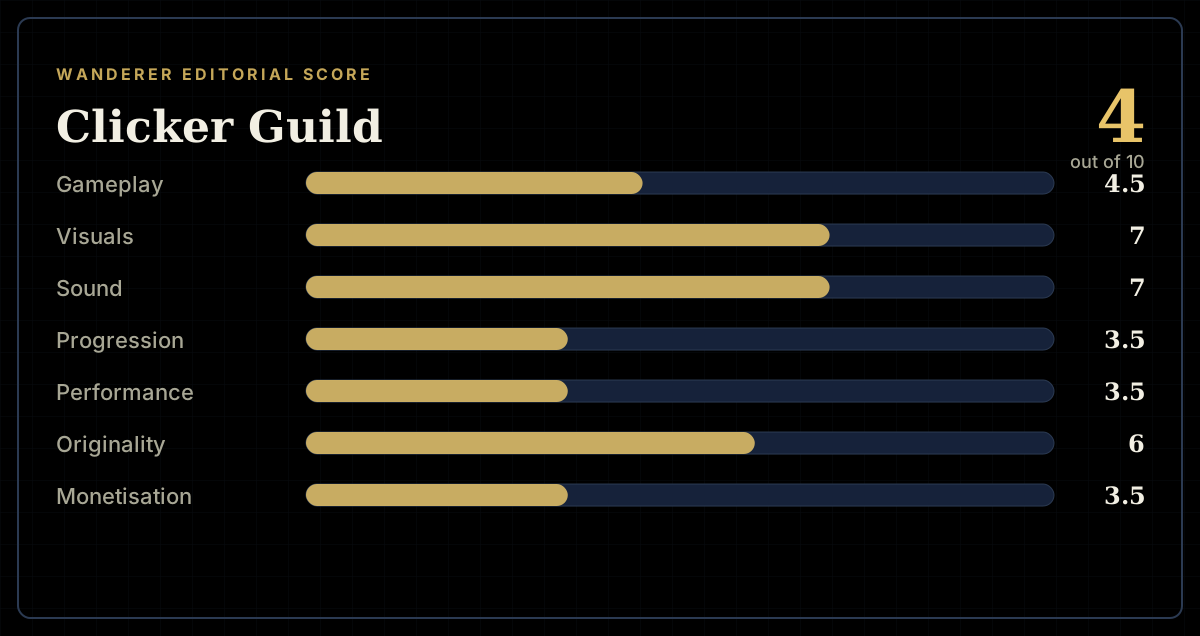
How the review scores each part of the gameWanderer Editorial -
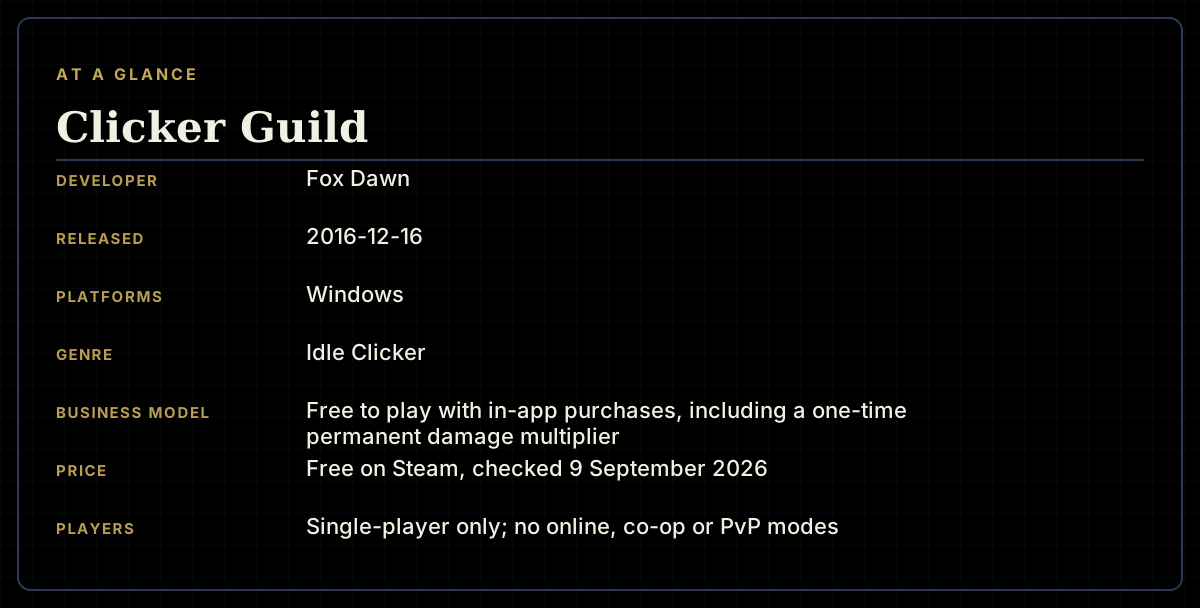
The specsWanderer Editorial -
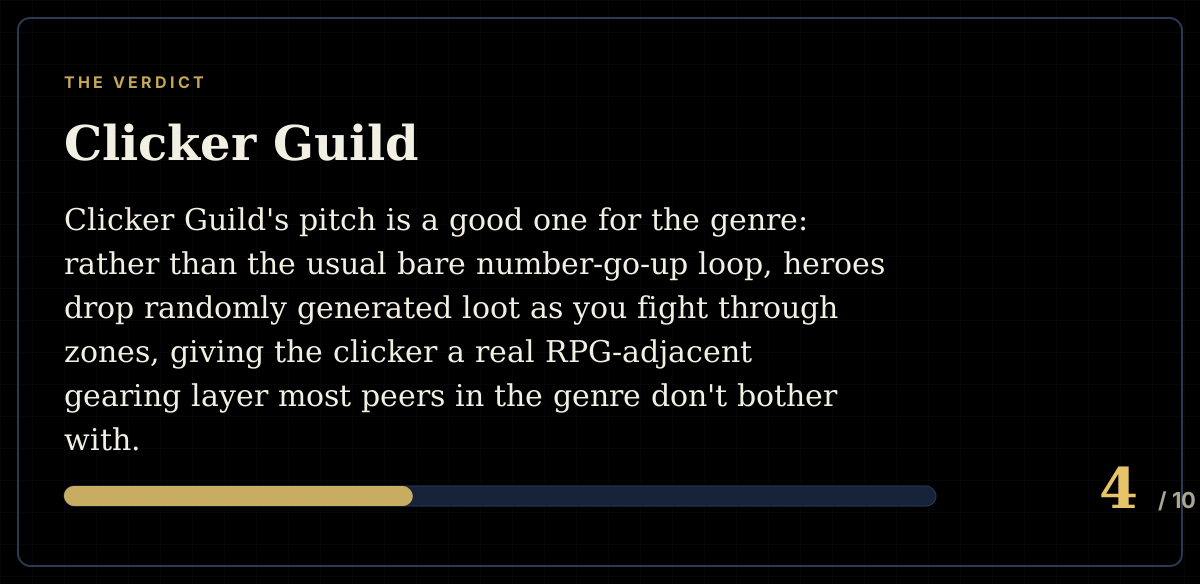
The short versionWanderer Editorial