Game review
Voodoo Garden
6 / 10
- Developer
- M. Hanka
- Publisher
- Liu Lidan
- Released
- 4 August 2016
- Platforms
- Windows
- Genre
- Incremental Clicker
- Monetisation
- One-time premium purchase; no ads or microtransactions found
- Players
- Single-player only; no online, co-op or PvP modes
The short version
Voodoo Garden dresses a clicker/farming loop in a genuinely distinctive theme: you feed and grow swamp critters, then sacrifice the big ones so their spirits can help harvest ingredients for voodoo potions. The art and music are consistently praised even by this game's harshest reviewers, and the premise is unlike almost anything else in the genre.
Its central problem is one its own review base argues about directly: gold and experience only accrue while the game is actually running, and the spirit helpers that provide any passive collection only cover part of the harvest, leaving the rest to manual clicking. Some reviewers call this a real idle game with a genuine afk-and-return loop; others call it a clicker mislabeled as one. Both are describing the same limited-automation system accurately from different vantage points, and a buyer should go in knowing which one they're actually getting.
Biggest strengths
- A genuinely distinctive theme for the genre — grow and feed swamp critters, then sacrifice the biggest ones so their spirits help harvest ingredients — praised consistently even by otherwise critical reviewers
- Art style and soundtrack are singled out as standouts across nearly every review read for this piece, positive and negative alike
- Achievement design gives completionists a real, gradually declining curve to chase (33 achievements, from roughly two-thirds of the playerbase down to about one in ten at the hardest tiers) rather than a wall that stops most players early
Biggest weaknesses
- Gold and experience only accrue while the game is actually running, and the spirit-helper automation that does exist only covers part of the harvest (fruit and vegetables, not the critters), so full progression still requires substantial ongoing manual clicking rather than the offline progress the "idle" framing implies to some buyers
- Multiple reviewers report a specific mid-game energy drop, describing the first few hours as charming and the remaining stretch toward 100% completion as tedious and repetitive
- No in-game tutorial, leaving players to work out early systems (which animals to feed, when to sacrifice them, how to unlock further recipes) largely by trial and error
Who it's for: Achievement hunters and trading-card collectors who enjoy a cheap, cute, short clicker with a genuinely distinctive theme, and who don't mind that "idle" here means partial automation rather than true offline progress. Not for anyone specifically shopping for a set-and-forget idle game to run untouched in the background.
Our recommendation: A solid pickup at its usual price, especially on sale, for players who want a short, distinctive-looking clicker to chase full completion in — just go in understanding it demands real, ongoing manual clicking rather than pure idle automation.
6 / 10
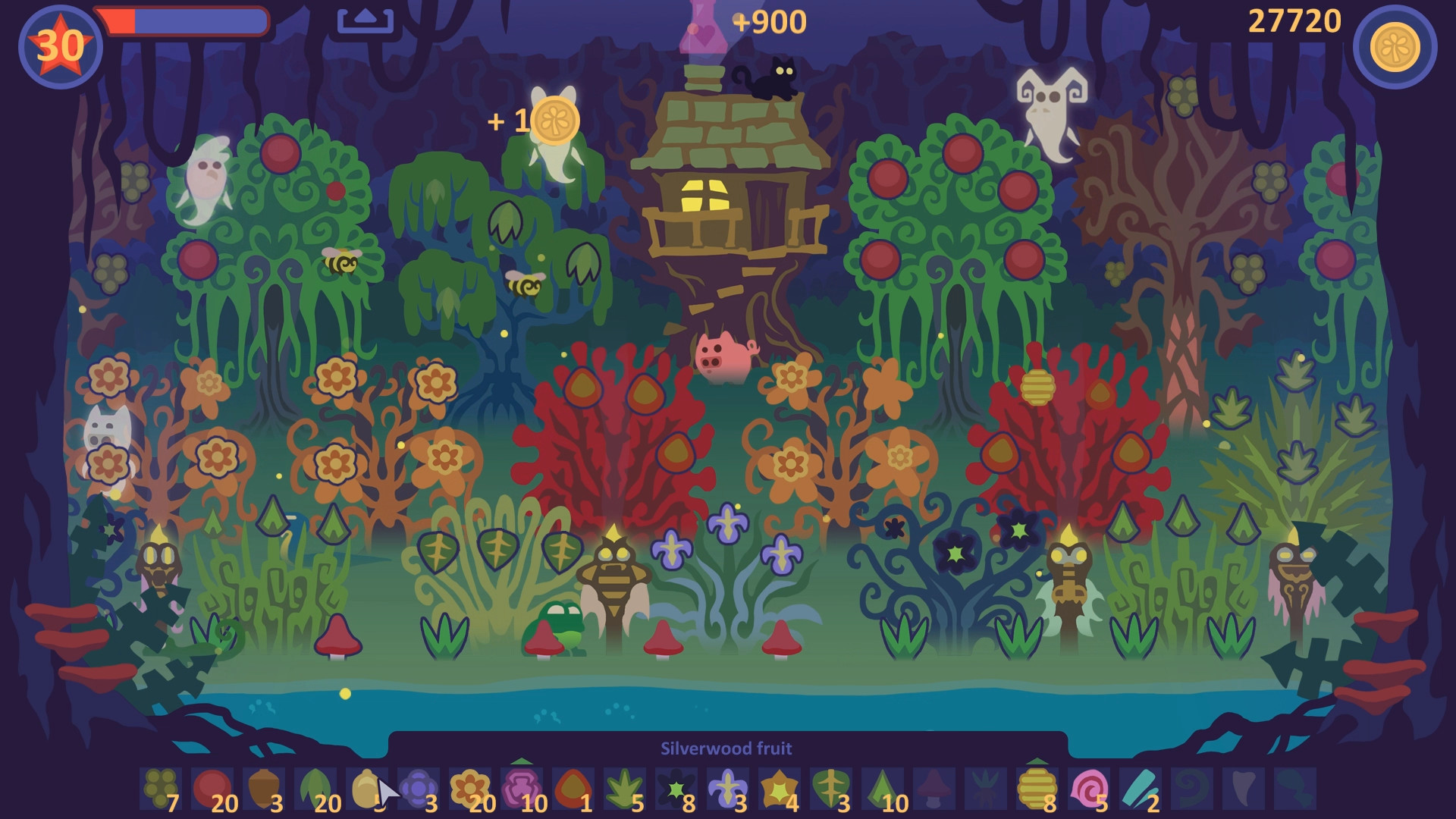
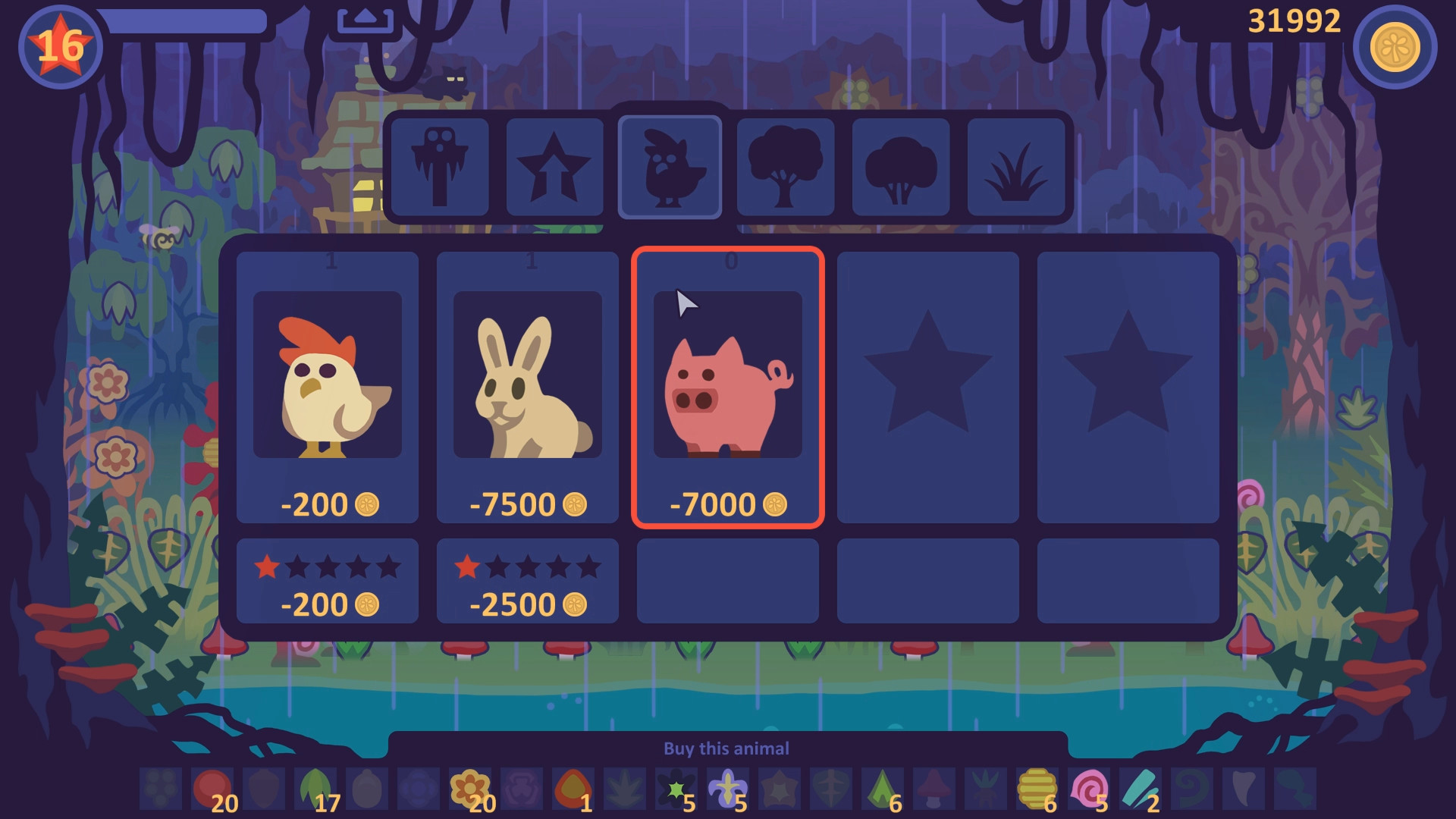
Voodoo Garden's pitch is a strange, charming one for the clicker genre: you tend a swamp hut, feeding and growing critters until they're big enough to sacrifice, at which point their spirits join you as helpers who assist in harvesting the fruit, leaves and animal parts needed to brew and sell voodoo potions. It's a genuinely distinctive premise, and the art and music built around it are praised consistently across this game's review base, including by reviewers who otherwise walk away disappointed. What those same reviewers disagree about, sometimes sharply, is a more basic question the marketing doesn't clearly answer: is this actually an idle game, or just a clicker wearing one's clothes.
A dispute worth taking seriously, not resolving lazily
One of the game's most detailed and highest-voted critical reviews lays out the case directly: gold and experience "can only be earned while the game is running," meaning there's no real offline progress to return to, which the reviewer argues disqualifies it from the idle-game label it's marketed and tagged under — vote-weighted community tags list "Incremental" as one of the game's top descriptors alongside Casual and Farming Sim. A separate, differently-voted review pushes back just as directly: "I'm not sure what game they're playing: but this is definitly an idle game... I go afk, I come back, I spend my money, collect some special snail shells and dragonfly wings and leave." Both reviewers are describing the same game and neither appears to be simply wrong.
A third review resolves the apparent contradiction by describing the actual mechanic underneath it: the spirit helpers you unlock through sacrifice provide passive collection, but only for part of the harvest — "the ghosts can never harvest the bugs and animals, only fruit and veggies." That explains both camps at once. A player who's unlocked enough ghost helpers and is mainly harvesting plant ingredients genuinely does get an afk-and-return loop worth calling idle. A player still relying on animal parts, or comparing the game against a fuller-automation peer like Plantera (which multiple reviewers name directly as the comparison point), is going to run into manual clicking far more often than the word "idle" implies. This isn't a case of one reviewer being right and the other wrong — it's a limited-automation system that reads completely differently depending on which part of the production chain a given player happens to be leaning on.
A theme that earns real, specific praise
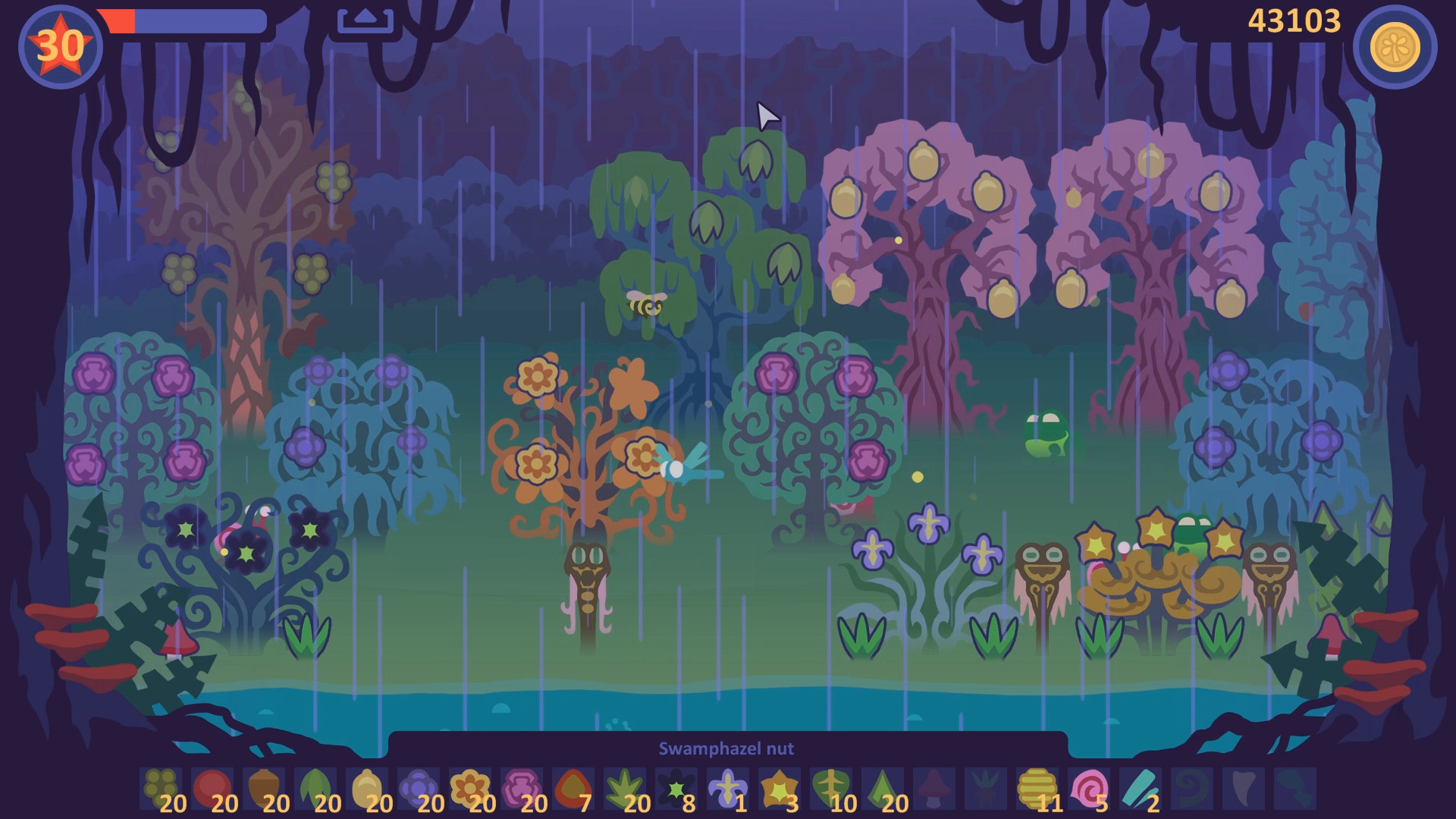
Set the automation debate aside and the presentation lands consistently well. Reviewers across both the positive and negative samples single out the art style as "cute" and "aesthetically pleasing," and the soundtrack comes up unprompted often enough to be a genuine draw rather than incidental background noise. The sacrifice mechanic — raising an animal only to kill it so its spirit can help with chores — gets described more than once as darkly funny rather than off-putting, a tonal balance that's harder to land than it sounds and that this game's reviewers credit it for pulling off. It's a small, well-executed idea that does real work distinguishing the game from the dozens of more generic clickers sharing its shelf.
The achievement grind is real, and partly by design
Multiple reviewers report the same specific arc: a genuinely enjoyable first few hours, followed by a longer, more tedious stretch chasing full completion. One reviewer logged 33 hours to unlock every achievement and, despite enjoying the early game, didn't come away willing to recommend the full grind to others. That grind is also, per several reviewers, not purely passive — a number of the game's 33 achievements specifically require active, attentive clicking rather than being reachable through idling, which cuts directly against the relaxed pace some buyers expect from a game tagged "Relaxing" and "Incremental." Steam's own achievement data backs up that full completion is a real, gradual climb rather than a wall very few reach: the easiest achievements sit around two-thirds of the playerbase, declining smoothly down to roughly one in ten at the hardest tiers, with no sharp cliff in between — consistent with reviewers' accounts of a long but genuinely completable grind rather than a broken or gated one.
A short, real support window, then nothing further
Voodoo Garden's own history on Steam shows honest, if brief, post-launch investment: four bug-fix updates landed within about three weeks of its 4 August 2016 release, addressing specific named issues (a "bogroot bug," a bee-related bug, a keyboard-scrolling addition, a long-session slowdown fix). After that window closed, the developer's public activity moved on to promoting an earlier game and, roughly a year later, announcing a new one — no further Voodoo Garden update followed, and specifically, the offline-progress question the "is this really idle" critics raise was never addressed by a later patch. That's a materially different shape than an outright abandoned or broken launch — the bugs reviewers hit early largely got fixed — but it also means the core design question dividing this game's review base was never going to be resolved by future support, because none came.
Where it lands
Voodoo Garden earns its Mostly Positive score honestly: the theme is distinctive, the art and music are genuinely good, and the achievement curve rewards the completionists who are this game's most natural audience without walling most of them out. But it's not the pure, hands-off idle experience its tagging suggests to some buyers, and the reviewers calling that out have real, specific mechanics to point to rather than a vague complaint. Go in expecting a cute, cheap clicker that asks for real, ongoing attention rather than a background timer to check in on once a day, and it delivers comfortably on that promise.
Pros and cons
Pros
- A genuinely distinctive theme for the genre — grow and feed swamp critters, then sacrifice the biggest ones so their spirits help harvest ingredients — praised consistently even by otherwise critical reviewers
- Art style and soundtrack are singled out as standouts across nearly every review read for this piece, positive and negative alike
- Achievement design gives completionists a real, gradually declining curve to chase (33 achievements, from roughly two-thirds of the playerbase down to about one in ten at the hardest tiers) rather than a wall that stops most players early
- Cheap even at full price and frequently discounted, with Steam trading cards adding further value for collectors
- A real, if brief, launch support window: four bug-fix patches landed within three weeks of release addressing specific reported issues
Cons
- Gold and experience only accrue while the game is actually running, and the spirit-helper automation that does exist only covers part of the harvest (fruit and vegetables, not the critters), so full progression still requires substantial ongoing manual clicking rather than the offline progress the "idle" framing implies to some buyers
- Multiple reviewers report a specific mid-game energy drop, describing the first few hours as charming and the remaining stretch toward 100% completion as tedious and repetitive
- No in-game tutorial, leaving players to work out early systems (which animals to feed, when to sacrifice them, how to unlock further recipes) largely by trial and error
- Several achievements are reported as requiring active, attentive clicking rather than being reachable through idling alone, cutting against the relaxed pace some buyers expect going in
- Development activity stopped within about a month of launch beyond routine bug fixes; no later update added the offline-progress feature the "is this really idle" critics were specifically asking for
Screenshots
-
Voodoo GardenImage: M. Hanka via Steam -
Voodoo GardenImage: M. Hanka via Steam -
Voodoo GardenImage: M. Hanka via Steam -
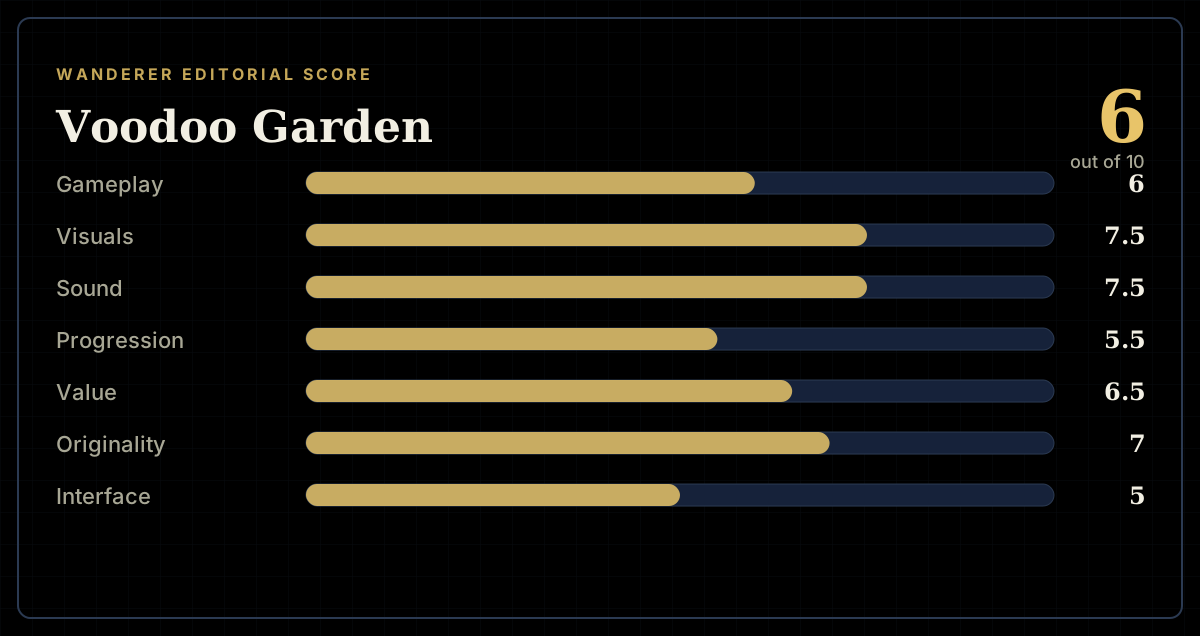
How the review scores each part of the gameWanderer Editorial -
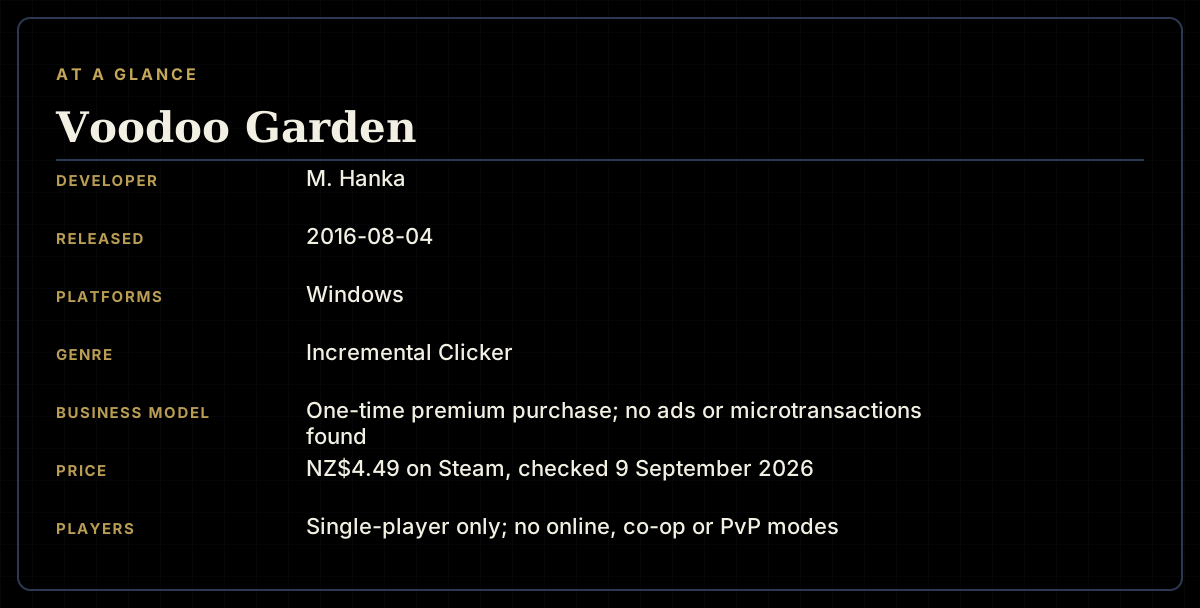
The specsWanderer Editorial -
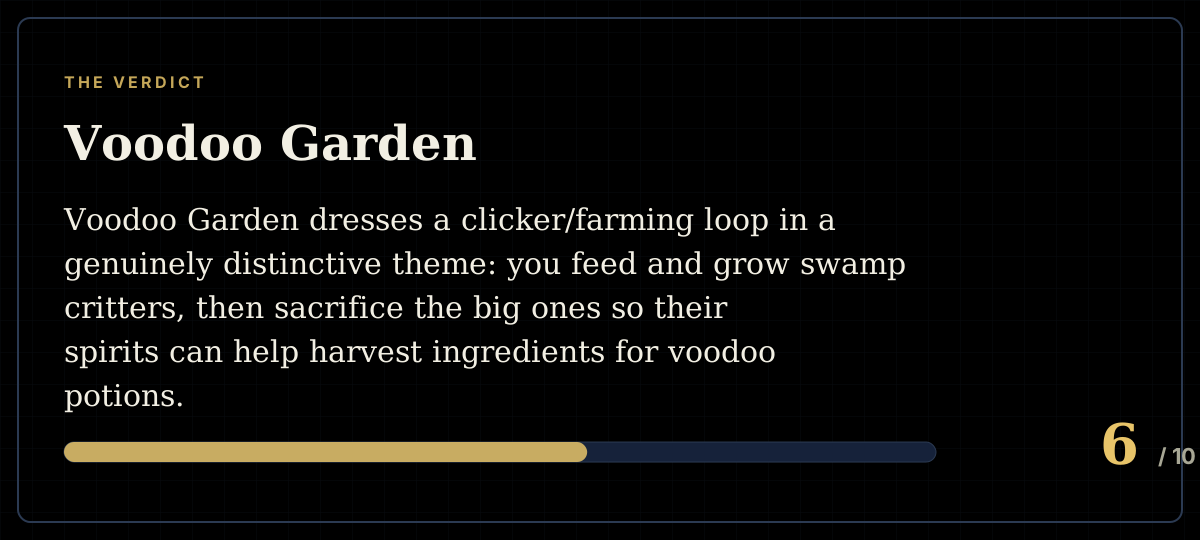
The short versionWanderer Editorial