Game review
Circadian Dice
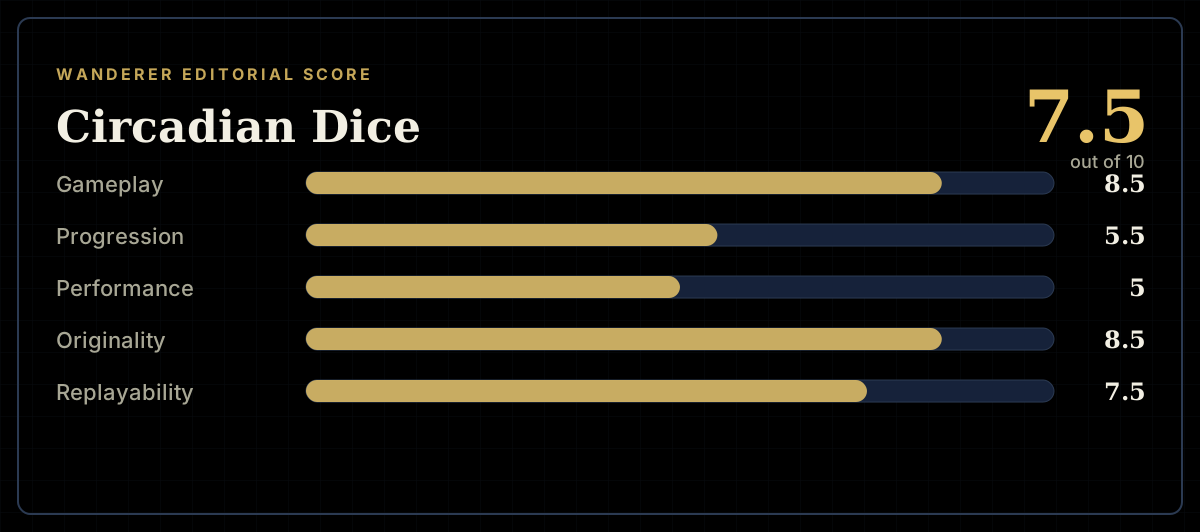
7.5 / 10
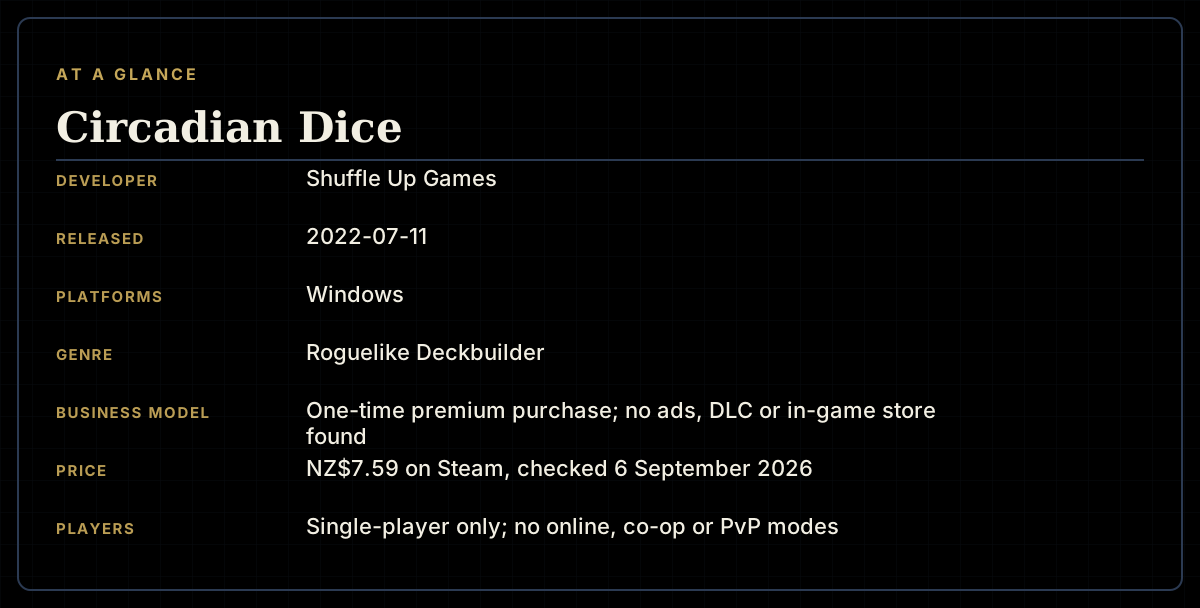
- Developer
- Shuffle Up Games
- Publisher
- Shuffle Up Games
- Released
- 11 July 2022
- Platforms
- Windows
- Genre
- Roguelike Deckbuilder
- Monetisation
- One-time premium purchase; no ads, DLC or in-game store found
- Players
- Single-player only; no online, co-op or PvP modes
The short version
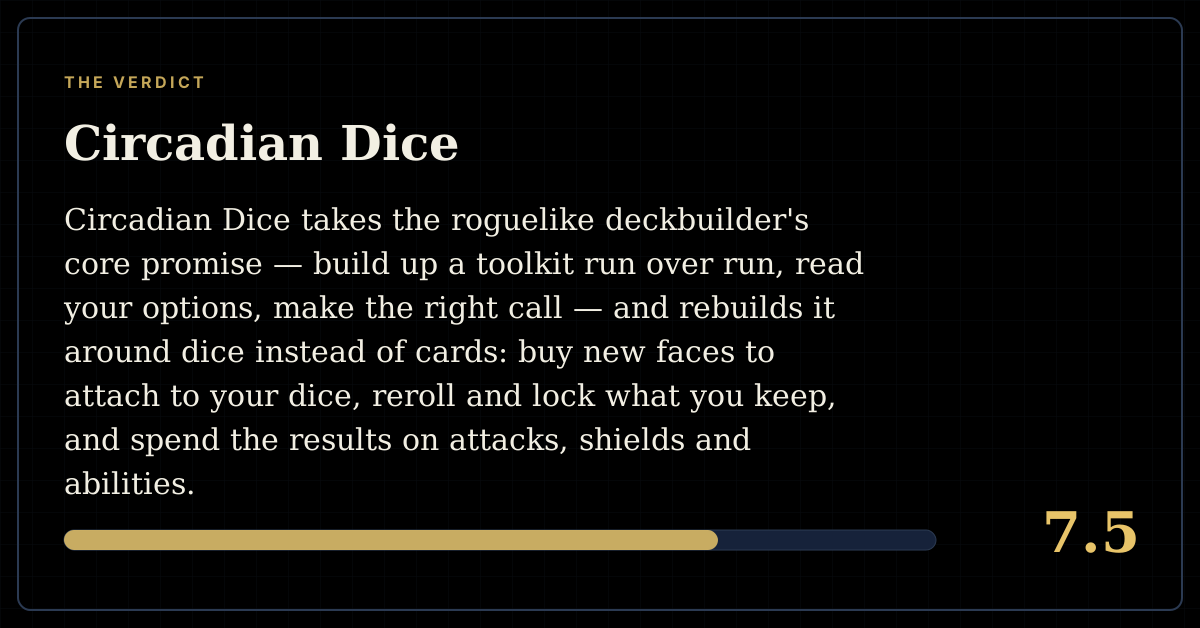
Circadian Dice takes the roguelike deckbuilder's core promise — build up a toolkit run over run, read your options, make the right call — and rebuilds it around dice instead of cards: buy new faces to attach to your dice, reroll and lock what you keep, and spend the results on attacks, shields and abilities. Reviewers with deep histories in Slay the Spire and Monster Train repeatedly rank it among the best the wider genre has produced, praising "thinky" decisions that feel more deliberate than card-based comparisons, in runs short enough to fit into a lunch break.
Set against that praise is one specific, widely-cited structural complaint: after every wave, a forced choice between taking currency and power that makes the current run easier, or taking score that's the only route to unlocking more of the game's content. Reviewers call this an active punishment for playing to survive, and no patch on record has changed it. A separate, unaddressed technical issue — a native resolution reviewers say caps out around 720p, blurry at higher resolutions and locked to 60Hz in fullscreen — compounds an otherwise glowing picture.
Biggest strengths
- A genuinely inventive reinterpretation of deckbuilder mechanics through customizable dice faces, earning direct, favourable comparisons to Slay the Spire and Monster Train from reviewers with deep histories in both
- Ten distinct playable characters with meaningfully different playstyles, plus a large amount of hidden content and secret areas reviewers say rewards experimentation
- Short, focused runs of 15 to 30 minutes that reviewers consistently describe as dangerously replayable, with several reporting dozens of hours logged without losing interest
Biggest weaknesses
- A forced choice after every wave between taking currency/power upgrades or taking score (the only progression currency for unlocking new content) is called out by a large, detailed share of reviewers as actively punishing players for wanting an easier, more winnable run
- The game's native resolution caps out around 720p by reviewer accounts, appearing blurry at 1080p and above in fullscreen, which several reviewers also say locks the game to 60Hz even on higher-refresh-rate displays
- Heavier reliance on RNG than genre comparisons like Slay the Spire, with several experienced deckbuilder players describing higher difficulties as too dependent on favourable shop offers to reliably out-strategize
Who it's for: Deckbuilder-roguelike veterans looking for a genuinely different spin on a familiar structure, with runs short enough for quick sessions. Less suited to anyone who wants strong visual presentation or dislikes being asked to trade short-term survival for long-term unlocks.
Our recommendation: One of the strongest dice-based roguelikes on the market for the price, provided you can look past dated visual presentation and accept its score-versus-power choice as a real design tax on unlocking the rest of the game.
7.5 / 10
Roguelike deckbuilders live or die on how fresh their central gimmick feels once a player has spent dozens of hours with the genre's biggest names. Circadian Dice clears that bar convincingly: instead of building a deck, you build a set of dice, buying and rerolling faces that determine what resources you generate each turn, then spending those resources on attacks, shields and abilities. Reviewers with deep histories in Slay the Spire and Monster Train — genre veterans, not newcomers easily impressed — repeatedly rank this among the best the wider category has produced, which is about as strong an endorsement as a review of this kind can cite secondhand.
Dice instead of cards, and it genuinely works
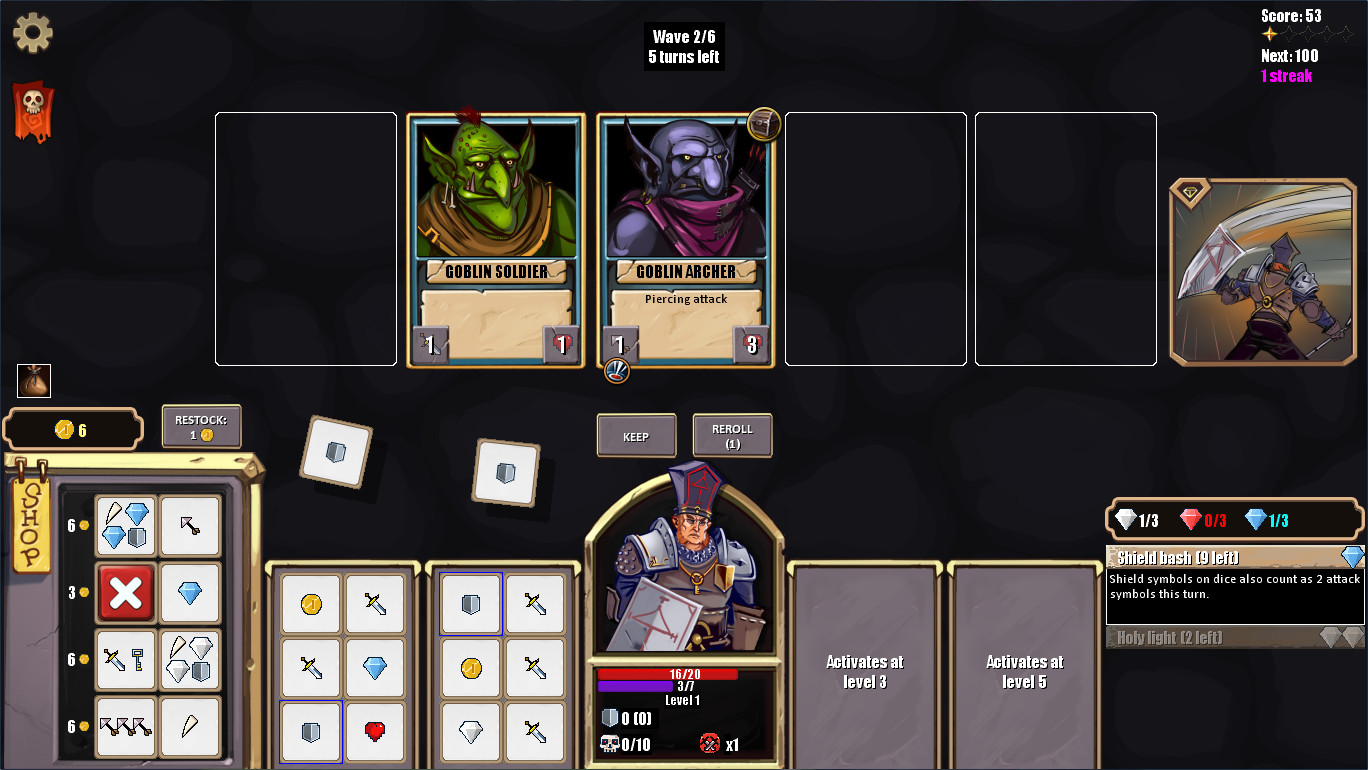
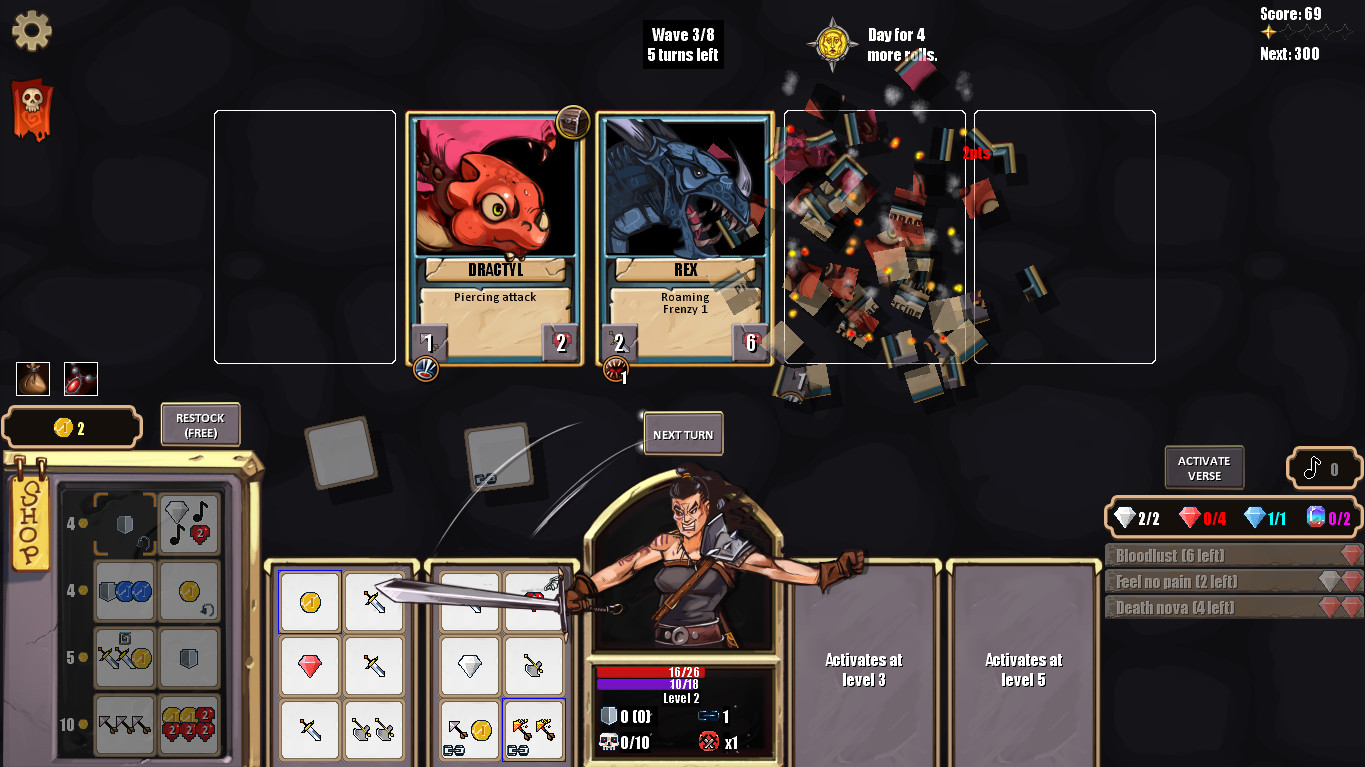
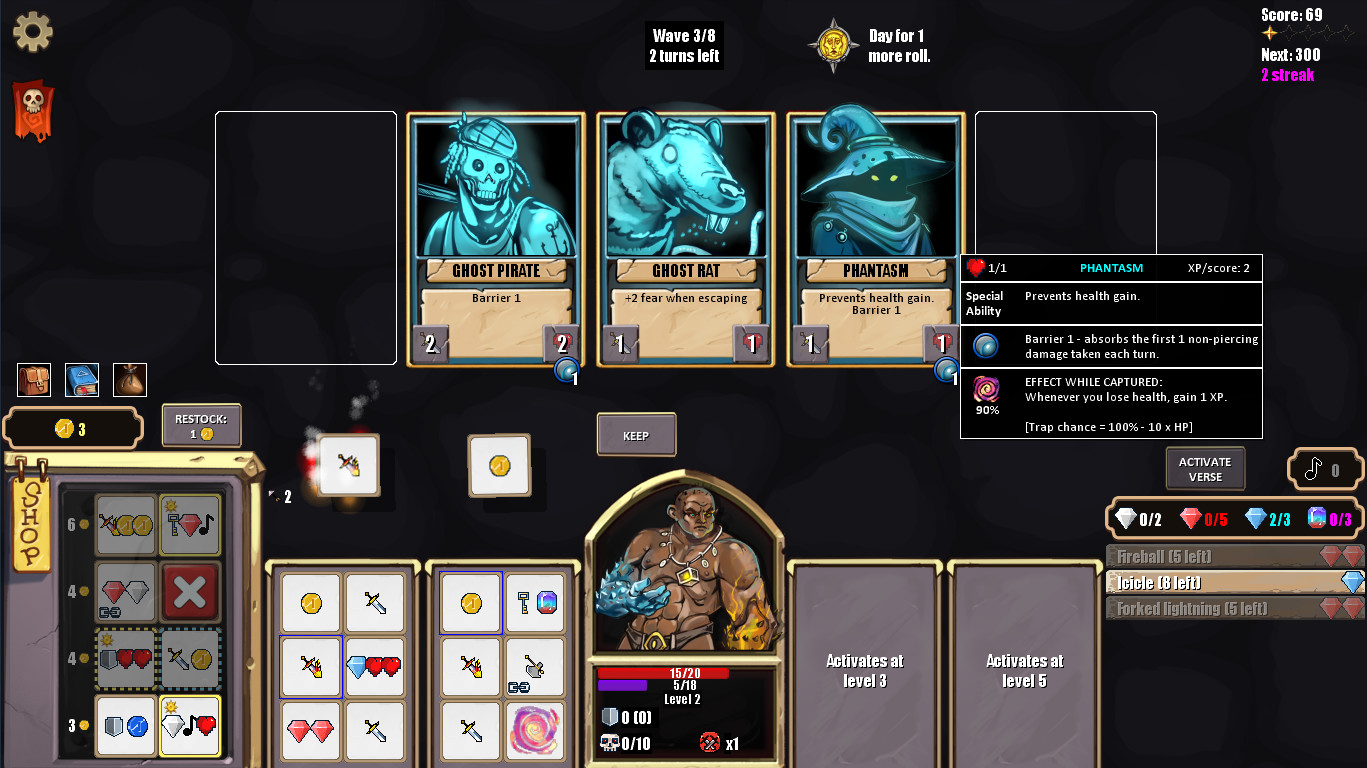
The core loop asks a player to manage ten sides across several dice, upgrading individual faces from a shop between waves, choosing what to lock and reroll each turn, and layering relics and gem-powered abilities on top. Reviewers describe the resulting decisions as unusually "thinky" for a genre often criticized for simple, repeatable optimal plays — one detailed comparison specifically contrasts Circadian Dice favourably against Slay the Spire's lower difficulty tiers, which the same reviewer found too easy by comparison. Ten distinct playable characters each reframe the core mechanics differently, and reviewers describe genuine hidden depth: secret areas unlocked by defeating enemies in a specific order, dice combinations that feel absurdly overtuned when they click, and runs short enough at 15-30 minutes to fit into a single sitting without losing the "just one more" pull that defines the best of this genre.
A single choice that undercuts its own progression
Set against that praise is one specific, widely and independently repeated structural complaint. After each wave, players choose between taking currency and power upgrades that make the current run more survivable, or taking score — the only currency that unlocks new content for future runs. Reviewers describe this as a direct, uncomfortable trade-off between having a good time in the run you're currently playing and actually progressing the game's own unlock system, and several call it out by name as the single worst design decision in an otherwise excellent package. One detailed review frames it plainly: "There should NOT be a choice between fun and progression." This isn't a minor nitpick scattered across a couple of outlier reviews — it recurs independently across enough of this review's negative and mixed sample to treat as the game's one genuinely load-bearing flaw, compounded further by reviewer accounts that later difficulty tiers lean heavily enough on favourable shop RNG that skill alone can't reliably carry a run regardless of which path is chosen.
An unresolved technical rough edge
A separate, more straightforward complaint concerns presentation: reviewers consistently describe a native resolution that appears to cap around 720p, producing noticeably blurry visuals at 1080p and above in fullscreen mode, with at least one detailed report that fullscreen additionally locks the game to 60Hz even on displays capable of much higher refresh rates, while windowed mode correctly adapts to the desktop's native rate. Reviewers are broadly unbothered by the low-fidelity pixel art style itself — nobody plays a dice-builder roguelike for graphical fidelity — but the scaling and refresh-rate behavior is a distinct, fixable technical issue rather than a stylistic choice, and it's one this review found no patch note addressing across the game's full public update history.
A short, quiet patch history
Circadian Dice received four logged updates between July 2022 and August 2023, covering genuine bug fixes, balance tuning across specific relics and abilities, gamepad support, and a full new soundtrack — real, substantive work, even if modest in volume. Nothing has been logged publicly since August 2023, over three years before this review, and neither of the two complaints detailed above appear in any of the four patches' change notes. That doesn't necessarily mean the developer has abandoned the project, but anyone buying today should expect the game largely as reviewers describe it now, rather than assuming further changes are imminent.
Pool dilution compounds the progression problem
A related, less-discussed complaint deepens the concern above rather than standing apart from it: several reviewers note that unlocking new characters and relics dilutes the shared pool of items that can appear in any given run, meaning the very act of unlocking more content — the reward the score system exists to gate — can make individual runs harder to build coherently around, since useful synergistic pieces show up less often once diluted across a larger pool. One reviewer draws an explicit comparison to how Isaac-likes handle unlock dilution, framing it as a genre-adjacent problem rather than something unique to this game, but it stacks uncomfortably on top of the score-versus-power choice already discussed: not only are players nudged away from a comfortable run to progress the unlock system, the payoff for that progression can make subsequent runs statistically messier rather than more powerful. Reviewers who raise this tend to still recommend the game overall, but it's a second, compounding data point on the same underlying design tension rather than an unrelated gripe.
Where it lands
Circadian Dice earns the comparisons to Slay the Spire and Monster Train that its most enthusiastic reviewers keep reaching for — its dice-based reinterpretation of deckbuilder mechanics is genuinely inventive, deep, and replayable at an unusually low price. The forced choice between power and progression is a real, specific, and well-corroborated design flaw that actively works against the game's own meta-progression system, and the unresolved resolution and refresh-rate issues are a fair reason for some players to wait or look elsewhere. Neither undoes what the core loop does exceptionally well, but both are worth knowing about rather than discovering after the free demo's five stages run out.
Pros and cons
Pros
- A genuinely inventive reinterpretation of deckbuilder mechanics through customizable dice faces, earning direct, favourable comparisons to Slay the Spire and Monster Train from reviewers with deep histories in both
- Ten distinct playable characters with meaningfully different playstyles, plus a large amount of hidden content and secret areas reviewers say rewards experimentation
- Short, focused runs of 15 to 30 minutes that reviewers consistently describe as dangerously replayable, with several reporting dozens of hours logged without losing interest
- A generous free demo covering three characters and five stages, giving prospective buyers a real, substantial preview before purchase
- Extremely inexpensive for the amount of praised content on offer, repeatedly cited by reviewers as excellent value regardless of any other complaint
Cons
- A forced choice after every wave between taking currency/power upgrades or taking score (the only progression currency for unlocking new content) is called out by a large, detailed share of reviewers as actively punishing players for wanting an easier, more winnable run
- The game's native resolution caps out around 720p by reviewer accounts, appearing blurry at 1080p and above in fullscreen, which several reviewers also say locks the game to 60Hz even on higher-refresh-rate displays
- Heavier reliance on RNG than genre comparisons like Slay the Spire, with several experienced deckbuilder players describing higher difficulties as too dependent on favourable shop offers to reliably out-strategize
- Unlocking new characters and content dilutes the shared item and relic pool, which a number of reviewers say makes builds harder to assemble coherently the more of the game gets unlocked
- Public patch activity appears to have stopped in August 2023, with none of the four logged updates addressing either the score/power choice or the resolution and refresh-rate issues raised above
Screenshots
-
Circadian DiceImage: Shuffle Up Games via Steam -
Circadian DiceImage: Shuffle Up Games via Steam -
Circadian DiceImage: Shuffle Up Games via Steam -
How the review scores each part of the gameWanderer Editorial -
The specsWanderer Editorial -
The short versionWanderer Editorial