Game review
Card roguelike of musou farming
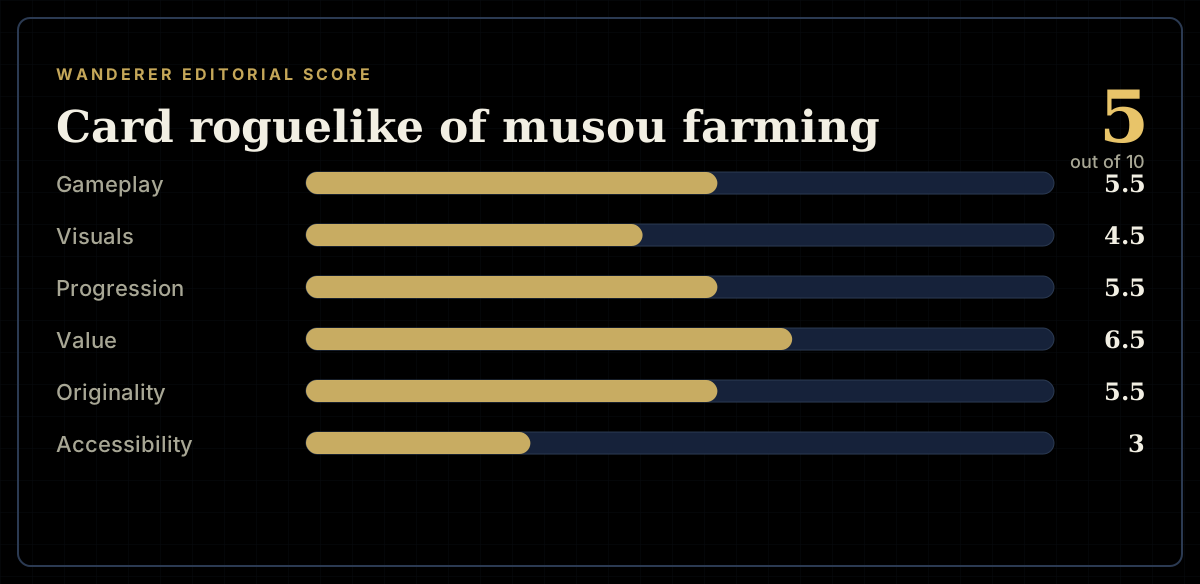
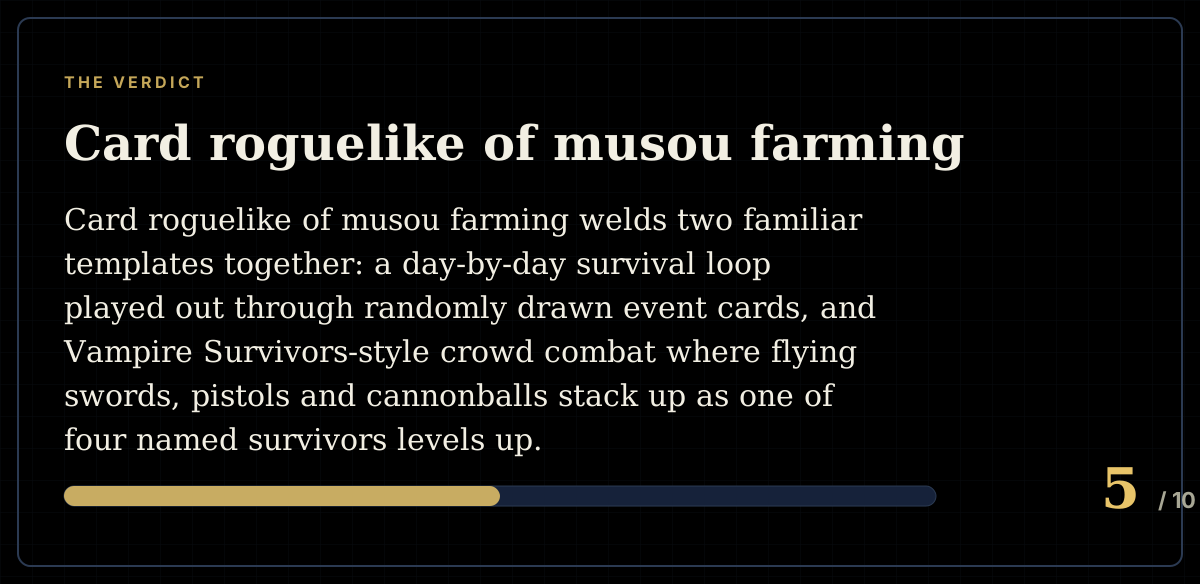
5 / 10
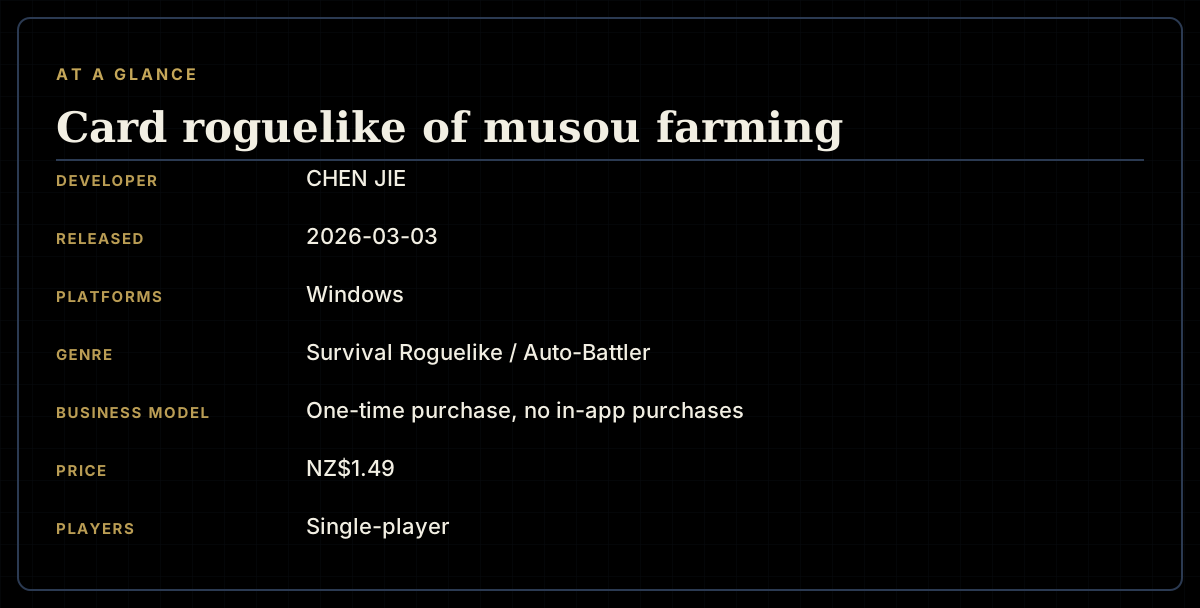
- Developer
- CHEN JIE
- Publisher
- CHEN JIE
- Released
- 3 March 2026
- Platforms
- Windows
- Genre
- Survival Roguelike / Auto-Battler
- Monetisation
- One-time purchase, no in-app purchases
- Players
- Single-player
The short version
Card roguelike of musou farming welds two familiar templates together: a day-by-day survival loop played out through randomly drawn event cards, and Vampire Survivors-style crowd combat where flying swords, pistols and cannonballs stack up as one of four named survivors levels up. The developer's own store-page message says the whole thing — code, art and all — was built in 21 days by "an unemployed programmer" working with generative AI, and it mostly plays like that claim is true: there's more structure here than a shovelware cash-in, including a hundred-day achievement ladder and a small cast with individual sprites and backstories, but the seams show everywhere you look.
The one that matters most for this audience: every screenshot of actual dialogue and event text is Simplified Chinese, with no English toggle visible anywhere on a storefront page that is otherwise written in (rough, machine-translated) English. At NZ$1.49 the financial risk is trivial, but with zero user reviews to weigh against the store page's own claims and a language wall most Wanderer readers can't cross, this is a curiosity rather than a recommendation.
Biggest strengths
- A genuine hybrid loop — a card-drawn scavenging/event day feeding into escalating Vampire-Survivors-style combat with at least five named skill lines (flying swords, surrounding blades, pistols, cannonballs, homing fireballs)
- Real structural ambition for a 21-day solo build: four named survivor characters with their own portraits and backstory blurbs, a post-apocalyptic frame story told in illustrated panels, and a day-count progression that Steam's own achievement list tracks out to day 100
- Impulse-buy pricing (NZ$1.49) that roughly matches the scope on offer
Biggest weaknesses
- In-game text is Simplified Chinese only in every screenshot the store page shows, despite the storefront listing itself being in English — dialogue, event cards and UI prompts will be unreadable to non-Chinese-reading players
- Zero user reviews at the time of writing, so there is no community track record to weigh against the developer's own description of the game
- The store description is visibly machine-translated, and the developer states outright that the art was AI-generated inside the same 21-day window as the code; the screenshots bear that out with three visibly mismatched styles across combat, event and narrative scenes
Who it's for: Bargain-bin roguelike collectors and Simplified Chinese readers curious about a scrappy solo-plus-AI passion project — not a fit for anyone who needs English text or wants a community-vetted purchase before buying.
Our recommendation: Skip unless you read Simplified Chinese or are simply curious what a 21-day solo-and-AI build looks like for NZ$1.49; wishlist it and wait to see whether an English translation or a review base ever materialises.
5 / 10
The pitch
"Card roguelike of musou farming" is, unusually, an exact description rather than a marketing title: it's a roguelike built from cards, wrapped around musou-style crowd combat, and its survival loop runs on resource farming. The store page's own author's note is unusually candid about how it came to exist — "this game is the result of 21 days and nights of collaborative work between an unemployed programmer and generative AI" — which frames everything else about the release. This is solo developer and publisher CHEN JIE's post-apocalyptic survival roguelike: protagonist Harrison, a mild-mannered former office worker, wakes up with no memory in a ruined city and has to out-survive a crisis cycle that keeps escalating around him.
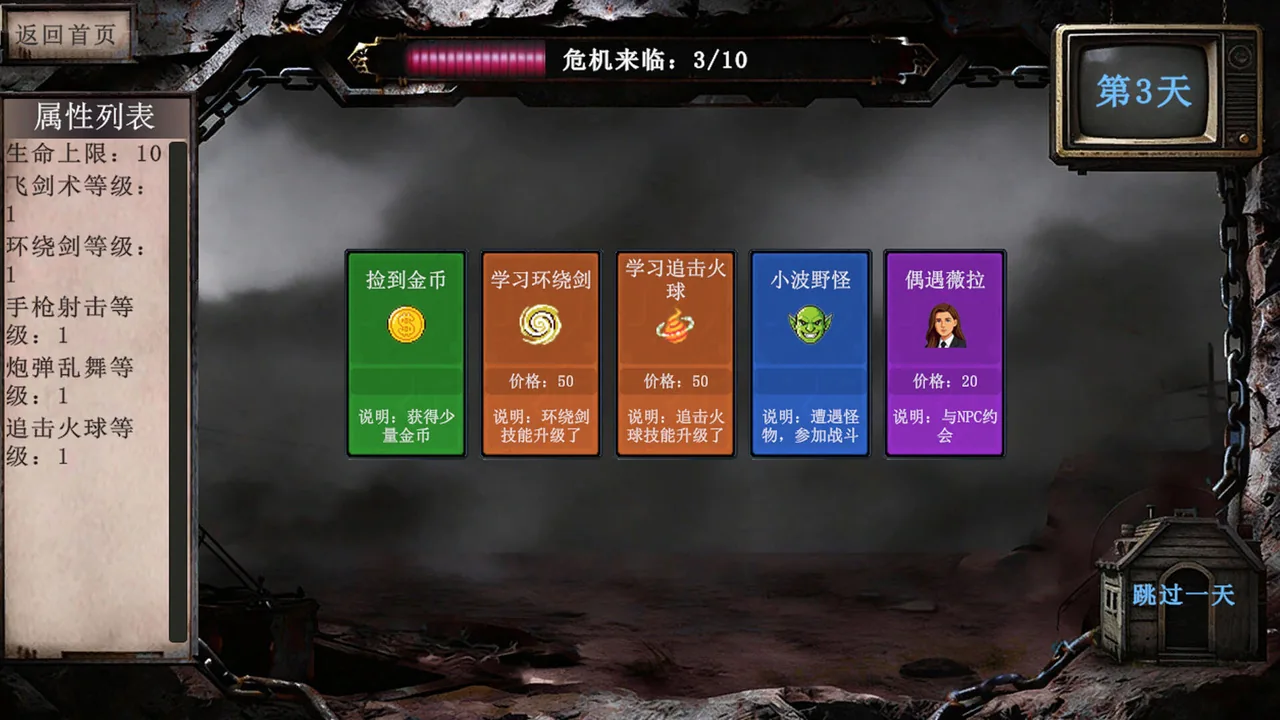
The structure is two loops stacked on top of each other. Day to day, the game deals you random event cards — one screenshot shows the character rifling through a row of coloured bins in a scavenging event tracked as "6/24," presumably a haul counter against a target for that day. When the "crisis cycle" hits, the only cards left to draw are combat ones, and the game switches into crowd-clearing musou combat: swarms of card-backed zombie enemies, flying swords, pistol bursts, volleys of cannonballs and homing fireballs that all scale with the level of whichever skill you've been feeding. Three other survivors — Vera, an administrator who runs the shelter's logistics; Frost, an "Ice Blade" guardian; and Stella, described on the store page as a "glorious martyr" — round out a four-character roster, each with their own portrait and backstory blurb.
A day of cards, a night of musou
What's notable, for a 21-day solo project, is that this is a real hybrid rather than either half being window dressing. The event-card day-loop is the game's own description of "daily actions drawn from event cards" with a genuinely random draw — the store page is explicit that "event cards possess a random nature" and that combat-only cards start crowding out the rest once a crisis cycle begins, which reads as a soft difficulty ramp: early runs give you room to scavenge and prepare, later ones funnel you straight into the meat grinder. The combat side leans hard on one well-worn genre — auto-aiming, screen-filling, level-up-your-orbiting-weapons combat in the lineage Vampire Survivors popularised — and the skill list the store page walks through (flying swords that multiply with level, a ring of surrounding blades, a pistol that fires more bullets per burst, chaotic cannonball volleys, a fireball that pursues and hits harder as it levels) is a standard toolkit for that genre rather than a novel one. The genuine idea is stitching the two loops together into one survival arc rather than either mechanic alone.
Twelve Steam achievements track that arc almost entirely by day count — "survival days 1," "5," "10," "20," "30," "40," "50," "60," "70," "80" and on to 100 — which tells you the game is built around a season-length run rather than a short roguelike loop measured in minutes. That's a bigger structural commitment than most 21-day solo builds attempt, whatever you make of the execution.
Art from three different projects
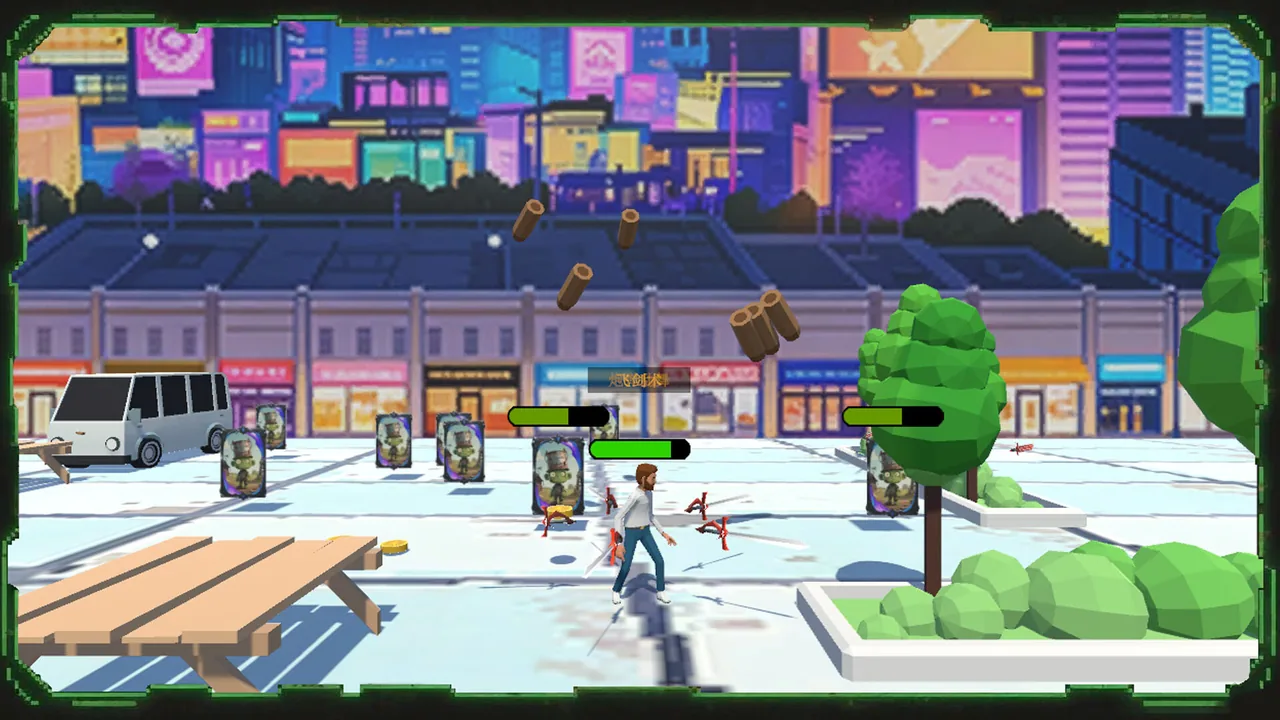
The screenshots make the AI-assisted, three-week production timeline visible rather than theoretical. Combat plays out in a low-poly 3D city street — a delivery van, striped awnings, neon signage in the background — with enemies rendered as literal oversized playing cards bearing a small zombie portrait, health bars floating above named skill callouts written only in Chinese. The scavenging/event scenes drop the 3D city for flat item icons and simple bin models on a bare grey plaza. The narrative interludes switch styles again, to moodier pixel art — a blood-red sunset over dead trees and a collapsed monorail, narrating the protagonist's waking moment in a paragraph of Simplified Chinese prose. None of the three individually looks bad for a solo project on this budget, but they don't read as one game's art direction; they read as three separate generation sessions stitched together, which lines up exactly with what the developer's own note describes.
The language wall
This is the finding that should sit above everything else in this review: every piece of in-game text visible across the store page's screenshots — skill names, event prompts, the narrative panels, UI labels — is Simplified Chinese, and supported_languages on the Steam listing confirms it as the only supported language. The storefront page itself is in English, including the "Introduction to gameplay" and "Introduction to combat skills" sections quoted above, but that appears to be a translation layer over a Chinese-only build rather than evidence of an English in-game option. For most readers of this site, that's the deciding factor before price, art or combat design ever come into it: without reading Simplified Chinese, the event cards, character dialogue and crisis-cycle prompts that carry the actual survival decisions will be illegible.
What Steam's own numbers say
There are no user reviews on the Steam page to check the store description against — the review summary reads "no user reviews" outright — so the closest thing to independent signal is the global achievement data, and it should be read as directional rather than statistical: these percentages come from what looks like a very small player base, not a large sample. With that caveat, the shape is still worth noting. 65.2% of owners have the "survival days 1" achievement, dropping to 60.8% by day 5–10, 47.8% by day 20 and 43.4% by day 30 — a fairly normal early-game drop-off curve. What's unusual is what happens after that: the day-40 through day-100 achievements all sit at exactly 39.1%, meaning nobody who is tracked as reaching day 40 failed to also reach day
- On a small sample that could simply mean a handful of committed players ran the clock all the
way, but it's at least consistent with a game whose late-game combat snowballs hard enough that surviving the early crisis cycles is the only real filter.
Value
At NZ$1.49, the price tag mostly answers its own question. This isn't being sold as a finished, polished survival roguelike — it's a transparently disclosed three-week experiment with a functioning day-loop, a real combat layer and enough structure (four characters, a hundred-day achievement arc, a frame story) that it doesn't read as a low-effort asset flip either. For a Chinese-reading buyer curious about musou-style combat wrapped in a card-driven survival shell, the price makes it an easy, low-stakes look. For anyone who can't read the in-game text, there's effectively nothing to buy regardless of price.
Verdict
Card roguelike of musou farming is a genuinely unusual data point rather than a game this review can recommend outright: a solo, AI-assisted, 21-day build that attempts a real structural hybrid — random event-card survival days feeding a musou-style combat escalation — and mostly delivers on that idea's bones, even as its three different art styles and machine-translated store copy show exactly how it was made. The dealbreaker for most readers here isn't the speed of its production or its total absence of user reviews, both of which a NZ$1.49 price tag reasonably discounts — it's that the entire game is playable only in Simplified Chinese. Until that changes, this is a review of a game most of this audience literally cannot read, and the score reflects a curiosity worth knowing about rather than a purchase worth making.
Pros and cons
Pros
- A genuine hybrid loop — a card-drawn scavenging/event day feeding into escalating Vampire-Survivors-style combat with at least five named skill lines (flying swords, surrounding blades, pistols, cannonballs, homing fireballs)
- Real structural ambition for a 21-day solo build: four named survivor characters with their own portraits and backstory blurbs, a post-apocalyptic frame story told in illustrated panels, and a day-count progression that Steam's own achievement list tracks out to day 100
- Impulse-buy pricing (NZ$1.49) that roughly matches the scope on offer
- Steam Achievements and Steam Cloud are both wired up, a small polish touch a lot of projects this size skip
Cons
- In-game text is Simplified Chinese only in every screenshot the store page shows, despite the storefront listing itself being in English — dialogue, event cards and UI prompts will be unreadable to non-Chinese-reading players
- Zero user reviews at the time of writing, so there is no community track record to weigh against the developer's own description of the game
- The store description is visibly machine-translated, and the developer states outright that the art was AI-generated inside the same 21-day window as the code; the screenshots bear that out with three visibly mismatched styles across combat, event and narrative scenes
- Minimum spec asks for an i7-10700 and an RTX 2060, a surprisingly steep ask for a low-poly combat scene and pixel-art story panels
Screenshots
-
Card roguelike of musou farmingImage: CHEN JIE via Steam -
Card roguelike of musou farmingImage: CHEN JIE via Steam -

Card roguelike of musou farmingImage: CHEN JIE via Steam -
How the review scores each part of the gameWanderer Editorial -
The game at a glanceWanderer Editorial -
The short versionWanderer Editorial