Game review
Bugs. Billions of Bugs.
6 / 10
- Developer
- Recoil Mojo
- Publisher
- Mojo Games
- Released
- 10 September 2026
- Platforms
- PC
- Genre
- Incremental Tower Defense
An incremental swarm defense that undersells its own looks
Bugs. Billions of Bugs. is a tower defense from Recoil Mojo, published by Mojo Games, released 10 September 2026 for NZ$4.79. The premise is straightforward B-movie sci-fi: a mining colony under siege by an escalating insect horde, defended with an arsenal of towers and orbital strikes that scales from a handful of turrets to genuinely absurd firepower. It's built around a 26-map campaign, an infinite procedural mode called SURGE, a built-in map editor with Steam Workshop support, and a persistent upgrade tree spanning 165 nodes that carries progress from one attempt to the next regardless of whether any individual run succeeds.
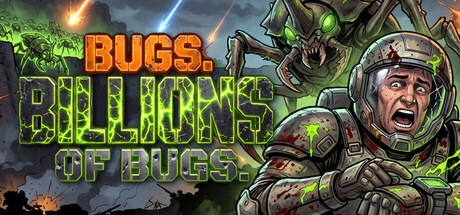
The header art sells a very different game than the one you actually play. It's a detailed illustrated poster of a screaming soldier and a towering armored bug under a meteor-streaked sky — striking, competent horror-comedy art. The screenshots tell the real story: in motion, the battlefield is rendered as coloured squares, diamonds, and dots on a plain grid, with almost no illustrated detail at all. One of the game's own positive reviewers put it plainly: the developer "has forsaken nearly all graphical trickery and has nailed gameplay." That's a fair trade for some players and a dealbreaker for others, and it's worth knowing before buying based on the key art alone.
The core loop: build, survive, specialize
The tower roster covers eight types — gatling turrets, acid sprayers, plasma cannons, cryo towers, sniper emplacements, mortars, tesla towers, and flame turrets — each specializable through multiple upgrade paths as the run progresses. Layered on top is a set of seven "heavy equipment" abilities (orbital strikes, napalm, cryo-EMP, acid rain, ion storms, gravity wells, bait drops) with their own cooldowns, visible in the HUD as a row of icons with countdown timers. The screenshot evidence backs up the game's own claim of built-around-huge-battles scale: enemy counts in the low thousands are visible mid-wave, with kill and bug counters climbing well past 2,000 by wave six in the sample shown.
Enemy variety is described across seven species with distinct armor types and behaviors — workers, armored grunts, ranged spitters, flying skyrays, tanky colossi, and boss-tier queens and kings — which gives the tower-specialization systems something to actually respond to rather than just scaling numbers up. A positive reviewer with 1,482 minutes logged singled out the soundtrack and called the loop "challenging" and forces genuine thought, which lines up with a design built on chokepoint denial and target-type counters rather than pure numeric escalation.
A genuinely deep persistent progression system
The 165-node upgrade tree is the game's strongest pitch for the "incremental" side of its identity. Ore and gems harvested during runs — even failed ones — fund permanent upgrades covering towers, orbital powers, and prestige bonuses, meaning a lost battle still pays into the next attempt. That's the right shape for the genre: it rewards persistence without making individual runs feel meaningless, and the campaign's 26 handcrafted maps give the tree room to matter across a real arc rather than a single repeated stage. The SURGE mode's procedurally generated layouts extend that arc indefinitely for players who want an unbounded target for their unlocks, which is a sensible way to give a finite campaign long-term legs.
Where the interface gets in the way
The screenshot of the play HUD shows the friction points clearly. Eight towers and seven abilities are crammed onto a single numbered hotbar along the bottom of the screen, and at 1920x1080 several of the labels are already truncated to a few characters ("ORBI...", "NAP...", "PLA..."). That's a readability problem waiting to get worse as a player's muscle memory for fifteen hotkeys inevitably slips. One reviewer with under two hours logged flagged a concrete gap in the current build: no apparent way to change turret targeting priority, a basic tower-defense expectation that's missing or well-hidden enough that an attentive player couldn't find it.
Co-op is present but not yet reliable
Steam co-op for two to four players is a headline feature, supporting friends-only or public lobbies and Quick Match, with shared campaign progress and Workshop maps playable together. The one detailed negative review on file describes it as "genuinely unplayable" at time of writing: a friend joining via Steam's Shift-Tab overlay gets stuck permanently zoomed out, sessions desync so that one player wins a round while the other loses it, and roughly half of turrets were reported unplaceable in a co-op lobby, forcing seven-plus restarts just to get a clean session going. That's a single detailed account rather than a broad sample, but it's specific enough — naming particular symptoms rather than a vague "buggy" complaint — to treat as a real signal against the multiplayer mode specifically, separate from the solo campaign it doesn't appear to affect.
Where this lands
Bugs. Billions of Bugs. is a well-built solo incremental tower defense wrapped in art direction that doesn't match its own gameplay, at a price that makes the mismatch easy to forgive. The core loop, enemy variety, and 165-node progression tree are the real draw, and the campaign-plus-SURGE-plus-Workshop structure gives it legitimate longevity for a $4.79 asking price. The co-op mode, by contrast, reads as shipped before it was ready, and the packed hotbar needs a legibility pass before the tower roster grows any further. With only three reviews on file this early, none of this is a settled verdict — but the pattern across even that small sample, solo praise against a specific co-op complaint, is consistent enough to be worth stating plainly rather than waiting on a larger sample that doesn't exist yet.
Screenshots
-
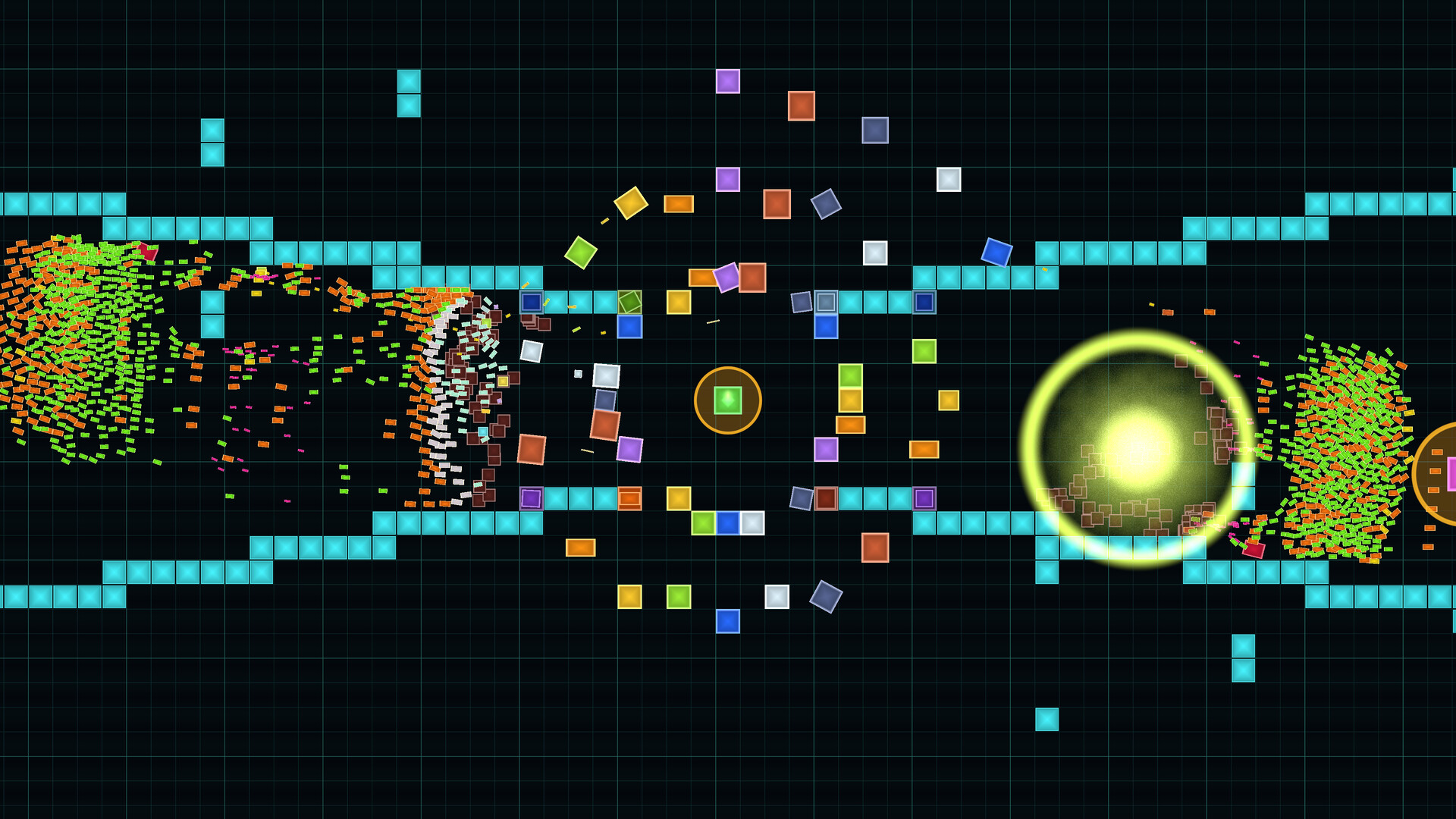
The actual battlefield is pure abstract shape-and-colour, a long way from the illustrated key art.Steam store page -
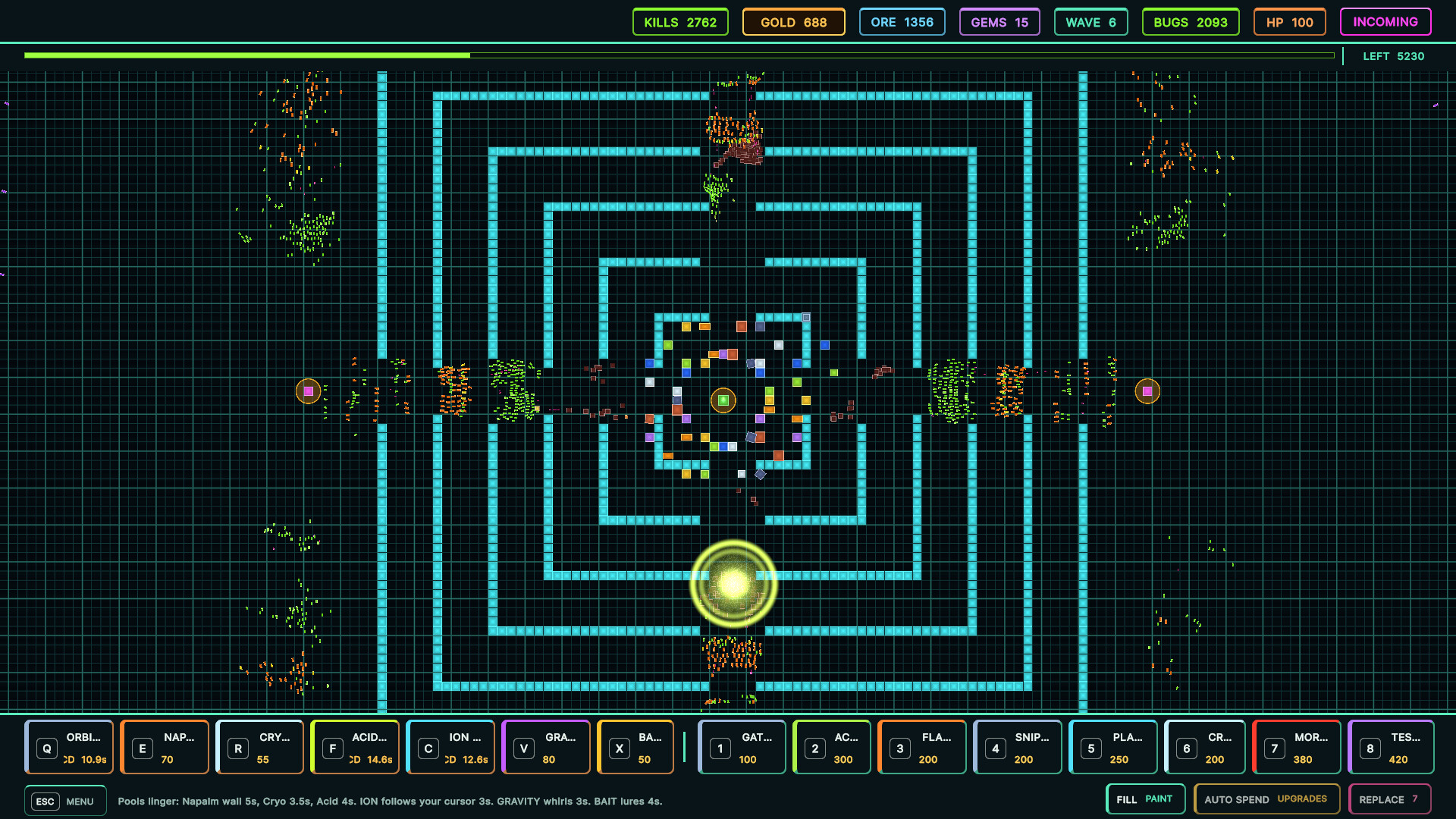
Eight towers and seven orbital abilities share one crowded hotbar, with labels cut off before you can read them.Steam store page -
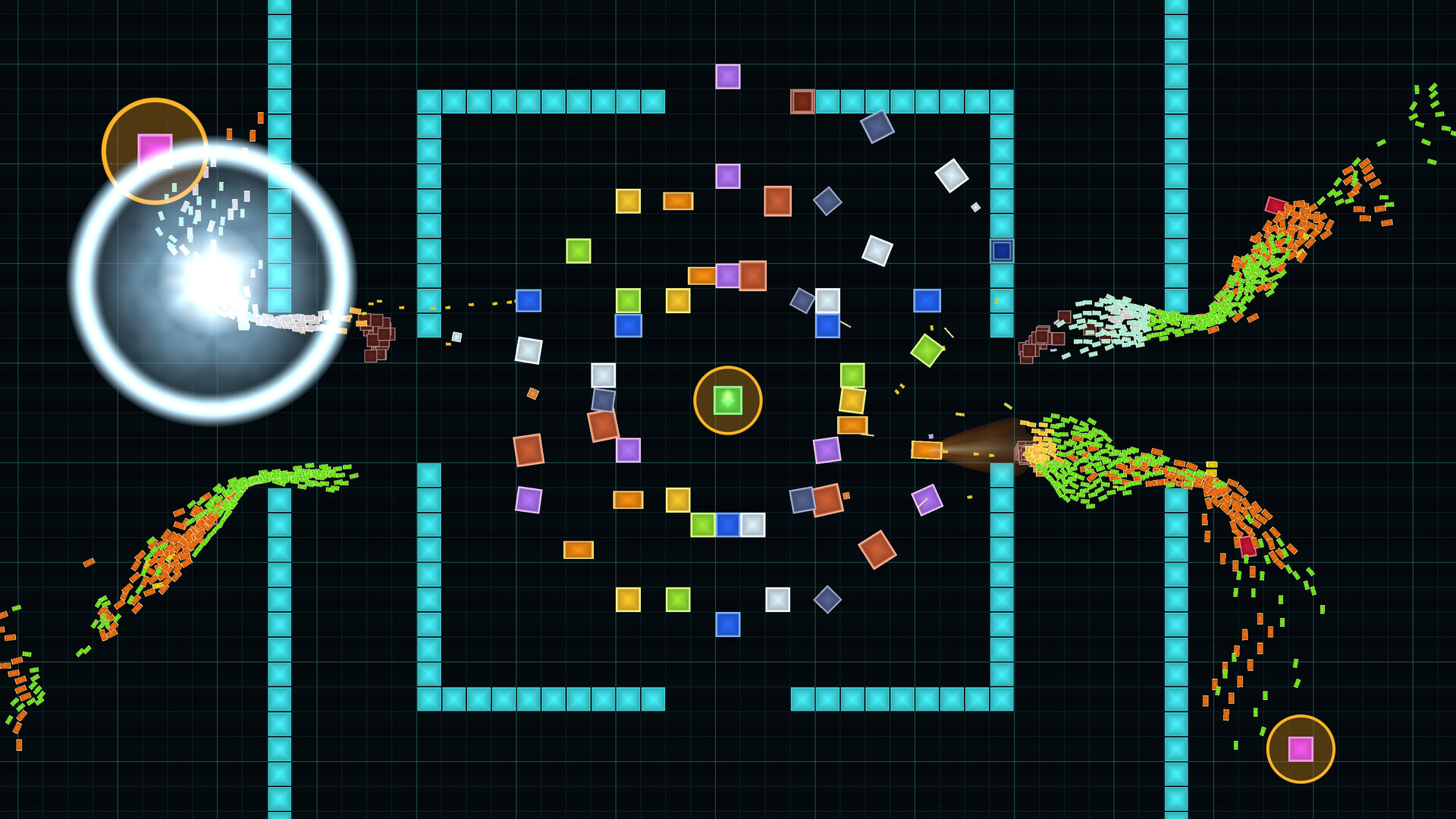
Orbital strikes and colour-coded towers are the whole visual language of a fight — function over spectacle.Steam store page