Game review
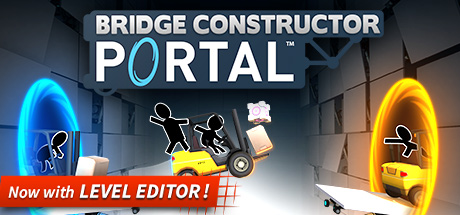
Bridge Constructor Portal
6 / 10
- Developer
- ClockStone
- Publisher
- Headup
- Released
- 20 December 2017
- Platforms
- Windows, macOS, Linux
- Genre
- Physics engineering puzzle
- Monetisation
- One-off purchase, with a DLC campaign extending the base 60-chamber campaign; no in-game currency or gameplay-affecting purchases
- Players
- None; single-player only, with a level editor for creating and sharing custom test chambers
The short version
Bridge Constructor Portal's crossover premise — build bridges and ramps through Aperture Science test chambers using portals, propulsion gel, and repulsion gel, narrated by Ellen McLain's original GLaDOS voice work — earns genuine credit from reviewers for how well the two source franchises actually complement each other conceptually. That praise runs into a specific, repeated complaint about the underlying physics: multiple reviewers independently describe bridges as excessively wobbly and unpredictable, built on hydraulic-suspension materials rather than the rigid beams typical of the wider genre, with a control scheme reviewers say makes fine-tuning that instability genuinely frustrating. A separate, equally common complaint targets the game's tutorial, described by more than one reviewer as effectively nonexistent, leaving new players to discover basic mechanics like converting a girder into a road surface through trial and error. Achievement data confirms a real drop-off in engagement across the campaign's four chapters, and at least one reviewer reports a specific, unresolved bug blocking progress at level 50 entirely.
Biggest strengths
- A genuinely well-executed crossover concept that reviewers credit for making the Portal and Bridge Constructor franchises feel like a natural fit rather than a forced tie-in
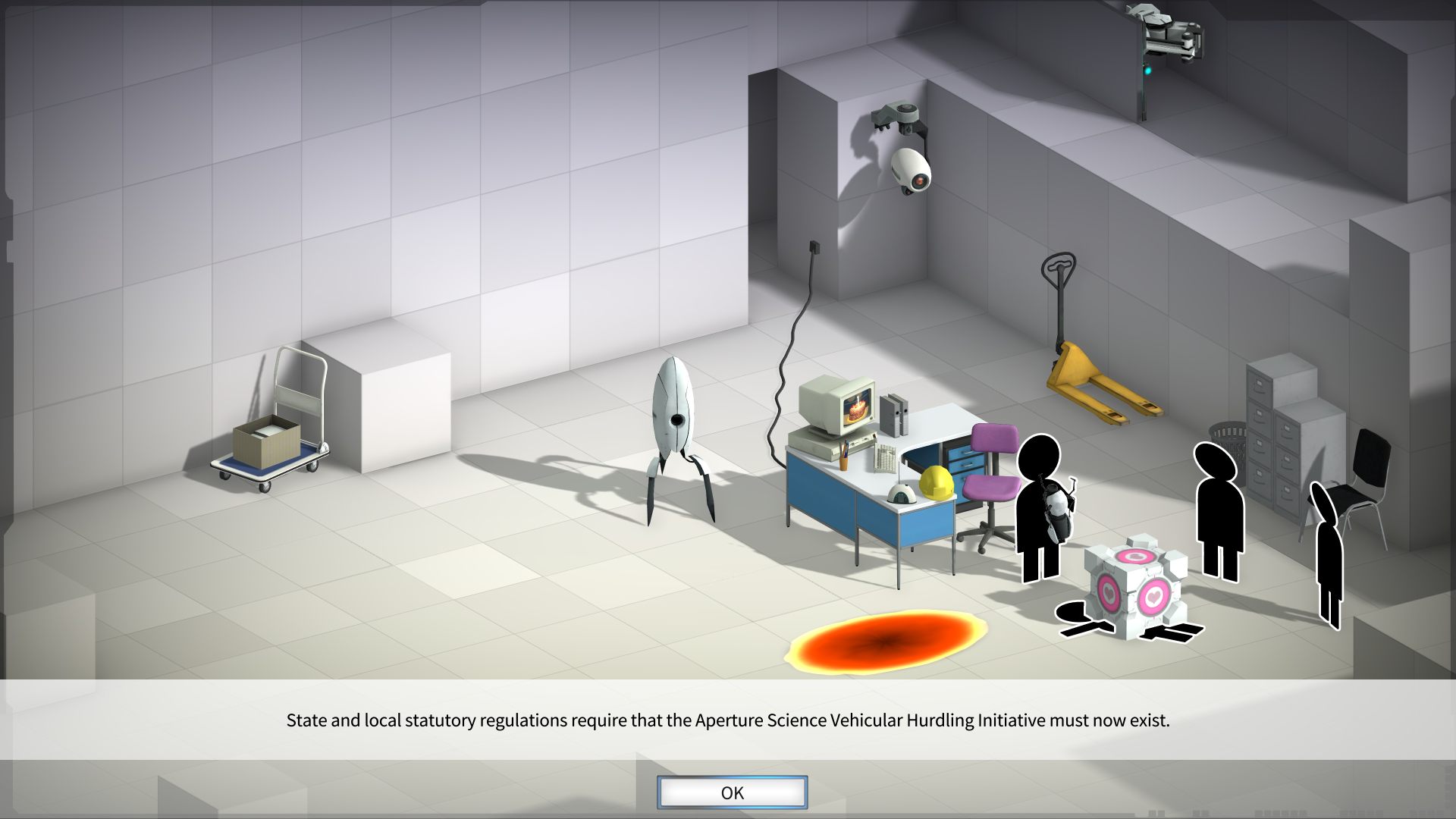
- Ellen McLain's authentic GLaDOS voice work adds real charm and franchise authenticity to the tutorial and chamber introductions
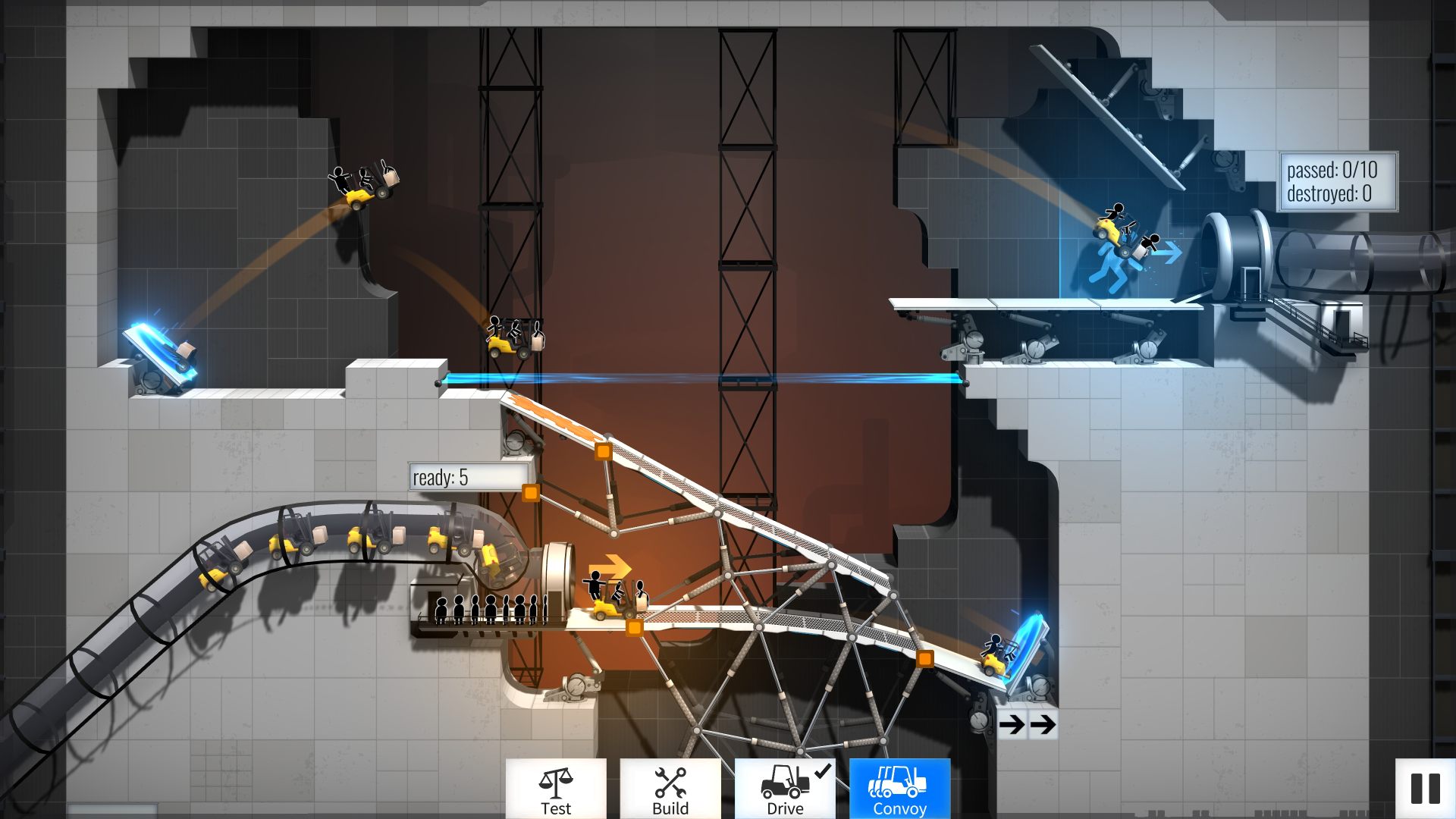
- A creative toolkit of Portal-specific gadgets — portals, propulsion and repulsion gel, aerial faith plates — gives the engineering puzzles a distinctive flavor beyond typical bridge-sim mechanics
Biggest weaknesses
- A specific, repeated complaint describes the bridge physics as excessively wobbly and unpredictable, built on hydraulic suspension materials with an unfriendly interface for fine-tuning stability
- Multiple reviewers independently describe the tutorial as effectively nonexistent, leaving basic mechanics like converting girders into road surfaces to be discovered through trial and error
- At least one detailed reviewer describes many puzzles as having exactly one intended solution that players are meant to brute-force toward, rather than genuinely open engineering challenges
Who it's for: Portal fans curious about a lighter, puzzle-focused spin-off, and engineering-puzzle fans who don't mind looser, more chaotic bridge physics than genre veterans might expect. Less suited to players who want a proper tutorial before diving in, or anyone hoping for the series' more traditional rigid-structure engineering challenge.
Our recommendation: Worth its low price for Portal fans wanting a lighter puzzle spin-off; go in expecting a rough, largely absent tutorial and looser physics than typical bridge-building games.
6 / 10
Bridge Constructor Portal drops players into the Aperture Science Enrichment Center as a new test engineer, tasked with building bridges, ramps, and slides across 60 chambers to guide the franchise's signature "Bendies" safely to their goal, narrated throughout by Ellen McLain reprising her original GLaDOS voice role. Released in December 2017 as an official crossover between two established franchises, it built a solid, positive following — 90% Very Positive across 2,511 English reviews — anchored in genuine appreciation for how well the two concepts fit together, alongside a specific, recurring set of complaints about the physics and onboarding underneath that concept.
A crossover reviewers say genuinely works
The praise for the core premise is specific and consistent. One reviewer sums it up simply: "excellent game for both portal fans and bridge constructor fans." Another credits the way the Portal setting reshapes the base formula: "Portal's theme is beautiful and original, with gameplay changes based on the game's story and its setting in Portal 2." A third notes the added charm from authentic voice casting, describing GLaDOS's narration as giving the tutorial real personality even where the mechanical instruction itself falls short. That's genuine, specific credit for a licensed crossover actually integrating its source material meaningfully rather than simply reskinning an existing formula.
Physics reviewers describe as excessively wobbly
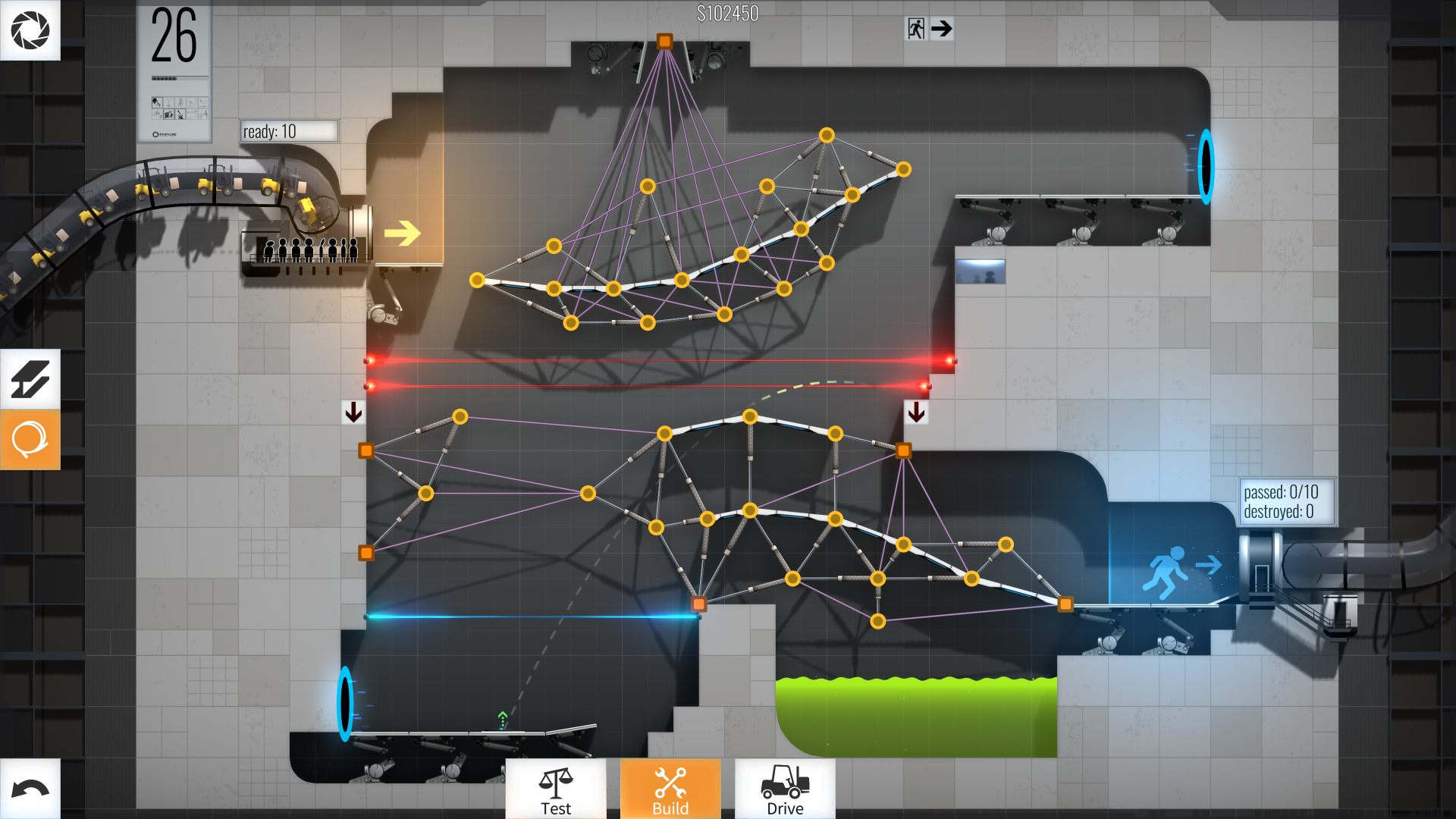
The most detailed, most technical complaint in the sample concerns the underlying bridge-building physics. One reviewer explains precisely: "the physics is super janky here. the available material is kinda 'weird': you gotta work w/ hydraulic suspension instead of rigid I-beam. and there're annoyingly too few anchor to support the bridge. that's make the bridge wobble too much in an unpredictable way. so you have to fine-tuning the bridge quite a lot, but the UI/UX is totally unfriendly for this task." A second, more blunt reviewer agrees: "Physics are terrible and bridges are so jiggly no mater what you do." That's a specific, reproducible technical complaint about a particular design choice — flexible suspension materials over rigid structural pieces — rather than a general difficulty gripe, and it's worth taking seriously given how central stable bridge construction is to the entire genre.
A tutorial reviewers call effectively absent
A separate, equally common complaint concerns onboarding. One reviewer states it directly: "This game is kinda unplayable without the original game. Upon launch, it refers you to play the base game to learn how to play the game and no tutorial is included with this game." Another, independently: "The tutorial is basically nonexistent... I struggled more with figuring out how to do anything or realizing you can actually do stuff, rather than solving the actual puzzles." A third reviewer's frustration gets specific: "had to spend way too much time to realize you could turn a girder into a road platform." Three independent accounts of the same fundamental onboarding gap is strong enough convergence to treat as an accurate, current characteristic of the game.
Puzzle design some reviewers say lacks real openness
Beyond the physics and tutorial issues, one detailed, 9-vote reviewer raises a more structural critique: "it feels like a lot of the time there is explicitly one intended solution, that you slowly brute force your way towards. A lot of the later levels are just multiple puzzles of 'this needs to go here and this over there' bundled as one chamber. The game doesn't iterate on ideas much." That's a specific complaint about puzzle design depth distinct from the physics jankiness above — a genre that should reward creative engineering solutions instead often points toward one correct answer.
What the achievement data confirms
Global achievement statistics show a steady, meaningful drop-off across the campaign: 57.7% of players complete Chapter One, falling to 29.1% for Chapter Two, 17.9% for Chapter Three, and just 11.8% for Chapter Four. That taper is steeper than several other titles reviewed in this lane, consistent with reviewer accounts of repetition and difficulty setting in well before the campaign concludes. At least one reviewer reports a specific, unresolved bug at level 50 blocking further progress entirely despite multiple attempted workarounds, which may account for some of that drop-off beyond ordinary attrition.
A developer that kept supporting the license for years
Checked against ClockStone and Headup's own partner-events history, the game received meaningful, long-tail attention well beyond a typical licensed tie-in: Steam Deck verification in March 2022, continued franchise sale bundling through 2023 and 2025, and update notes as recently as December 2025, nearly eight years after release. That's a genuinely longer support tail than several other titles reviewed in this lane, even though the specific tutorial and physics complaints documented above don't appear to have been fully resolved by that ongoing attention — worth noting as a case where continued support and unresolved core complaints have coexisted for years rather than one following from the other.
Verdict
Bridge Constructor Portal succeeds at its central premise — a genuine, well-integrated crossover between two beloved franchises, brought to life with authentic voice work — even as a specific, well-documented set of complaints about wobbly physics and a near-absent tutorial undercut the engineering-puzzle experience underneath it. Worth its low price for curious Portal fans willing to push past a rough start; genre veterans expecting the series' usual rigid-structure precision should adjust expectations for looser, more unpredictable bridge behavior.
Sources: Steam store page and appdetails API (release date, pricing, platform data); Steam's aggregate review data (query_summary totals, English-language sample); individually read user reviews, both positive and negative, sorted by helpfulness and recency; Steam's global achievement statistics API; ClockStone/Headup's own partner-events history from 2017 through 2025.
Pros and cons
Pros
- A genuinely well-executed crossover concept that reviewers credit for making the Portal and Bridge Constructor franchises feel like a natural fit rather than a forced tie-in
- Ellen McLain's authentic GLaDOS voice work adds real charm and franchise authenticity to the tutorial and chamber introductions
- A creative toolkit of Portal-specific gadgets — portals, propulsion and repulsion gel, aerial faith plates — gives the engineering puzzles a distinctive flavor beyond typical bridge-sim mechanics
- A level editor with sharing support extends the game's life for players who enjoy designing and testing their own chambers
- Budget-friendly pricing makes it an easy, low-risk purchase for curious Portal fans
Cons
- A specific, repeated complaint describes the bridge physics as excessively wobbly and unpredictable, built on hydraulic suspension materials with an unfriendly interface for fine-tuning stability
- Multiple reviewers independently describe the tutorial as effectively nonexistent, leaving basic mechanics like converting girders into road surfaces to be discovered through trial and error
- At least one detailed reviewer describes many puzzles as having exactly one intended solution that players are meant to brute-force toward, rather than genuinely open engineering challenges
- A specific, reported bug blocks progress at level 50 for at least one player, with no workaround found despite multiple attempted builds
- Achievement data confirms a steep drop-off across the campaign's four chapters, consistent with reviewer accounts of repetition and difficulty setting in well before the end
Screenshots
-
Bridge Constructor PortalImage: Headup via Steam -
Bridge Constructor PortalImage: Headup via Steam -
Bridge Constructor PortalImage: Headup via Steam -
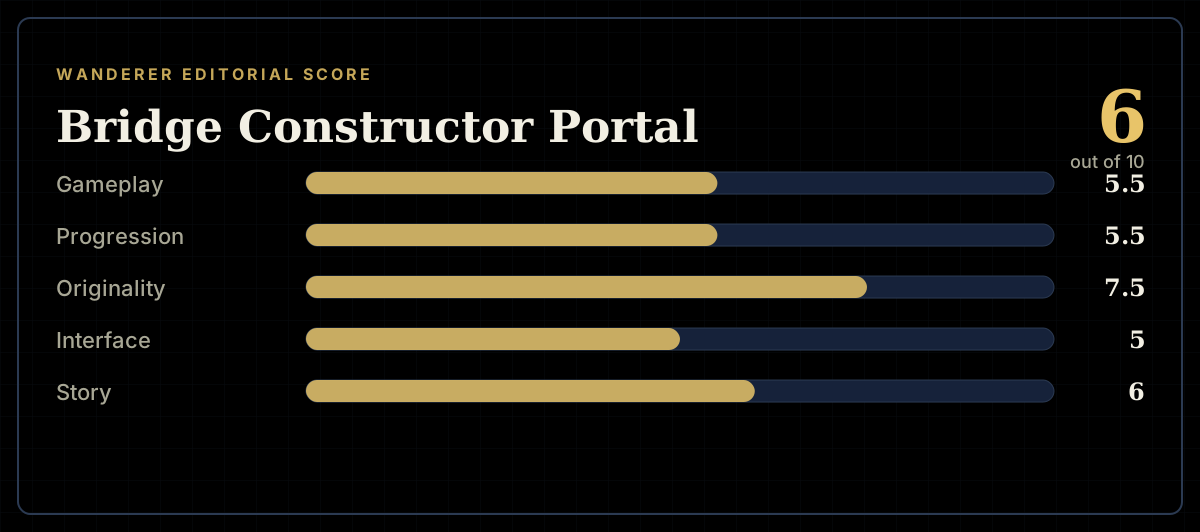
How the review scores each part of the gameWanderer Editorial -
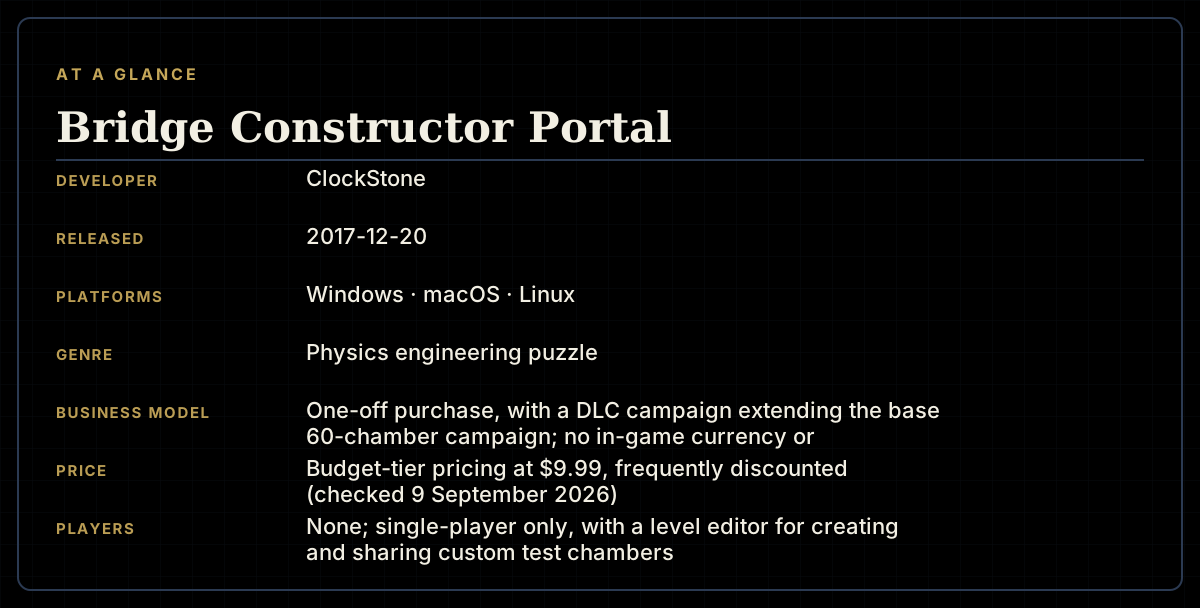
The specsWanderer Editorial -
The short versionWanderer Editorial