Game review
BrickSpace
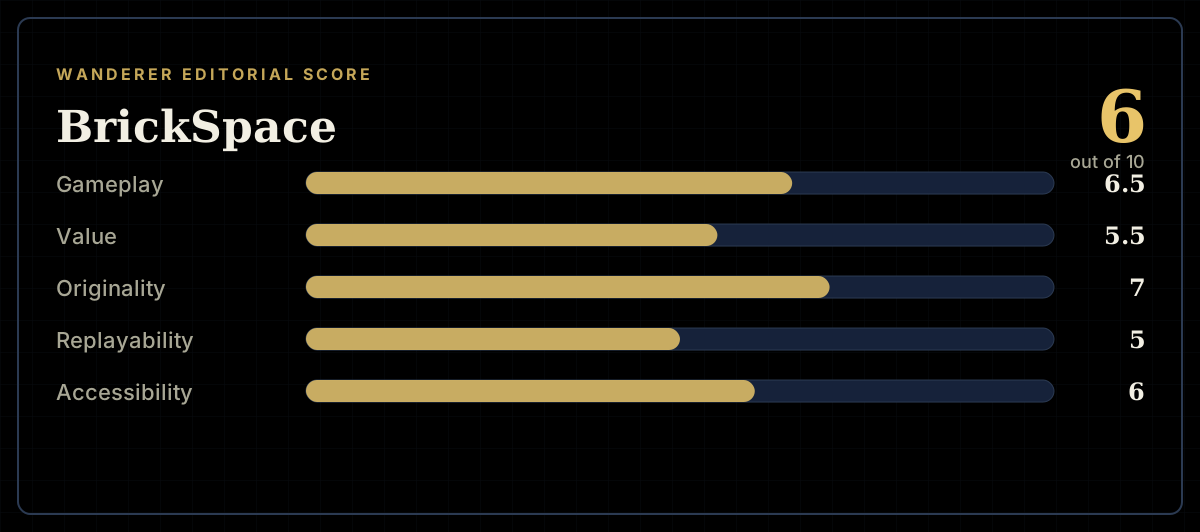
6 / 10
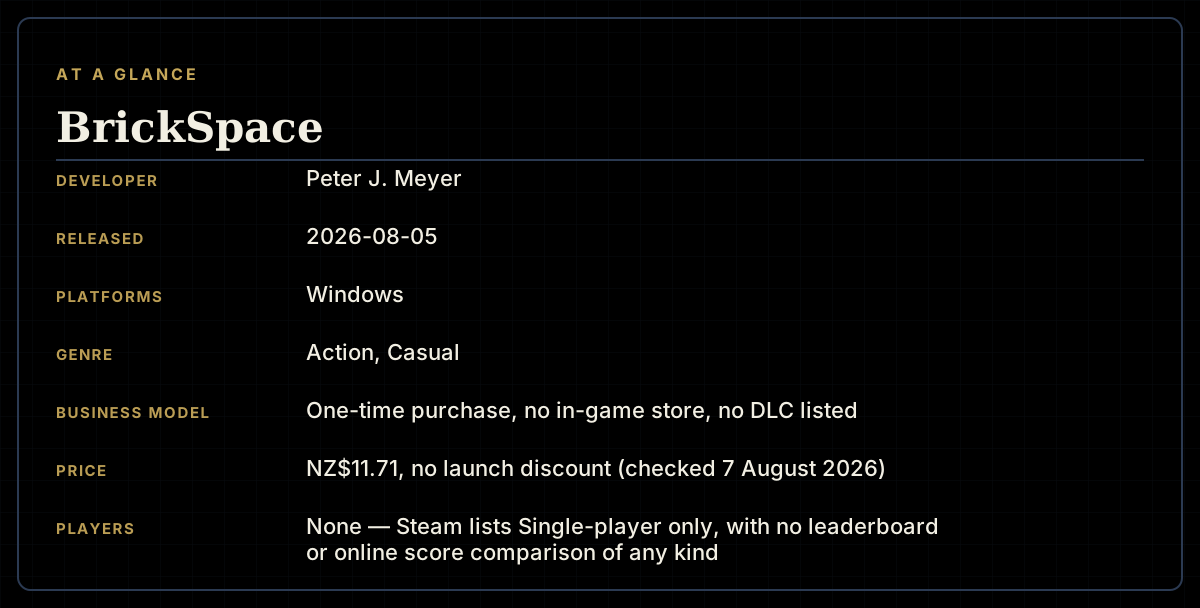
- Developer
- Peter J. Meyer
- Publisher
- Peter J. Meyer
- Released
- 5 August 2026
- Platforms
- Windows
- Genre
- Action, Casual
- Monetisation
- One-time purchase, no in-game store, no DLC listed
- Players
- None — Steam lists Single-player only, with no leaderboard or online score comparison of any kind
The short version
BrickSpace takes the Breakout formula and rebuilds its camera around a first-person, zero-gravity cockpit view: the paddle sits in front of you, the bricks hang somewhere out in the dark, and balls come rocketing back at the screen instead of sliding across a flat 2D field. That perspective shift, plus a sixteen-symbol power-up alphabet and 32 hand-built levels with shifting and rotating brick fields, is a genuinely distinctive take on a genre that mostly hasn't moved past top-down since the 1980s. What it doesn't have is any kind of persistent progression: no online leaderboard despite the entire pitch being a high-score chase, no Steam achievements at all, and a system-requirements page that admits the game has only been tested on one Windows 11 machine. This is a one-person hobby project priced and scoped like one, not a system with a meta layer sitting behind it.
Biggest strengths
- The first-person, zero-gravity camera behind the paddle is a real structural difference from the flat top-down view nearly every other Breakout-style game uses
- Sixteen distinct power-up letters (Big Ball, Crazy Ball, Double, Fast, Guided, Hold, Jolt, Knock Through, Large Paddle, Moving Blocker, Quad, Small Paddle, Transport, 1 Up, Wacky Ball, Explosive) give genuine variety within each level rather than one or two repeated pickups
- 32 levels with shifting and rotating brick sections, rather than one static layout reused with palette swaps
Biggest weaknesses
- The high-score list is explicitly local only — ten scores on your own machine — for a game whose entire hook is score-chasing, with no Steam leaderboard to compare against anyone else
- No Steam achievements exist for this game at all, not even a small starter set, which is unusual even for a first-time solo release
- The store page's own system requirements say the game has "only tested on Windows 11 machine," a level of QA disclosure players should factor into their expectations
Who it's for: Breakout and Arkanoid fans curious about an unusual camera angle on a familiar loop, and anyone who wants a short, self-contained arcade session with a genuinely large power-up set. A poor fit for players who want their high scores to mean anything to anyone but themselves, since there's no online leaderboard to chase.
Our recommendation: A cheap, clearly solo-made arcade game with a real point of difference in its camera and a deep power-up roster for the price, held back by a completely local high-score system, zero Steam achievements, and zero outside verification two days after launch. Worth a look if the first-person zero-gravity framing appeals to you specifically; there's no demo to test it risk-free first.
6 / 10
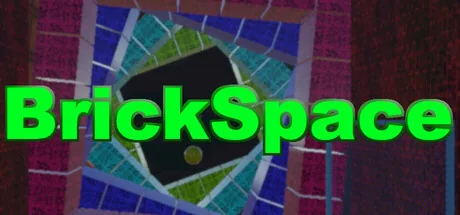
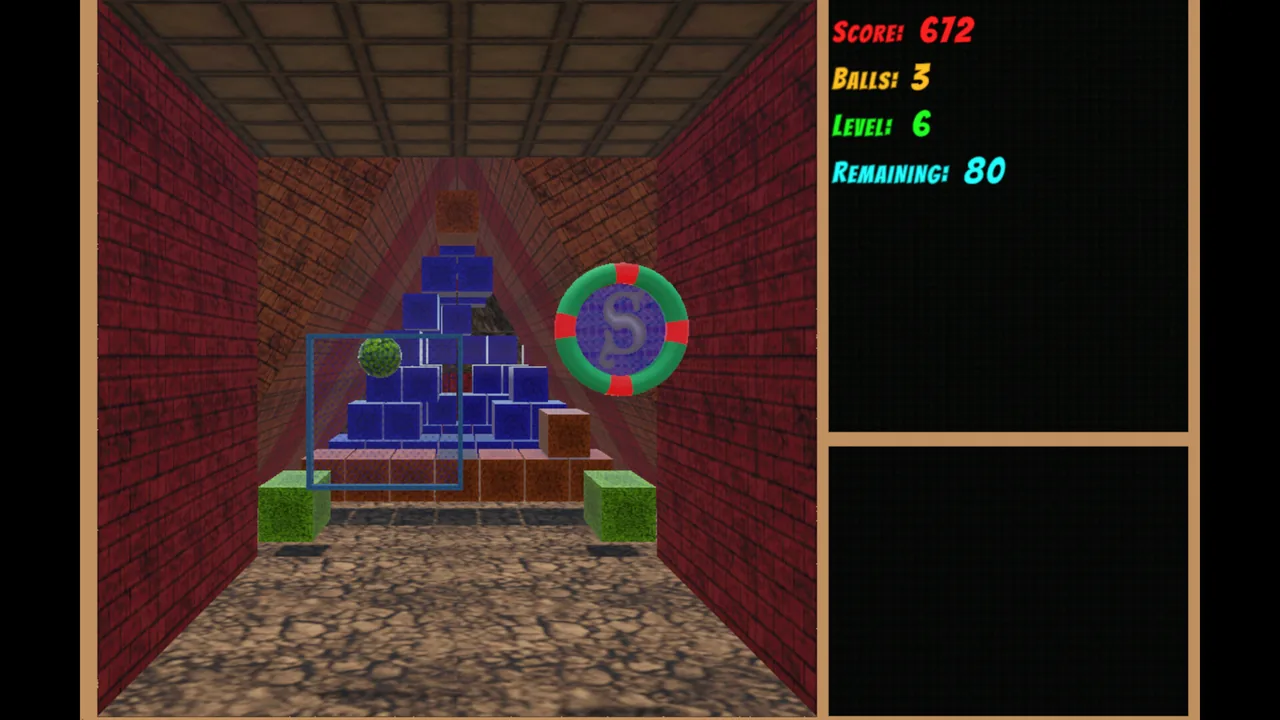
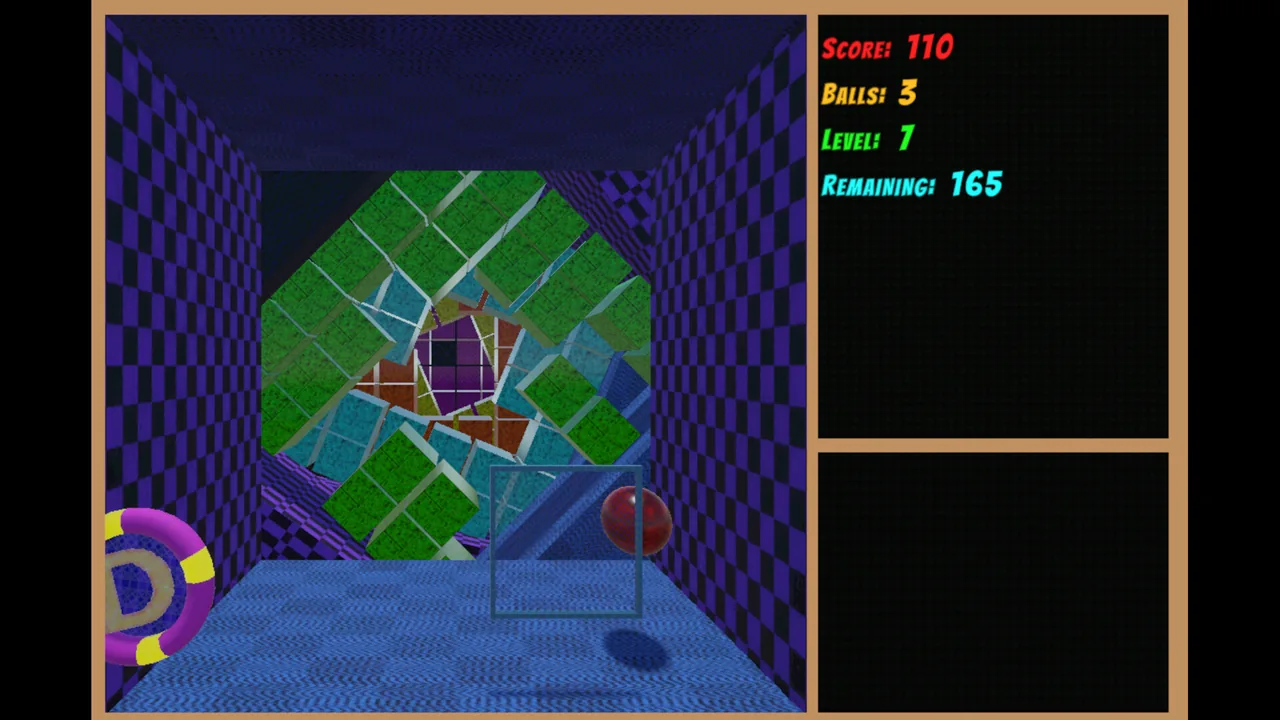
Most Breakout descendants keep the camera exactly where Atari left it in 1976: looking straight down at a flat field, paddle at the bottom, bricks at the top. BrickSpace throws that out. Its paddle sits in front of the player like a cockpit window, the bricks hang in the dark middle distance, and the ball comes rocketing back toward the screen rather than sliding sideways across it. Solo developer Peter J. Meyer built the whole thing in Unity as what the store page calls "a 3 Dimensional Zero G Brick Smashing Game," and that camera change is the one idea the entire release hangs on.
A paddle with four directions and two hands full
The core interaction is more involved than a normal Breakout paddle. Moving the mouse shifts the paddle across four directions in that 3D space rather than one axis; the left mouse button knocks the paddle forward, accelerating any ball it connects with; the right mouse button tilts the paddle to redirect a ball's angle rather than just bouncing it back flat. Keyboard players get the same three inputs mapped to the arrow keys, Ctrl and Shift, and the game supports gamepads too, with a title-screen quirk worth noting: highlighting "Start Game" and pressing a controller button switches control scheme to gamepad automatically, pressing Space or Enter switches to keyboard, and clicking with the mouse switches to mouse — so the game reads your intent from how you press the same button rather than making you dig through an options menu first.
Sixteen ways for a level to go sideways
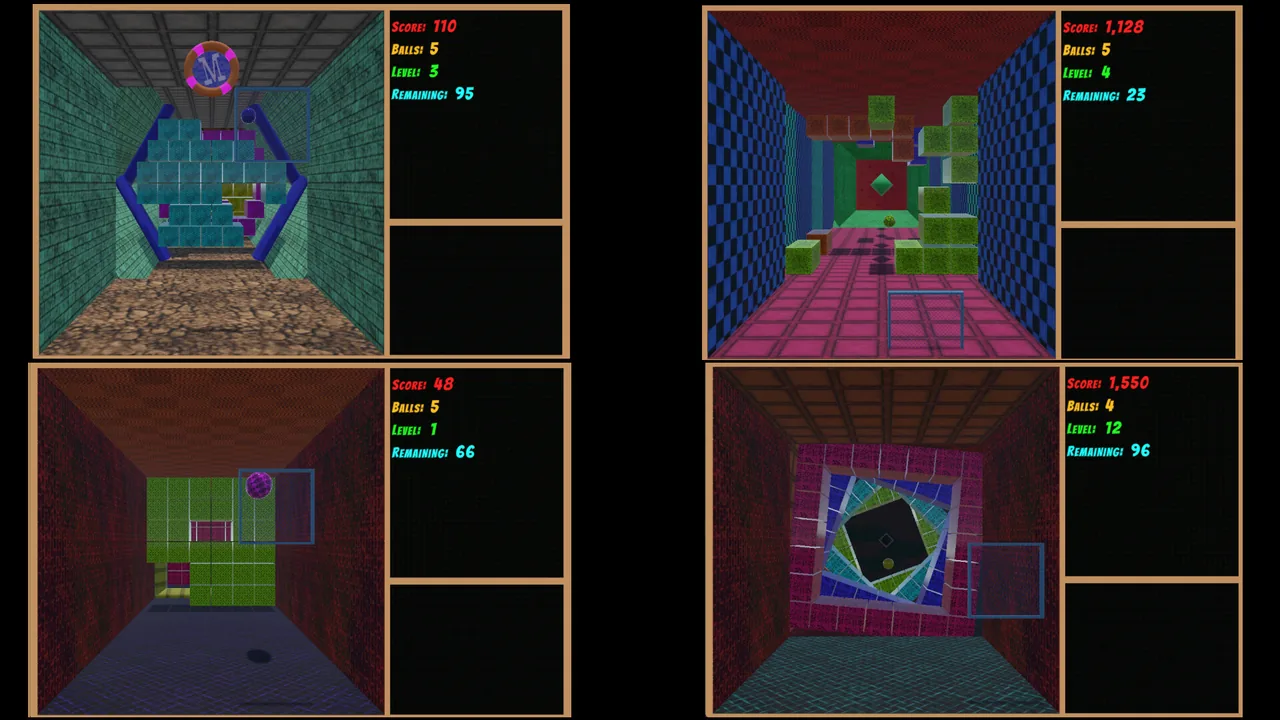
Where a lot of budget brick-breakers lean on two or three repeated power-ups, BrickSpace's own description lists sixteen distinct letter-coded pickups, each doing something genuinely different: Big Ball and Small/Large Paddle resize things, Double and Quad split the ball count, Fast and Guided change how a ball moves after it leaves the paddle, Hold lets you catch and re-aim a ball on demand, Knock Through and Explosive change what happens on brick impact, Transport teleports a ball to the far side of the level, Jolt freezes your own paddle for five seconds as a genuine punishment pickup, and Moving Blocker spawns a second, fixed-size paddle that follows your prior position around the field. That's a wide toolkit for a game built by one person, and it means a run through the 32 levels — some of which shift or rotate their brick layout mid-level rather than sitting still — keeps introducing new combinations rather than repeating the same handful of effects with a new coat of paint.
What doesn't carry over, and what isn't there yet
The progression in BrickSpace is entirely level-to-level: clear a stage's bricks and move to the next of 32, chase a better run on the built-in ten-entry high-score table, and that's the whole structure. There's no persistent unlock system, no currency, no meta layer of any kind — which is honest, since nothing on the store page claims otherwise. What is a real gap for a game built around score-chasing is that the high-score list is explicitly local: ten scores kept on your own machine, with no Steam leaderboard to measure yourself against anyone else. A game whose entire premise is "beat your best run" usually wants that comparison to be public, and this one doesn't offer it.
The achievement list compounds that. Where most modern Steam releases ship at least a handful of achievements even in a first project, BrickSpace has none at all — a direct query to Valve's global achievement stats for this app returns an empty set, not a low-completion one. There's consequently no completion curve to read here the way there would be on a game with even a small achievement list; the absence itself is the finding.
A young, unverified release
Two days after launch, BrickSpace has zero Steam user reviews in any language, no news posts, and no press coverage this review could locate. A same-day check of Valve's live player-count endpoint returned zero concurrent players — a single dated snapshot rather than a trend, but consistent with a release nobody has covered yet. A search for other Steam titles under the developer's name turned up nothing, which reads as a first release rather than an established studio with a track record to lean on. The system requirements section is unusually candid about the scope of testing behind it: alongside the expected OS and hardware minimums, it notes the game has been "only tested on Windows 11 machine," which is the kind of disclosure a solo developer makes when they mean it literally. There's no demo on the store page either, so there's no way to try the mouse-driven 3D paddle before buying — a bigger ask than usual for a game whose feel is the whole pitch, given how physics-dependent this style of game tends to be.
One tag on the store page is worth flagging rather than trusting outright: alongside accurate descriptors like Action, Casual, Arcade, 3D and Controller, the community tag list currently includes "3D Platformer" — which doesn't match anything in the game's own description of a fixed-camera paddle-and-ball loop. With a release this new, a handful of early taggers can push an odd label onto a page before enough people arrive to correct it, and this looks like exactly that rather than an accurate description of the game.
Value and final verdict
At NZ$11.71 with no discount, no in-game store and no DLC, BrickSpace is priced the way a one-person, 32-level arcade project should be — modest, and clearly scoped to match. The camera and power-up work show real design effort for a solo release, and the multi-input support with automatic scheme detection is a nice touch that a lot of bigger, less careful games skip.
Six point zero reflects a game with a genuinely distinctive hook — few Breakout games have tried a first-person zero-gravity cockpit view — undercut by a scoring structure that doesn't back up its own premise (no online leaderboard for a score-chase game), a complete absence of achievements, and zero outside verification of how the core paddle-and-ball feel actually plays two days after launch. Players specifically drawn to the camera idea and the deep power-up list have reason to be curious; anyone who wants their best run to mean something beyond their own machine should wait for Peter J. Meyer to add a leaderboard, or look elsewhere in a genre that increasingly assumes one exists.
Pros and cons
Pros
- The first-person, zero-gravity camera behind the paddle is a real structural difference from the flat top-down view nearly every other Breakout-style game uses
- Sixteen distinct power-up letters (Big Ball, Crazy Ball, Double, Fast, Guided, Hold, Jolt, Knock Through, Large Paddle, Moving Blocker, Quad, Small Paddle, Transport, 1 Up, Wacky Ball, Explosive) give genuine variety within each level rather than one or two repeated pickups
- 32 levels with shifting and rotating brick sections, rather than one static layout reused with palette swaps
- Mouse, keyboard and gamepad are all fully supported, with the title screen auto-detecting whichever device presses Start
- A single NZ$11.71 purchase with no in-game store, no premium currency and no DLC listed
Cons
- The high-score list is explicitly local only — ten scores on your own machine — for a game whose entire hook is score-chasing, with no Steam leaderboard to compare against anyone else
- No Steam achievements exist for this game at all, not even a small starter set, which is unusual even for a first-time solo release
- The store page's own system requirements say the game has "only tested on Windows 11 machine," a level of QA disclosure players should factor into their expectations
- Launched with zero Steam user reviews, zero current players in a same-day check, and no press coverage this review could locate
- No demo, so there's no low-risk way to confirm the mouse-controlled 3D paddle feels right before paying
Screenshots
-
BrickSpaceImage: Peter J. Meyer via Steam -
BrickSpaceImage: Peter J. Meyer via Steam -
BrickSpaceImage: Peter J. Meyer via Steam -
How the review scores each part of the gameWanderer Editorial -
The game at a glanceWanderer Editorial -
The short versionWanderer Editorial