
Game review
Braveland
5.5 / 10
- Developer
- Tortuga Team
- Publisher
- Tortuga Team
- Released
- 17 March 2014
- Platforms
- Windows, macOS, Linux
- Genre
- Turn-Based Tactical RPG
- Monetisation
- One-time purchase, no DLC or in-game currency
- Players
- Single-player
The short version
Braveland ports a Heroes of Might and Magic-style hex battlefield onto a linear, mobile-shaped campaign that a large majority of its 478 reviewers (76% positive, Mostly Positive) genuinely enjoy for the three-to-six hours it lasts, while agreeing almost unanimously — on both sides of the recommend button — that the word for it is shallow. There's no bug list here and no abandonment story; the whole verdict comes down to a straightforward and well-documented mismatch between a full asking price built for a longer game and a campaign most reviewers finish in an afternoon.
Biggest strengths
- The hexagonal battlefield genuinely channels Heroes of Might and Magic and King's Bounty's tactical feel, and multiple longtime fans of those series say so directly and favourably
- Full controller support and Remote Play across phone, tablet and TV make it comfortable to pick up in short sessions, fitting its mobile-first origins honestly rather than fighting them
- Presentation lands well within its modest scope — hand-drawn art and a light fairy-tale tone draw consistent, specific praise even from reviewers who don't recommend the game overall
Biggest weaknesses
- The campaign is reported finished in roughly three to six hours across a wide, consistent sample of reviews, which at full NZ$14.75 price several reviewers work out to roughly two to five dollars per hour of content
- Tactical depth is repeatedly described as an illusion of Heroes of Might and Magic rather than the real thing — no city management, minimal build variety, and combat several reviewers finish on the hardest difficulty without real challenge
- The story is uniformly called thin, linear and forgettable, with more than one review noting the writing and translation feel like an afterthought to the combat loop
Who it's for: Fans of Heroes of Might and Magic or King's Bounty looking for a light, low-stakes appetiser between bigger tactics games — and players who pick it up on a deep sale rather than at full price — will get a pleasant few hours out of it, and say so consistently. Anyone wanting genuine tactical depth, meaningful builds, or a campaign that lasts beyond a single sitting should look toward the genre's more ambitious names instead.
Our recommendation: Recommended only at a real discount, in line with what its own reviewers repeatedly say. At full price, the near-universal complaint about length-to-cost ratio is specific, consistent and verifiable across the review corpus rather than a minority gripe, and this review can't responsibly argue around it.
5.5 / 10
A tribute act, played faithfully and briefly
Braveland's hexagonal battlefield, unit-facing flanking bonuses and small hero-led army are an honest, recognisable homage to Heroes of Might and Magic and King's Bounty, and reviewers who grew up on those series consistently recognise the reference immediately: "if you liked Heroes of Might & Magic... you'll love this short intermission of a game," as one puts it, with the emphasis landing as much on "short" as on "love." That's the shape of nearly every review in this corpus, whichever side of the recommend button it lands on — real, if compressed, respect for the source material, paired with an immediate qualifier about how little of it actually made the trip.
The mobile lineage shows in exactly the ways you'd expect once you know it's there: a linear map with combat encounters strung along a single path rather than an open world to explore, simple tap-friendly commands, and a campaign built around discrete short sessions rather than sprawling strategic decisions. Full controller support and Remote Play to phone, tablet and TV lean into that origin rather than disguising it, which several reviewers credit as an honest design choice even while criticising the depth that came with it.
The one complaint that shows up in nearly every review
What makes Braveland worth reviewing plainly rather than dismissing outright is how consistent its criticism is. Reviewer after reviewer arrives independently at the same finding: the campaign runs three to six hours on hard difficulty, the tactical options don't meaningfully expand across that span, and the story is thin enough that more than one review calls the writing an afterthought. That's not a scattered handful of complaints from players who bounced off the genre — it includes self-described tactics fans who specifically sought the game out and still found it wanting, several naming The Banner Saga and Dark Quest II directly as the tactical RPGs that deliver what Braveland only gestures toward.
The achievement data adds an interesting, if indirect, data point to this picture. The single easiest unlock in the game sits at just 21.4% global completion — unusually low for a first-tier achievement, and consistent with several reviews mentioning they bought Braveland as part of a heavily discounted trilogy bundle or picked it up for its Steam Trading Cards rather than out of active interest in playing it. That doesn't excuse the length-to-price complaint, but it does suggest the review corpus's harsher voices are self-selected from people who actually finished the thing, rather than representing typical ownership.
Value is the whole argument
Braveland doesn't have a bug list, a monetisation complaint or an abandonment story attached to it — the entire critical conversation around this game is a values judgement about length against price, made independently by dozens of reviewers who otherwise enjoyed their time with it. At full price, "two to five dollars an hour," as one reviewer tallies it, is a fair characterisation of what the numbers actually work out to for a three-to-six-hour campaign, and it's hard to argue the asking price is calibrated for that runtime rather than for a much longer game. On sale, at a fraction of list, the same three-to-six hours reads as exactly the light, well-executed genre snack its fans describe.
The trilogy question
Braveland was never really designed to stand alone — Tortuga Team followed it with Braveland Wizard and Braveland Heroes, and reviewers who bought all three, frequently in a single deeply discounted trilogy bundle, treat the set as one continuous experience rather than three separate purchases. That context matters for how to read this specific entry: several reviewers who finish all three explicitly rank this original instalment as the weakest of the set and recommend newcomers start with, or jump straight to, a later game in the series instead. One review states it outright after finishing the trilogy: skip Braveland and start with its sequel. That's a meaningfully different piece of guidance than "avoid this developer's work," and worth separating from the length-and-depth complaint above — this is a case of the series improving on its own template, not a one-off disappointment.
Presentation is the area where the game earns its most consistent, least qualified praise, independent of the depth conversation entirely. The hand-painted fantasy art style and a light, fairy-tale-toned soundtrack draw specific compliments even from reviewers giving the game a middling or negative overall verdict, several going out of their way to call the visuals "cute" or "charming" in the same sentence as a complaint about shallow combat. That's a real point in the game's favour rather than faint praise — a turn-based tactics game surviving almost entirely on the strength of its combat loop and depth would have nothing left to recommend it once that loop is found wanting, and Braveland's art and tone give reviewers a genuine reason to still call the time pleasant even when they can't call it deep.
Verdict
Braveland is a well-made, honestly presented, genuinely charming miniature — a real love letter to Heroes of Might and Magic's hex-tactics feel, delivered in a package that never asks for more of the player's time or skill than a first afternoon with the genre requires. That's a fine thing to be, and its 76% positive rating reflects real affection rather than grade inflation. What it isn't, by the near-unanimous account of its own reviewers, is worth its full asking price for anyone who already knows the genre it's imitating — buy it on sale, treat it as a three-hour appetiser rather than a main course, and the disappointment several detailed reviews describe simply won't apply to you.
Pros and cons
Pros
- The hexagonal battlefield genuinely channels Heroes of Might and Magic and King's Bounty's tactical feel, and multiple longtime fans of those series say so directly and favourably
- Full controller support and Remote Play across phone, tablet and TV make it comfortable to pick up in short sessions, fitting its mobile-first origins honestly rather than fighting them
- Presentation lands well within its modest scope — hand-drawn art and a light fairy-tale tone draw consistent, specific praise even from reviewers who don't recommend the game overall
- Steam Achievement data shows the earliest unlock sitting at only 21.4% completion, suggesting a large share of owners came via bundles or trading-card interest rather than buyer's remorse from people who actually played it and disliked it
Cons
- The campaign is reported finished in roughly three to six hours across a wide, consistent sample of reviews, which at full NZ$14.75 price several reviewers work out to roughly two to five dollars per hour of content
- Tactical depth is repeatedly described as an illusion of Heroes of Might and Magic rather than the real thing — no city management, minimal build variety, and combat several reviewers finish on the hardest difficulty without real challenge
- The story is uniformly called thin, linear and forgettable, with more than one review noting the writing and translation feel like an afterthought to the combat loop
- Replayability is close to nonexistent by the corpus's own account — reviewers who liked it recommend the sequels rather than a second playthrough of this entry
- Several reviewers explicitly recommend other genre entries instead — The Banner Saga and Dark Quest II both named directly — as delivering the tactical depth Braveland only gestures toward
Screenshots
-

BravelandImage: Tortuga Team via Steam -

BravelandImage: Tortuga Team via Steam -

BravelandImage: Tortuga Team via Steam -
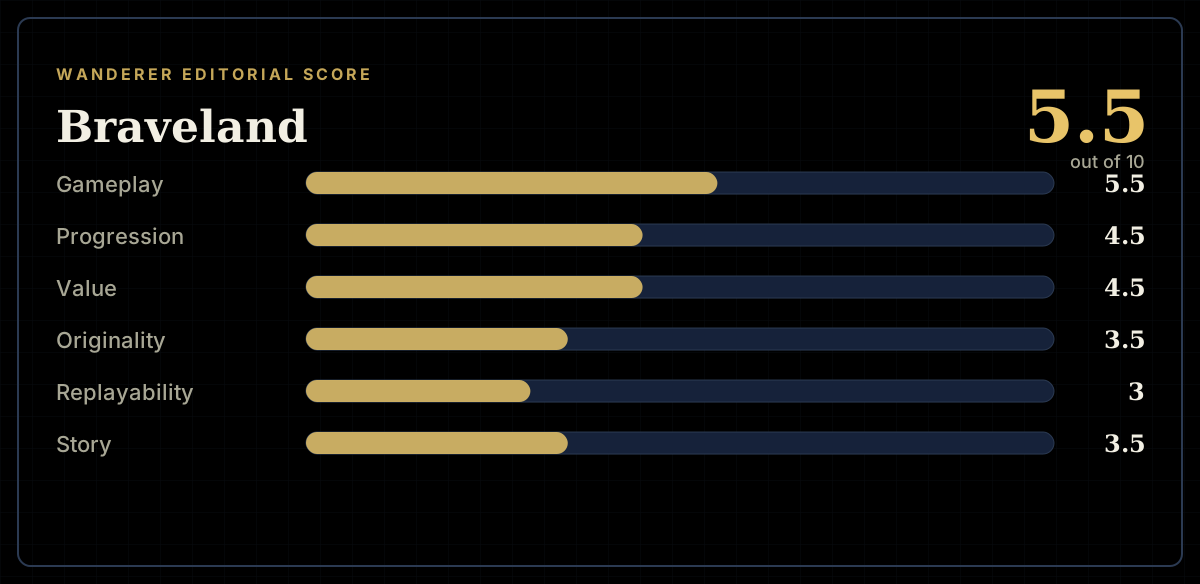
How the review scores each part of the gameWanderer Editorial -
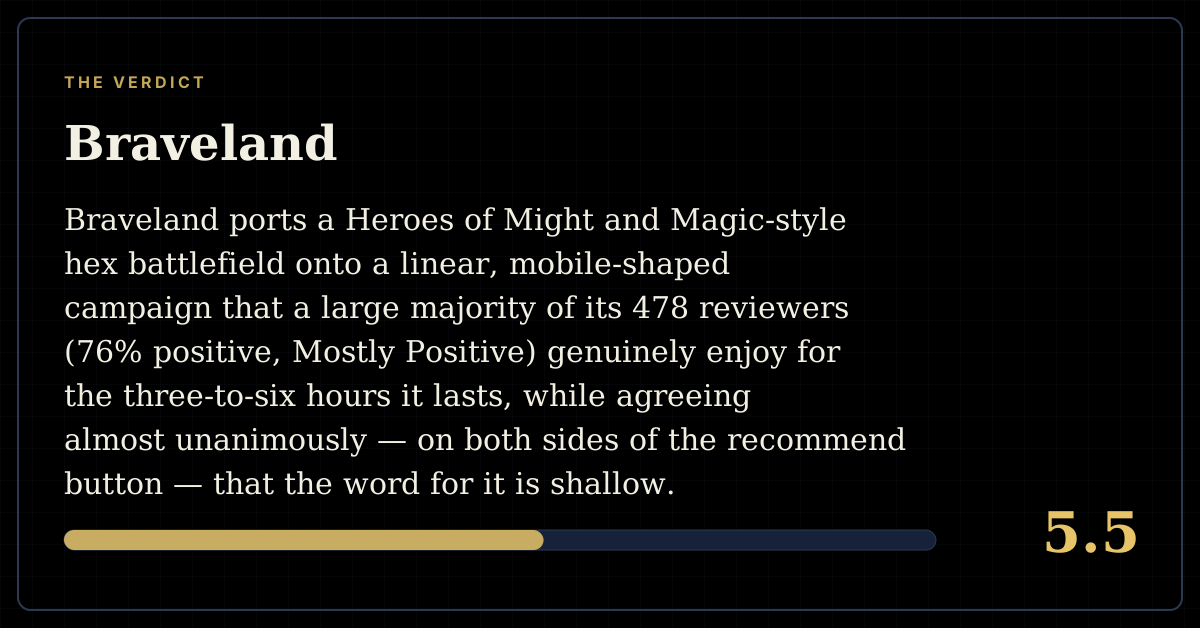
The short versionWanderer Editorial