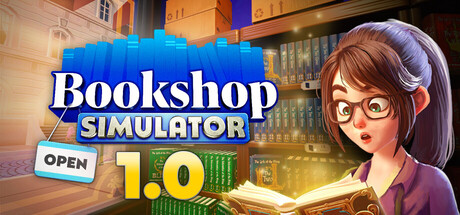
Game review
Bookshop Simulator
5.5 / 10
- Developer
- Blep Games
- Publisher
- Blep Games
- Released
- 20 July 2026
- Platforms
- [Windows]
- Genre
- Simulation
- Monetisation
- Paid
- Players
- Single-player
The short version
Bookshop Simulator lets players stock shelves, order inventory, and run a growing chain of literary-themed stores, developed and published by Blep Games. It launched into Early Access in September 2025 to a warm reception and graduated to a 1.0 release in July 2026, and the reviews sampled here — 92% positive across roughly 1,500 total reviews — still lean firmly favourable. Fans love the parody book titles, the collectible shop cats, and the low-stress pace, with many reporting dozens of relaxing hours spent decorating and restocking. But a meaningful and detailed minority of reviewers describe a shallow core loop that stops evolving after the first few hours, customer NPCs with no real personality, and a 1.0 update that introduced visual bugs and performance issues some say made the game feel worse than its Early Access build. It's a comfortable, well-liked cozy sim for the right mood, let down by a ceiling on its own depth.
Biggest strengths
- Consistently praised, clever parody book titles that riff on real bestsellers, called out as one of the game's most charming touches
- Collectible cats for each store location draw repeated, specific affection from reviewers
- A genuinely relaxing, low-pressure pace that multiple reviewers say works well for winding down or as a low-stimulus, low-stress game
Biggest weaknesses
- A significant share of reviewers say the core loop — restock, sell, reorder — stops evolving within the first few hours and never develops real depth or challenge
- Customer NPCs are repeatedly described as lifeless, buying books with no visible preference or personality, sometimes several copies of the same title at once
- The 1.0 update introduced new bugs for some reviewers, including harsh blue lighting at night, menu and text-overlap issues, and performance problems at higher store levels
Who it's for: Fans of cozy, low-stakes shop-management sims who want something to half-focus on for an hour at a time, especially readers who'll enjoy the parody book titles; less suited to players wanting the deeper systems or customer interactions of genre peers.
Our recommendation: A solid pick on sale for cozy-sim fans who know what they're getting into — a relaxing but fairly shallow loop; those hoping for the depth or NPC personality of similar bookshop sims should temper expectations, and anyone burned by post-launch bugs may want to wait for a patch or two.
5.5 / 10
Stocking Shelves, Collecting Cats, and Reading the Fine Print
Bookshop Simulator puts players behind the counter of a small bookstore, ordering inventory, licensing titles to sell, stocking shelves, and ringing up customers, with profits funding decoration, staff, and eventually entirely new store locations, developed and published by the small studio Blep Games. It launched into Early Access in September 2025, spent roughly ten months building a following there, and exited to a full 1.0 release in July 2026 — a trajectory that shows up directly in the reviews, several of which are explicitly framed as "before and after" comparisons of the two versions.
Reception remains strong overall: 92% positive across roughly 1,500 total reviews at the time of writing. An English-language sample pulled for this piece (100 reviews: 76 positive, 24 negative) tracks that split closely, and both sides of the sample are detailed enough to paint a clear, consistent picture of what works and what doesn't.
The Cozy Hook: Cats, Book Puns, and a Low-Pressure Pace
The single most consistently mentioned draw is the game's sense of humour, specifically its parody book titles — reviewers repeatedly single out jokes like "Harry Fodder" as genuinely funny, trademark-safe riffs on real bestsellers that reward browsing the shelves just to read the spines. Collectible cats, one per store location, come up almost as often, with multiple reviewers describing them as an unexpected emotional highlight, right down to small animation details like their ears twitching while they eat.
Beyond the theming, reviewers consistently praise the game's pace. Several describe it as ideal for winding down, calling it low-stress, low-stimulus, or simply "vibes" — a handful specifically mention it as helpful for disabled or neurodivergent players who want a game with no real pressure or fail state. The addition of new store locations, including Japan- and Paris-themed settings, is cited by several reviewers as a welcome way to keep the loop feeling fresh once the first shop has been fully decorated, and a genuinely responsive developer — active on Discord and visibly patching based on player feedback — earns its own specific praise.
Where the Depth Runs Out
Set against that goodwill is a large, detailed body of criticism that centres on one consistent complaint: the game doesn't develop past its opening hours. Multiple reviewers describe the loop — restock shelves, sell books, reorder, repeat — as shallow to the point of feeling like a "spreadsheet simulator" once the initial novelty wears off, with customers who buy indiscriminately, sometimes purchasing several copies of the exact same title, regardless of price or stock levels. Customer NPCs draw particularly pointed criticism for having no visible personality or preferences beyond an optional, easy-to-miss "recommend a book" interaction; several reviewers directly and unfavourably compare this to genre peer Tiny Bookshop, which offers actual customer conversations and stories.
A second cluster of complaints centres specifically on the 1.0 update, which more than one reviewer says made the game feel worse rather than better. Complaints include jarringly blue lighting and shadows that appear at night, menus with overlapping text or that can't be exited, and performance problems — crashes, glitches, and heavy memory use — that several reviewers say appear specifically once a store reaches around level 20. A few reviewers who were happy with the Early Access build say they can no longer recommend the game in its current 1.0 state, while others note the multi-location system undercuts its own appeal: opening a second store, several say, effectively means neglecting and losing money on the first one rather than building a genuine chain. Smaller, recurring quality-of-life complaints include the lack of a dedicated storage room for overstocked books and limited customization consistency (some decor items support colour-matching, others don't). One reviewer also raised, without certainty, a suspicion that some of the game's art assets may be AI-generated — a specific, documented concern rather than a universal one, but worth noting as part of the review record.
A Comfortable, Well-Liked Sim With a Ceiling
At a base price of roughly NZ$23 (currently discounted to around NZ$17.61), value opinions largely track how far into the loop a given reviewer got. Players who stayed in the early hours — decorating a single shop, discovering new book titles, enjoying the cats — tend to report dozens of relaxing hours and call it a fair or even generous price for the genre. Reviewers who pushed further, into multiple locations or higher store levels, are more likely to report the loop wearing thin or running into the 1.0-era bugs, and correspondingly more likely to feel the price outpaces what the game ultimately offers.
Verdict
Bookshop Simulator has real, specific charm — a genuinely funny theme, an appealing collectible-cat hook, and a pace that a wide range of reviewers say helps them relax — built by a developer reviewers describe as actively listening and patching. What keeps it from a stronger recommendation is a shallow core loop that a substantial share of reviewers say stops growing almost as soon as it starts, paired with a rocky 1.0 launch that introduced bugs some feel outweigh the improvements over its well-received Early Access run. For players who want a low-pressure, half-focused game to sit with for an hour and don't mind bugs that may or may not be patched, it delivers; players hoping for the deeper simulation or NPC personality of its closest genre peers should look elsewhere or wait to see how post-launch support shakes out.
Pros and cons
Pros
- Consistently praised, clever parody book titles that riff on real bestsellers, called out as one of the game's most charming touches
- Collectible cats for each store location draw repeated, specific affection from reviewers
- A genuinely relaxing, low-pressure pace that multiple reviewers say works well for winding down or as a low-stimulus, low-stress game
- Multiple store locations (including Japan and Paris settings) give players who enjoy the loop a way to keep expanding without starting over
- Reviewers highlight a responsive developer active on Discord and visible in patch notes
Cons
- A significant share of reviewers say the core loop — restock, sell, reorder — stops evolving within the first few hours and never develops real depth or challenge
- Customer NPCs are repeatedly described as lifeless, buying books with no visible preference or personality, sometimes several copies of the same title at once
- The 1.0 update introduced new bugs for some reviewers, including harsh blue lighting at night, menu and text-overlap issues, and performance problems at higher store levels
- Managing a second or third location is criticized for breaking the game's pacing, forcing players to effectively neglect earlier stores rather than genuinely growing a chain
- No dedicated storage room for overstocked books is a small but frequently repeated quality-of-life complaint
Screenshots
-
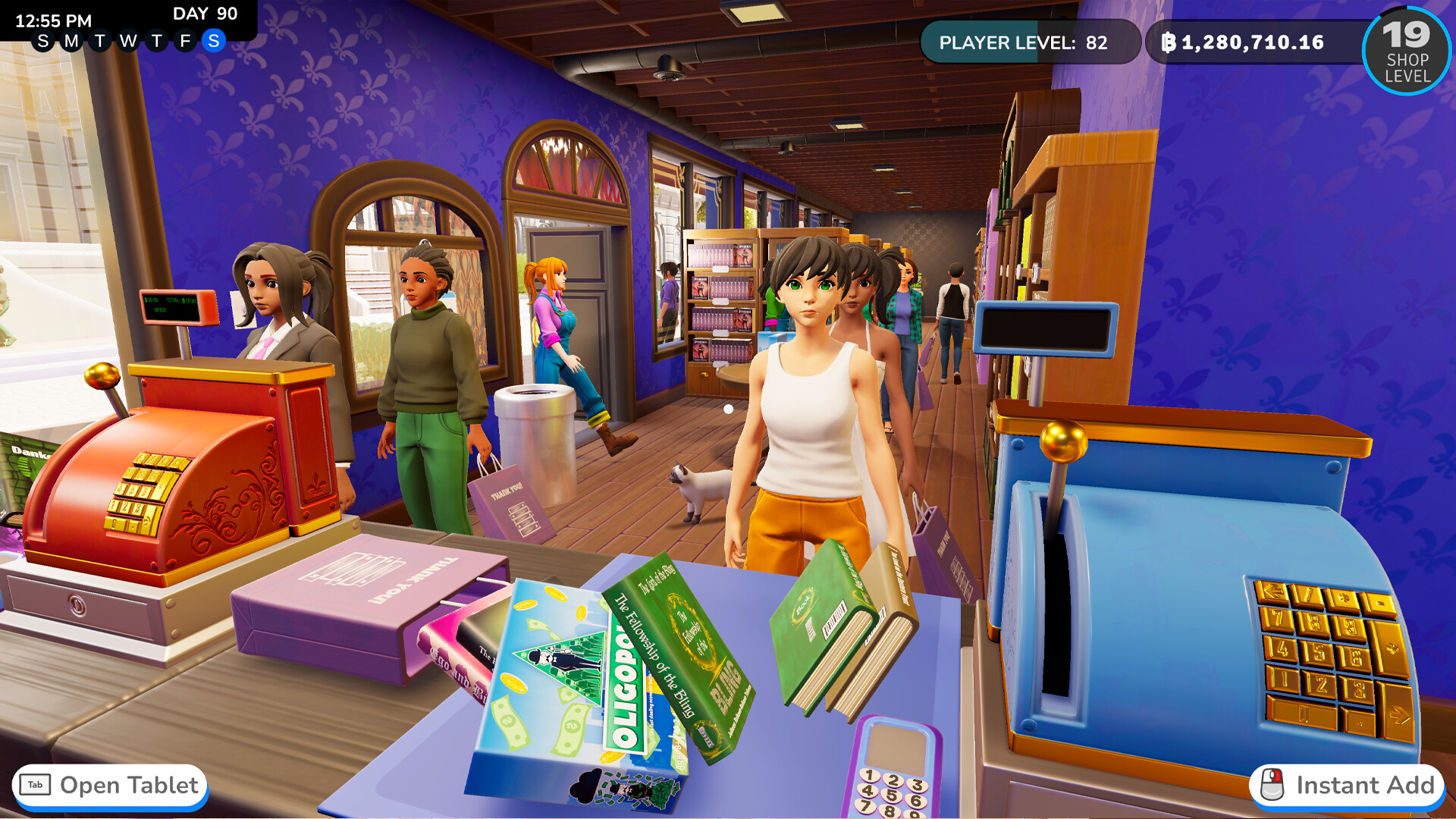
A busy checkout counter, the kind of scene reviewers say gets repetitive once customers stop feeling distinct from one anotherBlep Games -
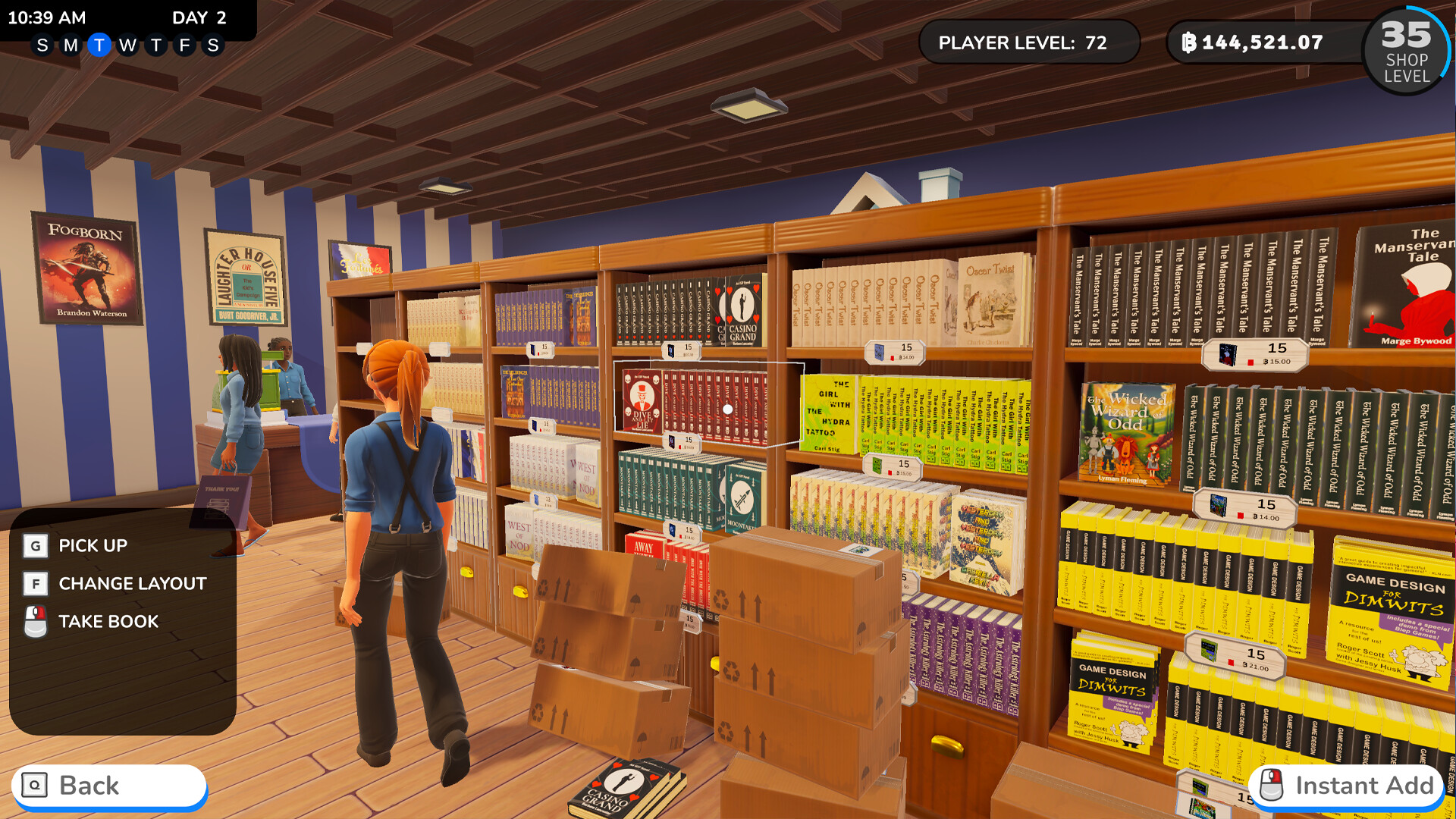
Restocking shelves stacked with the parody book titles reviewers repeatedly call the game's best jokeBlep Games -
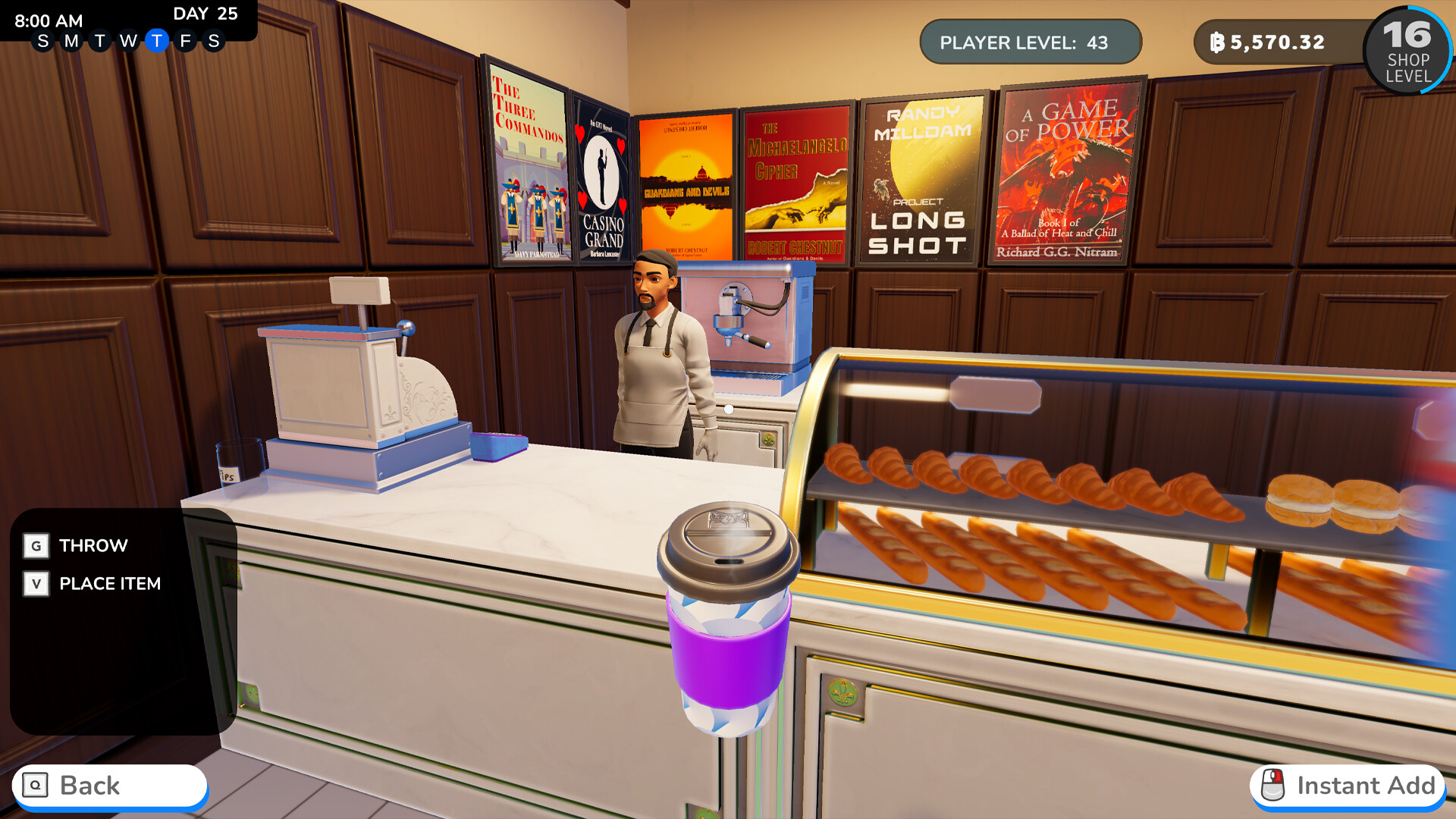
The café counter, one of the unlockable expansions some reviewers say adds welcome variety to the loopBlep Games -
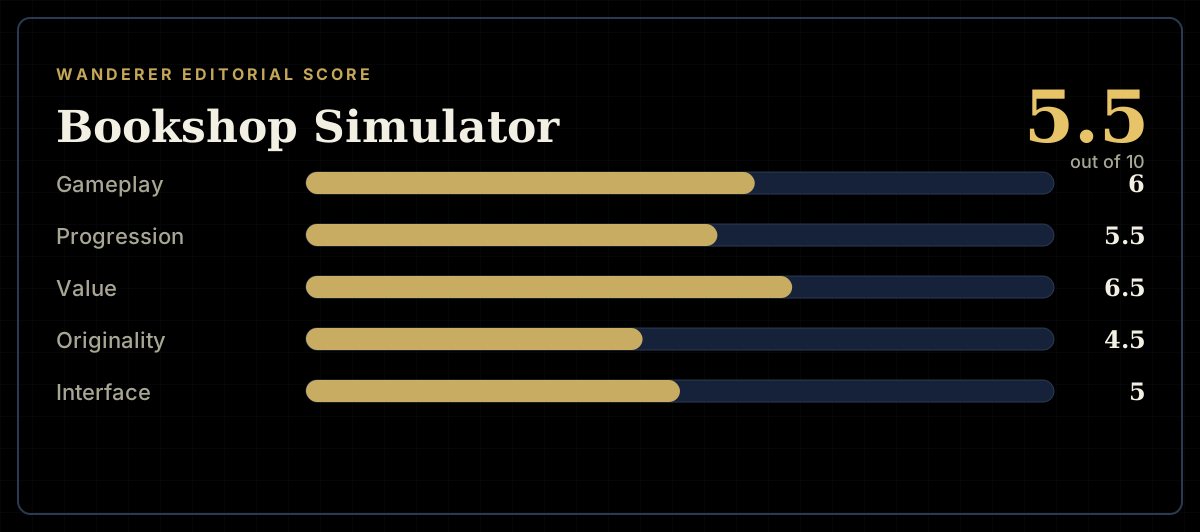
How the review scores each part of the gameWanderer Editorial -
The short versionWanderer Editorial