Game review
Blacksmith Master
4.4 / 10
- Developer
- Untitled Studio
- Publisher
- Hooded Horse
- Released
- 15 May 2025
- Platforms
- [Windows, Mac, Linux]
- Genre
- Simulation
- Monetisation
- Paid
- Players
- Single-player
The short version
Blacksmith Master, developed by Untitled Studio and published by Hooded Horse, puts players in charge of a medieval smithy, mining ore, smelting ingots, forging weapons and tools, hiring staff, and fulfilling merchant orders. It's the studio's follow-up to the well-regarded Tavern Master, and that lineage is central to how nearly every reviewer talks about it, for better and worse. Reception sits at Very Positive across 1,347 reviews, and a large English-language sample pulled for this piece (100 reviews: 55 positive, 45 negative, an unusually even split for a Very Positive title) shows why the headline score doesn't tell the whole story. The early and mid-game loop of expanding production, optimising worker assignments, and watching a chaotic workshop turn efficient earns real, consistent praise. But an enormous share of both positive and critical reviews converge on the same complaints: logistics and worker-routing systems that become a micromanagement nightmare as the smithy grows, a late game that collapses into idle button-pressing with no real challenge or fail state, and a sense, especially among Tavern Master veterans, that this is a smaller, shallower game wearing a new coat of paint.
Biggest strengths
- The early and mid-game production loop, expanding from a couple of smelters into a full smithy, is repeatedly called genuinely satisfying and well-paced
- The game runs smoothly even with large numbers of workers and items on screen, with several reviewers specifically praising its technical optimisation
- Deep customisation of the shop's layout and decoration draws consistent praise, alongside a substantial achievement list for completionists
Biggest weaknesses
- Logistics and worker-routing systems are the most common complaint by far: assistants can only carry one item type at a time, can't be given clear priorities, and pathing is frequently described as illogical once a smithy grows past a few floors
- The late game is widely described as shallow and repetitive, turning into a one-button "wait and collect" loop with no real economic challenge, since going into debt carries no meaningful consequence
- Several reviewers, especially those who loved Tavern Master, feel this game strips out systems like staff needs, random events, and fires, leaving it feeling thinner and less alive than its predecessor
Who it's for: Fans of cosy production-chain management sims like Tavern Master or Manufacture King, especially those who enjoy achievement-hunting and optimisation over narrative depth.
Our recommendation: A satisfying and well-optimised sim for its first 15-20 hours, best bought on sale, with the understanding that logistics micromanagement and a thin late game are widely reported, unresolved Early Access issues.
4.4 / 10
From Tavern to Smithy, With the Same DNA
Blacksmith Master, developed and self-funded by Untitled Studio and published by Hooded Horse, drops players into a medieval smithy with a mine, a forest, and a merchant-driven economy to build up from scratch. Mine ore, smelt it into ingots, forge weapons, tools, and cooking utensils, hire and train assistants, and decorate a shop that grows from a single room into a multi-floor operation. It's an Early Access release, live since 15 May 2025, and it comes from the same small team behind Tavern Master, a connection that essentially every reviewer brings up unprompted, whether as the reason they bought it or the yardstick they're measuring it against. Reception currently sits at Very Positive across 1,347 total reviews. The English-language sample pulled for this piece (100 reviews: 55 positive, 45 negative) is far more evenly split than the overall score suggests, and reading through it reveals a game whose strengths and weaknesses are described in strikingly consistent terms by supporters and critics alike.
A Genuinely Satisfying Loop, At Least at First
Where Blacksmith Master succeeds, reviewers describe it in almost identical language regardless of which way their final recommendation lands: the early hours are engaging, the sense of building a chaotic single-smith operation into an efficient, multi-floor production chain is repeatedly called satisfying, and the game is praised for running smoothly even once dozens or hundreds of workers and items are moving around the screen at once, several reviewers single out the technical optimisation specifically. Customisation of the shop's layout and decor draws steady praise, and the substantial achievement list gives completionist-minded players a reason to keep going well past the point the core loop stops introducing anything new, with numerous reviewers logging 50, 100, even 200-plus hours specifically chasing 100% completion. Comparisons to Anno and other logistics-optimisation games come up more than once, with reviewers who enjoy puzzling out ideal worker ratios and production ratios describing real satisfaction in cracking the game's systems. For dedicated fans of the studio's earlier title, the familiarity is often framed as a selling point in itself: reviewers who loved Tavern Master describe getting hooked for many hours by the same core feedback loop applied to a new setting, and more than one reviewer explicitly credits the solo or small-team developer with a level of care and community responsiveness during Early Access that they say puts larger studios to shame.
Logistics Micromanagement and a Short, Thinning Late Game
If there's one thing this review sample makes unmistakably clear, it's that logistics and worker-routing frustration is the closest thing Blacksmith Master has to a universal flaw. Reviewer after reviewer, across both positive and negative reviews, describes the same specific problems: assistants can only be assigned to move a single item type at a time, meaning a smithy needs armies of narrowly specialised workers rather than a few flexible ones; there's no way to set clear item or destination priorities, so a worker restocking shop shelves might instead spend all their time serving a merchant cart, leaving shelves empty; and pathing is repeatedly called illogical, with workers walking across an entire floor or up and down stairs rather than waiting briefly for a nearer station to free up. Multiple reviewers describe reaching a point, often once a smithy spans more than a couple of floors, where managing these systems stops being interesting strategy and becomes pure busywork, checking and re-checking chest contents and worker assignments rather than making meaningful decisions. This complaint sits alongside a second, closely related one: a near-total absence of real challenge. Debt carries no meaningful penalty, resources are described as essentially infinite once basic income is established, and several reviewers note explicitly that there's no way to lose, which several found relaxing at first but eventually reported drained tension and purpose from later hours. Reviewers who came in as fans of Tavern Master are often the most pointed critics here, several describe missing systems they took for granted in the earlier game, staff needs, random events, fires to put out, and one reviewer flatly called this entry a reskin with a higher intricacy ceiling but a lower fun floor. Tied closely to both complaints is a consistent observation about pacing: many reviewers report having effectively "finished" everything the game has to offer within 10 to 20 hours, with anything beyond that representing repetition, unlocking new metals or woods that function identically to what came before, rather than grinding toward 100% achievement completion for its own sake. One reviewer described completing everything meaningful by day seven while sitting on a large gold surplus; another called the game "a 10 hour mini-game" stretched by achievement hunting into many more. This isn't universally treated as damning, several reviewers frame a tight, well-paced 10 to 20 hour experience as a perfectly reasonable scope for the genre and price point, and note that the developer is actively patching and expanding the game during Early Access, addressing at least some of the AI pathing and stockpile-size complaints already. But it does mean expectations matter a great deal: reviewers going in expecting Tavern Master-level scope and systems depth are consistently more disappointed than those treating it as a shorter, more focused production-chain puzzle.
Fair Value on Sale, Harder to Justify at Full Price
At NZ$29.99, opinion on value splits cleanly around discounting. Reviewers who bought during a sale, several specifically cite a roughly NZ$15-and-under price point, are considerably more forgiving of the game's late-game repetition and logistics frustrations, framing the purchase as good value for a relaxing 15 to 20 hour experience regardless of its rough edges. Reviewers who paid full price are more likely to call the cost steep relative to the amount of genuinely new content on offer, particularly given how many describe exhausting the game's systems within the first quarter of their total playtime. Because this is an actively developed Early Access title with a track record, per multiple reviewers, of listening to feedback and shipping fixes, several reviewers frame their purchase explicitly as support for future updates rather than a verdict on the game as it exists today, a dynamic increasingly common for management sims funded through ongoing Early Access sales.
Verdict
Blacksmith Master gets the hardest part of a production-chain management sim right: the early and mid-game loop of building a chaotic operation into a smooth, efficient one is genuinely satisfying, the game runs technically well even under heavy load, and the developer's Tavern Master pedigree shows in the care put into presentation and customisation. Where it struggles, consistently and specifically across dozens of reviews on both sides of the recommendation line, is in what happens once that early satisfaction wears off: a logistics and worker-routing system that becomes a micromanagement chore rather than a strategic challenge, a near-total absence of real risk or failure state, and a late game that many reviewers say runs out of new things to offer well before their playtime does. For fans of the genre willing to treat this as a tight 15-to-20-hour experience, especially at a discount, there's real satisfaction here. Players hoping for the fuller, more systemic depth of Tavern Master, or a management sim that stays interesting for the long haul, should wait and watch how Early Access development addresses the logistics complaints that dominate this review sample.
Pros and cons
Pros
- The early and mid-game production loop, expanding from a couple of smelters into a full smithy, is repeatedly called genuinely satisfying and well-paced
- The game runs smoothly even with large numbers of workers and items on screen, with several reviewers specifically praising its technical optimisation
- Deep customisation of the shop's layout and decoration draws consistent praise, alongside a substantial achievement list for completionists
- Fans of the developer's previous game, Tavern Master, find plenty to like in the familiar production-and-optimisation formula applied to a new theme
- The developer is described as active and responsive, with reviewers noting regular updates addressing community feedback during Early Access
Cons
- Logistics and worker-routing systems are the most common complaint by far: assistants can only carry one item type at a time, can't be given clear priorities, and pathing is frequently described as illogical once a smithy grows past a few floors
- The late game is widely described as shallow and repetitive, turning into a one-button "wait and collect" loop with no real economic challenge, since going into debt carries no meaningful consequence
- Several reviewers, especially those who loved Tavern Master, feel this game strips out systems like staff needs, random events, and fires, leaving it feeling thinner and less alive than its predecessor
- Many reviewers report finishing everything the game has to offer within 10-20 hours, with further playtime spent purely on achievement grinding rather than new content
- The price is frequently called fair on sale but steep at full price for the amount of lasting content currently available
Screenshots
-
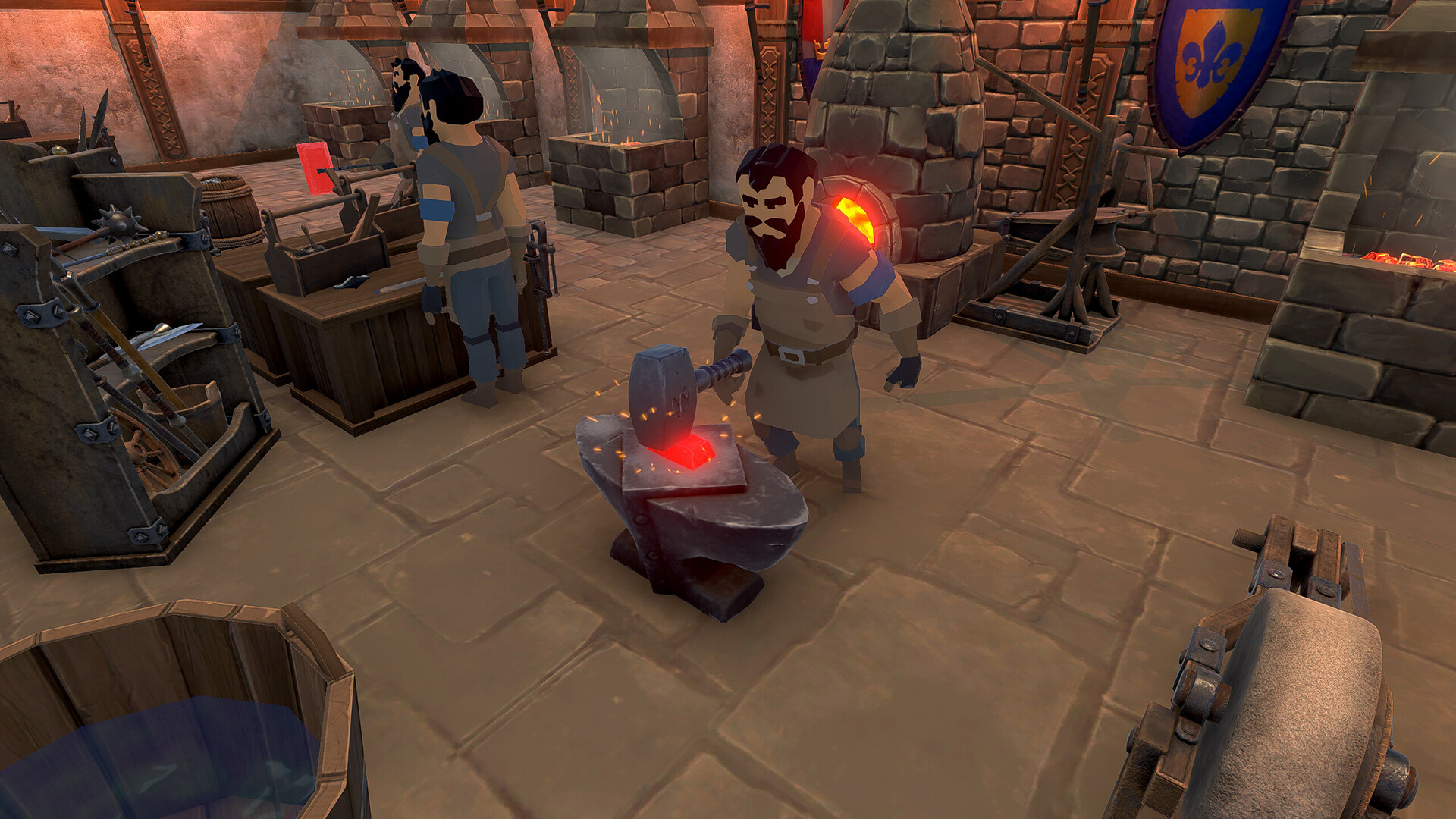
The forge, part of the early-game production loop reviewers call genuinely satisfyingHooded Horse -
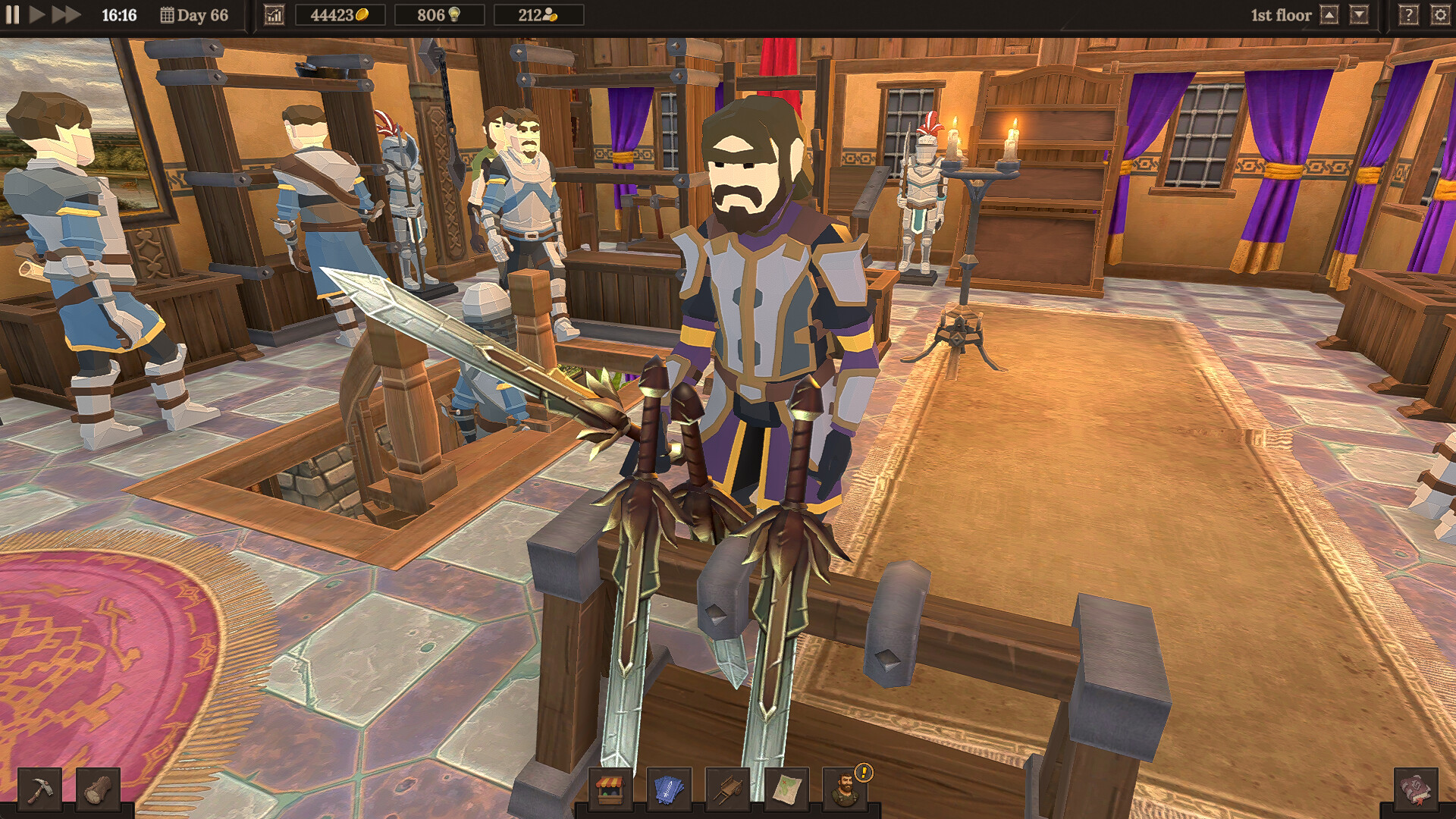
A fully decorated shop floor, the kind of customisation reviewers consistently praiseHooded Horse -
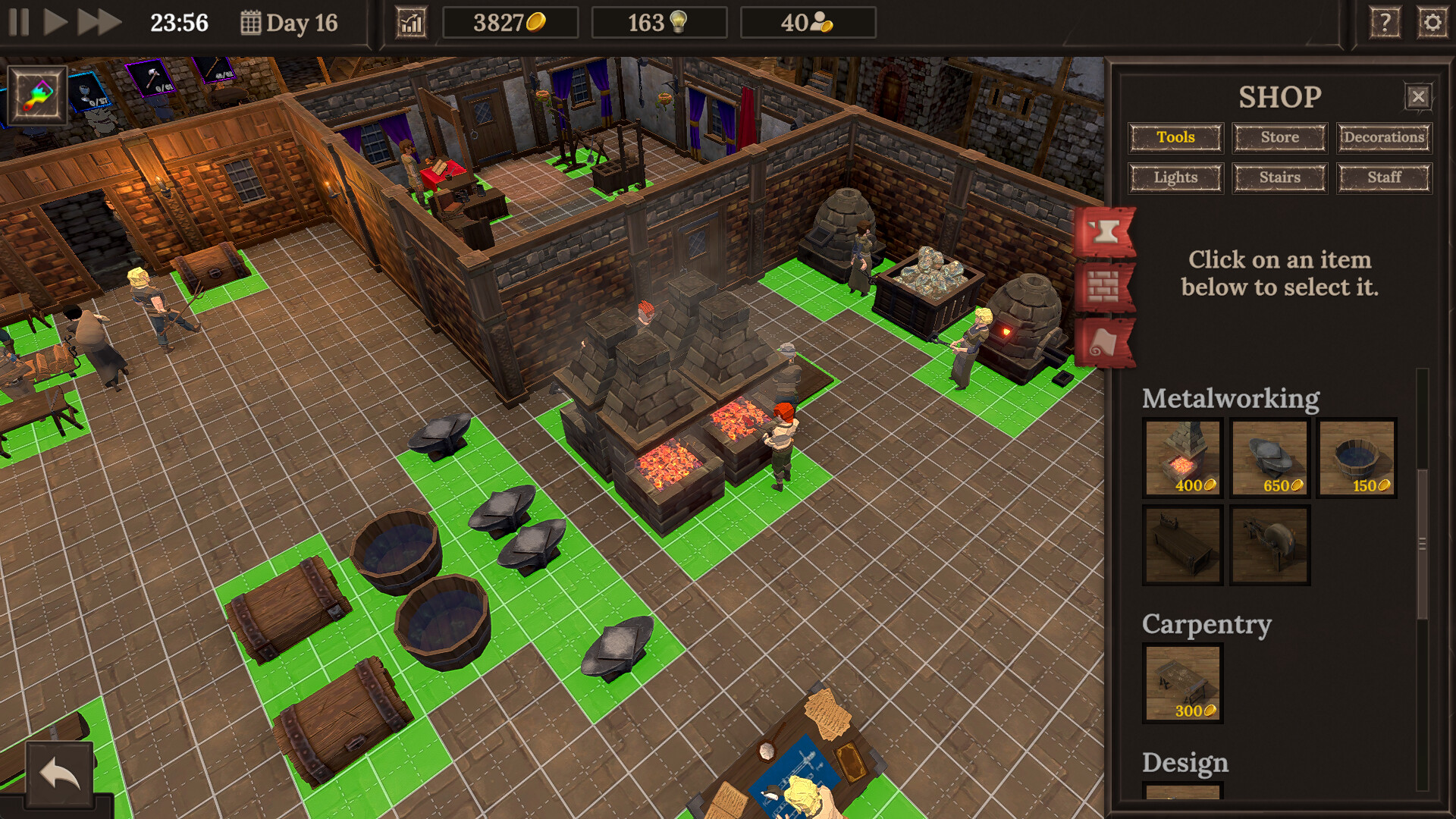
The shop-building interface, part of the logistics and layout systems reviewers found increasingly fiddly as their smithy grewHooded Horse -
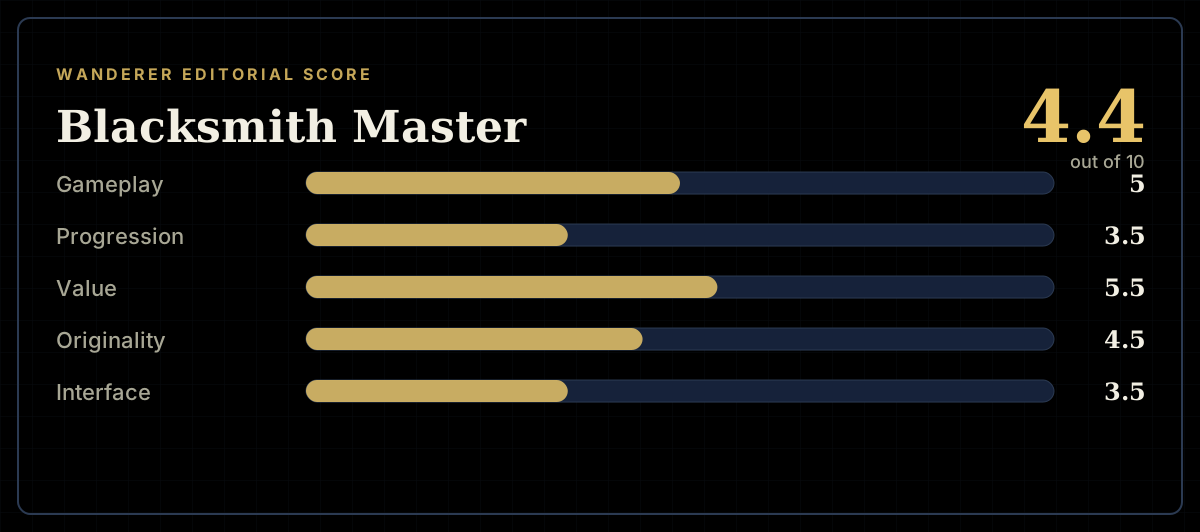
How the review scores each part of the gameWanderer Editorial -
The short versionWanderer Editorial