Game review
Beggar's Road
6 / 10
- Developer
- Coldframe Studios
- Publisher
- Coldframe Studios
- Released
- 23 June 2026
- Platforms
- Windows
- Genre
- Adventure, Indie, RPG
- Monetisation
- paid
- Players
- false
The short version
Biggest strengths
- A fun, darkly comic choose-your-own-adventure structure that several reviewers enjoyed completing in a single sitting with a partner or friend
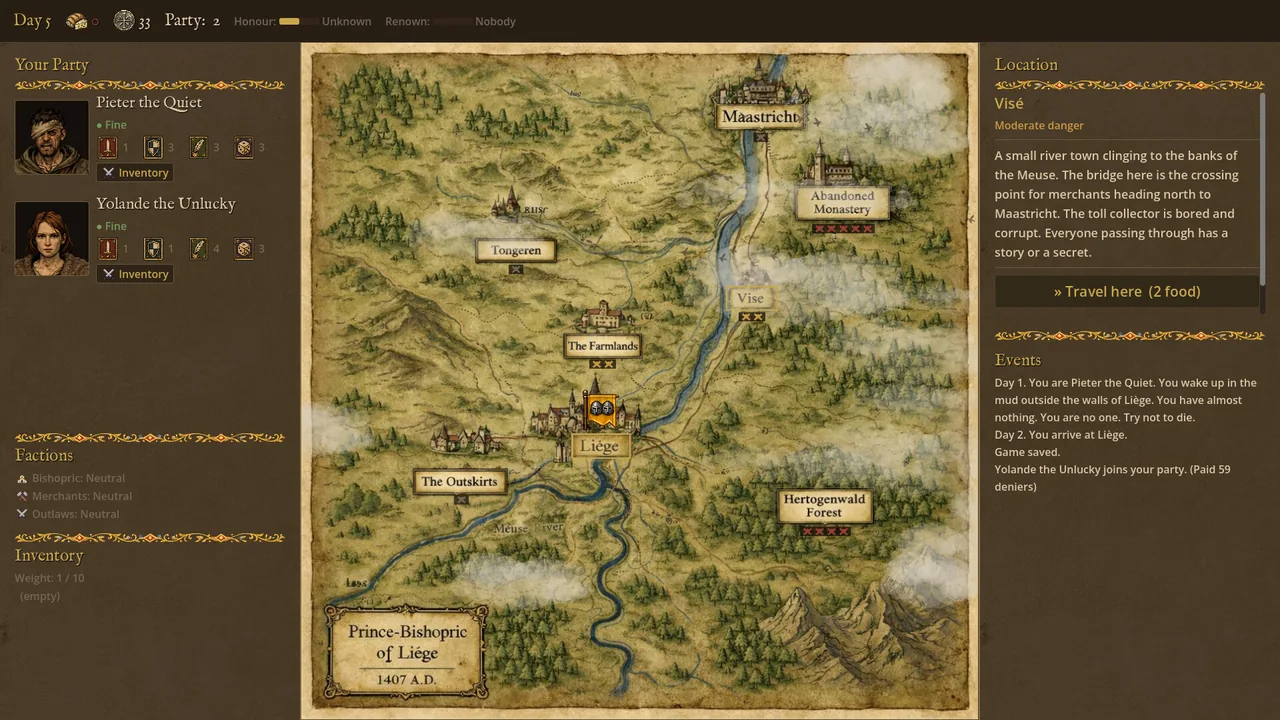
- An interesting, Baroque-inspired art style that most reviewers liked even after learning it was developer-disclosed as AI-rendered
- Reasonably priced for its short runtime, with several reviewers explicitly calling it a fair deal at its low asking price
Biggest weaknesses
- A central tavern dice minigame, Beggar's Bluff, that multiple reviewers found exploitable enough to trivialize the game's economy and difficulty entirely
- Very short overall length, most reviewers finished the main story in two to five hours, with several noting little meaningful content beyond the initial areas
- Reported broken quest lines and recycled dialogue used to pad out interactions, according to at least one detailed critical review
Who it's for: Fans of short, cheap choose-your-own-adventure games looking for a couple of hours of dark comedy and faction politics, more than anyone hoping for a genuinely punishing survival roguelike or deep RPG systems
Our recommendation: recommended
6 / 10
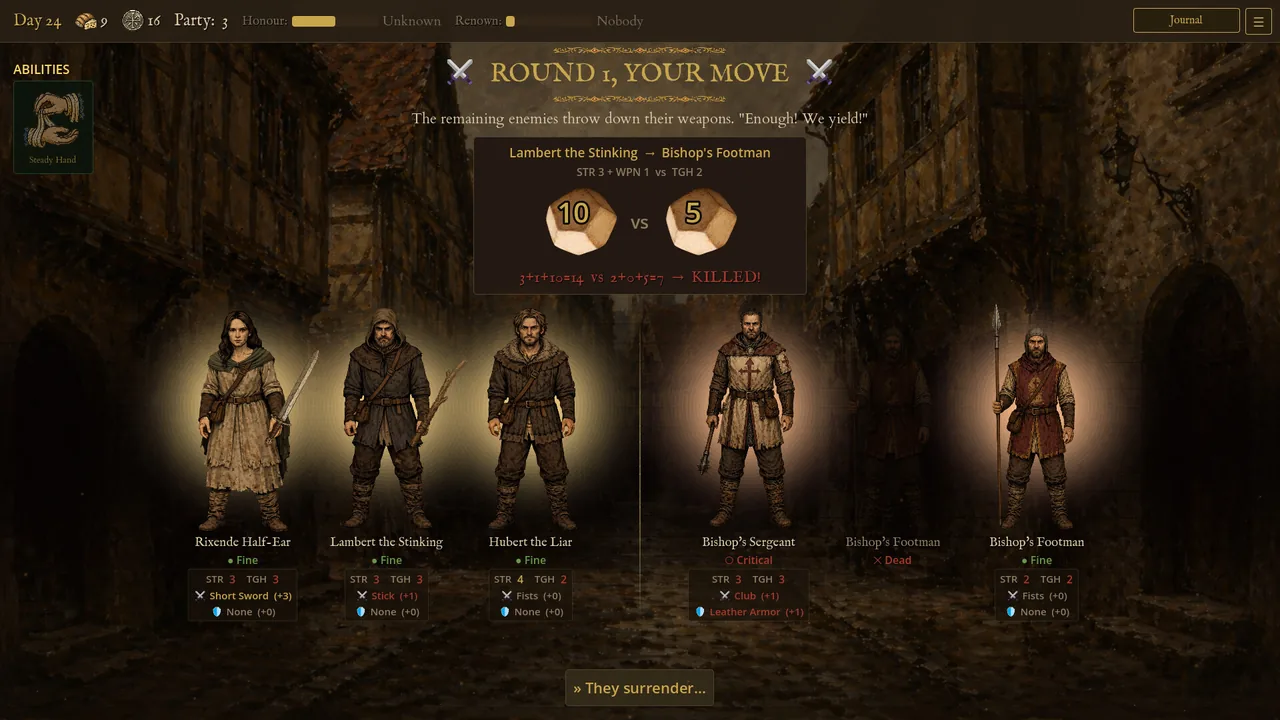
Beggar's Road released on Steam on June 23, 2026, a darkly comic, choose-your-own-adventure medieval roguelike from Coldframe Studios in which players travel between towns, recruit desperate companions, and navigate scarce resources and shifting alliances between bishops, merchants, and bandits. Its 34-review English pool lands at Mostly Positive (25 up, 9 down, 74%), and the reviews are detailed and often unusually thoughtful, laying out a game whose core premise lands well even as several specific systems and questions about its production undercut the experience for a meaningful chunk of players.
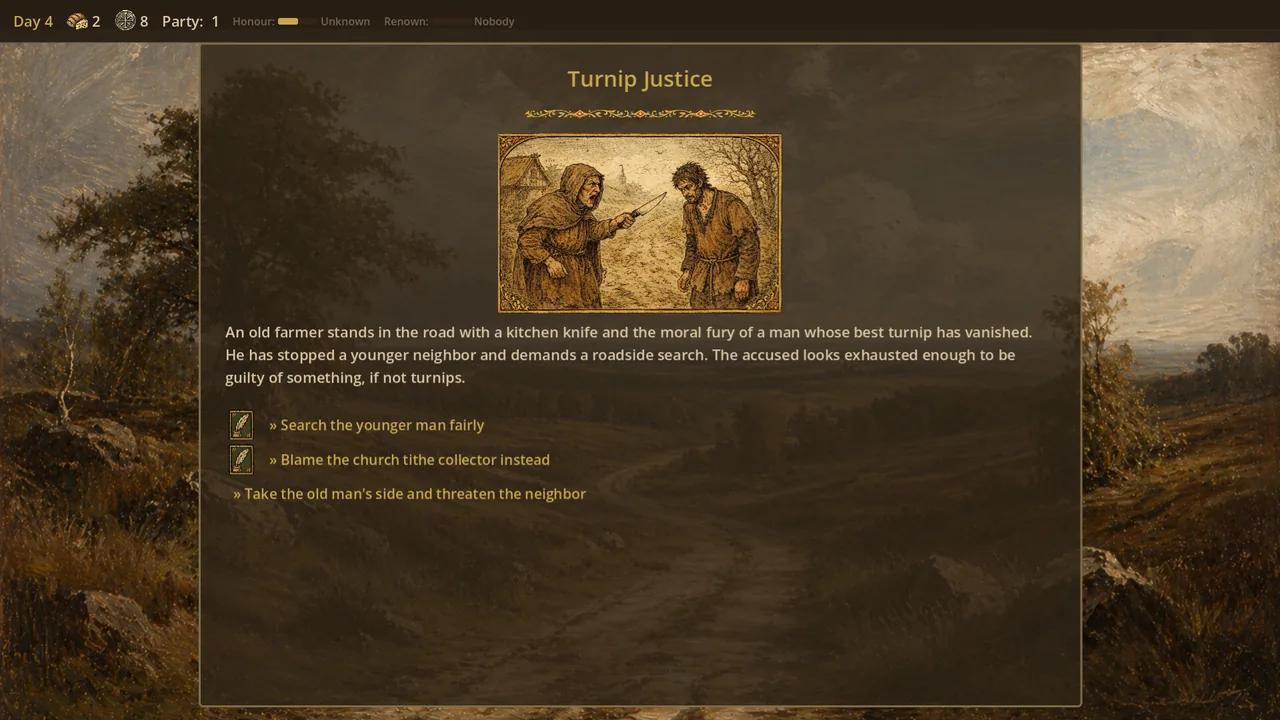
The choose-your-own-adventure structure and dark comic tone draw genuine, if modest, enthusiasm from most of the pool. One reviewer who played through with their spouse called it "a fun choose your own adventure story," while directly comparing expectations against Roadwarden and concluding it's "certainly no Roadwarden," landing at a "Neutral" overall verdict despite enjoying their few hours with it. Another reviewer, writing from a budget-conscious perspective, put it simply: "for 5 bucks it's worth it," praising the art style, music, and sound effects while being upfront that they'd seen "pretty much everything there was to see" within a short playtime. A third reviewer specifically praised the game's handling of randomness, saying it "wasn't difficult for the sake of being difficult" the way a genre peer they named was, calling the RNG "game-friendly" rather than punitive, and appreciating that a party member's death didn't end their run outright since they had a second companion to fall back on.
The tavern dice minigame, Beggar's Bluff, is where the pool's sharpest and most technical disagreement lives. One detailed negative review laid out a specific rules complaint: players are always forced to make the first move in a Liar's Dice-style bidding structure, and can't match an opponent's raise using the same die face value they used, only exceed it, a rule the reviewer called fundamentally unfair to the player. That mechanical complaint connects directly to a much larger issue several other reviewers independently identified: the minigame is exploitable enough to break the game's intended difficulty curve entirely. One reviewer wrote bluntly that on day one, a player can already "amass more money than you will ever need, max out your Virtue, and buy the best weapon in the game," describing how this "effectively removed any challenge from the game" across two full playthroughs. Another reviewer reached the same conclusion from a more sympathetic angle, recommending the standard difficulty be increased specifically because it's "very easy" once a player understands the dice game, while still recommending the game overall as "a nice entry point" at its asking price.
A separate, more detailed critical review raised a different structural complaint about the beggar premise itself failing to create real stakes: despite the game's framing around desperation and classism, the reviewer found "classism doesn't bar you from anything as far as I could tell," meaning the player is never truly desperate enough to need crime as the story implies, undermining the moral-quandary framing the developers clearly intended. That same reviewer noted the entire main questline could be completed well before any of the game's harder long-term achievements would require, describing the amount of random battle-encounter content as "shockingly low" once the main path was exhausted.
The most serious and most carefully-argued negative reviews raise concerns about the game's underlying production that are worth reporting transparently rather than glossing over. One reviewer noted plainly that "the Developers mention that the art is AI rendered," a disclosure the reviewer said was "certainly obvious" but that they personally liked anyway, given how well the Baroque-inspired look suited the game's tone. Building on that same developer disclosure, other reviewers went further with their own suspicions: one reviewer stated flatly that in their belief "AI was used in every facet of the creation of this game," extending that speculation even to the formatting of community-page replies, while separately reporting broken quest lines and dialogue they described as constantly recycled to pad out interactions. Another reviewer was more measured about the same underlying question, writing they were "a bit dubious that the game was not made with more AI than what's it's saying it was," but explicitly noted they couldn't prove it and chose to evaluate the game as though it were made by human hands. It's important to be precise about what's actually verified here: the developers themselves disclosed AI-rendered art, which we can report as fact; the broader claims about AI-generated writing and community engagement are reviewer speculation, some of it explicitly labeled as unprovable by the reviewers making it, and we treat it accordingly as attributed suspicion rather than an established claim about the game.
One more thing worth flagging for prospective buyers specifically: one reviewer who purchased the game after enjoying a free demo reported that the paid full release added disappointingly little beyond what the demo already offered, describing roughly three additional characters, three additional quests, and one additional faction as the entirety of the paid expansion over the free preview. If accurate, that's a meaningful data point for anyone deciding whether to try the demo first, since it suggests the core experience most reviewers are rating, and largely enjoying, may already be substantially available to sample before spending anything at all.
Taken together, Beggar's Road is a short, inexpensive game whose central choose-your-own-adventure premise and dark comic tone land well enough to earn a genuine, if qualified, recommendation, provided buyers go in with expectations calibrated to its price and runtime rather than to a deeper survival RPG. The exploitable tavern minigame and thin post-main-quest content are real, fixable design issues rather than dealbreakers on their own, but combined with legitimate, partly developer-confirmed questions about how much of the game's content was AI-generated, this is a title best suited to players specifically drawn to a quick, cheap dose of medieval faction intrigue rather than anyone expecting a fully realized, hand-crafted world.
Pros and cons
Pros
- A fun, darkly comic choose-your-own-adventure structure that several reviewers enjoyed completing in a single sitting with a partner or friend
- An interesting, Baroque-inspired art style that most reviewers liked even after learning it was developer-disclosed as AI-rendered
- Reasonably priced for its short runtime, with several reviewers explicitly calling it a fair deal at its low asking price
- Game-friendly randomness that avoids feeling punitive, unlike some genre peers reviewers compared it against
Cons
- A central tavern dice minigame, Beggar's Bluff, that multiple reviewers found exploitable enough to trivialize the game's economy and difficulty entirely
- Very short overall length, most reviewers finished the main story in two to five hours, with several noting little meaningful content beyond the initial areas
- Reported broken quest lines and recycled dialogue used to pad out interactions, according to at least one detailed critical review
- Real, unresolved reviewer speculation, informed partly by the developer's own disclosure about AI-rendered art, about how much of the game's writing and art was AI-generated
Screenshots
-
Beggar's RoadImage: Coldframe Studios via Steam -
Beggar's RoadImage: Coldframe Studios via Steam -
Beggar's RoadImage: Coldframe Studios via Steam