
Game review
Atelier Lulua ~The Scion of Arland~
6.5 / 10
- Developer
- KOEI TECMO GAMES CO., LTD.
- Publisher
- KOEI TECMO GAMES CO., LTD.
- Released
- 20 May 2019
- Platforms
- Windows
- Genre
- RPG
- Monetisation
- Paid, with 29 separate DLC listings including multiple season passes
- Players
- false
The short version
Atelier Lulua follows Lulua, daughter of a previous series protagonist, as she pieces together an ancient alchemy book that gradually unlocks the game's deep item-synthesis system while reconnecting with characters from across the Arland subseries. It's a chill, no-time-pressure entry point that longtime fans and newcomers alike describe pulling them in for well over a hundred hours in many cases — undercut by a base price of NZD 76.49 stacked with 29 separate DLC listings and multiple overlapping season passes that at least one detailed reviewer calls straightforwardly exploitative.
Biggest strengths
- A deep, genuinely engaging alchemy and item-synthesis system built around gradually deciphering an ancient book, which reviewers across the corpus describe as compelling enough to sink 70-plus hours into on its own
- A warm, heartwarming slice-of-life story and cast that multiple reviewers say left them smiling throughout, explicitly welcoming to players who've never touched an Atelier game before
- Distinctive, widely-praised music, with several reviewers singling out specific tracks (the "Wagon Atelier" theme is mentioned repeatedly) as genuine highlights
Biggest weaknesses
- A detailed, pointed review accuses Koei Tecmo of releasing "another season pass" after "another season pass," with DLC content still appearing outside of season pass coverage and a Deluxe Edition sold at full price with no upgrade path for existing base-game owners — confirmed structurally by 29 separate DLC listings on the store page
- A specific, documented technical bug stretches the image on non-16:9 monitors in fullscreen mode, requiring third-party tools like Lossless Scaling or Borderless Gaming to work around
- A separate reported Nvidia-specific frame-rate issue requires manually disabling V-sync through the Nvidia control panel rather than in-game settings
Who it's for: JRPG and crafting-system fans, including newcomers to the Atelier series specifically, who don't mind budgeting carefully around its DLC structure.
Our recommendation: A genuinely excellent alchemy RPG at its core — buy the base game only, skip the season passes and Deluxe Edition unless a specific piece of content is worth the extra cost to you directly.
6.5 / 10
What it is
Atelier Lulua ~The Scion of Arland~ is the fourth entry in the Arland subseries of Koei Tecmo's long-running Atelier franchise, casting players as Lulua, daughter of a previous protagonist, Rorona. The framing hook is a mysterious, ancient alchemy book that gradually reveals new recipes and synthesis possibilities as Lulua explores the world and interacts with returning characters from across the earlier Arland games — a structure multiple reviewers describe as "a love letter to Arland fans" while remaining genuinely approachable for players who've never touched the series before. Unlike earlier Atelier entries, there's no time-management pressure forcing players to rush through the story before an in-game clock runs out, a change several reviewers specifically credit with making this a noticeably more relaxed, welcoming entry point.
It released on 20 May 2019 at a base price of NZD 76.49, with 29 separate DLC listings on its Steam store page including multiple overlapping season passes. Its 135-review English corpus sits at a strong Very Positive (110 to 25), and reading through it reveals two very different, largely unconnected conversations happening in the same space: one about the core game's genuine quality, and one about how it's been sold.
A genuinely compelling core loop
The alchemy and synthesis system draws real, specific devotion. Reviewers describe getting lost in crafting for its own sake — "I could really just synthesize all day while listening to that song," writes one, referring to the game's music alongside the crafting loop it accompanies. Playtimes across the corpus run remarkably high for a single-playthrough JRPG: multiple reviewers report figures in the 70-to-220-hour range, several explicitly framing that investment as evidence of genuine, sustained engagement rather than padding. The story draws consistently warm praise for its tone — "the most cheerful, relaxing game that I've probably ever played," in one reviewer's words — while still engaging, per another detailed review, with real questions like "what is your purpose in life?" beneath its cheerful surface. Several first-time Atelier players specifically credit this entry with converting them into fans of the wider series, describing it as an unexpectedly strong introduction despite being a fourth installment.
A monetisation structure several reviewers call predatory
Set against that genuine warmth is a specific, pointed complaint about how Koei Tecmo packaged and sold the game. One detailed review lays out the structure plainly and with visible frustration: "sell game at highest market price, sell season pass, sell another season pass, DLC comes outside season pass, sell another season pass, DLC comes outside season pass, deluxe edition comes at full price with no upgrade option" — concluding bluntly that "at this point it's theft." That's not an exaggerated characterisation once checked against the storefront itself: 29 separate DLC listings sit alongside the NZD 76.49 base game, including multiple season passes that, per the reviewer's account, didn't even cover all the DLC content that continued to release afterward. For a genre where individual character and cosmetic DLC has become increasingly normalized, a structure this fragmented, on top of an already premium base price, is a legitimate value concern distinct from any complaint about the game's actual content or quality.
Real, specific technical issues
Beyond monetisation, this review needs to flag two concrete technical problems independently documented by reviewers. The game reportedly stretches its image incorrectly in fullscreen mode on any monitor that isn't a standard 16:9 aspect ratio, with one reviewer specifically recommending third-party tools like Lossless Scaling or Borderless Gaming as the only reliable fix rather than anything available in the game's own settings. A separate reviewer reports frame-rate problems specific to Nvidia hardware, resolved only by manually disabling V-sync through the Nvidia control panel rather than an in-game option — both fixes that shouldn't be necessary for a full-price release, even accounting for the game being several years old by the time these reports were filed.
What the achievement data confirms about the game's own depth
The completion curve across Atelier Lulua's 50 achievements gives useful shape to just how deep the core loop actually runs. Early story-event achievements sit in a healthy 55-80% range, confirming most buyers do engage seriously with the main narrative. But a cluster of "SYSTEM" achievements — tied, based on their naming, to specific alchemy or gameplay systems rather than story beats — sit much lower, in the 9-10% band, alongside full completion at 8.2%. That gap is a meaningful, positive signal about the game's actual depth: it suggests the synthesis system has enough genuine complexity and optional mastery available that only a dedicated fraction of players fully explore it, which lines up with the extraordinarily high playtimes (many well past 70 hours) reported by the game's most devoted reviewers. In other words, the achievement data corroborates that this isn't a shallow crafting system dressed up with a big number — there's real, substantial depth here for players willing to dig into it.
Judging the DLC complaint fairly
It's worth being precise about what the monetisation criticism is and isn't arguing, since the distinction matters for how seriously to weigh it. No reviewer in this corpus claims the base game itself is incomplete or artificially gated behind DLC purchases — the complaints about story, characters and the crafting system are about a fully realized experience achievable from the base purchase alone. The objection is specifically about the accumulation of season passes and add-on content released in a way that, per the detailed critical review, outpaced what any single pass actually covered, combined with a full-price Deluxe Edition offering no discounted path for existing owners to upgrade into it. That's a criticism of Koei Tecmo's broader packaging and pricing strategy around the Atelier line specifically, not evidence that Atelier Lulua as a base game is a lesser or incomplete product — a distinction worth keeping in mind when deciding what, if anything, beyond the core release is actually worth purchasing.
Verdict
Atelier Lulua's core alchemy-and-storytelling loop is genuinely excellent, earning the kind of sustained, hundred-hours-plus devotion this lane rarely documents even among its most acclaimed picks. But the way Koei Tecmo chose to sell it — a premium base price stacked with nearly thirty separate paid add-ons across multiple overlapping season passes — is a real, specific business practice complaint that deserves equal weight in any purchase decision. Buy the base game for the alchemy and the story; think carefully before reaching for anything beyond it.
Pros and cons
Pros
- A deep, genuinely engaging alchemy and item-synthesis system built around gradually deciphering an ancient book, which reviewers across the corpus describe as compelling enough to sink 70-plus hours into on its own
- A warm, heartwarming slice-of-life story and cast that multiple reviewers say left them smiling throughout, explicitly welcoming to players who've never touched an Atelier game before
- Distinctive, widely-praised music, with several reviewers singling out specific tracks (the "Wagon Atelier" theme is mentioned repeatedly) as genuine highlights
- No time-management pressure unlike earlier Atelier entries, making it a notably more relaxed, newcomer-friendly structure according to multiple reviewers who compare it directly to prior series entries
Cons
- A detailed, pointed review accuses Koei Tecmo of releasing "another season pass" after "another season pass," with DLC content still appearing outside of season pass coverage and a Deluxe Edition sold at full price with no upgrade path for existing base-game owners — confirmed structurally by 29 separate DLC listings on the store page
- A specific, documented technical bug stretches the image on non-16:9 monitors in fullscreen mode, requiring third-party tools like Lossless Scaling or Borderless Gaming to work around
- A separate reported Nvidia-specific frame-rate issue requires manually disabling V-sync through the Nvidia control panel rather than in-game settings
- At least one long-time series fan finds protagonist Lulua's characterisation notably flatter than previous Arland protagonists, describing her personality as static "positive fluff" without meaningful development
Screenshots
-

Atelier Lulua ~The Scion of Arland~Image: KOEI TECMO GAMES CO., LTD. via Steam -

Atelier Lulua ~The Scion of Arland~Image: KOEI TECMO GAMES CO., LTD. via Steam -

Atelier Lulua ~The Scion of Arland~Image: KOEI TECMO GAMES CO., LTD. via Steam -
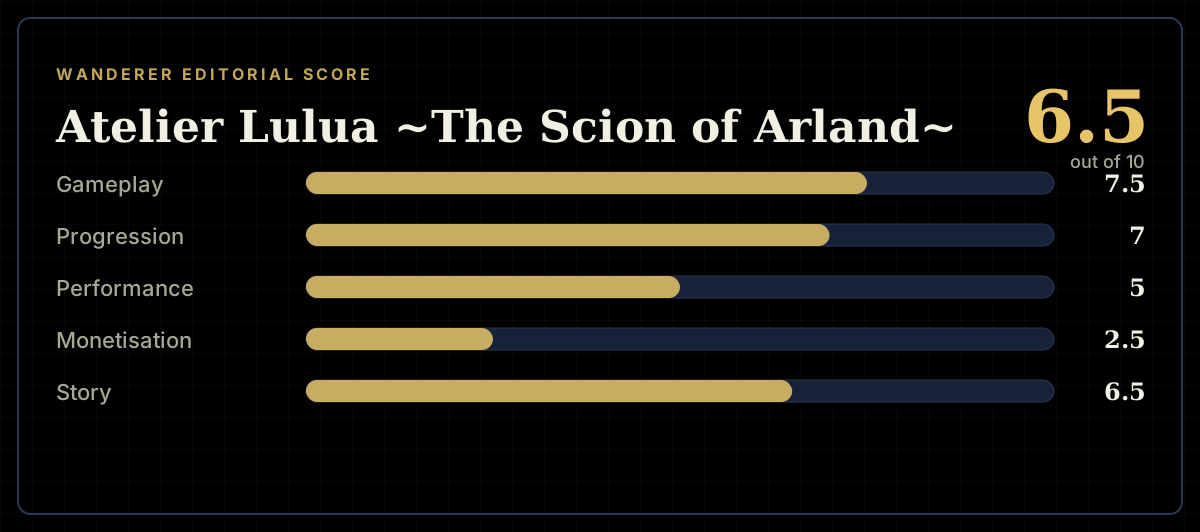
How the review scores each part of the gameWanderer Editorial -
The short versionWanderer Editorial