
Game review
Arctic Eggs
6.5 / 10
- Developer
- The Water Museum, cockydoody, abmarnie, Cameron Ginex
- Publisher
- CRITICAL REFLEX
- Released
- 16 May 2024
- Platforms
- Windows
- Genre
- Surreal narrative cooking simulator
- Monetisation
- One-time purchase, with an optional soundtrack release
- Players
- Single-player only
The short version
Arctic Eggs casts you as a disgraced "Poultry Prepper" cooking eggs, canned goods, and yes, cigarettes on a frying pan for the strange, half-mad residents of a distant-future Antarctic outpost, delivered through jazz-soaked atmosphere and dialogue that commits fully to its own fever-dream logic. Reviewers overwhelmingly praise that commitment as genuine rather than performative quirkiness, with the game's soundtrack and mood earning some of the most affectionate praise this lane has documented. What splits the sample is the actual cooking mechanic underneath all that atmosphere: a deliberately fiddly, physics-based pan-flipping system that a real share of reviewers find rewarding once mastered, and another real share find simply too frustrating to enjoy, especially given how central it is to actually experiencing the story. A smaller but genuine cluster of technical bugs, including a specific softlock that can block the ending entirely, further separates a strong first impression from a fully finished product for some players.
Biggest strengths
- The game's tone, writing, and jazz-inflected soundtrack draw overwhelming, specific praise, with reviewers consistently describing the atmosphere as genuinely committed rather than quirky for its own sake
- The surreal premise — cooking increasingly strange items on a frying pan for a settlement of half-mad Antarctic residents — is repeatedly praised as a genuinely original concept unlike anything else reviewers have played
- Multiple reviewers who initially bounced off the cooking mechanic describe finding real satisfaction once they adjusted to its physics and rhythm, suggesting a real skill curve rather than pure frustration for everyone
Biggest weaknesses
- The physics-based pan-flipping mechanic is the single most polarising element in the review sample, with a real share of reviewers describing it as needlessly frustrating and disruptive to enjoying the story it's meant to deliver
- Several reviewers describe the surreal dialogue as tipping from genuinely inventive into try-hard or self-satisfied, arguing the constant non-sequiturs eventually undercut their own impact through sheer repetition
- Specific, reproducible technical bugs are reported, including a white-screen rendering issue on certain GPU configurations and physics behaviour tied to frame rate rather than properly capped, both requiring manual workarounds
Who it's for: Fans of deliberately strange, atmosphere-first indie games who don't mind a genuinely fiddly physics-based mechanic standing between them and the story. Less suited to players who want either a low-friction cooking sim or dialogue that resolves into conventional sense.
Our recommendation: Worth playing specifically for its atmosphere, music, and total commitment to its own weirdness — a genuine original in a crowded indie market. Go in ready to wrestle with a real, sometimes frustrating physics-cooking mechanic, and keep an eye out for the game's own known softlock bug if you're aiming to see every ending.
6.5 / 10
Arctic Eggs opens with a premise that could easily be a punchline on its own: a disgraced "Poultry Prepper," stripped of rank for forgotten crimes, is sent to cook eggs on a frying pan for the strange, half-mad residents of a distant-future Antarctic settlement. It commits to that premise with a straight face and a jazz score, and the review sample makes clear the commitment is the entire point — this isn't quirkiness deployed as a marketing hook, it's a genuinely singular tone that a large majority of players who try it end up loving.
An atmosphere reviewers can't stop describing
The praise for Arctic Eggs' mood is remarkably consistent in its specificity. "The soundtrack is frustratingly good. It makes me want to apologize for ever touching an instrument," one reviewer writes, and another frames the whole experience as a genre statement: "Critical Reflex have been publishing some really wild games lately, including Buckshot Roulette, Mouthwashing, and this," placing it alongside genuinely notable recent indie releases from the same publisher. Reviewers repeatedly describe finishing the game changed in some small, sincere way — "I feel like I have become a better person. I have ascended to become one with the eggs," one writes, a joke that nonetheless captures something real about how fully players buy into the game's specific, deliberately absurd internal logic.
The mechanic that divides the room
Set against that atmosphere, the actual cooking mechanic — flipping and positioning food on a frying pan using genuine physics simulation rather than simplified prompts — draws real, split reactions. "The movement is sluggish and the gameplay is extremely frustrating and not fun. If I'm dreading the gameplay portions of your game then it's not a good game," one reviewer writes bluntly. But others describe a real skill curve rewarding patience: multiple reviewers who initially struggled report the mechanic clicking into place with practice, becoming a genuine source of satisfaction rather than an obstacle. This is a fair, real disagreement rather than one side simply being wrong — the mechanic is unapologetically fiddly by design, and whether that fiddliness reads as meaningful friction or needless obstruction depends heavily on individual tolerance for physics-based precision challenges.
When weird stops feeling fresh
A smaller but genuine complaint concerns the writing's sustainability across a full playthrough. "When everything is weird, nothing is weird. Every line is a non-sequitur," one reviewer writes, arguing the dialogue's constant commitment to absurdism eventually undercuts its own impact through repetition rather than escalation. This is worth weighing against the otherwise near-universal praise for the writing — it's a minority view, but a specific and coherent one, suggesting the game's tone lands hardest in shorter doses than a full playthrough necessarily allows.
Real bugs, including one that can block the ending
Beyond taste-based disagreements, this review found genuine, reproducible technical complaints worth flagging directly. Multiple reviewers report a white-screen rendering bug tied to specific GPU configurations, along with physics behaviour that isn't properly capped to a fixed frame rate, causing inconsistent cooking feel depending on a player's hardware. Most seriously, at least one reviewer describes a specific softlock in a particular area of the game, where visuals freeze while audio remains responsive, blocking further progress toward the ending without restarting entirely. That's a genuinely serious bug for a narrative-driven game where reaching an ending is the entire point of playing.
A developer that kept refining after launch
This review can confirm the developer responded quickly to early feedback: a Sandbox Mode and a Random Mode were both added within two weeks of the 16 May 2024 launch, giving players who wanted to experiment with the cooking mechanic outside the story's fixed structure a dedicated way to do so. Chinese localisation followed in June 2024, and the game continued receiving promotional attention, including a limited vinyl soundtrack release, well over a year later — evidence of a small team that treated the release as an ongoing relationship with its audience rather than a one-off drop.
What the achievement data suggests about the narrative payoff complaint
Steam's own completion figures offer a useful independent check on the "thin narrative payoff" criticism raised by some reviewers. An early story-related achievement sits at 65.6%, meaning a solid majority of buyers do progress meaningfully into the game, but completion drops off steadily rather than sharply, with the rarest optional-challenge achievements settling around 10-13%. That's a gentler falloff than many games in this lane show, suggesting most players who commit to Arctic Eggs do see a meaningful chunk of what it has to offer — consistent with a short, focused experience rather than one whose content dries up early, even if some players ultimately find what's there thinner than the atmosphere promised.
A short, focused experience by design
It's worth being direct that Arctic Eggs is not a long game, and the review sample treats that as a feature rather than a shortcoming for the most part. Reviewers consistently describe playthroughs in the two-to-four-hour range, and the pricing sits comfortably in line with that scope rather than overreaching it. For a game this committed to a specific, sustained tone, a shorter runtime arguably works in its favour — several reviewers who found the dialogue's constant absurdism wearing by the end still finished the game without feeling like their time was wasted, a different outcome than a much longer game leaning on the same stylistic choices might have produced.
Final verdict
Arctic Eggs is a genuinely singular piece of indie strangeness, backed by atmosphere and music strong enough to win over players who'd never normally seek out a game this deliberately odd. Its physics-based cooking mechanic is a real, fair point of contention rather than a universal flaw, and a handful of documented technical bugs — including one that can block the ending outright — are worth knowing about before committing to a full playthrough. Recommended for anyone drawn to atmosphere-first, unapologetically weird indie games; go in patient with the cooking mechanic and aware of its known rough edges.
Pros and cons
Pros
- The game's tone, writing, and jazz-inflected soundtrack draw overwhelming, specific praise, with reviewers consistently describing the atmosphere as genuinely committed rather than quirky for its own sake
- The surreal premise — cooking increasingly strange items on a frying pan for a settlement of half-mad Antarctic residents — is repeatedly praised as a genuinely original concept unlike anything else reviewers have played
- Multiple reviewers who initially bounced off the cooking mechanic describe finding real satisfaction once they adjusted to its physics and rhythm, suggesting a real skill curve rather than pure frustration for everyone
- The developer added a Sandbox Mode and a Random Mode shortly after launch, directly responding to players who wanted to experiment with the cooking mechanic outside the main narrative's structure
- The game received Chinese localisation and continued promotional support, including a limited vinyl soundtrack release, well over a year after its original release, reflecting a genuinely sustained afterlife for a small narrative title
Cons
- The physics-based pan-flipping mechanic is the single most polarising element in the review sample, with a real share of reviewers describing it as needlessly frustrating and disruptive to enjoying the story it's meant to deliver
- Several reviewers describe the surreal dialogue as tipping from genuinely inventive into try-hard or self-satisfied, arguing the constant non-sequiturs eventually undercut their own impact through sheer repetition
- Specific, reproducible technical bugs are reported, including a white-screen rendering issue on certain GPU configurations and physics behaviour tied to frame rate rather than properly capped, both requiring manual workarounds
- At least one reviewer reports a specific softlock bug in a particular area that can make the game appear frozen while still technically responsive, blocking access to the ending entirely without restarting
- The narrative is described by several reviewers as thin on payoff relative to its atmosphere, with specific complaints that character encounters don't build toward meaningful answers about the setting or its residents' backstories
Screenshots
-

Arctic EggsImage: CRITICAL REFLEX via Steam -

Arctic EggsImage: CRITICAL REFLEX via Steam -

Arctic EggsImage: CRITICAL REFLEX via Steam -
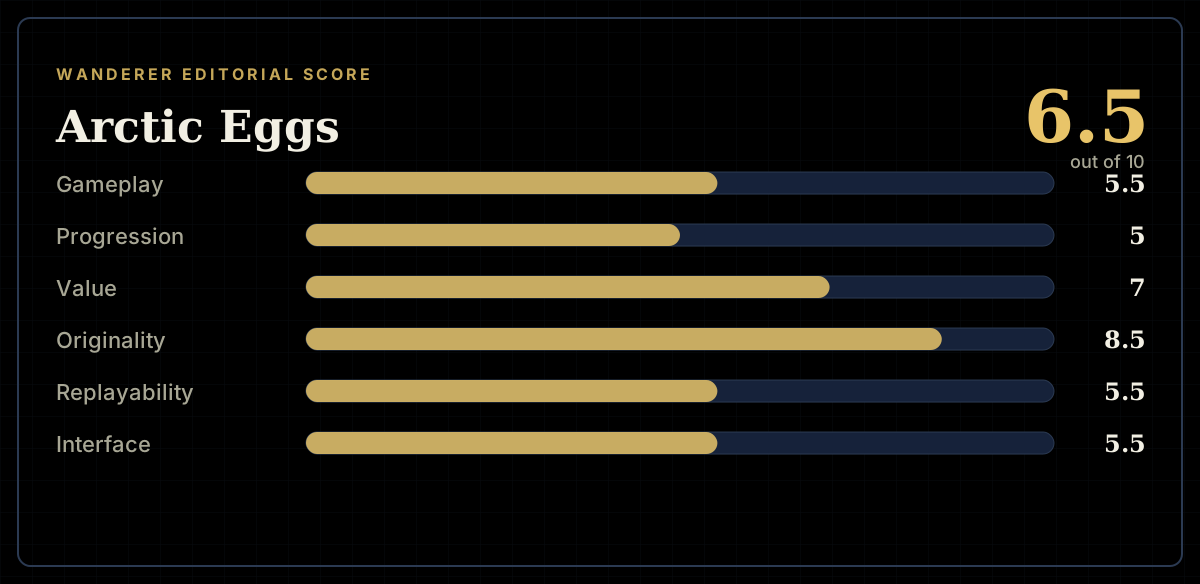
How the review scores each part of the gameWanderer Editorial -
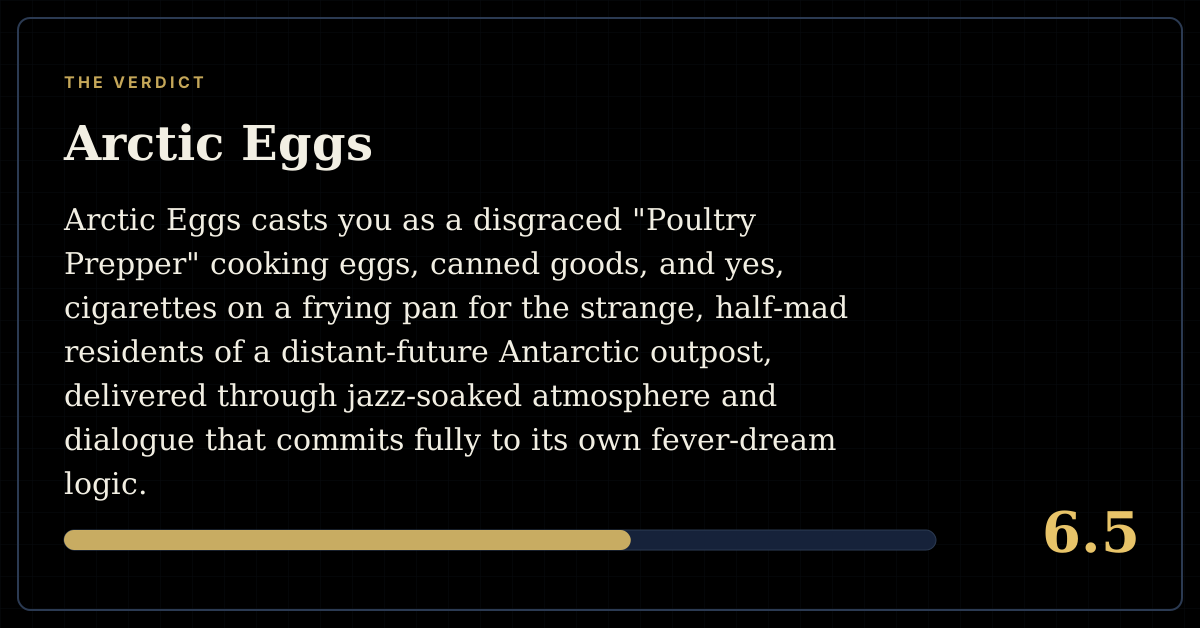
The short versionWanderer Editorial