Game review
Arcadie II: Cold Lands
6.5 / 10
- Developer
- Arcadie & Utopie
- Publisher
- Arcadie & Utopie
- Released
- 18 June 2026
- Platforms
- Windows, macOS
- Genre
- Adventure, RPG, Indie
- Monetisation
- paid
- Players
- false
The short version
Biggest strengths
- Genuinely compelling, emotionally intriguing romance writing on its strongest routes, with several reviewers singling out specific character arcs as some of the best in the genre
- A significant audiovisual upgrade over the first game, with illustrated backgrounds, a new UI, and an original score multiple reviewers specifically praised
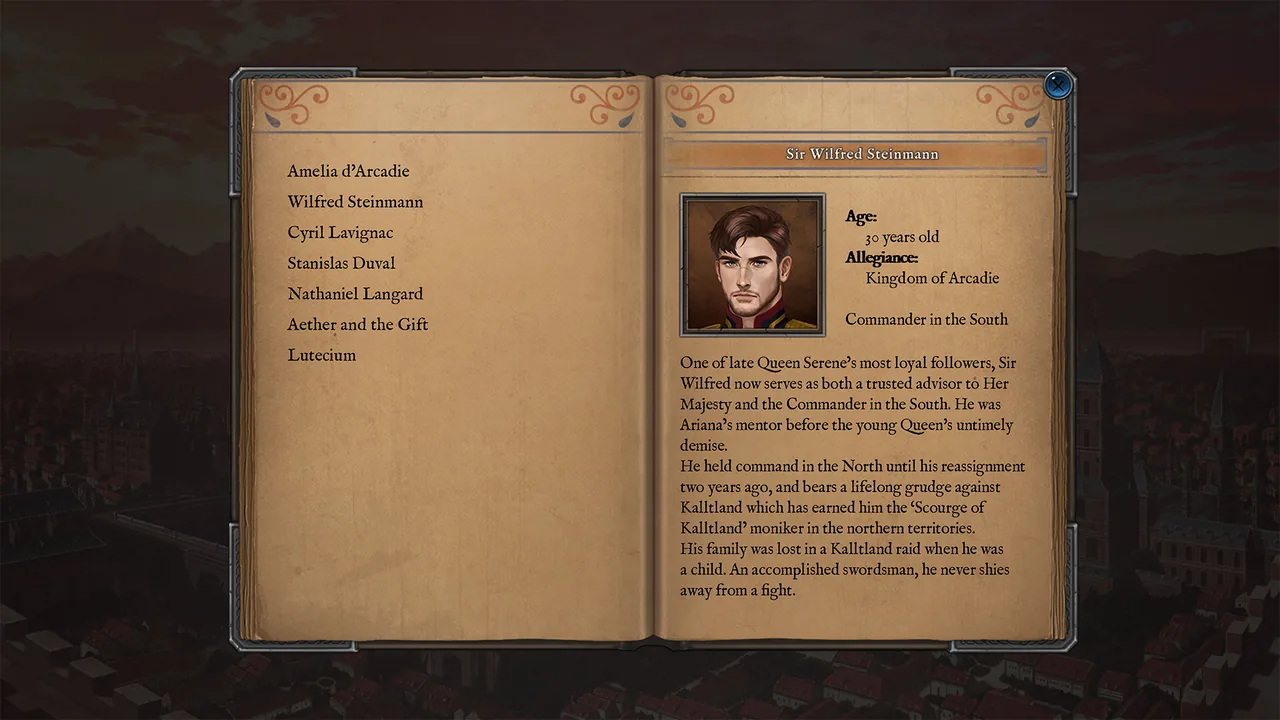
- Returning characters reviewers describe as just as engaging as in the original, retaining what made the first game's cast memorable
Biggest weaknesses
- The removal of the first game's stats and relationship-chart systems, which many longtime fans say stripped out the sense of earned, trackable consequence that defined the original
- A noticeably shorter playthrough than the first game, with some reviewers clocking an average route at 60-80 minutes and citing thinner content overall
- Reduced branching and character interaction outside a chosen romance route, leaving non-romanced characters feeling largely irrelevant to multiple reviewers
Who it's for: Fans of Second-Born curious about the sequel, and interactive fiction readers who prioritize strong romance writing, music, and art over deep stat-driven branching and long-term consequence systems
Our recommendation: recommended with caveats
6.5 / 10
Big shoes, and a genuinely difficult act to follow
Arcadie II: Cold Lands continues the story of Second-Born, one of the more beloved titles in the interactive fiction space, putting players back in the role of the Monarch as they navigate diplomacy, romance, and the fallout of the first game's choices. Reviewers approach the sequel with real affection for its predecessor, and that affection colors much of the pool's reaction. One wrote plainly, "Second Born is one of my favorite interactive novels out there, so its sequel has large shoes to fill," a framing that recurs across nearly every detailed review, whether ultimately positive or critical.
Writing and romance that still land
Where the sequel draws its strongest praise is in its character writing, particularly on its best romance routes. One reviewer who played extensively described two of the three romance paths as "absolutely twisting and narratively intriguing," while another, writing from their first playthrough, said simply, "I just finished the game on Cyril's route and all I can say is wow... this second book made me fall in love with its universe and the characters even more." A separate reviewer specifically praised how consequence still echoes across a full route: "It also retains the distinction of feeling like an early choice has a repercussion much much later," evidence that even with structural changes from the first game, the underlying narrative craft still delivers for readers focused on story and romance above all else.
A real audiovisual upgrade
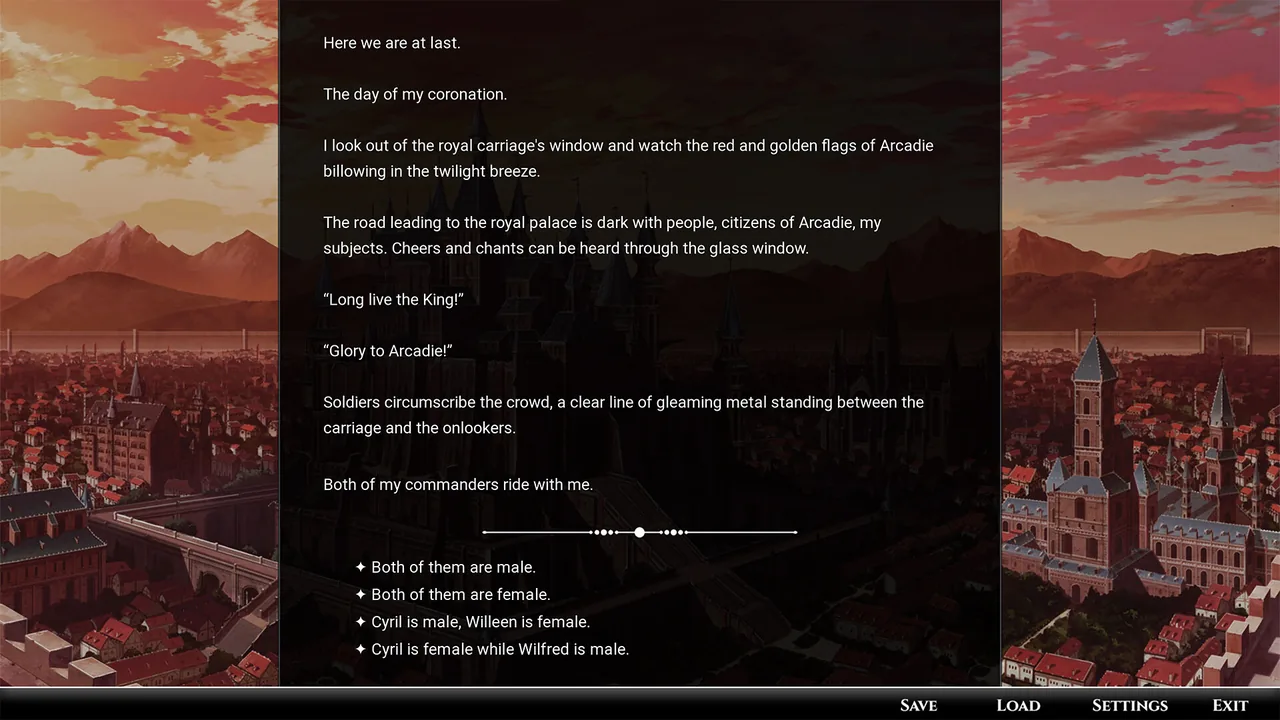
Nearly every reviewer, positive and critical alike, agrees the game looks and sounds significantly better than its predecessor. One wrote, "The backgrounds are beautifully drawn, and the music... Mama, the music is incredible. I truly hope the OST will be [released separately]." Another reviewer who was otherwise disappointed by other changes still credited the presentation: "The music and artworks are a welcome addition, both aspects are great and helped with the immersion." That consistency across otherwise divided reviews makes the audiovisual upgrade one of the few points of near-universal agreement in the entire pool.
The stats system's absence is the dominant complaint
Set against that praise is a specific, frequently repeated structural criticism: the removal of the first game's stats and relationship-tracking systems. One detailed reviewer explained why that matters beyond simple nostalgia: "I don't miss the stats, I miss the customisation they gave," pointing at a deeper design loss rather than a superficial one. Another reviewer connected the missing stats directly to a broader sense of reduced agency: "There are no stats, very little meaningful branching, and almost no decisions that seem to have any real impact on the plot. It feels less like an interactive narrative and more like a short, straightforward novel that can be slightly customized through the different romance options." That's a serious critique for a game in the "choices matter" genre specifically, since it argues the sequel's core interactive promise has been meaningfully scaled back even as its presentation improved.
Shorter, and more linear than fans expected
Several reviewers quantified their disappointment in concrete terms. One wrote, "It is significantly shorter than the first game, an average playthrough lasts about 60-80 minutes, and the differences between the three routes mostly boil down to extra relationship scenes between the major events which are fixed between all playthroughs." Another reviewer who completed a full eight-hour playthrough, longer than most, still flagged the same structural issue from a different angle: characters not being actively romanced "become largely irrelevant to the story," reducing the sense of a living, reactive cast outside whichever single relationship a player pursues. A separate critical review connected this to pacing specifically: "The story moves rapidly from one problem to the next, but each conflict is usually introduced and resolved very [quickly]," a complaint that lines up with the broader sense that Cold Lands compresses more plot into less space than the format ideally supports.
A returning character whose consistency drew scrutiny
Beyond the structural complaints, a handful of reviewers raised a more specific writing concern about one particular returning love interest. One detailed reviewer who chose the same romance option they'd played in the first game wrote that the character "seemed rather inconsistent," elaborating on specific moments where established traits from the original didn't carry through cleanly into the sequel's characterization. That's a narrower complaint than the broader stats-and-branching criticism, but it's worth flagging separately since it comes specifically from a reviewer with direct comparison points across both games, rather than a general impression of quality decline.
Pricing against a shorter, narrower game
At $12.99, Cold Lands is priced modestly below many genre peers, which several reviewers implicitly credited as fair given the game's reduced scope relative to its predecessor. Still, for readers who specifically valued Second-Born's depth of branching and stat-driven customization, the calculus shifts: a shorter, more linear game asks the same kind of financial commitment while delivering less of the specific systems that made the original stand out in a crowded interactive fiction market. Prospective buyers who haven't played the first game may find the price entirely reasonable on its own terms, but returning fans should weigh the asking price against a game that several of the pool's most detailed reviewers describe as narrower in scope than what they were expecting from a direct sequel.
Verdict
Arcadie II: Cold Lands succeeds as a piece of writing and presentation, delivering genuinely compelling romance arcs, a substantial audiovisual upgrade, and a cast fans of Second-Born will recognize and still enjoy spending time with. But it stumbles as a sequel to an interactive fiction specifically praised for its depth of consequence, stripping out the stats and relationship systems that gave the first game's choices weight, and delivering a noticeably shorter, more linear experience as a result. Worth playing for Second-Born fans invested in these characters and willing to accept a more streamlined, romance-forward structure, but players hoping for a deeper, more consequential sequel to the original's systems may come away disappointed despite the strong writing on display.
Pros and cons
Pros
- Genuinely compelling, emotionally intriguing romance writing on its strongest routes, with several reviewers singling out specific character arcs as some of the best in the genre
- A significant audiovisual upgrade over the first game, with illustrated backgrounds, a new UI, and an original score multiple reviewers specifically praised
- Returning characters reviewers describe as just as engaging as in the original, retaining what made the first game's cast memorable
- A choice system that still delivers meaningful early-to-late consequence on its best routes, with reviewers noting decisions can echo much later in the story
Cons
- The removal of the first game's stats and relationship-chart systems, which many longtime fans say stripped out the sense of earned, trackable consequence that defined the original
- A noticeably shorter playthrough than the first game, with some reviewers clocking an average route at 60-80 minutes and citing thinner content overall
- Reduced branching and character interaction outside a chosen romance route, leaving non-romanced characters feeling largely irrelevant to multiple reviewers
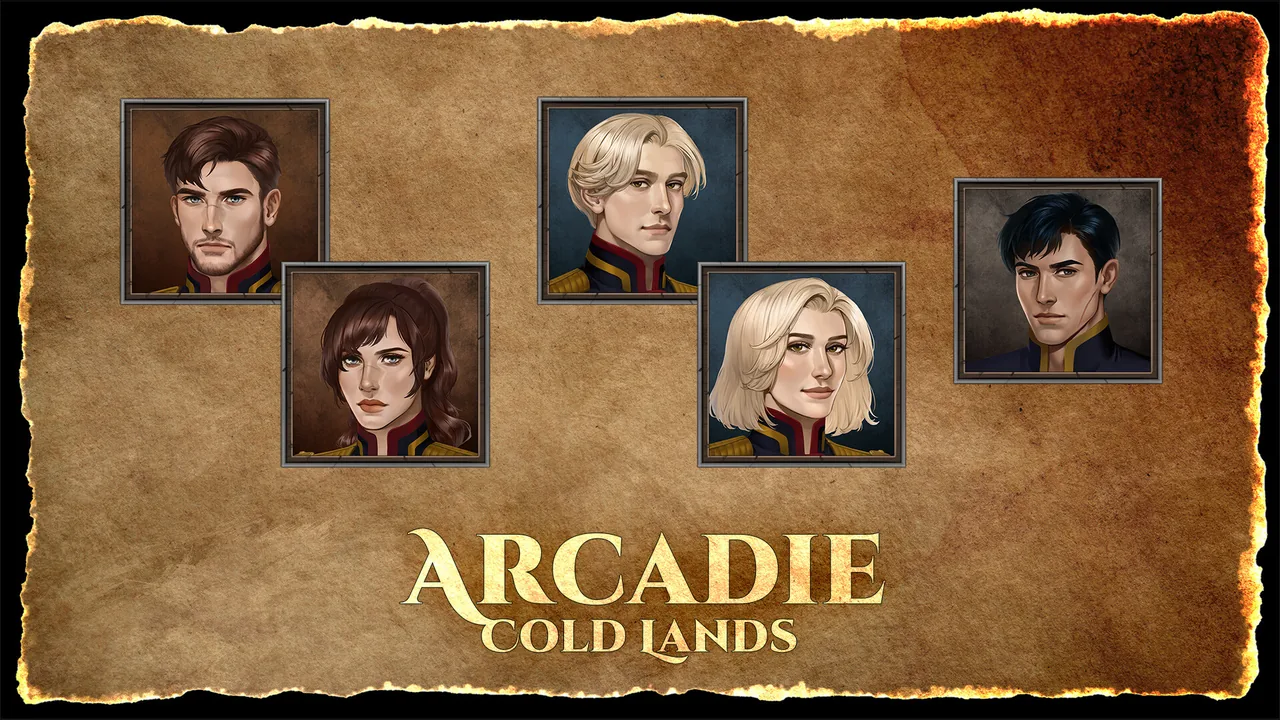
- The absence of character busts or CGs that several reviewers found conspicuous given the game's otherwise significant visual upgrade
Screenshots
-
Arcadie II: Cold LandsImage: Arcadie & Utopie via Steam -
Arcadie II: Cold LandsImage: Arcadie & Utopie via Steam -
Arcadie II: Cold LandsImage: Arcadie & Utopie via Steam