
Game review
Antichamber
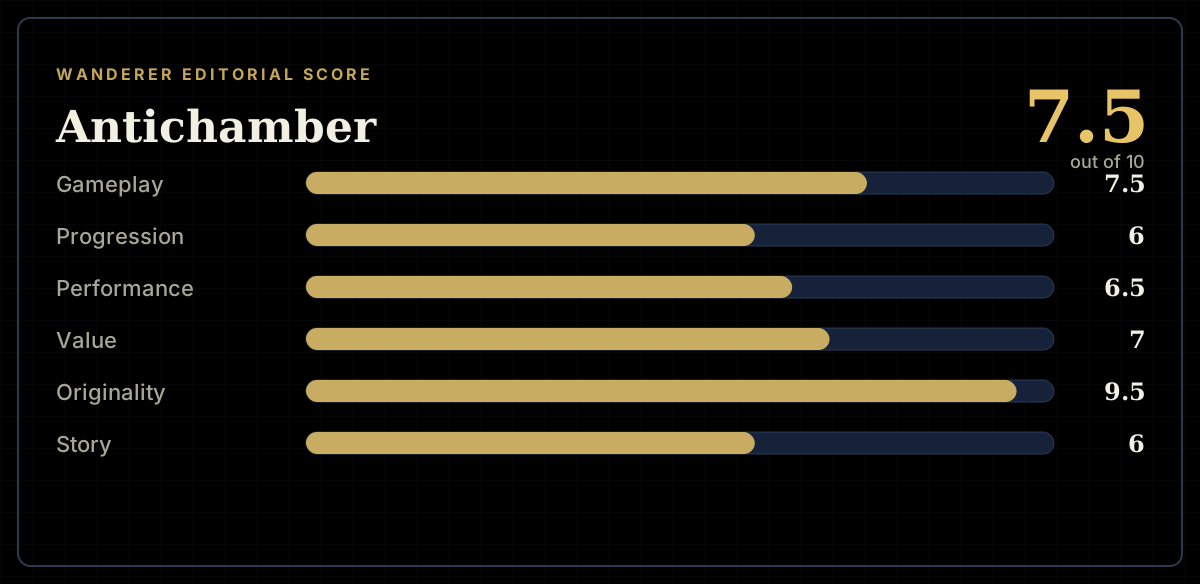
7.5 / 10
- Developer
- Alexander Bruce
- Publisher
- Demruth
- Released
- 31 January 2013
- Platforms
- Windows, macOS, Linux
- Genre
- Puzzle
- Monetisation
- One-time premium purchase; no DLC, no in-app purchases
- Players
- Single-player only; no online, co-op or PvP modes
The short version
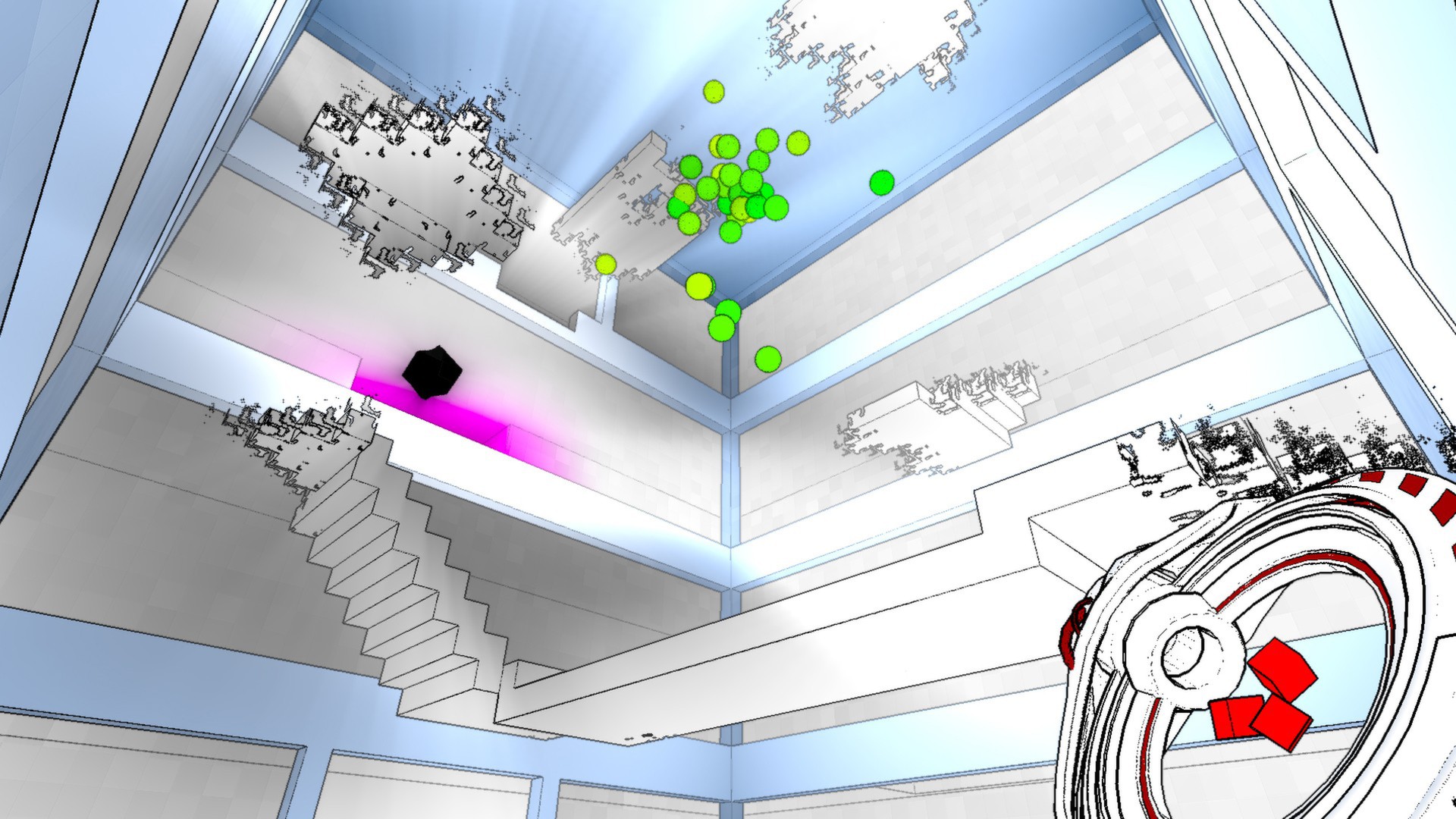
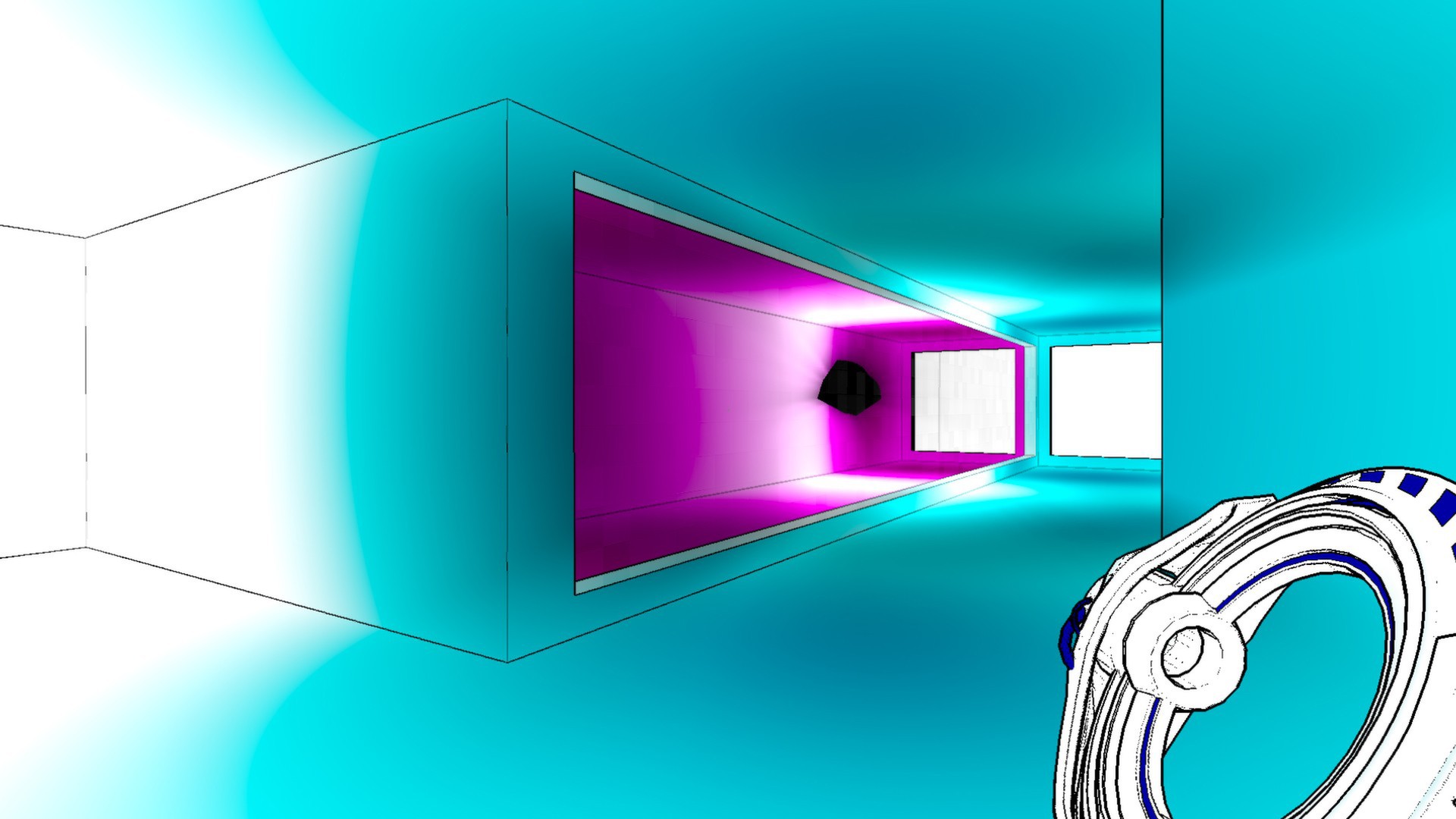
Antichamber drops players into a shifting, non-Euclidean maze where corridors loop back on themselves, walking backward can move you forward, and dead ends aren't always what they appear to be. Reviewers describe the experience in unusually specific, almost philosophical terms: "It is not a game, but you have to play it," one writes. "It is not that fun, but you have to play it anyway." That's a genuinely uncommon way for a review sample to frame overwhelming praise, and it recurs often enough to suggest the game succeeds by deliberately subverting expectations about what makes a puzzle game enjoyable in the first place, rather than through conventional moment-to-moment satisfaction.
A specific, health-relevant warning deserves equal prominence alongside that praise: multiple reviewers report the game's disorienting, shifting geometry triggered genuine motion sickness and nausea, with one describing symptoms lasting well after quitting. A separate, more common design frustration concerns open-ended exploration leading players to attempt puzzles that aren't actually solvable yet without a not-yet-acquired tool, wasting real time on genuinely unsolvable problems before realizing the issue isn't their own reasoning.
Biggest strengths
- A genuinely unique, non-Euclidean world design that reviewers consistently describe as unlike anything else in the puzzle genre, even years after other games have tried similar ideas
- Individual puzzles, once found, are widely praised as well-crafted, fair, and satisfying to solve on their own terms
- A minimalist, distraction-free presentation reviewers say keeps focus entirely on the puzzle design rather than padding the experience with unnecessary systems
Biggest weaknesses
- A specific, corroborated accessibility warning: several reviewers report genuine motion sickness and nausea from the game's disorienting, shifting geometry, with one describing symptoms persisting well after quitting
- A recurring, specific design frustration: the game's open-ended structure allows players to attempt puzzles that aren't actually solvable yet without a tool they haven't found, wasting real time before realizing the issue isn't their own reasoning
- Finding puzzles in the first place is described by at least one detailed reviewer as more tedious than solving them, given the free-roaming, non-linear structure
Who it's for: Puzzle fans who want a genuinely original, mind-bending experience unlike anything else in the genre, and who are comfortable with minimal guidance. Less suited to players prone to motion sickness, or anyone who wants clear signals about which puzzles are currently solvable before investing time in them.
Our recommendation: Worth experiencing for puzzle fans specifically seeking something genuinely unlike anything else available — just take breaks if you feel disoriented, and don't blame yourself if a puzzle turns out to need an ability you haven't found yet.
7.5 / 10
Antichamber is easy to dismiss at a glance as a Portal clone — a first-person puzzle game where players carry a gun-like tool and navigate chamber to chamber. One detailed reviewer draws the distinction precisely: "while Portal deals mostly in learning the rules of its mechanics and then adding complexity to those mechanics, Antichamber is a game which aims to subvert your expectations about how a game is even supposed to work" in the first place. Built almost entirely by a single developer, Alexander Bruce, over roughly seven years, it's a genuinely strange, singular achievement, and this review sample describes it in correspondingly strange terms. Reviewers with a genuine background in the genre repeatedly reach for the same comparison points — Portal, The Stanley Parable, The Witness — only to immediately qualify that comparison, arguing Antichamber sits apart from all of them rather than simply belonging to the same lineage.
Praise that admits the game often isn't "fun"
What stands out most about this review sample is how many reviewers frame their strongest praise in deliberately paradoxical language. "You have to play this game," one widely upvoted review states. "It is not a game, but you have to play it. It is not that fun, but you have to play it anyway." That's not damning with faint praise — it's a specific, repeated attempt to describe an experience reviewers feel conventional review language doesn't fit. Another reviewer calls it "the apex of what gaming is supposed to be about... an extremely tight puzzle that respects the player," crediting the total absence of filler content with making every space in the game feel intentional. Several reviewers specifically single out short, embedded philosophical messages scattered throughout as an unexpectedly meaningful layer, describing real-life lessons and advice tucked into otherwise abstract puzzle rooms.
The puzzle-gun mechanics underneath the mind games
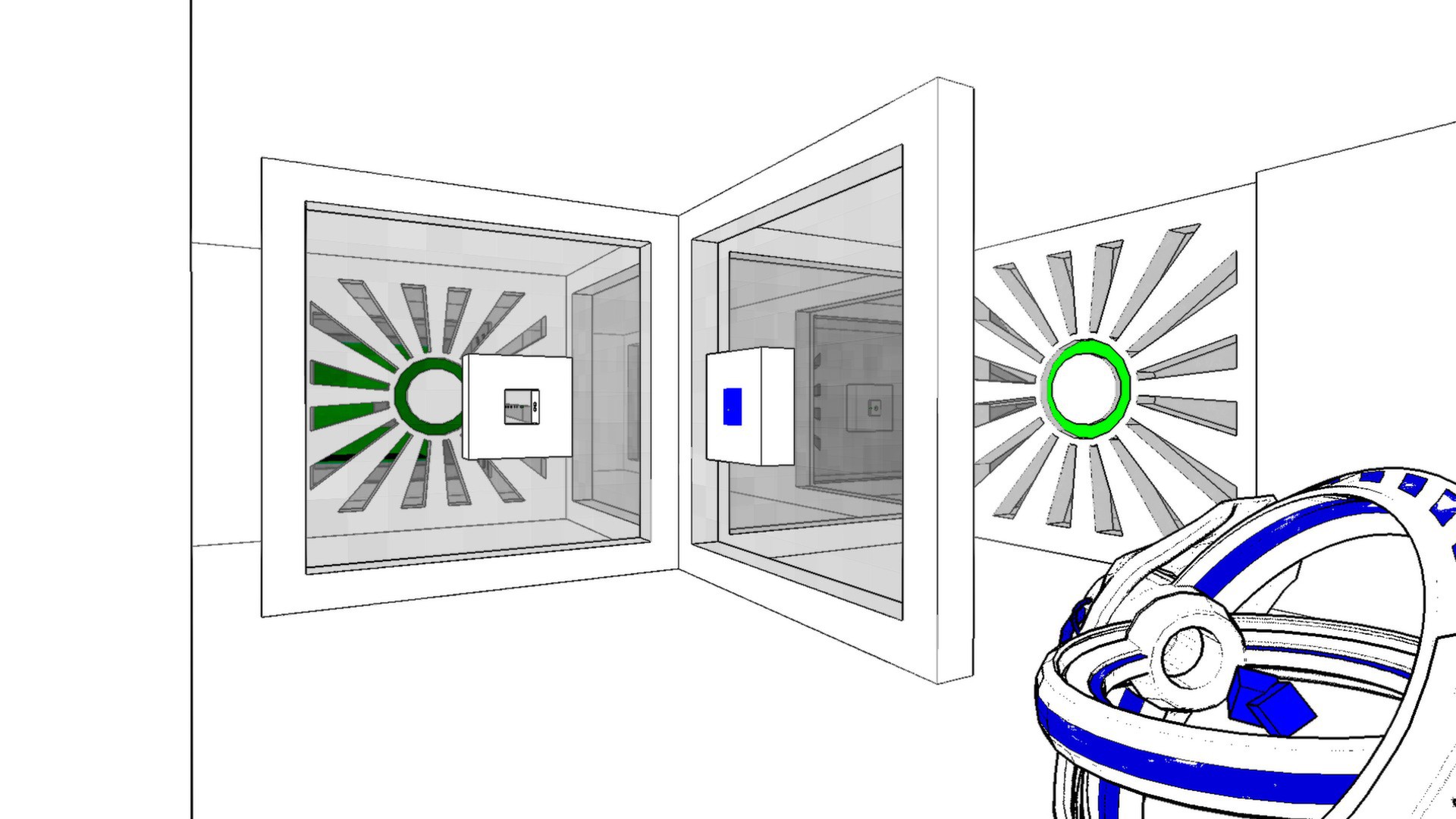
Beneath its reality-bending geometry, Antichamber's actual toolset is comparatively simple: a gun-like device that can pick up, place, and later manipulate colored blocks to solve environmental puzzles. Reviewers generally credit the restraint here, noting that the mechanical complexity stays deliberately modest so that the disorientation comes entirely from the space itself rather than from an overloaded toolkit. One reviewer specifically contrasts this with other mind-bending puzzle games that pile on new mechanics constantly, arguing Antichamber's decision to keep its actual tools simple is what allows the non-Euclidean environment design to remain the star of the experience throughout, rather than getting lost under systems layered on top of it.
A real, specific health warning worth equal weight
Alongside that praise, this review sample surfaces a genuinely important accessibility concern that deserves to be flagged with the same prominence as the game's strengths. "Playing this game for just half an hour made me incredibly nauseous, and I didn't recover for some time after quitting," one reviewer writes, specifically warning players who suffer from motion sickness. That's not a vague complaint about difficulty — it's a specific, physical reaction tied directly to the game's core, disorienting geometry, and it recurs across enough independent reviews to treat as a real consideration rather than one unusually sensitive player's experience. A related, if less severe, complaint concerns the game's bright, high-contrast visuals causing genuine eye strain for light-sensitive players.
A specific, recurring design frustration
Beyond the accessibility concerns, a mechanically specific complaint recurs across several detailed reviews: because the game is open-ended rather than linear, players regularly stumble into puzzles that can't actually be solved until a specific tool or ability is found elsewhere first. "The 'bruteforce through everything for an hour until you look up the fact you physically can't solve this puzzle yet' approach to problem solving" was, one reviewer writes, "too obnoxious to actually finish the game." That's a genuine design tension between rewarding open exploration and avoiding wasted player effort, and it's worth going in aware of rather than assuming every dead end reflects a failure of your own reasoning.
A long, acclaimed development history, and no achievement data to check against it
This listing carries no Steam achievement schema at all, so unlike many other older titles in this catalogue, there's no independent completion-rate data available to corroborate how far the average player gets before setting the game aside — a genuine limitation for a title several reviewers describe as unusually likely to be abandoned partway through given its specific, recurring frustrations. What the review sample does confirm is the game's long, well-regarded development pedigree: Antichamber grew out of an earlier prototype that won recognition on the independent games festival circuit years before its full 2013 release, and reviewers with awareness of that history frequently cite it as context for why the final game feels so deliberately, unusually crafted rather than rushed or derivative.
Where it lands
Antichamber earns its Overwhelmingly Positive reception through a genuinely singular puzzle design that reviewers consistently struggle to compare to anything else, delivered with real craftsmanship from a small, dedicated development effort. The specific motion-sickness warnings and the open-ended structure's occasional wasted-effort frustration are concrete enough to weigh seriously before diving in, alongside honest acknowledgment that this isn't a conventionally "fun" experience in the way most puzzle games aim to be. For puzzle fans specifically seeking something genuinely different, this remains a must-play — just go in with reasonable breaks planned and clear eyes about what kind of experience you're actually signing up for. Don't be surprised if what sticks with you afterward isn't any single puzzle, but the lingering, unsettled sense of no longer quite trusting your own read of ordinary space.
Pros and cons
Pros
- A genuinely unique, non-Euclidean world design that reviewers consistently describe as unlike anything else in the puzzle genre, even years after other games have tried similar ideas
- Individual puzzles, once found, are widely praised as well-crafted, fair, and satisfying to solve on their own terms
- A minimalist, distraction-free presentation reviewers say keeps focus entirely on the puzzle design rather than padding the experience with unnecessary systems
- Occasional short, philosophical messages embedded throughout the game draw specific praise from reviewers who found them a meaningful, unexpected layer beyond pure puzzle-solving
- A genuinely singular achievement for a solo developer, built over roughly seven years, that reviewers consistently credit with real ambition and craft
Cons
- A specific, corroborated accessibility warning: several reviewers report genuine motion sickness and nausea from the game's disorienting, shifting geometry, with one describing symptoms persisting well after quitting
- A recurring, specific design frustration: the game's open-ended structure allows players to attempt puzzles that aren't actually solvable yet without a tool they haven't found, wasting real time before realizing the issue isn't their own reasoning
- Finding puzzles in the first place is described by at least one detailed reviewer as more tedious than solving them, given the free-roaming, non-linear structure
- Bright, high-contrast visuals are reported by some reviewers as genuinely uncomfortable for players sensitive to light
- Reviewers are candid that the experience is deliberately unconventional and often not straightforwardly "fun" in a traditional sense, which won't suit every puzzle fan despite the game's high overall approval rating
Screenshots
-
AntichamberImage: Demruth via Steam -
AntichamberImage: Demruth via Steam -
AntichamberImage: Demruth via Steam -
How the review scores each part of the gameWanderer Editorial -

The specsWanderer Editorial -
The short versionWanderer Editorial