Game review
What Lurks Below
7 / 10
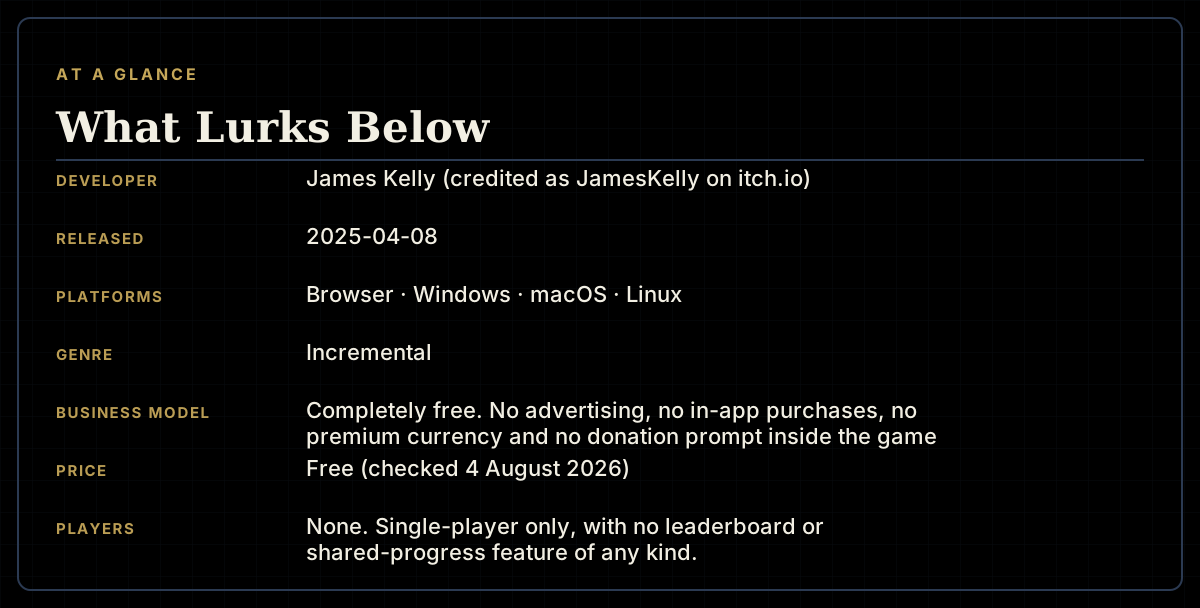
- Developer
- James Kelly (credited as JamesKelly on itch.io)
- Publisher
- Self-published
- Released
- 8 April 2025
- Platforms
- Browser, Windows, macOS, Linux
- Genre
- Incremental
- Monetisation
- Completely free. No advertising, no in-app purchases, no premium currency and no donation prompt inside the game itself.
- Players
- None. Single-player only, with no leaderboard or shared-progress feature of any kind.
The short version
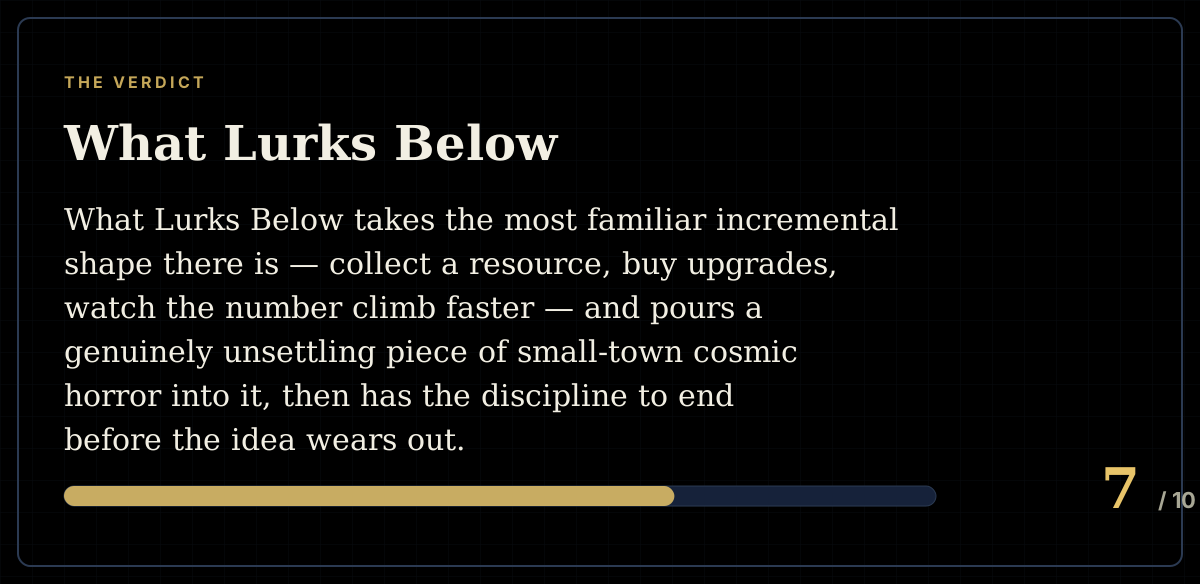
What Lurks Below takes the most familiar incremental shape there is — collect a resource, buy upgrades, watch the number climb faster — and pours a genuinely unsettling piece of small-town cosmic horror into it, then has the discipline to end before the idea wears out. The mining town of Gloomhollow gives up its dead a bucket at a time, and by the time the credits roll you understand exactly what the townsfolk sacrificed and why. The tradeoff for that tight scope is a progression curve that crawls early and sprints late, and a story with exactly one ending worth seeing once.
It's a jam game that a solo developer kept sanding down after the deadline passed rather than walking away from, and it's honest about being a jam game rather than dressing itself up as something bigger.
Biggest strengths
- The Lovecraftian sacrifice premise is built into the resource loop itself rather than layered on top of it, so learning what Situla extraction actually costs the town changes how the earlier clicking reads in hindsight
- Music and pixel art carry a genuine sense of dread without leaning on jump scares or gore
- Entirely free with nothing to buy, no ads and no account required, playable straight in a browser tab
Biggest weaknesses
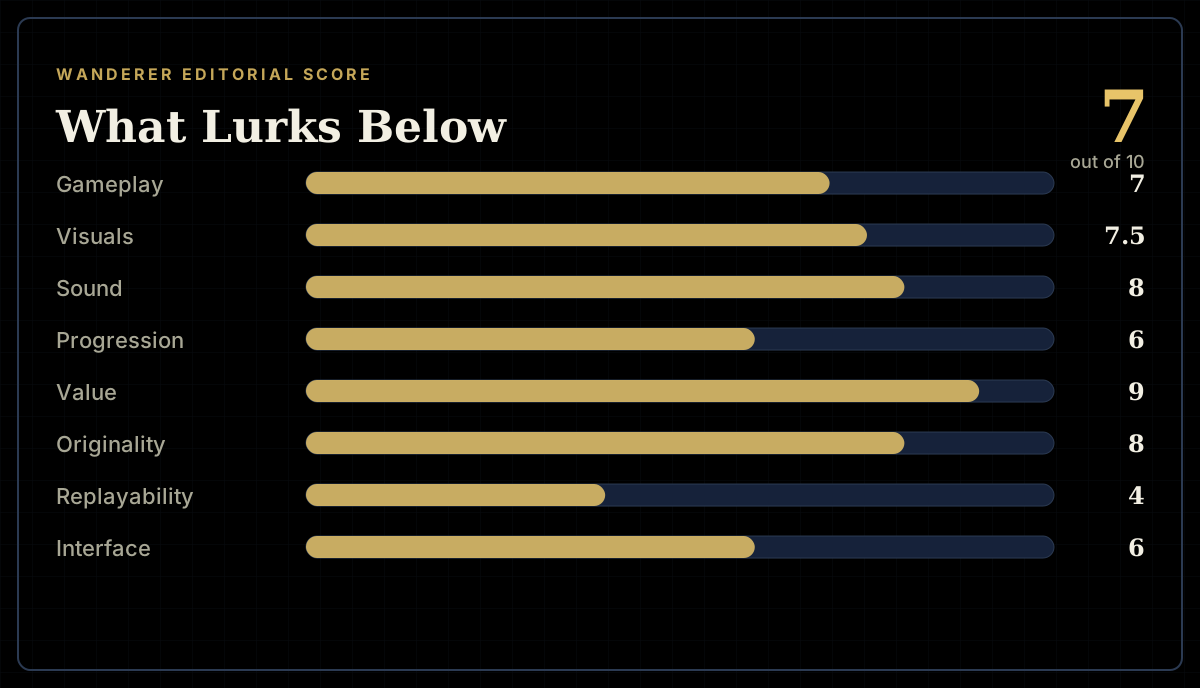
- Early collection is slow enough that several players describe stalling out before the upgrades that make the loop interesting come online
- The back half compresses years of intended pacing into a short, steep final stretch, which reads as unbalanced rather than deliberately climactic
- Upgrade tiers are numbered far higher than a sub-hour run has any real use for, suggesting scope that was trimmed late rather than designed tight from the start
Who it's for: Incremental fans who want a complete, atmospheric story in a single sitting rather than a system to maintain for weeks, and anyone curious what a horror incremental looks like when it commits to the theme instead of bolting spooky skins onto a generic resource chain
Our recommendation: Play it once, in one sitting, and don't go looking for a second run — the entire point is the reveal, and there's nothing left to chase once you've seen it.
7 / 10
Most horror games that borrow the word "Lovecraftian" mean it as set dressing: tentacles on the loading screen, a font that looks like it's dripping, maybe a sanity meter that doesn't do much. What Lurks Below means it structurally. It's a free browser incremental where you click and wait for orbs of a strange substance to rise out of a chasm beneath the town of Gloomhollow, spend that substance on bigger buckets and faster crews, and watch a number climb — the exact shape of a hundred other clicker games. The difference is that the game never lets you forget what's paying for the substance, and by the time it tells you outright, the mechanical grind you've been running has already made you complicit in it.
A jam weekend that didn't end on schedule
The game began life as James Kelly's entry for Ludum Dare 57, the April 2025 edition of the 72-hour jam built around the theme "Depths." That heritage explains a lot about the shape of the final product: a tight, single-idea experience designed to be finished and judged inside a weekend, not a system built to run for months. What's less typical is that Kelly kept working on it once the jam's voting period closed. Itch.io lists at least four numbered updates since the original submission, fixing a bug where buying a late-game Situla upgrade could stop the game from ever reaching its ending, reworking the early tutorial after players got lost before the loop clicked, and smoothing out the opening pace. None of that turns a 30-to-60-minute jam game into something longer, but it's a meaningfully more finished 30-to-60-minute jam game than the one that shipped in April 2025, and that kind of after-the-deadline polish is rarer than it should be in game-jam incrementals, most of which get uploaded once and never touched again.
Buckets, orbs, and a slow start
The core loop asks you to gather a mysterious substance rising from beneath the town using containers called Situla — an old word for a bucket-shaped vessel, and a deliberately archaeological choice of name for a game about digging up something that was buried on purpose. Clicking (or holding the spacebar) fills the current Situla; filled buckets convert into the game's main currency, which buys larger Situla tiers, faster fill rates, and eventually automation that keeps the substance flowing without direct input. It's a familiar three-beat rhythm — act, spend, automate — and the opening stretch leans hard into the "act" part longer than it probably should. Player feedback consistently flags the same problem: the first several minutes move slowly enough that the payoff upgrades feel a long way off, which is a rough place to lose someone in a game this short. Once the automation upgrades land, though, the loop does what a good incremental loop is supposed to do — it recedes into the background and lets the number keep climbing while your attention moves to the thing actually worth paying attention to.
The story underneath the numbers
That thing is Gloomhollow itself. As the substance-extraction operation scales up, the game starts dropping in pieces of context about why a town would let something be dug out of the ground beneath it in the first place, and the answer is bleaker than the cheerful orb-collecting music initially suggests. Without spoiling the specific turn, the throughline is that the townsfolk aren't victims of the operation so much as willing participants in it, and the game's final stretch reframes everything you spent the earlier minutes optimizing. It's a small, blunt piece of cosmic-horror writing — closer in spirit to a short story than a branching narrative — and it works because the mechanical progression and the narrative reveal are telling the same story at the same time, rather than the plot sitting on top of systems that don't care about it. A Dark Room did something similar years earlier, hiding a survival narrative inside what looked like a bare-bones resource counter; What Lurks Below is a much shorter, much darker cousin of that same trick.
A curve that saves its punishment for last
The pacing complaint that comes up most often in player feedback is really two complaints wearing one coat: the early game is too slow, and the late game is too fast. Once the automation upgrades and higher Situla tiers kick in, the number that took several minutes to move meaningfully starts climbing fast enough that the ending arrives with less warning than the buildup implies it should. Some players report needing outside help to recognize they'd actually reached the finish, because the closing stretch compresses so much faster than everything before it. Upgrade tiers that reportedly run as high as a hundred levels on the top-tier Situla only make this more noticeable — that's a lot of headroom built into a system a typical run barely uses before the credits roll, and it reads like scope that got trimmed for the jam deadline rather than a curve tuned specifically for the length the finished game settled on. None of this breaks the experience, but it's the clearest sign that What Lurks Below is still, underneath the post-launch polish, a jam game whose pacing was tuned against a 72-hour clock rather than against player feedback from a hundred completed runs.
Presentation carrying more than its weight class
Visually, this is simple pixel art doing an above-average job of selling dread through restraint — dim palettes, an unglamorous mining-town setting, and enough visual grime on the Situla and machinery to make the whole operation feel unsanctioned rather than industrial. It won't impress anyone looking for technical showcase work, and it doesn't try to. The sound design is where the atmosphere actually lands: the music has been singled out repeatedly in player reaction as the thing holding the creeping-dread tone together, shifting register as the depths get more attention than they should. For a project built in a weekend, the audio work punches well above the budget a jam game usually has to spend on it.
Free, and there's nothing hiding behind that word
There's no premium currency, no ad break, no cosmetic shop and no donation nag anywhere in the experience — it's simply free, the way itch.io game-jam projects usually are, and the value case barely needs arguing. Set against something like Dodecadragons, another solo-built free incremental that deliberately stopped rather than chasing endless content, What Lurks Below sits at the far short end of that same "finished on purpose" philosophy: where Dodecadragons gives you a genuine long session before its number-eating dragon runs its course, this is closer to a short story you can finish on a lunch break. Whether that's a good trade depends entirely on what you want from the sitting — as a free, one-time experience with a real ending, it delivers exactly what it promises and asks for nothing in return.
Verdict
What Lurks Below is a small, confident piece of horror writing wearing a very ordinary incremental-game skeleton, and the fit between the two is tighter than most games this short manage. The slow opening and the compressed, occasionally disorienting final stretch are real flaws, and the sky-high upgrade tiers left over from a bigger original scope are a visible seam in the design. None of that changes what the game is actually for: a single, atmospheric sitting that uses its clicker mechanics to make a point about complicity rather than just to pass time. Play it once, take the ending at face value, and don't expect a second run to offer anything the first one didn't already give you. Anyone who wants that same "line goes up while the world quietly changes" feeling stretched out over weeks instead of an hour, with no ending waiting at the far end of it, might eventually find their way to Wanderer instead.
Pros and cons
Pros
- The Lovecraftian sacrifice premise is built into the resource loop itself rather than layered on top of it, so learning what Situla extraction actually costs the town changes how the earlier clicking reads in hindsight
- Music and pixel art carry a genuine sense of dread without leaning on jump scares or gore
- Entirely free with nothing to buy, no ads and no account required, playable straight in a browser tab
- Post-launch patches show a developer still listening after the jam deadline passed, fixing a softlock and reworking the tutorial rather than leaving the compo build to rot
- Finishes in well under an hour, so it never overstays the one idea it's built around
Cons
- Early collection is slow enough that several players describe stalling out before the upgrades that make the loop interesting come online
- The back half compresses years of intended pacing into a short, steep final stretch, which reads as unbalanced rather than deliberately climactic
- Upgrade tiers are numbered far higher than a sub-hour run has any real use for, suggesting scope that was trimmed late rather than designed tight from the start
- One ending, no branching choices and no prestige layer means a second playthrough has nothing new to offer
- Menu and pause-related bugs present in the original jam build needed multiple patches to clear up, and some UI roughness is still noticeable
Screenshots
-
How the review scores each part of the gameWanderer Editorial -
The game at a glanceWanderer Editorial -
The short versionWanderer Editorial