
Game review
Village Tale
5.8 / 10
- Developer
- Knight Owl Games
- Publisher
- Knight Owl Games
- Released
- 27 July 2025
- Platforms
- PC
- Genre
- Idle Village-Building Simulator
Village Tale is a desktop-companion idle village builder from Knight Owl Games, released on Steam on 27 July 2025 in the wake of Rusty's Retirement popularising the format: a small pixel-art world that lives permanently along the bottom of the screen, growing itself while you work, browse or play something else entirely. Several reviewers name-check that lineage directly, and one review put the comparison plainly: it "plays like Rusty's Retirement if Rusty were building a wee village instead of a robot farm." The pitch is a cozy, low-pressure alternative to a full city builder — place resource-generating buildings, let villagers path automatically between fields, workshops and market stalls, and watch a "Mastery Star" system reward you for repeatedly selling the same goods.
A village that lives on your desktop, not in a window
The defining feature is placement: the village sits directly over the desktop wallpaper, screenshots show it coexisting with visible desktop icons and even a small system-monitor overlay, and there's reportedly a dedicated "hide from boss" hotkey (Alt + ~) that one reviewer singled out approvingly. That framing shapes everything else about the design. Villagers automatically gather resources, tend crops, and staff market stalls without direct control, with player input largely limited to placing and arranging buildings and decorations. Multiple reviewers describe this as genuinely calming — "It feels like having a tiny, living world beside you while you work," one wrote, and several specifically praise the lo-fi soundtrack, which has its own in-game Music Player tab letting players pick tracks rather than the default background music.
Smooth progression that runs out quickly
Early progression is consistently described as approachable: a short tutorial gets players building within ten to twenty minutes, and buying new structures, unlocking goods and expanding the trading economy feels rewarding without excessive grind, according to multiple reviews. The trouble, repeated by a meaningful share of the review pool, is how quickly that progression hits a ceiling. One reviewer reported completing the entire build list and decorating every available tile within about twenty hours; another timed full 100% achievement completion at under three days of leaving the game running in the background; a third called it bluntly "only has about 2 days worth of idle play before you 100% the game though... no replayability as far as I can see." This isn't a universal complaint — plenty of positive reviews don't mention running out of content at all, suggesting the ceiling matters more to players who actively optimise and complete than to those using it purely as ambient background decoration — but it's frequent and specific enough to treat as a real limitation rather than an outlier gripe.
A smaller but recurring cluster of negative reviews pushes back on the "idle game" framing itself, arguing the pacing sits awkwardly between genuinely idle and actively managed: one reviewer called it "too fast, too small" and said it can "easily turn into micromanaging," while another described the opposite complaint — a "hell of a slow idle game" where nothing meaningful happens between morning and night check-ins. Read together, these contradictory complaints suggest Village Tale's actual pacing sits in an ambiguous middle ground that doesn't fully satisfy players looking for either a snappier incremental loop or a truly hands-off, check-in-once-a-day idler.
Rough edges in the building tools
The most concrete, repeated criticism concerns the building and decoration tools themselves. Several reviewers flag the inability to delete or move placed buildings and decorations once they're down, which becomes a real problem for anyone trying to plan an efficient or attractive layout rather than placing structures permanently on a first attempt — "I quite love idle games... but the inability to delete buildings" was cited as a specific gripe even in an otherwise positive review, and another wrote "I'm pretty disappointed that I still can't remove trees and such that I make too many of." A separate, narrower technical report describes the window failing to scale correctly when moved to a secondary vertical monitor. Neither issue appears to be universal or severe enough to derail the broader positive reception, but both point to a game whose desktop-overlay presentation, while charming, hasn't been fully hardened around edge cases in multi-monitor setups or layout planning.
Who it's actually for
The review pool draws a fairly clear line between two audiences, and satisfaction tracks closely with which side a given player falls on. Reviewers who treat Village Tale as ambient decoration — something running quietly while they work, watch a show, or play a different, more demanding game in the foreground — are almost uniformly positive, several explicitly comparing it favourably to Littlewood and other cozy life-sim titles for its atmosphere alone. One reviewer summed up this use case bluntly: "I can finally slack off work by simulating productivity." Reviewers who approach it as a systems-driven management game to actively optimise, by contrast, are the ones most likely to report hitting the content ceiling within days and coming away disappointed that there wasn't more to chase. Knight Owl Games appears to be still actively developing the title post-launch based on player-suggestion threads referenced in the reviews, including requests for layered decoration placement and quality-of-life fixes to the building tools, so the replayability gap identified here may narrow in future updates — but it should be weighed as a present-tense limitation rather than a promise.
Verdict
Village Tale succeeds at what it sets out to be: a genuinely relaxing, well-scored desktop companion that turns idle progress into something visually pleasant to glance at throughout a workday, and the 39-to-4 positive review ratio reflects real affection from the people it clicks with. Where it falls short is durability — a meaningful slice of reviewers finish everything the game has to offer within a few days and are left with nothing further to work toward, and the inability to reposition buildings undercuts the customisation half of its pitch. It's a fair buy at its low price for players who want a short, cozy idle experience rather than a long-term systems game, but it shouldn't be mistaken for one with lasting depth.
Screenshots
-
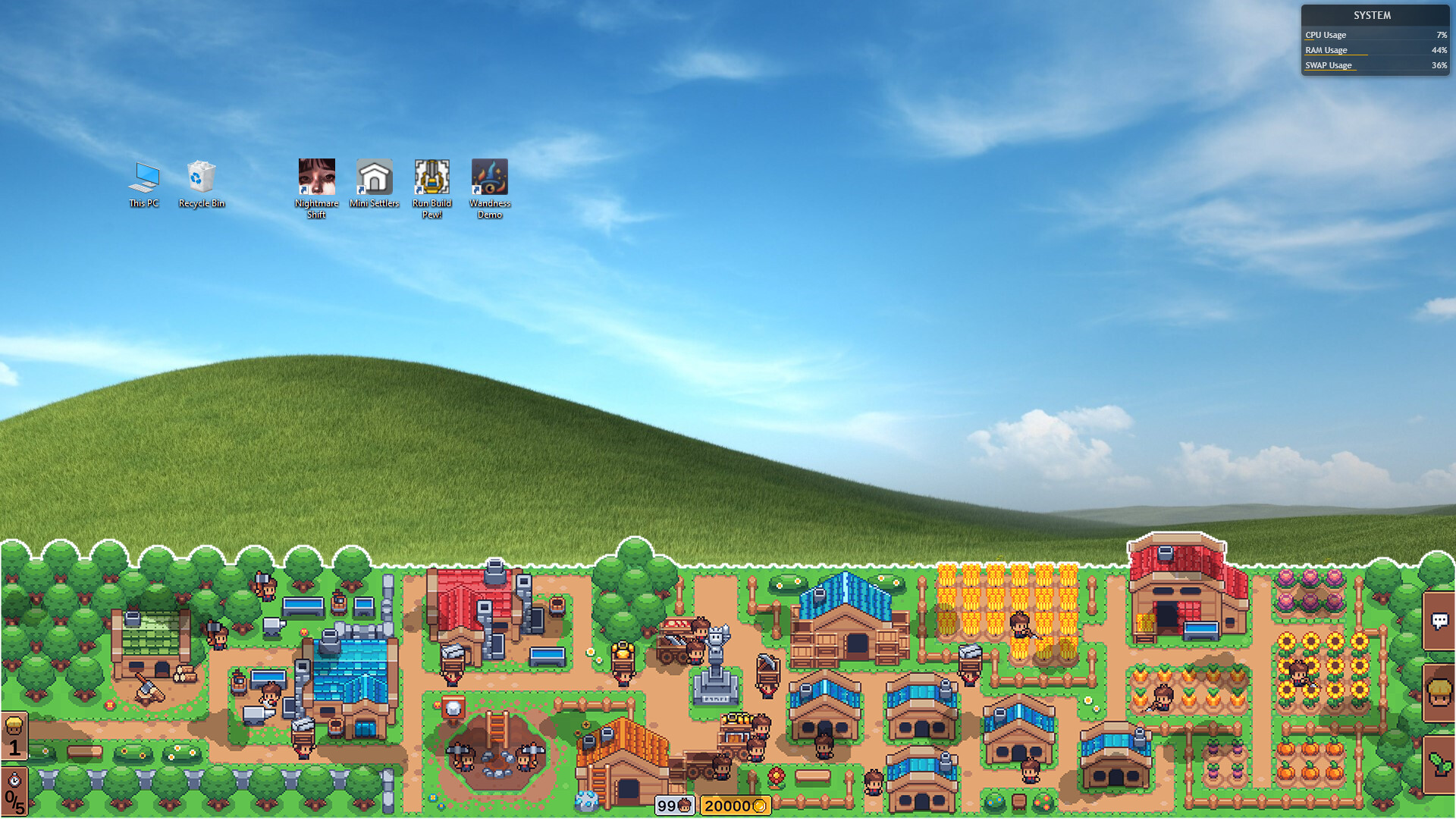
The village runs as a persistent strip along the bottom of the screen, sitting over the desktop rather than in its own window.Image: Knight Owl Games via Steam -
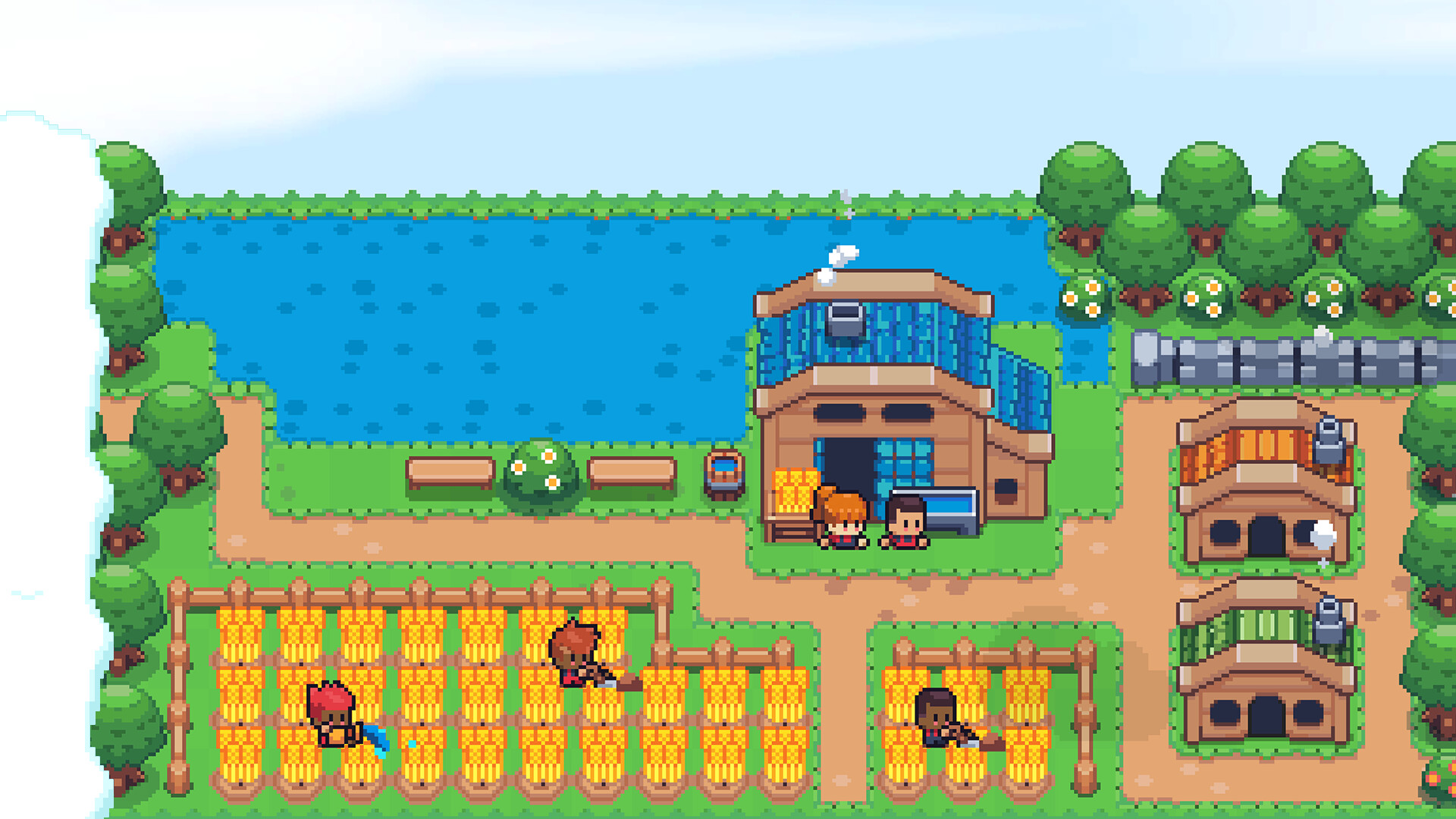
Villagers path between crop rows, buildings and the water automatically once resource-generating structures are placed.Image: Knight Owl Games via Steam -
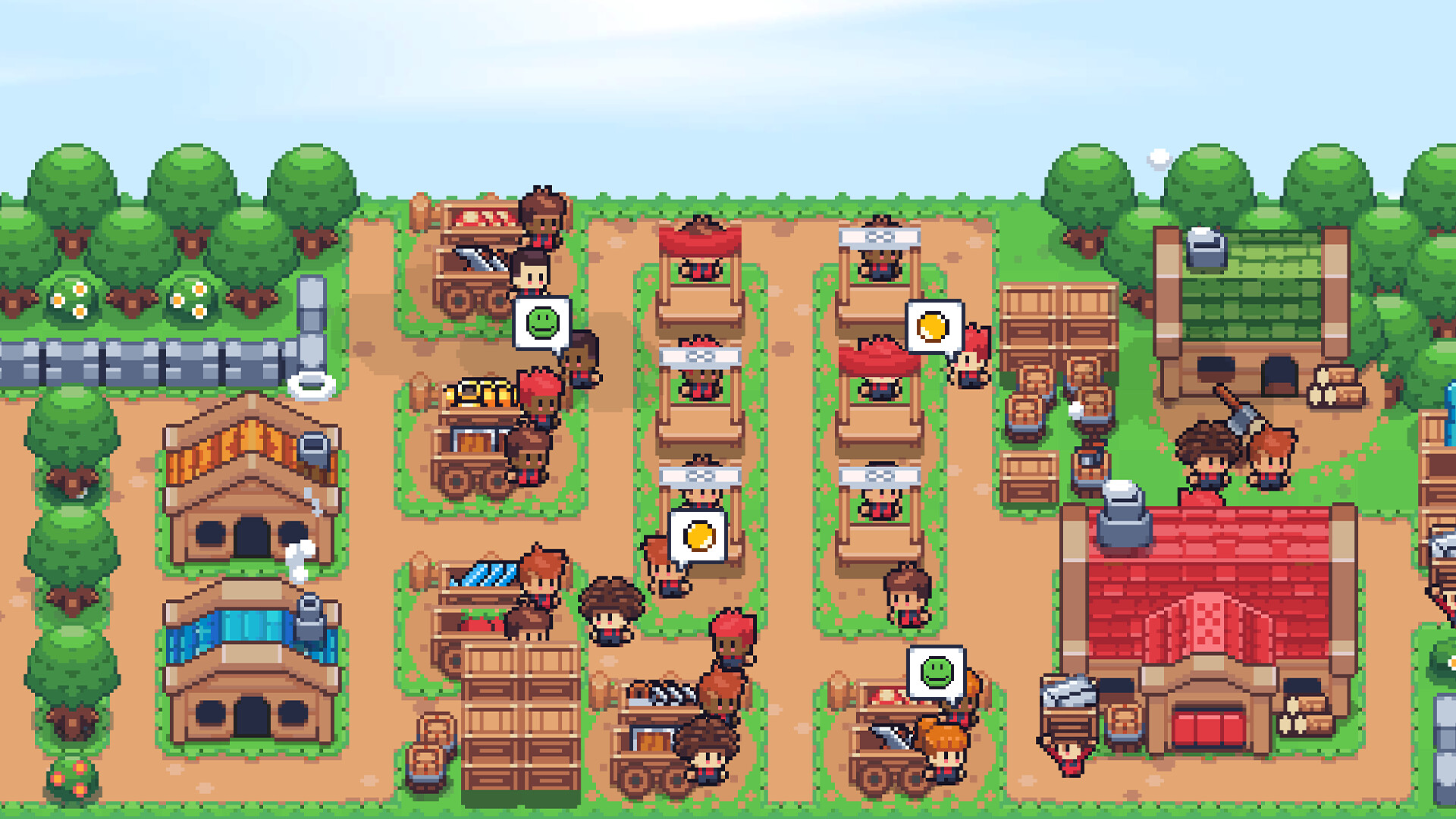
Trading stalls generate speech-bubble prompts as villagers buy and sell goods automatically, forming the core of the game's economy loop.Image: Knight Owl Games via Steam