
Game review
Vambrace: Cold Soul
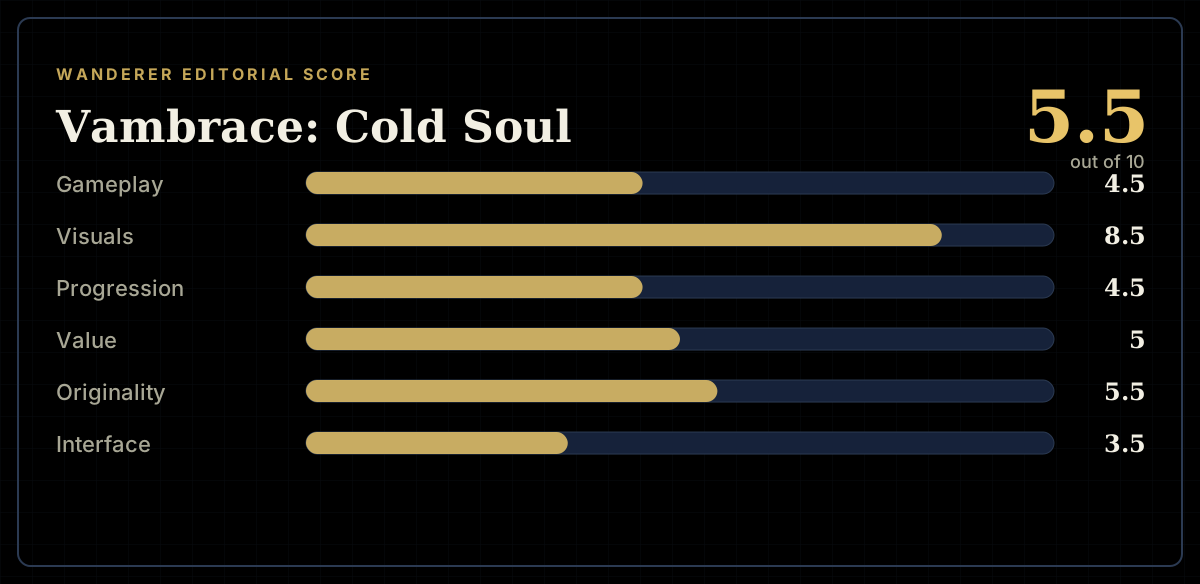
5.5 / 10
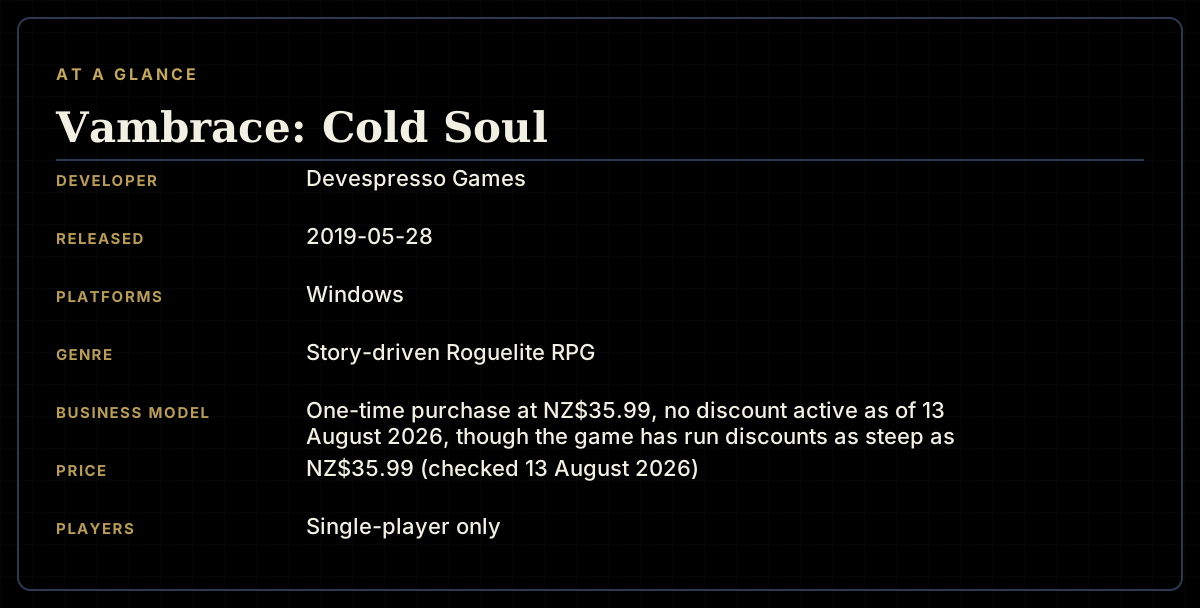
- Developer
- Devespresso Games
- Publisher
- Headup
- Released
- 28 May 2019
- Platforms
- Windows
- Genre
- Story-driven Roguelite RPG
- Monetisation
- One-time purchase at NZ$35.99, no discount active as of 13 August 2026, though the game has run discounts as steep as 95% in the past year -- several reviewers explicitly recommend waiting for one.
- Players
- Single-player only
The short version
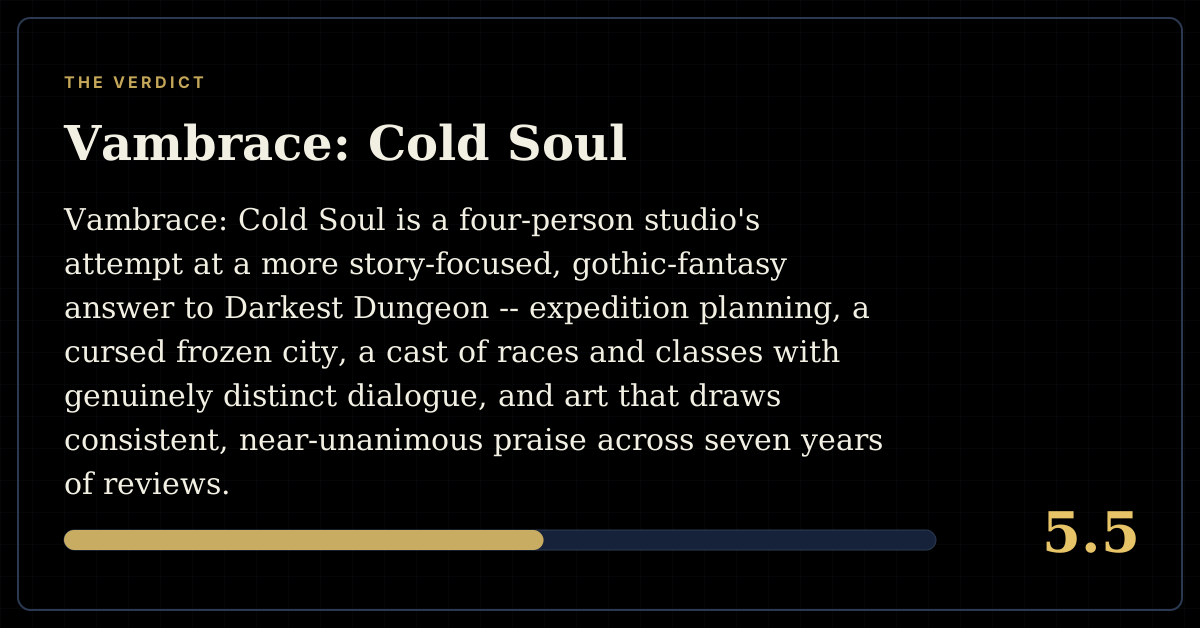
Vambrace: Cold Soul is a four-person studio's attempt at a more story-focused, gothic-fantasy answer to Darkest Dungeon -- expedition planning, a cursed frozen city, a cast of races and classes with genuinely distinct dialogue, and art that draws consistent, near-unanimous praise across seven years of reviews. It launched to Mixed scores (Metacritic 59 PC/Switch, 66 Xbox) and sits at Mixed on Steam today too, 65.8% positive of 952 reviews.
The specific reasons haven't shifted since launch: a UI reviewers repeatedly call among the worst they've encountered (no combat tooltips, unreadable status icons, hidden class information), a main-character-death-wipes-the-party rule that turns RNG spikes into full expedition losses, and a cosmetic-unlock system that the global achievement data confirms takes multiple full playthroughs to complete -- the rarest skin achievements sit at 3.6-4.6% completion. Devespresso patched hard in the first week (difficulty cuts, New Game+, fast-forward combat), but the fundamental complaints from May 2019 are the same ones reviewers are writing in 2026.
Biggest strengths
- Genuinely striking gothic fantasy art direction and character design that draws praise in almost every review this piece checked, positive and negative alike
- A story-first framing with real dialogue variety between party members and races, which some reviewers say carries the game further than its combat does
- Devespresso responded to launch feedback fast, patching difficulty, adding New Game+ and fast-forward combat, and adding Steam Cloud saves within the first week
Biggest weaknesses
- A UI reviewers repeatedly call among the worst they've seen in the genre -- no combat tooltips, unexplained status icons, and character classes that aren't shown anywhere in the interface
- If your main character dies, the entire party wipes regardless of the rest of the team's condition -- a punishing rule reviewers call a "dumb mechanic" that turns single bad rolls into full expedition losses
- Persistent, specific bug reports across multiple years -- quests that fail to trigger or clear, an arena encounter one reviewer describes getting permanently soft-locked in
Who it's for: Players drawn in specifically by the gothic fantasy art and setting who can tolerate a genuinely rough, undertaught interface and some real jank. Not a substitute for Darkest Dungeon if you want that game's tight, transparent systems -- reviewers compare the two constantly, and Vambrace loses that comparison almost every time.
Our recommendation: Worth a look on a deep sale for the art and setting specifically, which is the angle nearly every positive review takes -- several buyers who paid NZ$3-5 during a past 90%+ discount call it good value at that price while explicitly warning against paying full price.
5.5 / 10
Four people made Vambrace: Cold Soul. That's worth keeping in view throughout, because it explains both the game's clearest strength and most of its problems: a small South Korean studio, Devespresso Games, best known before this for the point-and-click horror game The Coma, reaching for something considerably more ambitious — a story-driven, gothic-fantasy roguelite explicitly in conversation with Darkest Dungeon — with the resources of a team that size. CEO Minho Kim described the game's world and concept as "15 years in the making" conceptually, though active production began around 2016. It shipped on Windows on 28 May 2019, with Xbox One, PlayStation 4 and Switch versions following that August, and it's spent the seven years since sitting at Mixed on Steam, 65.8% positive of 952 reviews — a small but remarkably stable number, barely moved from launch.
What it's trying to be
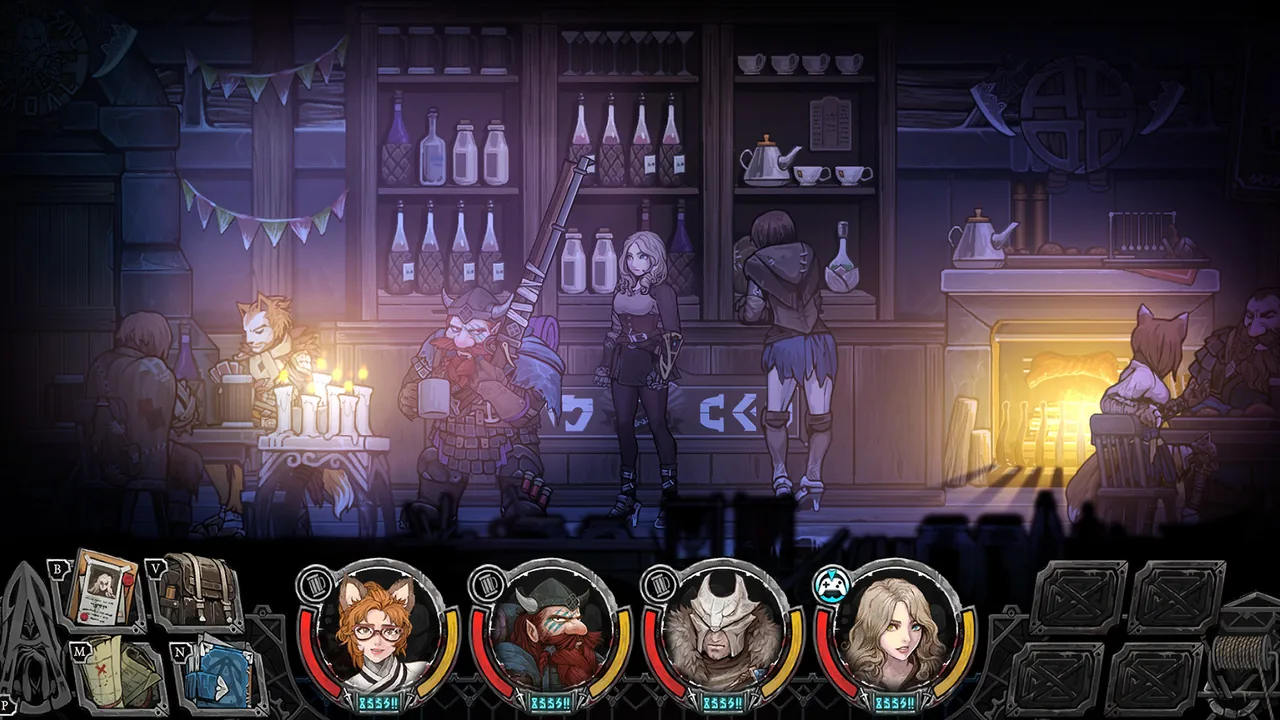
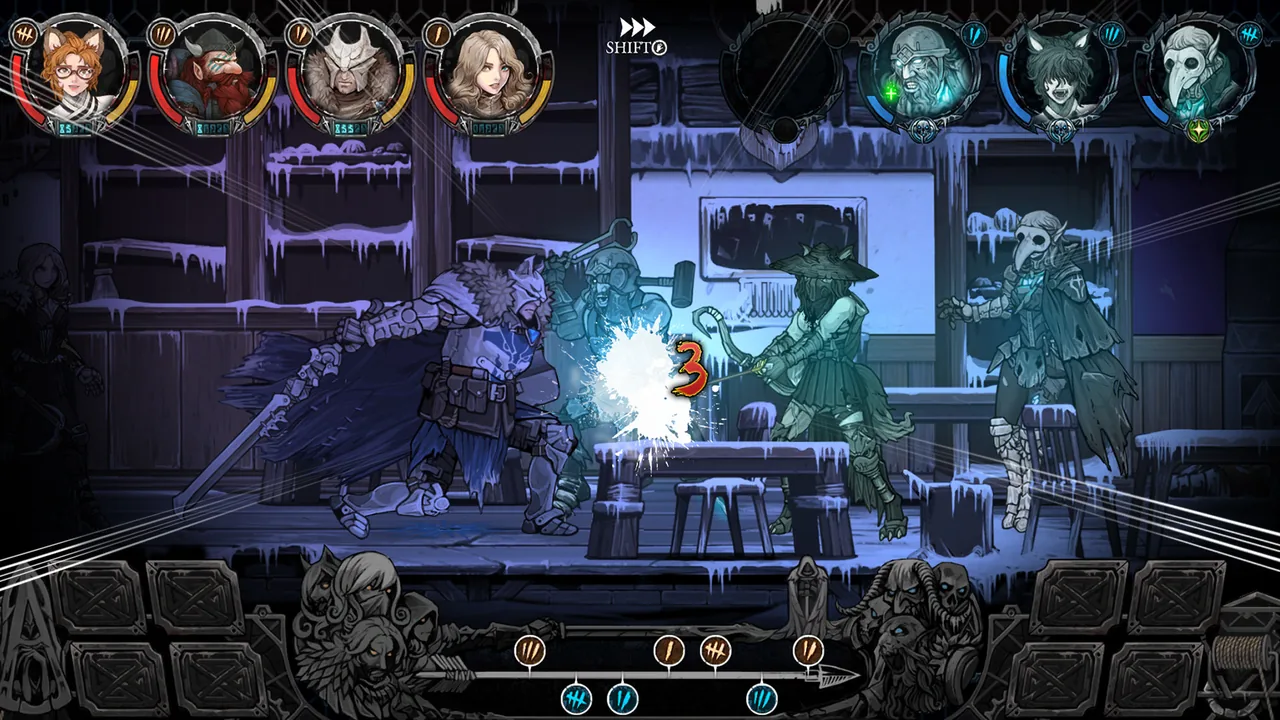
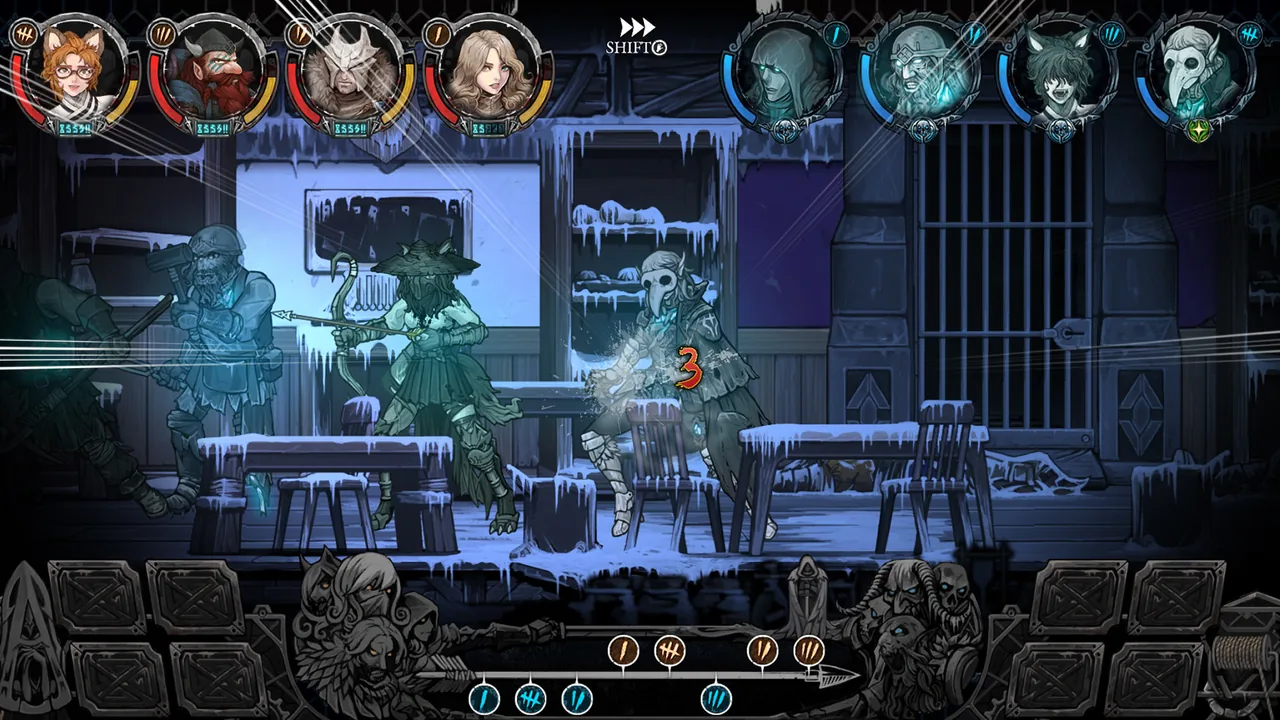
You lead a party of adventurers from the city of Icenaire down into a cursed, frozen underground after the city's protective magic — the Vambrace — starts to fail. Between expeditions, you manage a roster of hired party members, each with a class, a race, and genuinely distinct dialogue that several reviewers single out as a real strength; the "choosing my party was hard because I liked everyone" reaction shows up more than once in the review sample checked for this piece. Combat is turn-based, layered onto real-time overworld and dungeon movement, with a Health/Vigor system standing in for Darkest Dungeon's stress mechanic and a "Geistometer" that fills with Terror the longer an expedition runs, escalating encounters the deeper and longer you push. It's a clear, legible pitch: keep the tension and party-management hooks that made Darkest Dungeon a hit, but foreground story and character over that game's grim, systemic minimalism.
The art is where that pitch lands cleanly and consistently. Across the entire seven-year review history — launch week reviews from May 2019 and reviews written this year say almost the identical thing — the visual design, the gothic city, the character portraits and the sheer volume of unlockable cosmetic outfits draw close to unanimous praise, including from reviewers who otherwise recommend against buying the game. "The art is so beautiful, the scenery, the setting is great," reads one detailed 2024 review, from a player with well over a hundred hours logged, that goes on to explain in careful detail exactly why they still can't recommend it.
Where it loses the comparison
That comparison to Darkest Dungeon is not incidental — reviewers reach for it constantly, unprompted, across every year of the sample — and Vambrace loses it on almost every specific point raised. The most consistent, most detailed complaint is the interface. Reviewers describe a combat screen with no tooltips for hit chances, status effects or ability descriptions; status icons that get reused to mean different things depending on context, explained nowhere in the UI itself; and character classes that, remarkably, aren't displayed anywhere the player can see them — one reviewer describes trying to equip a class-restricted relic by process of elimination, testing it on party members one at a time to find out who could use it. "Imagine a large, out-of-shape man climbing in front of your computer screen at every possible opportunity, and that's what Vambrace's user interface feels like," reads one particularly vivid description, from a review that goes on to document, across seven separate edits made while continuing to play, an arena encounter that soft-locked permanently, a quest log that fails to correctly record cleared objectives, and a late-game boss with an instant-kill attack that interacts badly with the game's single harshest design decision: if your main character dies, the whole party wipes, regardless of how healthy the rest of the team is. Reviewers call this rule specifically frustrating rather than merely difficult, since it converts one unlucky enemy target-selection roll into the loss of an entire expedition's progress.
A second recurring complaint is combat depth, or the lack of it. Multiple reviewers, across multiple years, describe the actual moment-to-moment fighting as repetitive and shallow next to the strength of the presentation around it — "spamming two buttons for 20 hours," as one launch-week review puts it, and "the main gameplay loop is not fun at all" as a 2022 review summarizes more flatly. This isn't a universal reaction — some reviewers specifically defend the combat as "decent" or "streamlined" rather than shallow — but it's frequent enough, and specific enough about what's missing (skill variety, meaningful tactical choices, real character build differentiation, since party members don't level up in the traditional sense and are instead improved almost entirely through equipment), that it reads as a genuine design limitation rather than a difficulty complaint dressed up as a balance one.
A studio that tried, and a fanbase that's still there for the art
To Devespresso's credit, the response to launch feedback was fast and unusually thorough for a four-person team: contemporary coverage documents an almost-daily patch cadence through the first week after release, cutting difficulty, adding shelters outside the main hub city, and shipping New Game+, a combat fast-forward option and Steam Cloud saves in short order. That's a real, concrete effort to listen and respond, and it shows up in a handful of reviews that specifically credit the studio for continuing to update and take feedback on board. It didn't move the aggregate score much — the Mixed rating from launch week is essentially the same Mixed rating the game carries seven years later — which suggests the patches addressed real but secondary friction points without touching the two structural issues (the UI and the party-wipe rule) that reviewers keep coming back to across the entire span since.
What has kept the game visible seven years on is discounting. Vambrace has run promotions as deep as 95% off within the past year, and a distinct, repeated pattern shows up in the positive review sample: buyers who picked it up for NZ$3-5 during a sale consistently rate it well and explicitly frame that price as the reason. "I got it on sale for $3. My first playthrough took 18.7 hours. Definitely worth more than $3, but I probably wouldn't advise paying" full price, reads one typical review from 2025. That's a genuinely useful, consistent signal from the data rather than a one-off opinion: this is a full-price-versus-sale-price game in a way relatively few titles are quite this explicitly, and the review sample backs that framing up from both directions.
The global achievement data corroborates the cosmetic-grind complaint specifically. The most commonly earned achievement sits at 81.3%, a story-progress milestone most players who start the game reach, but the skin-specific achievements — tied to completing the story via different route and choice combinations — bottom out at 3.6% to 4.6% completion, confirming reviewer accounts that collecting the full outfit set realistically requires several full playthroughs rather than one thorough one.
Verdict
Vambrace: Cold Soul is an honest example of a small team's reach exceeding its grasp in a specific, identifiable way: the art, world and character writing are consistently good enough to draw people in and keep a small but real fanbase defending the game seven years later, while the interface and a couple of harsh, poorly-communicated systems (the party-wipe rule chief among them) keep it from ever climbing out of Mixed. Devespresso's fast first-week patch cycle shows a studio that cared and listened, which is worth crediting even though it didn't solve the deeper problems. If the gothic setting and art style genuinely appeal to you, the review data points to one clear piece of advice, repeated by buyer after buyer across seven years: wait for a deep sale.
5.5 out of 10. Beautiful, ambitious for its team size, and held back by a genuinely rough interface and a punishing core rule that reviewers have been making the same specific complaints about since the week it launched.
Pros and cons
Pros
- Genuinely striking gothic fantasy art direction and character design that draws praise in almost every review this piece checked, positive and negative alike
- A story-first framing with real dialogue variety between party members and races, which some reviewers say carries the game further than its combat does
- Devespresso responded to launch feedback fast, patching difficulty, adding New Game+ and fast-forward combat, and adding Steam Cloud saves within the first week
- Frequently available at very deep discounts (up to 95% off in the past year), where several reviewers say it becomes good value
Cons
- A UI reviewers repeatedly call among the worst they've seen in the genre -- no combat tooltips, unexplained status icons, and character classes that aren't shown anywhere in the interface
- If your main character dies, the entire party wipes regardless of the rest of the team's condition -- a punishing rule reviewers call a "dumb mechanic" that turns single bad rolls into full expedition losses
- Persistent, specific bug reports across multiple years -- quests that fail to trigger or clear, an arena encounter one reviewer describes getting permanently soft-locked in
- Full cosmetic collection requires multiple complete playthroughs; the rarest skin-related achievements sit at just 3.6-4.6% of players according to Steam's global achievement data
Screenshots
-
Vambrace: Cold SoulImage: Headup via Steam -
Vambrace: Cold SoulImage: Headup via Steam -
Vambrace: Cold SoulImage: Headup via Steam -
How the review scores each part of the gameWanderer Editorial -
The essentialsWanderer Editorial -
The short versionWanderer Editorial