
Game review
United Penguin Kingdom
4.5 / 10
- Developer
- Turquoise Revival Games
- Publisher
- GrabTheGames, UpgradePoint
- Released
- 9 March 2024
- Platforms
- Windows
- Genre
- Penguin colony city-builder with survival threats
- Monetisation
- One-time purchase, no in-game store or additional currency purchases
- Players
- Single-player only, though core progression is measured against other players' live reputation rankings
The short version
United Penguin Kingdom asks you to build and grow a penguin settlement, balancing food, entertainment, education and defenses against killer whales and thieving seals — a cute, approachable premise reviewers say genuinely works for newcomers to the city-builder genre. Its core progression system undermines almost everything built around it: advancing from village to city to province is gated behind a reputation stat that reviewers say is measured against other players' live standing on a global leaderboard, and that same reputation actively decays over time, causing entire settlements to regress to a lower tier if a player doesn't keep pace. For a strictly single-player game, this is an unusual and, by a wide reviewer consensus, poorly executed choice, and it appears to be one the developer has not revisited since a final patch in December 2024.
Biggest strengths
- The core building variety is genuinely broad for the price, spanning entertainment venues, education buildings, and spirituality structures alongside the expected food and housing chains, giving early hours real texture
- Multiple reviewers explicitly recommend the game specifically to city-builder newcomers, citing its low difficulty and gentle pacing as a genuinely good entry point into the genre
- The premise is charming and well-presented, with a distinctive penguin-settlement theme and named threats (killer whales, thieving seals) that give structure to the survival layer
Biggest weaknesses
- Advancing past the game's early settlement tiers is reported to require a reputation ranking measured against other players on a live leaderboard, meaning newer or less-active players can become permanently unable to progress once early adopters have pulled far enough ahead — an unusual and widely criticised choice for an otherwise single-player game
- The same reputation stat decays over time, and multiple reviewers describe entire settlements regressing from province back to city status, or city back to village, if a player can't maintain constant activity — one reviewer calls this "forced regression" and says it's the specific reason they can't recommend the game to anyone
- Buildings cannot be moved or upgraded once placed; reviewers repeatedly describe having to fully destroy and rebuild structures instead, calling it a straightforwardly bad design choice rather than an intentional challenge
Who it's for: Complete newcomers to the city-builder genre who want something cute and low-stakes for a few early hours, rather than genre veterans or anyone hoping to build a long-term settlement without hitting an artificial progress wall.
Our recommendation: Reasonable at a steep discount for a handful of charming early hours; avoid expecting to reach the game's higher settlement tiers, since the reputation-decay system means most players get permanently stuck well before then, and no fix has arrived since the developer's last update in December 2024.
4.5 / 10
United Penguin Kingdom's opening pitch is charming and simple: settle a colony of penguins on the ice, keep them fed, entertained and educated, and defend the settlement against killer whales and food-stealing seals as it grows from a village into a city and eventually a kingdom. Multiple reviewers say the early hours genuinely deliver on that pitch, and specifically recommend the game to newcomers looking for a gentle way into the city-builder genre. What those same reviewers, and many others, describe in detail is a progression system built around a single design decision that undoes much of that early goodwill — one that ties a strictly single-player game's advancement to a live comparison against other players, and then makes that comparison actively decay over time.
A gentle, well-liked entry point for newcomers
Setting the core complaint aside for a moment, the building and management layer draws real, specific praise. One reviewer frames this directly: "If you are new to city builders, then I highly recommend this game... it's user friendly, simple to understand, and gives you the time and freedom to learn." The building roster is broad for the price, spanning food production, medicine, entertainment venues like ice rinks and cinemas, and education buildings, giving the early game genuine texture rather than a bare-bones resource loop. The killer whale and seal threats add a light survival layer without demanding the constant vigilance a harder colony sim might, which several reviewers cite as part of what makes it approachable.
A reputation wall built into a single-player game
The trouble starts with how the game gates further progress. Multiple reviewers describe advancing past early settlement tiers as dependent on a reputation ranking measured against other players' standing on a live leaderboard — not against a fixed target, but against how well other players happen to be doing. One reviewer states this plainly and with visible frustration: "over half the buildings are locked behind your rating against the top 6 world players... so you get stuck, cannot advance anything until you become top 6, which might be the dumbest thing ever in a game." Another separately asks the more obvious question: "It's a single player game, why do I need to be pushed regarding other players' activity?" This is an unusual structural choice for a game with no other multiplayer component at all, and the review sample treats it less as a debatable design decision and more as a fundamental miscalibration — something that punishes anyone who didn't start playing early enough to build up reputation before the leaderboard filled with more dedicated players.
Progress that runs backward
Compounding the leaderboard problem, the same reputation stat is reported to decay over time, meaning a settlement's tier can actually regress rather than simply stall. One reviewer, having reached the game's "province" tier, describes reputation "dipping back into city status" and being unable to climb back regardless of continued play, despite having "150,000 science points" banked. Another calls this "forced regression" directly, comparing the structure unfavourably to a gacha game's engagement-farming mechanics rather than a traditional city-builder's steady, permanent growth. A third simply notes that most of the rewards tied to reputation are "temporary in nature," meaning the resource the game asks you to prioritise above all else is one that actively works against long-term investment. Steam's own achievement data reflects exactly this pattern: early building achievements sit comfortably above 74% completion, but the badges tied to reaching higher settlement tiers collapse to between 1.6% and 2.4% — a gap consistent with a system where very few players ever break through, or stay through, the tier wall.
Smaller frictions that compound the bigger one
Beyond the headline progression complaint, a specific and widely-repeated interface criticism concerns building placement: structures cannot be moved or upgraded once placed, requiring a full destroy-and-rebuild cycle instead. "Its more frustrating than fun sadly," one reviewer writes, "the biggest letdown for me is the constant rebuilding and replacement of buildings... instead [of] able to drag them to other places or just upgrade them." Combined with reports of forced spacing between buildings and penguins ignoring placed roads, this reads as a genre-standard quality-of-life feature that simply didn't make it into the finished game, adding friction on top of the reputation system's structural problems rather than existing as an isolated complaint.
A game the developer appears to have stopped supporting
This review can verify directly how much attention the game has received since launch. The Steam partner-events feed shows exactly two version updates in the game's entire lifetime — one in April 2024, a second in December 2024 — with no further activity of any kind visible since, nearly two years on from that second patch. One reviewer with nearly 3,000 minutes logged captures the resulting frustration precisely: "the game is not updated for years and the achievements are too much work... could be fun if the developer would care about the game and fix it." Given how squarely the reputation-wall and regression complaints sit at the center of the negative reviews, and how long they've apparently gone unaddressed, this reads as a case where the core fix the community is asking for simply hasn't come, rather than one still plausibly in progress.
Final verdict
United Penguin Kingdom's opening hours are exactly as charming and approachable as its premise promises, and for a genre newcomer looking for something gentle and low-stakes, that's a genuine, specific point in its favour. But its core progression design — gating advancement behind a live comparison to other players' reputation, then letting that same reputation decay and drag a settlement backward — is a serious, well-documented structural flaw in what's otherwise a strictly single-player game, and Steam's own achievement data confirms how few players ever get past it. With no update since December 2024, there's no indication that flaw is being revisited. Buy it at a steep discount for a cute few hours with your first penguin village, and don't expect to see the kingdom the box art promises.
Pros and cons
Pros
- The core building variety is genuinely broad for the price, spanning entertainment venues, education buildings, and spirituality structures alongside the expected food and housing chains, giving early hours real texture
- Multiple reviewers explicitly recommend the game specifically to city-builder newcomers, citing its low difficulty and gentle pacing as a genuinely good entry point into the genre
- The premise is charming and well-presented, with a distinctive penguin-settlement theme and named threats (killer whales, thieving seals) that give structure to the survival layer
- A free prologue and demo were available well before release, letting buyers sample the core building loop before purchasing
- The developer's two post-launch updates, in April and December 2024, show at least some responsiveness to feedback in the game's first year, even if that responsiveness didn't extend to the progression system reviewers most wanted fixed
Cons
- Advancing past the game's early settlement tiers is reported to require a reputation ranking measured against other players on a live leaderboard, meaning newer or less-active players can become permanently unable to progress once early adopters have pulled far enough ahead — an unusual and widely criticised choice for an otherwise single-player game
- The same reputation stat decays over time, and multiple reviewers describe entire settlements regressing from province back to city status, or city back to village, if a player can't maintain constant activity — one reviewer calls this "forced regression" and says it's the specific reason they can't recommend the game to anyone
- Buildings cannot be moved or upgraded once placed; reviewers repeatedly describe having to fully destroy and rebuild structures instead, calling it a straightforwardly bad design choice rather than an intentional challenge
- Steam's own achievement data shows an extremely steep completion cliff consistent with the progression complaints — early building achievements sit above 74%, while tier-badge achievements tied to reaching higher settlement ranks fall to between 1.6% and 2.4%
- The Steam partner-events feed shows only two updates in the game's entire lifetime, in April and December 2024, with no further activity since; at least one reviewer with nearly 3,000 minutes logged states plainly the game "could be fun if the developer would care about the game and fix it"
Screenshots
-

United Penguin KingdomImage: GrabTheGames via Steam -

United Penguin KingdomImage: GrabTheGames via Steam -

United Penguin KingdomImage: GrabTheGames via Steam -
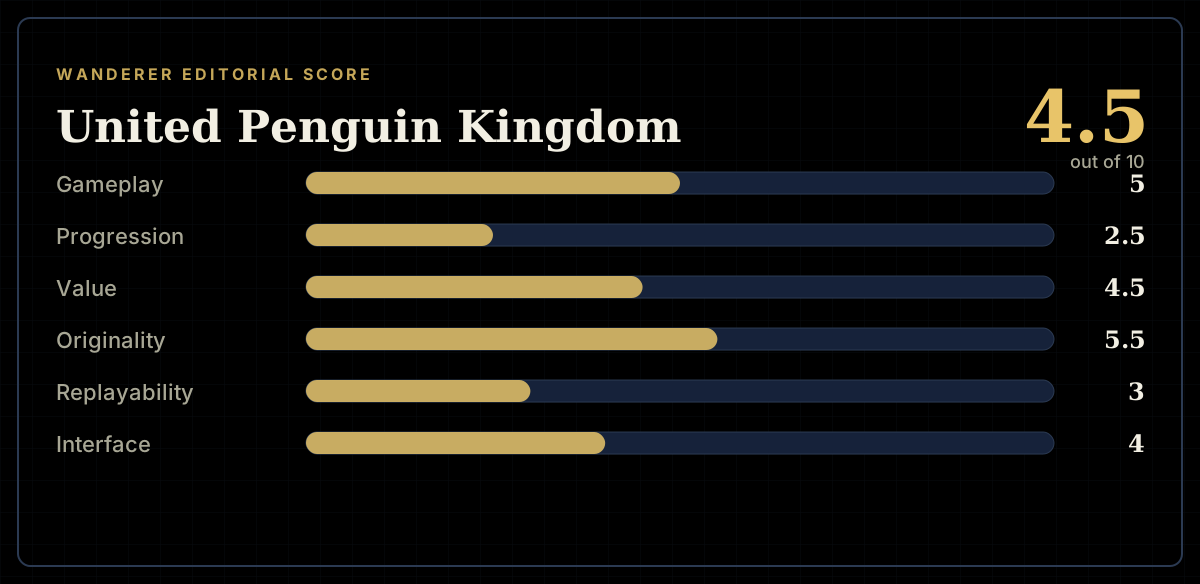
How the review scores each part of the gameWanderer Editorial -
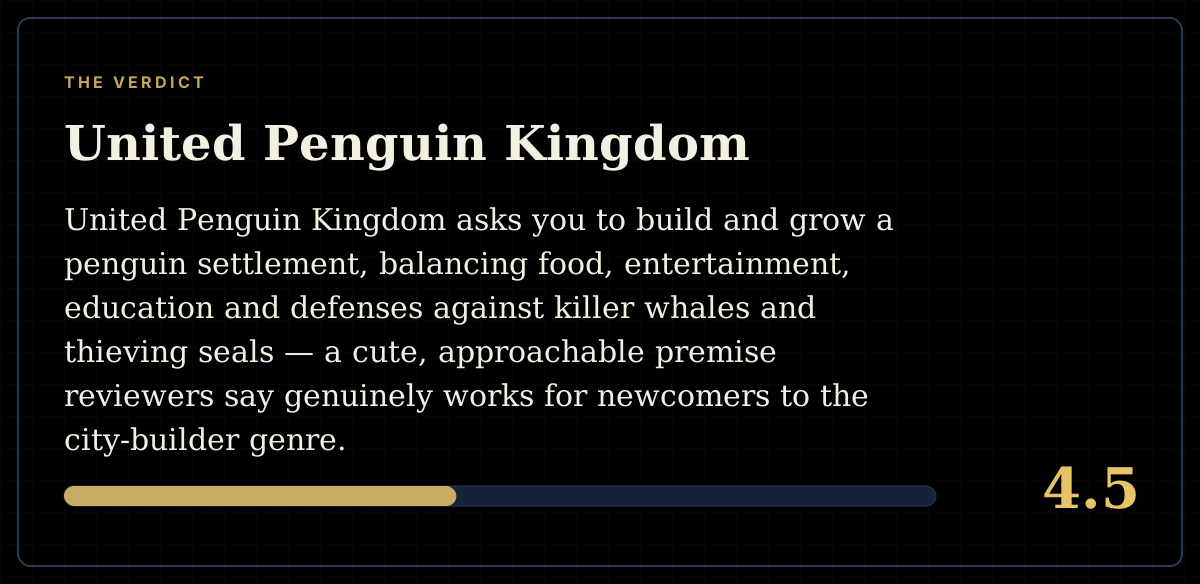
The short versionWanderer Editorial