Game review
Type or Die
3.5 / 10
- Developer
- Hunt Games
- Publisher
- Hunt Games
- Released
- 25 June 2026
- Platforms
- Windows
- Genre
- Action, Adventure, RPG, Strategy
- Monetisation
- paid
- Players
- false
The short version
Biggest strengths
- A genuinely fresh hook: typing words in real time as the core combat mechanic, layered onto a roguelite card system
- Distinctive, well-received medieval-manuscript art direction that reviewers consistently praised as the game's strongest asset
- A small number of reviewers found the concept fun enough in short bursts to recommend it, especially at a deep discount
Biggest weaknesses
- Widespread, specific bug reports across the review pool: mismatched card effects, HP/buff values that don't apply as described, forced-mouse interruptions in what should be a keyboard-only game, and combat that fails to end correctly
- A gold and shop economy multiple reviewers independently described as broken, always pricing offers around the player's exact current gold total regardless of rarity
- Little to no in-game explanation of how cards, dice, or map choices actually function, leaving players to guess at systems through trial and error
Who it's for: Typing-game curious players willing to tolerate an unfinished, buggy roguelite for a novel concept, but not recommended for anyone bothered by disputed AI-asset disclosures or expecting a polished $13.99 release
Our recommendation: not recommended
3.5 / 10
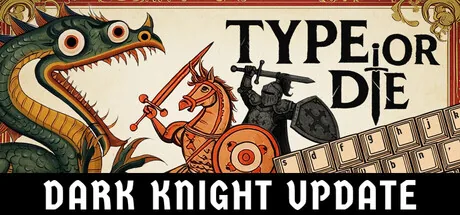
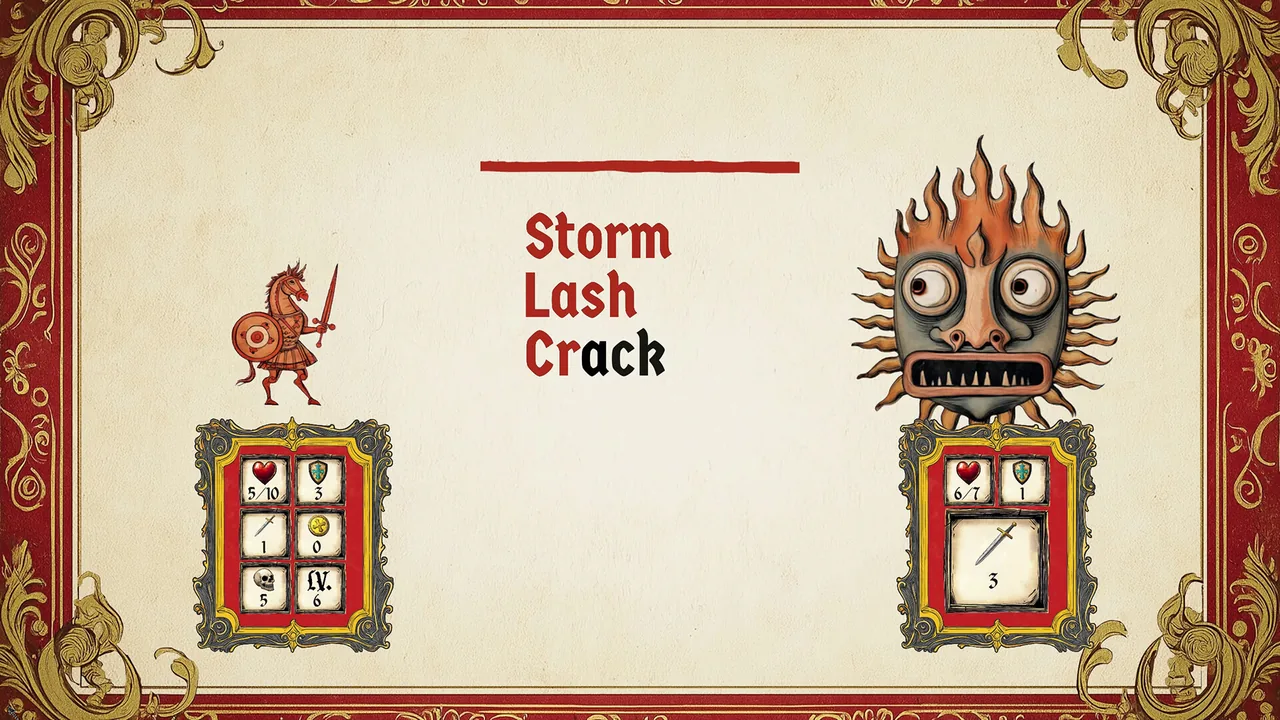
Type or Die released in full on Steam on June 25, 2026, from solo developer Hunt Games, a roguelite where a horse avenging its fallen master fights its way across a tiled board by typing words on command, collecting cards, and rolling dice between encounters. It's a genuinely novel pitch wrapped in a striking medieval-manuscript art style, and its 26-review English pool reflects a game whose concept keeps drawing people in even as its execution keeps pushing them back out: Mostly Negative, with 19 of 26 reviews negative.
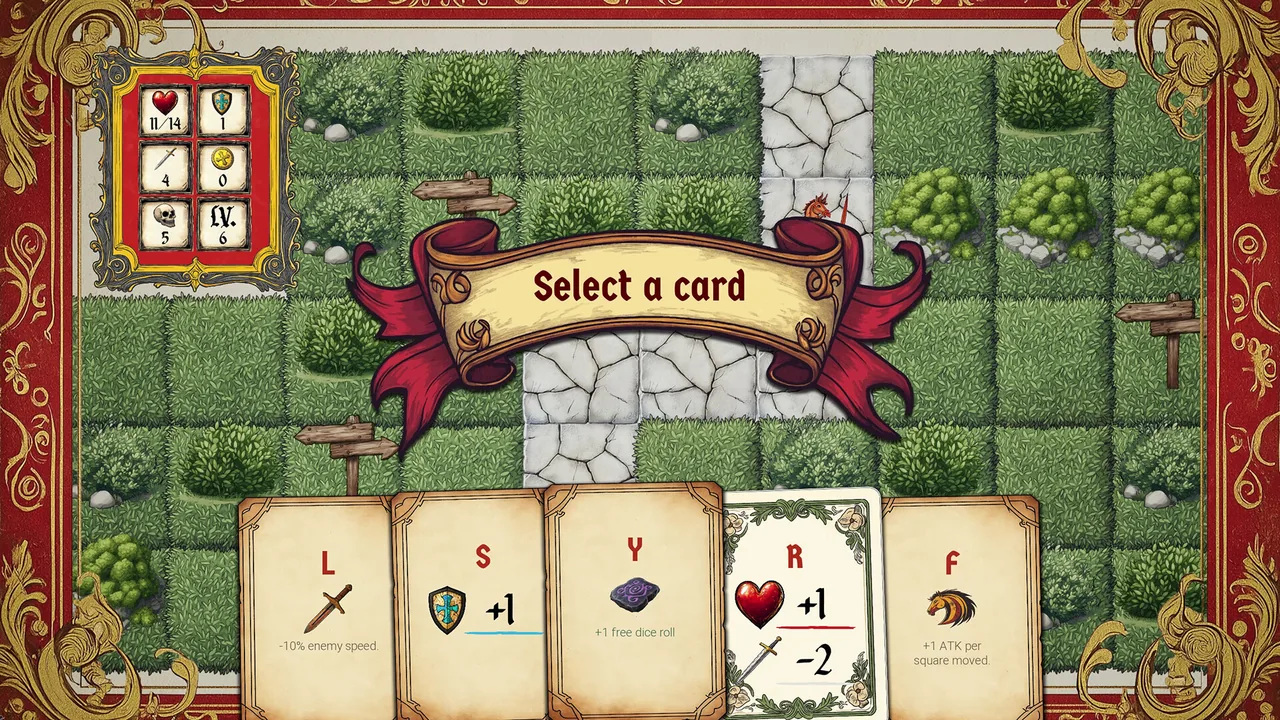
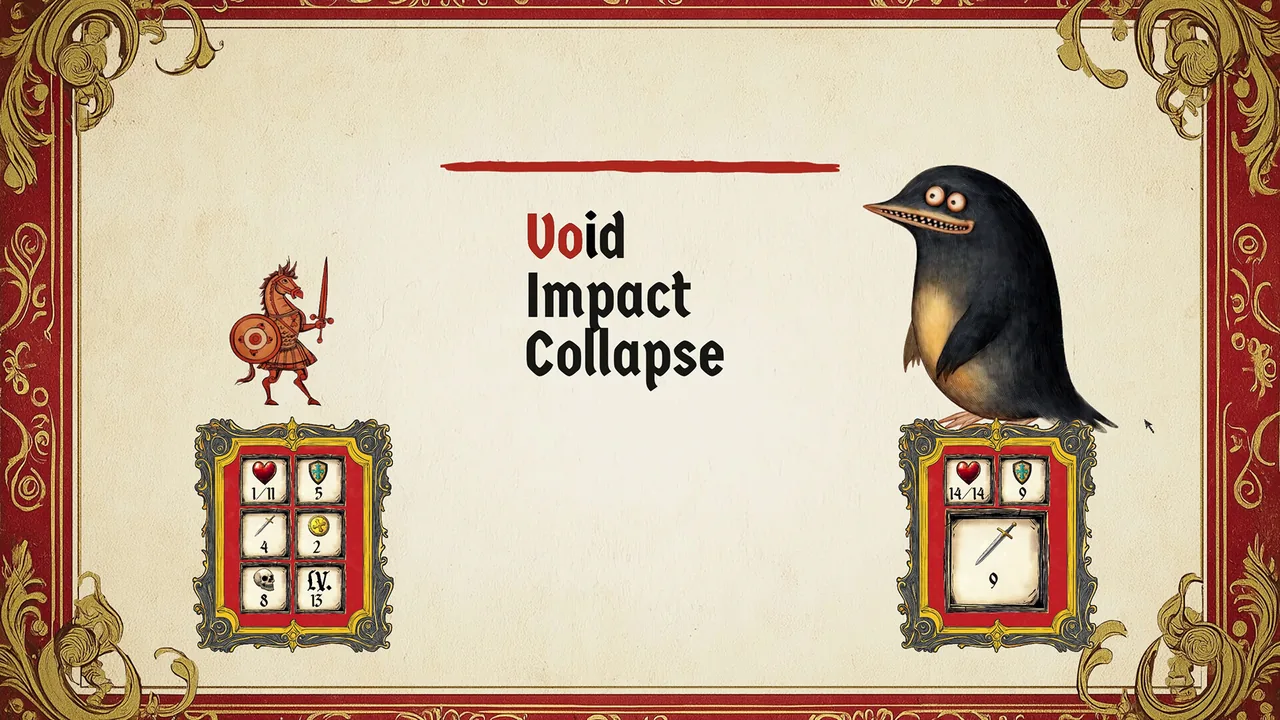
The core loop is simple to describe: roll a die to move your horse across a board, encounter monsters, chests, or events, and resolve combat by typing a rotating pool of words before a timer runs out, while card-based buffs and debuffs modify the fight. Several reviewers found real appeal in that mix even while ultimately not recommending it. One wrote that "the mix of typing gameplay, roguelite progression, and board game mechanics works surprisingly well, and the Gothic manuscript aesthetic gives it a lot of personality," and a handful of others specifically called out the concept as creative and worth revisiting once (or if) the game stabilizes. But that same enthusiasm collides, review after review, with a game reviewers describe as feeling closer to an early access build than a $13.99 full release.
The bug list compiled across the pool is long and remarkably consistent in its specifics rather than vague griping. One detailed review catalogued: a card that reduces an enemy to 0 HP that doesn't actually end the fight, a mouse cursor that disappears when clicking empty space, unselectable text bleeding through the UI, card descriptions that don't match their actual effects, a "add level to gold" perk that sets gold to the player's level instead of adding to it, and buff-stacking and status effects that behave inconsistently or not at all. Another reviewer separately confirmed several of the same categories of failure — mismatched card effects, HP and buff values that don't track correctly mid-run — describing stats getting "MIXED AND MATCHED as the game progressed further." A third reviewer flagged the shop economy specifically: prices scale to match whatever gold the player currently holds, making gold accumulation functionally pointless, a complaint echoed independently by at least two other reviewers who each described watching their hoarded gold get entirely consumed by a single purchase regardless of amount.
Interface friction compounds the confusion. Multiple reviewers noted that what should be a keyboard-only typing game constantly forces players back to the mouse to select cards or confirm choices between fights, breaking the flow the core mechanic depends on. Others pointed to a near-total absence of onboarding: card effects, dice mechanics, and map layout are left for players to reverse-engineer through trial and error, with one reviewer specifically noting a curse that was supposed to reduce attack "by 1" instead reduced it "to 1," ending their run outright. Several reviewers separately observed that branching map paths appear cosmetic, funneling players down a single effective route regardless of the choices offered.
The pool's most serious and recurring thread, though, is a dispute over the game's AI-asset disclosure, and it's corroborated across enough independently written reviews with specific, concrete details that it's worth reporting as a real point of consumer concern rather than a single aggrieved voice. The developer's store page states that AI was used only for "card icons and sprite animations," with the majority of art, design, and other systems made manually. Multiple reviewers directly dispute this, citing specific observations: visual tells they describe as characteristic of AI generation across backgrounds and UI elements well beyond stated "icons," a text-to-speech-style voiceover several reviewers independently called out as clearly synthetic, and a prior game from the same developer whose own store page reportedly states the developer doesn't know how to illustrate by hand. Several reviewers also independently reported that a Steam discussion thread questioning the disclosure's accuracy was deleted around the game's launch, and that subsequent discussion posts on the topic were removed within hours — an observable, repeatable pattern rather than a single unverifiable claim. Not every reviewer treated this as disqualifying; one explicitly credited the developer's transparency and stated intent to replace AI icons post-launch as a mitigating factor in an otherwise positive review. But the volume and specificity of reviewers citing the disclosure dispute as their actual reason for refunding is high enough that prospective buyers concerned about AI-generated assets should weigh it directly rather than assume it's settled.
Value compounds every other complaint. At $13.99, reviewers repeatedly compared the amount of actual, functional content to free mobile games, with the repetitive, small word pool and shallow card-fusion system cited as reasons runs stop feeling engaging within fifteen to twenty minutes. A few reviewers explicitly suggested it might be worth picking up only at a steep discount, treating the current asking price as fundamentally mismatched to what's delivered.
Taken together, Type or Die has a real idea buried inside it — typing as combat, wrapped in genuinely distinctive manuscript art — but between the volume of concrete, corroborated bugs, an economy several reviewers independently describe as non-functional, and a disputed AI-disclosure controversy with specific, repeatable evidence behind it, the current release does not hold together. A shallow, unfinished execution earns a harsh score regardless of how appealing the pitch sounds on paper, and this one is not recommended at its current price or state.
Pros and cons
Pros
- A genuinely fresh hook: typing words in real time as the core combat mechanic, layered onto a roguelite card system
- Distinctive, well-received medieval-manuscript art direction that reviewers consistently praised as the game's strongest asset
- A small number of reviewers found the concept fun enough in short bursts to recommend it, especially at a deep discount
Cons
- Widespread, specific bug reports across the review pool: mismatched card effects, HP/buff values that don't apply as described, forced-mouse interruptions in what should be a keyboard-only game, and combat that fails to end correctly
- A gold and shop economy multiple reviewers independently described as broken, always pricing offers around the player's exact current gold total regardless of rarity
- Little to no in-game explanation of how cards, dice, or map choices actually function, leaving players to guess at systems through trial and error
- A disputed AI-asset disclosure controversy, corroborated across many separate reviewers with specific details (a deleted developer discussion thread, discrepancies between the store page's AI-use statement and what reviewers observed in the art, voice, and writing), that several reviewers cited directly as their reason for refunding
Screenshots
-
Type or DieImage: Type or Die via Steam -
Type or DieImage: Type or Die via Steam -
Type or DieImage: Type or Die via Steam