Game review
Trashy Cashy
5.5 / 10
- Developer
- Challenging Games
- Publisher
- Challenging Games
- Released
- 24 June 2026
- Platforms
- Windows
- Genre
- Casual, Indie, Simulation
- Monetisation
- paid
- Players
- false
The short version
Biggest strengths
- A genuinely fun, novel core concept: sorting trash into star-rated items and building an automated sales operation, praised by multiple reviewers for its comedic, low-stakes tone
- A satisfying skill tree and progression system for a meaningful share of the review pool, with several reviewers reporting multiple engaging playthroughs toward different endings
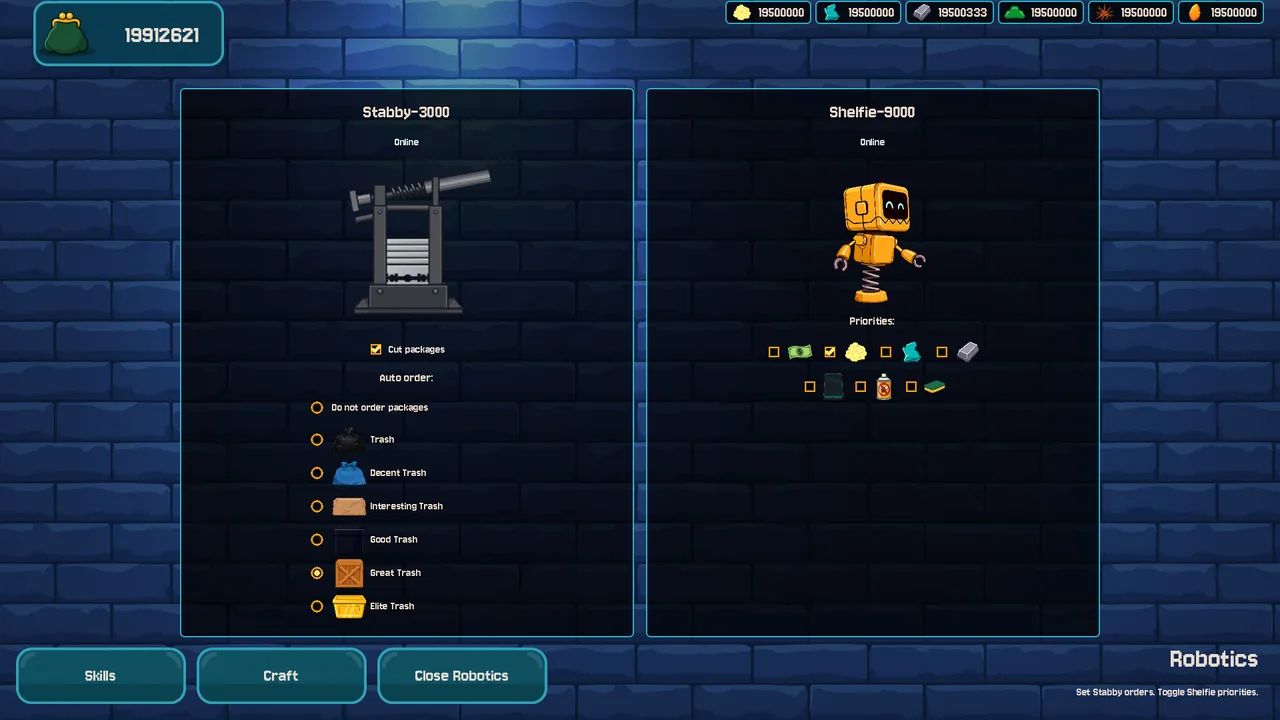
- Automation-focused late-game robots and equipment that reviewers who reached them consistently enjoyed
Biggest weaknesses
- A widely corroborated complaint that the full release paces significantly slower than the well-liked free demo it's built from, with multiple reviewers saying that change specifically deflated their excitement
- A recycling/alternative-currency mechanic that at least one detailed reviewer called "last minute busywork" bolted onto the core loop
- A poorly balanced skill tree flagged by more than one reviewer, compounded by obnoxious, overused sound effects according to a separate detailed review
Who it's for: Incremental/idle fans who enjoy short, sandbox-y automation loops with a comedic tone, and who can tolerate a grindier late game than the free demo suggested, ideally buying on a discount rather than at full price
Our recommendation: recommended with caveats
5.5 / 10
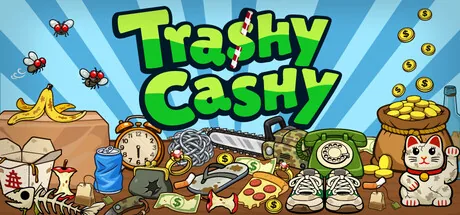
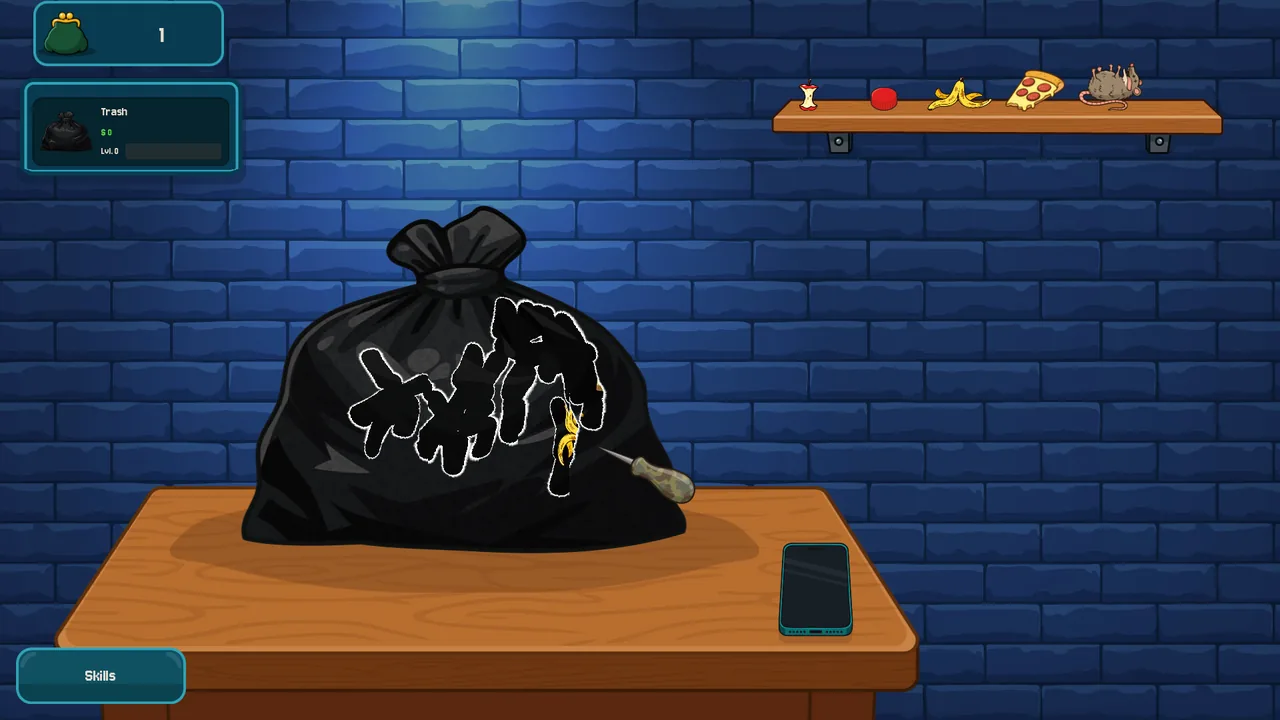
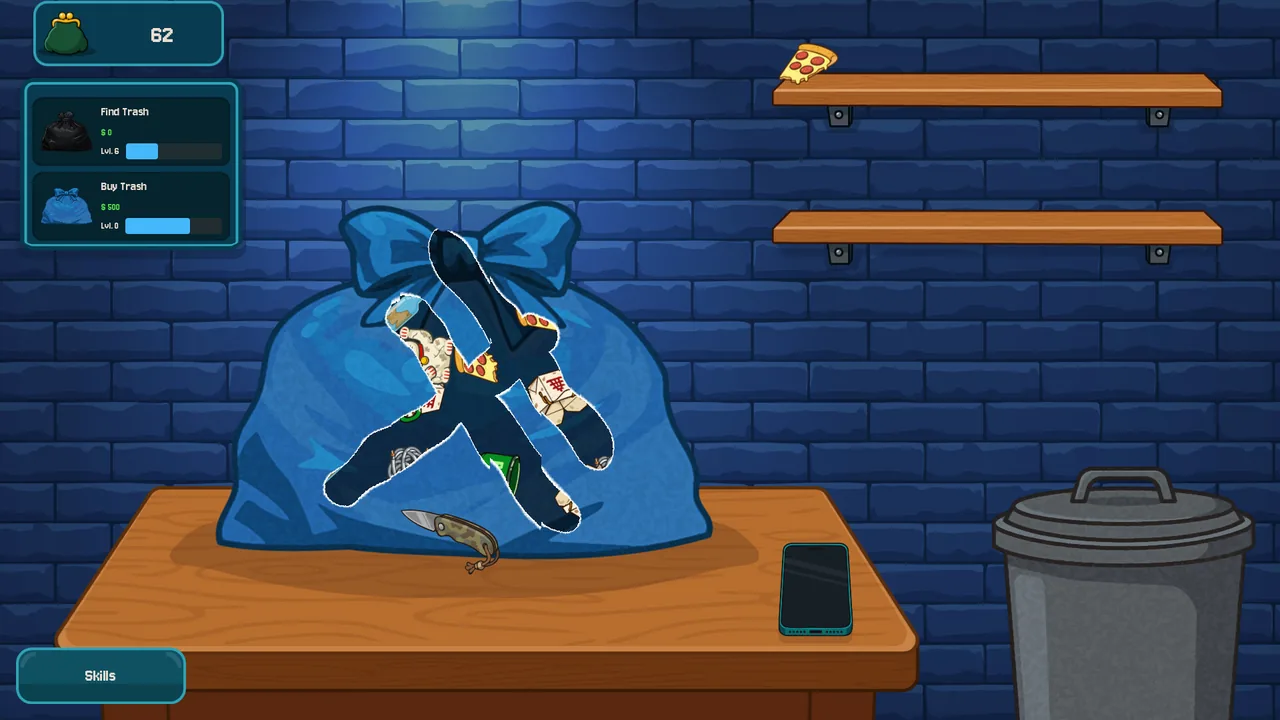
Unpacking trash for outrageous profit
Trashy Cashy's premise is straightforward and a little absurd: join a mysterious franchise that pays outrageous sums for sorted trash, and build up an automated operation to unpack, evaluate, and ship it off without asking too many questions about where the money actually comes from. Reviewers who clicked with that tone found it genuinely charming. One called it "really fun, slightly addictive and unfortunately very short," while another, after nearly skipping it due to negative reviews, reported completing it in "3ish hours to 100%" and specifically praised "the progression, the music was good," concluding it's "definitely a good one" even if not the genre's best.
A demo players loved, and a full release that lost something
The single most consistent, corroborated thread running through this review pool, positive and negative alike, is a direct comparison to the game's earlier free demo, and it's not flattering to the full release. One reviewer wrote plainly, "I loved the demo. It got me genuinely excited for the full release... Sadly, the full game was a letdown. The beginning feels much slower than the demo, and it immediately killed a lot of my excitement." Another confirmed the same pattern from the negative side: "definitely a lot slower progression than the demo. I went straight from the demo to the full release and was underwhelmed." A third reviewer, blunter still, wrote "the Demo was better... just play the demo. You're not missing much... Except they removed the demo cause they knew it was better." That's an unusually specific and repeated complaint pattern worth flagging clearly: whatever pacing changes shipped between the demo and the full release appear to have cost the game real goodwill among players who tried both.
A bolted-on currency system reviewers weren't sold on
Beyond general pacing, at least one detailed reviewer identified a specific structural culprit: a recycling mechanic introduced as an "alternative currency" late in development. They described it as feeling "like a last minute busywork addition, as many 'alternative currencies' often do in this type of game," calling the overall experience "very anticlimactic" as a result. That's a specific, plausible explanation for the broader slowdown complaint other reviewers reported more vaguely, and it points at a concrete design decision rather than just general grind fatigue.
Skill tree balance and sound design drew sharper criticism
A separate cluster of complaints concerns execution quality rather than pacing philosophy. One detailed negative review catalogued several issues at once: "a really obnoxious overuse of basic SFX, to a rather poorly balanced skill tree and complete lack of replayability," while still conceding "I did however enjoy the robots" in the late game. Another reviewer reported being unable to make sense of the skill tree's writing at all, playing on Steam Deck and finding the whole experience "slow & boring & made no sense." A third, more measured critical reviewer summarized the skill tree issue simply: "upgrades are disappointing," reporting no real "sense of progression" despite going in expecting to enjoy the genre.
Where the game actually lands for its fans
Not every account was negative about the late game specifically, and reviewers who stuck with it into the automation-heavy endgame consistently reported the strongest impressions. One reviewer described unlocking multiple distinct endings by loading back to a save point just before completion, writing "I enjoyed the progression, the music was good and I encountered no bugs," while another, playing alongside a partner obsessed with the genre, reported finishing "in one sitting" and rating it a full "10/10," specifically praising the skill tree they engaged with. That's a real, if smaller, share of the audience for whom the late-game systems that frustrated critical reviewers instead delivered exactly the payoff they were looking for.
Priced above what most reviewers feel it delivers
At $5.99, several reviewers explicitly weighed the price against the amount of content and consistently landed on "wait for a sale." One wrote that they "got it on sale and think $3-4 is fair, but full price is a bit much for how little there is going on," a sentiment echoed by another reviewer's blunt closing line: "unless it's a 75% off sale, just don't bother." That's a meaningfully different value proposition than most of the incremental games reviewed this cycle, where reviewers more often treated a low asking price as an easy justification for rough edges; here, the price itself is part of the complaint.
A familiar formula in a genre with strong competition
Short, comedic incremental sims about sorting and selling junk for profit have become a reliably crowded niche on Steam, and one reviewer's closing complaint, calling the game "lazy" because "there's 100 better versions of this kind of game on steam," speaks to how high the bar has gotten for standing out in this specific space. Trashy Cashy's trash-sorting hook is genuinely distinct enough to clear that bar on concept alone, but the review pool suggests execution is where it struggles to keep pace with the genre's stronger entries, particularly once the initial novelty of the premise wears off and the slower, grindier full-release pacing sets in. That's a meaningful distinction for prospective buyers: the idea here is good, reviewers largely agree on that, but the surrounding systems needed to sustain that idea across a full playthrough are where the game's weaknesses concentrate.
Verdict
Trashy Cashy has a genuinely fun, novel premise and a skill tree and endgame automation loop that a meaningful chunk of its audience enjoyed enough to fully complete and recommend. But the review pool tells a consistent, specific story of a full release that paces slower and grindier than the demo that built anticipation for it, compounded by a bolted-on recycling currency, uneven skill tree balance, and sound design several reviewers found actively obnoxious. Worth a look for incremental fans drawn to its comedic trash-sorting premise, ideally picked up on a discount rather than at full price; those who loved the demo specifically should be warned the full release is a meaningfully different, slower pace than what won them over in the first place.
Pros and cons
Pros
- A genuinely fun, novel core concept: sorting trash into star-rated items and building an automated sales operation, praised by multiple reviewers for its comedic, low-stakes tone
- A satisfying skill tree and progression system for a meaningful share of the review pool, with several reviewers reporting multiple engaging playthroughs toward different endings
- Automation-focused late-game robots and equipment that reviewers who reached them consistently enjoyed
- A short, self-contained runtime (roughly 3 to 7 hours to fully complete) that suits a single relaxed sitting
Cons
- A widely corroborated complaint that the full release paces significantly slower than the well-liked free demo it's built from, with multiple reviewers saying that change specifically deflated their excitement
- A recycling/alternative-currency mechanic that at least one detailed reviewer called "last minute busywork" bolted onto the core loop
- A poorly balanced skill tree flagged by more than one reviewer, compounded by obnoxious, overused sound effects according to a separate detailed review
- Full asking price is widely considered too steep for the amount of content on offer, with several reviewers explicitly recommending waiting for a sale instead
Screenshots
-
Trashy CashyImage: Challenging Games via Steam -
Trashy CashyImage: Challenging Games via Steam -
Trashy CashyImage: Challenging Games via Steam