
Game review
Tiny Eden
6 / 10
- Developer
- Bajka Games
- Publisher
- Digital Vortex Entertainment
- Released
- 7 September 2026
- Platforms
- Windows
- Genre
- Casual, Indie, Simulation
- Monetisation
- One-time purchase, no in-game purchases listed
- Players
- Single-player
The short version
Tiny Eden, released 7 September 2026 by Bajka Games, is a cozy first-person farming sim set in a futuristic city apartment: grow plants from seed to harvest, cook what you gather, and transform a small balcony into a thriving urban garden while managing soil, light, temperature and watering. It sits Very Positive with a strong sample of 154 reviews, and reading widely through it reveals genuine, deeply felt charm sitting alongside a specific, well-corroborated cluster of launch-week problems. Reviewers consistently praise the game's presentation, with even a self-described professional graphic designer specifically complimenting the UI and UX work, and describe the underlying gardening and cooking systems as genuinely satisfying, with real depth in managing growing conditions rather than a shallow watering-can simulator. Set against that praise, multiple reviewers report severe launch bugs, including crashes within minutes of starting a session, broken drag-and-drop functionality in menus, a cooking timer that doesn't function correctly, and shop stands that fail to sell placed items. Separately, this review found reports of unintuitive controls, weak tutorialization, and a specific, serious economic design flaw in which following the game's own main progression and room-unlock prompts can trap new players in an unrecoverable debt spiral before they've had a chance to build up sufficient income.
Biggest strengths
- Presentation draws extensive, detailed praise, with reviewers — including a self-described professional graphic designer — specifically complimenting the UI and UX design, art style, and calming music and ambience as genuine standouts
- The underlying gardening mechanics draw consistent praise for real depth, with reviewers highlighting soil composition, light, temperature and watering as meaningful systems to manage rather than a simplified, shallow growing loop
- The cooking system and wide variety of plants and recipes draw specific, repeated appreciation, with reviewers describing genuine satisfaction turning harvested ingredients into sellable meals as the garden and kitchen grow together
Biggest weaknesses
- Multiple reviewers report severe launch bugs, including crashes within two to three minutes of starting a session with no error message, broken drag-and-drop functionality in inventory and other menus, and a cooking timer that doesn't function correctly during meal preparation
- Separate reviewers report shop stands failing to sell placed items even when properly stocked, directly undermining the core income loop the game's broader economy depends on
- Multiple reviewers describe the control scheme as unintuitive and report weak tutorialization, with the interface specifically criticised as hard to read, particularly around plant status and detailed growing information
Who it's for: Fans of cozy, detailed farming and cooking sims looking for genuine mechanical depth around growing conditions and recipes, who can tolerate real, currently documented launch-week bugs and a rough early economic curve.
Our recommendation: Worth it for cozy-game fans drawn to genuine gardening depth and charming presentation; be cautious about following the game's own progression prompts too quickly given reported economic balance issues, and expect real bugs at this early stage.
6 / 10
Introduction
Tiny Eden, released 7 September 2026 by Bajka Games, is a cozy first-person farming sim set in a futuristic city apartment: grow plants from seed to harvest, cook what you gather, and gradually transform a small balcony into a thriving urban garden while carefully managing soil, light, temperature and watering. It sits Very Positive with a strong sample of 154 reviews, and reading widely through it reveals genuine, deeply felt charm sitting alongside a specific, well-corroborated cluster of launch-week technical and economic problems.
Genuine, deeply felt charm
The clearest, most consistent praise across this sample concerns presentation and underlying mechanical depth. Reviewers describe the UI and UX design, art style, and overall ambience as genuine standouts, with one self-described professional graphic designer specifically praising the interface work directly. Beyond presentation, the gardening mechanics themselves draw consistent praise for real depth — soil composition, light, temperature and watering are all described as meaningful systems to actively manage rather than a simplified, shallow watering-can loop. The cooking system and wide variety of available plants and recipes draw their own specific appreciation, and companion characters including a cat and a droid draw warm, repeated praise from multiple reviewers.
Severe, specific launch bugs
Set against that genuine charm, this review found a large, consistent body of criticism focused on launch-week technical stability. Multiple reviewers report crashes occurring within two to three minutes of starting a session with no accompanying error message, making sustained play difficult or impossible for some. Separate reviewers report broken drag-and-drop functionality across inventory and other menus, and a cooking timer that doesn't function correctly during meal preparation. A further specific complaint concerns the core economic loop itself: reviewers report shop stands failing to sell placed items even when properly stocked, directly undermining the income system the wider game depends on.
Unintuitive controls and a serious economic design flaw
Beyond the bugs, this review found separate complaints about design choices independent of raw stability. Multiple reviewers describe the control scheme as unintuitive and report weak tutorialization, with the interface specifically criticised as hard to read around plant status and detailed growing information. Most seriously, at least one detailed reviewer reports a specific economic design flaw: following the game's own main progression and room-unlock prompts too early can trap new players in an unrecoverable debt spiral before they've had the chance to build up sufficient income to support the resulting expenses. This is a notable design problem distinct from ordinary bugs, since it means the game's own guidance can actively lead new players toward a failure state rather than away from one.
Pacing and presentation friction
Two smaller but specific complaints round out this sample's more critical side. At least one reviewer reports choppy, disorienting transitions between gameplay and cutscenes severe enough to cause mild nausea, and separately notes early-game pacing that provides very little breathing room between the first several tasks a new player is asked to complete. Neither complaint is described as severe as the crashes or economic-balance issue above, but both compound the sense of a game whose launch state needed more time in testing before release.
A clarification worth making directly
One small but recurring point of confusion in this sample deserves direct mention. At least one detailed reviewer specifically clarifies, somewhat emphatically, that Tiny Eden is not a co-op or multiplayer game and expresses hope it remains that way, suggesting some prospective buyers may have approached the game with mistaken expectations about shared or social play. This review confirms Tiny Eden is built as a single-player experience throughout, and flags this directly for any reader who might be considering the purchase specifically for multiplayer gardening with friends, since that isn't what's currently on offer.
Reading the demo-to-launch gap
A useful pattern across this sample concerns how consistently reviewers who'd played an earlier public demo describe a meaningful gap between that experience and the full release. Multiple reviewers report having no significant issues during the demo period, only to encounter the crashes, broken menus and economic problems documented above once the full game launched. This suggests the specific bugs affecting this sample aren't necessarily present in every system of the game uniformly, but rather concentrated in systems, like the full progression and economy loop, that a short demo simply wouldn't have exercised as thoroughly. That's a useful distinction for prospective buyers: the core moment-to-moment gardening and cooking loop that impressed players during the demo period appears to remain intact and well-liked, while the surrounding systems built around longer-term play are where this sample's specific complaints concentrate most heavily.
Final Verdict
Taken together, this review reads Tiny Eden as a genuinely strong foundation currently let down by launch execution rather than a flawed core design — the specific, reproducible nature of most complaints documented here suggests a plausible path to a considerably stronger recommendation once the developer has time to address them.
Tiny Eden delivers genuine, deeply felt charm through its presentation, gardening depth, and cooking systems, earning real praise even from reviewers with professional design expertise. What holds this score down is a specific, well-corroborated cluster of launch-week problems: severe bugs including crashes and broken shop functionality, unintuitive controls with weak tutorialization, and a serious economic design flaw capable of trapping new players in unrecoverable debt if they follow the game's own progression prompts too quickly. Worth it for cozy-game fans drawn to genuine gardening depth; go in cautiously with the game's early economic pacing, and expect real, currently documented bugs at this stage.
Pros and cons
Pros
- Presentation draws extensive, detailed praise, with reviewers — including a self-described professional graphic designer — specifically complimenting the UI and UX design, art style, and calming music and ambience as genuine standouts
- The underlying gardening mechanics draw consistent praise for real depth, with reviewers highlighting soil composition, light, temperature and watering as meaningful systems to manage rather than a simplified, shallow growing loop
- The cooking system and wide variety of plants and recipes draw specific, repeated appreciation, with reviewers describing genuine satisfaction turning harvested ingredients into sellable meals as the garden and kitchen grow together
- Companion characters, including a cat and a droid, draw specific, warm praise from multiple reviewers, and the game is separately confirmed to run well on handheld devices including Steam Deck and ROG Ally
Cons
- Multiple reviewers report severe launch bugs, including crashes within two to three minutes of starting a session with no error message, broken drag-and-drop functionality in inventory and other menus, and a cooking timer that doesn't function correctly during meal preparation
- Separate reviewers report shop stands failing to sell placed items even when properly stocked, directly undermining the core income loop the game's broader economy depends on
- Multiple reviewers describe the control scheme as unintuitive and report weak tutorialization, with the interface specifically criticised as hard to read, particularly around plant status and detailed growing information
- At least one detailed reviewer reports a specific, serious economic design flaw: following the game's own main progression and room-unlock prompts too early can trap new players in an unrecoverable debt spiral before they've built up enough income to support the resulting expenses
- At least one reviewer reports choppy, disorienting transitions between gameplay and cutscenes that caused mild nausea, and separately notes early-game pacing that provides very little breathing room between initial tasks
Screenshots
-
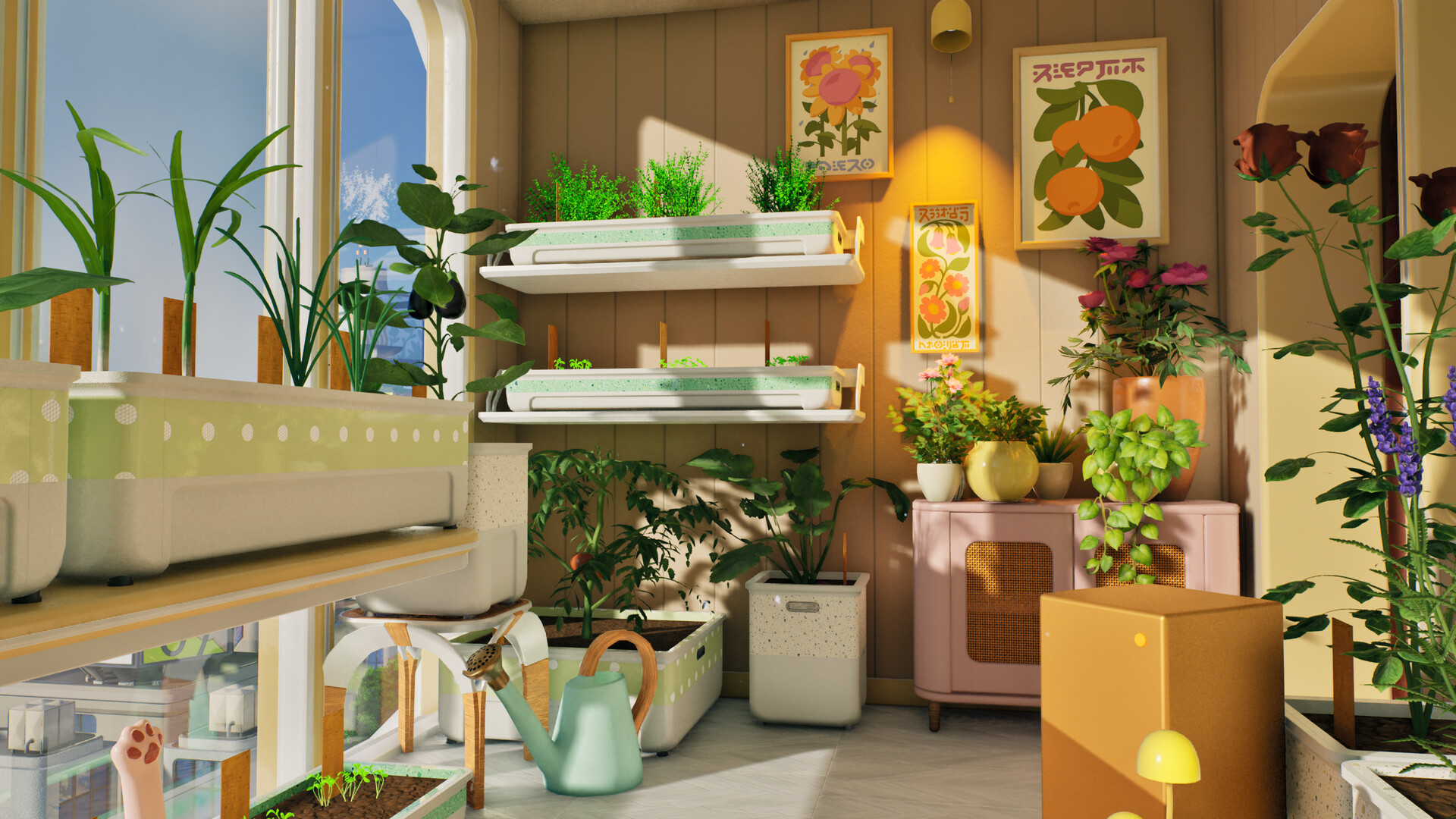
Tiny EdenImage: Digital Vortex Entertainment via Steam -
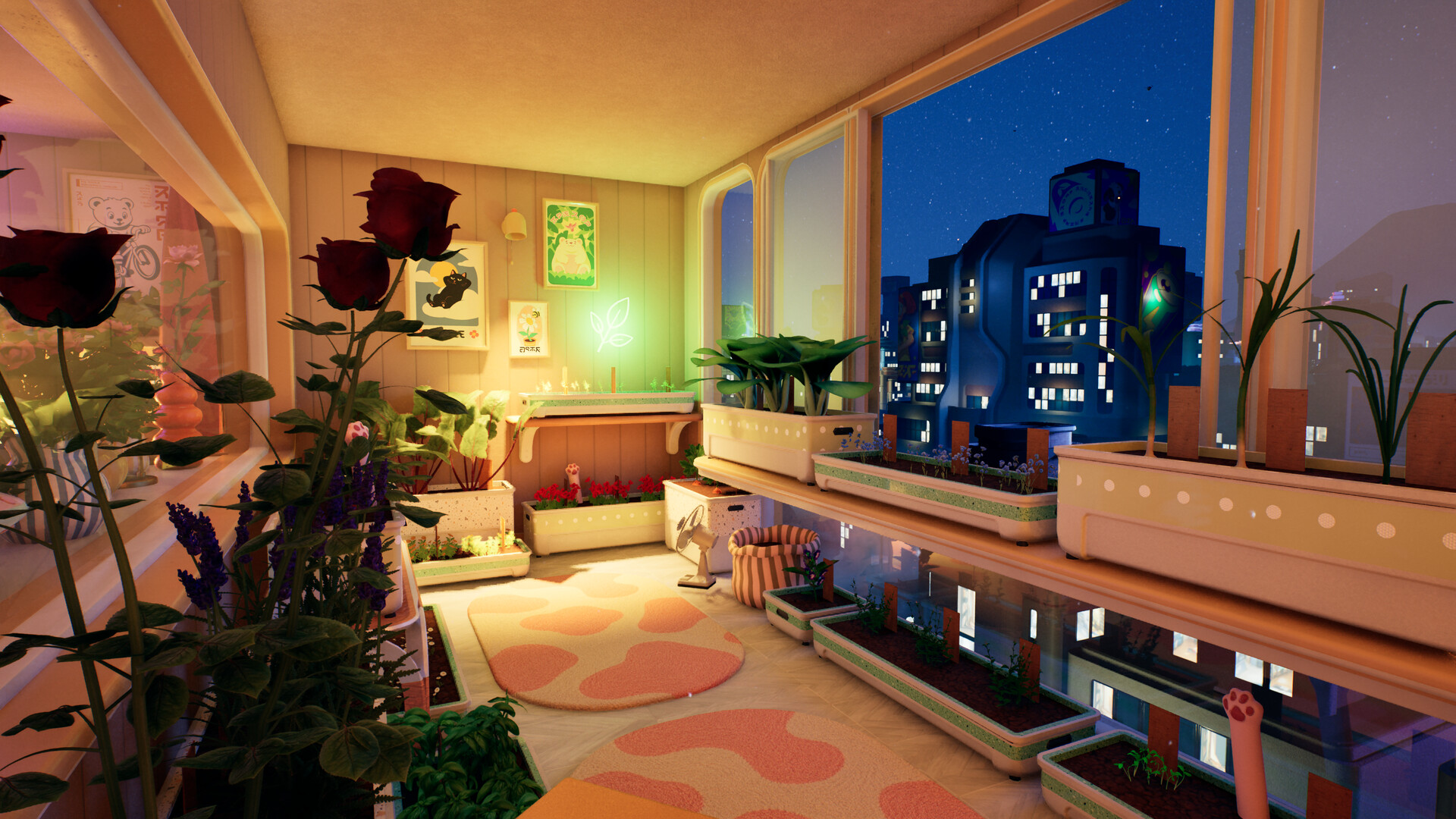
Tiny EdenImage: Digital Vortex Entertainment via Steam -
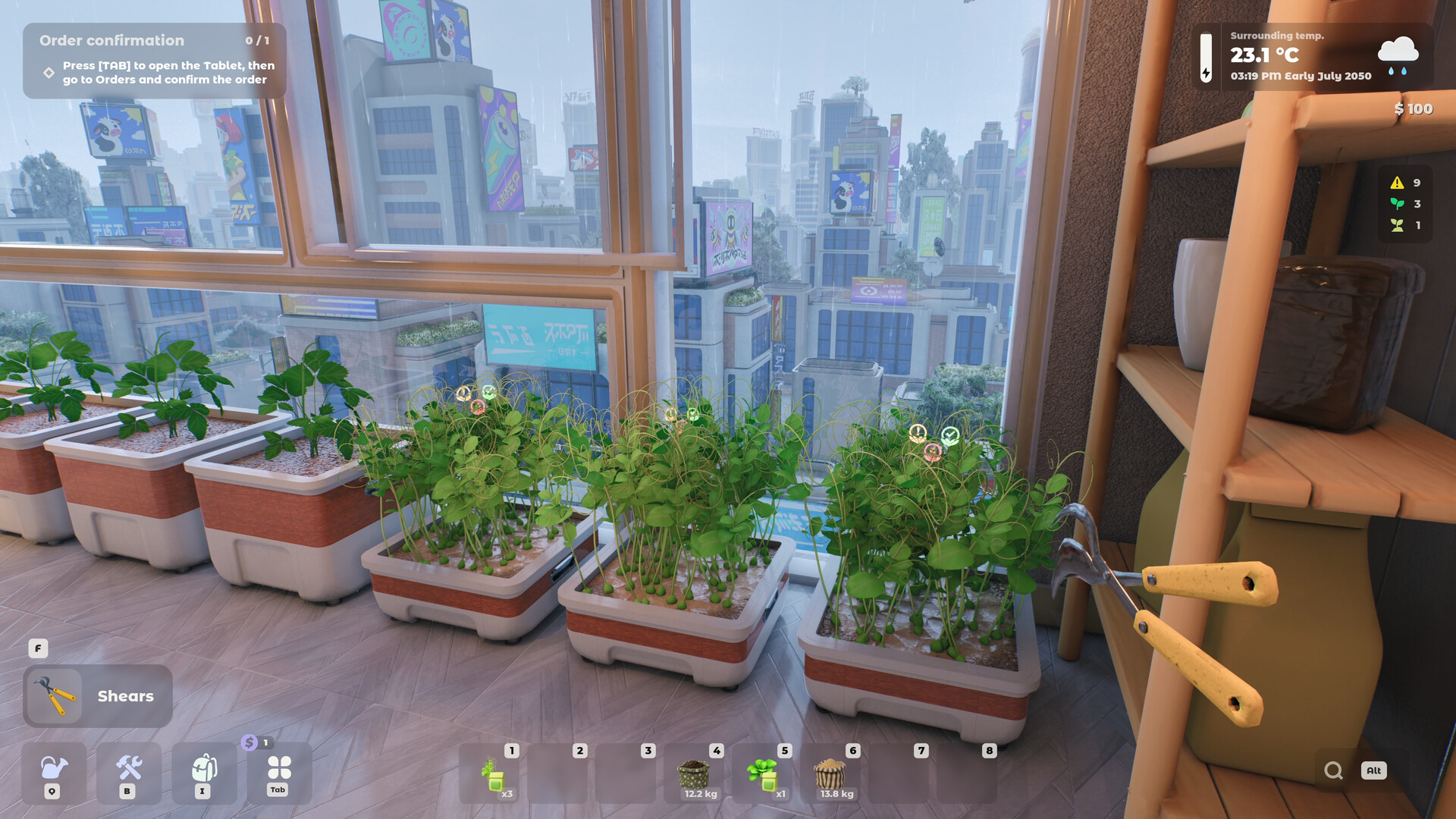
Tiny EdenImage: Digital Vortex Entertainment via Steam -
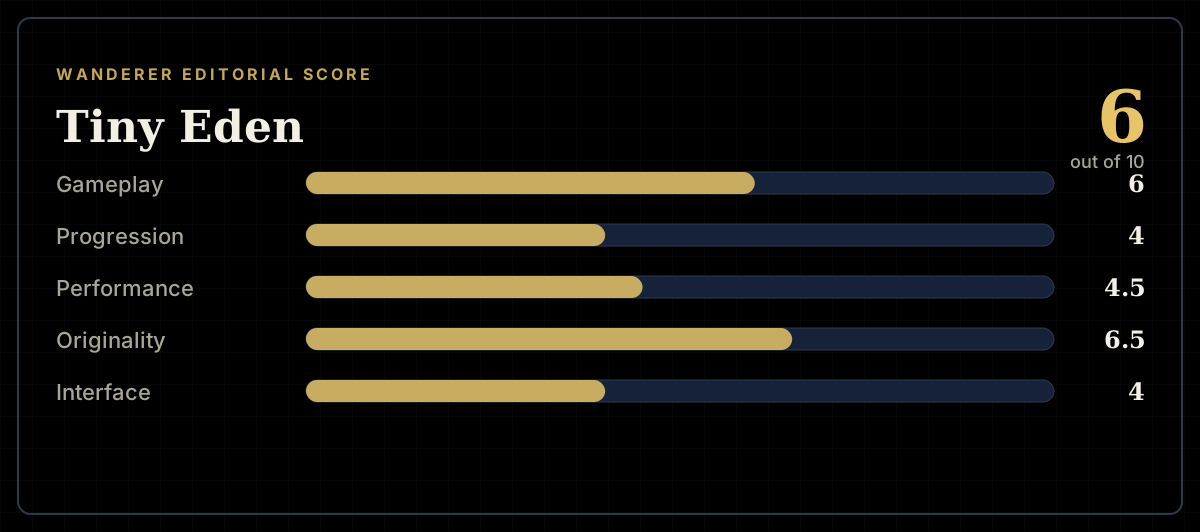
How the review scores each part of the gameWanderer Editorial -
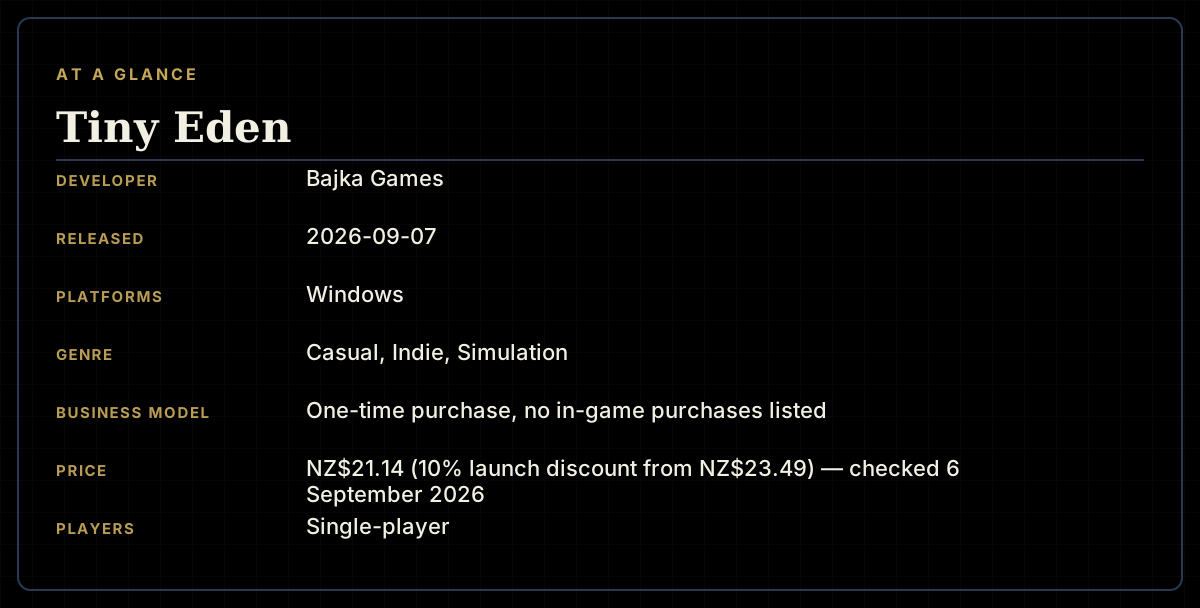
The essentials at a glanceWanderer Editorial -
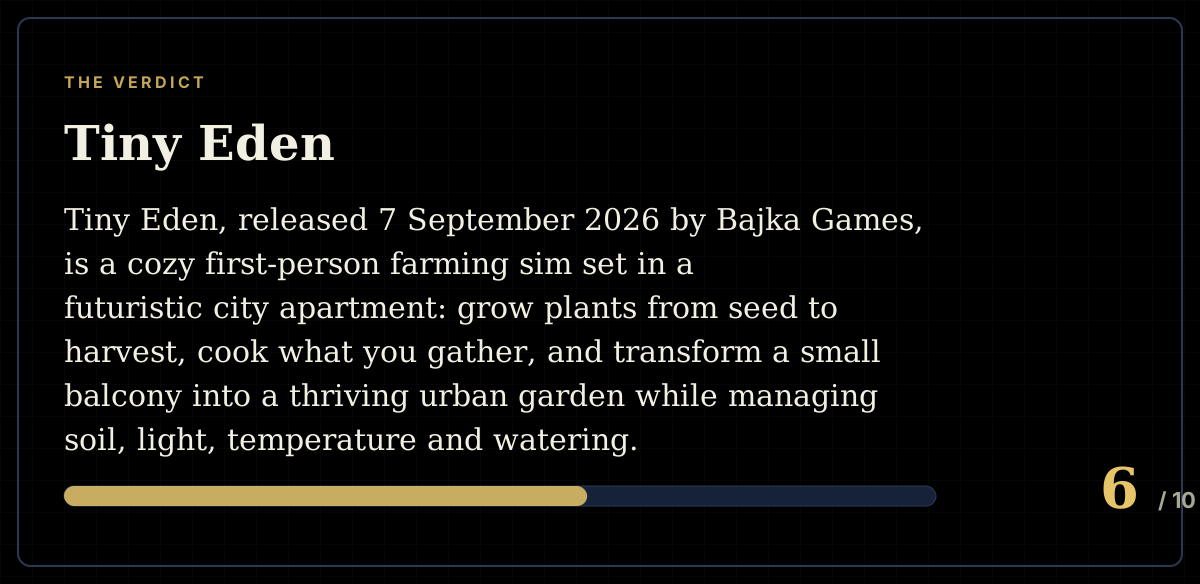
The short versionWanderer Editorial