Game review
PomoFarm
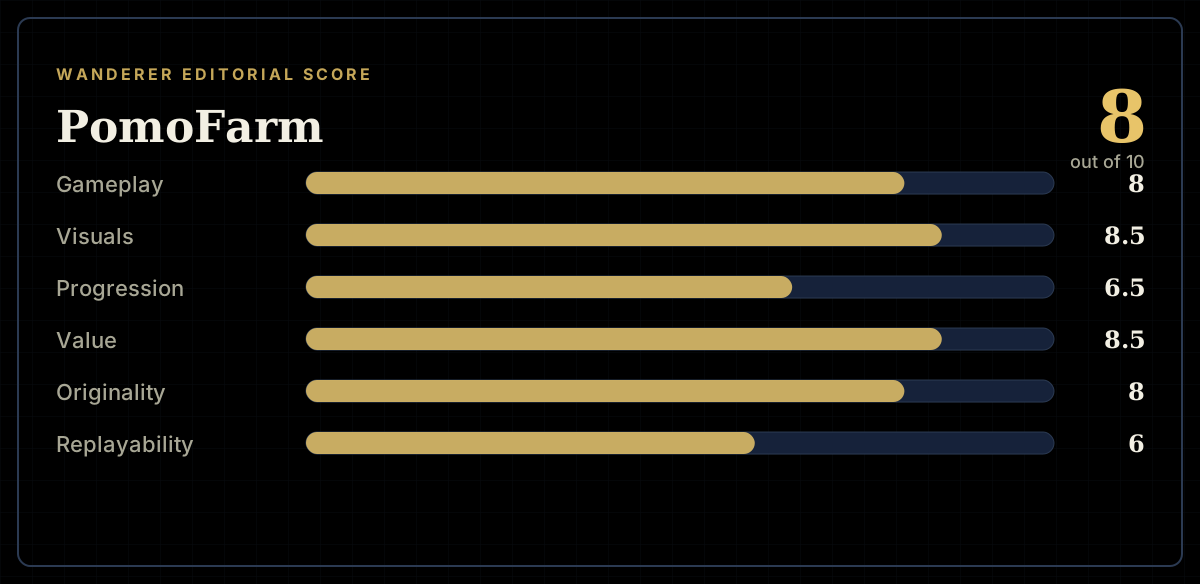
8 / 10
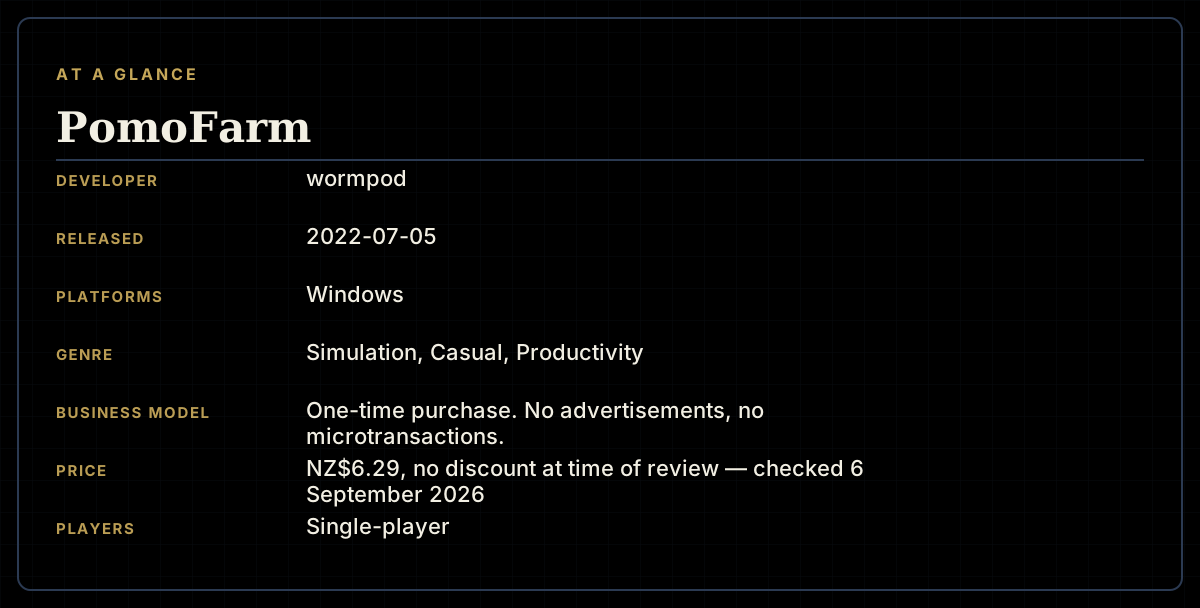
- Developer
- wormpod
- Publisher
- wormpod
- Released
- 5 July 2022
- Platforms
- Windows
- Genre
- Simulation, Casual, Productivity
- Monetisation
- One-time purchase. No advertisements, no microtransactions.
- Players
- Single-player
The short version
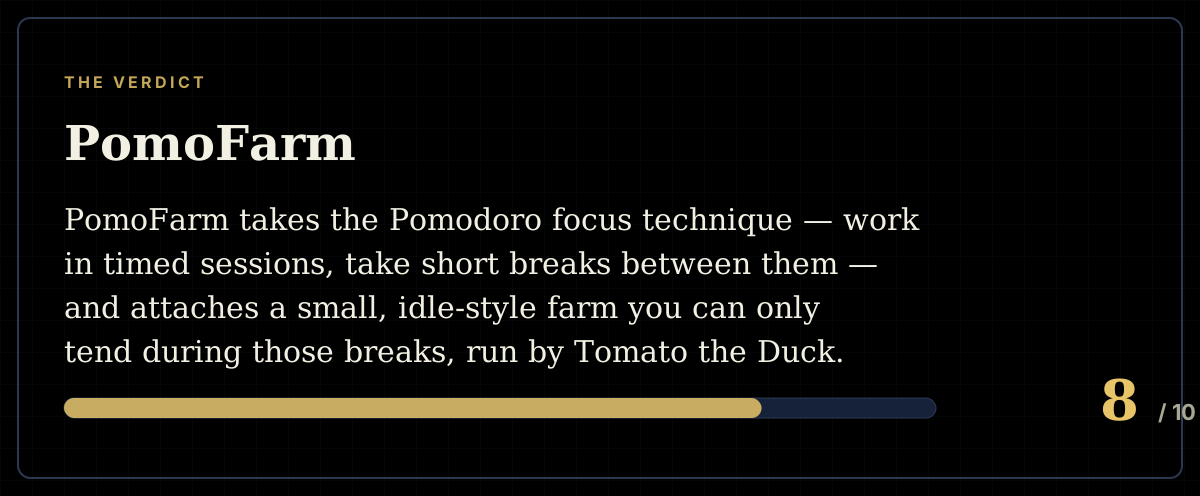
PomoFarm takes the Pomodoro focus technique — work in timed sessions, take short breaks between them — and attaches a small, idle-style farm you can only tend during those breaks, run by Tomato the Duck. Released 5 July 2022 by developer wormpod, it sits Very Positive with English-speaking players, an exceptional 97% across 462 reviews, and reading through that sample is genuinely moving: reviewer after reviewer describes real, specific help with procrastination, ADHD, depression and burnout, not just enjoying a cute game. The design earns that reception deliberately — you cannot interact with the farm at all while a focus session is running, so the only way to progress is to actually do the work. A smaller but specific set of complaints keeps the score from a perfect one: a season-transition bug that can strand crops and progress, and a content ceiling that dedicated long-term users eventually reach.
Biggest strengths
- Reviewer after reviewer describes genuine, specific real-world benefit — getting through depression, managing ADHD, finishing assignments, surviving job loss — credited directly to the game's structure rather than vague enjoyment
- The core restriction, that you cannot touch the farm at all during a focus session, is frequently singled out as the design's smartest choice: it removes any temptation to use the "game" part as a distraction from the work it's meant to support
- Adjustable timer lengths let players tailor sessions to their own tasks, from short study bursts to long writing sessions, without being locked into the standard 25-minute Pomodoro interval
Biggest weaknesses
- A specific, reproducible bug affects season transitions: crops that need longer than the remaining weeks in a season to mature will die when the season changes regardless of remaining growth time, and a player who has spent all their money on now-dead crops can be left with no way to earn more, softlocking their farm's economy
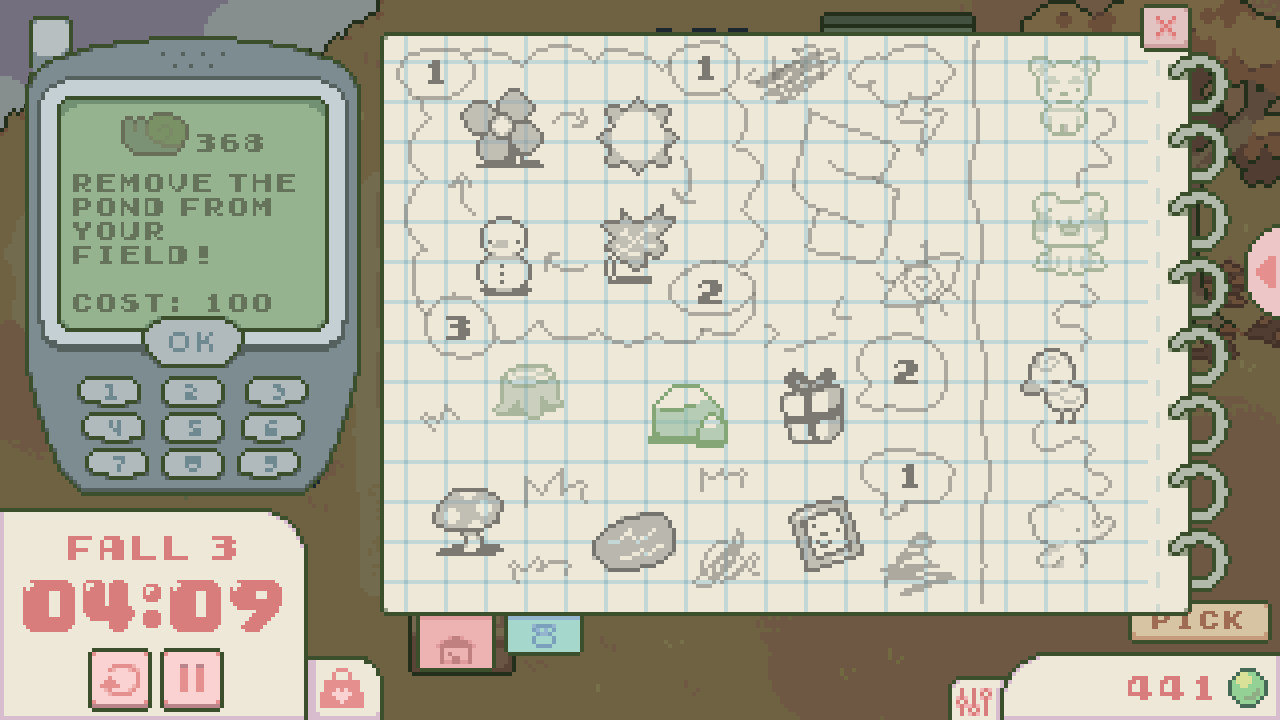
- Money resets at the start of each new season by design, which several reviewers find demotivating, describing the feeling of otherwise-permanent progress being wiped away each time
- The skill tree and core systems are only lightly explained in-game, and multiple reviewers ask for a way to revisit the tutorial rather than relying on memory
Who it's for: Anyone who struggles to start or sustain focused work — students, remote workers, people managing ADHD or low motivation — looking for a gentle, genuinely non-punishing companion app rather than a strict productivity tool.
Our recommendation: An easy, cheap recommendation for almost anyone who has ever struggled to sit down and start a task. Go in understanding the farm only grows during your breaks, not during your work — that restriction is the entire point.
8 / 10
Introduction
Productivity apps promising to fix your focus are everywhere, and most of them are forgotten within a week. PomoFarm, a small Pomodoro-timer-and-idle-farm hybrid from developer wormpod released 5 July 2022, appears to be a genuine exception. It sits at an exceptional 97% Very Positive across 462 English-language reviews, and what stands out reading through that sample isn't just the score — it's how many reviewers describe specific, real personal circumstances the game helped them through, rather than simply saying it's fun.
A restriction that is the entire design
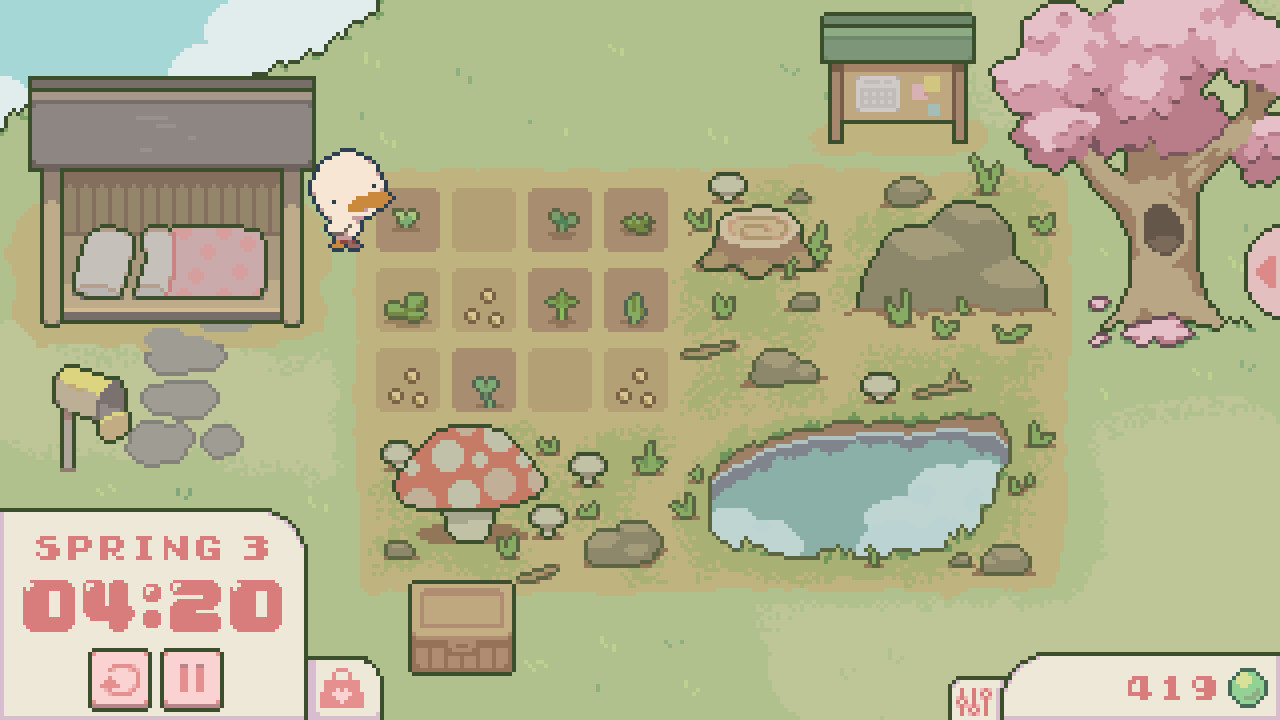
The premise is simple: set a focus timer, work until it ends, then use your short break to tend a tiny farm run by Tomato the Duck — planting, watering, harvesting and selling crops, unlocking new seeds and upgrades along the way. The single smartest design decision, named specifically by several reviewers, is that you cannot interact with the farm at all while a focus session is running. There's no way to sneak in a click, check an upgrade menu, or otherwise let the "game" half become a distraction from the "work" half it exists to support — the only way to see your farm again is to actually get back to the task at hand. One reviewer describes it as "the perfect chord between minimalism and progression," and the review sample backs that up overwhelmingly: story after story describes finishing schoolwork, surviving job loss, managing ADHD or depression, or simply getting through a long stretch of dreaded chores, credited directly to wanting to see the duck's farm grow.
A specific bug worth knowing about
Set against that near-universal praise, one detailed negative review identifies a real, reproducible design flaw rather than a matter of taste. Each season lasts eight work sessions, and crops that take longer than the remaining time in a season will die when the season changes regardless of how much growth time they had left. A player who spends their limited money on such a crop, only to watch it die at the season change, can be left with no seeds and no way to earn more — softlocked, by that reviewer's account, "basically forever." A separate, related complaint concerns the game's currency resetting at the start of each new season by design, which more than one reviewer finds actively demotivating rather than an intentional pacing choice, since it can make real, sustained progress feel illusory session to session.
A ceiling dedicated players eventually hit
For the game's most devoted users — and this sample includes several with genuinely enormous logged hours, one reporting over 2,000 — a second, gentler problem emerges: PomoFarm eventually runs out of things to unlock. Steam's own achievement data reflects a healthy, gradual taper rather than a hard wall, with early milestones earned by well over half of tracked players and the deepest long-term achievements sitting in the low teens and single digits — a shape consistent with a tool that holds genuine long-term engagement for a meaningful stretch before the content runs dry. Multiple reviewers, having reached that point, explicitly ask for paid DLC or an expansion, several stating outright they'd buy one immediately; none describe this as a reason to stop using the game as a plain timer, only as a wish for more.
Standing out in a small, specific niche
PomoFarm isn't the only game trying to gamify the Pomodoro technique, and at least one reviewer compares it directly to a competitor, Virtual Cottage, noting they came to PomoFarm already invested in that other app's approach and found this one distinct enough to be worth switching between. What several reviewers specifically credit PomoFarm with, relative to plain browser or phone Pomodoro timers, is refusing to punish or rigidly lock users into the standard 25-minute interval — timers are freely adjustable to whatever length actually suits the task at hand, from short bursts for quizzing yourself on flashcards to long stretches for deep writing sessions. For a niche this specific, that flexibility, paired with a genuinely likeable mascot and art style, appears to be enough to win real, sustained loyalty away from free alternatives.
What players are asking for next
The requests scattered across dozens of otherwise glowing reviews cluster around a small, sensible set of additions rather than fundamental complaints: a way to jot down or check off the actual tasks being worked on, since the game currently tracks focus time but not what it was spent on; statistics or a summary of total sessions and profit over time; and, more than once, simply more things to spend the game's currency on once every unlock has been purchased. None of these read as dealbreakers in context — they're the kind of wishlist a genuinely satisfied, long-term userbase writes when a tool already works, rather than complaints from people looking for a reason to stop using it.
Final Verdict
PomoFarm is a small, cheap, unusually sincere piece of software, and its review corpus reads less like typical game feedback and more like a stack of genuine thank-you notes — for helping people through depression, ADHD, job loss and looming deadlines, specifically because its central restriction never lets the reward system become the distraction it's meant to cure. A real, reproducible season-transition bug and a content ceiling for its most dedicated users keep this from a flawless score, but neither comes close to outweighing what this library's research consistently found: a genuinely well-designed piece of software doing exactly what it set out to do, for six New Zealand dollars.
Pros and cons
Pros
- Reviewer after reviewer describes genuine, specific real-world benefit — getting through depression, managing ADHD, finishing assignments, surviving job loss — credited directly to the game's structure rather than vague enjoyment
- The core restriction, that you cannot touch the farm at all during a focus session, is frequently singled out as the design's smartest choice: it removes any temptation to use the "game" part as a distraction from the work it's meant to support
- Adjustable timer lengths let players tailor sessions to their own tasks, from short study bursts to long writing sessions, without being locked into the standard 25-minute Pomodoro interval
- Charming pixel art and a genuinely large roster of unlockable content — 60 crops across four seasons, 68 skills, several recurring character friends — give the loop real room to grow over weeks or months of use
- At NZ$6.29, reviewers consistently describe it as excellent value, including several who specifically say they'd pay for a paid expansion if one existed
Cons
- A specific, reproducible bug affects season transitions: crops that need longer than the remaining weeks in a season to mature will die when the season changes regardless of remaining growth time, and a player who has spent all their money on now-dead crops can be left with no way to earn more, softlocking their farm's economy
- Money resets at the start of each new season by design, which several reviewers find demotivating, describing the feeling of otherwise-permanent progress being wiped away each time
- The skill tree and core systems are only lightly explained in-game, and multiple reviewers ask for a way to revisit the tutorial rather than relying on memory
- Long-term dedicated players — including at least two reviewers reporting thousands of hours — report earning every achievement and running out of things to work toward, with repeated requests for additional endgame content or a paid expansion
- The window size cannot be freely adjusted, and the game cannot be interacted with at all during a focus session, which is by design but is occasionally reported as inconvenient when a task finishes early and the timer can't be skipped
Screenshots
-
PomoFarmImage: wormpod via Steam -
PomoFarmImage: wormpod via Steam -
PomoFarmImage: wormpod via Steam -
How the review scores each part of the gameWanderer Editorial -
The essentials at a glanceWanderer Editorial -
The short versionWanderer Editorial