Game review
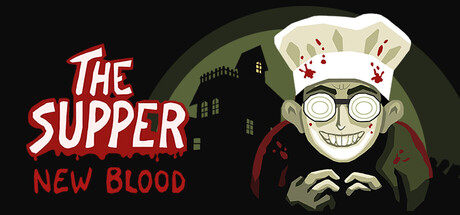
The Supper: New Blood
5.9 / 10
- Developer
- White Blanket Games
- Publisher
- Octavi Navarro
- Released
- 26 August 2025
- Platforms
- [Windows]
- Genre
- Adventure
- Monetisation
- Paid
- Players
- Single-player only
The short version
The Supper: New Blood pairs gorgeous pixel art and a gleefully macabre premise — a motel owner judging and cooking his guests — with a structure that repeats the same daily loop for every victim, undercutting a concept its own demo made look much deeper. Easy puzzles, real launch bugs, and a shift toward broader dark comedy divide longtime fans of the developer's work, but the short runtime and sharp writing still make it an easy few hours for genre fans.
Biggest strengths
- Gorgeous, heavily animated pixel art with far more cutscenes and visual feedback than the developer's earlier, shorter games
- A gleefully dark, funny premise — judging and cooking motel guests — with genuinely inventive puzzle solutions
- Sharp, witty writing with memorable death scenes that land as comedy rather than pure gore
Biggest weaknesses
- The demo promised a longer, more consequential game (choosing whether to kill each guest, one arrival per day) that the full release doesn't deliver
- Every guest arrives on the same day, and the moment-to-moment loop repeats nearly identically for each one
- Puzzles are very easy, with hints that frequently spoil the solution outright
Who it's for: Fans of short, dark-comedy point-and-click adventures (Rusty Lake, Thimbleweed Park) and existing followers of Octavi Navarro's horror-adventure catalogue who don't mind a lighter, gorier tone than his more suspenseful games.
Our recommendation: Recommend
5.9 / 10
A Motel, a Murderous Chef, and a Familiar Recipe
The Supper: New Blood puts you in the shoes of Stewie S. Appleton, a motel owner with a family culinary legacy and a habit of judging his guests' moral character before turning the ones he deems irredeemable into ingredients. It's a direct sequel to the developer's earlier short The Supper, retaining the same core hook — investigate a guest, decide their fate, then cook the evidence — while expanding it into a fuller point-and-click adventure. Reviewers reach for comparisons like Rusty Lake Hotel and a comic, culinary spin on Norman Bates almost automatically, and the pedigree behind it explains why: this is the team behind Midnight Scenes and Thimbleweed Park veteran Octavi Navarro's other horror-adventure work, and the pixel art carries that lineage clearly. One reviewer calls it "either his best, or second best game" of the catalogue on visual terms alone, citing far more animation, cutscenes, and background variety than the developer's typically much shorter releases.
The tone here leans harder into dark comedy than suspense, and reviewers are largely on board with the shift even when they note it: sound-effect-heavy death scenes, absurd character interactions, and puzzle solutions built for a laugh rather than a scare define most of the experience. One reviewer singles out "the slippers joke" as a favourite among several memorably ridiculous kill methods, and multiple others describe individual death cutscenes as the game's clearest highlight.
A Demo That Promised More Than the Full Game Delivers
The single most consistent and detailed criticism in the review sample isn't about tone or art — it's about scope, and it comes from players who played the free demo before buying. Several long, thoughtful negative reviews describe the demo as implying a longer game: a new guest arriving each day, a genuine moral choice over whether to kill them, and consequences that would shape how the story played out. The released version, by these accounts, drops nearly all of that. One reviewer lays it out plainly: "All the clients show up on the same day, what room you give each doesn't matter, the money that you earn doesn't matter, what order you choose to 'interrogate' your clients doesn't matter... you do not get to make a choice whether to kill a client or not, as they are all monsters and there is literally no prompt to choose."
That same structural issue shows up as the most common substantive complaint across the sample even among reviewers who ultimately recommend the game: each guest is processed through an identical scene-by-scene loop — investigate, gather ingredients via hints, cook — and because the underlying scenes and dialogue are reused for every guest, the repetition becomes noticeable fast. One detailed review puts it bluntly: "instead of playing 5 game days, you're playing 1 game day five times." It's a criticism echoed, in gentler terms, even by reviewers who liked the game overall, several of whom describe circling the same locations hoping for new content that doesn't arrive.
Sharp Art, Easy Puzzles, a Shift Toward Dark Comedy
Puzzle design draws a consistent, if secondary, critique: solutions are rarely difficult, and in-game hints often spell out exactly what to do next, which several reviewers describe as removing most of the agency a point-and-click adventure typically offers. Nobody in the sample calls this a dealbreaker on its own, but it compounds the repetition complaint — easy, similar puzzles repeated across nearly identical daily structures leave less for returning players to chew on. On the positive side of the same coin, the puzzles that do land are praised for their specific, absurdist logic, in keeping with the demo's promise of "out-of-the-box thinking" reminiscent of Maniac Mansion and Thimbleweed Park.
The tonal shift toward broad dark comedy, rather than the slower suspense of the developer's Midnight Scenes series, is treated by the sample less as a flaw than as a matter of taste. Reviewers who came in as existing fans of that more atmospheric style are candid that New Blood works differently, with one recommending newcomers start with the developer's earlier games first, since "The Supper recycles and self-references, which can feel a bit hollow if you don't know his past creations." Others embrace the change outright, praising the balance of gruesome content with an accessible, almost family-adjacent puzzle structure, while noting the content itself — murder, cannibalism-adjacent cooking — keeps it firmly for older audiences regardless of how approachable the mechanics feel.
Short, Buggy in Places, but Beloved by Returning Fans
Technical issues show up across multiple reviews spanning the game's first several months on sale. Reported problems include a softlock near the game's end (since patched), a left-click input bug requiring players to leave and re-enter an area to fix, and — reported as late as several months after launch — a gamebreaking bug where the game miscounts remaining guests, leaving the guestbook empty while still prompting for one more investigation. These aren't universal experiences, but they recur often enough in the sample to be worth flagging for anyone picking the game up expecting a fully smooth run.
None of this stops most of the sample from recommending the game, and the split in the reviews reads less like inconsistent quality and more like a real gap between two audiences: players who came in cold, for whom a short, funny, gorgeously-drawn horror-comedy at this length and price is an easy yes, and players who'd played the demo or the developer's earlier work and expected a longer, more consequential game than they got. Several enthusiastic reviewers explicitly ask for a third entry in the series, describing hours well beyond the credits' roll and genuine affection for the cast — a good sign for where the format could still go, even if this particular entry doesn't fully deliver on its own setup.
Verdict
The Supper: New Blood is a good-looking, funny few hours built on a premise sharper than its execution — a promising demo's deeper systems got flattened into a repetitive daily loop, and the puzzles rarely test the player. Fans of the developer's earlier work and newcomers to short dark-comedy adventures alike will likely still enjoy it, but go in expecting a light, gruesome romp rather than the more consequential game its own marketing implied.
Pros and cons
Pros
- Gorgeous, heavily animated pixel art with far more cutscenes and visual feedback than the developer's earlier, shorter games
- A gleefully dark, funny premise — judging and cooking motel guests — with genuinely inventive puzzle solutions
- Sharp, witty writing with memorable death scenes that land as comedy rather than pure gore
- A comfortably short 3-to-4-hour runtime that respects players who want a complete story in one sitting
- Clear thematic continuity with the developer's Midnight Scenes and The Supper catalogue for returning fans
Cons
- The demo promised a longer, more consequential game (choosing whether to kill each guest, one arrival per day) that the full release doesn't deliver
- Every guest arrives on the same day, and the moment-to-moment loop repeats nearly identically for each one
- Puzzles are very easy, with hints that frequently spoil the solution outright
- Multiple players reported real bugs at launch, including a softlock and a guest-count-tracking bug, some since patched
- The shift toward broad dark comedy over suspense is a noticeable departure some longtime fans of the developer's other work found less compelling
Screenshots
-
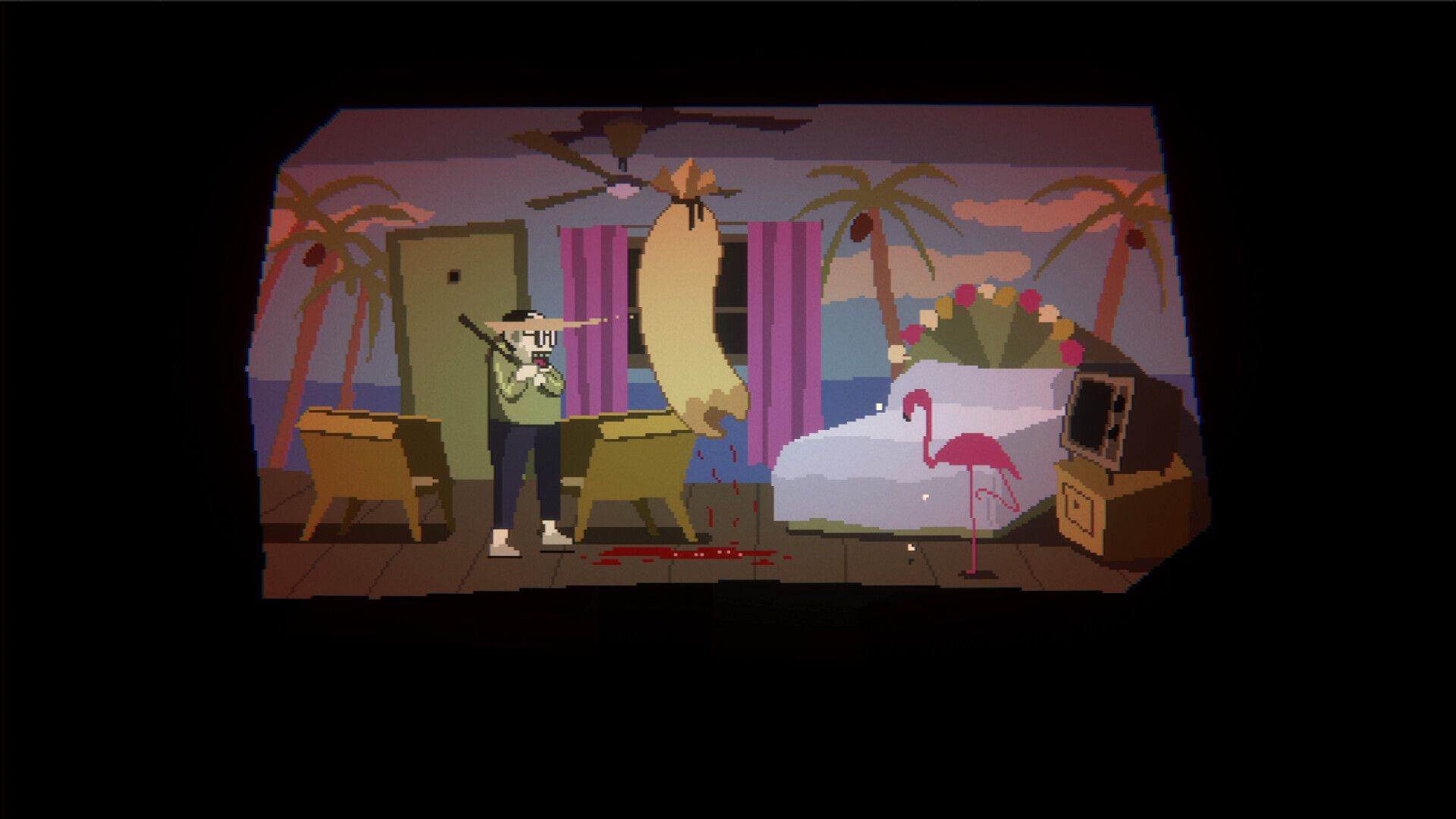
The game's dark comedy leans on exactly this kind of gruesomely staged aftermathOctavi Navarro -
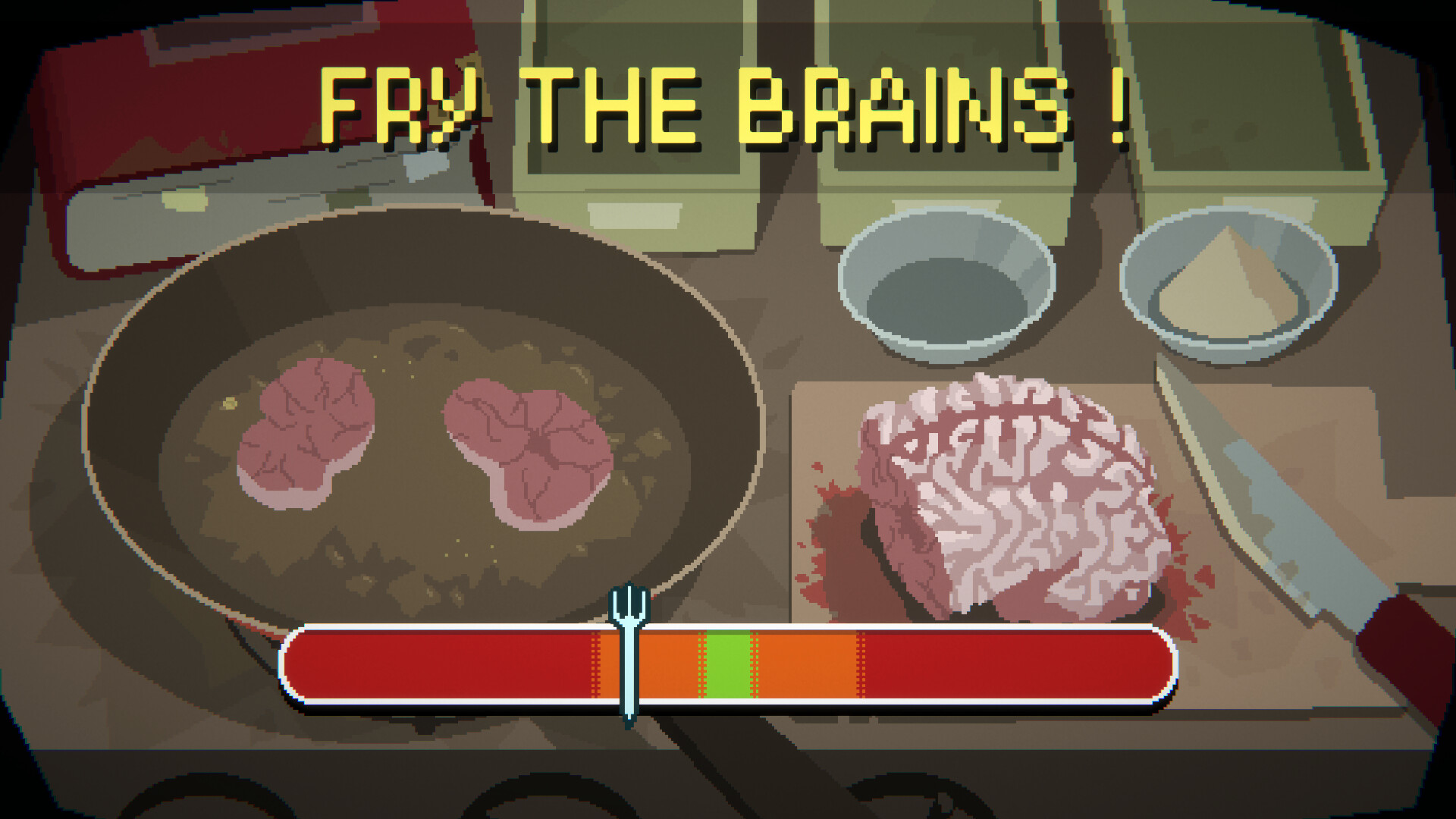
Cooking the evidence is a recurring minigame, and one of the more inventive touchesOctavi Navarro -
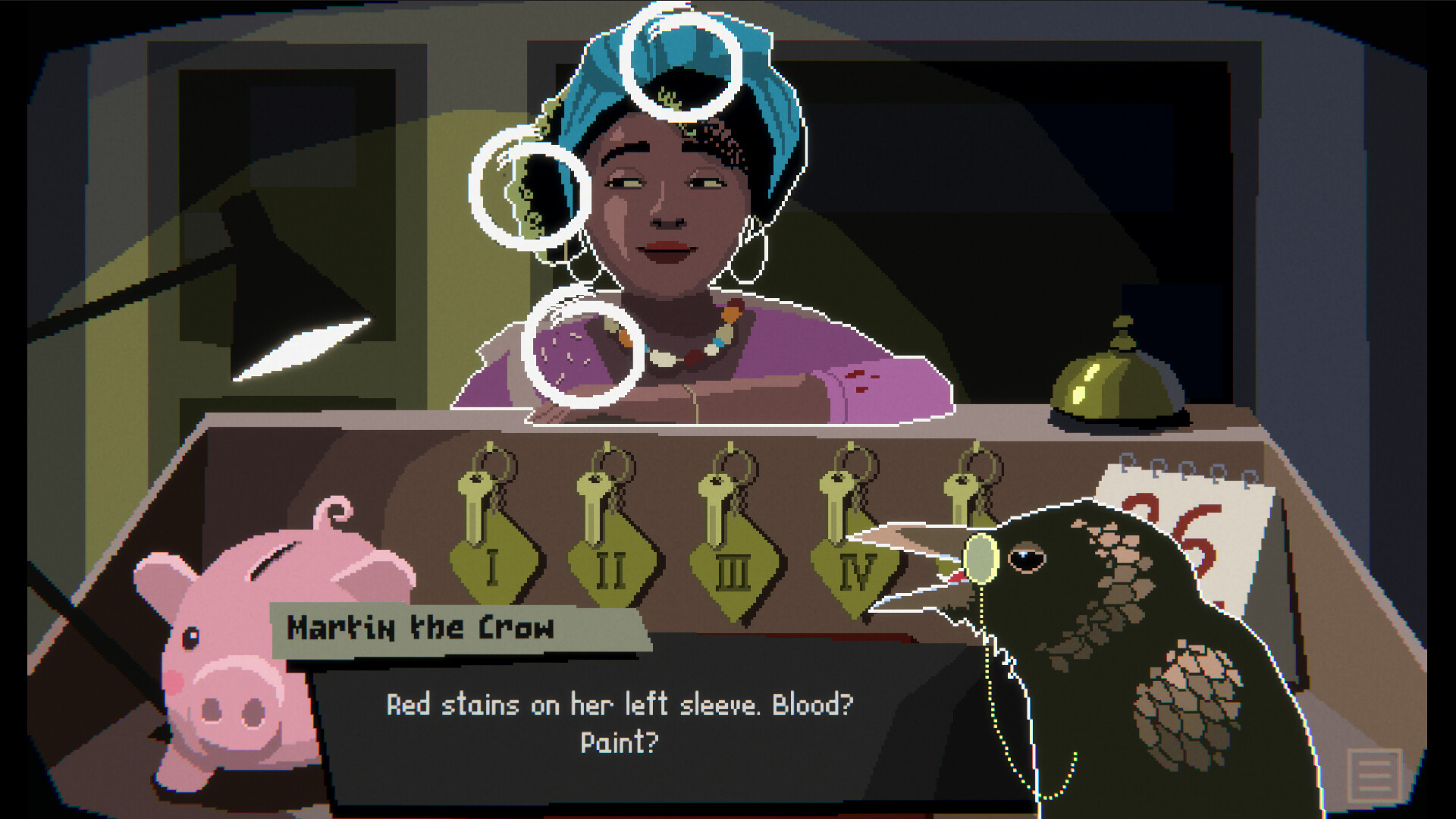
Investigating guests for evidence, with sidekick commentary from Martin the CrowOctavi Navarro -
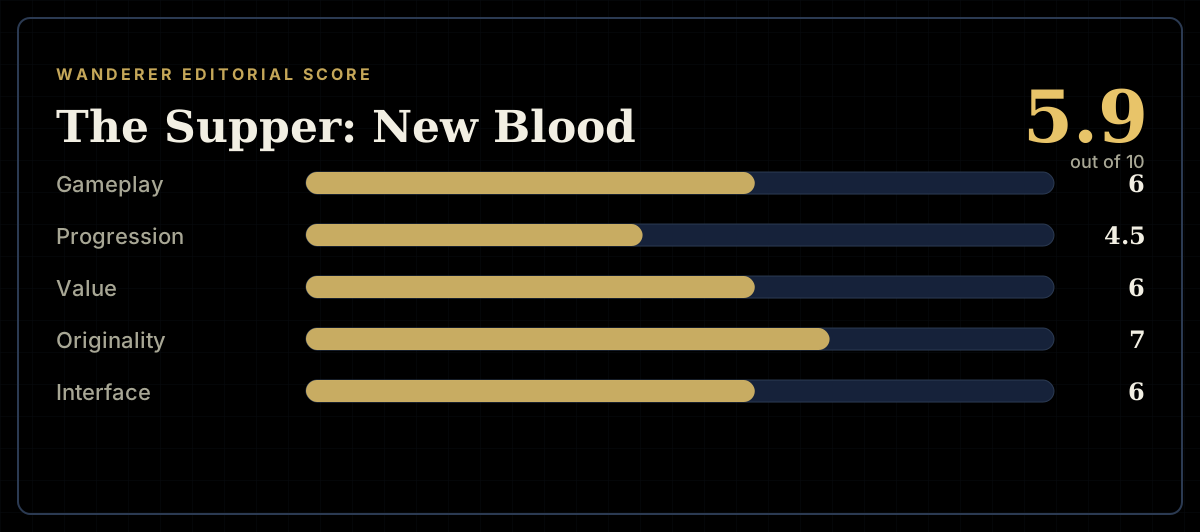
How the review scores each part of the gameWanderer Editorial -
The short versionWanderer Editorial