Game review
The People of Sea, Sun & Salt Review: A City Builder That Knows It's a Puzzle
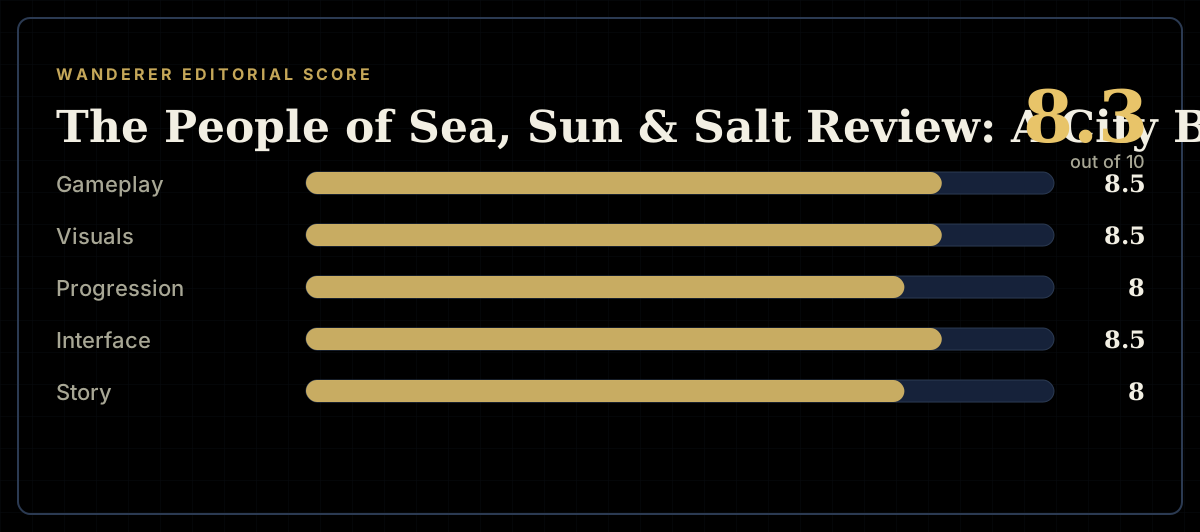
8.3 / 10
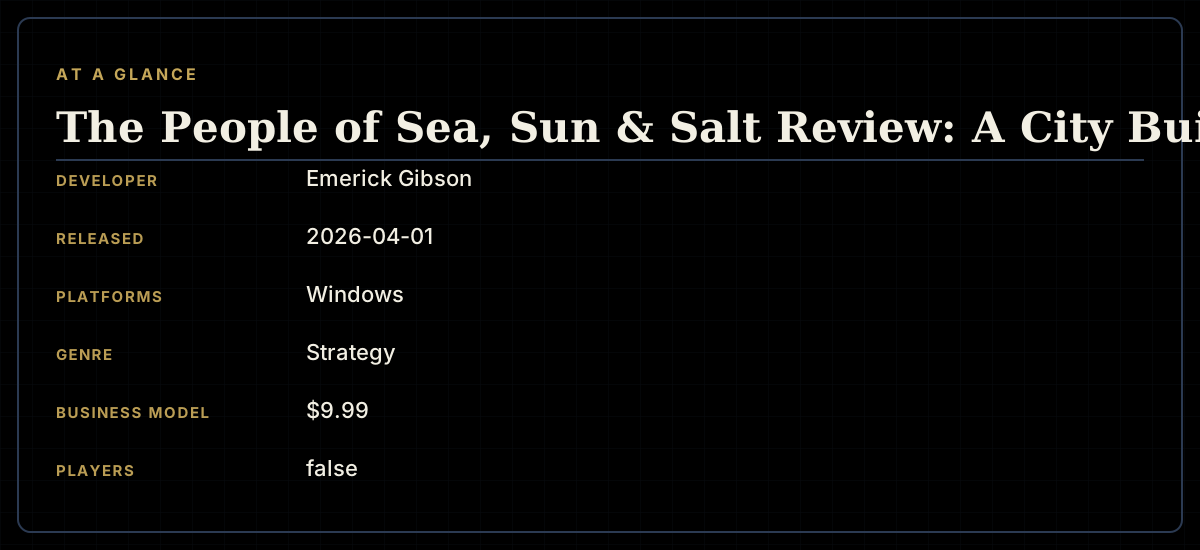
- Developer
- Emerick Gibson
- Publisher
- RockGame S.A.
- Released
- 1 April 2026
- Platforms
- Windows
- Genre
- Strategy
- Monetisation
- $9.99
- Players
- false
The short version
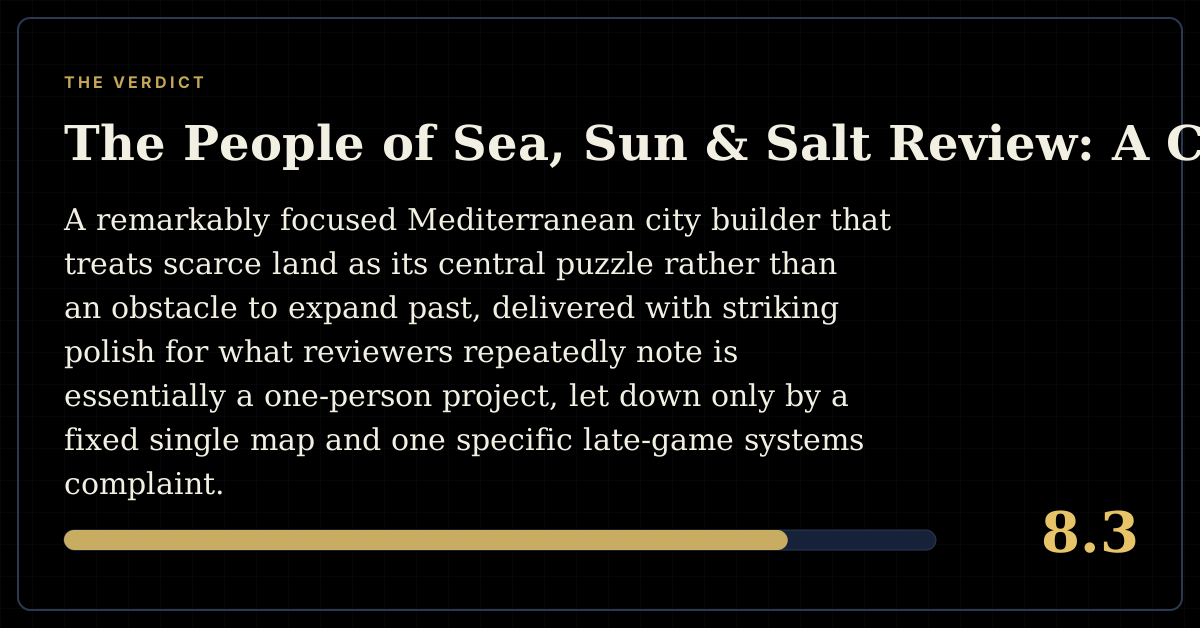
A remarkably focused Mediterranean city builder that treats scarce land as its central puzzle rather than an obstacle to expand past, delivered with striking polish for what reviewers repeatedly note is essentially a one-person project, let down only by a fixed single map and one specific late-game systems complaint.
Biggest strengths
- A genuinely fresh take on the city-building genre: land is deliberately scarce, forcing constant re-planning and relocation as your civilization's needs evolve across eras, rather than simple outward expansion
- A well-paced, narrative-flavored tech tree and card-based cultural choice system that reviewers say gives the city's growth a sense of story rather than pure mechanical gating
- Remarkably polished for what multiple reviewers understand to be a very small (sometimes described as one-person) development team, with a standout UI for at-a-glance resource management
Biggest weaknesses
- The map is fixed and identical across every playthrough, which multiple reviewers flag as a real replayability limiter for a genre that usually offers procedural or varied maps
- A specific, strongly worded complaint from at least one reviewer about a mandatory late-game embellishments system that can lock further progress if ignored, described as forcing engagement with a system they otherwise disliked
- A short overall runtime — most reviewers report finishing a full run in 4 to 11 hours — which is reasonable at $9.99 but worth knowing if you want a long-term city-building project
Who it's for: Fans of tightly-scoped, objective-based city builders (Islanders, Dorfromantik-adjacent design) who want a focused 4-11 hour puzzle-driven experience rather than an open-ended sprawling city sim; not for anyone wanting infinite replayable maps or deep economic simulation.
Our recommendation: Buy it
8.3 / 10
Building a civilization on land you can't get more of
The People of Sea, Sun & Salt asks a deceptively simple question: will your civilization endure, or collapse back into the sea? You build a city on a small Mediterranean island, defining your culture's values through card-based choices while managing your people's needs against a hard limit that most city builders don't impose — there's genuinely very little land to build on, and what you have keeps changing shape as the story progresses. One reviewer summarized the appeal precisely: "the land is cramped, but that's the entire premise of the title," and unlike games where scarcity feels like a design failure, here it's clearly the entire point.
A puzzle wearing a city builder's clothes
The most consistent praise in the review sample treats the game less as a traditional city sim and more as a spatial puzzle. One detailed review describes it as "more puzzle than anything," where the game gradually grants more land as you meet your people's needs, and growth forces you to demolish and rebuild to accommodate new demands. Another reviewer compares it directly to Islanders for its objective-based structure, while a detailed Simplified Chinese-language critique — one of the few to raise real reservations — describes the core tension precisely: cramped land forces constant relayout as eras advance, turning building placement into a search for local optimal solutions. That same reviewer still recommended it, citing the pacing between tech and cultural progression as genuinely well-crafted even where the moment-to-moment adjustments risk feeling repetitive.
A tech tree that feels like a story
Multiple reviewers single out how the game paces its unlocks: a "progressively unlocked tech tree that feels more like a narrative than a gating mechanism," paired with a map that opens up gradually as a reward for using existing space efficiently. That framing — progression as story rather than checklist — comes up repeatedly enough to feel like the developer's clearest design intention, and reviewers credit it with making even repetitive-sounding tasks like relocating buildings feel purposeful rather than tedious, especially since relocating and refunding buildings costs nothing, removing the usual city-builder anxiety about "wasted" early decisions.
A striking amount of polish from a very small team
Several reviewers express genuine surprise at the production quality given what they understand to be a tiny development team — one explicitly says "I'm shocked at how few people are on the dev team" after being pulled into a five-hour session without noticing the time pass. The praise spans art direction, a standout resource-management UI that reviewers say communicates complex information "at a glance," and a soundtrack repeatedly called relaxing and well-matched to the Mediterranean setting. A French-language reviewer noted encountering no bugs at all, with only minor translation rough edges in the localization as a caveat — a detail easy to fix in updates and not treated as a serious mark against the game.
The one recurring hard sticking point
Beyond general "it's short" observations, one specific mechanical complaint stands out clearly: a reviewer strongly objected to a mandatory late-game embellishments system, describing how the game "FORCES you to interact with it or get locked from further progress" once you reach roughly the halfway point, and stopped playing rather than engage with a system they'd already decided they disliked. It's the sample's lone negative review, but the specificity of the complaint — a genuine progression gate tied to a system some players find unappealing — is worth flagging clearly rather than dismissing as an outlier, even against an otherwise overwhelmingly positive reception.
Fixed map, real replayability question
The other recurring critique, raised by multiple otherwise-positive reviewers, is that the island map is identical in every playthrough. One reviewer specifically noted this as their "only complaint," acknowledging that some players enjoy replaying a single map to master it, while personally preferring fresh maps each run. For a game whose core loop is a spatial optimization puzzle, a single fixed layout does mean that mastering it once likely diminishes the challenge on subsequent playthroughs — a real, if narrow, limitation on how much replay value the $9.99 price buys beyond a first full run.
Is a short, focused city puzzle worth $9.99
Reported completion times cluster in the 4-to-11-hour range depending on how thoroughly players chase all 29 achievements, and reviewers are split mainly on whether that length justifies the asking price rather than on the game's quality itself — one suggested $5-8 might be fairer for the amount of content, while others call it "a lot of content" for the price given the density of systems packed into that runtime. Either way, nobody in the sample suggests the game overstays its welcome; if anything, the consistent theme is that it ends before most players are ready to stop.
A publisher backing a first-time solo direction
The game's release credits Emerick Gibson as developer with RockGame S.A. publishing, and its long public pre-launch history — a playtest opened to everyone in September 2025, sequential demo builds through the following months, and steady patch notes (v1.0.33, v1.0.34) landing within the first two weeks of the April 1 launch — points to a small team that spent real time gathering feedback before and immediately after release, rather than shipping once and walking away. That cadence lines up with the review sample's overall read: a game built with unusually clear intent for its size, still being actively refined rather than abandoned to its initial launch state.
Verdict
The People of Sea, Sun & Salt is a small, focused city builder that turns land scarcity into its defining strength rather than treating it as a limitation, backed by unusually strong polish and a near-unanimous, detailed review sample. Its fixed single map and one firmly-gated late-game system are real, specific weaknesses worth knowing about going in, but for a tightly-scoped puzzle-driven city builder that respects a few hours of your evening, it easily earns its recommendation.
Pros and cons
Pros
- A genuinely fresh take on the city-building genre: land is deliberately scarce, forcing constant re-planning and relocation as your civilization's needs evolve across eras, rather than simple outward expansion
- A well-paced, narrative-flavored tech tree and card-based cultural choice system that reviewers say gives the city's growth a sense of story rather than pure mechanical gating
- Remarkably polished for what multiple reviewers understand to be a very small (sometimes described as one-person) development team, with a standout UI for at-a-glance resource management
- Forgiving design: no death spirals, and buildings can be relocated and refunded freely, which several reviewers specifically credit with keeping the core re-planning puzzle satisfying rather than punishing
Cons
- The map is fixed and identical across every playthrough, which multiple reviewers flag as a real replayability limiter for a genre that usually offers procedural or varied maps
- A specific, strongly worded complaint from at least one reviewer about a mandatory late-game embellishments system that can lock further progress if ignored, described as forcing engagement with a system they otherwise disliked
- A short overall runtime — most reviewers report finishing a full run in 4 to 11 hours — which is reasonable at $9.99 but worth knowing if you want a long-term city-building project
- Minor translation rough edges reported in at least the French localization, alongside a reported early-game card-selection input bug, both seemingly easy fixes rather than deep issues
Screenshots
-
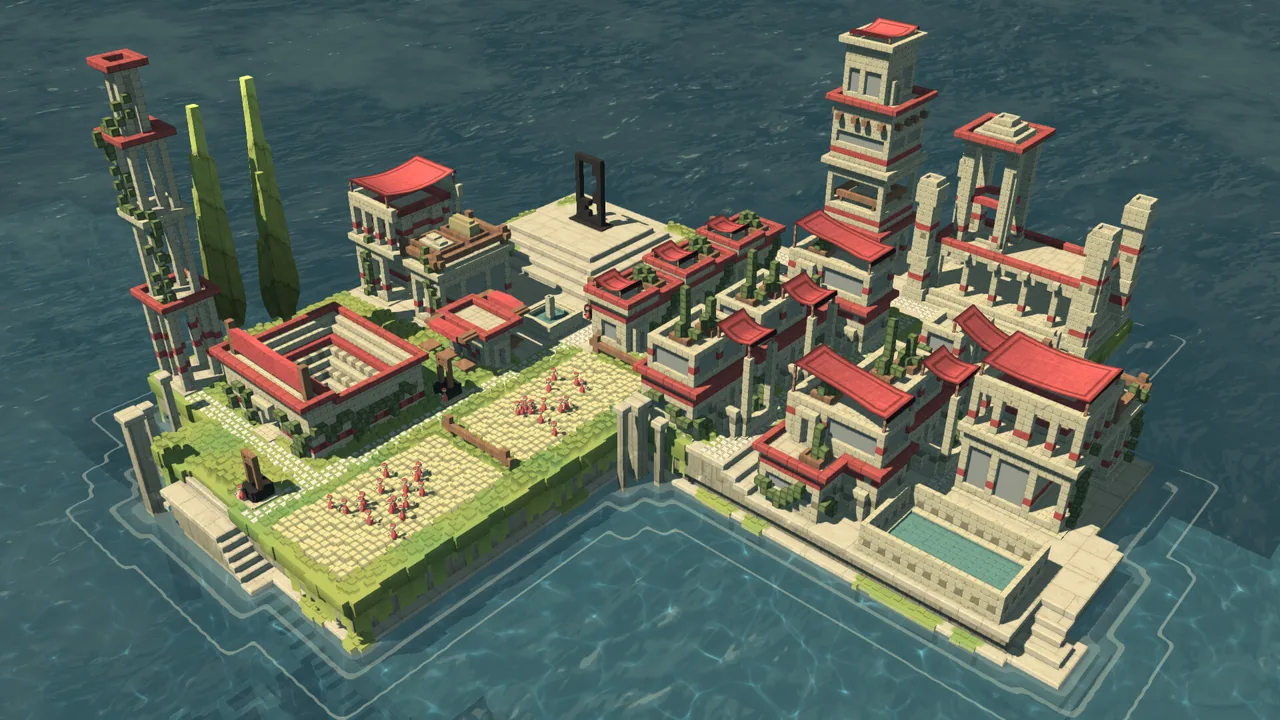
Image: RockGame S.A. via Steam -
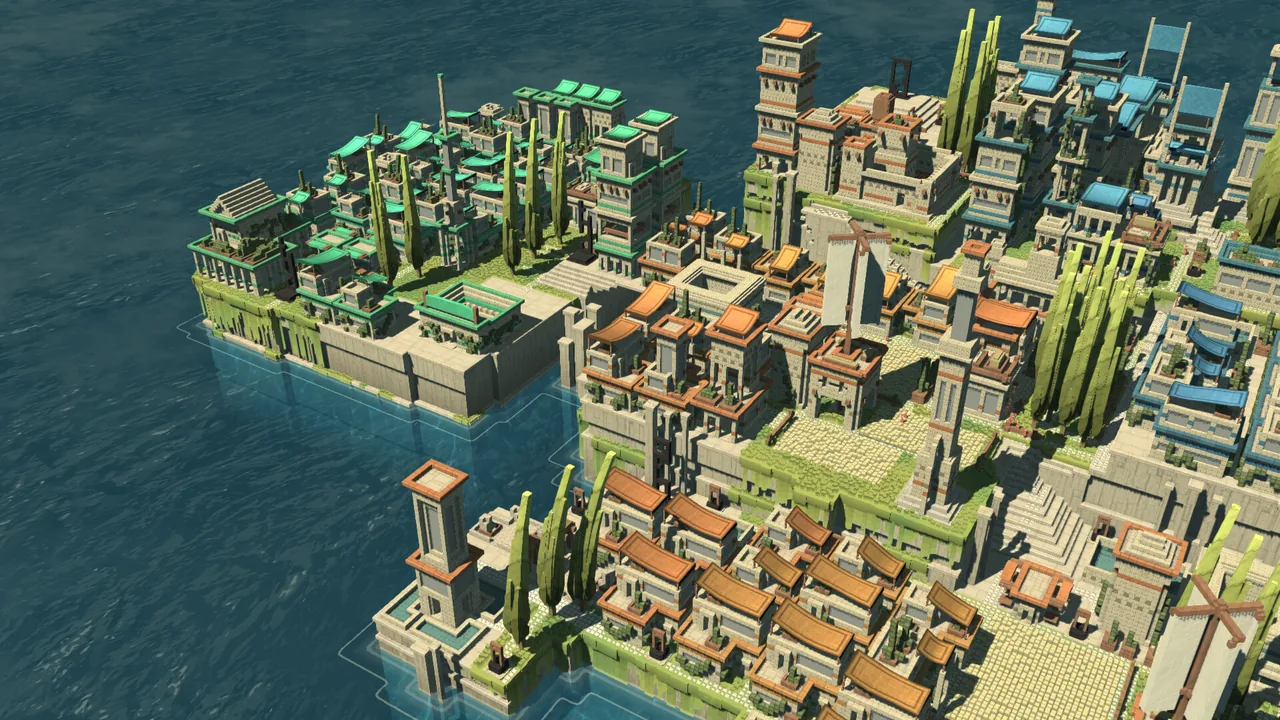
Image: RockGame S.A. via Steam -
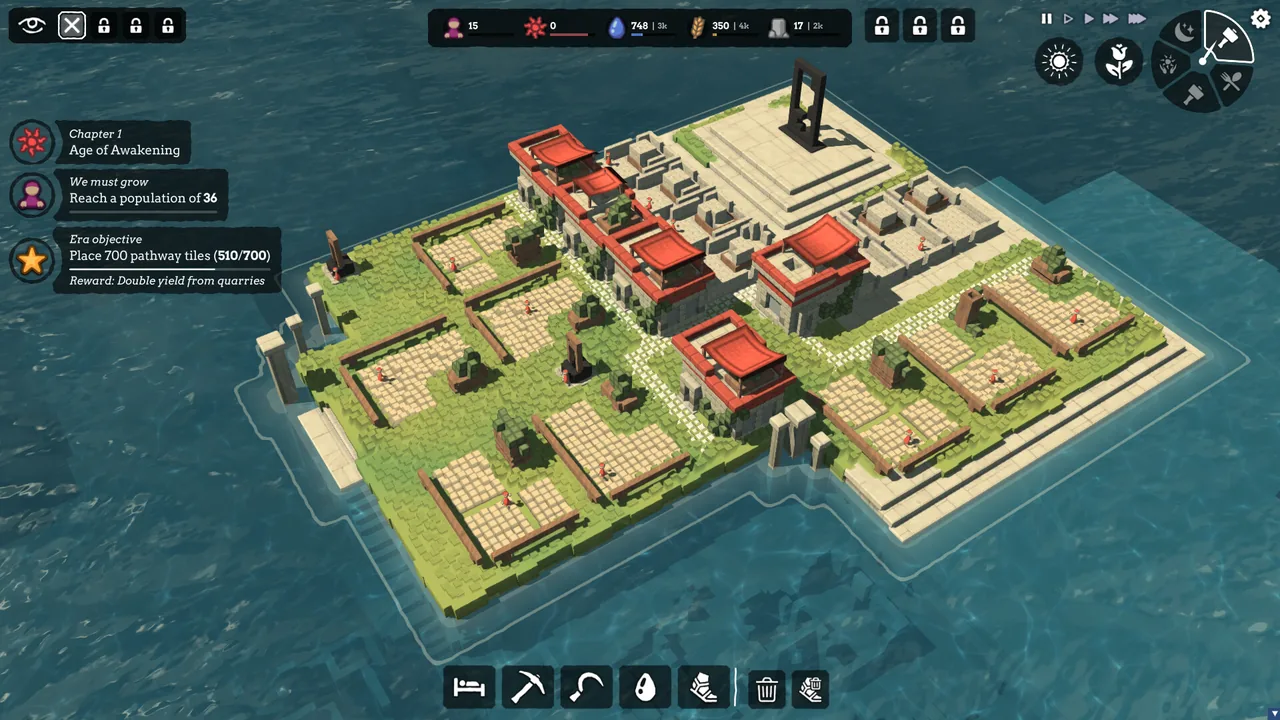
Image: RockGame S.A. via Steam -
Wanderer Editorial -
Wanderer Editorial -
Wanderer Editorial