Game review
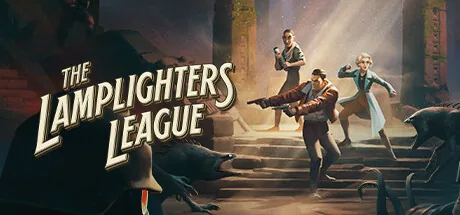
The Lamplighters League
6 / 10
- Developer
- Harebrained Schemes
- Publisher
- Paradox Interactive
- Released
- 3 October 2023
- Platforms
- Windows
- Genre
- Tactical Strategy RPG
- Monetisation
- One-time purchase, plus a Day One DLC pack criticised in reviews as content held back from the base game. No ads, subscriptions or premium currency.
- Players
- Single-player only
The short version
The Lamplighters League sends a recruited crew of 1930s misfits -- a boxer, a con artist, a scholar-turned-gunslinger and more -- to infiltrate an occult conspiracy through real-time stealth that drops into XCOM-style turn-based combat the moment a fight breaks out. Steam has it Mostly Positive, 511 of 709 reviews (72.1%), and reviewers who stuck with it consistently praise the art direction, Jon Everist's jazz-inflected score and the voice cast.
The more consequential story is what happened after launch. Within a week, publisher Paradox Interactive confirmed a 248 million SEK (roughly $22.8 million) write-down on the game, calling sales "a big disappointment" -- reporting corroborated by Game Developer, PC Gamer and Video Games Chronicle. Developer Harebrained Schemes split from Paradox on 1 January 2024, and Paradox's COO said a sequel or new project in the genre no longer fit the publisher's plans. Patches stopped. Reviews from 2024 through mid-2026 describe the same crashes, a persistent memory leak and unresolved balance problems as at launch -- and Steam's own achievement data shows only 51.1% of owners finish the tutorial, and just 8.8% ever complete the campaign.
Biggest strengths
- Distinctive, well-received presentation -- a 1930s pulp-adventure setting blending Indiana Jones, Lovecraftian cults and Nazi-adjacent occultists that reviewers consistently single out as fresh for the genre
- Jon Everist's adaptive jazz score and the voice cast draw near-universal praise across both positive and negative reviews
- A genuine hybrid of real-time stealth infiltration and XCOM-style turn-based combat that, when it works, reviewers describe as a legitimately clever structural idea
Biggest weaknesses
- Development has effectively stopped: Harebrained Schemes split from publisher Paradox on 1 January 2024 after a confirmed $22.8 million write-down, and reviews from as recently as July 2026 report the same crashes, memory leaks and balance problems as at launch, with no team left to fix them
- Global Steam achievement data shows only 51.1% of owners complete the tutorial and just 8.8% ever finish the campaign -- an unusually severe drop-off even for a demanding tactics game
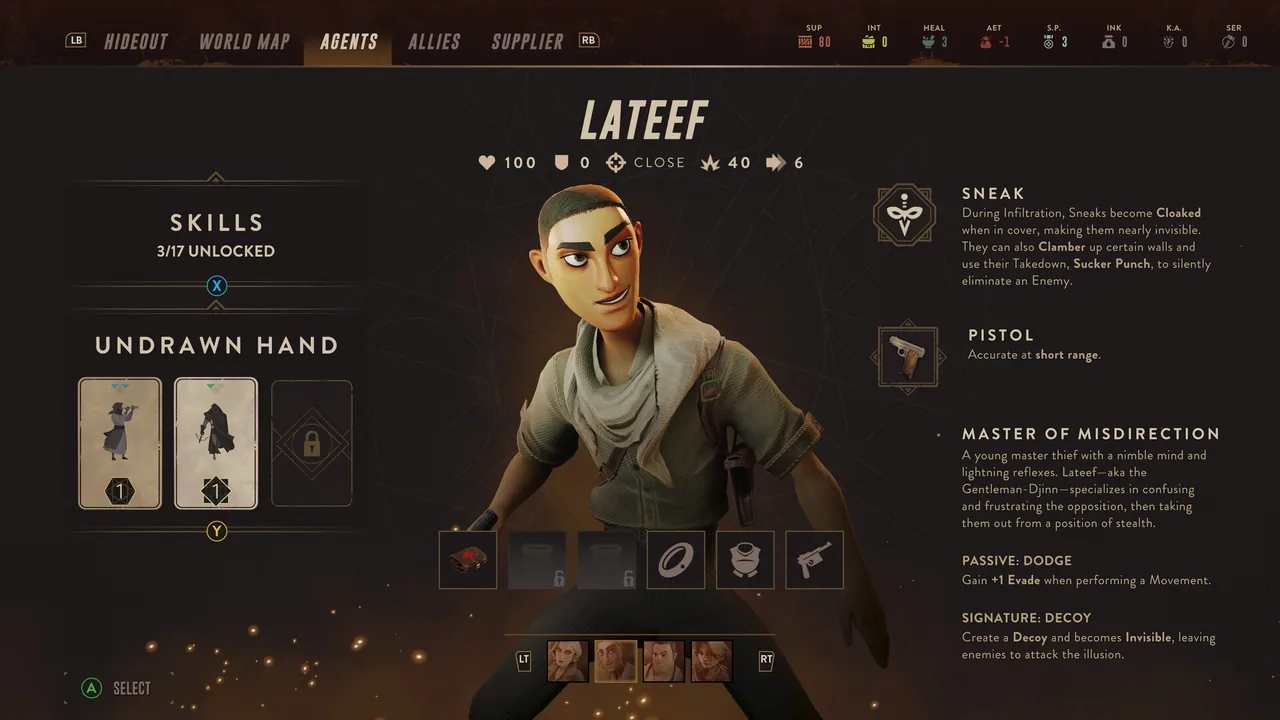
- A detailed, evidence-heavy review breaks down specific unfinished systems: an inventory screen capped at displaying 18 item types with no scroll indicator, unconvertible strategic resources, and an opaque post-mission card system with no in-game reference for its effects
Who it's for: XCOM and tactics fans who want a distinctive pulp-adventure setting and don't mind playing a game whose developer has publicly moved on and stopped fixing it. A poor fit for anyone who needs a finished, actively supported game, or who bounces off steep, uneven difficulty spikes.
Our recommendation: Worth trying only on a deep sale, and go in with expectations calibrated by the achievement data above -- most owners don't finish it, for reasons the reviews below explain in detail. If XCOM-style tactics with a real narrative hook is the draw, Hard West 2 and Cyber
6 / 10
A pulp setting built by a studio with real pedigree
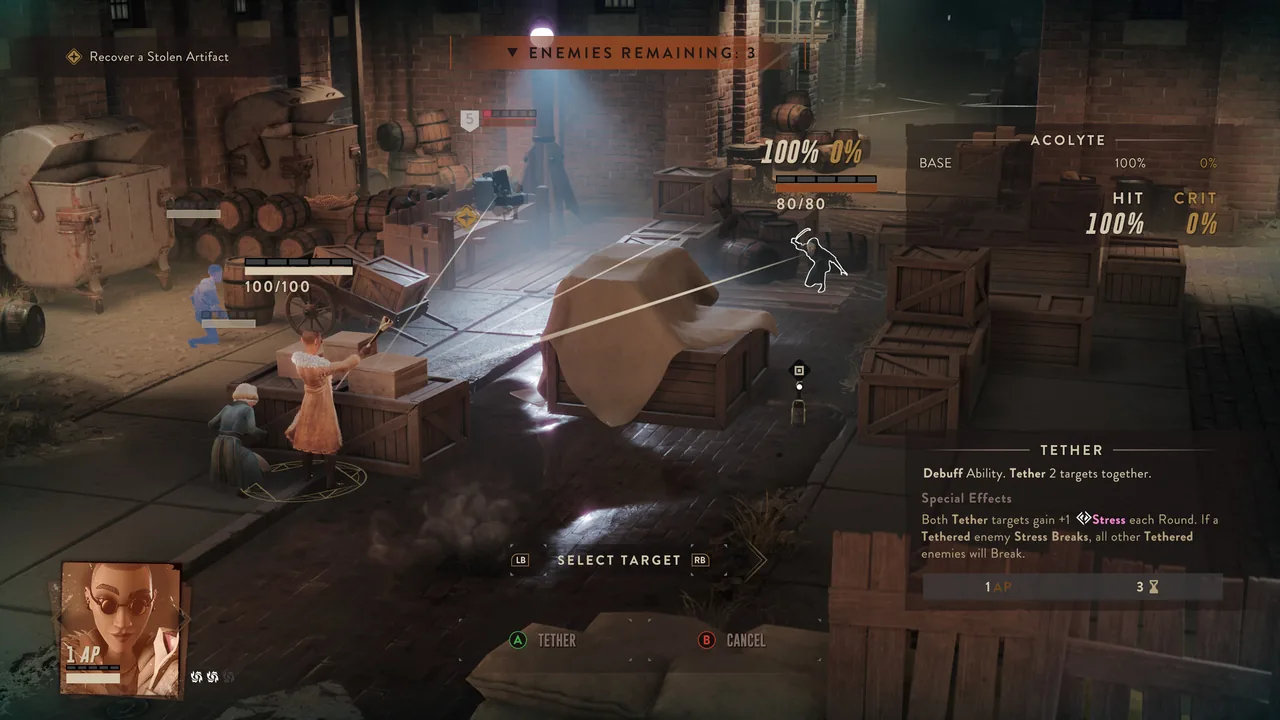
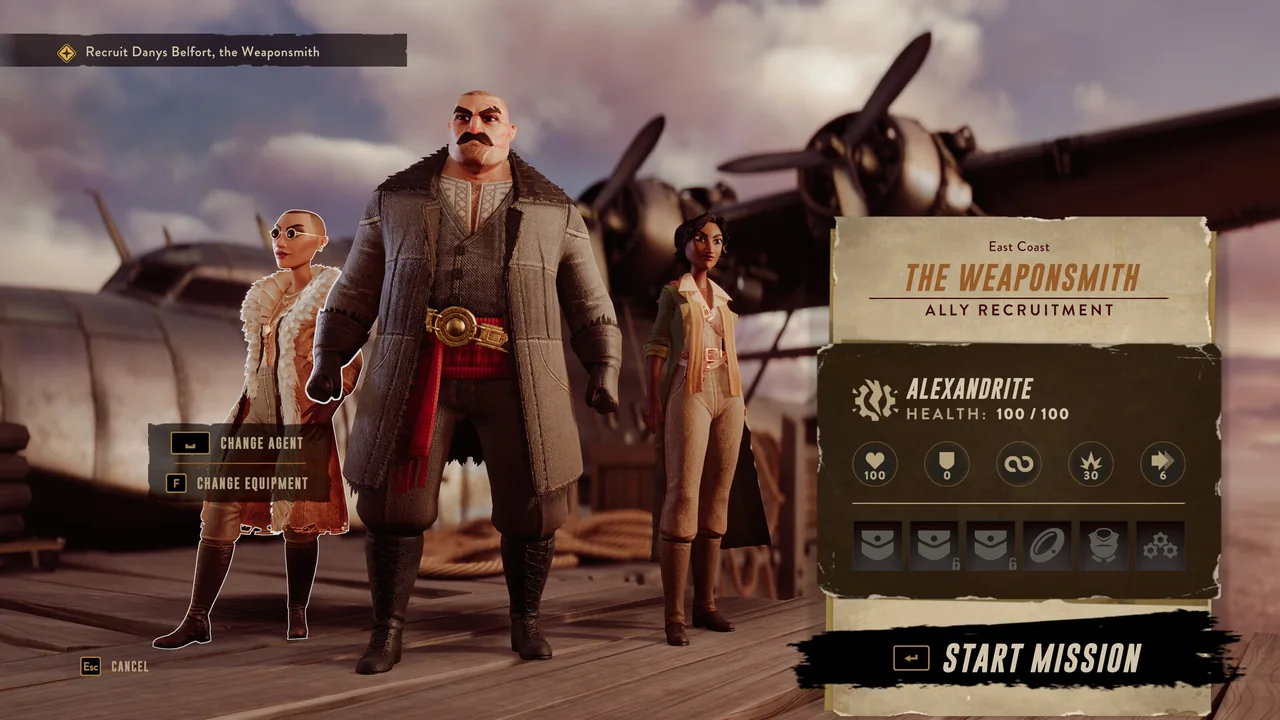
Harebrained Schemes made its name on the Shadowrun Returns trilogy and BattleTech, and The Lamplighters League is a clear attempt to apply that studio's strength — richly written, personality-driven squad tactics — to a new setting: a 1930s pulp-adventure world where a secret society called the Banished Court is trying to unravel reality itself, and the player recruits a rotating cast of smugglers, occultists and soldiers-of-fortune to stop them. Structurally, it's a hybrid: exploration and infiltration happen in real time, with agents sneaking past patrols and setting up takedowns, and the moment a fight breaks out the game drops into XCOM-style turn-based combat built around an action-point economy. Reviewers who click with the idea call it genuinely clever — "the mix of real-time exploration, timing-based real-time and turn-based mode is brilliant," reads one 76-hour review — and the presentation around it is close to uncontested: art direction, the 1930s pulp aesthetic and above all Jon Everist's adaptive jazz score draw praise from reviewers on both sides of the recommendation line.
The commercial story is the more important one
None of that presentation quality translated into sales, and what happened next is well enough documented outside Steam reviews that it belongs at the centre of this review rather than a footnote. Within a week of the 3 October 2023 launch, publisher Paradox Interactive confirmed a 248 million Swedish krona write-down — roughly $22.8 million — on the game's development costs, with CEO Fredrik Wester calling sales "too weak, which is frankly a big disappointment" (reporting independently corroborated by Game Developer, TheSixthAxis, PC Gamer and Video Games Chronicle). The fallout escalated fast: Harebrained Schemes and Paradox agreed to part ways, with the studio returning to independence on 1 January 2024, and Paradox's chief operating officer stated afterward that a new project or sequel in the same genre "was not in line with our portfolio plans" — effectively Paradox stepping back from XCOM-style tactical games as a category.
That history matters directly to a buying decision today, not just as trivia. Reviews dated well after the split describe a game that stopped receiving fixes at almost exactly the point it split from its publisher. "There is a pretty crippling memory leak. I need to quit to desktop and restart it about every forty-five minutes or so," reads a review from July 2026 — nearly three years after launch. "It's not a bad game... but I cannot with good conscience recommend it as it is quite buggy, clunky and has no team working to fix these issues," reads another from the same month. "There are game breaking bugs more than a year after the original release date. I can't finish the game because of that," reads one from February 2025. Whatever the game's design strengths, it is, in a very literal sense, an unfinished product that nobody is currently working to finish.
What the numbers say about who actually gets through it
Steam's public achievement data puts a hard figure on how much that has cost the game in practice. Just 51.1% of owners have the tutorial-completion achievement — meaning close to half of everyone who owns the game never gets past the opening — and only 8.8% have completed the campaign on any difficulty, dropping to 2.0% on Hard specifically. That's a severe curve even by the standards of demanding tactics games, and it lines up closely with what negative reviewers describe in detail: launch-week bugs turning early missions into a slog, a difficulty ramp several reviewers call disproportionate to the tools the game gives you to keep pace ("Tidespawn are ridiculously overpowered out of the gate," reads one; "the difficulty really gets out of hand," reads another), and, compounding both, a UI that one exceptionally detailed 117-hour review documents as genuinely unfinished — an HQ inventory screen that silently caps at displaying 18 item types with no scrollbar or overflow warning, strategic resources like Intel and Aether that can't be converted between each other, and a post-mission card-upgrade system with no in-game way to preview what a card does before spending scarce currency on it, so opaque that the reviewer notes "the only reference to cards is a Reddit post from two years ago."
The case for it anyway
None of this means the 72% positive score on Steam is wrong, and it's worth taking the positive side seriously rather than reading it as launch-week goodwill that soured. A meaningful number of reviewers, including several who logged well over 100 hours, describe a game that improved substantially after its early patches and is being unfairly remembered by its rocky launch. "By the time I played the game — the bugs were by and large gone, presumably fixed in the last patch prior to the devs leaving Paradox," reads a September 2024 review; "I think in a few years this game will be looked at as a hidden gem," reads another from February 2024. The writing and cast — paper-thin to some reviewers, genuinely charming to others — clearly land for a real segment of players, and the central hybrid of stealth and turn-based tactics is repeatedly called out as a legitimately fresh structural idea for the genre, whatever its execution problems. This isn't a game with no audience; it's a game whose audience is real but smaller, and less certain to have a smooth experience, than its critical reception alone would suggest.
Price and what's actually on offer today
At NZ$79.99 with no discount as of this review, The Lamplighters League is priced like a current, supported release rather than what it now is: a game its own publisher wrote off as a commercial failure nearly three years ago, whose developer has moved on, and which multiple 2025 and 2026 reviews confirm still carries unresolved bugs from launch. Several reviewers flag a Day One DLC pack at launch as content that should arguably have shipped in the base game — a familiar complaint about Paradox titles specifically, raised independently of the game's other problems. None of that erases what's genuinely well-made here — the atmosphere, the score, the ambition of the hybrid combat system — but it does mean the asking price is doing a lot of the work in whether this is a reasonable purchase right now.
Verdict
The Lamplighters League is a well-reviewed game that was, by its own publisher's public accounting, a financial disaster — and the two facts aren't in tension so much as they're both true at once. Patient, tactics-literate players who play past the rough opening hours report a genuinely engaging game underneath the jank; the achievement data confirms that most buyers never get that far. With development stopped and full price still asking NZ$79.99 for a game its own developer no longer supports, this is a recommendation for a deep sale and tempered expectations, not a full-price purchase.
Pros and cons
Pros
- Distinctive, well-received presentation -- a 1930s pulp-adventure setting blending Indiana Jones, Lovecraftian cults and Nazi-adjacent occultists that reviewers consistently single out as fresh for the genre
- Jon Everist's adaptive jazz score and the voice cast draw near-universal praise across both positive and negative reviews
- A genuine hybrid of real-time stealth infiltration and XCOM-style turn-based combat that, when it works, reviewers describe as a legitimately clever structural idea
- Patient players who returned after the early patches report a noticeably more stable, more enjoyable game than the one that launched, with several calling it an underrated "hidden gem"
Cons
- Development has effectively stopped: Harebrained Schemes split from publisher Paradox on 1 January 2024 after a confirmed $22.8 million write-down, and reviews from as recently as July 2026 report the same crashes, memory leaks and balance problems as at launch, with no team left to fix them
- Global Steam achievement data shows only 51.1% of owners complete the tutorial and just 8.8% ever finish the campaign -- an unusually severe drop-off even for a demanding tactics game
- A detailed, evidence-heavy review breaks down specific unfinished systems: an inventory screen capped at displaying 18 item types with no scroll indicator, unconvertible strategic resources, and an opaque post-mission card system with no in-game reference for its effects
- Difficulty escalates unevenly and quickly according to many reviewers, with specific late-game enemy types described as overtuned relative to the party's available upgrades
- A Day One DLC pack drew criticism as content withheld from an already NZ$79.99 base game, which still carries no discount more than two and a half years after its commercial failure was publicly confirmed
Screenshots
-
The Lamplighters LeagueImage: Paradox Interactive via Steam -
The Lamplighters LeagueImage: Paradox Interactive via Steam -
The Lamplighters LeagueImage: Paradox Interactive via Steam -
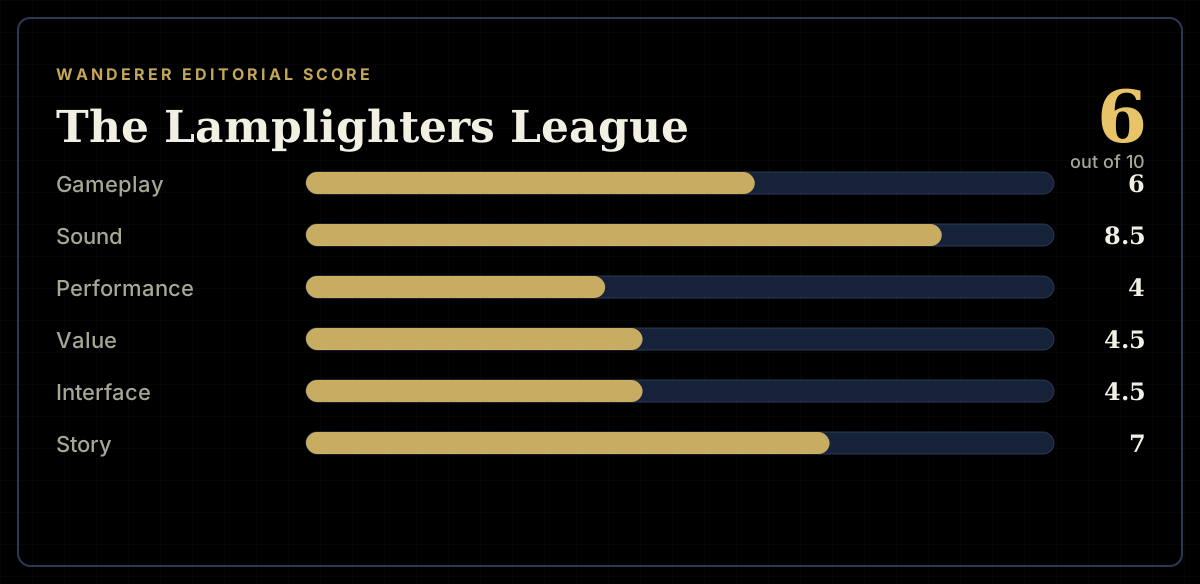
How the review scores each part of the gameWanderer Editorial -
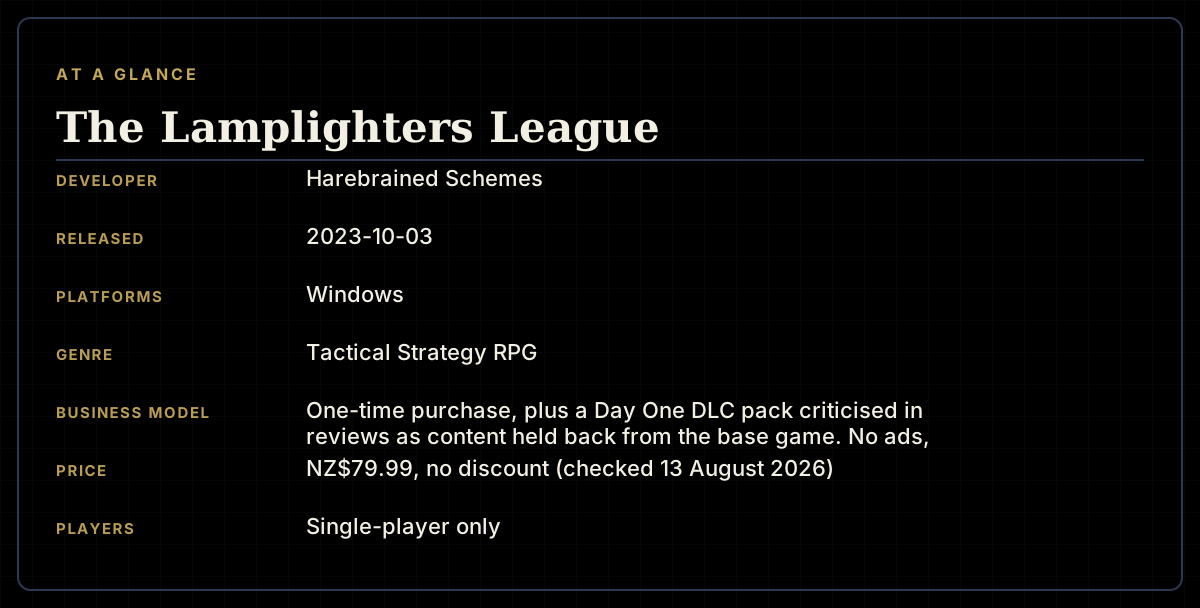
The essentials at a glanceWanderer Editorial -
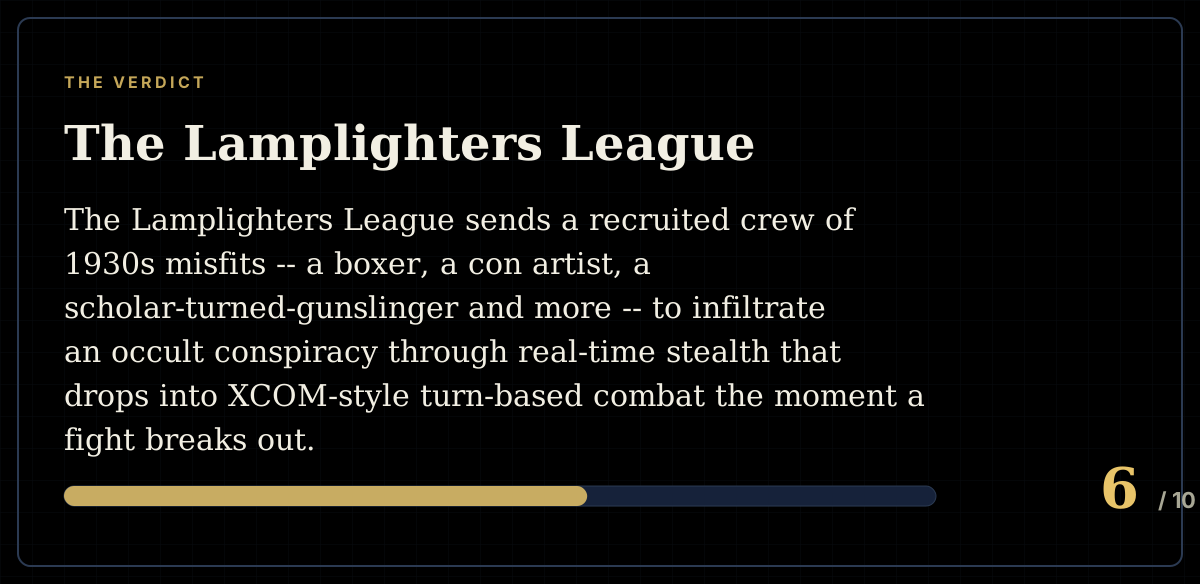
The final verdictWanderer Editorial